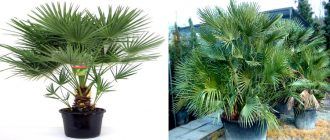
Washingtonia is a plant belonging to the Palm family. It is native to the southern United States and western Mexico. It was named after America's first president.
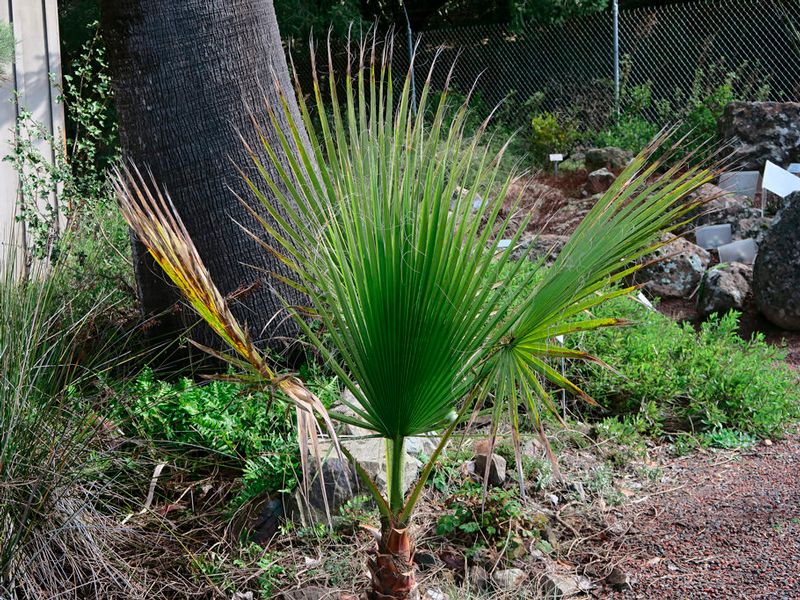
Features and appearance of Washingtonia
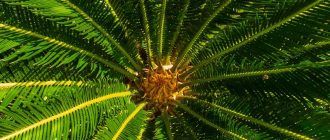
The palm has fan-shaped, thin foliage that reaches 1.5 meters in length. In nature, it grows up to 25 meters. The petioles are bare and up to one and a half meters in length. The foliage is composed of segments with distinctive threads between them.
Washingtonia palms are grown in the subtropics and may not survive the winter if moved to central Russia. The drier the air, the easier it is for the palm to survive the cold.
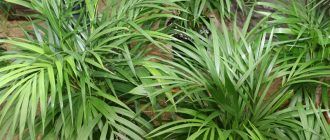
When grown indoors, the plant's height is much shorter, around 1.5-3 m, but it still requires space, fresh air, and good lighting. It is recommended to grow the plant on a balcony, veranda, or loggia.
Washingtonia is not suitable for indoor landscaping, as it becomes diseased when there is a large amount of dust, soot or dirt in the air.
Washingtonia varieties for indoor growing
Only two species can be grown indoors:
- Washingtonia filiformis (Washingtonia filiformis) is a perennial, woody plant with fan-shaped foliage. In the wild, it grows up to 20 m tall. Indoors, it can reach up to 3 m. Fine, stiff hairs are visible at the top of the trunk. Its color is gray-green. The flowers are white. It tolerates relatively low temperatures; in winter, it thrives at temperatures between 6 and 15 °C. In its native habitat, this palm species is considered edible; the succulent petioles are eaten boiled, although this dish is rarely consumed in recent years.
- Washingtonia robusta. A woody perennial that grows up to 30 m in the wild. Indoors, it reaches 50 cm in height in its first year, but continues to grow, sometimes reaching 3 m. Its slender, elongated trunk has slight longitudinal cracks. The leaves are fan-shaped and divided into thirds. The petioles are elongated, reddish at the base. The flowers are light pink. It tolerates heat poorly, so at temperatures above 30 °C (86 °F), the plant should be immediately shaded. In winter, it thrives at room temperature (21–23 °C).
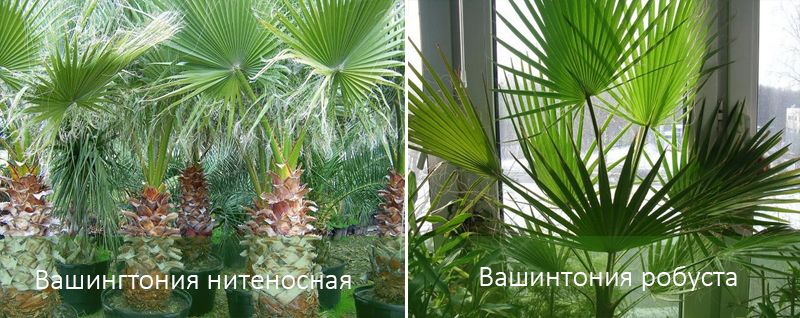
The presented Washingtonia species are well adapted to the subtropics of Crimea and the North Caucasus, where these palms can grow in open soil.
Caring for Washingtonia at home
When caring for Washingtonia at home, you should pay attention to the season of the year:
| Parameter | Spring-summer | Autumn-Winter |
| Location, lighting | It requires good lighting, but should be protected from direct sunlight. Daylight hours are approximately 16 hours, year-round. In winter, it can be illuminated with a fluorescent lamp. It is recommended to place it on the east or west side of the house. | |
| Temperature, humidity | +20…+24°C. Requires high humidity, misting 1-2 times per day. In extreme heat, wipe the foliage with a damp cloth. Temperatures above +30°C are harmful to the palm; in this case, move it to a cooler room. | It can tolerate minor frosts, but it is best to avoid this and maintain the temperature at around +7..+10 °C. Spray 1-2 times a week. |
| Watering | With warm water, as the top layer of soil dries out, water is added to the base of the trunk. | A few days after the top layer of soil has dried. The frequency should be controlled, as overwatering can negatively impact the palm's decorative qualities. |
| Top dressing | Combine mineral and organic fertilizers twice a month. The plant has a high iron requirement. This should be taken into account when choosing fertilizers. | Stop applying fertilizers. |
Transplantation, soil
The best time to repot is February to March. Plants up to 3 years old should be repotted annually. Older plants should be repotted every 3-5 years.
A Washingtonia that is 10 years old cannot be repotted.
For replanting, you need to prepare soil from the following components in a ratio of 2:2:2:1:
- turf soil;
- leaf soil;
- humus or peat;
- sand.
After preparing the soil and the new pot, carefully remove the plant from the old container and remove any remaining soil from the roots. Next, place it in the new container and fill it with the prepared soil. Don't forget to provide a drainage layer of pebbles; it should fill about 1/3 of the pot.
When repotting, avoid pruning, as the Washingtonia palm is an ornamental plant and does not tolerate this procedure. Trimming is only permitted when the foliage is wilting.
Reproduction
To propagate this houseplant, use seeds:
- It's best to begin germinating seeds in early spring, but before then, they should be stratified. To do this, use a sharp knife to make small cuts in the seeds, then place them in damp cheesecloth and refrigerate for 7-10 days. After a week, stimulate growth by placing them in an Epin solution for 10-12 hours.
- Then prepare the soil from the following components: leaf soil, fine sand, peat (4:1:1).
- The substrate is poured into the selected containers, the seeds are placed in them, and covered with 1-2 cm of soil. The soil is watered, and the trays with seeds are covered with plastic film. This is necessary to create a greenhouse effect.
Next, the seedlings are regularly ventilated and watered. The first shoots appear after two months, after which the Washingtonia containers are moved to a brighter location. After two or three leaves appear, the plants are transplanted into separate pots. This is done carefully to avoid damaging the palm's root system.
Diseases and pests
When growing Washingtonia indoors, the plant may be affected by various diseases and suffer from the effects of harmful insects:
| Symptom or pest | Cause | Struggle |
| Darkening of the tips of the leaves. | Unregulated watering, potassium deficiency. | The watering regime is normalized and fertilized with fertilizers containing potassium. |
| Leaf spot. | Excessive soil moisture, sudden temperature change. | The palm tree's condition returns to normal only after returning to its usual conditions. |
| Root system rot. | Excessive frequency of watering. | The Washingtonia is taken out of the pot, shaken off the soil, and the rotten roots are removed. |
| Mealybug, scale insect, whitefly. | The appearance of white spots, curling of leaves. | The plant is treated with any insecticides (Actellic, Nurell). |
With timely control of diseases and pests, the palm tree will delight you with its healthy appearance for many years.