Pandanus is a tree-like plant belonging to the Pandanaceae family. There are approximately 750 species today. It is native to Africa and Madagascar.
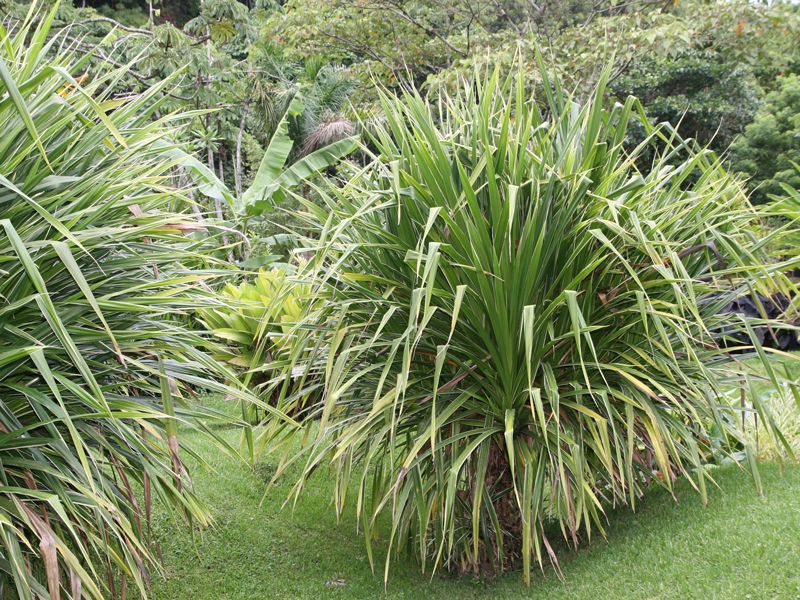
Description
A large tree, it can grow up to 15 meters in the wild, reaching a maximum of 25 meters. When grown indoors, the trunk reaches no more than 1.5 meters. Its surface resembles a screw, giving rise to the nickname "screw palm." The root system detaches from the trunk and is considered an excellent anchor for holding the plant in place during strong winds and hurricanes.
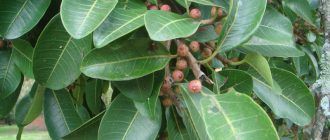
The foliage is narrow and elongated, 10 to 15 cm wide. The leaves are arranged in several rows on the trunk, forming a spiral. The flowers are unisexual. The male flowers resemble spikelets, while the female flowers are cone-shaped. The fruits are dense and red.
Types of indoor pandanus
Only a few varieties of pandanus can be grown indoors:
| View | Description |
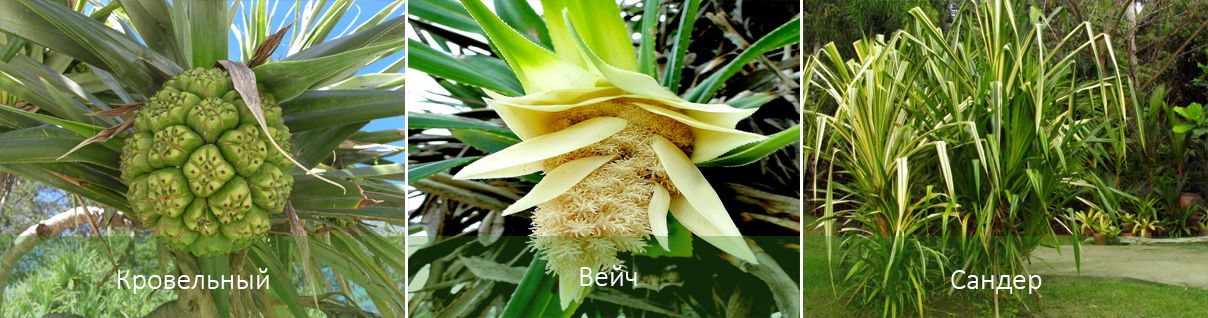
| Roofing | An evergreen perennial growing to one and a half meters in height. It has a short trunk from which an adventitious root system extends. The foliage is narrow and serrated. Its color is green. Native Africans use it for roofing, making baskets and hats, and creating sails for small boats. |
| Veitch | The most common species, it is considered a variegated plant. It grows up to 2 m tall. The foliage edges have sharp spines. It has a short stem from which aerial roots extend. The leaves are dark green, with white or yellow longitudinal stripes at the tips. |
| Sander | The leaves are 80 cm long and 5 cm wide. They are green in color, with a yellow stripe in the center and small teeth on the edges. |
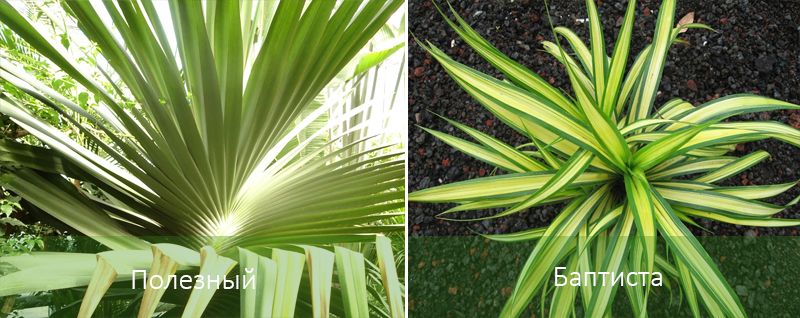
| Useful | Indoors, it reaches 2-3 m in height. The leaves are stiff, with reddish spines along the edges. |
| Baptista | Grows up to 2 m. It has numerous narrow, leathery leaves. The leaves are green with yellow stripes. The edges are smooth. |
Caring for pandanus at home
When caring for your pet at home, there are a number of things to consider:
| Parameter | Spring – summer | Autumn – Winter |
| Location/lighting | Southeast and east-facing windows. To ensure even foliage development, the palm is sometimes turned so its backside faces the light. Pandanus prefers bright but indirect light and does not tolerate direct sunlight. | Place near a south-facing window. Additional lighting is required; special fluorescent lamps are used. |
| Temperature | The optimal temperature is +20…+22 °C, but it easily tolerates temperatures up to +28 °C. | The minimum threshold is +18°C. Only the dwarf variety grows at temperatures up to +12°C. |
| Watering | Drain copiously, draining all excess water. Frequency: once every 7 days. | Water the palm tree 2-3 days after the top layer of soil has dried out. Water every 14 days. |
| Humidity | It tolerates dry conditions, but prolonged exposure to such conditions can cause growth problems. Therefore, pandanus is frequently sprayed and the foliage is wiped with a damp cloth. Showering is prohibited, as water droplets remain in the axils and cause the leaves to rot. | Place the container away from heaters to maintain 60% humidity. Place it on a tray filled with damp expanded clay. It's important to ensure the drainage holes don't come into contact with water. |
| Top dressing | 2-3 times a month (Master Agro, Agricola). | Once a month (Biohumus, Agricola). |
Transplantation, soil
A young plant is repotted annually for five years. As it matures, the frequency of repotting decreases to once every three years.
The new pot should be 2-3 cm taller and wider than the previous one. Due to the fragile root system, repotting is always done by transshipment.
The soil should be loose and nutritious, but with a slight clay content. You can purchase pandanus soil from a specialty store or prepare it yourself. To do this, combine the following ingredients in a 2:1:1:1 ratio:
- greenhouse soil;
- clay soil;
- peat;
- coarse sand.
Once the soil has been prepared, you can begin replanting the palm tree:
- A drainage layer is poured into the new pot; its volume is about 1/3 of the capacity.
- Add a small amount of substrate.
- Since mature plants have thorns on their edges, wear gloves before repotting. Then, carefully gather the leaves into a bunch and tie them with ribbon. This will prevent scratches.
- The pot is turned on its side, and then, using a flat spatula, the pandanus is removed from the old pot. The soil is not removed from the roots.
- Place the palm tree in the center of a container 2-3 cm larger than the previous one. Support it by the sides and add the remaining soil.
- To compact the soil and fill the spaces between the roots, water the pandanus. After collecting excess water in a tray, drain it.
When purchasing a palm tree in a store, replanting should begin no earlier than 10 days later.
Reproduction
Screw palms are propagated in three ways:
- cuttings;
- seeds;
- by dividing the rhizome.
To propagate by cuttings, take several shoots approximately 20 cm long with elongated side shoots. Cover the cut areas with charcoal or activated charcoal. Place each cutting in a pre-prepared substrate consisting of equal parts sand and peat. Cover the plant with plastic wrap to create greenhouse conditions. The temperature should be between 25 and 28°C. Ensure adequate ventilation.
It takes approximately two months for cuttings to root properly. To speed up this process, use a growth stimulant.
The seeds don't require any pre-treatment; they are planted directly in soil consisting of equal parts peat, sand, and leaf mold. A plastic film is placed on top. If the temperature is maintained at a constant level (around 25°C), the first shoots will appear within two weeks. Caring for the seedlings includes regular ventilation and watering.
The seedling is moved to a separate pot when it has three fully developed leaves. If you use a heated mini-greenhouse, the sprouts will appear even earlier.
Another propagation method is to separate daughter rosettes with long roots from a mature bush. These are then thoroughly dried and placed in separate containers. To speed up the rooting process, a high-quality drainage layer of about 70 mm is created. The plant is kept at a temperature of 25°C. During this time, pay attention to air humidity and water when the soil dries out.
Diseases and pests
Pandanus is a plant that is relatively resistant to various diseases (there are a few exceptions), but the palm tree is not immune to pests:
| Pest | Manifestations on leaves | Cause | Elimination |
| Scale insects | The appearance of round and elongated spots, drying out. | Insufficient air humidity. | Wipe all the leaves and stems of the palm tree with a cotton pad soaked in soapy water. After 30 minutes, rinse the palm with clean water. Repeat after a few days. |
| Spider mite | Yellow spots, on the inside, indicate the presence of a thin web. | Excessive air humidity. | Use products such as Karbofos, Actellic, or Vermitek. Prepare the solution strictly according to the instructions. Repeat the treatment after a week. |
| Mealybug | White spotting, including on the trunk, slows down the plant's growth. | Low humidity. | A cotton swab is soaked in soap and then used to remove insects from all parts of the palm tree. |
| Root rot | Yellowing, wilting, and darkening. Rotten areas can be seen on the rhizome and trunk. | Overwatering, low temperatures. | The pandanus is removed from the pot and trimmed back to healthy tissue. The cut areas are sprinkled with crushed activated charcoal or charcoal. All damaged foliage is removed. The palm is soaked in a solution of Khometsin or Kuprozan for 15 minutes. If severe damage is present, treat the pandanus with any fungicide suitable for palms. Next, repot it in a new container, disinfecting it first. If the trunk was damaged, cut off the top of the palm and root it. |
Problems in caring for pandanus
When caring for a pandanus, a number of problems may arise:
| Problem with leaves | Cause | Solution |
| The appearance of a brown tint at the edges. | Dry air, lack of moisture and nutrients. | Trim off dried leaf tips to prevent damage to the rest of the pandanus. Water generously and add nutrients. |
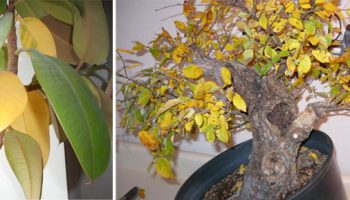
| Yellowing. | Excessive moisture, root rot. | The plant is removed from the substrate and the rhizome is inspected for damage. Rotten parts are removed with a sharp knife, and the cuts are treated with brilliant green. The palm is replanted in new soil and the humidity is maintained at 60%. |
| Fading of color. | Bright lighting, use of hard water for irrigation, excessive calcium content in the soil. | Shade or move to another location. Use settled water for watering. |
| Drying out. | Sunburn. | The palm tree is moved to a shaded area. |
Top.tomathouse.com warns: Pandanus is an energy vampire
Today, pandanus is often seen in offices and apartments, but it was once not particularly popular, as the flower is considered an energy vampire and is believed to drain the positive emotions of its owners. Because of this, sensitive people who don't handle stress well may feel a certain discomfort and even depression when around it.
Furthermore, it's not recommended to place this plant in a bedroom or living room due to its spiral shape. These trees have a strong character, and their energy spreads throughout the room in a spiral, filling it with heavy energy.
Because the pandanus's leaves have thorns at the tips, the energy emanating from it is considered prickly and unpleasant. This makes it difficult to be indoors, and the flower exerts psychological pressure. It is contraindicated for those with a caustic personality, as it will exacerbate their already specific attitudes toward others.
But this plant also has certain benefits. If a person has an overly soft character, it will teach them how to deal with enemies correctly and how to defend their own position.
As a garden decoration, pandanus is simply irreplaceable, as it can green a large area. It's best not to plant it near other plants.