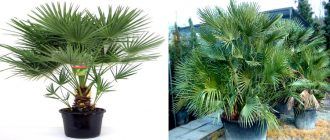
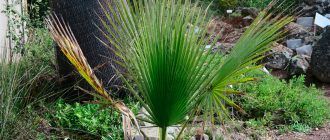
Livistona is a palm tree growing up to 25 meters tall, named after the Scottish collector P. Murray, Laird of Livingston. It is native to the southern hemisphere from Africa to Australia.
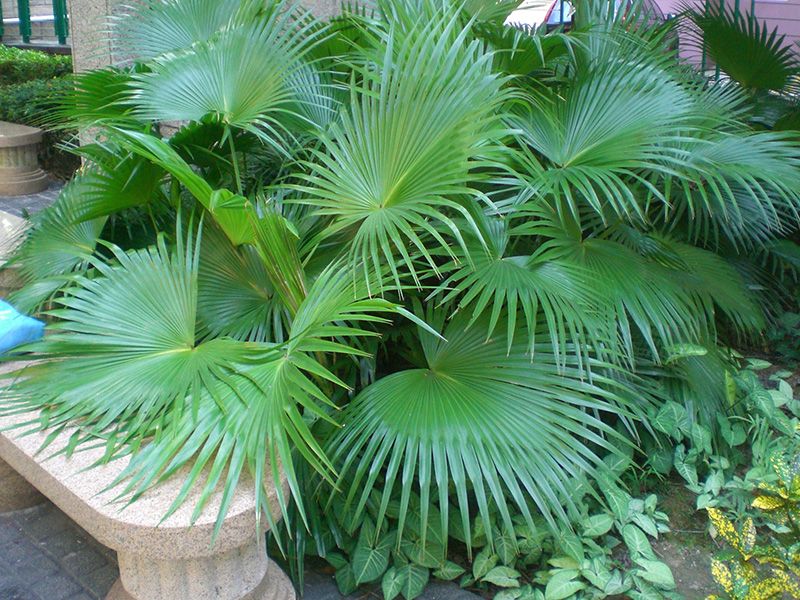
Description of Livistona
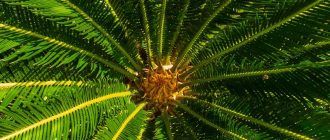
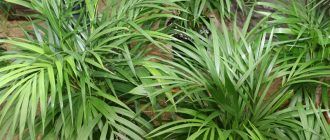
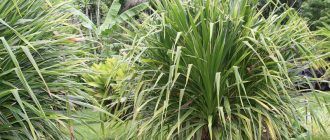
The stem is hard and scarred. Dark green, sometimes grayish, leaf blades with a glossy sheen, resembling a fan, radiate from it. They can reach 10 cm in diameter. The petioles are thorny. In the wild, the height ranges from 20-25 m.
Popular Livistona species for indoor growing
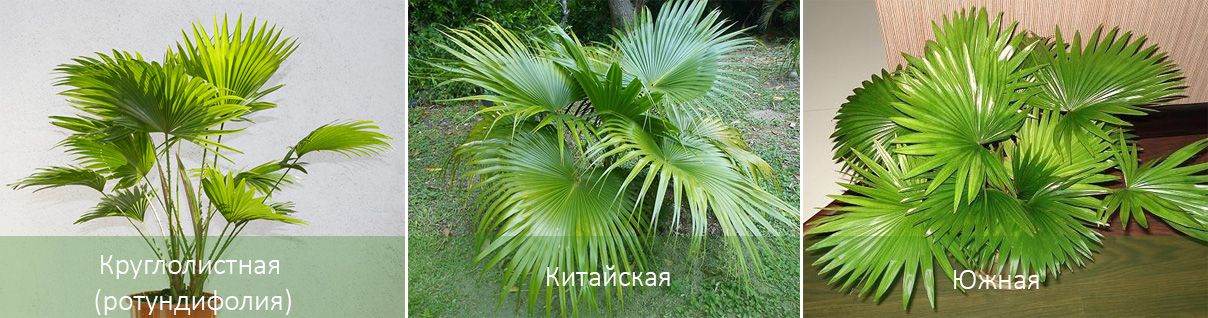
There are 36 species of this plant, three of which are commonly grown indoors. The most popular is Livistona rotundifolia.
| View | Description |
| Round-leaved (rotundifolia) | The leaf blades are 1.5 m in diameter, and the petioles are densely covered with spines. The flowers are yellow. It grows up to 14 m. The color ranges from grayish to dark green. It is easy to maintain and grows quickly. |
| Chinese | The tips of the leaves curl. The trunk reaches up to 12 m with a girth of 50 cm. Shade-tolerant variety. |
| South | Columnar trunk with a thickening at the base. Dark green foliage with forked ends. Height approximately 25 m. |
Features of purchasing Livistona
When choosing a plant, inspect the stems, petioles, and foliage for damage and pests. It's important to provide a spacious space for the plant in your home. After transporting, water the Livistona and clean it of dust. Repotting should only be done in the spring.
Growing conditions for Livistona
| Parameter | Spring/Summer | Autumn/Winter |
| Location/Lighting | South window, garden or balcony. | South window + UV lamp. |
| Temperature | +18…+21 °C | +14…+16 °C |
| Watering | Frequently and generously, draining excess liquid from the pan after half an hour. | Only when the top 2 cm dries out. |
| Humidity | Warm shower once a week. | Regular spraying. |
| Top dressing | Fertilizers for palm trees 3 times a month. | Once a month. |
Transplantation, soil
Do this every 3-4 years and only if the rhizomes extend beyond the container. When repotting, trim off the tips of overgrown roots.
The plant should be planted in a stable, heavy pot with a thick layer of expanded clay drainage (one fifth of the total filling).
The soil mixture consists of turf, leaf mold, peat, rotted manure, and sand in a ratio of 2:2:1:1:1. Example: if the new tub has a capacity of 20 liters, 1-2 kg of each component is required, according to the proportions.
Features of pruning
Old leaves gradually dry out but do not die. They should be trimmed between March and May. Use sterile pruning shears. Petioles should only be cut off when they are completely dry. Failure to do so will cause the plant to wither. Treat the cuts with paraffin after they have dried.
Methods of reproduction
Palm trees are propagated by division or seeds. The former method is possible if the plant has produced side shoots. In the spring, these should be carefully separated and replanted in the soil mixture described above.
Growing from seeds is a little more difficult:
- In February – March, soak the seeds in water and wait for them to swell for 2 days.
- Plant one by one in separate pots, creating 1 cm depressions.
- Cover with a transparent bag or place in a mini greenhouse. The first shoots may appear immediately or after 3 months.
- Remove evaporation every 2-3 days, water, adding liquid to the tray.
- Once the seedlings have grown stronger, remove the pots from the mini-greenhouse. If necessary, transplant the plants into larger containers.
Diseases and pests
The plant is unpretentious, but can be affected by pests. The main negative factors are:
- spider mite;
- root rot;
- mealybug.
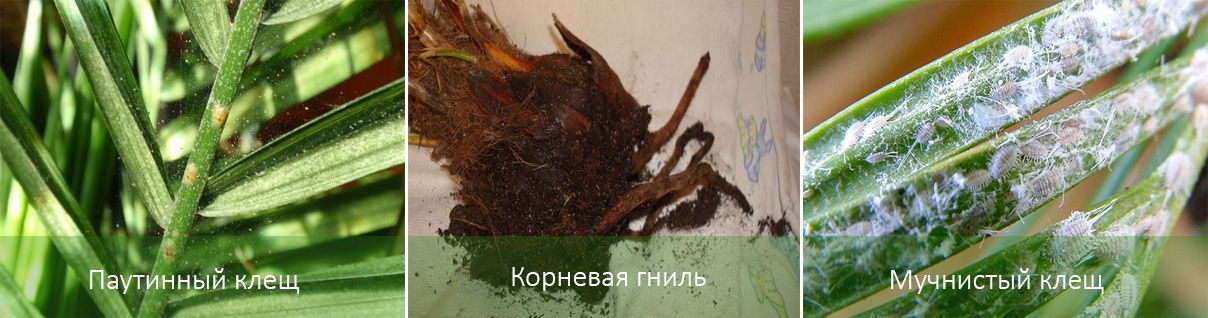
For minor pest infestations, wipe the plant with a soapy solution up to three times, with a 5-day interval. If this doesn't help, treat with Aktara or Decis according to the instructions.
Potential problems when caring for Livistona
Incorrect home care can weaken a palm tree. If the plant hasn't already died, this can be easily corrected.
| Problem | Cause |
| Bronze spots on foliage. | Potassium deficiency. |
| Lack of growth. | Lack of fertilizers and lighting. |
| Dark, wilted stems. | Overwatering and low temperature. |
| Yellow spots. | Sunburn. |
| Drying and browning of leaves. | Fluoride poisoning. |