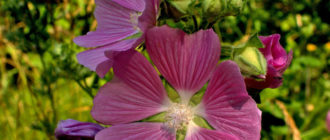
Thrift is a herbaceous plant belonging to the Plumbaginaceae family. Its distribution includes eastern Europe, Siberia, and the Mediterranean region.
Content
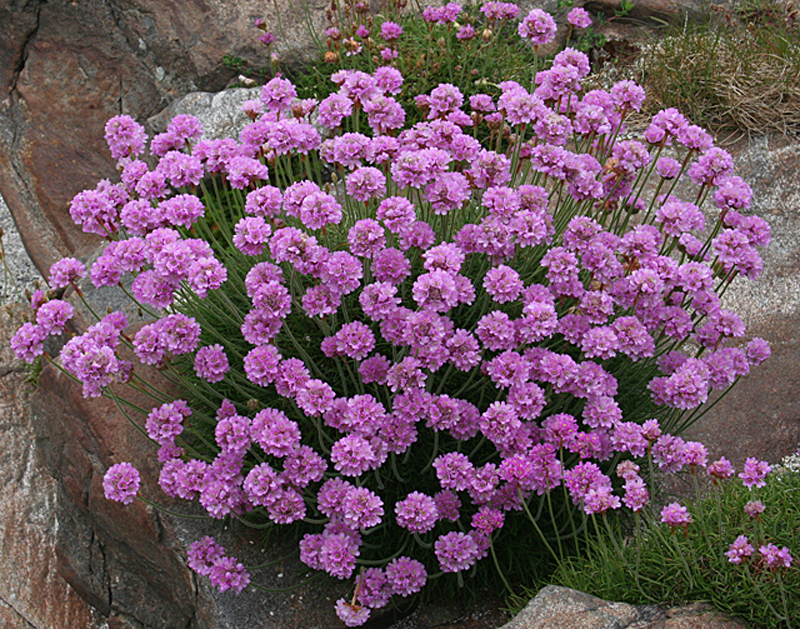
Description of armeria
- Trunk height 15-60 cm.
- The root system is short and taproot.
- The leaves are sessile, linear-lanceolate in shape.
- The buds are small, ranging in color from white to purple. The fruits are single-seeded.
- Flowering period: from late spring to August.
Types and varieties of armeria
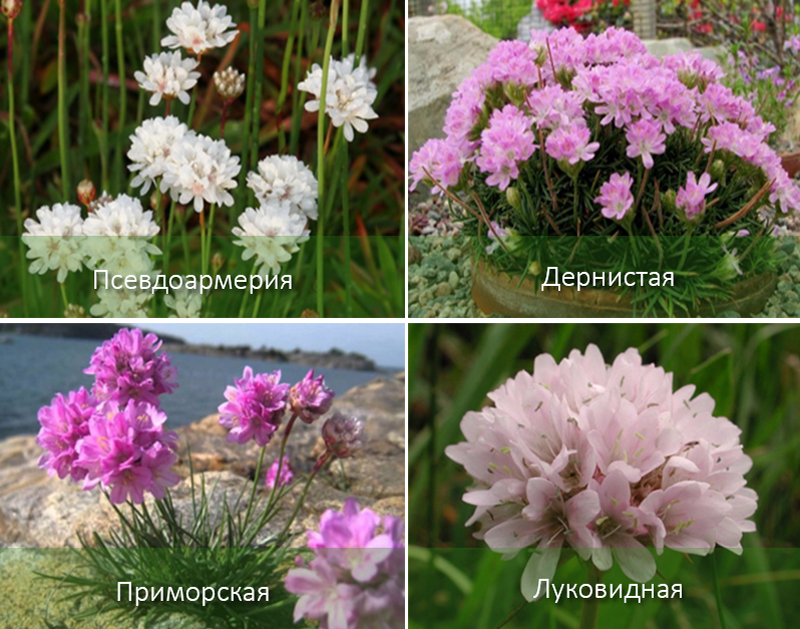
There are more than 10 varieties of armeria, widely used for garden decoration, but the following are best suited for central Russia:
| View | Description | Leaves | Flowers |
| Alpine | A perennial shrub that forms dense cushions up to 0.3 m long. Stem – up to 150 mm. | Linear-lanceolate. | Pale pink, up to 30 mm in size. Inflorescences are capitate. |
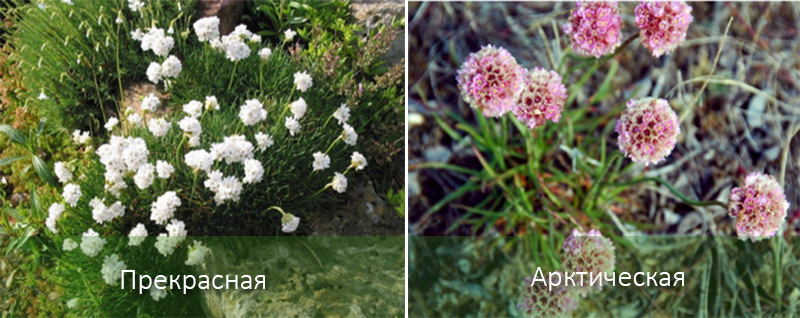
| Beautiful (pseudoarmeria) | Grows up to 0.4 m. Flowering period is from June to August. | Dark green. | White and pink. |
| Primorskaya (magnificent) | Native to European countries located on the sea coasts, it grows up to 20 cm. | Narrow, linear shape. Blue-green color. | Pinkish-purple. Inflorescences are capitate. |
| Soddy (juniper-leaved) | Distributed in the mountains of southern Europe, this perennial shrub reaches a height of 150 mm. | Linear type, forms a rosette up to 20 cm in size. | Red or pink. |
| Velvich | Tall, trunk – 35 cm. | Large, about 100 mm long and 50 mm wide. | The inflorescences are capitate and pink in color. The buds reach up to 20 mm in size. |
| Common (garden) | Grows up to 0.6 m. | Entire, linear shape. Length – approximately 125 mm, width – 10 mm. | Carmine-pink. Up to 40 buds on a single stem. |
| Beautiful | It has a straight trunk, 20-25 cm high. | Narrow-linear, evergreen. | White, red, or pinkish. The buds are about 50 mm in size. |
| Siberian | Native to the mountainous regions of Siberia and Mongolia, it is a low-growing shrub, reaching up to 20 cm. | Elongated, light green. | Small, purple. |
| Arctic | A frost-hardy biennial. Flowering period lasts 2 months. | Narrow, linear. | Solitary, spherical, pale pink. |
| Sünderman | Considered a mixture of coastal and turf varieties, it is a perennial with a trunk approximately 18 cm tall. | Length – about 150 mm. Dark green. | Lilac. |
| Broadleaf | Decorative, has lush basal vegetation. | Linear. | Small. The buds are white or light pink. The inflorescences are spherical. |
| Bulbous | Tall, reaching 0.5 m. Flowering period: from late spring to June. | Narrow. Light green. | Purple. |
| Prickly | Native to Portugal and Spain, it consists of a large number of rosettes. | Bluish. | Medium-sized, pink. Inflorescences are loose. |
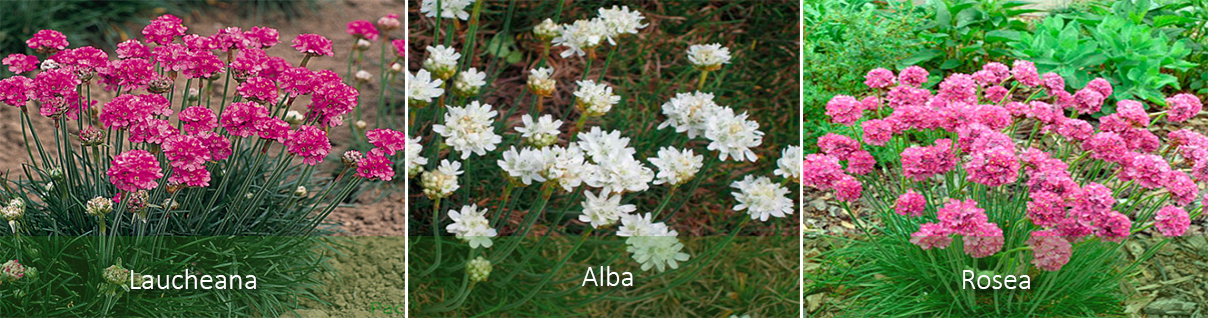
Some of the presented varieties of armeria became the founders of a number of original varieties.
Alpine armeria
| Variety | Description | Flowers |
| Alba | Perennial, stem up to 150 mm. | White. |
| Laucheana | It has linear-lanceolate foliage. Low-growing, up to 150 mm. | Carmine red. |
| Rosea | Perennial, stem 12-15 cm. | Deep pink. Capitate inflorescences. |
Beautiful armeria
| Variety | Description | Flowers |
| Joystick White | Grows up to 0.4 m. Occasionally cultivated as an annual. | White. The inflorescences are spherical. |
| Thrift | It is one of the low-growing species, with a trunk up to 20 cm. | Pink. |
| Red Planet | Perennial. Flowering stems are about 30 cm. | Red, spherical. |
| Bees Ruby | Stem up to 0.6 m. | Hot pink. |
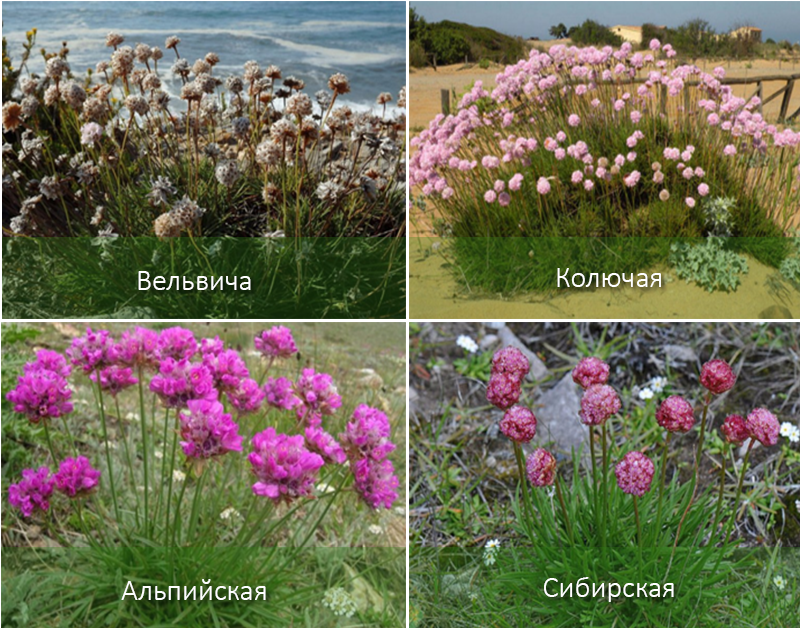
Seaside thrift and its varieties: Louisiana and others
| Variety | Description | Flowers |
| Louisiana | It has blue-green, linear leaves. The trunk is up to 20 cm. | Pale purple. |
| Dusseldorf Stolz | Narrow foliage. Erect stem reaching 18-20 cm. | Burgundy. |
| Vindictive | The foliage is flat. The color is green-blue. Flowering period is from May to mid-August. | Reds. |
| Bloodstone | The size of the basal rosette is up to 0.2 m. The height is up to 20 cm. The leaf blade is flat, the color is blue-green. | Small, bloody. Inflorescences are capitate. |
Thrifty armeria
| Variety | Description | Flowers |
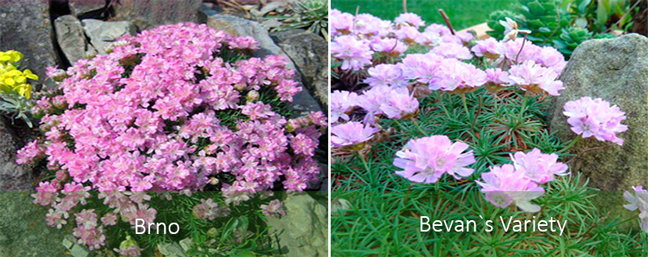
| Brno | Low-growing, stem reaches 150 mm. Double type. | Color: lilac. |
| Bevan's Variety | The basal rosette is approximately 20 cm. The shrub is 150 mm. The foliage is narrow and linear. | Light pink. |
Methods of planting and propagation
There are a number of methods for planting and growing armeria:
- grown from seeds;
- seedlings are used;
- divide the bush.
Planting seeds in the ground
To maximize germination, place the seeds in a refrigerator 7 days before sowing. Then, 7-9 hours before planting, place them in warm water mixed with Zircon or another growth stimulant.
The optimal time for planting outdoors is late November or early spring. When grown in a greenhouse, the seeds are sown in the last days of February.
When using this planting material, it is buried 1-2 cm deep. Dry soil is sprinkled on top, the layer thickness is 5 mm.
Seedling method
When using the seedling method, seeds are prepared in the same way as when planting in open ground.
Then perform the following manipulations:
- soil suitable for the flower is poured into small containers;
- the seeds are planted 2 cm deep;
- The containers are placed in a warm, well-lit room to await germination. Once the seedlings have developed two true leaves, they are transplanted into separate containers.
- sowing in open ground is done in the spring, but even careful preparation of seeds does not guarantee their full germination;
- Once the plants have grown and matured, they are moved into the garden immediately after the danger of frost has passed. Choose a site with soil rich in sand and rocks. An alpine garden near a pond is ideal.
Armeria should not be planted in alkaline soil. Flowers planted in such soil will become diseased and lose their decorative appeal. Calcareous soil can be neutralized by adding a vinegar solution.
Vegetative propagation
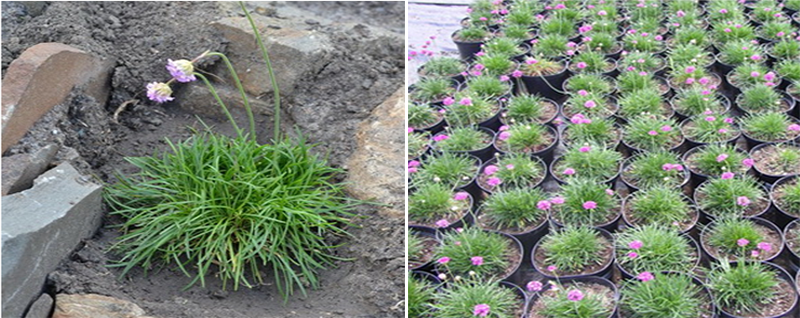
Every year, the shrubs produce numerous basal shoots. The dense turf is divided into 2-3 sections and planted in various corners of the garden. The first treatment is performed when the thrift plant reaches three years of age.
Planting is done at the end of August, immediately after the flowering period ends. Each plot should have a strong root system. Space new plants approximately 20 cm apart.
In summer, the flower is propagated by cuttings. To do this, a young rosette without a root system is separated from the turf. The cutting is transplanted into loose, well-drained soil and covered with a cap for 7-14 days. The plant is ventilated daily and watered as needed.
Caring for armeria
Armeria requires virtually no care while growing. However, before buds appear, it's essential to fertilize with a complex mineral fertilizer. Subsequently, repeat this treatment every 14 days.
During the rainy season, the plant does not require additional watering. During dry weather, water the plant twice a week, but avoid stagnant water.
At 5 years of age, the plant is repotted and the bush is divided. This procedure is then repeated every 3 years.
To prolong flowering, prune dried stems promptly. When planted correctly, armeria is virtually disease-free, but if fungus is detected, complete pruning is necessary.
Seed collection
Armeria reproduces effectively by self-seeding. When giving a plant as a gift, cuttings or divisions are most often used.
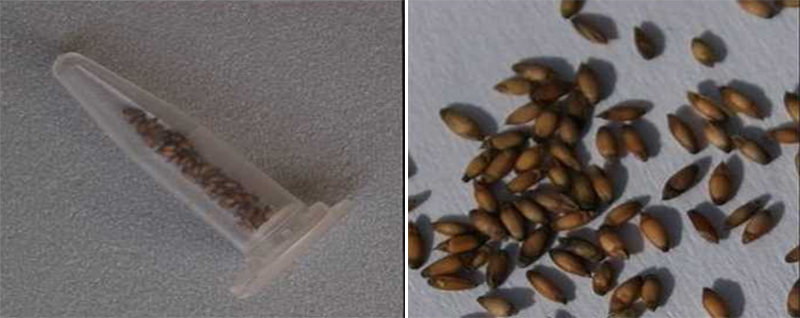
To obtain seeds, the wilting plant is tied with a piece of gauze, which prevents the planting material from spilling onto the soil surface.
Carefully trim the dried inflorescences and shake out the contents onto a white sheet of paper. Remove any remaining plant material and, once dry, place them in a paper bag.
Wintering
Thriftwood is highly winter-hardy, so it doesn't require covering during cold weather. The exception is the turf-like variety, whose shrubs are covered with spruce branches, peat, and non-woven fabrics.
If there is a forecast of no snow during the frosty period of the year, it is still worth considering a "blanket" for the plant.
Diseases and pests
Armeria is resistant to disease and insect attacks, but if it is grown in soil with low acidity, problems with leaf spot and aphids arise. These problems are solved by radical pruning.
Slugs are occasionally found. They are removed by hand picking. Prevent these pests from forming during planting by treating the plant's foliage with a soapy solution.
Using flowers in landscape design
Thanks to its dense and vibrant foliage, armeria is widely used to decorate gardens. It is used to create flower beds, rockery compositions, mixed borders, and rock gardens.
The elongated leaves of the plant retain their beauty all year round, thus forming a continuous green carpet.
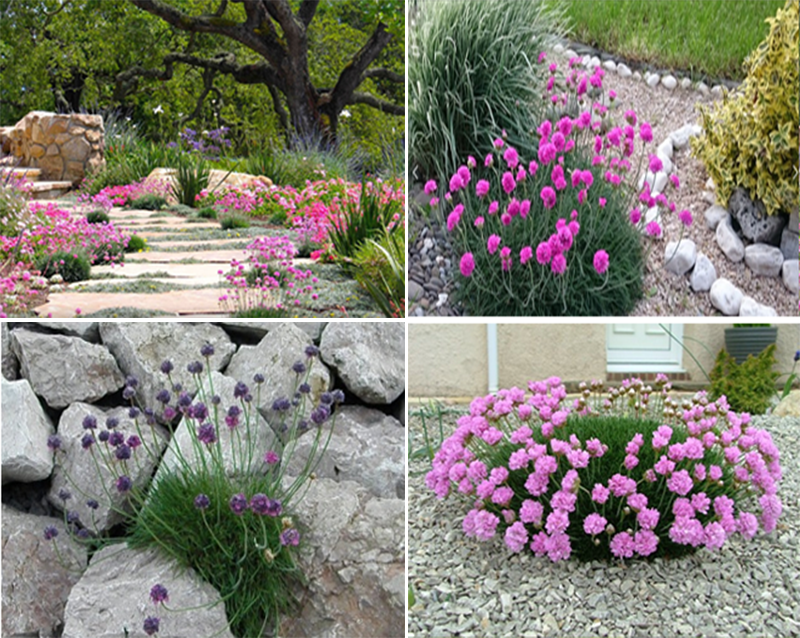
In flowerbeds, they are planted next to low-growing plants (thyme, bellflowers, phlox). Different varieties of thrift are also used to create unique bouquets.
The inflorescences retain their beautiful appearance even after drying, so they are used to create dried arrangements. For this purpose, they are cut during flowering and hung upside down in the sun.
Armeria is low-maintenance, so gardeners can enjoy a healthy plant for a long time with minimal effort.