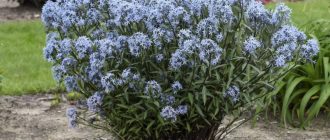
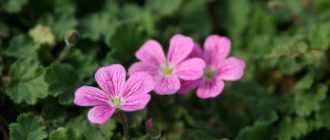
Aster (Calystephus) is a herbaceous plant belonging to the Asteraceae (Compositae) family, which includes more than two hundred species.
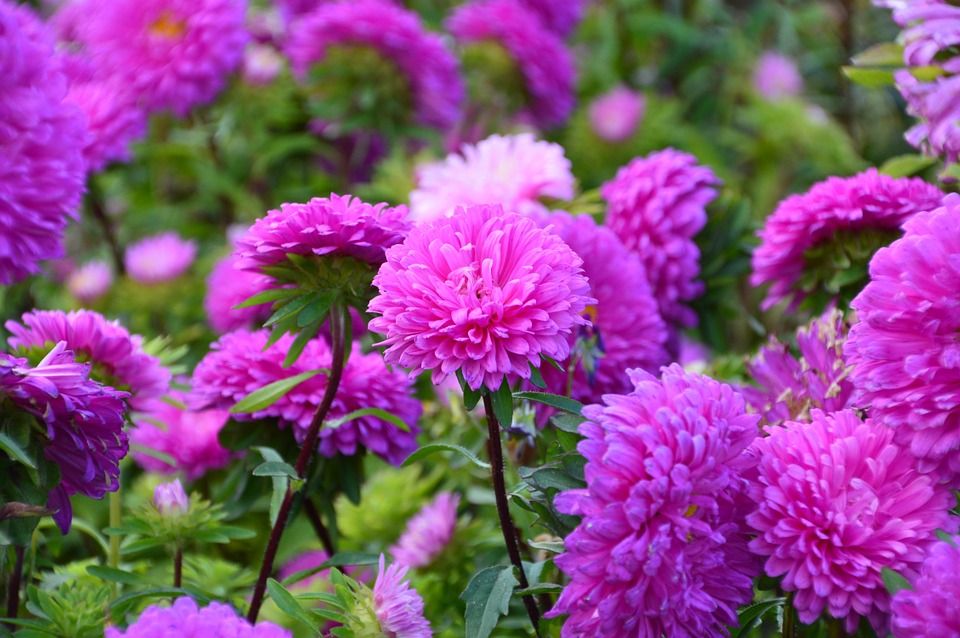
Native to Asia and the Far East. The flower's Greek name means star, while its international name means "beautiful wreath."
Content
- 1 Aster flower: photo and description of what it looks like
- 2 Perennial aster: alpine, shrub and other species
- 3 Varieties of annual asters
- 4 How to Grow Annual Asters
- 5 Perennial aster: planting and care
- 6 Post-flowering care for annual and perennial asters
- 7 Potential problems with asters
- 8 Top.tomathouse.com informs: interesting facts about asters
Aster flower: photo and description of what it looks like
It can be annual or perennial. The roots are fibrous, the stems are solitary or branched. The leaves are oval and petiolate, located on the stalk.
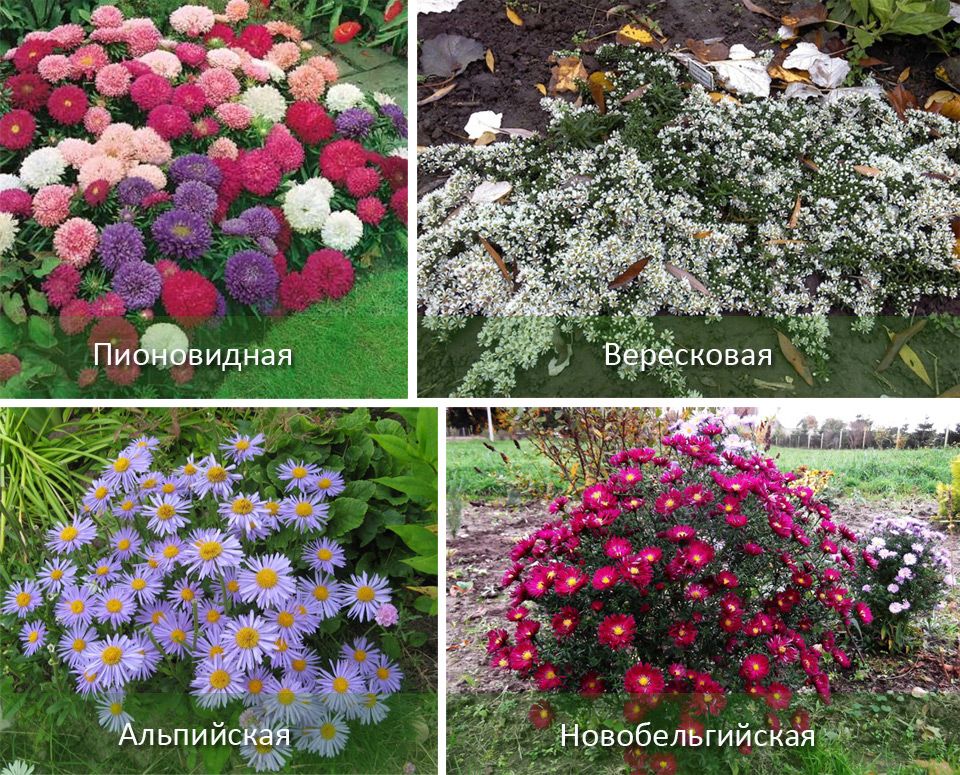
The flowers are ligulate at the edges and finely tubular in the middle, from snow-white to sky-blue shades, inflorescences are baskets.
Perennial aster: alpine, shrub and other species
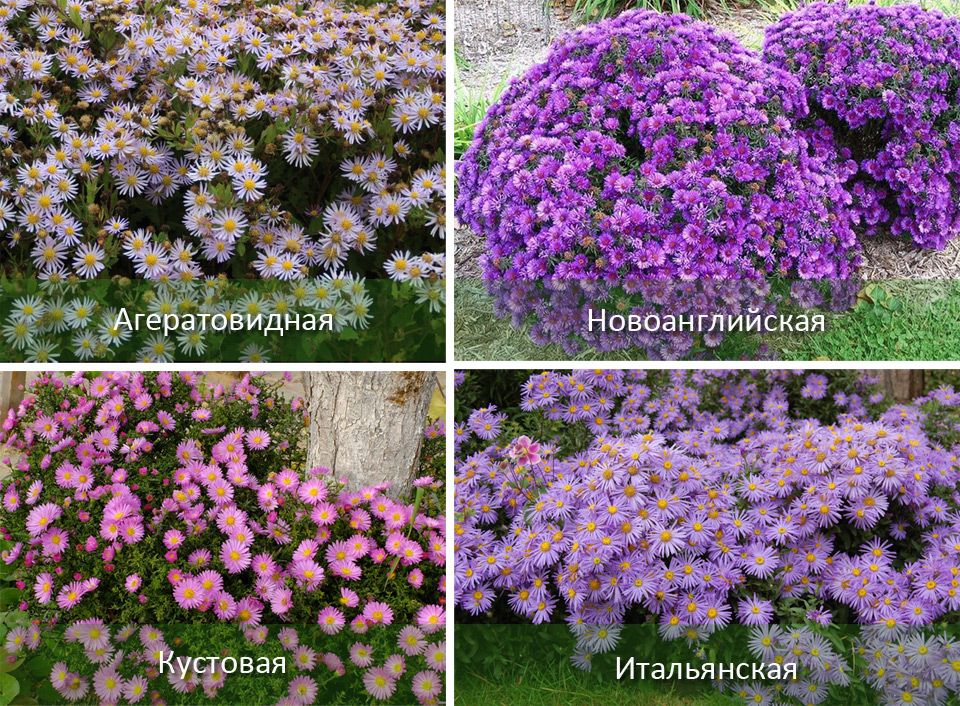
Aster species can be tall (New Belgian - 150 cm) or low-growing (Alpine - no more than 40 cm):
| View | Description
Leaves |
Inflorescences | Bloom |
| Alpine | Thin stems. Branched roots. 10-40 cm.
The lower ones are lanceolate. |
About 6 cm. The baskets consist of about 60 ligulate petals. | In May, for about a month. |
| New Belgian | About 150 cm tall, the bushes are branched. The plant is cold-resistant. The rhizome is creeping.
Lanceolate, sessile. |
Paniculate with ligulate lilac flowers arranged in 6 rows. | From July to September. |
| Heather | Spreading bush, multi-flowered, frost-resistant.
Upper needle-shaped, lower scapular. |
Different shades, small. | September, October. |
| Peony-shaped | The bushes have varying branching, the bush is up to 70 cm. | Spherical, up to 10 cm, of various colors, petals directed towards the center. | From July to October. |
| Italian | The bush has a strict shape, the stems are pubescent, the root is small.
Small, they form a dense cushion. |
Reminiscent of a daisy. The edges are ligulate, the center is tubular, and comes in various purple colors. | July - September. |
| Bushy or shrubby | A branched perennial.
Green, in large quantities. |
Various shades. They form baskets about 3 cm in size, with a sunny center. | July - October. |
| New England | The stems are straight, branched, approximately 1 m, and can withstand light frosts. | 4 cm, different colors. | September, October. |
| Ageratoides | About 1.5 m, wild species, used for planting natural flower beds, drought-resistant. | The baskets change color from white to lilac, up to 1 cm, the core is golden. | August, September. |
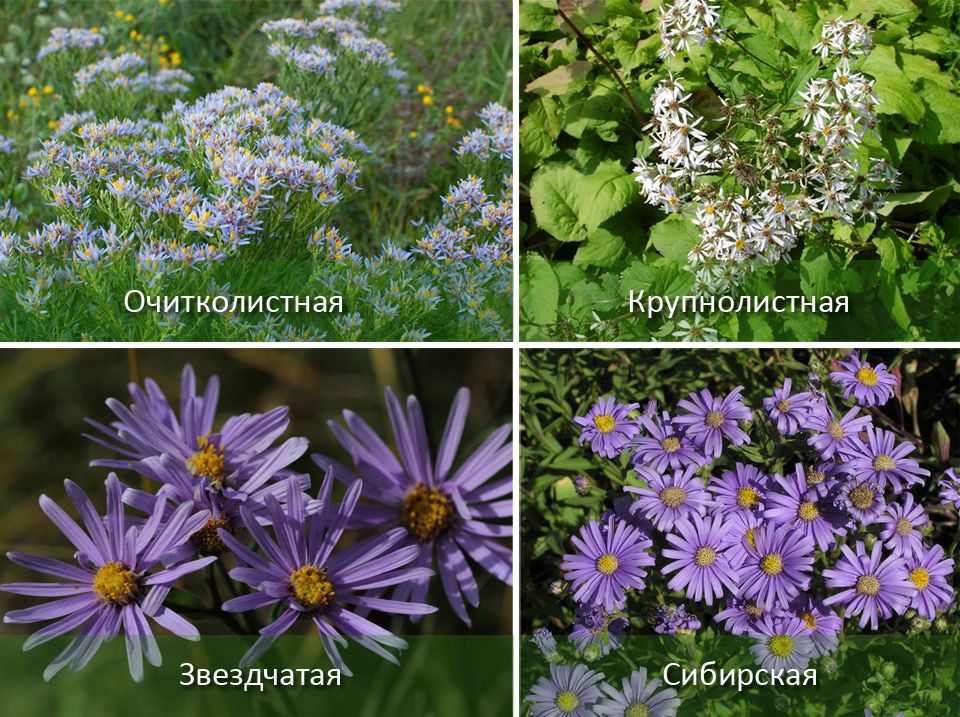
| Star-shaped | Thick rhizome, pubescent stem of reddish color. | Baskets or panicles of different shades of blue, with a sunny center. | July, August. |
| Large-leaved | Erect, branched, with a long, thick rhizome. Frost-resistant. | 3 cm, purple, amber core. | From August to October. |
| Sedum | Erect, branched, heavily foliated. | Multiple baskets, sand-colored in the middle and purple at the edges. | September, October. |
| Heart-leaved | Small, upright semi-shrubs.
Lanceolate. |
Oblong petals, canary yellow center, edges in various shades. | August, September. |
| Siberian | Red-green, sparsely branched, 55 cm.
Small, another one. |
4 cm. Tubular flowers are pink and lemon, ligulate, lilac. | June, July. |
Alpine aster hybrids
Low-growing varieties are widely used as framing for alpine gardens, flower beds, borders, and also for decorating balconies.
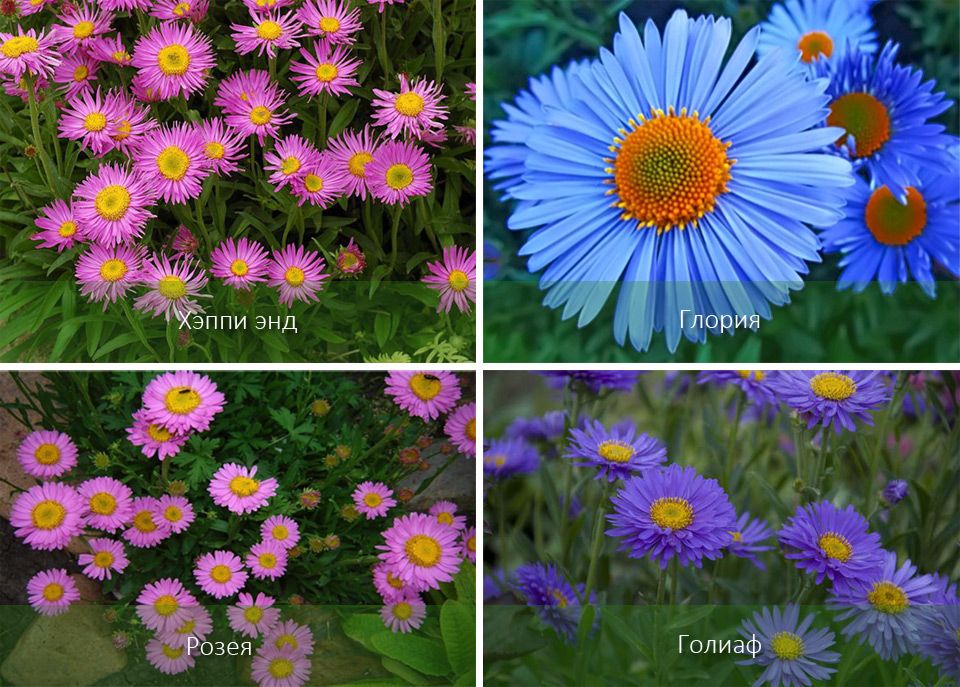
| Variety | Description
Leaves |
Flowers Flowering period |
| Albrus | About 25 cm. Small, dark. |
Snow-white with gold. June, July. |
| Gloria | Height 35 cm. Emerald lanceolate. |
Small, up to 3 cm, heavenly. May, June. |
| Goliath | Herbaceous bush. Emerald with grey. |
Shades of lilac, up to 6 cm, semi-double. June. |
| Happy ending | About 30 cm. The next ones, green ones. |
Pink, ligulate. May. |
| Rosea | 15 cm, horizontal rhizome. Light green. |
Baskets up to 6 cm, pinkish with an amber center. May, June. |
| Dunkle Schöne | Low-growing. Lush greenery. |
Purple with yellow center, 3cm. June. |
| Ruber | About 30 cm. Small ones. |
Red-pink. June, July. |
| Superbus | Graceful bushes, 30 cm. Openwork, green. |
Lilac-blue, 3 cm. July. |
| Dark Beauty | They grow to about 30 cm. |
Violet, 3 cm. July, August. |
| Helen Beauty | Height 25 cm. Green, lanceolate. |
Soft pink and lilac up to 4 cm. May, June. |
Varieties of New England aster
Tall varieties are used as hedges and as the main accents of flower beds and flower gardens.
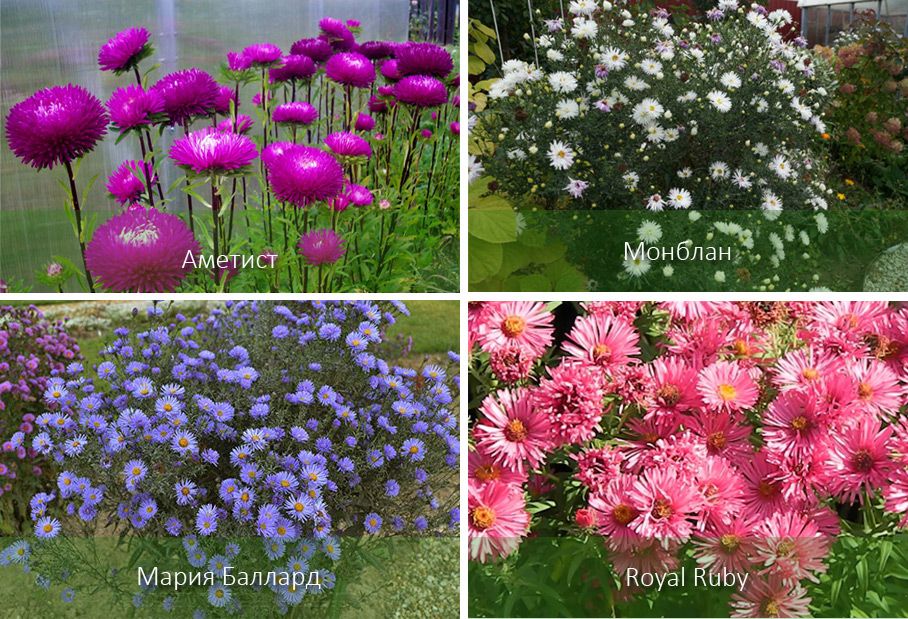
| Variety | Description
Leaves |
Flowers Flowering period |
| Mont Blanc | Approximately 140 cm, cold-resistant. |
Terry, snow-white, up to 4 cm. September. |
| Amethyst | About 100 cm. |
Lilac, reminiscent of a daisy, semi-double with a yellow center. August. |
| Maria Ballard | 100 cm tall. Branched. Lanceolate, green. |
Blue ones about 8 cm. September, lasts about 2 months. |
| White Ladies | The bushes are inversely pyramidal in shape, about 110 cm, the lower part of the stem is bare. |
Reed, white. 3 cm. The beginning of autumn, abundant. |
| Royal Ruby | A medium-sized, branched bush, up to 90 cm tall, with straight branches. Good winter hardiness. |
Semi-double, raspberry up to 4 cm August. |
| Sam Benham | Height up to 150 cm, wide bush. Oblong dark. |
White, up to 4 cm, with a lemon core. September. |
| Saturn | Branched, approximately 150 cm. |
Blue, up to 4 cm, ligulate. Abundant, September. |
| Sunset | Tall branching bush. Small, green. |
Dark pink, tubular, amber core. September. |
| Royal Blue | Small, about 140 cm, stem straight. Oblong, green. |
Semi-double, about 4 cm, sky-blue, golden in the middle. September. |
| Planty | Branched, about 140 cm. |
4 cm, raspberry, reed. September. |
| Beechwood Rivell | Spreading, up to 70 cm. |
Ligulate, purple. August. |
| Oktoberfest | About 100 cm. |
Semi-double, ligulate, collected in baskets up to 4 cm, blue. August. |
| Aden | A lush, tall bush, 100 cm, with many flowers. |
Terry with a canary-colored center, white. September. |
| Bengal | The bush is branchy and lush. |
Pale purple. September. |
| Herbst Wunder | Up to 90 cm, stem straight. Green, all the way up. |
Tongue-shaped white, tubular sand-colored 3 cm. The beginning of autumn. |
Heather aster varieties
Medium-sized varieties, distinguished by small, abundant flowering and aroma.
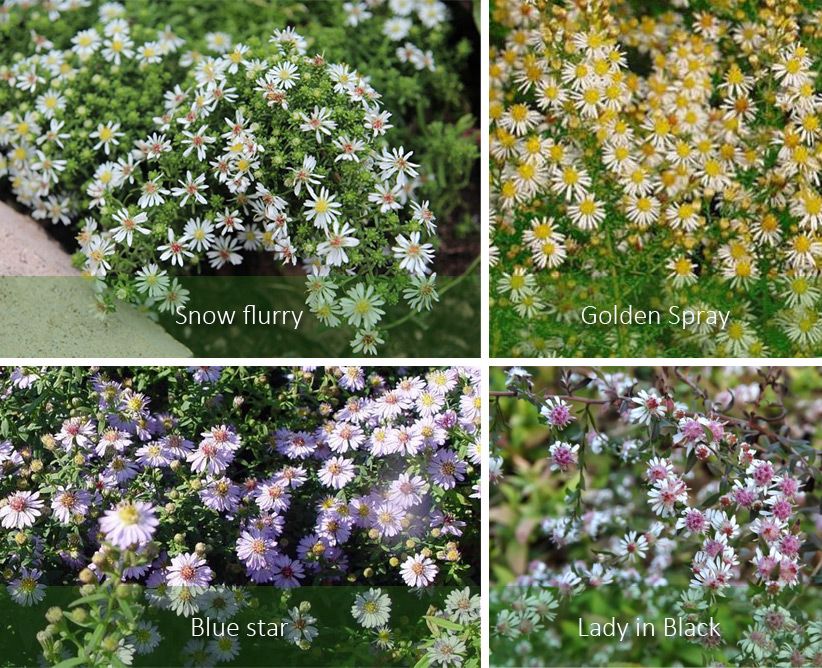
| Variety | Description
Leaves |
Flowers Flowering period |
| Herbstmirte | 1 m, leafy bush. |
White-lilac, 1.5 cm, yellow center. September. |
| Erlkönig | Ground cover, 100 cm. |
Purple with an amber center. The beginning of autumn. |
| Blue Star | Creeping, 70 cm. Needle-like, reminiscent of heather. |
Pale blue, small. From August until frost. |
| Snow flurry | Ground cover variety. Needle-shaped, 10 cm, linear. |
Small, white. September, October. |
| Golden Spray | Branched 100 cm, straight trunk. Linear. |
Small, reed-shaped, white with a lemon-colored center. September, October. |
| Lady in Black | The bush is decorative, not tall. Dark green or dark purple. |
Small, snow-white with a pink spot in the middle. The first two months of autumn. |
| Pink Cloud | Strongly branched stems, spherical bush. Green ones. |
Baskets are pinkish, small, up to 1 cm. From September to late autumn. |
Peony aster varieties
The distinctive feature of this species is its flowers, which resemble peonies.
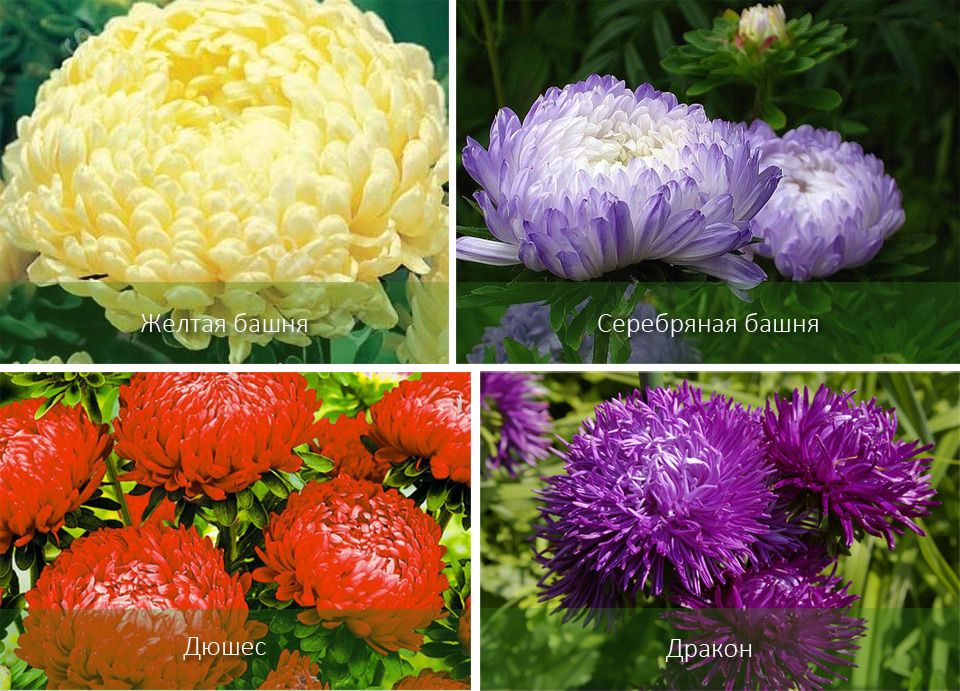
| Variety | Description |
Flowers Flowering period |
| Silver Tower | Inverse pyramidal shape, up to 70 cm. Stem is dense. |
Double, up to 10 cm, spherical. Petals change color from purple at the edges to a white center. August, September. |
| Dragon | 70 cm, mid-late variety. |
Large, purple petals resemble dragon claws. August, September. |
| Duchess | Columnar, branched, 70 cm. |
The inflorescences are spherical, double, with ligulate edges and a tubular center, ranging in shades from snow-white to blue. August, September. |
| American Browning | 70 cm. |
More than 10 cm, red-blue shades. July - September. |
| Yellow Tower | About 70 cm, with up to 12 inflorescences. |
Large, double, yellow. July, August. |
| Red Tower | 70 cm, do not fall apart to the sides, stand straight. |
Terry, up to 10 cm, carmine color. From July until the first frost. |
| Fontainebleau | Long-flowering, columnar, 65 cm, cold-resistant. |
Terry, 10 cm, bent towards the center, the color has a transition from light purple to snow-white in the center. From July to September. |
| Annushka | Compact 60 cm, few branches. |
Rounded, fiery-colored. The petals are elongated at the edges, tapering toward the center. Abundant August - September. |
| Chambord | 65 cm, strongly branched. |
up to 10 cm, petals bent towards the center, burgundy. July - August. |
Varieties of Italian aster
Medium-height varieties, distinguished by lush, compact bushes with various shades of purple.
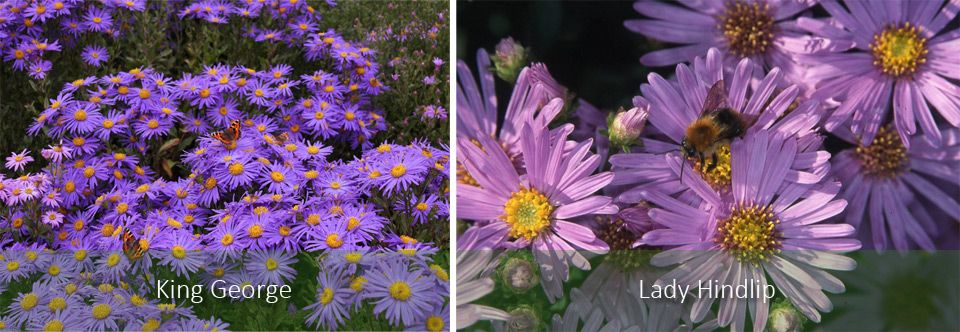
| Variety | Description
Leaves |
Flowers Bloom |
| Herman Lens | 60 cm, elastic. Green, alternate, lanceolate. |
Purple daisies. July - October. |
| Dwarf | Height 35 cm, spherical. |
Light lilac, densely double, 6 cm. From July until cold weather. |
| Henrich Seibert | Large, 60 cm, looks like a pink cloud, frost-resistant. Alternate, lanceolate. |
Pink 4 cm, collected in baskets. July - October. |
| Kobold | Branched, 50 cm tall. Green ones. |
Dark purple, 4 cm. From July, lasting 55 days. |
| King George | 60 cm tall, resistant to mold, requires staking. |
Purple with a yellow center, up to 6 cm. July - September. |
| Lady Hindlip | Spreading, 60 cm, branches of medium branching. |
Baskets 4 cm, pink, golden in the center. End of summer. |
| Coerulea | Low. |
Burgundy-violet, 4 cm, lemon or bluish center. July - August. |
Varieties of annual asters
Annual asters are divided into three groups according to the structure of their flowers:
- reed;
- tubular;
- transitional.
Lingual group
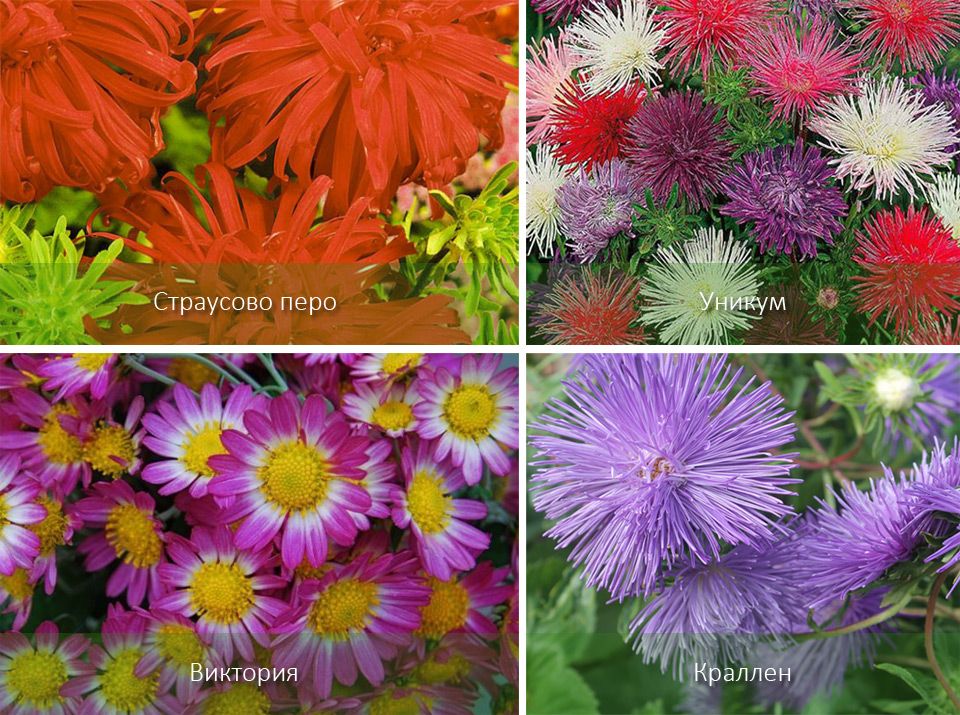
| View | Variety | Inflorescences |
| Curly | Hohenzollern, California Giant, Ostrich Feather, Market Queen, Early Wonder and Chrysanthemum. | The center is tubular, the edges are curled like curls. Terry. |
| Hemispherical | American Beauty, American Bush, Duchess, Peony, Rose, Triumph, Shenheit. | Wide boat-shaped tongues, curved inward. Hemispherical shape. |
| Radial | Radio, Unicum, Art. | They have narrow tongues, folded lengthwise, terry. |
| Needle-shaped | Radiant, Needle, Riviera, Valkyrie, Krallen. | The tongues are fused together and resemble a claw. |
| Spherical | Dragon, Matador, Valkyrie, Princess, Old Castle, Krallen, Milady. | Very terry, with short, wide tongues. |
| Imbricated | Victoria, Dwarf, Royal. | Short, wide tongues, arranged as if they were laying tiles. |
Tubular group
| View | Variety | Inflorescences |
| Cirrus | Rosette, Rose-Marie, Oktoberfest. | Semi-double, up to 7 cm, long at the edge. |
| Lilliputian | Pinocchio, Montpensier, Border Aster, Summer. | Terry, various colors, up to 4 cm. |
| Tubular | Memory, Chocolate Girl. | Chrysanthemum-like, have small tubes. |
Transitional group
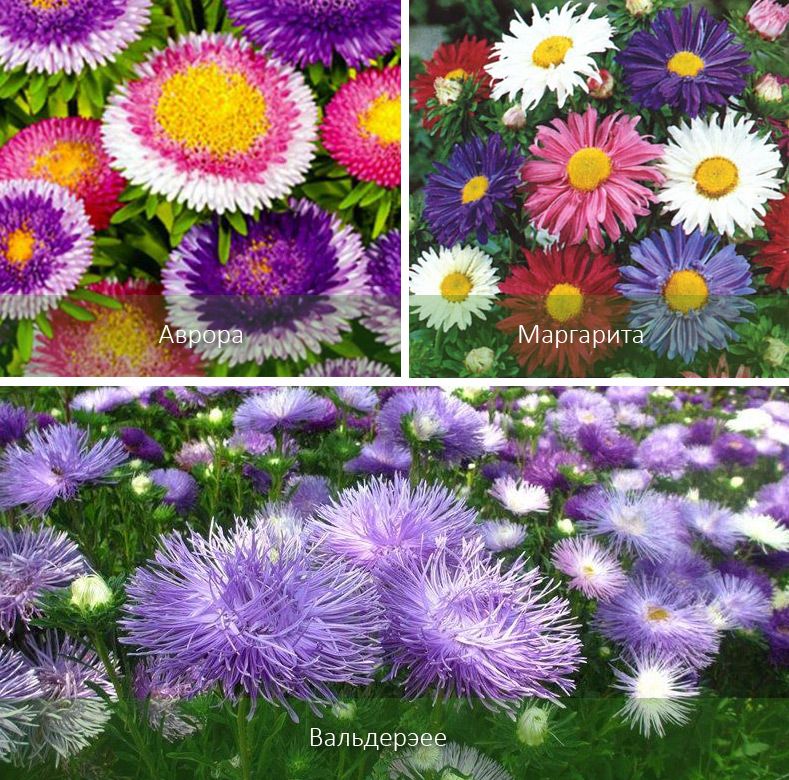
| View | Variety | Inflorescences |
| Coronary | Aurora, Laplata, Princess, Fantasy, Ambria, Pompom. | Double, long, tubular flowers in the center, with many rows of ray flowers along the edges. The middle is almost invisible. |
| Simple | Apollo, Margarita, Waldersee, Sonnenkugel, Edelweiss. | 2 rows of non-double flowers with a yellow center. |
| Semi-double | Mignon, Madeline, Victoria Baum, Rosette, Anmouth, Akemodavidnaya. | Flowers are semi-double with a yellow center. |
How to Grow Annual Asters
Growing asters is a wonderful opportunity for gardeners to learn how to care for cultivated flower varieties. They are undemanding.
They select species that suit their region and soil, and enjoy the flowering.
Two ways to plant annual asters
They choose between seedling and non-seedling methods.
Seedling
Growing asters from seeds using seedlings allows for earlier flowering.
Asters are sown in mid-spring. A month later, they are planted in soil, and the plants bloom in July.
- For planting seeds, prepare containers and soil. Wash the containers and pots with a disinfectant solution.
- Place drainage at the bottom of the box, then fill it with soil with the addition of sand and humus.
- The soil is watered with a hot pink solution of potassium permanganate and fertilizers are added.
- Scatter the seeds over the soil and add 1 cm of soil on top. Water with warm water.
- Containers with plantings are covered with spunbond or polyethylene film to prevent the soil from drying out.
- To reduce the risk of plant loss when planting in the garden, it is better to plant them in separate pots.
- After two true leaves appear, the seedlings are pricked out, transplanting the excess plants to another location.
- The seedlings are not watered too abundantly to prevent root rot.
- After the plants grow taller than 10 cm, they are transplanted, maintaining a distance of 40 cm from each other.
Flower beds and borders are chosen on the sunny side, trying to plant them so that the asters are not hidden by other flowers.
It is not recommended to plant asters where potatoes and tomatoes were grown the previous year.
Seedless
Aster is an unpretentious plant that will happily delight its owners even when planted directly in the garden.
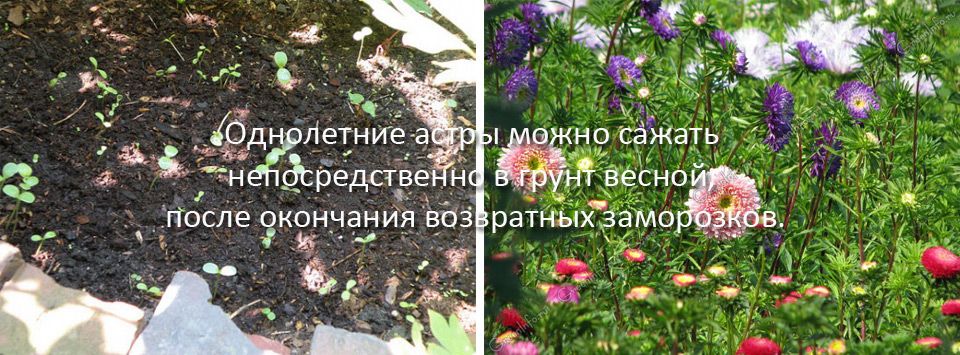
If this method is chosen, there are 2 periods for it.
- The first is before winter, after the first frosts have passed. At this point, it's no longer possible to dig the soil, so the seeds are scattered on the ground, then covered with a layer of humus, followed by mulch. Watering is not necessary.
- The second method is in the spring. The pre-prepared soil is loosened, phosphorus and potassium are added, and then the seeds are planted in the holes, deepening them by half a centimeter. Then, they are watered.
Further care is exactly the same as for seedlings planted in boxes.
Choosing a location
Different aster varieties prefer sunny or lightly shaded locations. Gardeners receive this information when purchasing seeds. It's indicated on the packet, which they carefully examine before planting.
In the fall, the area where the flowers will be planted is dug over, and humus, compost, and mineral fertilizers are added. Then, it is covered with black spunbond, which will protect the soil from unwanted weeds and provide insulation. In the spring, the covering is removed, the soil is loosened, and the seeds are sown.
Care instructions
After transplanting and thinning the plantings, asters, like other flowers, require certain care:
- The plant is cold-resistant and does not require shelter.
- Watering is essential if the summer is dry. Avoid overwatering the soil, as this can lead to root rot.
- Fertilizer is added once every two weeks, starting when the sap begins to flow. Phosphorus and potassium are added continuously, but nitrogen is added only at the very beginning; it delays flowering. If there's too much nitrogen, leaves grow, but buds fail to form.
Perennial aster: planting and care
Perennial asters are often propagated by seed rather than by seed, as it's a labor-intensive process. Cuttings and rhizomes are used.
The cuttings are germinated in a greenhouse, in prepared containers. They thrive best at a 45-degree angle. The containers in the greenhouse are not covered, but they must be moistened periodically.
Planting in open ground
Young plants with a good root system and at least 3 pairs of true leaves are planted in open ground.
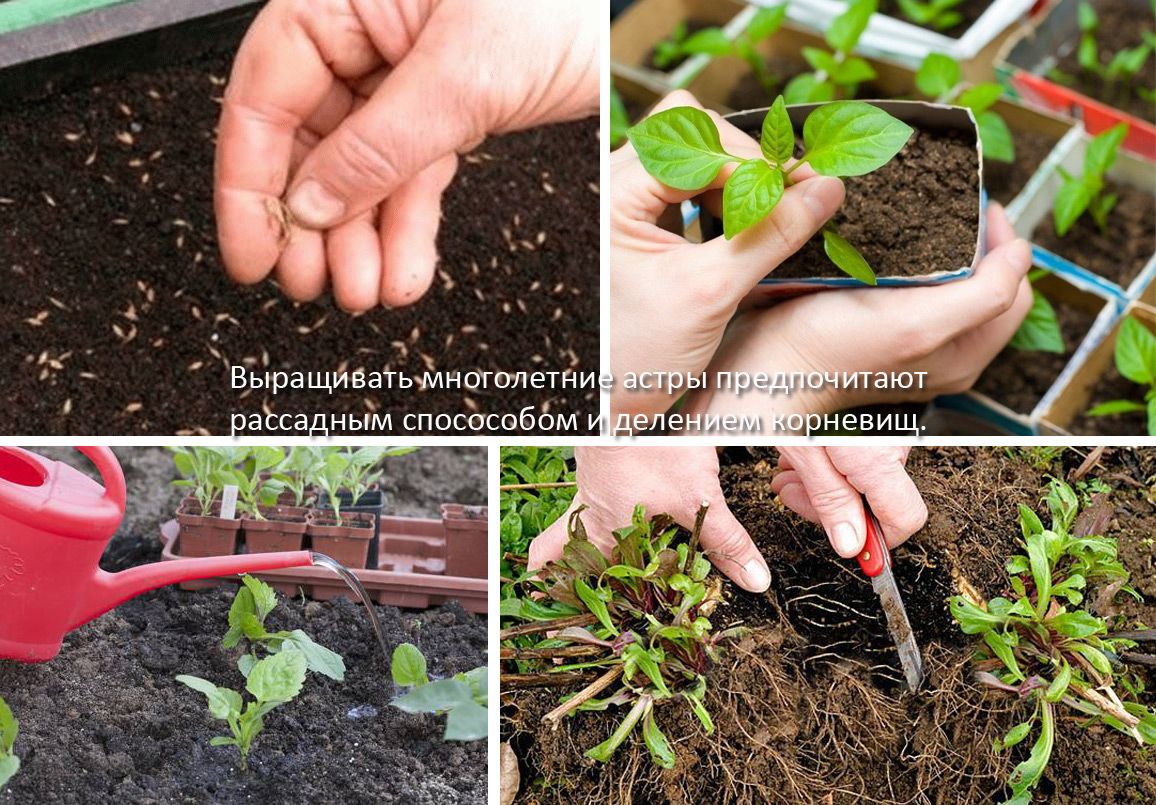
Choose a sunny location. Tall varieties should be planted at a distance of up to 1 m, short varieties at a distance of up to 50 cm.
Care instructions
When caring for perennial asters, use mineral fertilizers containing nitrogen, potassium, and phosphorus. As with annuals, nitrogen is applied only at the very beginning of growth to avoid disrupting flowering.
Many shrub asters can tolerate mild drought, such as alpine asters, as their relatives thrive on rocky mountain soil. However, this should not be overdone; watering should be done regularly and thoroughly.
Tall asters are supported at the beginning of summer.
Perennial asters bloom the following summer after being planted in flower beds.
Post-flowering care for annual and perennial asters
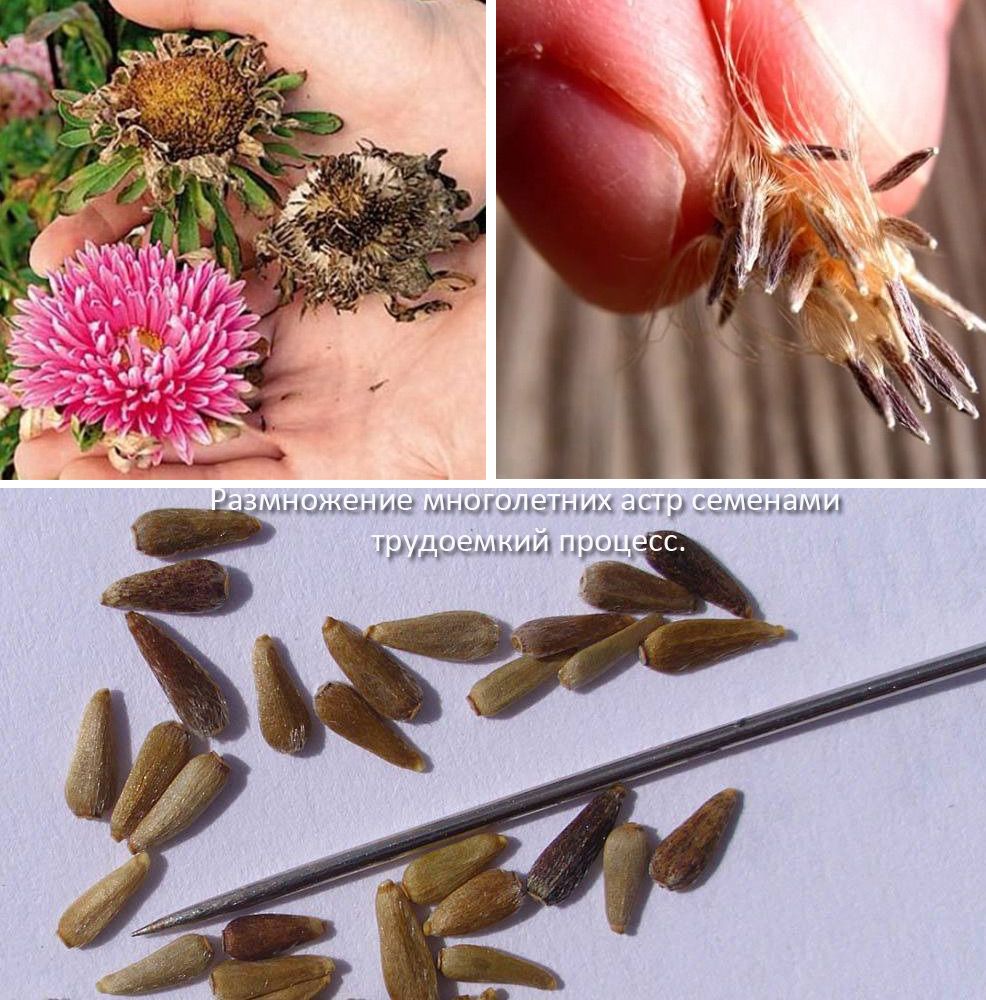
After flowering, the seeds ripen, are collected, and stored, carefully labeled in packets. The remaining green material is cut off and thrown into the compost heap.
The soil where this year's annual plantings were located is dug up, fertilized with humus and peat, and mineral fertilizers are added.
The soil around perennial asters is loosened, removing the last weeds, then less frost-resistant varieties are covered with mulch or spruce branches.
Potential problems with asters
| Problem | Elimination measures |
| Brown leaf spot. | Watering from a shower head with a solution of Bordeaux mixture or other preparations containing copper. |
| Blackleg. | Treatment with a solution of onion scales is carried out every week. |
| Jaundice or ringspot. | Burning diseased plants, using insect control agents and yarrow tincture to control aphids. |
| Gray mold | Removing diseased bushes, fertilizing with Bordeaux mixture. |
| Fusarium. | Proper planting. Watering the soil with disinfectant solutions. |
| Cucumber mosaic. | Complete destruction of asters. |
| Rust on leaves. | Spraying with Bordeaux mixture or a solution of sulfur and lime. |
Asters are often attacked by foliar nematodes. To prevent this, marigolds are planted between them to repel these pests.
Top.tomathouse.com informs: interesting facts about asters
The aster is a very ancient flower. An old legend says it was born from a speck of dust that fell from a star. It is also believed that at night, these flowers whisper faintly to their sister stars.