Astrantia is a member of the large Umbelliferae family.
The genus includes various species common in Europe and Asia. The shrub is easy to care for and can thrive in challenging conditions. It's ideal for beginning gardeners, but there are several important considerations to keep in mind when replanting.
Content
Description of the Astrantia flower
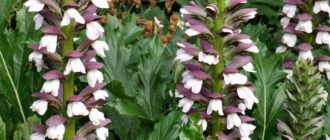
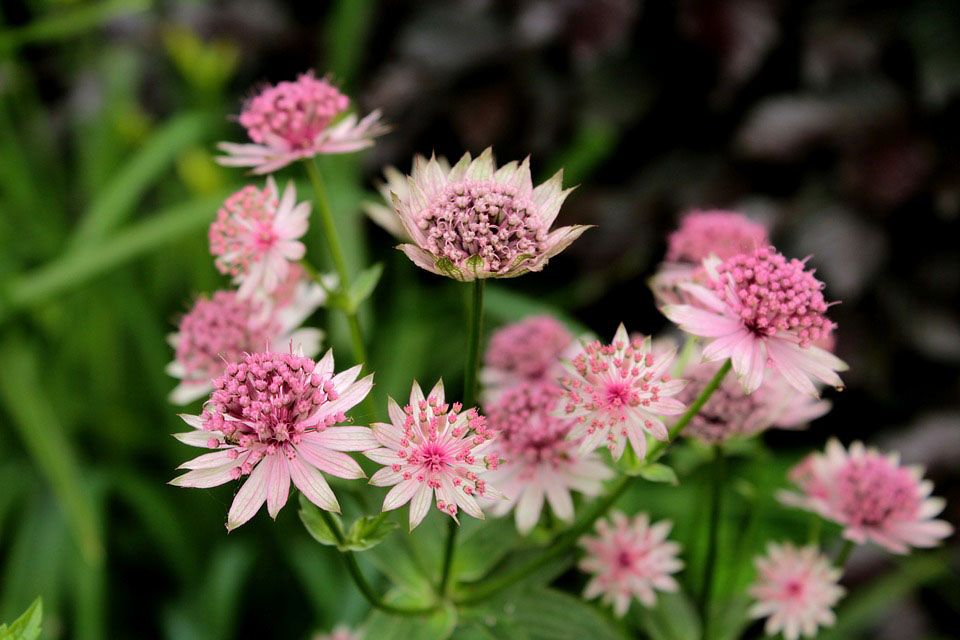
Astrantia has erect, sparsely branched stems no more than 1 meter tall. Palmately lobed leaves form a single basal rosette. They produce small flowers, usually light in color. The bush is popularly known as "star" because of its umbel-shaped inflorescences, which resemble stars. The bracts are large and bright green. Flowering begins in May and continues until autumn. This allows sufficient time for the fruit, a disaccharine, to develop.
Astrantia is a honey plant, so it's highly attractive to bees. The plant thrives in unfavorable conditions, thanks to its high winter hardiness and resistance to adverse factors.
The flower is planted in small groups. It pairs well with neighboring plants, such as geraniums, lungworts, heucheras, and hostas. Astrantia retains its freshness for a long time after cutting, making it a popular choice for bouquets.
In addition to its attractive appearance, the plant is easy to plant and care for.
Types and varieties of astrantia
The plant has become widespread in Europe and Western Asia. Cultivation of some varieties began as early as the 16th century.
Common species and varieties:
| View | Description | Variety | Description |
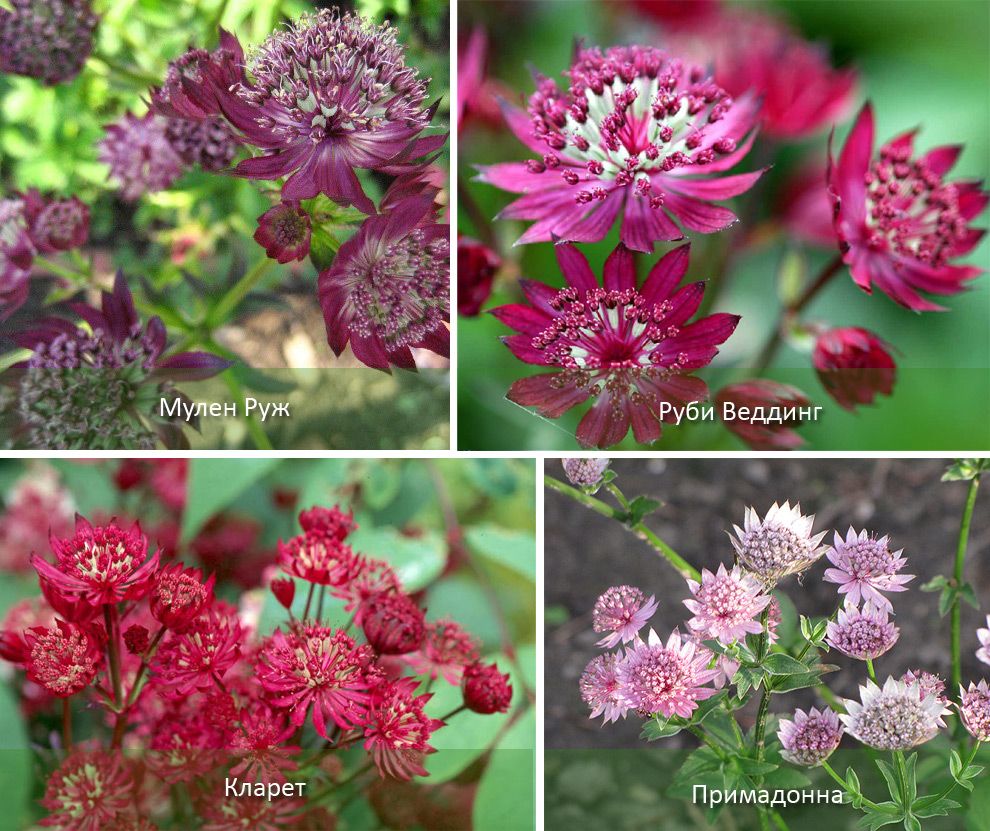
| Astrantia Major (Large Astrantia) | It is found in Ukraine, Moldova, the Baltic states, and Belarus. It prefers forest edges and clearings near coniferous forests. It does not exceed 70 cm in height. | Moulin Rouge | It has red inflorescences, and the outer leaves are much darker. If the bush grows in a sunny area, the flowers become bright and large. |
| Ruby Wedding | It grows up to 65 cm in height, with deep red flowers. It thrives best in a shaded area near trees. | ||
| Claret | The flowers and spathes are burgundy. The plant grows to a height of no more than 55 cm. It blooms in midsummer, and the fruits finish forming towards the end of September. It grows best in the shade, but it thrives in containers. | ||
| Diva | The cultivar's distinctive feature is its dark red flowers with lighter outer coverings. The plant grows approximately 70 cm tall and thrives in both direct sunlight and shaded areas. | ||
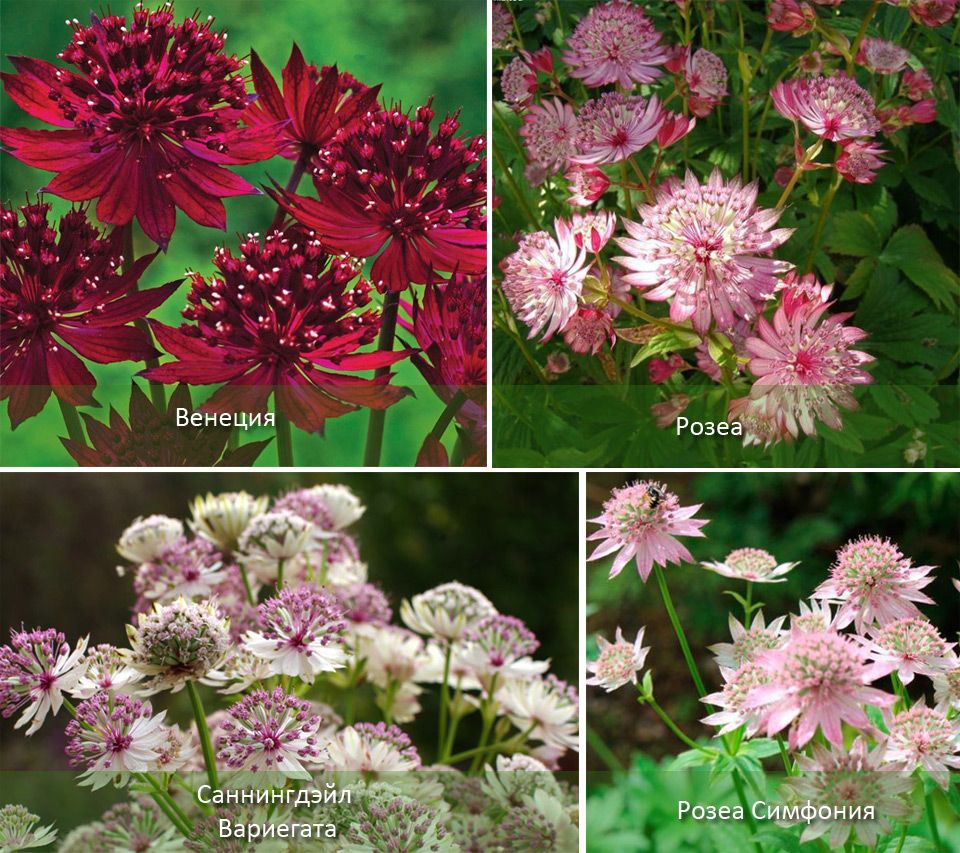
| Venice | The distinctive feature of this variety is the ruby color of the inflorescences. | ||
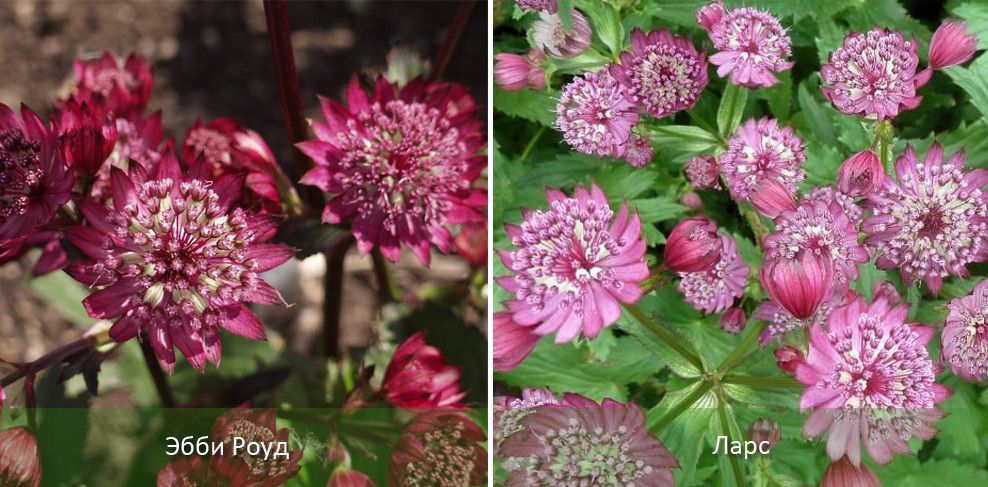
| Lars | It reaches a height of approximately 75 cm and has inflorescences of a rich pink color. | ||
| Sunningdale Variegata | It is distinguished by its pale lavender inflorescences. | ||
| Rosea Symphony | It grows up to 70 cm, has pink inflorescences and pale pink wrappers. | ||
| Rosea | Height no more than 60 cm, characterized by spotted leaf blades and bright pink inflorescences. | ||
| Snowstar | White flowers, white wrappers with characteristic green highlights. Does not exceed 70 cm. Grows best in shaded areas. | ||
| Abbey Road | Red in color, the inflorescences have a purple tint, the wrappers are several tones darker. | ||
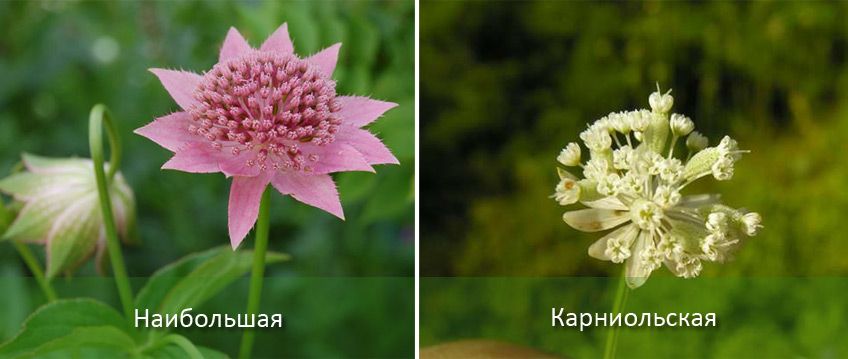
| Astrantia Maxima (The Largest) | It grows in the Caucasus. It reaches a height of about 70 cm and has a strong and extensive root system. The leaves are tripartite. The simple, umbel-shaped inflorescences are 4.5 cm in diameter and contain pink flowers. The bracts are pale red, about 1 cm long, and have a filmy appearance. It blooms in August, but the onset of bloom can last until September. | ||
| Astrantia Carniolica (Carniolan) | A perennial plant with palmately divided leaves. The inflorescences consist of light-colored flowers. The most common variety is Rubra. It reaches 70 cm. Flowering begins in late spring and ends after 3 months. | ||
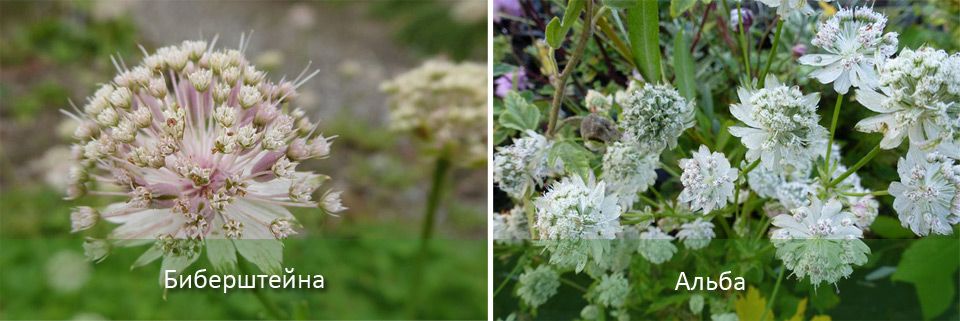
Some gardeners cultivate the Bavarian, Trifida, and Helleborus species, as well as the large Astrantia cultivars Biebersteinii and Alba. They differ in flower color, height, flowering period, and location.
Growing Astrantia from Seeds
Growing astrantia from seed is more difficult than vegetatively, but it's much more cost-effective. It's important to consider several key factors that will determine the plant's subsequent development and growth rate. First, familiarize yourself with the nuances of sowing, and then begin growing the seedlings.
Sowing astrantia seeds in the ground
One method of propagating astrantia is self-seeding. It's important to keep in mind that such seedlings don't have the full characteristics of their parents, unlike those produced by cuttings.
Therefore, gardeners recommend using other methods for propagating the shrub. Freshly harvested seeds should be planted closer to winter so that seedlings emerge in the first months of spring.
Sowing astrantia seeds for seedlings
It is best to plant astrantia using seedlings; in this case, the seeds are sown in spring in special boxes.
To ensure proper development, stratification is essential. Store the seeds from the autumn harvest in the refrigerator's vegetable drawer for 2-3 months. Before storing, read the information on the packaging. If the manufacturer specifies stratification, this procedure can be omitted.
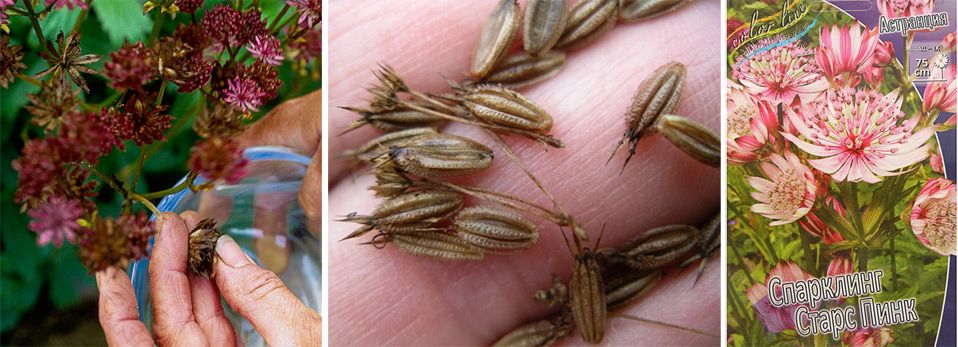
The seeds are sown in prepared soil; it should be light and not contain any special components.
They are spread over the soil surface, and a thin layer of substrate is laid on top. The boxes are covered with plastic or glass and then placed in a location with moderate humidity and a constant temperature of 22°C. When the first seedlings appear, remove the cover.
Caring for Astrantia seedlings
As the seedlings continue to develop, place the boxes in a bright room. Thin the seedlings after 7-14 days. Water the small plants periodically when the top layer of soil dries out, and loosen the substrate regularly. When ventilating, be sure to protect the plantings from drafts.
Planting astrantia in open ground
The health and quality of future plants depend on the quality of planting in prepared open soil. Therefore, this process must be approached with the utmost care and attention.
The study will cover the specifics of planting astrantia. Even a novice gardener can handle the task, as the shrub is undemanding of environmental conditions and can grow in virtually any soil.
When to plant
It's recommended to plant seedlings in late spring or early summer. Be sure to familiarize yourself with the variety's characteristics first, as some plants thrive in full sun, while others prefer shade. The soil should be loose and fertile, but there are no specific requirements regarding its chemical composition.
How to plant
Place the seedlings 35 cm apart. Dig the hole so that the plant is at the same depth it was when the seedlings were growing. Firm the soil around the plants and water generously. After just three years, you'll notice the first flowers on the astrantia.
Caring for Astrantia in the Garden
With normal rainfall, no special care is required. During dry periods, water the plant once a week to encourage a single bloom. Keeping the soil moist throughout the growing season will encourage the shrub to bloom again. Immediately after watering or rain, loosen the top layer of soil around the plant and remove weeds. To save time, mulch the area with peat or compost.
To prolong flowering and reduce the risk of self-seeding, faded inflorescences should be removed. After the first bloom, cut off all flower stalks; this will further stimulate the formation of stems and also help create a symmetrical and dense bush.
Fertilize in the first months of spring. Enrich poor soil once every three years with a phosphorus-potassium fertilizer in July or August. Apply the fertilizer in liquid form.
Bush propagation of astrantia
The most popular way to propagate astrantia is by dividing the plant. This is done in the spring (before active growth) or in the fall (during dormancy). The growing plant is divided into several sections and planted 40-50 cm apart, adding humus to each hole. The new plants will begin to bloom within three years. This method is used to preserve the plant's varietal characteristics.
Pests and diseases of Astrantia
Astrantia's protective properties are sufficient to reliably resist dangerous diseases and pests. Only improper care can have a negative impact on the shrub. For example, frequent watering can lead to fungal infections, which can be treated with fungicides such as Quadris, Fundazol, Fitosporin, and Bravo.
Astrantia in the landscape
Due to its unique visual qualities, Astrantia is a favorite among designers. It's suitable for creating flowerbeds and decorating shady corners of the garden, such as near trees and other shrubs.
Low-growing varieties are used for rock gardens and pool decoration.
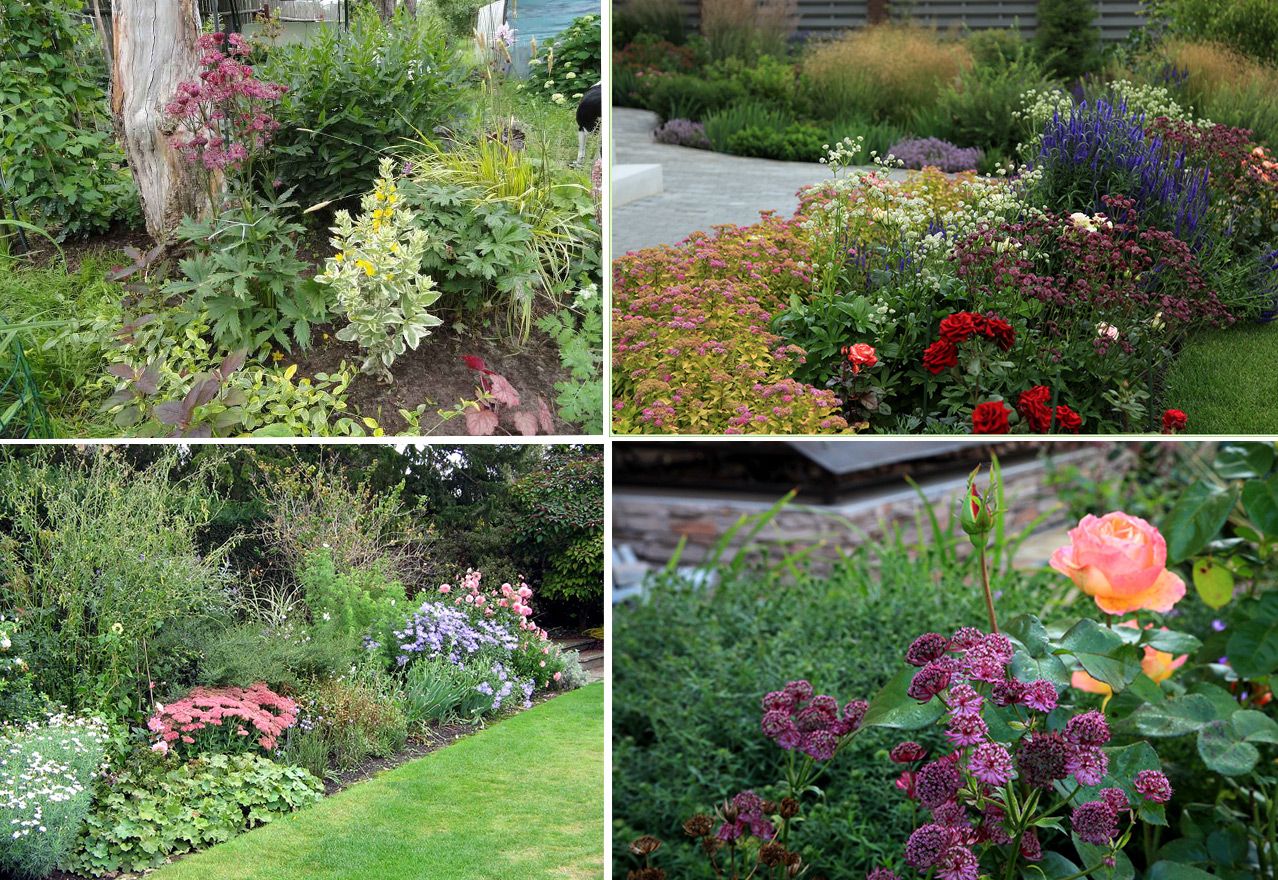
A flowerbed composed of several varieties of starflower has a unique appearance. The plant's modest bushes create a weightless, airy effect: alongside the spreading leaves of the starflower, flowers in shades of red, white, and pink are present.
Astrantia is a perennial green plant with unusual flowers. It thrives in the harshest conditions and is extremely low-maintenance, making it a popular choice for beginning gardeners. Large-flowered roses or lilies can be placed near the bushes. This combination creates an overall effect that will not only look attractive but also smell wonderful.