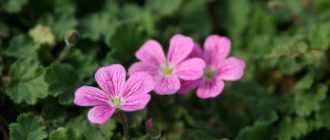
Azalea belongs to the genus Rhododendron, family Ericaceae. From the Greek, it means "rose tree." This plant is native to China, India, and the Caucasus. There are over 1,000 varieties. Some are grown in apartments and gardens.
Content
Description of azalea
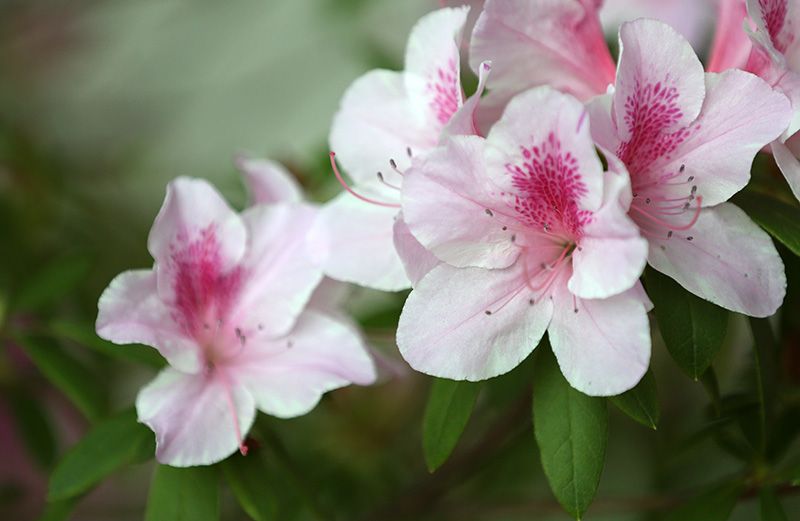
The flowers resemble overly open rosebuds, and are bisexual, solitary, or clustered. They can be simple, double, or fringed. The heavily branched bush grows to a small size. The leaves are underdeveloped and obovate.
Azalea is represented by:
- shrubs;
- pyramidal and ampelous plants;
- deciduous varieties;
- evergreen bushes.
The main types of azaleas for the home
Caring for this plant indoors isn't easy. Only two azalea species are adapted to being grown indoors:
| Name | Description | Flowers | Leaves |
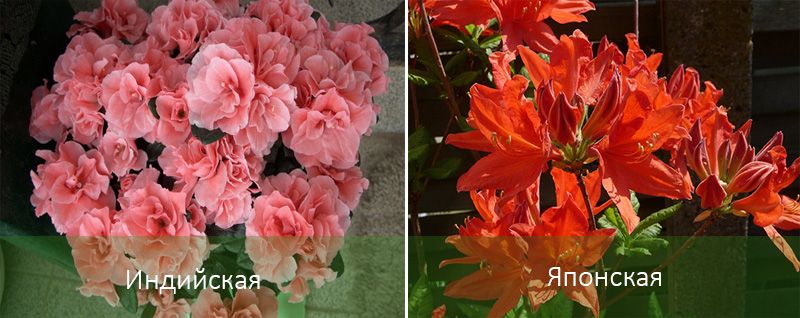
| Indian (Sinsa) | An indoor variety. Up to 50 cm in height. Stems with stiff, reddish-brown hairs. | White, scarlet, variegated. They open their buds at the same time. | Ovate, on shortened petioles. The inner surface has soft hairs. |
| Japanese | Typically grown in garden plots, it reaches 40-60 cm in height. Its distinguishing feature is its winter hardiness, withstanding temperatures down to -20°C. | From salmon to dark red. They bloom at the same time as the leaves, sometimes earlier. | Up to 5 cm. |
Indian azalea varieties
Azaleas used in homes are hybrids of the Indian variety. Common varieties include:
| Name | Description | Flowers |
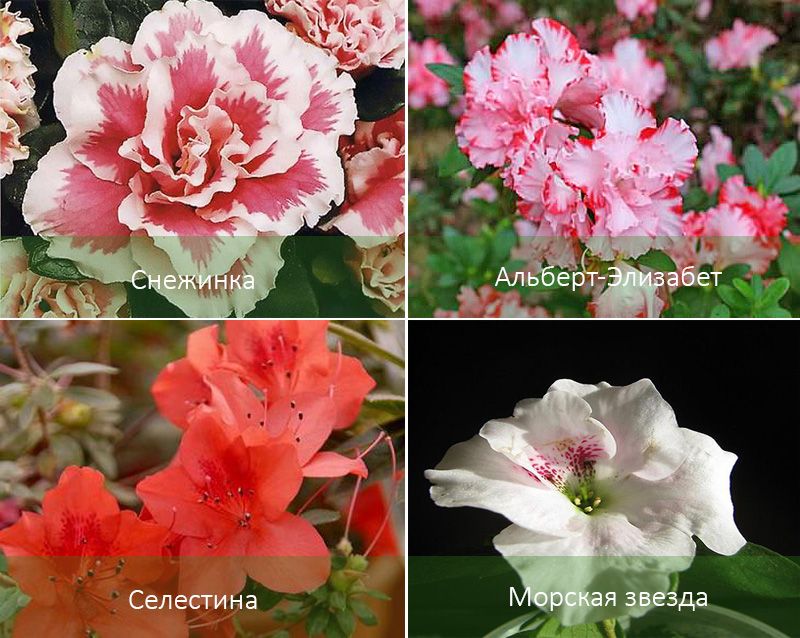
| Snowflake | A heavily branched shrub. Resistant to fungal and bacterial diseases. | Single, lilac-pink with brick dots. |
| Albert-Elizabeth | Blooms buds in late winter. | Large, snow-white or light pink, with a frame and corrugated edges. |
| Celestine | A spreading shrub that blooms from early spring. | Single, bright crimson. |
| Starfish | A compact bush with dark green, shaggy leaves. | Snow-white with crimson streaks at the base. |
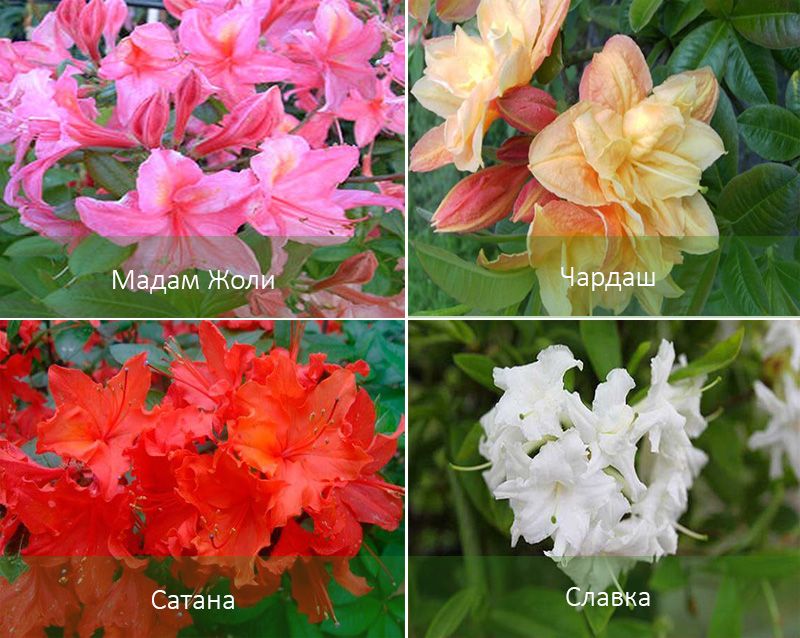
| Madame Jolie | Deciduous hybrid. | Simple, pinkish, orange-yellow at the base. |
| Czardas | Produces buds in April. It requires light. Without sufficient light, it loses its decorative appearance. | Creamy yellow, double, with a pleasant aroma. |
| Satan | Up to 1.5 m. | Fiery red with yellow highlights. |
| Slavka | Forms a crown in the shape of a ball. | White, with two corollas. |
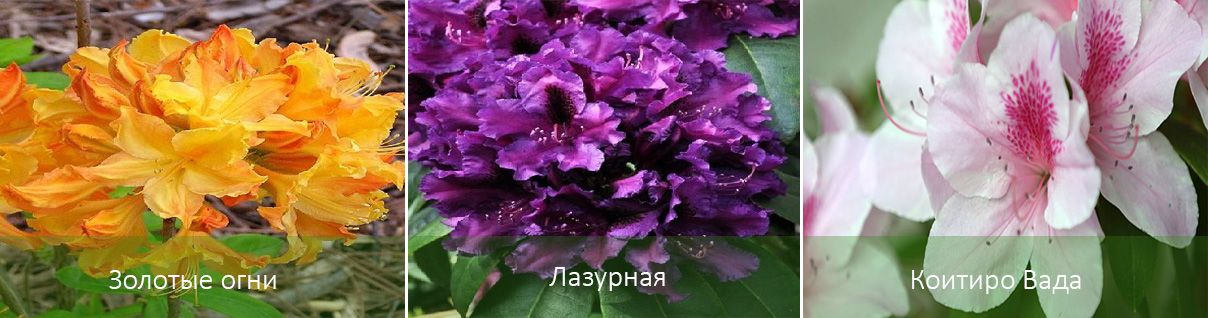
| Golden Lights | Blooms profusely, is frost-resistant, and grows up to 1 m. | Golden yellow. |
| Azure | A low-growing shrub with many branches. | Rich blackberry hue with bright raspberry flecks on the inside. |
| Koichiro Wada | A variegated hybrid. Frost-resistant and easy to care for. | When unopened they are crimson-pink, but become lighter during flowering. |
Types of azaleas for the garden
The following varieties of rosewood are commonly grown in summer cottages and garden plots:
| View | Description | Flowers | Bloom |
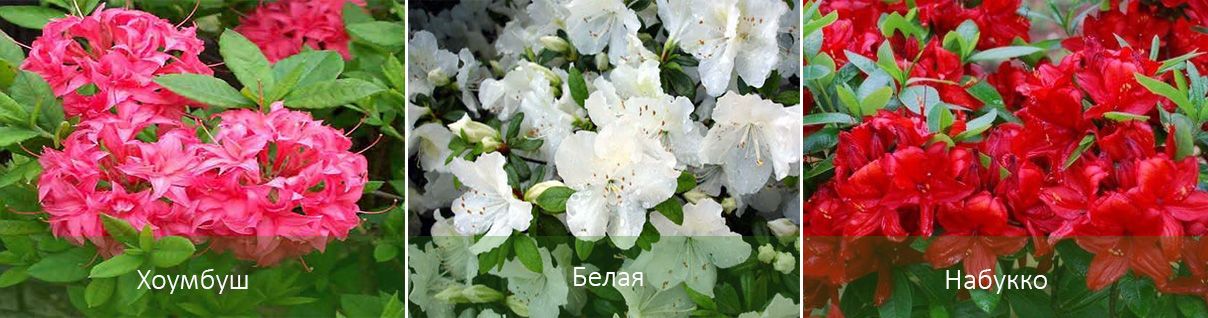
| Homebush | Reaches 1 m. | Double, pinkish-crimson. Frost-resistant. | May-June. |
| White | Visually similar to a jasmine bush. | Terry and simple, whitish or light pink. | Since May. |
| Nabucco | Up to 200 cm, with a spreading crown. | Wide open, bright red. | Summer. |
Acclimatizing azaleas at home after purchase
The azalea will fully adapt to the new conditions once it finishes blooming and produces new shoots. After purchase, avoid placing the plant near heating devices; it doesn't tolerate heat. The plant requires high humidity, no lower than what it had in the store. During the acclimation period, the bush doesn't need fertilizing; the transport soil contains sufficient nutrients.
Spraying with Epin will help the plant acclimate to the new conditions. It activates its protective functions and improves stress resistance and immunity. If the plant begins to wilt and drop leaves, it needs repotting. This procedure is described in the chapter "Forming and Repotting Flowers."
Caring for azaleas at home
To ensure the plant blooms and retains its decorative appeal, it is necessary to provide comfortable conditions specific to each season:
| Factor | Spring/summer | Autumn/Winter |
| Location/lighting |
Eastern or northern window sills. Diffused light, no exposure to direct UV rays. |
Keep away from heating appliances. Additional lighting with phytolamps. |
| Temperature | No more than +20 °C (this figure is difficult to achieve without air conditioning). | In autumn +10…+12 °C. In winter +15…+18 °C. |
| Humidity | High, at least 85%. This can be achieved in the following ways:
|
|
| Watering |
Use settled, chlorine-free water. Regularly mist the soil or place a few ice cubes on top, preventing the soil from drying out. If the soil does dry out, place the pot in a bucket of water for 2-3 hours. This will allow the root system to absorb the required amount of liquid. |
|
| Top dressing | Weekly. | |
| Nitrogen-containing fertilizers. | Phosphorus-potassium mixtures. | |
Formation and transplantation
Pruning is done immediately after the flowers fade. Remove all inflorescences, weak and overgrown shoots. Also, pinch out new growth above the second pair of true leaves.
Young specimens are repotted every season, while mature plants are repotted every 3-4 years. This is done by transshipment:
- Carefully remove the bush along with the root ball.
- Place in a new pot.
- Fill the voids with soil. The substrate should be acidic and allow moisture and air to pass through well.
- Do not over-water the soil.
Propagation of azaleas
The flower is propagated by cuttings:
- Cut a 5-8 cm cutting from a healthy, semi-woody branch. It is preferable to do this in the spring.
- Place in Heteroauxin for a couple of hours.
- Plant at a depth of 1.5-2 cm.
- Cover with plastic to create greenhouse conditions.
- The shelter should be removed daily for ventilation and spraying.
- Keep at a temperature of +25 °C.
- After the seedlings appear (after 3-5 weeks), transplant.
Azaleas can also be propagated by dividing the bush. This should only be done if the plant is healthy and strong. Care must be taken to avoid damaging the rhizome. After planting, provide intensive care.
Propagation by seed is a difficult and time-consuming process. Only experienced gardeners and breeders can handle it.
Rules for caring for azaleas in the garden
When planting azaleas in open ground, you need to follow these recommendations:
- During the growing season, keep the soil moist and don't allow it to dry out. Reduce watering in the fall. Water in a furrow surrounding the bush, not directly at the base.
- When greenery and buds are forming, spray daily; stop during flowering to prevent dark spots from appearing on the petals.
- Periodically renew the mulch layer around the plant to saturate the soil with oxygen and prevent the appearance of weeds.
- During the period of active growth, apply fertilizer weekly (without lime, chlorine, wood ash).
- Once a month, water with water with a few drops of citric acid added.
- After flowering, prune.
Mistakes in azalea care, diseases and pests
If not properly cared for, azaleas can become diseased and be eaten by insects. Signs and treatments:
| Manifestation | Reasons | Elimination measures |
| The leaves are falling. |
|
Create the necessary conditions of detention. |
| Spider mite. | Spray with soap solution or Aktara, Fitoverm. | |
| The greenery turns yellow. | Chlorosis damage. |
|
| The flower is withering, brown plaques and small insects are visible on the plates. | Scale insect. |
|
| The leaves are drying out. |
|
|
| The greenery dries out during the period of bud formation. | Lack of moisture. | Moisten the substrate more often. |
| The plates turn black. |
|
|
| The bush withers, blooms poorly, or does not produce buds at all. | Bad soil. | Transplant into different soil, add fertilizer. |
| The tips of the leaves turn brown. | Watering with hard water. | Use soft, settled liquid. |
| The greenery turns yellow and wilts. The stems and roots rot. | Fusarium. |
|
| Reddish-brown or brown spots appear on the leaves, which eventually spread to the entire above-ground part. | Septoria. |
|
| Ash-gray or brown spots are visible on the inner side of the plate. | Phyllostictosis. |
|
| On the underside of the leaves and at the base of the stems there is a snow-white coating and lumps that resemble cotton wool. | Mealybug. |
|
| White butterflies that fly away at the slightest touch. | Whitefly. |
|