Marigolds are a genus of the Asteraceae family. They are found as annuals and perennials. They are native to the Americas, from Arizona and New Mexico to Argentina. Their Latin name (Tagetes) comes from the Etruscan god who emerged from the earth. They have different names in different countries: in Germany, they call it the Turkish carnation, in China, the thousand-year flower, in England, Mary's gold, and in Ukraine, the marigold is a national symbol.
Content
Description and characteristics of marigolds
Marigolds have straight stems and ribbed shoots. Despite their extensive branching, the bush is compact, reaching a height of 20-120 cm. The root system develops fibrously.
Leaves come in several types, depending on the variety: pinnately divided, dissected, and entire. They are arranged opposite each other or alternately.
The coloring is all shades of green, both light and dark. The elongated shape with a pointed tip resembles feathers. The edges of the leaf blade are slightly serrated. The greenery is lacy.
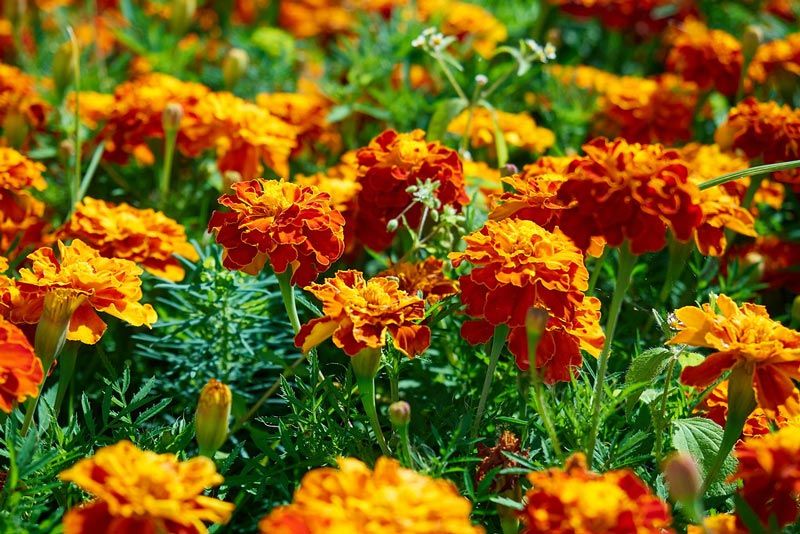
The inflorescences, located at the tops of the shoots, resemble medium-sized baskets. They can be single, semi-double, or double. They consist of a sepal of fused short leaves on a long stalk. Tubular flowers with dark-colored corollas are located in the center. Near the edge, false ligulate flowers with oval, wavy petals appear. They have a distinctive fragrance. The flowers come in a variety of colors: brown, red, orange, yellow, and variegated, as well as white and greenish, which are present in varieties bred through selective breeding. Blooming is abundant from June until frost.
The fruit is a flat, black or black-brown capsule. The seed is long, black and white, and has a germination period of 3-4 years.
Types and varieties of marigolds
There are approximately 60 known species of marigolds, divided into groups based on bush size and flower head structure. Three varieties are the most common. These are annual plants, from which numerous different cultivars and hybrids have been developed.
Rejected, French
Most popular with gardeners, it is often found in flowerbed arrangements. The bushes are medium-sized, reaching 50 cm in height. The leaves are oblong with a pointed tip. The flower heads are either single or double, depending on the variety, and are small, reaching 4 cm in diameter. The color palette includes orange and its shades. It can be used as a houseplant or as a balcony or loggia decoration.
|
Variety |
Size (cm) | Peculiarities |
Color |
| Vilmorin | 26 | The inflorescences are graceful. | Bright yellow. |
| Gold Kopchen | 25 | The greenery is dense, the flowers are small. | Golden. |
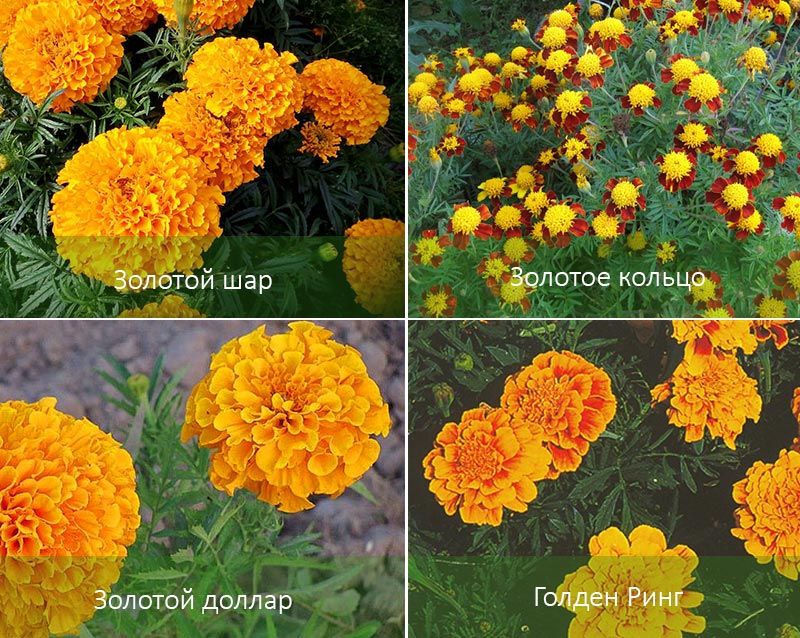
| Gold ball | 60 | A spreading bush. Semi-double flower heads. Suitable for cutting. | Rich yellow. |
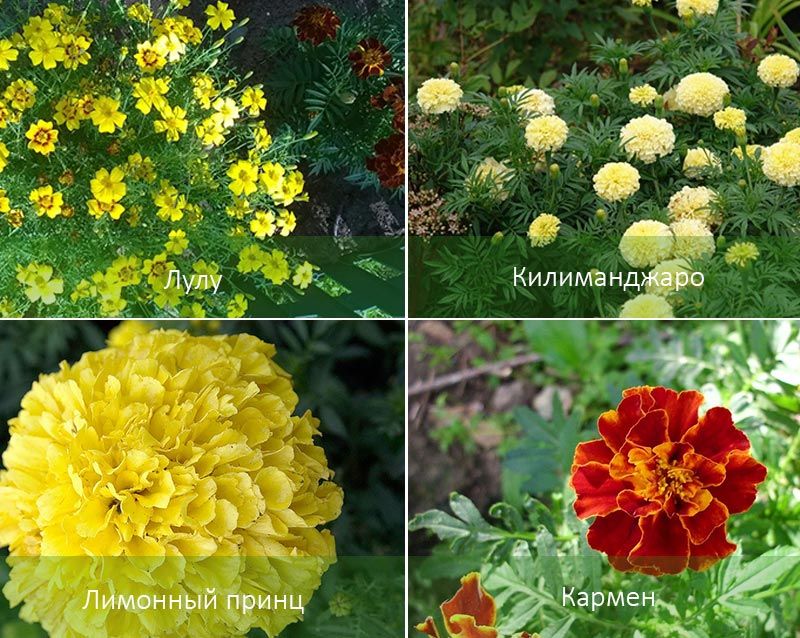
| Carmen | 30 | Large baskets 6 cm in diameter. | Yellow center, color stretching from red to brown towards the edge. |
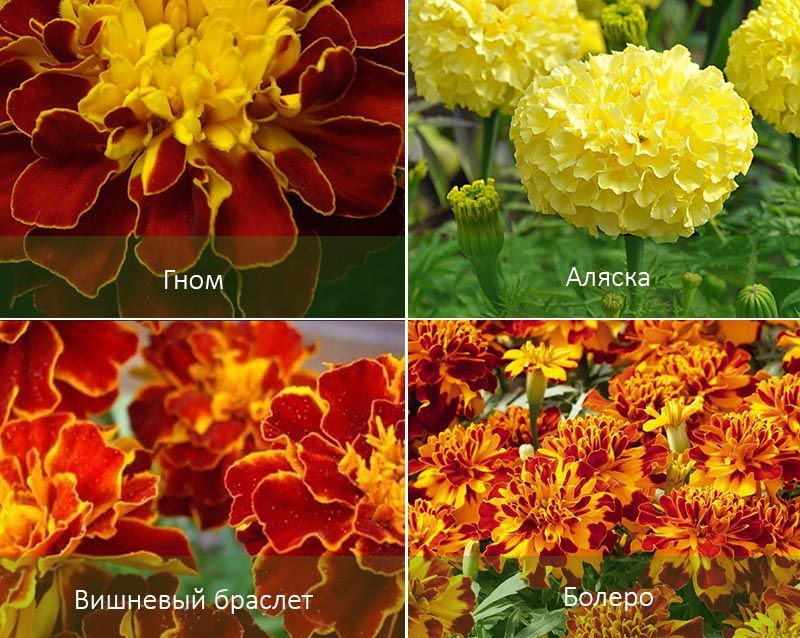
| Cherry bracelet | 25 | Dense bushes, good for balconies and flower beds. | Red with a hint of ripe cherry. |
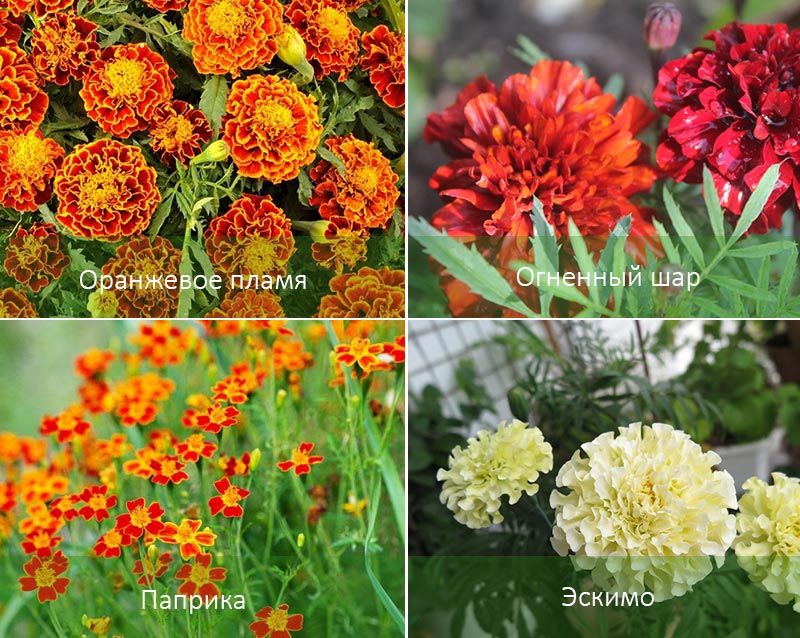
| Fireball | 70 | Tall marigolds, original coloring. | Reddish-brown, turning to yellow. |
| Golden Ball | 30 | The flowers are small. The plant can withstand light frosts. | Orange-gold. |
| Orange Flame | 25-30 | They grow close to each other. | Orange with red flecks. |
Narrow-leaved, Mexican
The most low-maintenance variety. It thrives even in poor soil and shaded areas. Compact, branched bushes, 20-50 cm tall, are spherical in shape, with straight stems and small foliage. The inflorescence is simple, with yellow and orange being the most common colors. They bloom profusely, sometimes producing up to a hundred buds.
|
Variety |
Size (cm) | Peculiarities |
Color |
| Golden Ring | 50 | Long flowering period: from June until frost. Small inflorescences, 3 cm in diameter. | Bright yellow. |
| Dwarf | 25 | The bushes grow in a dense carpet. The foliage is thick. | Yellow center and orange-brown petal edges. |
| The Golden Ring | 50 | Long shoots with small inflorescences at the ends. | Sand with brown inclusions. |
| Lulu | 30 | The leaves are thin, forming a neat bush. | Lemon and yolk color. |
| Paprika | 20-25 | An ornamental variety with a spherical shape. It repels pests from garden crops. | Bright red with amber cores. |
Erect, African
The largest variety, 30-110 cm tall, with large inflorescences: 13-15 cm in diameter. The buds open late, in early July. Suitable for cutting.
|
Variety |
Size (cm) | Peculiarities |
Color |
| Lemon Prince | 50-60 | Stems with a pink tint. Large, dark green foliage. | Rich yellow. |
| Bolero | 30 | Wide range of colors. Grows quickly. | Shades of red, brown. Golden. |
| Yellow stone | 100 | Branched bushes with well-developed shoots. Can be used as a houseplant. | Color of yolk. |
| Gold dollar | 110 | Tall but compact. | Orange, bright red. |
| Alaska | 100 | Flower in the shape of a ball. | With a creamy center. |
| Kilimanjaro | 70-80 | The best variety for bouquets. | White. |
| Eskimo | 30-35 | An excellent solution for group plantings. | Vanilla. |
Other species
Here are a few more common species.
Radiant or clear
A perennial plant with straight stems, 40-80 cm tall. The flowers are simple in shape, and the leaves are narrow; they are collected and dried as a substitute for tarragon.
Nelson
A tall bush, 90-120 cm, with dark green leaves. They have a citrusy aroma and are used in cooking as a seasoning for fish and as an additive to baked goods.
Lemmon
Also known as lemon marigold, it's a giant species, reaching 110-120 cm in height and boasting large leaves up to 15 cm long. The flowers' scent is reminiscent of tangerines and attracts numerous butterflies.
Licorice
The plant is found primarily in the wild and in agricultural fields as a weed. It tolerates dry climates well and is undemanding of soil conditions. Height: 8-50 cm.
Small ones
It is a large bush, 50-180 cm tall, with some reaching 200 cm. It gets its name from its small flowers, 1.5-2.5 cm in size. The leaves are long, dark green, and have a strong scent.
Growing marigolds from seeds
Marigolds are easy-to-grow and fast-growing plants. They propagate by seed.
The first method is without seedlings, by sowing in open ground: in warm climate zones this can be done as early as April.
If the spring is cold and there is a threat of frost, it is better to postpone planting until May.
By this time, the soil will have warmed up sufficiently, and the temperature will not drop below 5°C. Plant in holes at least 1.5 cm apart and 3 cm deep. Cover with soil to a depth of at least 1 cm. If the seedlings grow densely after emergence, they should be replanted. Mature plants will bloom in mid-July.
Preparing marigold seeds for planting
Another option, suitable for cool climates, is to grow seedlings. This is best done in early spring, so the young marigolds will bloom earlier. Upright marigolds should be sown first, in mid-February and March, followed by small-leaved and low-growing varieties, in early April.
For the initial planting, you'll need to purchase seeds. Afterwards, you can harvest them from the mature plants, allowing the seed pods to dry. However, it's important to remember that many varieties grown are hybrids, and some newly grown plants may inherit only some of their parents' traits.
For better germination, soaking is recommended. Place the seedlings on a saucer or cloth and moisten them. Cover with plexiglass or film and place in a warm place for 3-4 days.
Read more about growing seedlings in the next section.
Growing marigolds from seedlings
Sow in pots with prepared, loose soil. The soil should be composed of humus, turf, peat, and sand in a ratio of 1:1:1:0.5. The soil should also be prepared by disinfecting it with potassium permanganate; the solution should be a strong, dark pink color. You can also pour boiling water over the soil and let the soil cool. The bottom of the container should be covered with a layer of expanded clay at least 3 cm thick. At this stage, adding any organic fertilizer is beneficial; manure is contraindicated.
Prepare furrows 1.5-2 cm apart and distribute the seeds in them. Cover with a thin layer of soil and water gently. The temperature for germination should be between 22 and 25°C. Check occasionally to ensure the soil doesn't dry out, but don't overwater. After 7 days, when the first sprouts appear, move the seeds to a cool place. The thermometer should read no more than 15 to 18°C. After 14 days, add more organic matter to the soil.
Gradually acclimate the seedlings to the environment and ventilate the container by briefly removing the lid or plastic bag. This procedure will also help prevent diseases such as blackleg. Once all the seeds have sprouted, remove the bag.
Once the seedlings have grown a little, they can be taken outside for a few hours. This will make them more resilient to temperature fluctuations.
If the young seedlings feel cramped in their container, they need to be transplanted. To do this, prepare another pot with the same soil in advance. Make indentations in it and carefully, grasping a small ball of soil, transfer the seedlings to the new location. It's best to do this when the soil is moist to avoid damaging the root system.
Marigolds also thrive in boxes and containers. They require little soil to grow. If you plant the bushes in the fall, you'll see them blooming in the spring.
Planting seedlings in open ground
The plant prefers fertilized, neutral soil with a pH of 6.0-7.0. For drainage, add compost to the selected area to help oxygenate the roots. If the soil is poor, young plants should be fertilized at least 2-3 times during their growth period.
Determining when seedlings are ready for transplanting to their permanent location is easy: at least 3-4 true leaves should have grown and strong roots should have formed. The ideal time to transplant them to the open ground is late May or early June.
The spacing of marigolds in a flowerbed depends on the species and variety. Dwarf marigolds can be spaced up to 20 cm apart, medium-sized marigolds 30 cm, and giant marigolds at least 40 cm. When planting, the stems should be buried 1-2 cm into the soil.
Caring for Marigolds in the Garden
Caring for these plants is easy. They thrive in sunny, full-drained or partially shaded beds. This is noticeably reflected in the size of the flower. The optimal temperature for proper development is +20…+23°C. At temperatures below +10°C, plant growth may slow or stop altogether, and the foliage will fade. Protect the bushes from cold winds; they dislike drafts.
Abundant and regular watering is necessary during the active growth phase of young seedlings. Afterward, reduce soil moisture to prevent root rot and fungal diseases. Excessive moisture can even cause the plants to stop blooming. It's best to water at the roots of the plants, not from above, to prevent pests.
Due to their origins, marigolds easily adapt to drought. However, with very little watering, flowering slows and the buds become smaller.
Plants respond well to fertilizer; any complete fertilizer purchased from a specialty store will do. It should be applied in three stages:
- Young seedlings have reached a height of 10-12 cm.
- Formation of the first buds.
- Beginning of flowering.
However, fertilizer should be applied no more than once every 30 days; due to the abundance of minerals in the soil, the plant will build up green mass and will not bloom for a long time.
The soil around the flowers should be loosened, weeded, and removed. To create neat bushes, you can perform some corrective pruning in the summer. To prolong flower bud formation, remove faded flower stalks.
When frost sets in, the plant in the flowerbed will wilt and dry out. After that, it can be removed.
Marigolds, due to their low maintenance and decorative appearance, are used in landscape design. The optimal arrangement for planting marigolds is to distribute them in flowerbeds by height, with the shortest ones in the foreground and the larger ones in the center. You can also choose a variety by color, for example, creating a composition of yellow or orange ones.
Another option is to combine several shades in a single box or pot. Both solid-color and variegated marigolds look great.
They feel great together with large bushes, herbaceous plants and with all flowering annuals.
Diseases and pests
It takes two months from planting marigolds until the first flowers appear. If there are no buds after this period, it's possible the plant wasn't cared for properly, was attacked by pests, or is simply sick. The following table will help you identify the cause and find a solution:
|
Problem |
Cause |
Elimination |
| Blackleg | Damage to young plants and seedlings. | Water seedlings and bushes with a pale pink solution of potassium permanganate. Use fungicides and sprinkle ash on the soil. In severe cases, replant. |
| Gray mold | High humidity, dampness, overly dense planting. Use manure as an organic fertilizer. | It's best to pull out and dispose of diseased bushes. Prevention: weeding, loose, well-drained soil. |
| Viral infection | Bacteria in soil. | Removing damaged plants. |
| Fungal infection | Over-watered soil lump. | |
| Spider mite | Dry air. | Regular watering, spraying the leaves with tobacco tincture: 200 g per 3 liters, leave for 2 days, then dilute with water to a volume of 10 liters and add 50 g of soap. |
| Whitefly | Hot weather, growing in closed greenhouses with low humidity. | Spraying with preparations: Aktara, Fitoverm, Iskra. |
| Snails, slugs | Damp weather, excess humidity. | Collecting pests manually, spraying the soil around the plants with mustard infusion. |
| Thrips | Lack of care and prevention. | Treatment with special agents: Malathion, Spinosad or Thiamethoxam. |
| Caterpillars | Use of chemicals: Commander, Fufan. Sprinkling ash on leaves. | |
| Aphid |
Marigolds are not only suitable for planting in flowerbeds or containers; they also look great in the front row of a vegetable garden. Their distinctive scent repel pests from vegetables, helping preserve the harvest. They also protect against fungal diseases such as fusarium.
They can be used to make infusions to repel aphids. To do this, chop up any plant parts, fill a 5-liter bucket halfway with hot water, and then add the mixture. Let it steep in a dark place for two days. Then, add 30-40 grams of liquid or bar soap and spray it on fruit trees, cucumbers, or cabbage.
Top.tomathouse.com recommends: the medicinal properties of marigolds
Marigolds are used not only as a garden plant but also as a dietary supplement. In Mexico, the flower's native land, they have long been used not only as a seasoning for meat delicacies but also as a substance that can aid the gastrointestinal tract in digesting heavy protein foods. Water infusions also support pancreatic function, preventing the development of diseases such as pancreatitis and diabetes.
The plant is rich in essential oils, which contain beneficial micro- and macroelements and vitamins. You can purchase marigold extract or make your own at home. Grind the flowers and add oil, preferably olive oil, in a 1:10 ratio. Let it steep for eight hours, then warm it in a water bath for 30 minutes and pour it into opaque glass bottles. Use for burns and skin conditions.
To combat internal parasites, use fresh flowers: 2 after dinner for children and 5 for adults. An infusion is made by pouring 300 ml of boiling water over 1 tablespoon of crushed flowers and steeping for 30 minutes. Continue taking 2 tablespoons three times daily.
To treat joint pain: add 20-30 inflorescences to a liter of boiling water. Drink up to 2-2.5 liters of the resulting liquid per day. Treatment lasts from one and a half to three months.
Prevention of vision loss in computer specialists and drivers: consume fresh flowers or add them to salads.
For metabolic disorders: Boil 5 fresh inflorescences in a liter of water for 3 minutes. Then drink 1 tablespoon before meals twice a day, for two month-long courses, with a week's break between doses.
Lip balms are used for cosmetic purposes to protect the delicate skin of the lips in cold and windy weather. Recipe: 3 tablespoons olive oil, 12 grams almond (apricot) oil, 2 tablespoons ground lip balms, mix and let steep for 14 days.
There are few contraindications to using the supplement: allergic reactions, personal intolerance and pregnancy.
Marigolds are easy-to-care-for garden flowers. Their vibrant colors and wide variety of varieties make this plant not only a beautiful addition to flowerbeds, balconies, and windowsills, but also an indispensable pest control tool in the garden. Drinking infusions and decoctions of the inflorescences, in turn, helps improve health and treat illnesses.