Begonia elatior is a hybrid flower variety formed by crossing a tuberous and a Socotran species. It belongs to the Begoniaceae family and is native to South America.
Characteristics of Begonia Elatior
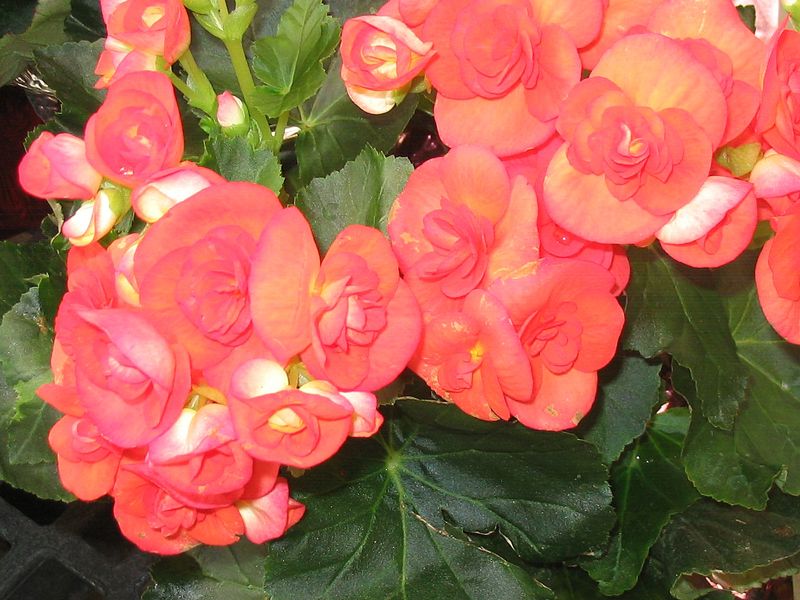
It stands out for its abundant and long-lasting blooms. The plant is capable of producing numerous shoots, each bearing up to 10 buds, in shades ranging from white to deep red.
Begonia elatior does not have a tuber, which makes it much easier to care for.
The plant is a shrub and reaches a height of 30-45 cm. The foliage has a rather unique shape, somewhat reminiscent of hearts with unequal halves. It is bright green in color and has serrated edges. The stems are fleshy, strong, and thick.
Varieties of begonia elatior
The following varieties of Begonia Elatior are grown in apartments:
| Variety | Description | Flowers |
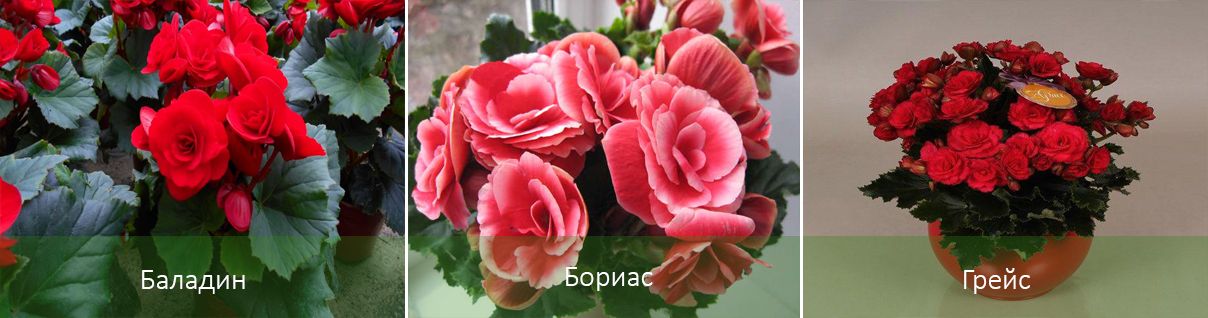
| Baladin | It reaches 30 cm, but the flower stalks vary in length, creating a tiered effect. The plant has earned the nickname "bouquet in a pot" and is often purchased for various holidays. | The color is deep red. Flowering occurs 2-3 times a year. |
| Borias | This variety was discovered in England and resembles classic roses in appearance. The flower stalks are multi-tiered. The foliage is glossy. | The color is light pink or coral. The buds are quite large and double. |
| Grace | The homeland is considered to be Southeast Asia, the height of the bush is up to 35 cm. | Red, bloom twice a year and do not fade for several months. |
Planting and caring for Begonia Elatior
When caring for this representative of the flora at home, you need to pay attention to the season of the year:
| Factor | Spring-summer | Autumn-Winter |
| Location/lighting | The plant loves light but does not tolerate direct sunlight (in double varieties, the petals become smaller and paler). Suitable locations include a west- or east-facing window. | It is one of the plants with short daylight hours, so it does not require additional lighting in cold weather. |
| Temperature | +18…+20 °C. At lower temperatures, the flower stops growing and drops its buds. | |
| Humidity | 60-70%. To maintain the desired parameters, the pot is placed on a tray filled with peat, moss, and moistened expanded clay. | 55-65%. |
| Watering | After the soil has dried out halfway, do not allow water to stagnate in the tray. | Once a month. |
| Top dressing | Once every 3 weeks with mineral fertilizers (when adding organic components, flowering becomes abundant and the color fades). | They are suspending. |
Having understood the peculiarities of plant care, you should also pay attention to its correct planting and replanting.
Planting and replanting begonias
The plant's roots are small and delicate, so it thrives in small containers. The soil should be loose and fertile, retain moisture, and drain well. The plant doesn't need to be repotted after purchase, as it doesn't tolerate this well. However, if repotting is necessary, use a homemade substrate made from the following components in a 2:2:2:1:1 ratio:
- peat soil;
- greenhouse and leaf humus;
- coarse river sand;
- perlite.
Repot young plants once a year. Use a pot 4-5 cm larger in diameter than the previous one. Once the Elatior begonia reaches 4 years of age, it no longer needs to be disturbed.
When caring for young specimens of this variety, regular pinching should be done to maintain formative growth. To maintain vigor and a healthy appearance, prune faded blooms promptly and minimize the use of organic nutrients. After this type of feeding, the stems become almost translucent and brittle.
Propagation of Begonia Elatior
Reproduction is carried out by 3 methods:
- seed;
- cuttings;
- by dividing the mother bush.
Seeds
It's considered the most difficult method of growing a flower. However, if you're choosing seeds, it's recommended to buy them at a gardening store, where they come in two varieties:
- ordinary – not subject to processing;
- granulated (dragee) - they are easier to work with.
Regardless of the material chosen, the planting instructions are identical:
- The seeds are soaked for half an hour in a 1% solution of potassium permanganate.
- The planting material is washed and then transported into a pot with moistened peat.
- The vessels are placed on a tray, covered with glass or polyethylene on top, and water is added here constantly.
- Provides temperatures within the range of +20…+22 °C.
- If the conditions are met, the first shoots will form in 2-3 weeks.
- After the appearance of the 3rd true leaf, picking is performed, and it is repeated 8 weeks after the formation of seedlings.
- Afterwards, the flowers are planted in separate containers.
cuttings
Most gardeners prefer cuttings, as this method is the fastest, most reliable, and allows for the preservation of the variety's characteristics.
This method of propagation uses cuttings 8-12 cm long. These can be either apical (taken from the ends of the plant stem) or mid-length. The key is that they contain 2-3 buds.
Excess foliage is removed; otherwise, it will feed on the shoot. The cuttings are then allowed to dry slightly.
Rooting of cuttings is performed using two methods:
- in a humid environment;
- in the ground.
In the first case, the bottom of the cut cuttings is placed in soft water at a temperature of +20…+21°C. Hard or cold water is strictly prohibited. Next, the container is placed in a bright room with a temperature of +18…+20°C. The container should be transparent, so that any decay at the end of the cutting can be noticed early. In this case, remove the cutting from the water, remove the affected areas, dry it, and return it to the water. After roots 1-2 cm long have formed, the cutting is transferred to soil suitable for growth and the procedure is as for a simple repotting.
The second rooting method uses a substrate consisting of moistened peat, river sand, and soil suitable for begonias (1:1:2). The cutting is first dipped in water, then in a rooting agent (Heteroauxin, Kornevin).
Fill a small container (identical to the size of the cutting) with suitable soil. Insert the cutting into the soil, deepening the cut by 1-2 cm. Then, seal the container tightly with a jar or place it in a translucent container, ensuring that no part of the plant touches the walls of the greenhouse.
After a few days, condensation will form on the container, indicating that the desired microclimate has been established. After this point, the greenhouse is opened daily for a minute of ventilation. After the first leaves appear, the cover is removed. The seedling is transferred to a pot filled with soil for mature plants.
Dividing the bush
This method is used to propagate begonia in the spring, during the next replanting:
- The plant is removed from the previous pot.
- Old branches, inflorescences, and large leaves are removed.
- Place the flower in warm water and use it to carefully free the root system from the soil.
- Using a disinfected sharp knife, separate the young shoots with a bud from the mother bush along with the root.
- For better rooting, treat with a growth enhancer (Epin, Zircon).
Mistakes in caring for Begonia Elatior, diseases and pests
When growing Begonia Elatior, certain difficulties may arise, which are associated with both improper care and attacks by diseases and insects:
| Symptoms. External manifestations on leaves | Cause | Elimination measures |
| Drying at the edges. | Low air humidity. | The flower is moved to a more humid room and the air is periodically humidified. |
| Wilting and yellowing. | Low temperatures. | The plant is placed in a room with a higher temperature. |
| Withering. | Heavily polluted air, lack of moisture. | The pot is transported to another place and watered generously if necessary. |
| Lack of flowering. Shallowness. |
Insufficient amount of nutrients. | The soil is fertilized with organic and mineral fertilizers. |
| The appearance of a thin white web. Tarnishing. |
Spider mite. | Treat with insecticides such as Karbofos, Thiophos, or Actellic. Spray the stems with an onion infusion until the pests are completely killed. How to prepare it:
|
| A powdery coating of green or brown color. | Gray mold. | Spray with Benomyl and move to a room with a higher temperature. |
| White coating. | Powdery mildew. | |
| Rotting and blackening of the root system. | Black root rot. | Stop watering, use Benomyl and move to a less humid room. |
| Decay. | Adding too much moisture. | Reduce the frequency of watering during spraying, preventing moisture from getting onto the flower. |
| Deformation, formation of yellow spots. | Cucumber mosaic. | The plant is thrown away, the pot is disinfected, and the soil is changed. |
|
The appearance of growths on the roots. Pallor. |
Nematodes. |
There are many problems when growing Begonia Elatior, but if you detect any changes in time and correct them, the plant will delight you with lush blooms and a healthy appearance.
Particular attention should be paid to the choice of fertilizers and moisture, as these factors directly affect the condition of the plant and can not only provoke the development of diseases, but also even lead to the death of the flower.
Gardeners recommend inspecting the flower once a month for diseases and pests, thereby beginning timely treatment.