The pine boletus (Boletus ed. f. pinophilus) is a common find among the baskets of "silent hunters" and is considered a distinct form of the porcini mushroom. It is renowned for its excellent flavor and culinary versatility.
Content
- 1 Description of the white pine mushroom
- 2 Types of white pine mushroom
- 3 Where does the white pine mushroom grow, and what is the season for picking it?
- 4 Related species of white pine mushroom
- 5 Poisonous mushrooms similar to the white pine mushroom
- 6 The benefits and harms of the white pine mushroom
- 7 Culinary uses of white pine mushrooms, recipes
- 8 The use of white pine mushroom in folk medicine
- 9 Growing White Pine Mushrooms at Home
- 10 Interesting facts about the white pine mushroom
- 11 Reviews of the white pine boletus from experienced mushroom pickers
Description of the white pine mushroom
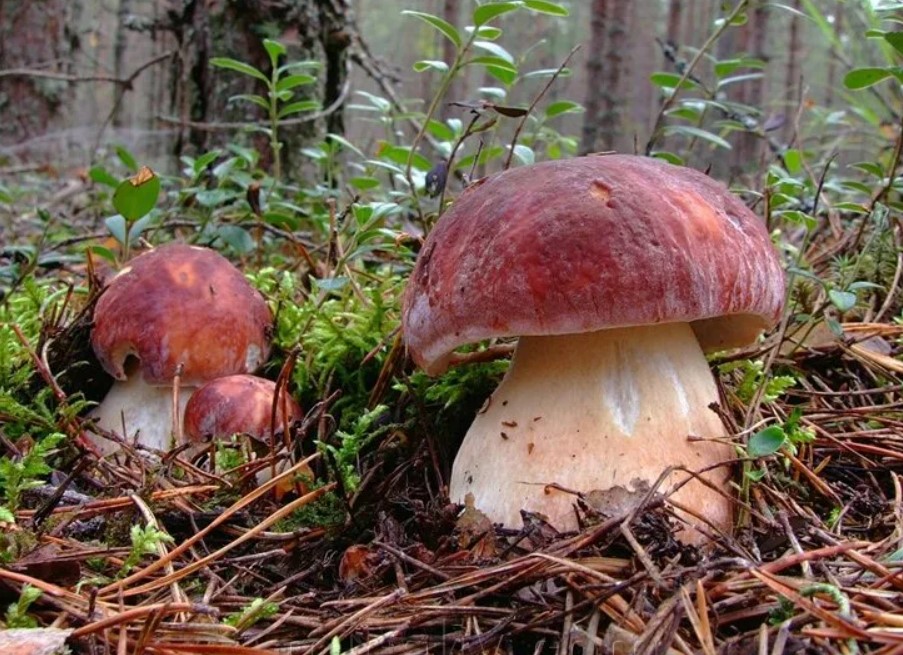
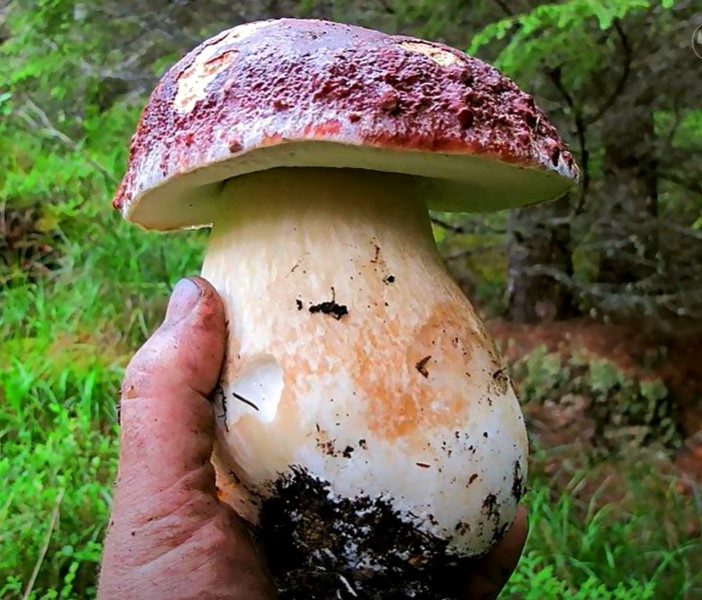
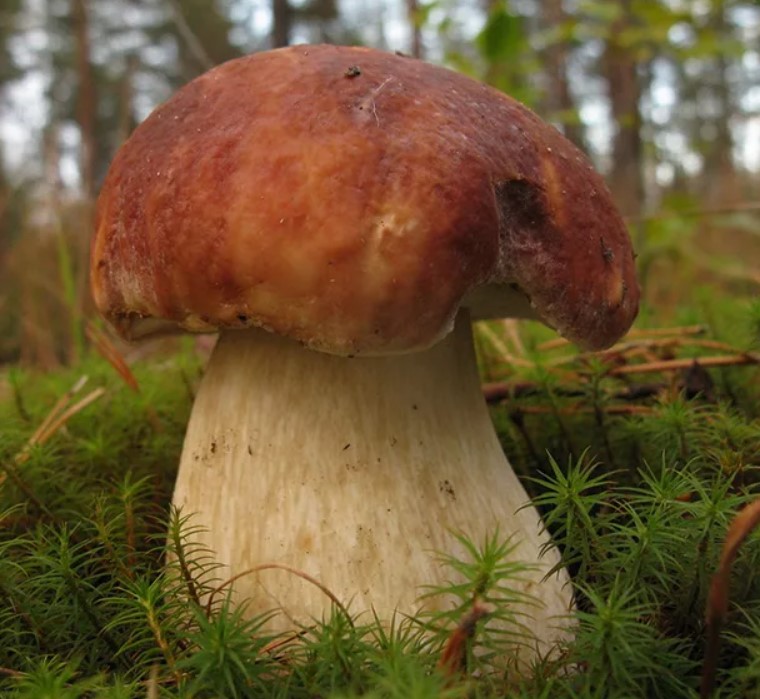
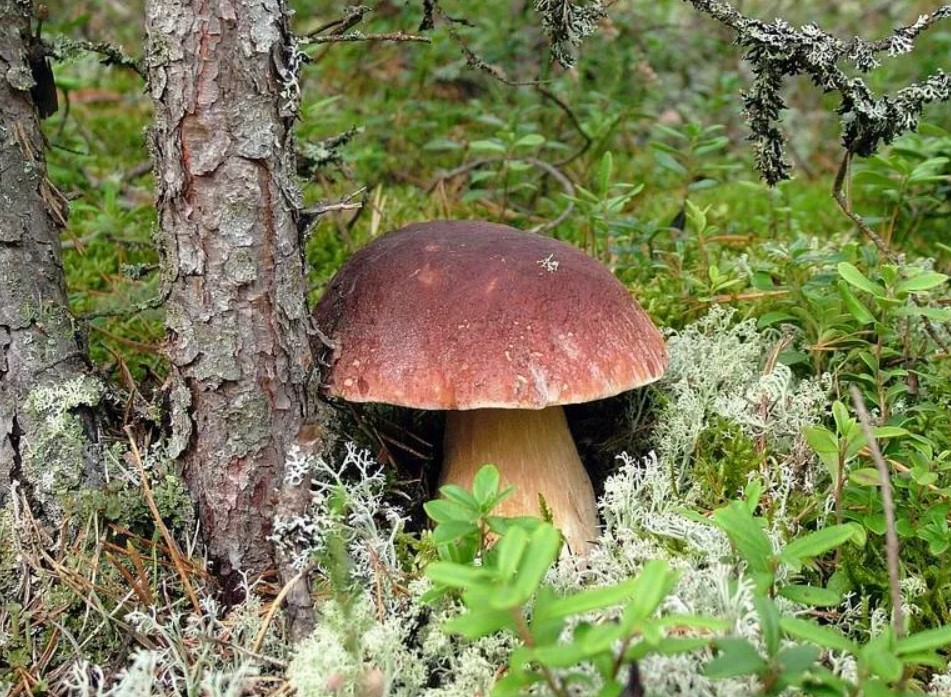
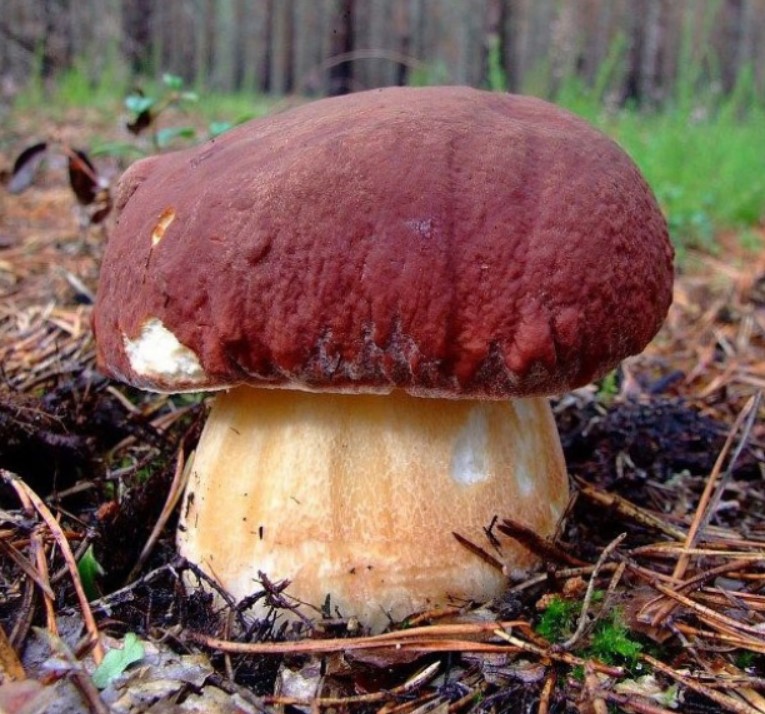
- The cap diameter varies from 6 to 30 cm, its shape is hemispherical, but becomes flatter with age. The surface is uneven, covered with tubercles or wrinkles. The skin is matte in dry weather, but becomes slimy in wet weather.
- The flesh is dense and white, with a pinkish tint beneath the skin. The aroma is very pleasant, and the taste is slightly sweet.
- The stem is thick and short. Its height ranges from 7 to 16 cm, and its diameter can reach 10 cm. The base is thickened, and the surface is white with a brownish mesh, which is especially noticeable near the cap.
- The tubular layer is distinguished by a notch at the stem. In young mushrooms, it is white, but with age it turns olive green.
- There are no remains of the veil on the mushroom body.
Photo gallery of the white pine mushroom
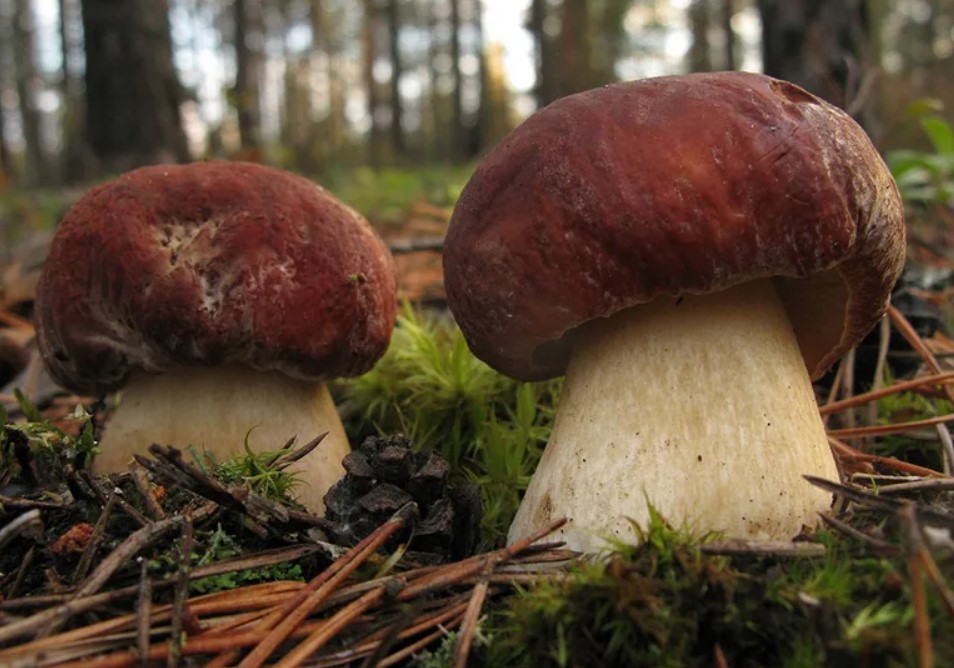
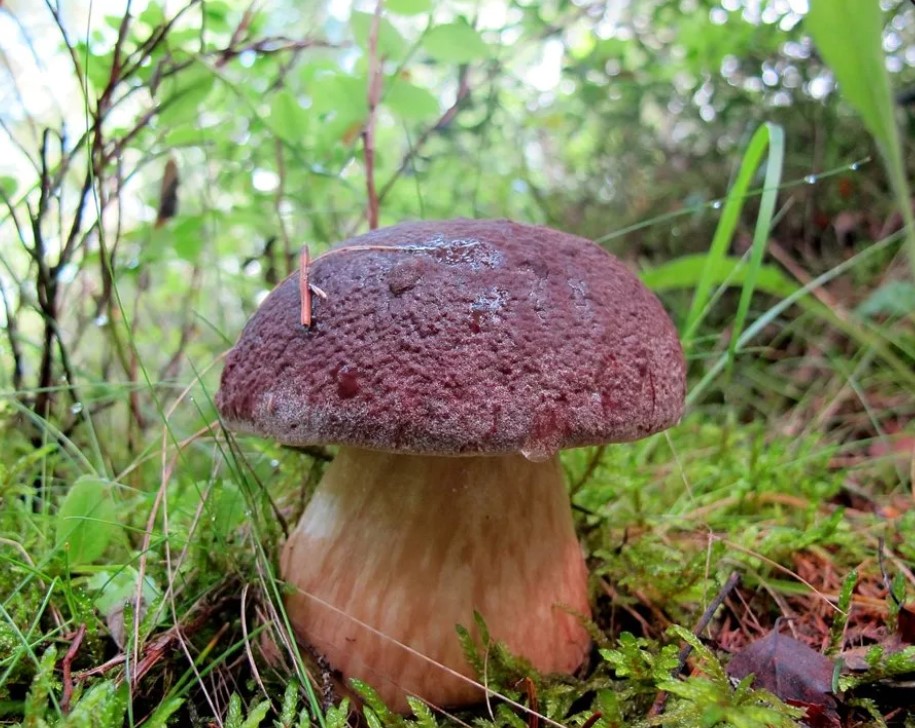
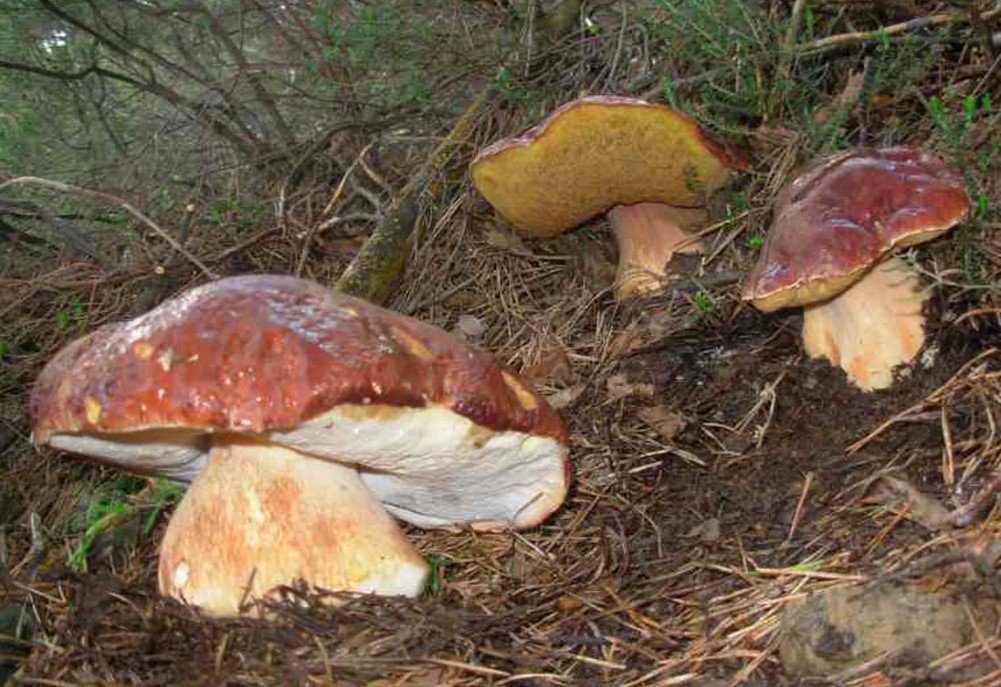
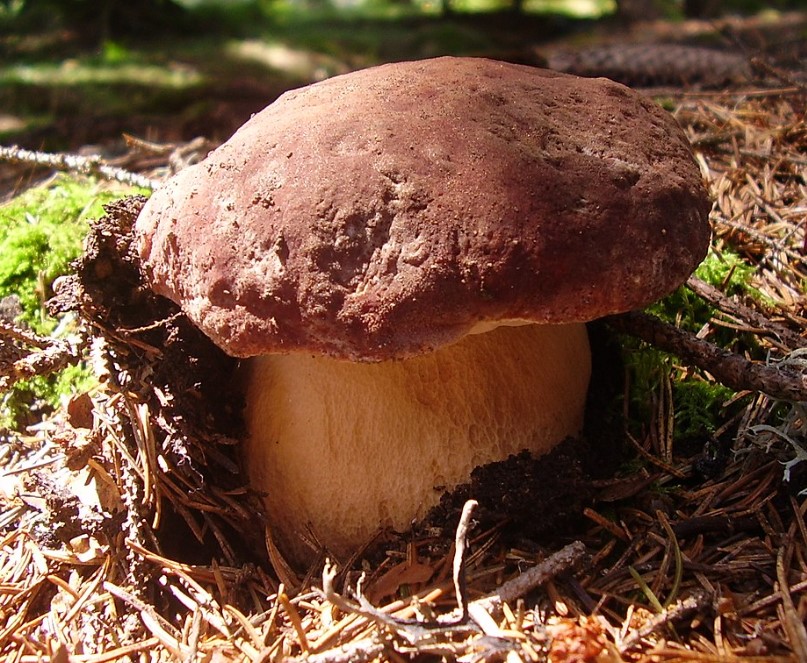
Types of white pine mushroom
Some sources describe a dark red form of the boletus, which is distinguished by a very thick, reddish-brown stem.
Soviet mycologist B.P. Vasilkov identified an early form of the porcini mushroom as a distinct species. It appears in late spring and is characterized by a lighter coloration and a brownish flesh beneath the skin.
If you are interested in different types of porcini mushrooms You can find out more about this on our website Top.tomathouse.com.
Where does the white pine mushroom grow, and what is the season for picking it?
Mushrooms prefer to grow not only under pine trees, but also near spruce, beech, chestnut, and oak trees. They are found in sandy soils and sometimes even along beaches. Fruiting lasts from late June until September–October. In some regions, porcini mushrooms have been found even after the first frosts.
Mushrooms don't grow in very swampy areas, but they readily settle on lichens and boletus. They don't tolerate porcini mushrooms well and don't tolerate temperature fluctuations.
Related species of white pine mushroom
Beginner mushroom pickers may confuse the white pine mushroom with several other species:
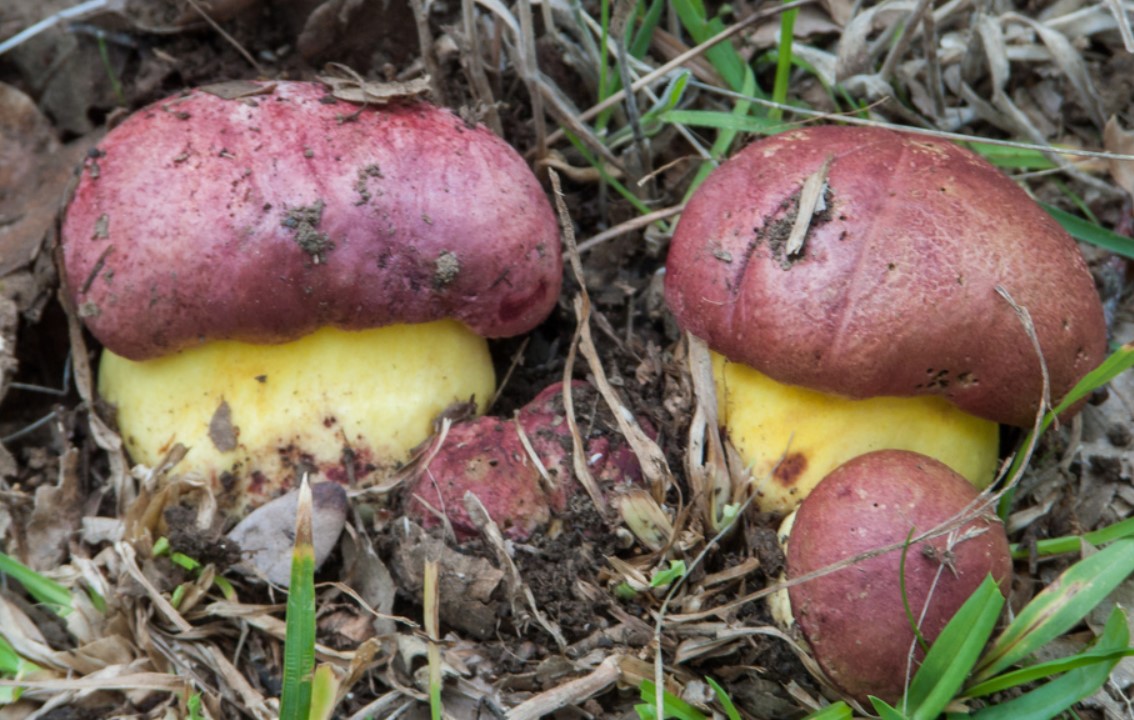
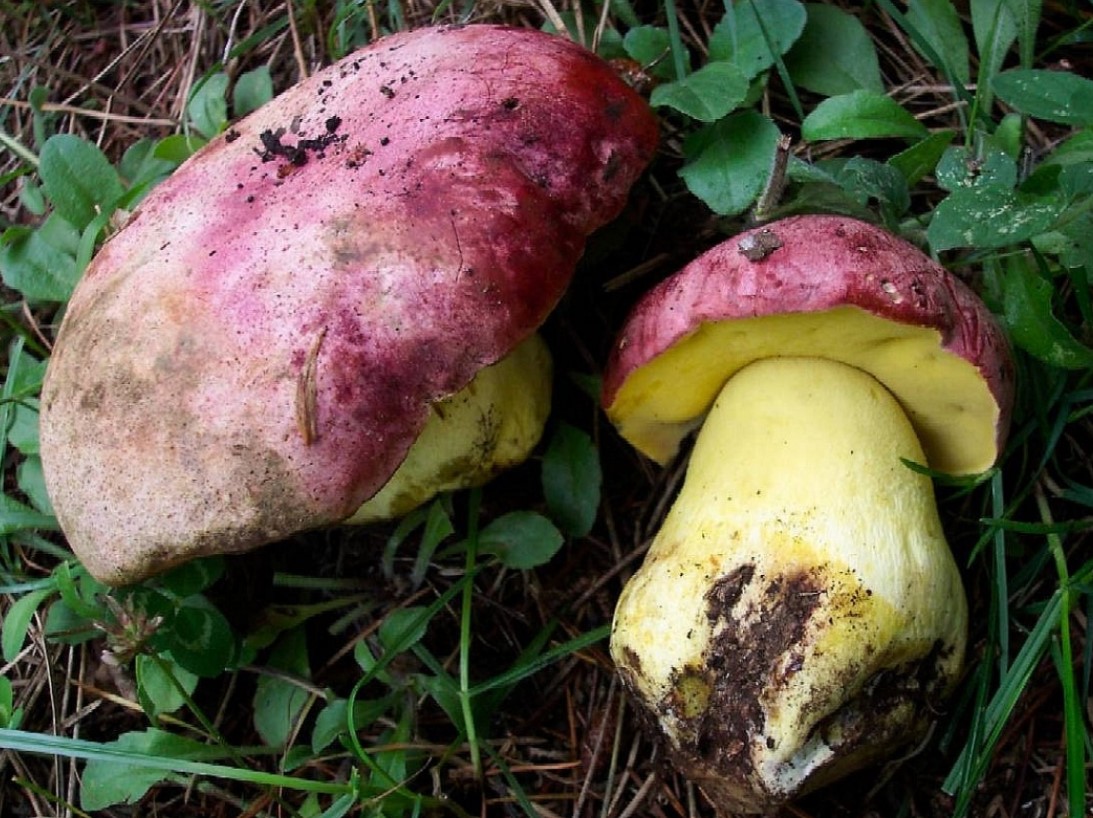
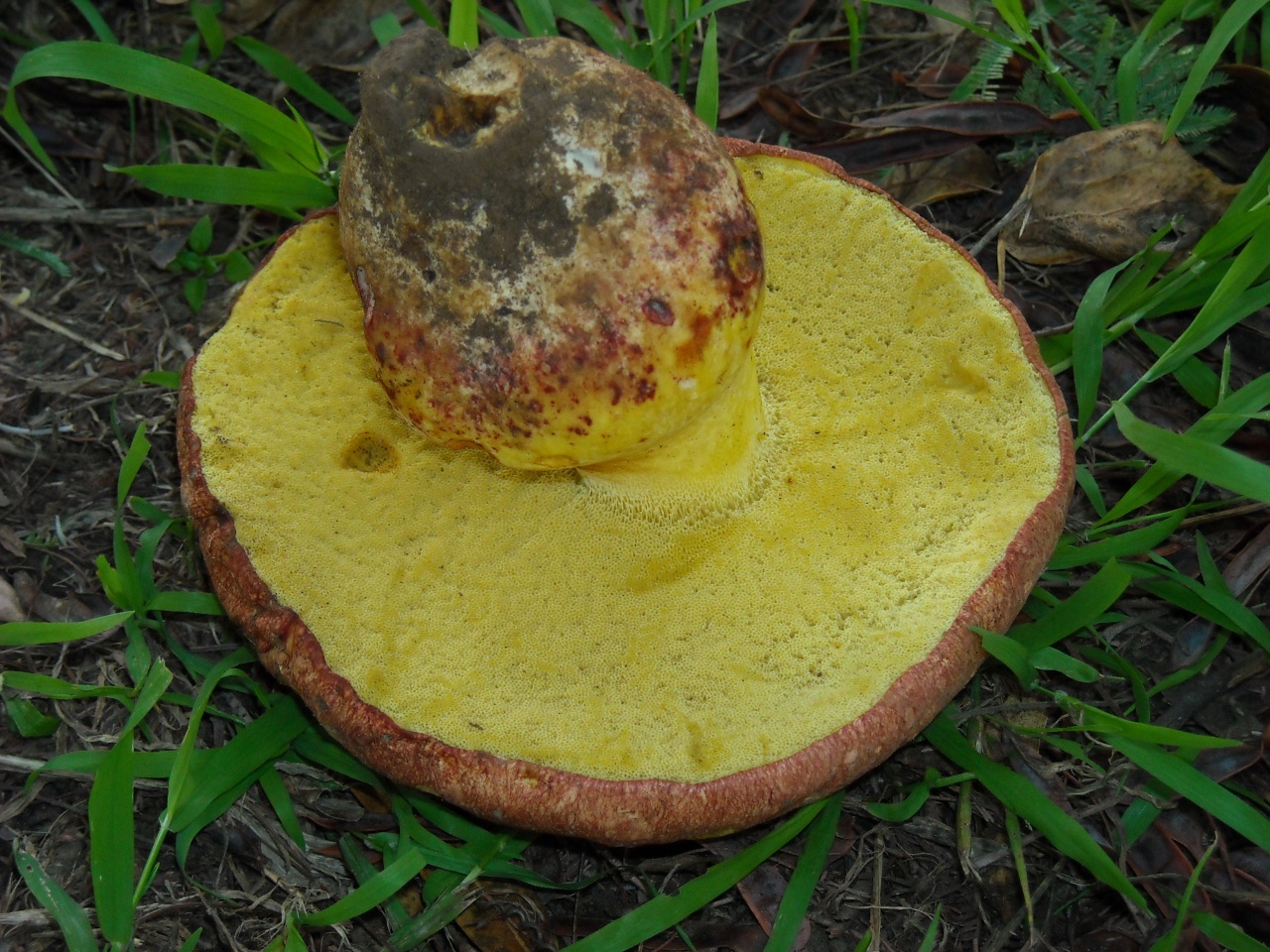
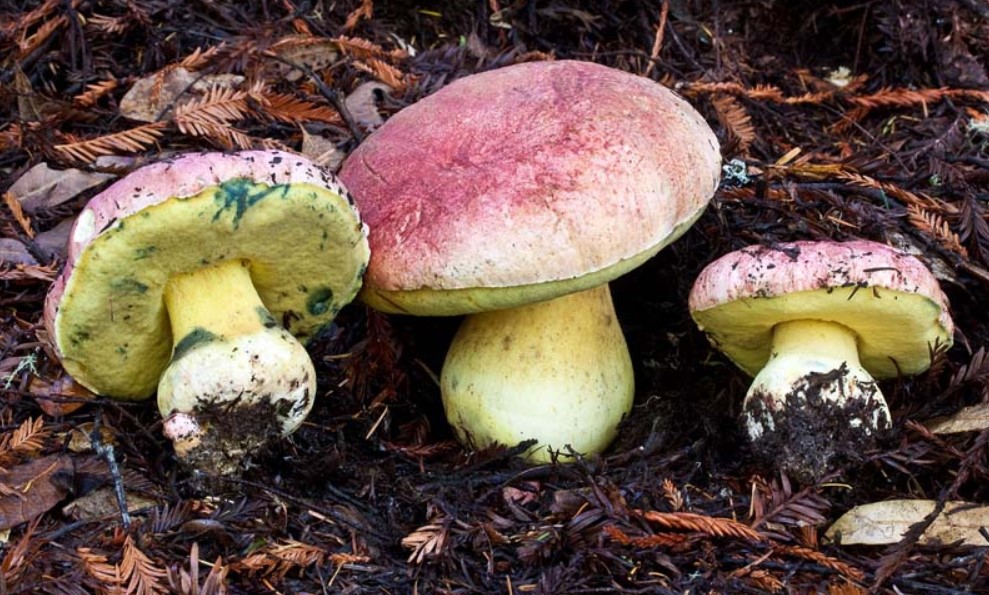
- The boletus (or boletus) is an inedible mushroom with a scaly cap and is not eaten.
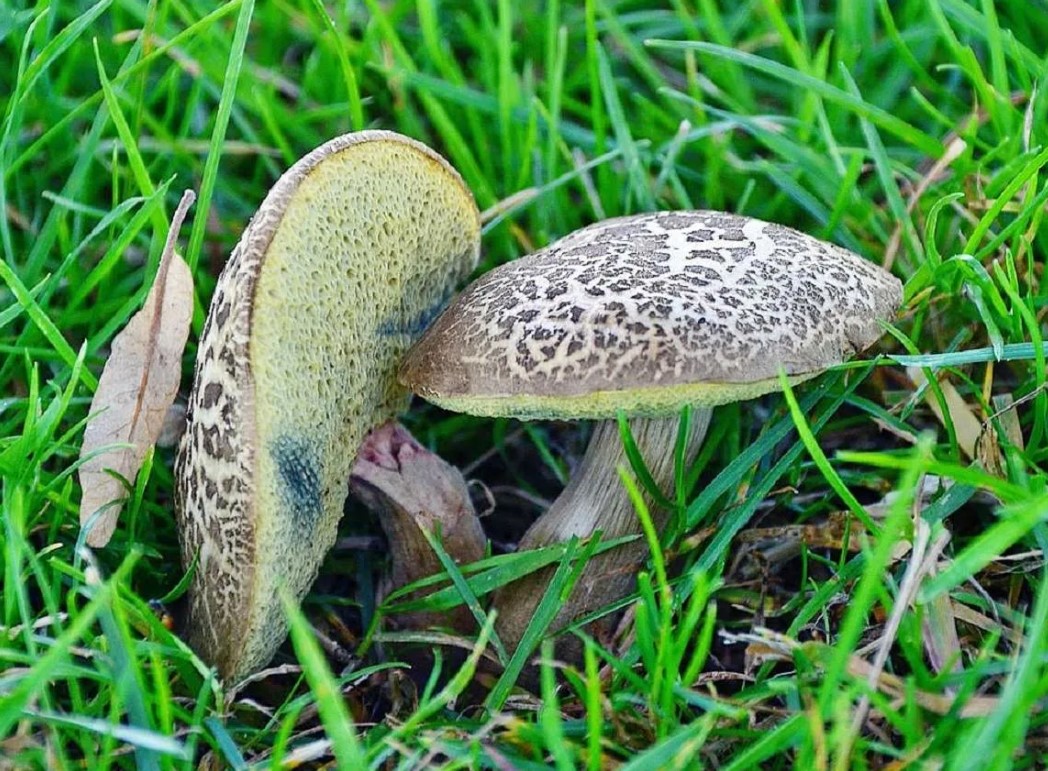
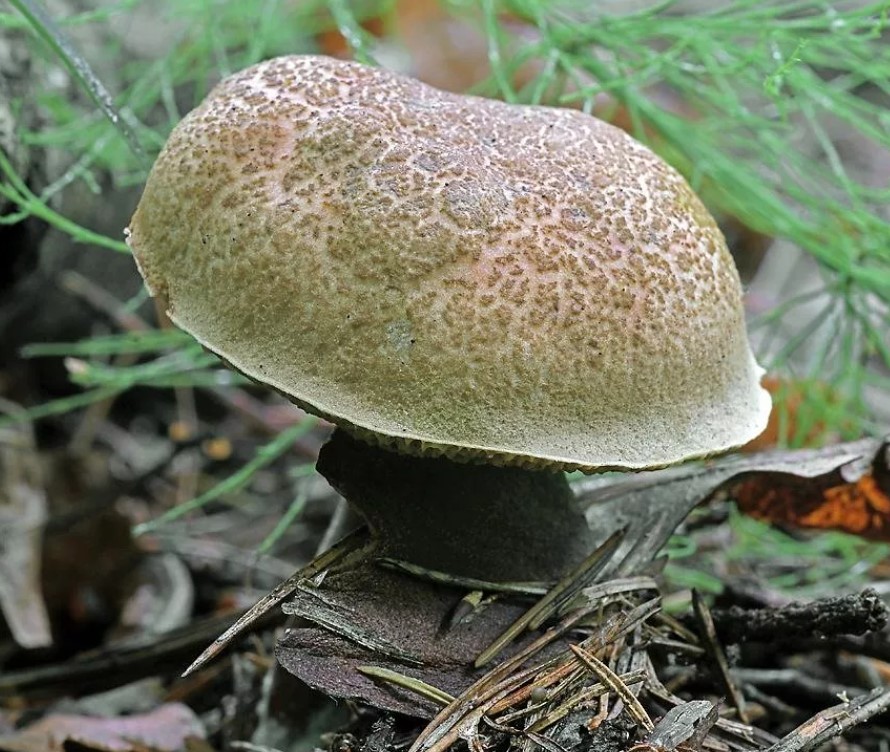
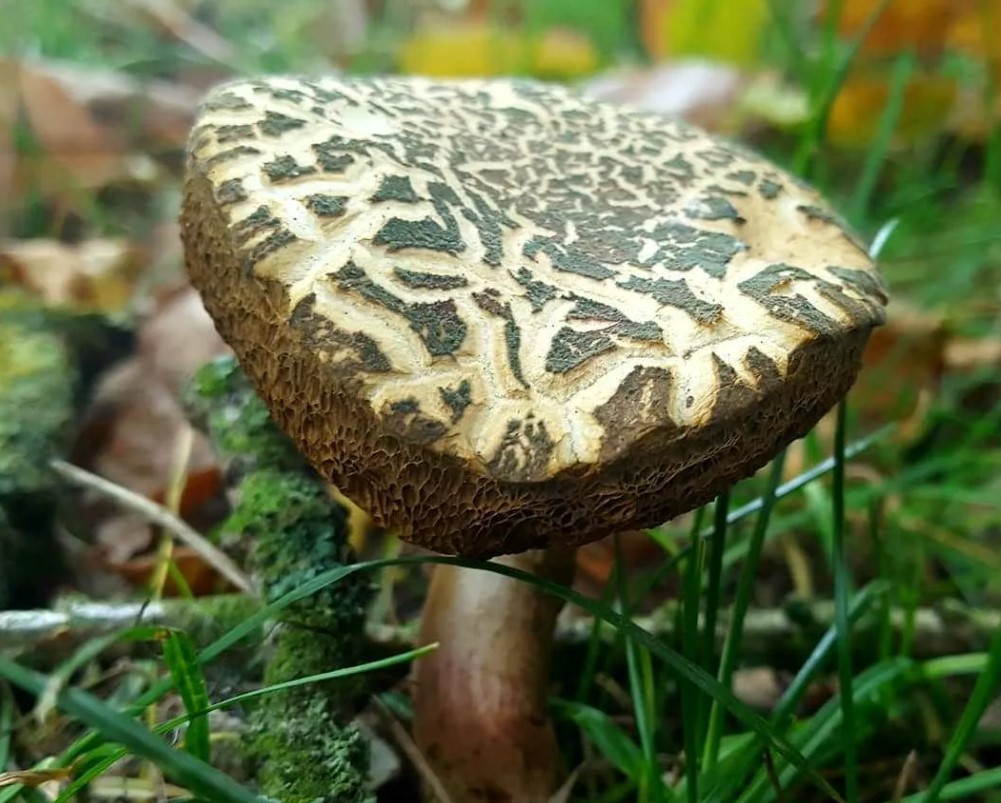
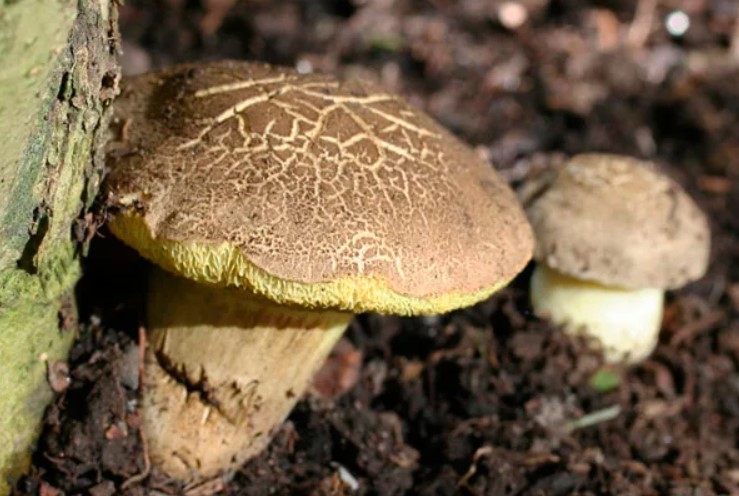
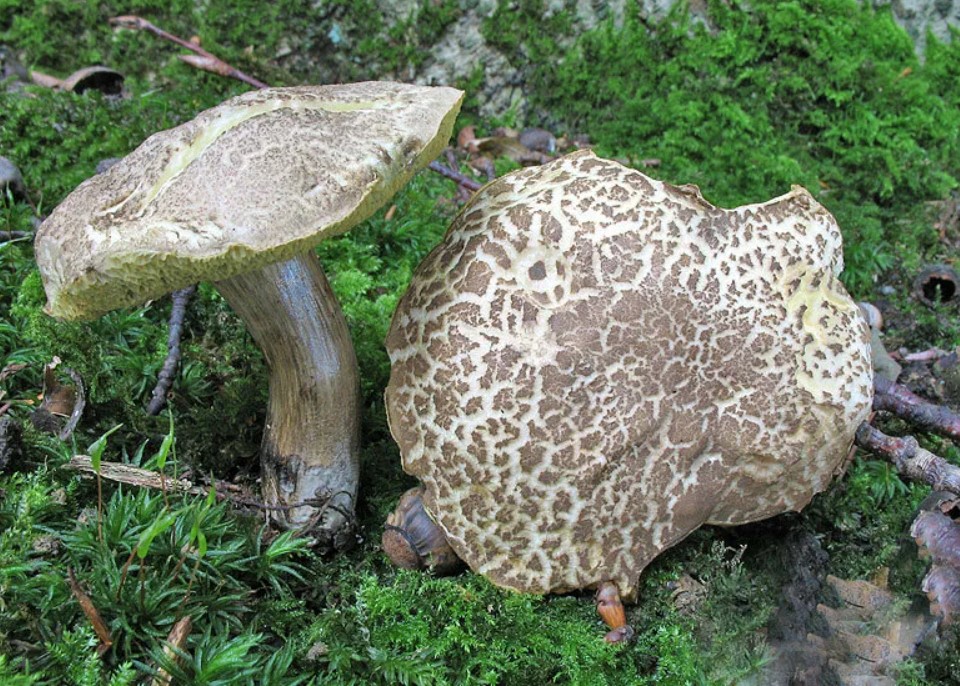
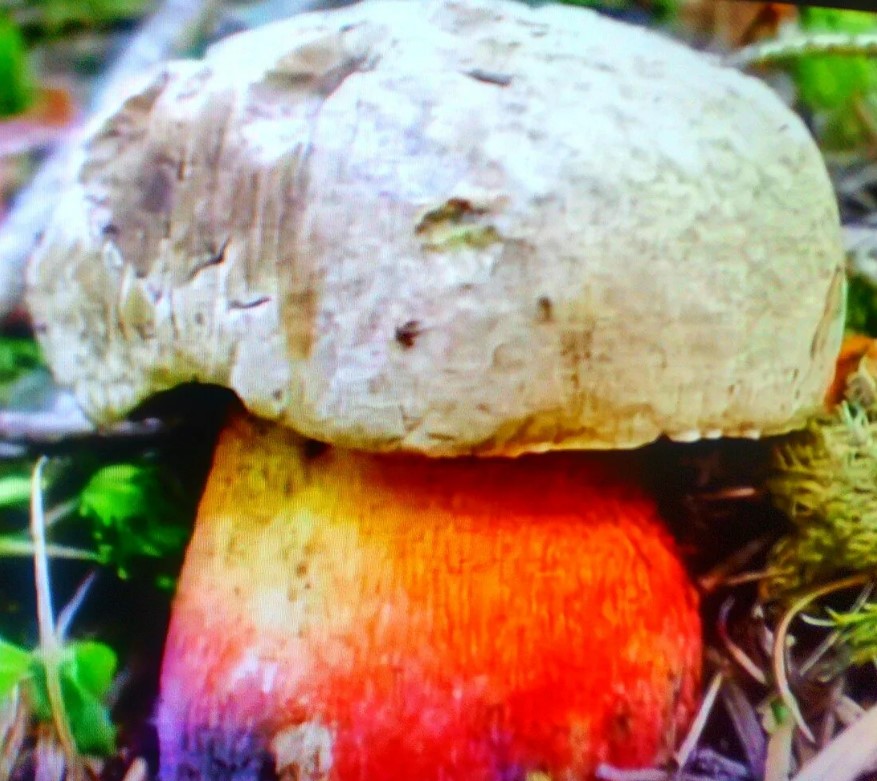
- The beautiful boletus or boletus is a brightly colored mushroom with a reddish stem and pale cap; it is not edible.
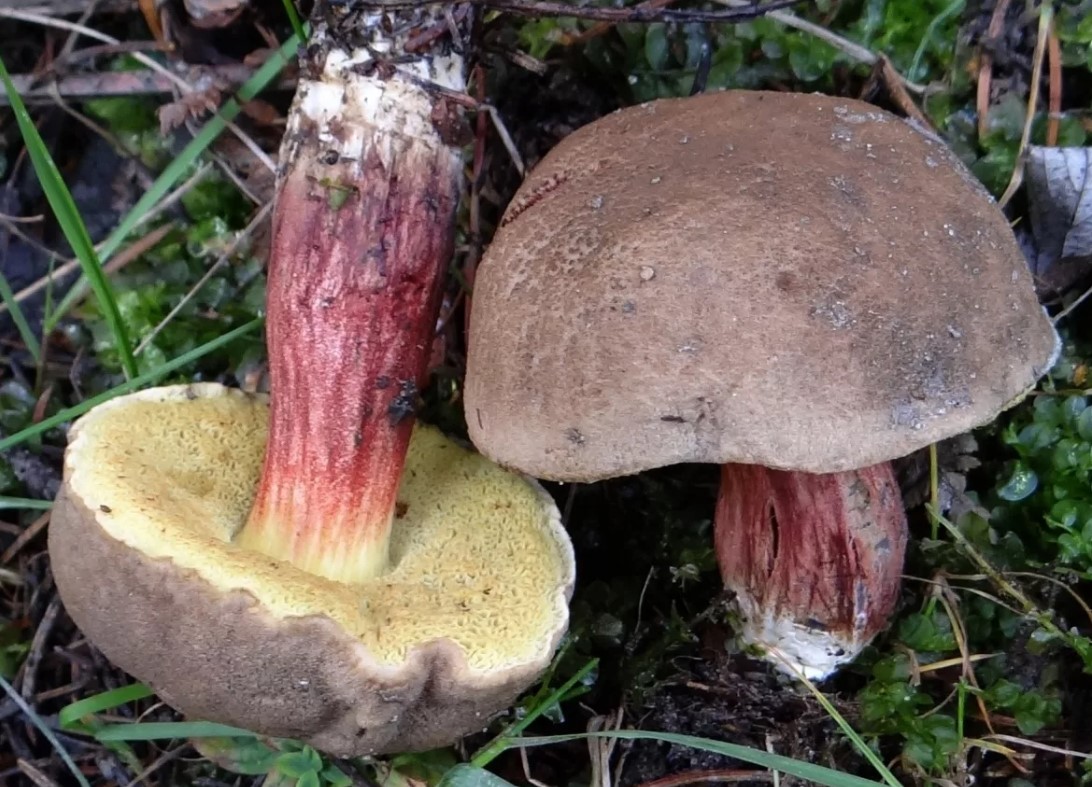
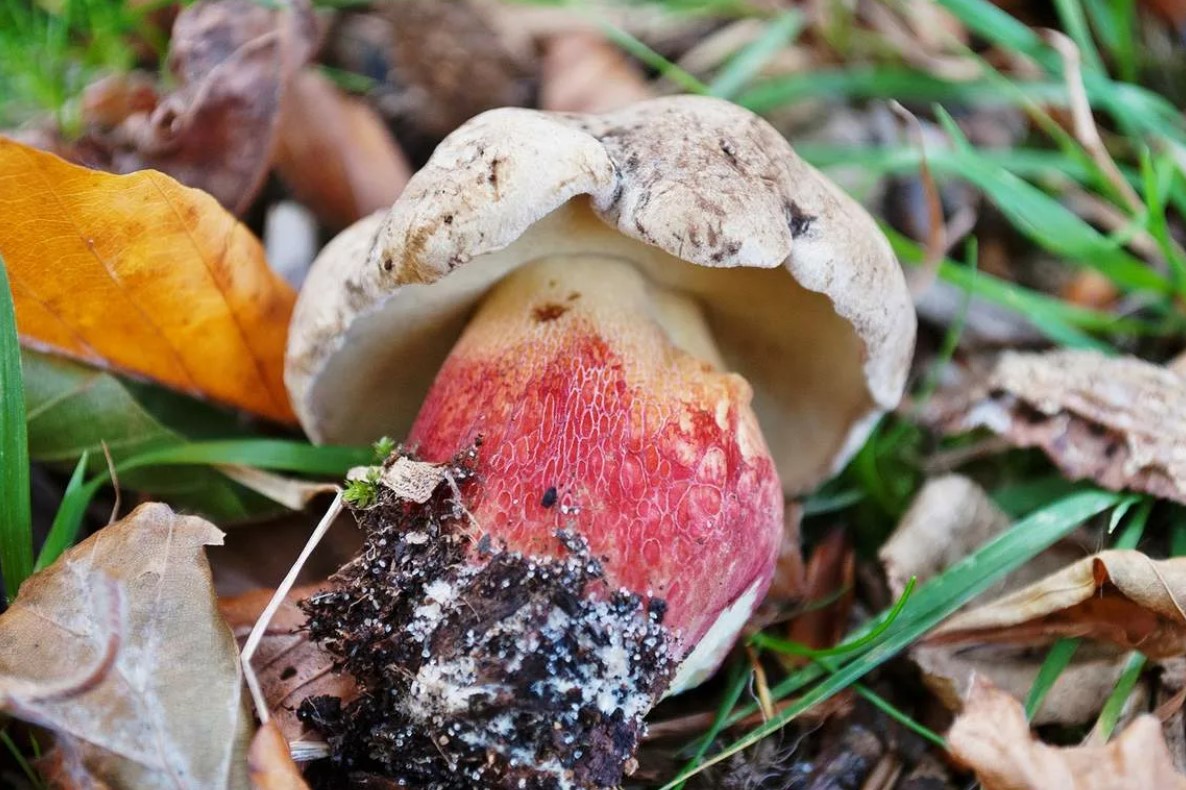
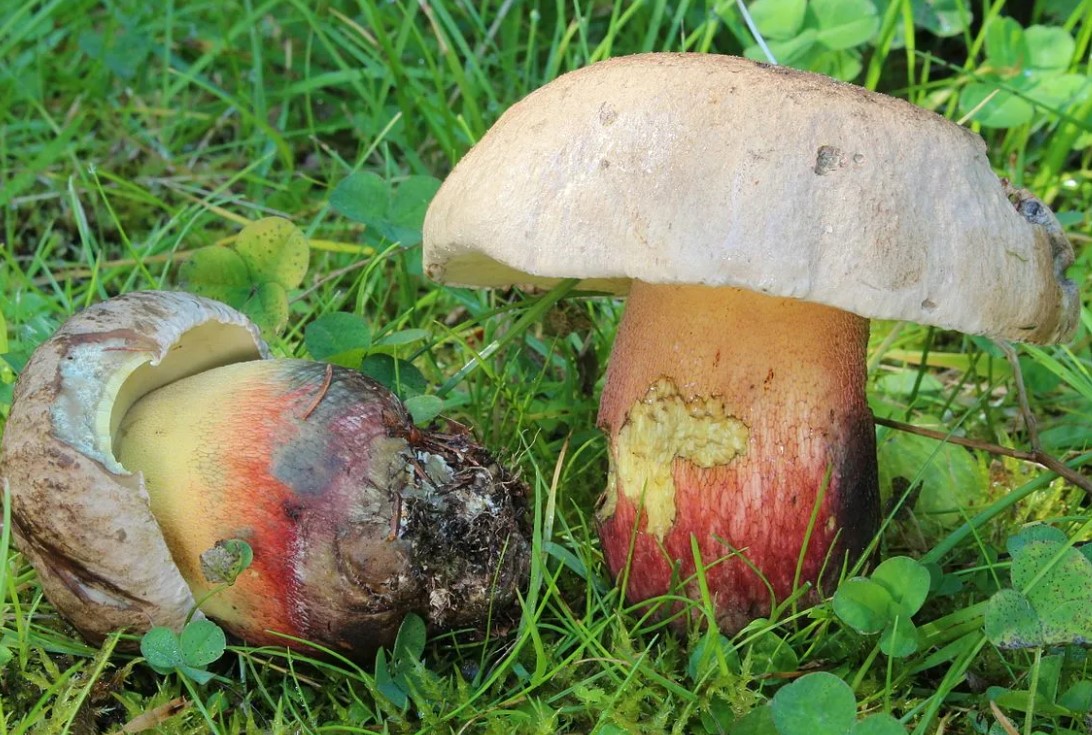
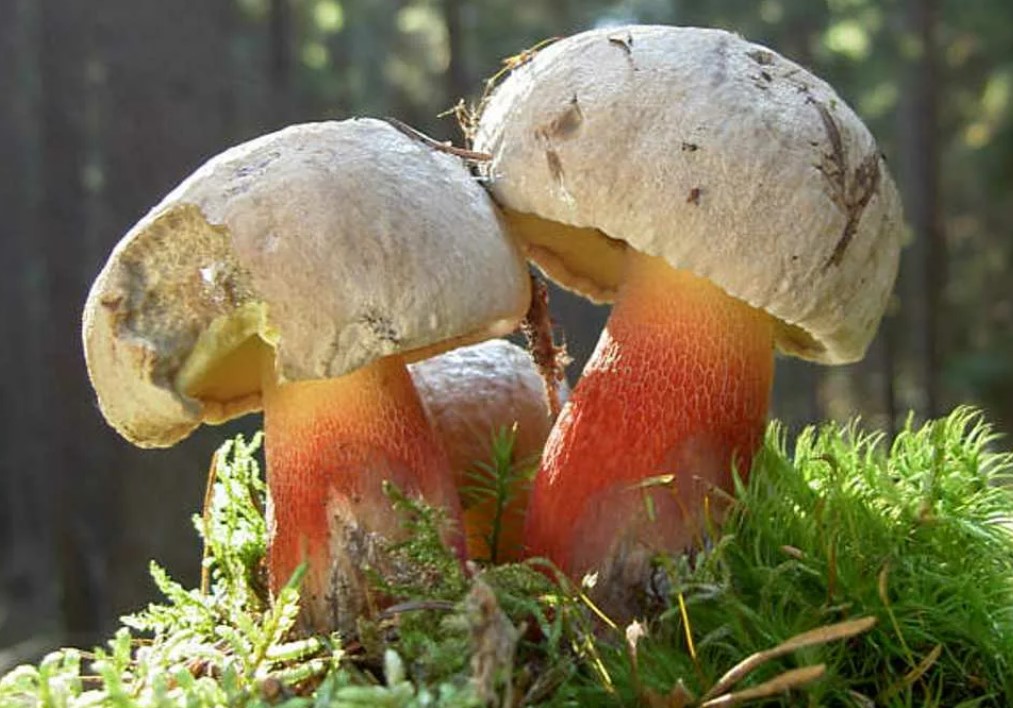
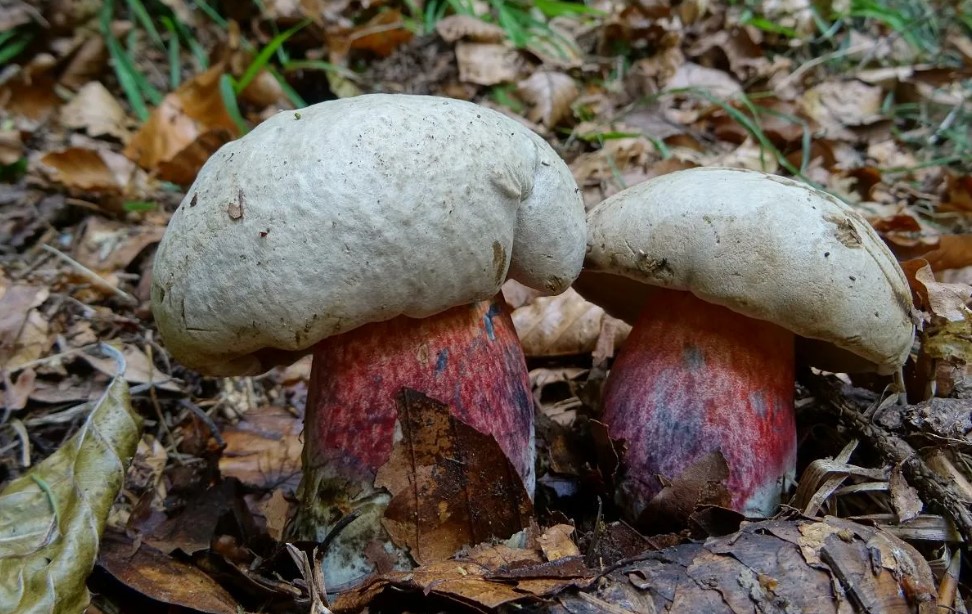
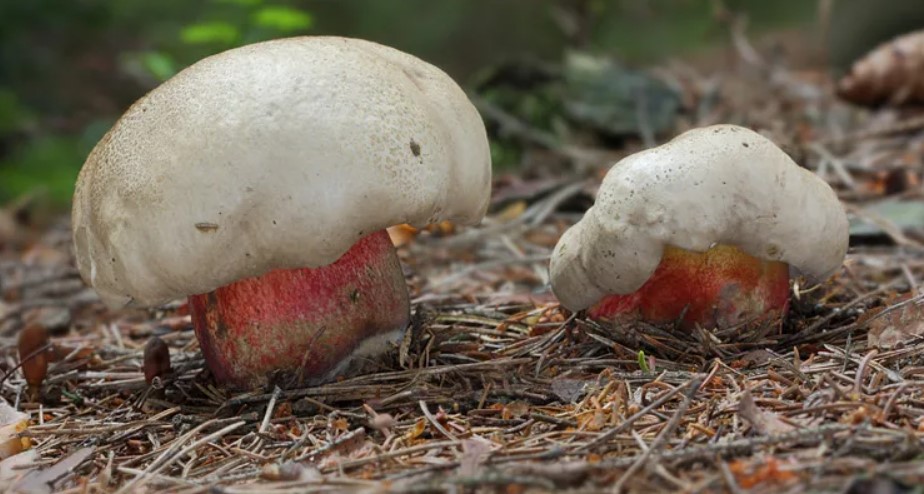
- The purple bolete gets its name from the purple skin on its cap; it is inedible.
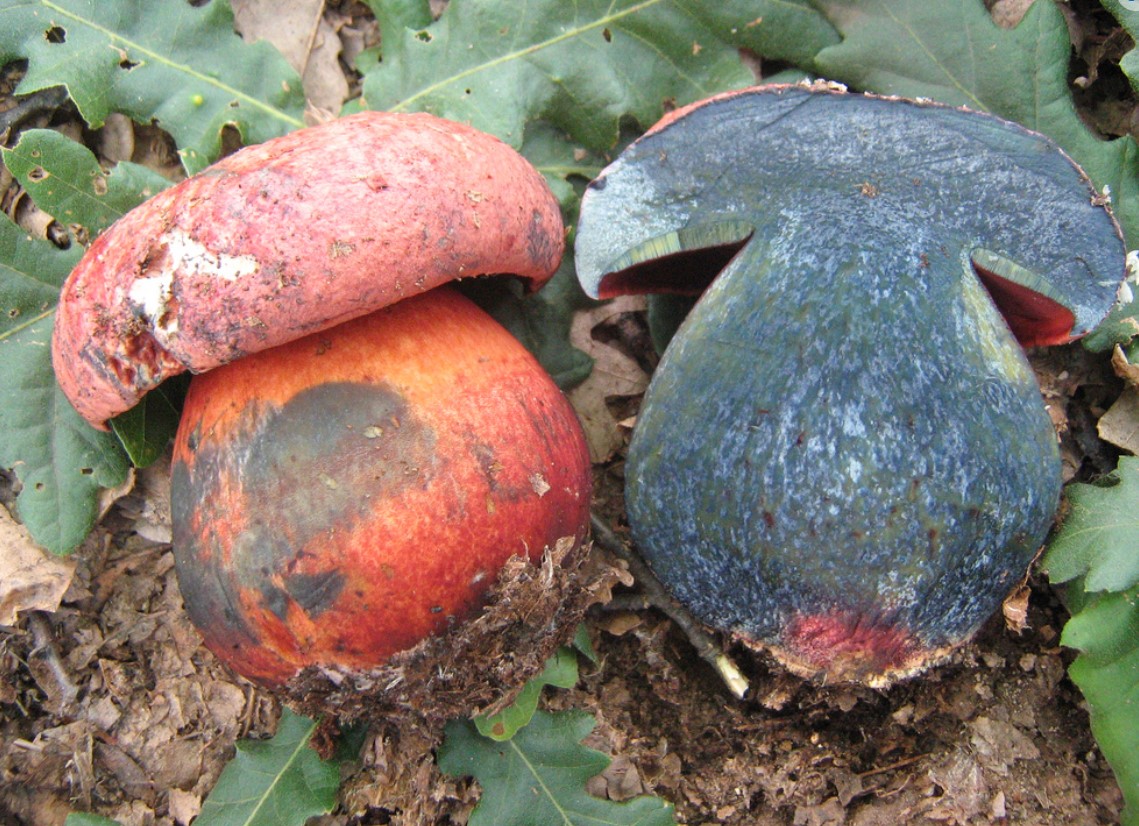
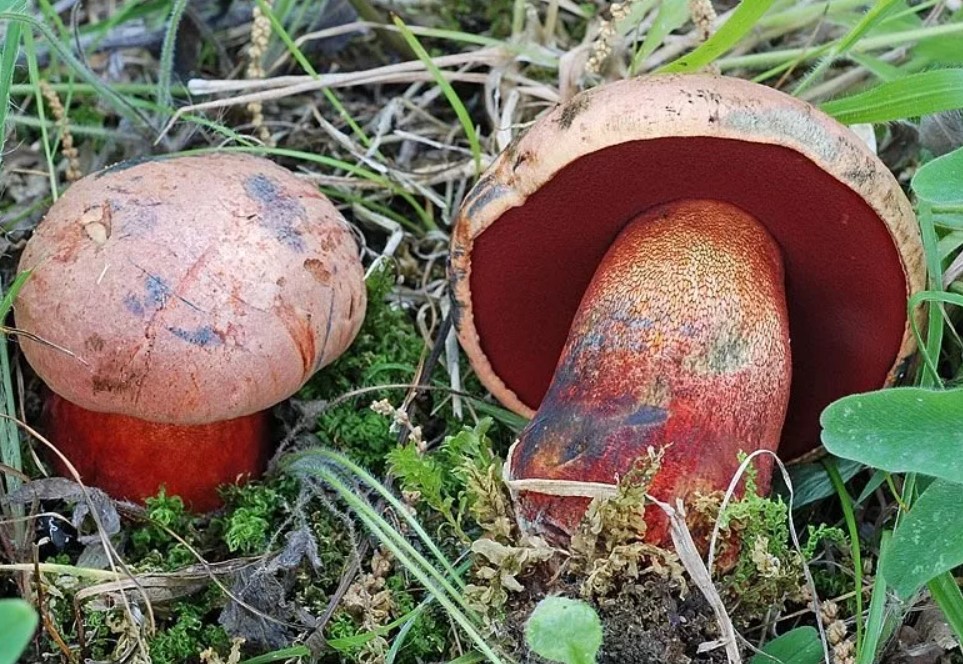
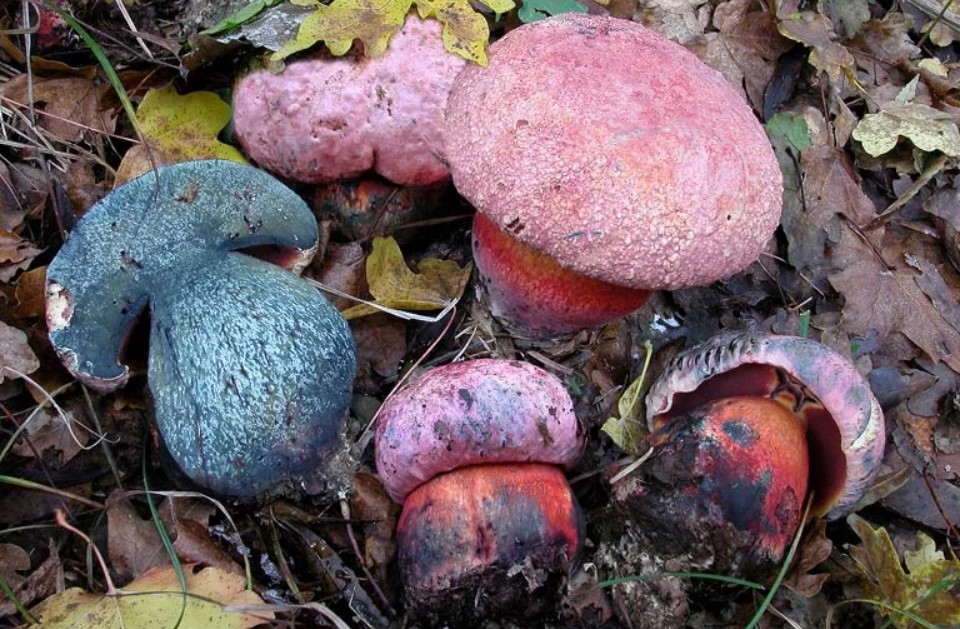
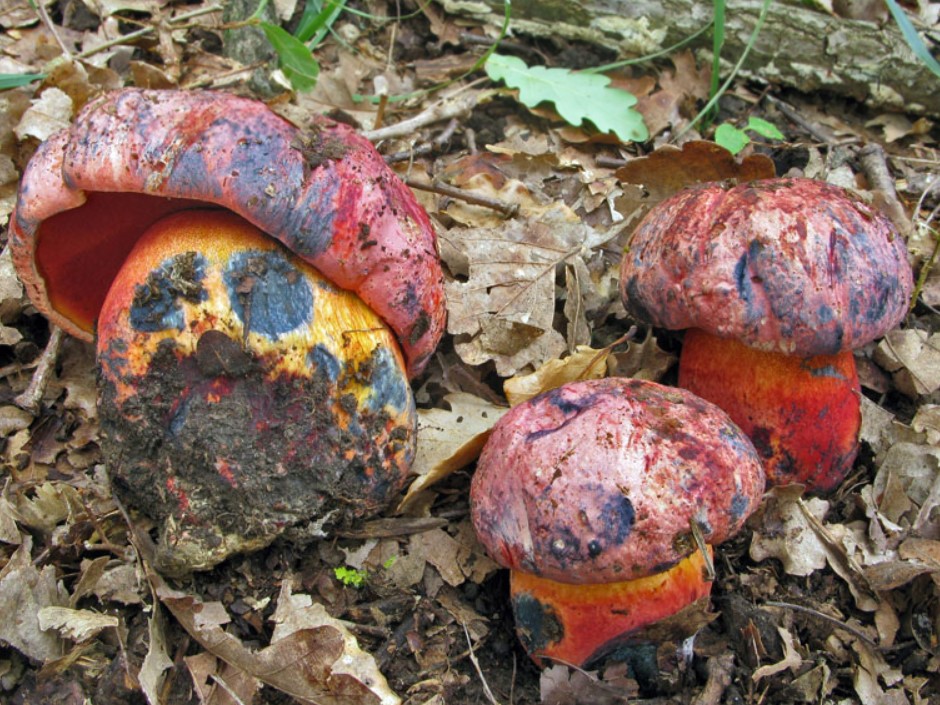
- Royal boletus is a large edible mushroom.
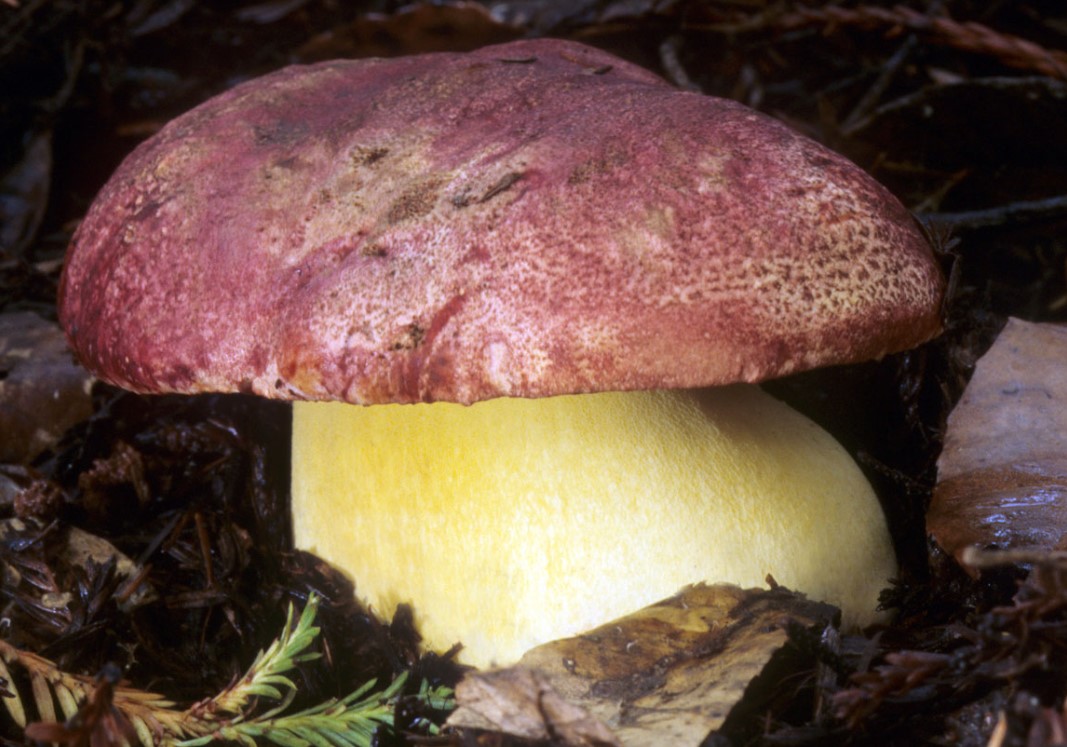
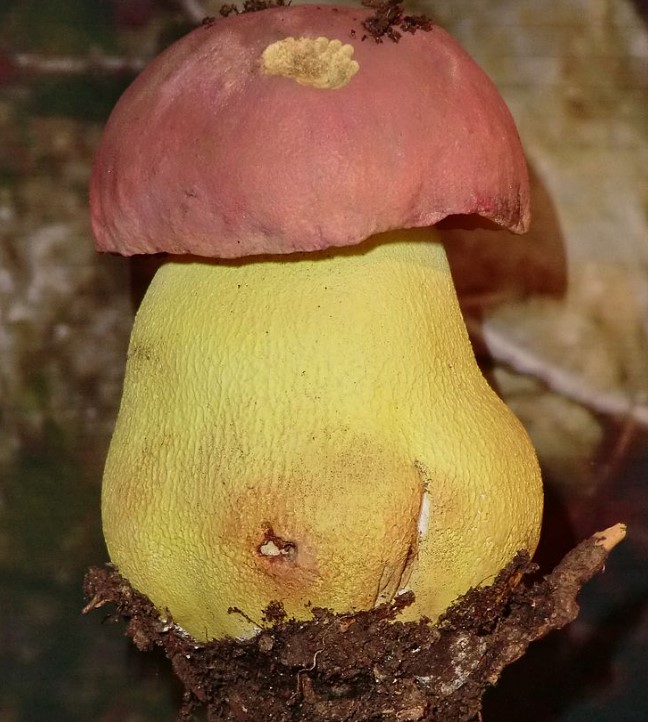
Poisonous mushrooms similar to the white pine mushroom
The white pine mushroom has several poisonous look-alikes:
- The boletus magnolia has a hemispherical cap of a bright brownish or brownish-red hue. The skin is woolly and matte. It is found on the west coast of North America and in New Mexico.
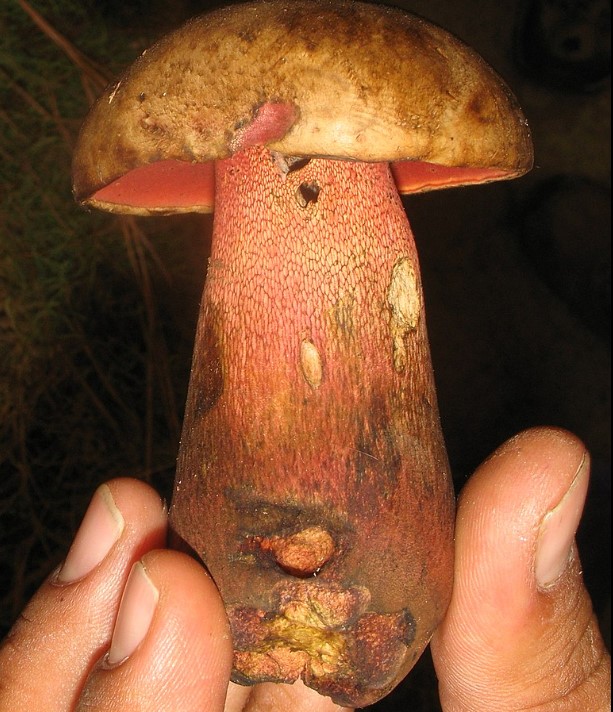
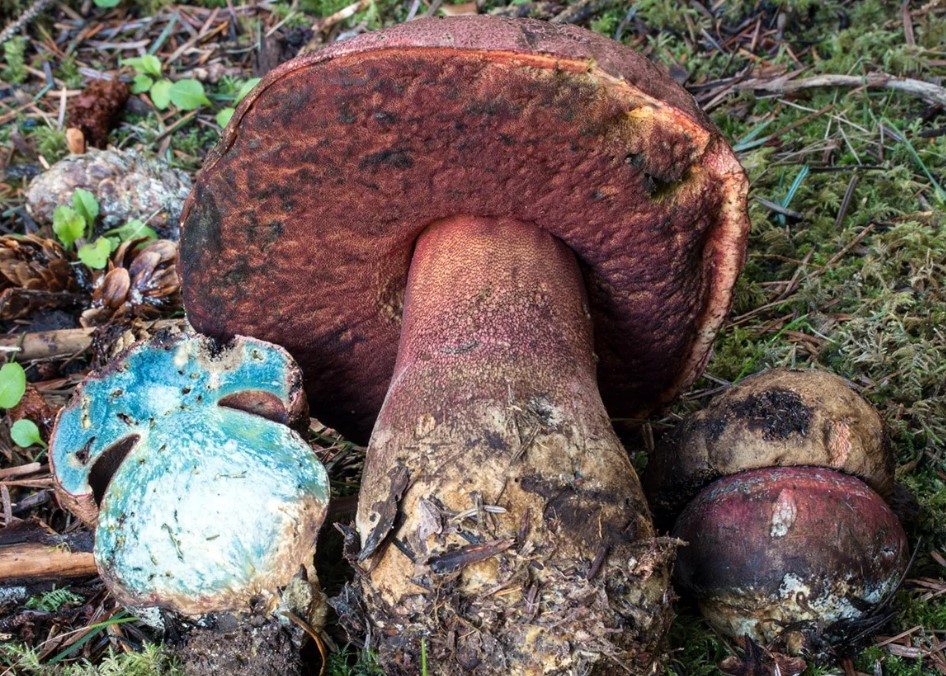
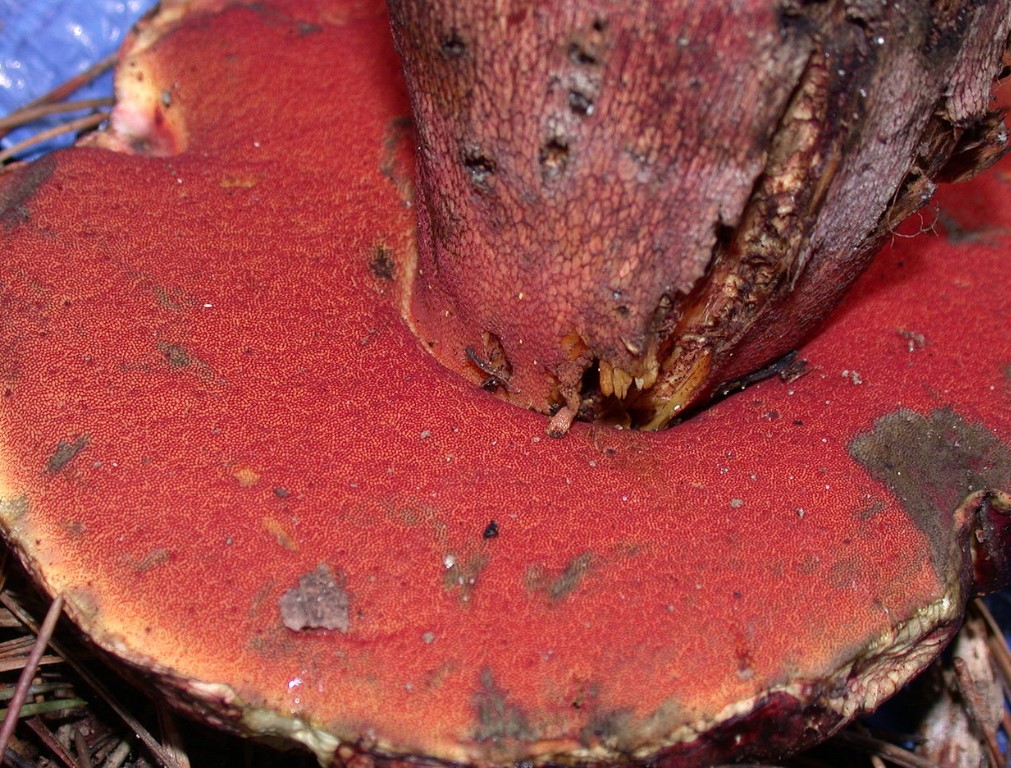
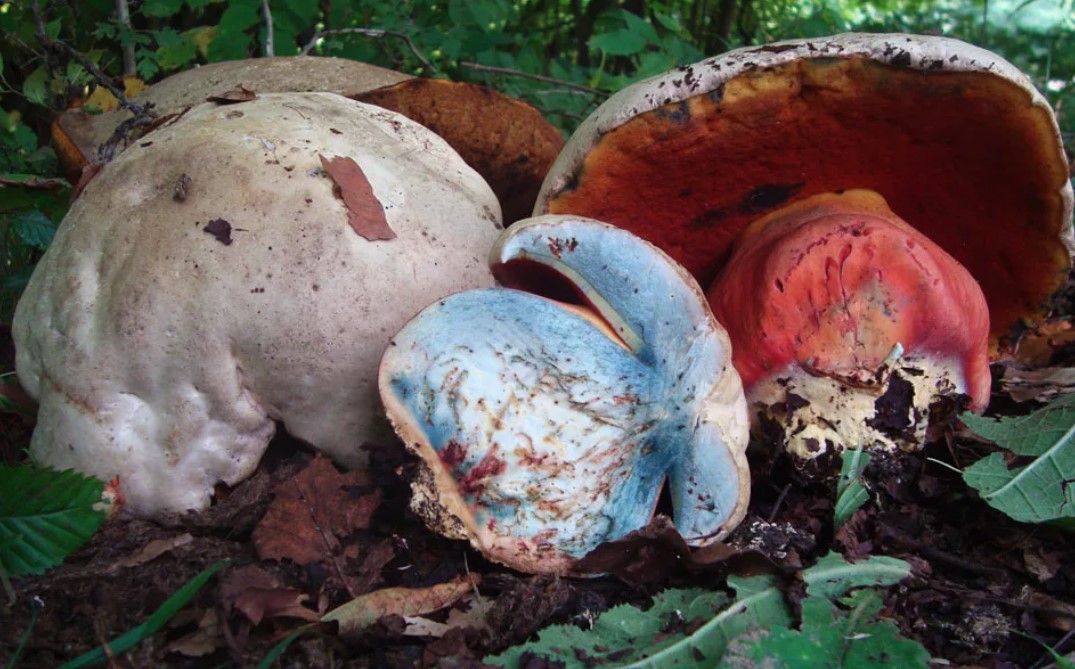
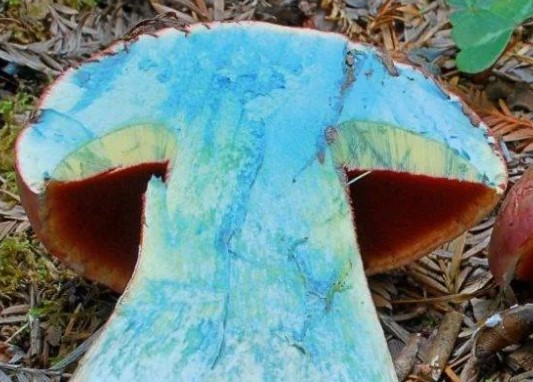
- The boletus leguminosa is a mushroom with a very large, orange-pink cap. The light flesh turns bluish when cut.
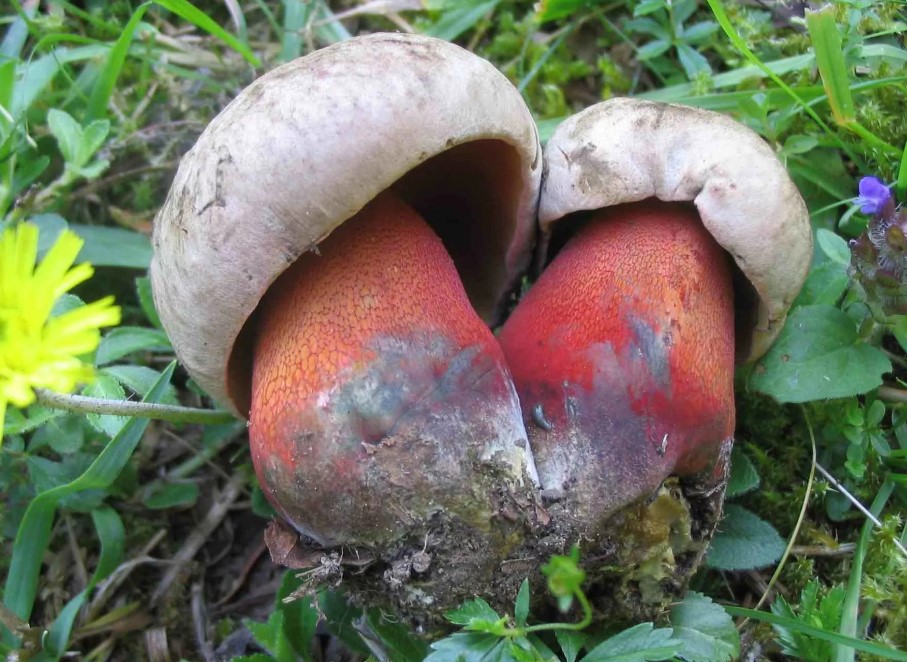
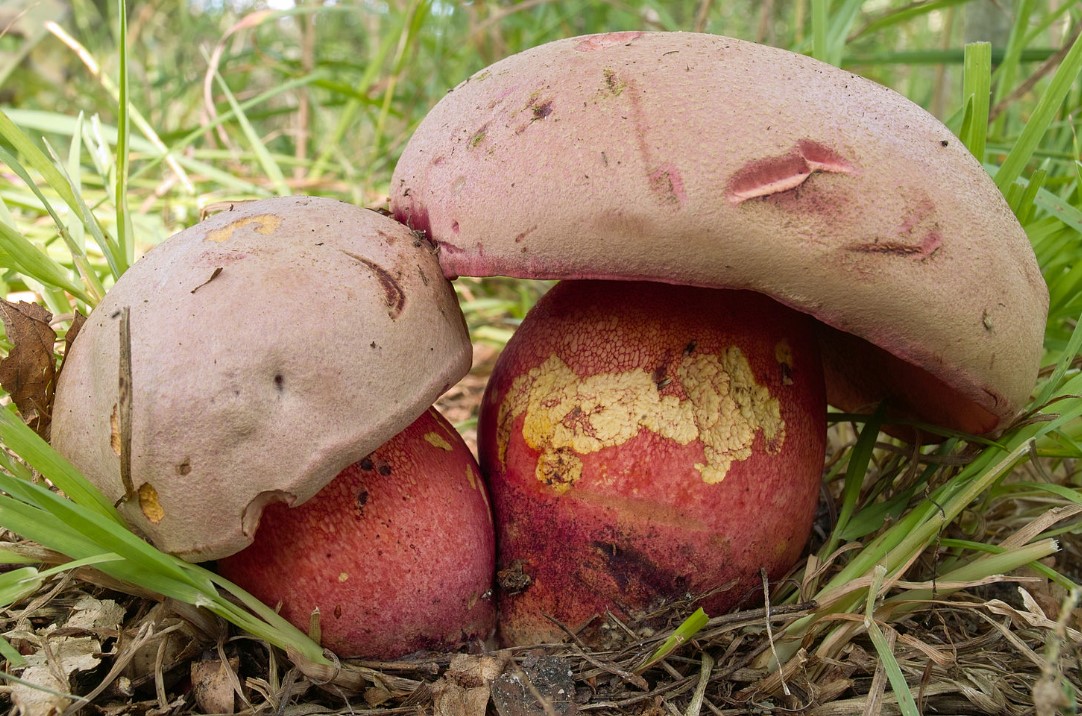
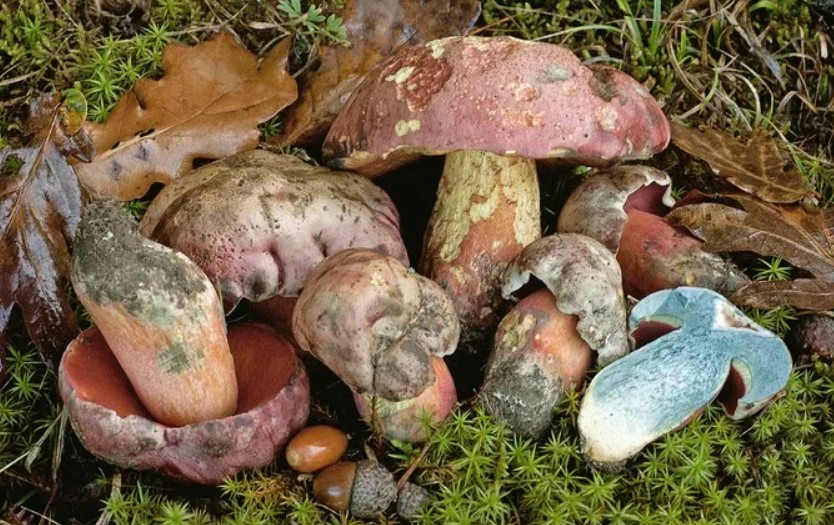
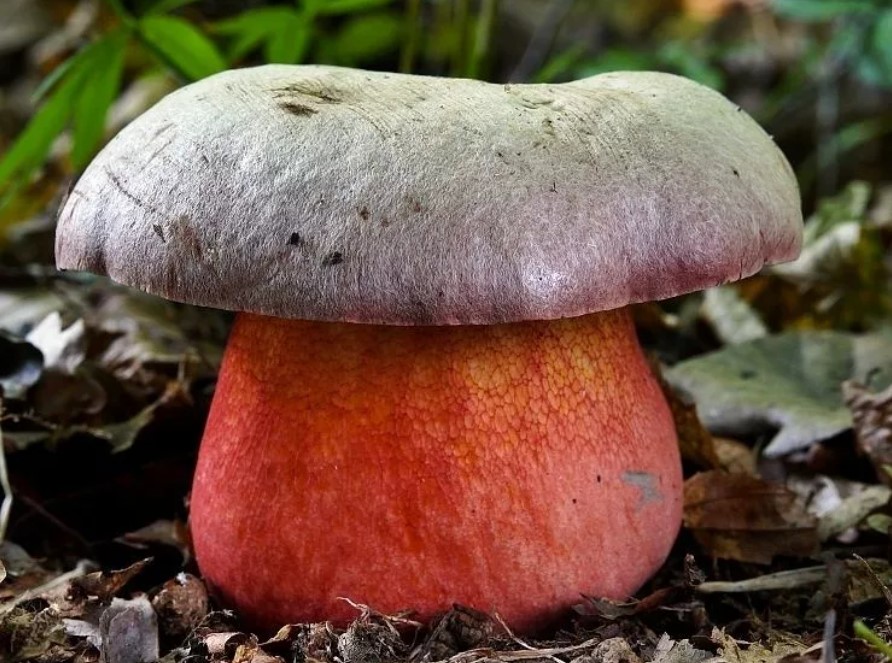
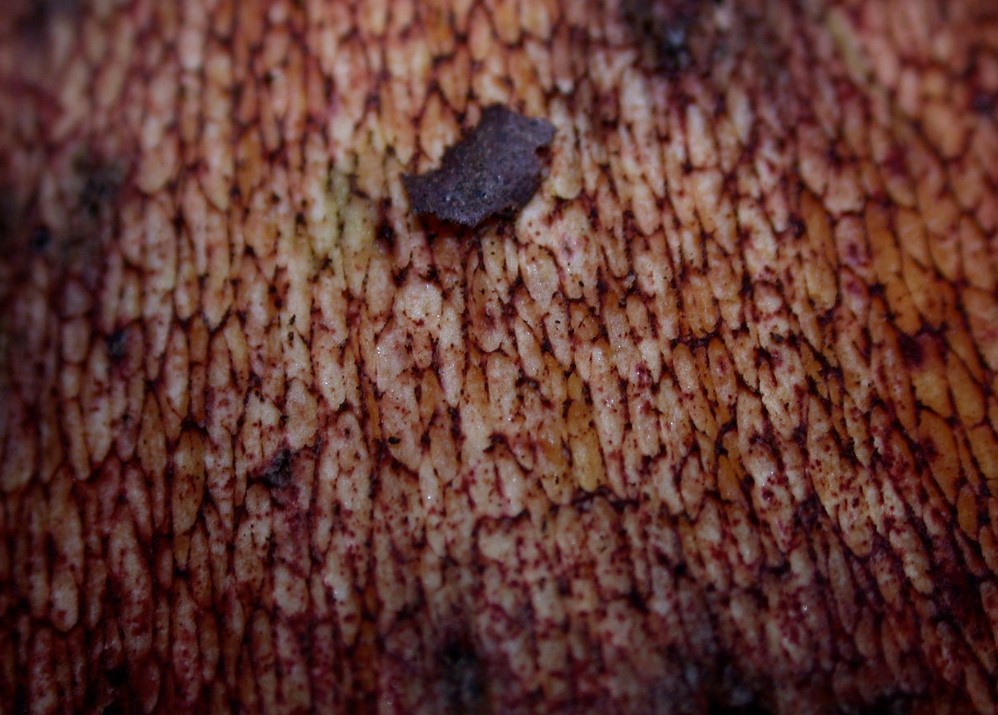
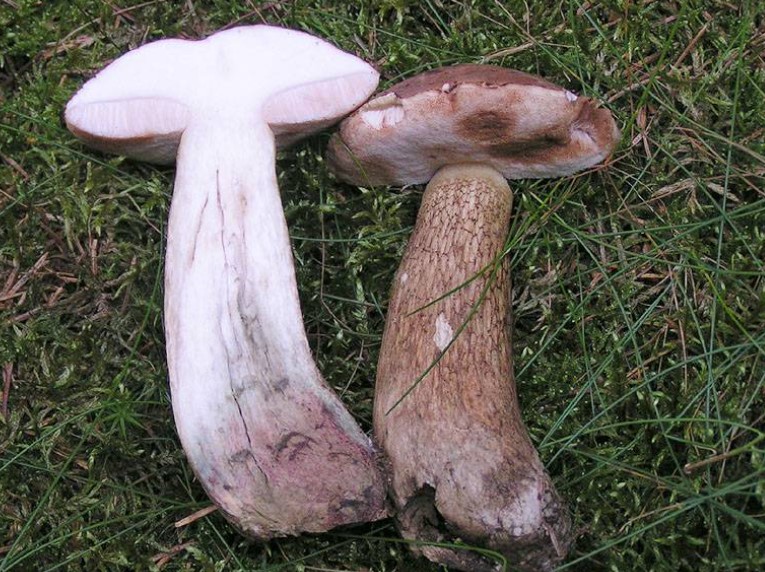
- Gall mushroom – similar in appearance to a porcini mushroom, but differs in the flesh, which turns blue where cut, and the presence of a distinct mesh on the stem. The flesh is bitter.
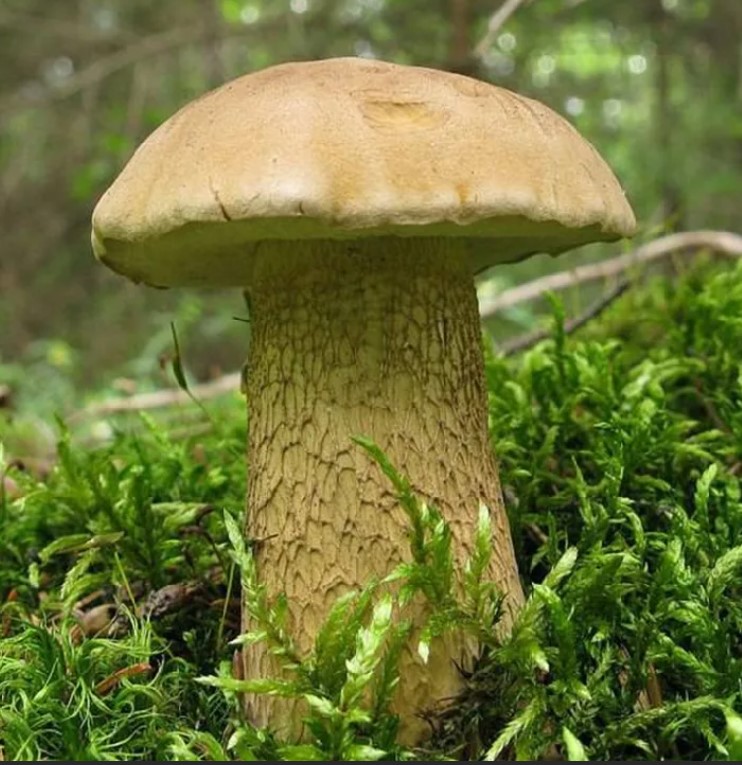
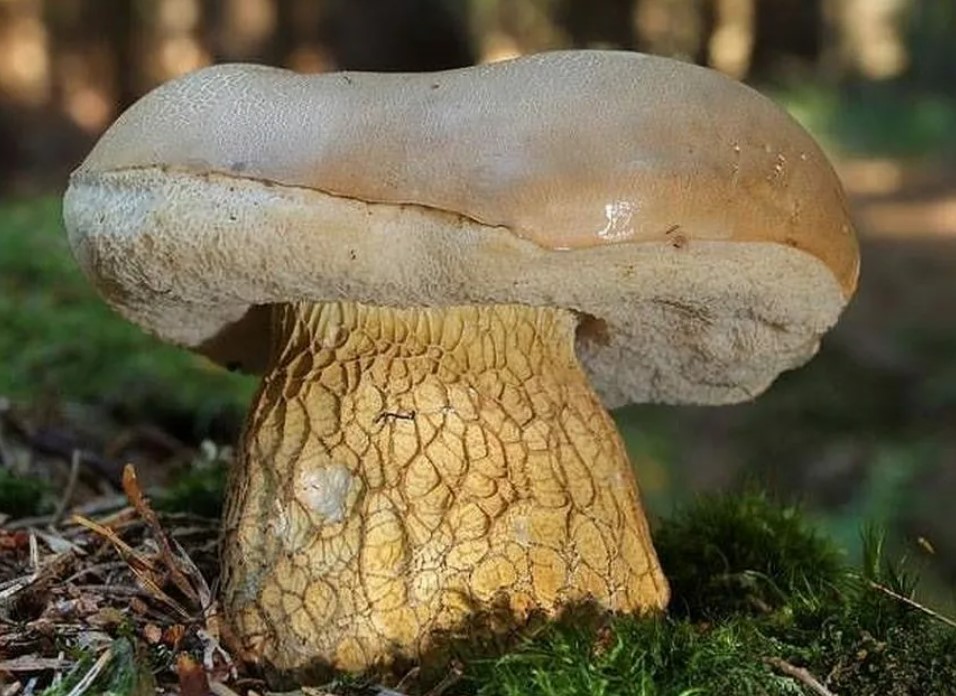
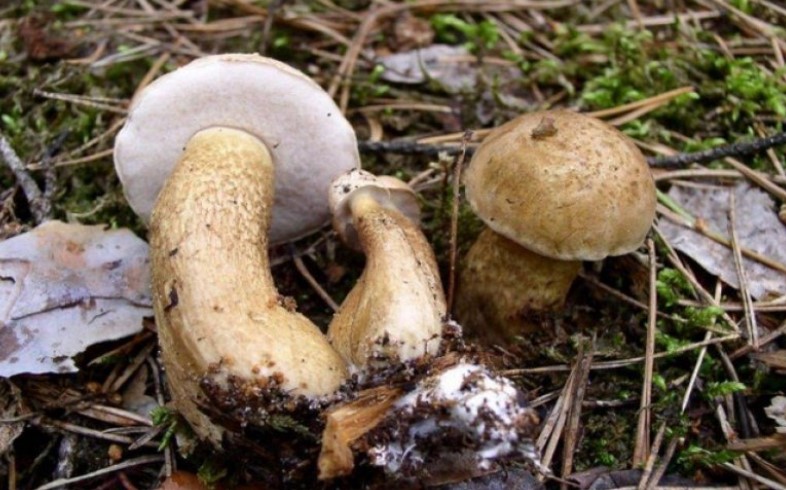
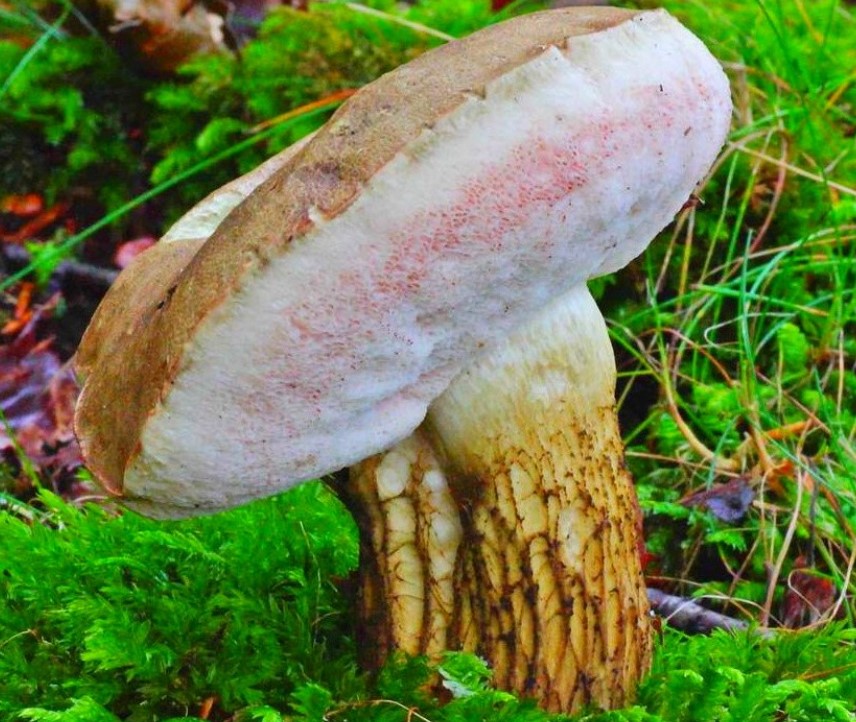
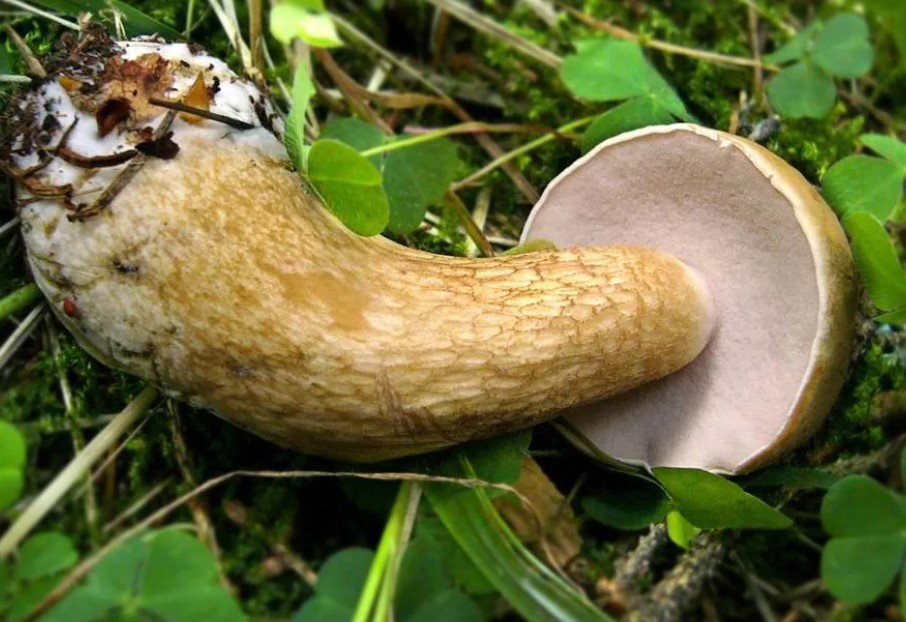
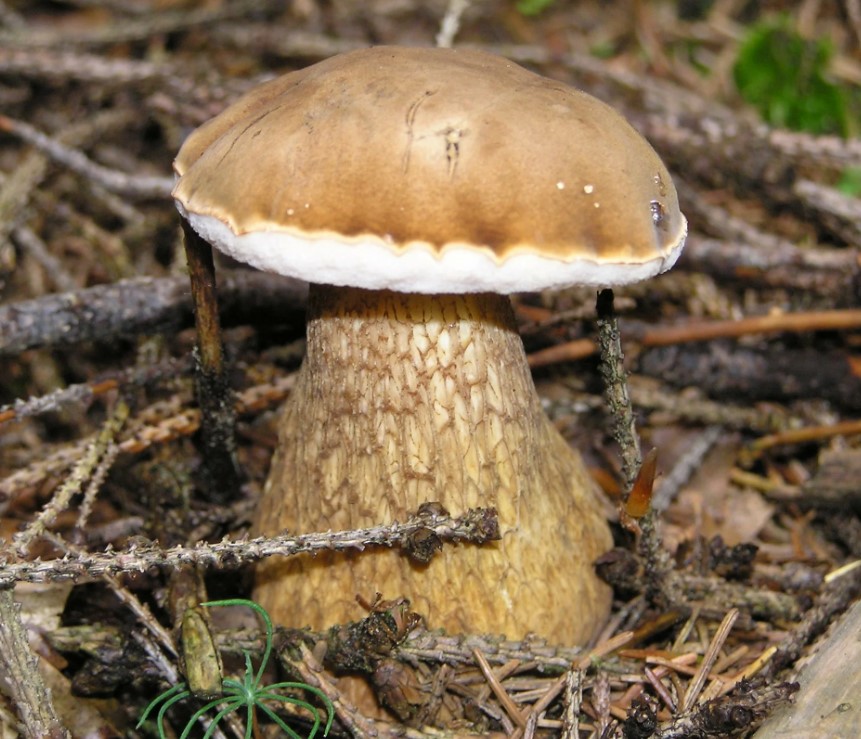
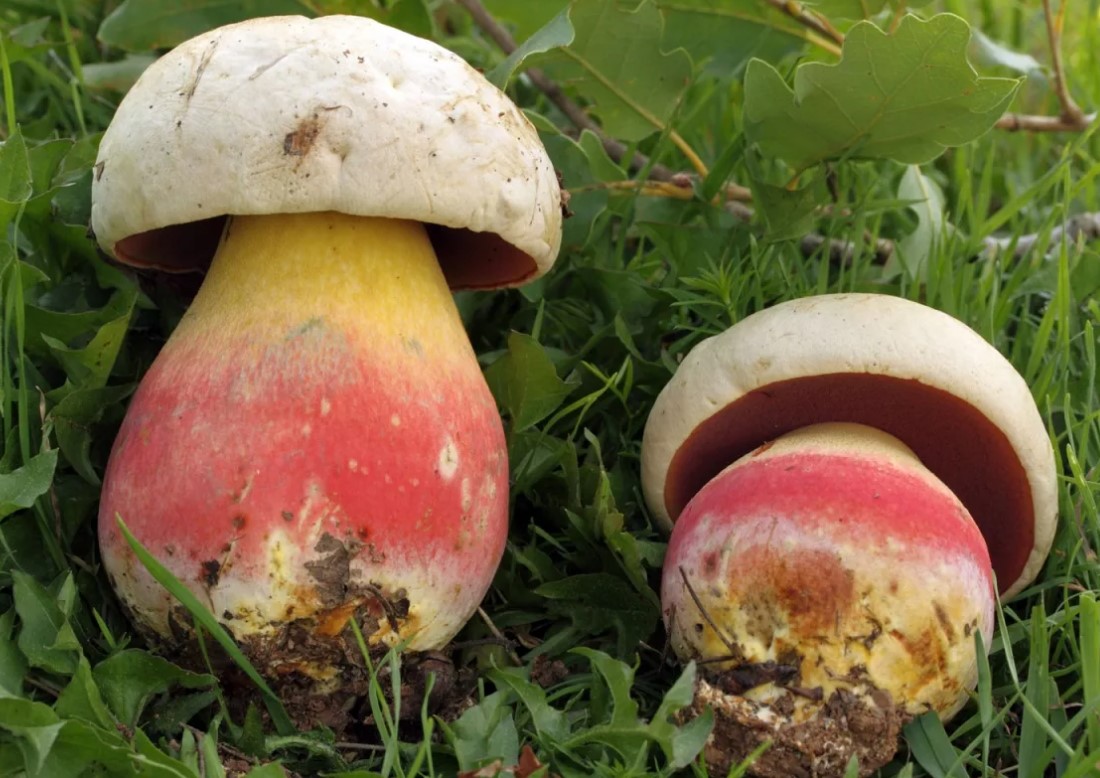
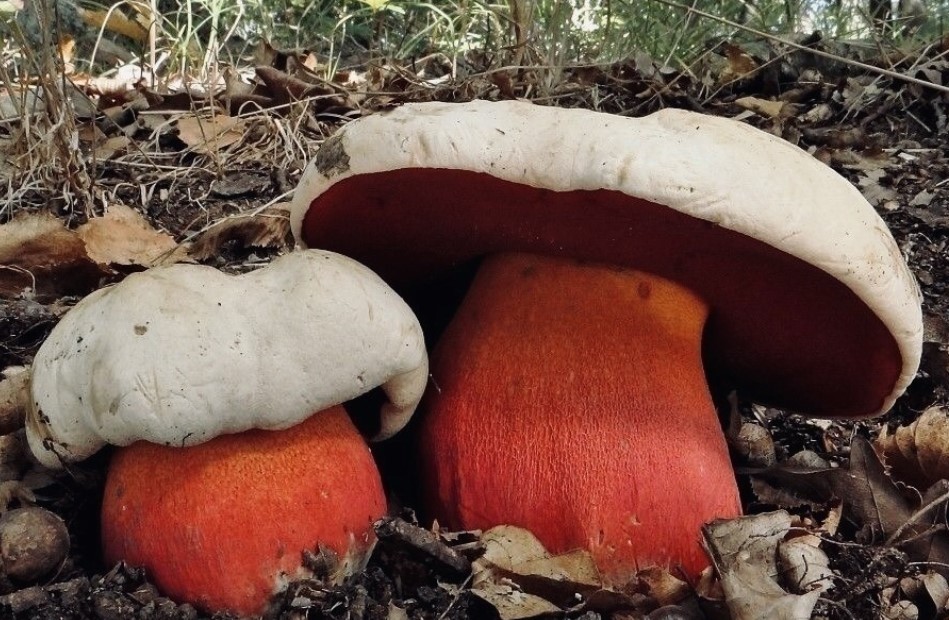
- The Satan's mushroom is a close relative of the porcini mushroom, but it contains a high amount of toxic substances, making it unsuitable for edibility. It is distinguished by its very large, heavy cap, up to 30 cm in diameter. Its color is predominantly gray, but can have a variety of shades and patterns (yellowish, ocher, pinkish, olive).
The benefits and harms of the white pine mushroom
Reasonable consumption of porcini mushrooms brings many benefits to the human body:
- Low calorie content helps keep weight under control, and the content of many micronutrients is not inferior to meat.
- The immune system is strengthened.
- Numerous lipids help cleanse the liver and normalize its function.
- Natural antibiotics destroy pathogenic microorganisms.
- Styrene improves the functioning of the hormonal, reproductive, and endocrine systems.
- Blood cholesterol levels are normalized.
- Iron maintains hemoglobin levels at the proper level.
- Amino acids and vitamins stabilize the functioning of the nervous system.
Porcini mushrooms can only cause harm if consumed in excess or if you have an individual intolerance to their ingredients. Furthermore, you should avoid picking mushrooms that grow in ecologically polluted areas.
Culinary uses of white pine mushrooms, recipes
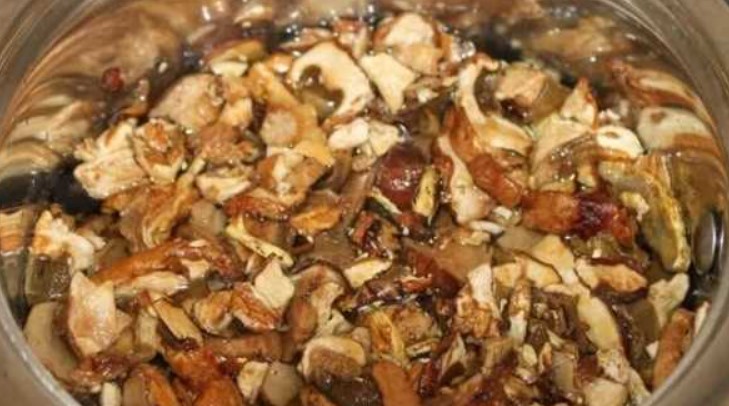
The porcini mushroom is excellent for drying, pickling, and salting. Its flavor is fully developed after processing, but it's best to eat only young mushrooms.
Soup
You can make soup from either fresh or dried mushrooms, but the latter will have to be soaked in water for a couple of hours first.
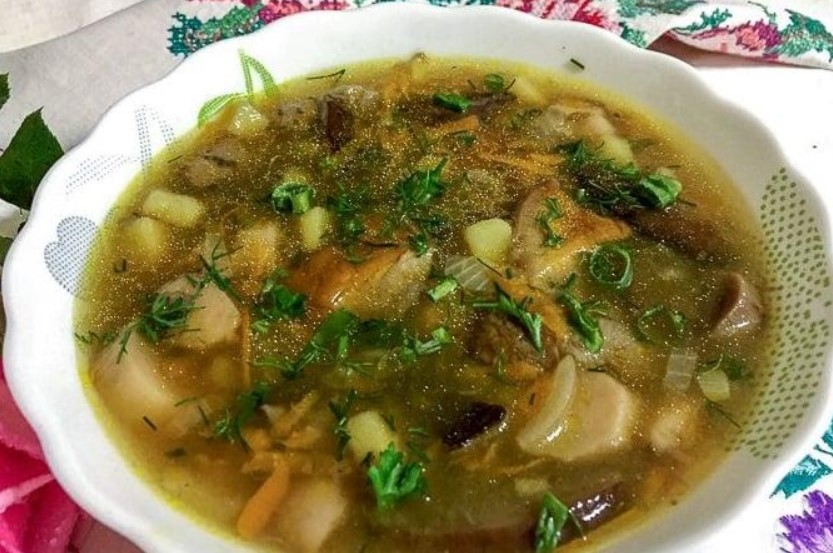
Clean and rinse the mushrooms. Cover with water and bring to a boil. Once the foam stops appearing, add diced potatoes, finely chopped onion and carrots, season with salt, and simmer for another 20 minutes. You can add herbs and sour cream before serving.
If you are interested in more details about this How to cook porcini mushrooms for different dishes, and also how to dry, marinate, freeze Read on our website Top.tomathouse.com.
Fried mushrooms with onions
Clean the mushrooms, wash them, and fry them until half-cooked. Cut the onion into half rings, add it to the mushrooms, and cook for another 10-15 minutes. Then add salt and spices to taste.
The use of white pine mushroom in folk medicine
Porcini mushrooms, like many others, are used in folk medicine due to the unique substances they contain that help fight tumors. Therefore, tinctures and powders are widely used in the comprehensive treatment of cancer.
Growing White Pine Mushrooms at Home
If you have the time and desire, you can grow porcini mushrooms in your own garden. However, to do this, you'll need to have access to a tree that naturally grows porcini mushrooms.
From purchased mycelium
You can purchase ready-made mycelium at a specialty store; the main thing is that the packaging is intact.
Preparatory stage:
- On the site, you need to select a tree no older than 10 years old. Conifers are preferable.
- Collect fallen leaves and moss.
- Prepare compost.
Landing:
- The top layer of soil with an area of 1 square meter is removed from under the selected tree.
- The bottom is lined with compost.
- The mycelium is placed on top in a checkerboard pattern; one package is enough for one tree.
- The mycelium is covered with the soil that was originally removed. Moss and leaves are placed on top.
- Watering is carried out using a spray bottle.
- The top of the planting is covered with a 40 cm layer of straw.
All that remains is to ensure the mycelium doesn't dry out. The first harvest can be collected in a year; the mycelium's lifespan under these conditions is approximately four years.
From the collected material
Myself the process of planting boletus It will be exactly the same as in the method described above. The difference is that the caps are used as mycelium.
You need to find ripe white specimens, even if they are damaged or wormy. A greenish coloration of the pulp at the break indicates that the spores are ready.
Once the planting material has been selected, all that remains is to plant and water the mycelium.
Interesting facts about the white pine mushroom
- The pine mushroom is much larger than the common porcini mushroom, averaging 300 g, but there are reports of specimens weighing up to 1 kg. In 1961, a record-breaking mushroom was found in the Moscow region, weighing 10 kg and with a cap diameter of 58 cm. However, mushroom pickers recommend picking only young specimens, as they are softer and tastier.
- Porcini mushrooms arrived in South America completely by accident. Mycelium was found in pots with imported conifer seedlings. It thrived in the new conditions and began to bear fruit.
Reviews of the white pine boletus from experienced mushroom pickers
I first encountered pine boletus mushrooms several years ago in the western Tver region, in pine forests and on islands among the swamps. I immediately realized they were the REAL white kind. But the moss there was ordinary green, not white at all... And I've never encountered them anywhere else, not in the Mytishchi district or the surrounding areas.
It's funny that my wife caught the owner of the house where we were staying quietly picking these mushrooms out of my basket and taking them to the trash. It turns out the locals are wary of these boletus mushrooms. We barely managed to persuade her not to throw them out.
In the Moscow region, I've found pine boletus mushrooms in the pine forests of the Orekho-Zuevsky (Kurovskoye) and Shatursky districts, respectively, but not every year and never more than 10 at a time. They grow there in sparse pine forests with green heather and white moss along roadsides and old firebreaks; I've never found them in September or even early October in the summer. In some years, boletus mushrooms can be found in the forests south of Petushki beyond the Klyazma River. There are large tracts of true white moss pine forests there, but that's in the Vladimir region. I'm under the impression that they're quite rare in the Moscow region. Much rarer than, for example, blueing pine (blue pine), which grows in the same area almost every year, sometimes in considerable numbers. In the Tver region, however, they can be numerous, sometimes as many as 50.
It is, of course, interesting - where are these places of pine-shaped white mushrooms?
Every year, they bring baskets full of them. If you ask, "Where are they from?"—Right! They'll tell you how...
At best, you'll hear from the training ground, or from Alekhovshchina, or Novgorodskaya. Or else, from Finland...
As soon as the word got around, the whole crowd flocked to the training ground...In reality, porcini mushrooms grow in many places around here. The trick is to sense when and where to catch them. And to do that, you need to know the mushroom's habits.
I have no doubt that the highly respected professionals gathered on this forum have many of their own secrets and superstitions associated with porcini mushrooms. Not in the sense of specific GPS coordinates for a treasured forest clearing, but in terms of what type of forest and when to pick these mushrooms.
It would be interesting to exchange experiences. Maybe I'll add my two cents...
I was lucky: since childhood I spent my summers in pine forests and enthusiastically collected boletus mushrooms.
Here are my observations.Boletus mushrooms prefer clean pine forests with pine trees 15-40 years old. If the forest is older, look for areas with young, 5-10-year-old pine growth.
Individual birch trees don't interfere with boletus mushrooms, but if there are a lot of birch trees in a forest, there will be fewer boletus mushrooms. A mixed pine-birch forest is the least interesting for picking not only boletus mushrooms but mushrooms in general. (The exception is white milk mushrooms, which prefer pine and birch trees.)
It is not often, but sometimes boletus mushrooms live in a clean old spruce forest.The boletus' favorite bedding is a mixture of green moss and white lichens, primarily reindeer moss. In dry pine forests where reindeer moss predominates, I look for patches of green moss. In green moss forests, on the contrary, I look for patches of reindeer moss. In dry periods, moss is preferred; in wet periods, reindeer moss.
A mixture of heather is good for boletus mushrooms. Heather alone is only suitable in very wet periods.
The lingonberry bush in the undergrowth is good for boletus mushrooms, but the blueberry bush is bad.Let the experts forgive me for these amateurish observations, or correct me, or add to them.