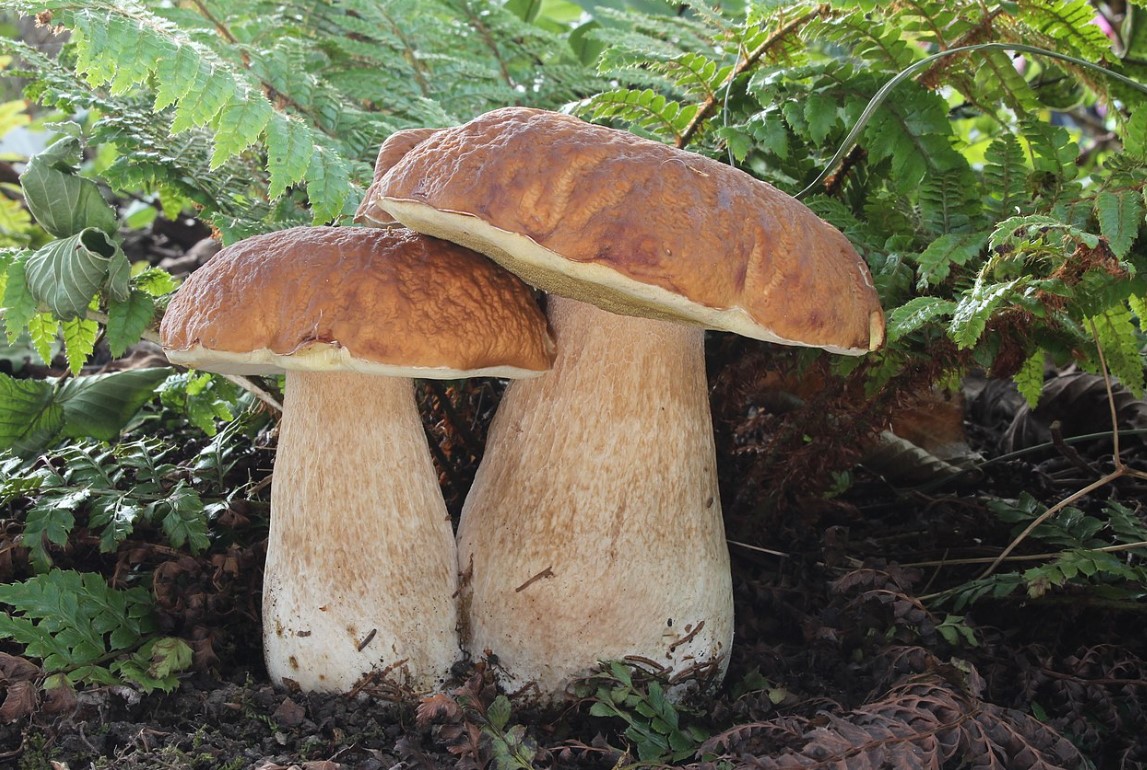
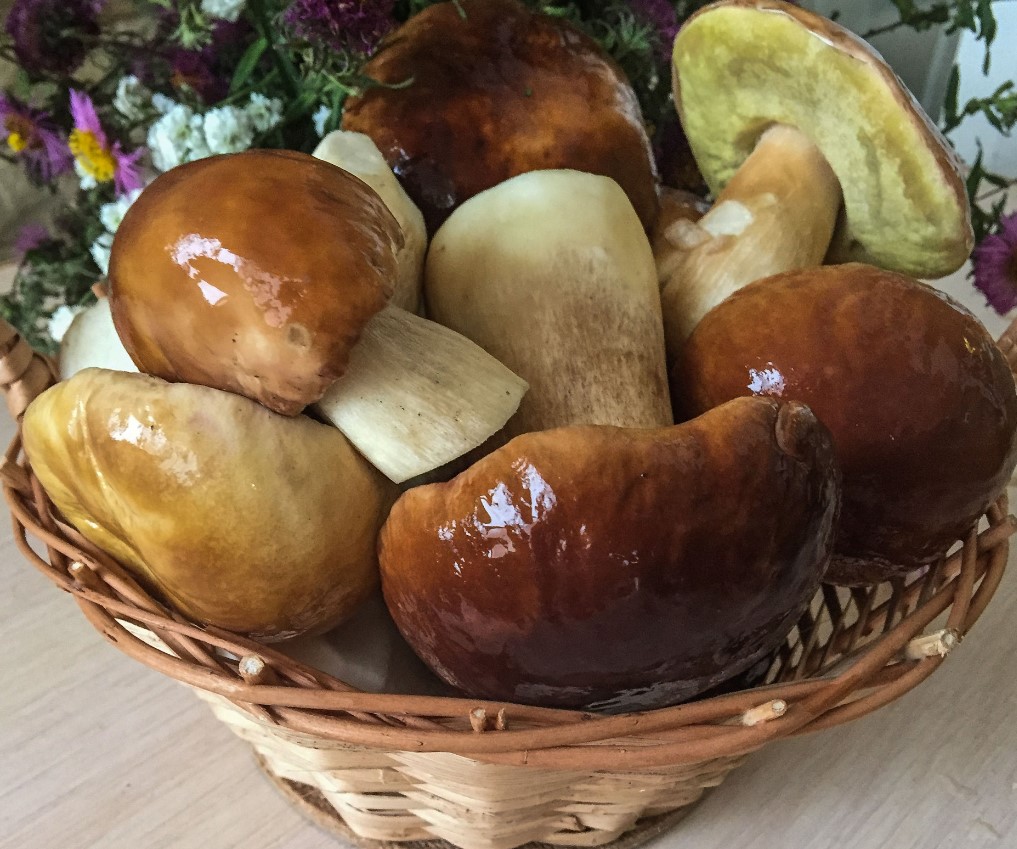
The porcini mushroom belongs to the Boletus family. It is highly prized by mushroom pickers and is their most coveted find. It is not for nothing that it is also called the "King of Mushrooms." It has an excellent taste and an attractive appearance.
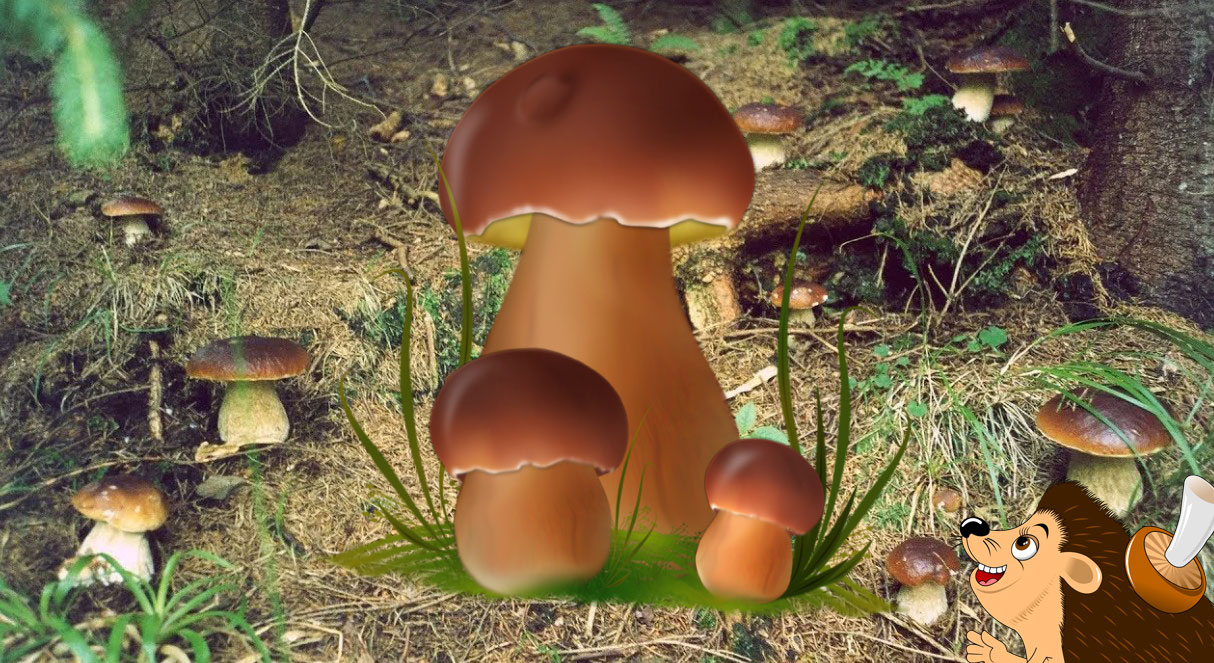
Description of the White Mushroom
Content
- 1 Description of the White Mushroom
- 2 What is the white mushroom called?
- 3 Characteristics and properties of the White Mushroom
- 4 Where do porcini mushrooms grow?
- 5 Porcini mushroom picking season
- 6 How long does a porcini mushroom grow?
- 7 How to pick porcini mushrooms
- 8 18 types of porcini mushrooms
- 9 Inedible doubles
- 10 Composition and caloric content
- 11 Edibility and nutritional qualities of porcini mushrooms
- 12 The benefits and harms of porcini mushrooms
- 13 Harvesting and storing porcini mushrooms
- 14 Interesting facts about porcini mushrooms
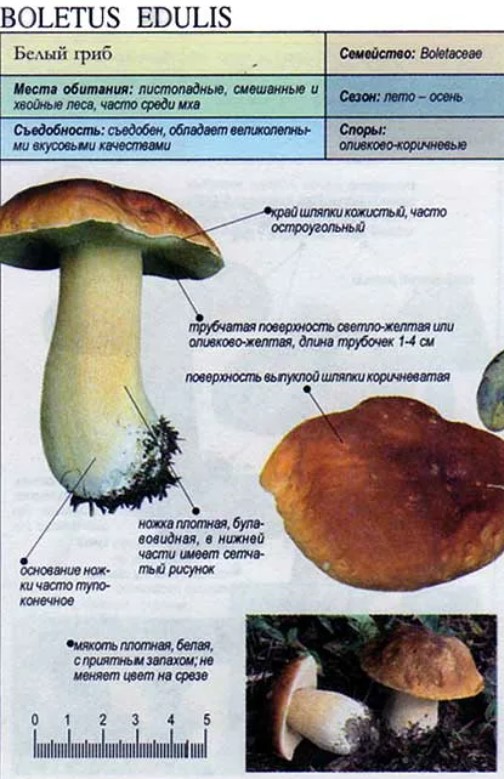
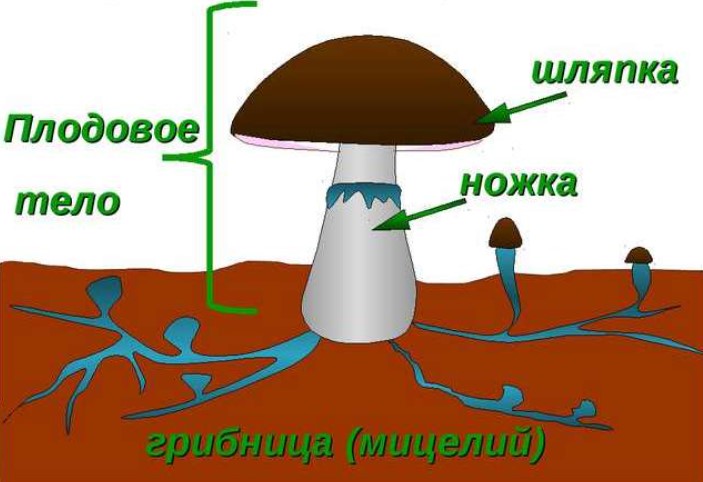
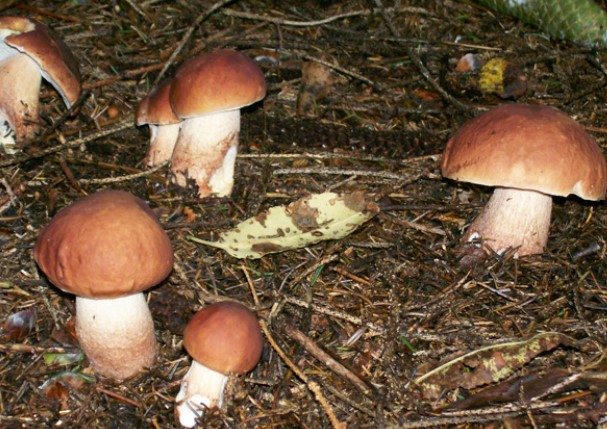
Let's consider the main external characteristics of the White Mushroom (Boletus edulis).
hat
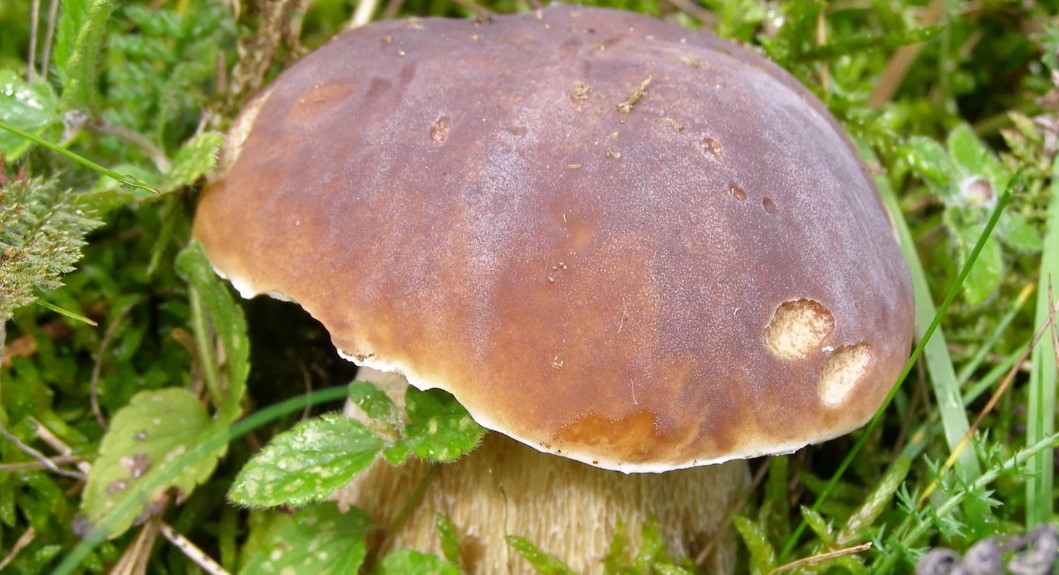
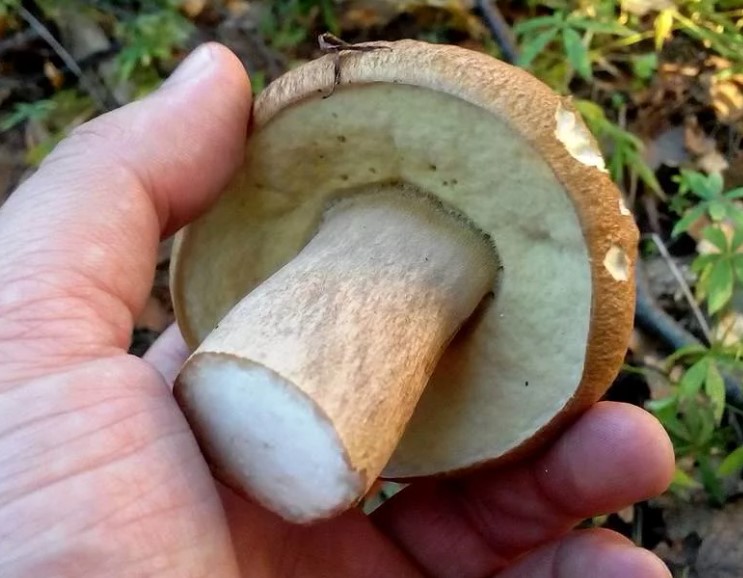
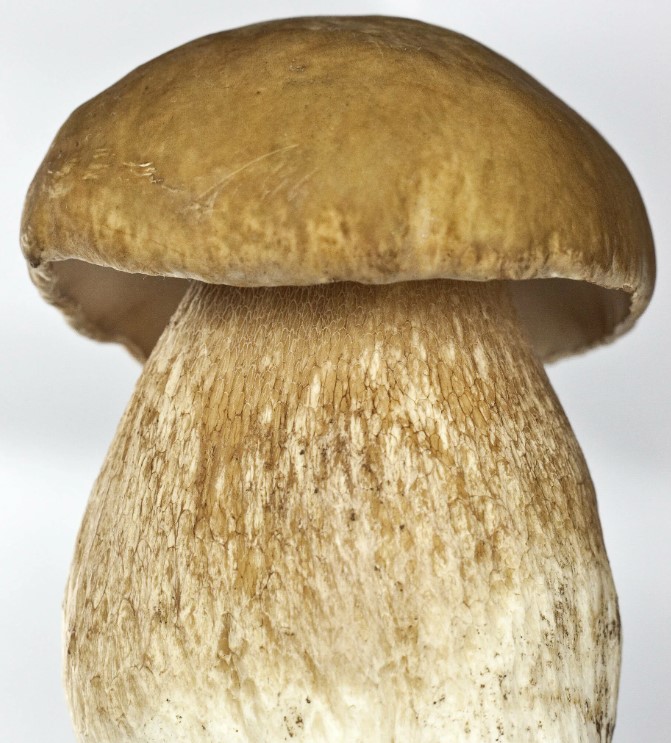
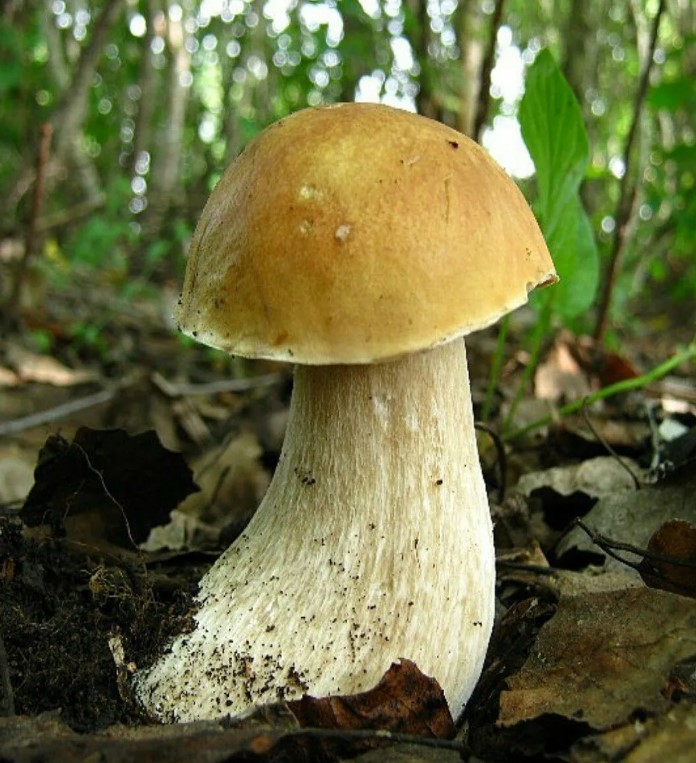
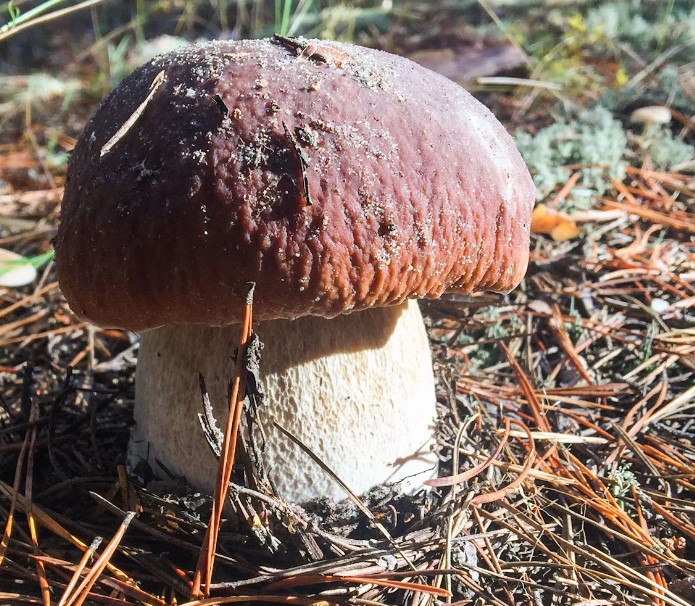
7-30 cm in circumference, but can be larger—up to 50 cm. Initially convex, later flat-convex, rarely prostrate. Smooth or wrinkled, glabrous, finely felted (especially along the perimeter), less commonly fibrous-scaly. May crack in drought. Slimy in high humidity.
It can vary in shade, from reddish-brown to almost white. It darkens with age. It can be yellow, reddish, or purple. The surface is often unevenly colored. The edges are lighter, sometimes with a narrow, snow-white or yellowish border.
Leg
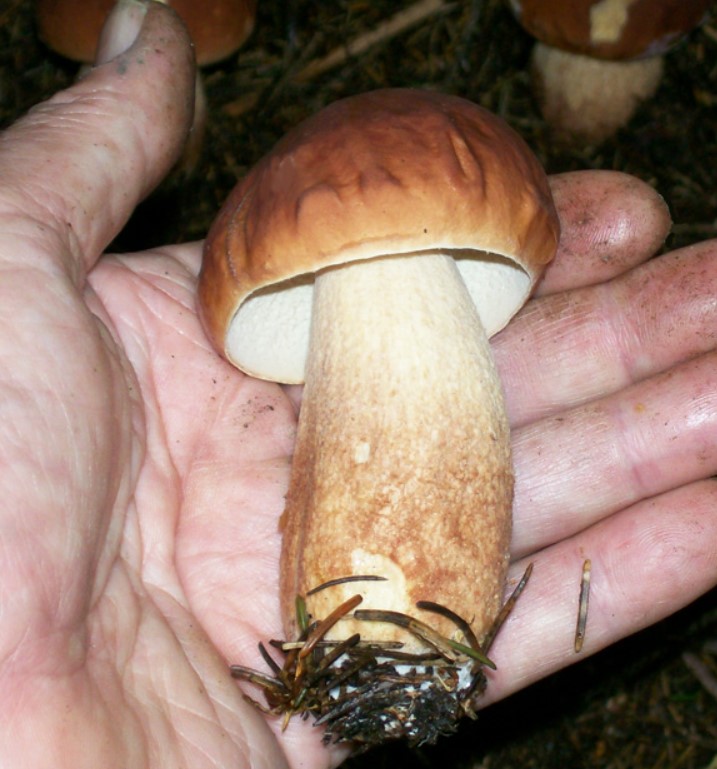
Up to 7-25 cm, but usually no more than 12 cm. Up to 7 cm thick. Large, barrel- or club-shaped. As it ages, it elongates, becoming cylindrical, tapering, or, conversely, widening in the middle. The bottom usually remains thick.
The stem surface is white, brown, or, less commonly, reddish. It can be the same shade as the cap, only lighter. The surface is covered with a network of whitish veins. This is usually located at the top, but can also extend to the bottom.
Pulp
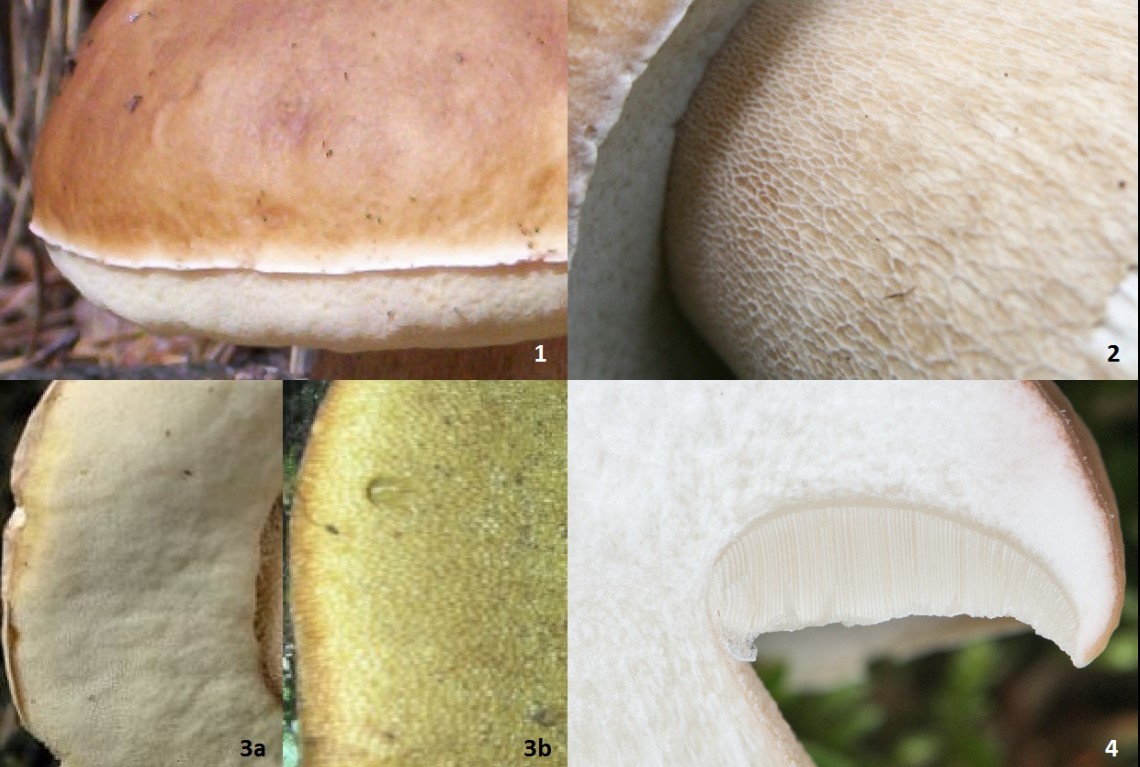
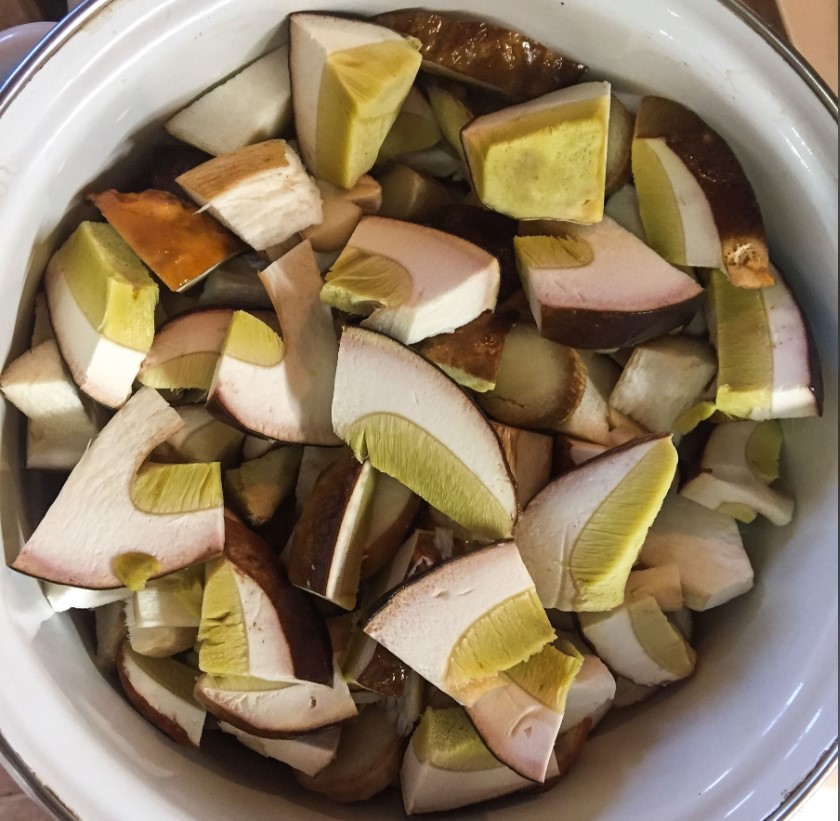
Dense, fleshy, and juicy. Initially snow-white, it then turns yellow and fibrous. When cut, it remains the same color. Sometimes it may turn a faint pink or bluish tint.
Spore powder
Olive-brown in color. The spores are spindle-shaped, averaging 15.5 × 5.5 µm. Their size can vary significantly even within the same specimen. Rarely, they can be greatly elongated, up to 22 µm, but their width does not exceed the standard.
What is the white mushroom called?
The mushroom is called "white" because it doesn't change color when cut. The flesh always remains light-colored, even after cooking. It also has other names: wood grouse, cow grouse, bear mushroom, cow grouse, belevik, feather grass, yellow grouse, and others.
Characteristics and properties of the White Mushroom
Mushrooms are especially prized for their rich flavor with subtle nutty notes. This flavor is especially enhanced after cooking and drying.
The porcini mushroom is quite large in size – at least 150 g. The growth rate is on average 5 days.
All species are similar in appearance, with only subtle differences in pattern or coloration.
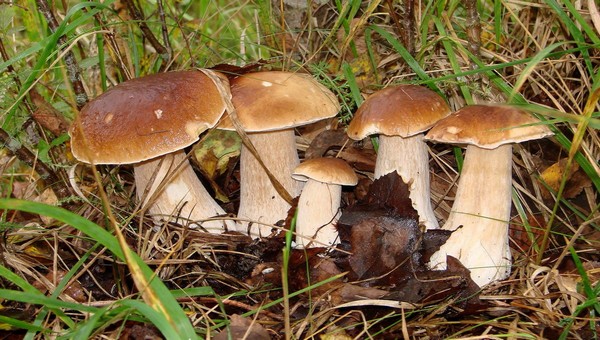
What is the difference? White mushrooms and boletus mushrooms, what are their similarities?
Where do porcini mushrooms grow?
They are found throughout the world. They are widespread in the Northern Hemisphere on all continents, with the only exception being Australia. They are found throughout the Russian Federation.
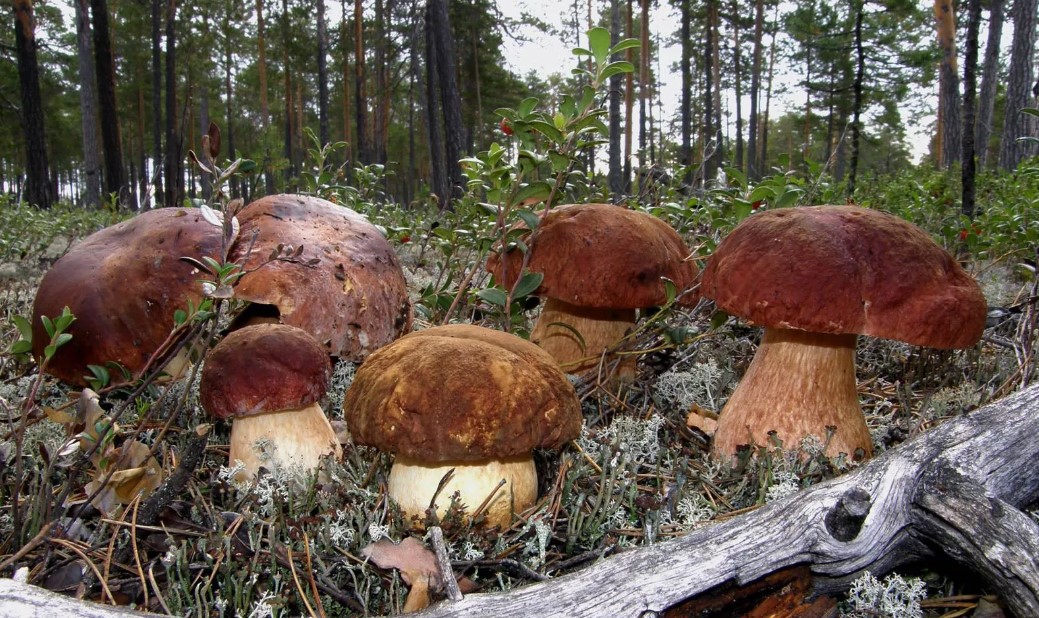
A white mushroom is growing In any forest. Most often found under birch, fir, pine, oak, and spruce trees. Prefers areas overgrown with lichen and moss, as well as old forests. It prefers warm areas, but can also grow in shade. Prefers sandy and sandy loam soils, as well as loam.
Porcini mushroom picking season
The fruiting period will depend on climatic conditions:
- regions with a temperate climate - mid-June to late September;
- South - late spring-mid autumn.
The second layer of mushrooms appears in the second half of July. After 2-3 weeks, growth begins to decline. After this, the third season (the most abundant) begins. Mushrooms can be picked until the first frost.
How long does a porcini mushroom grow?
On average, it takes 5 days for growth, but this time can vary up or down depending on the weather.
Optimal conditions for the growth of porcini mushrooms
What conditions are required for more intensive development:
|
Parameter |
Conditions |
|
Temperature |
The optimal temperature is +15…+18 °C. However, mushrooms can also grow at lower temperatures of +8…+10 °C. |
|
Humidity |
50-60% |
After the rain
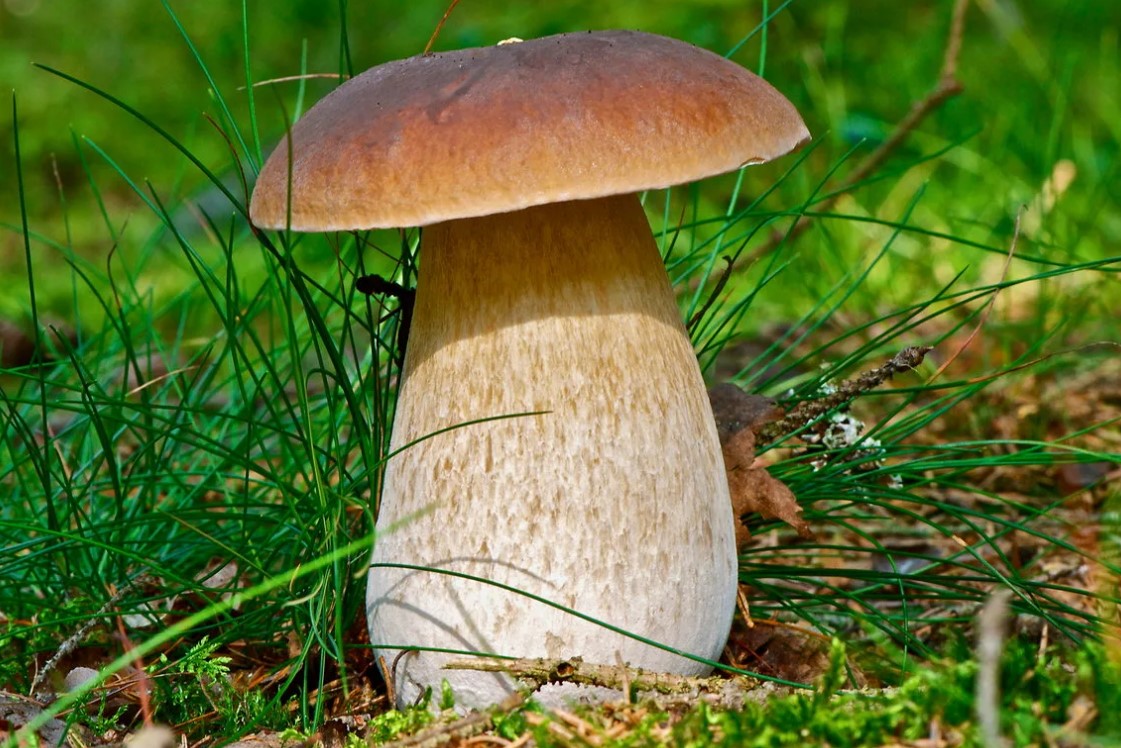
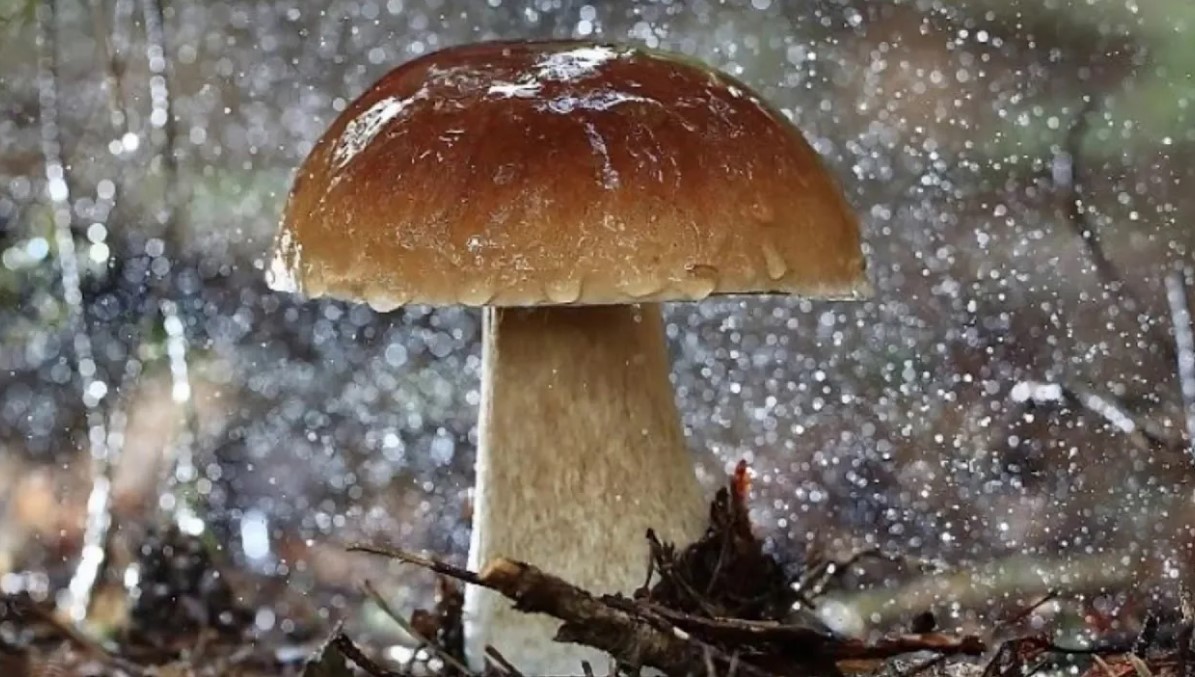
Rain stimulates intensive mycelial growth. This typically lasts for 2-4 days. Then the fruiting body (cap and stem) begins to grow. The fruiting process is complete 15-18 days after the tip emerges above the ground.
Mushrooms grow well after rain only if there was no drought the day before. High temperatures simply prevent the mycelium from absorbing moisture.
Furthermore, not every rainfall promotes vigorous growth. Short-term rainfalls or heavy downpours have virtually no effect on mushroom growth. Development is promoted by moderate rainfall, when the water falls gradually, moistening layer after layer and accumulating in the soil.
How to pick porcini mushrooms
For a “silent hunt” you need to prepare the following:
- A knife with a rounded blade and a safety tip. A regular knife with a thin, narrow blade will also work.
- A container for the harvest. A wicker basket is ideal. It will keep the mushrooms intact during transport. Bags are not recommended, as they restrict oxygen and can damage the mushrooms.
- A wooden forked stick. It can be used to push aside fallen leaves and grass while searching.
- Camping equipment (first aid kit, water, food, etc.).
When picking mushrooms, you should adhere to the following rules:
- Don't pull the find out by the roots. Carefully cut it off with a knife or twist it out.
- Place the mushrooms in a basket with the caps down.
- Do not trample the mycelium.
- Start collecting before sunrise (mushrooms will be more visible).
18 types of porcini mushrooms
B. P. Vasilkov (Soviet scientist, mycologist) described 18 forms of porcini mushrooms depending on mycorrhiza, fruiting season, fruiting characteristics, etc.
The Latin names of the species-forms of the Boletus edulis are given in abbreviations. For example: Boletus edulis f. edulis (B. ed. edulis)
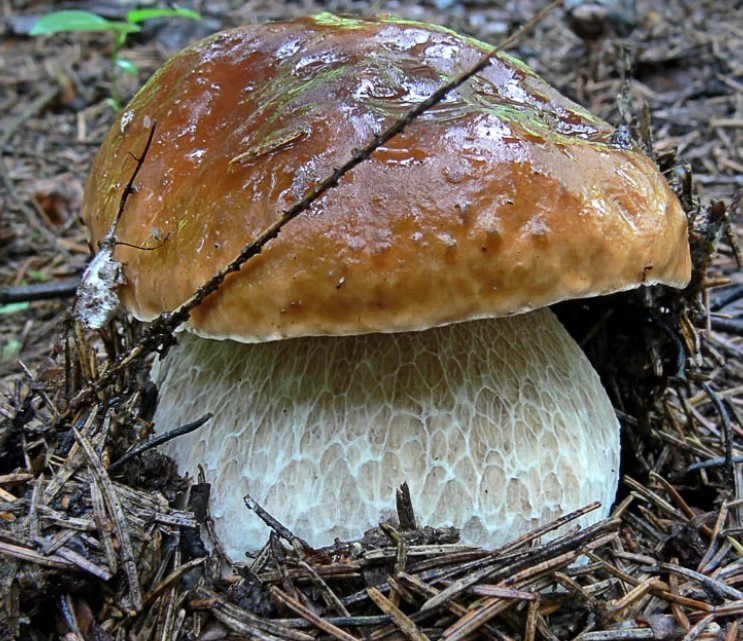
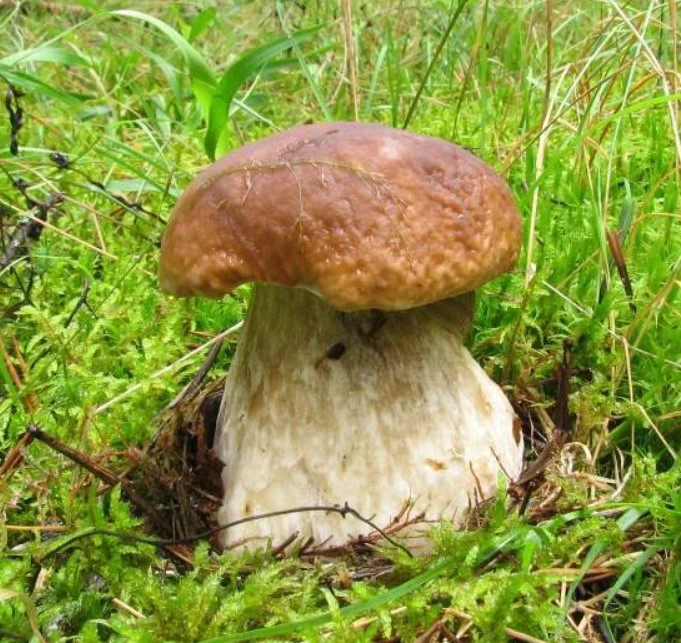
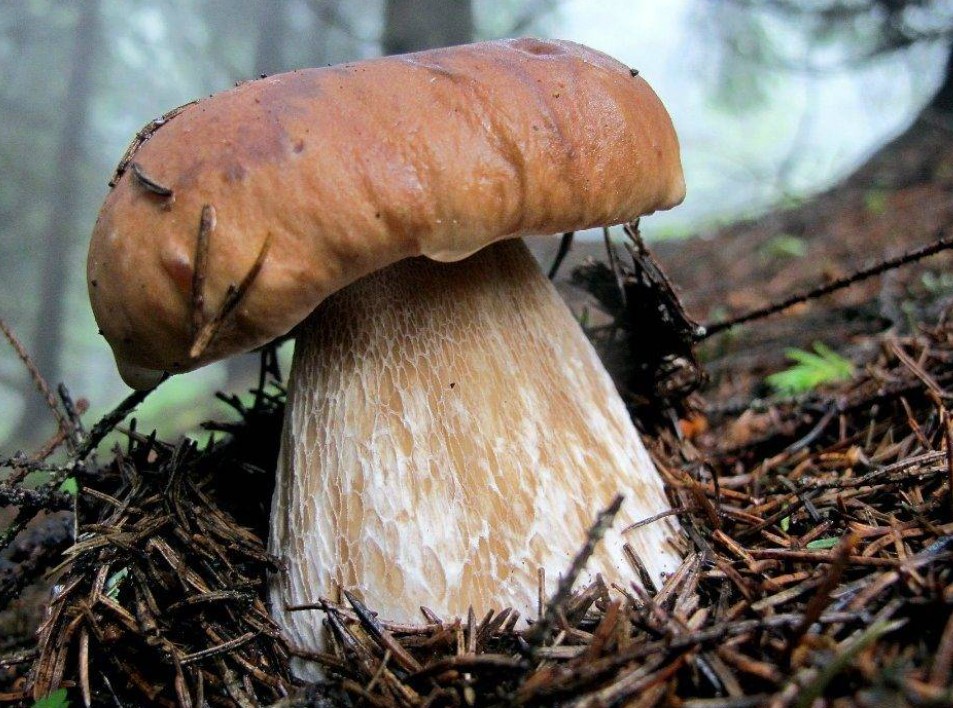
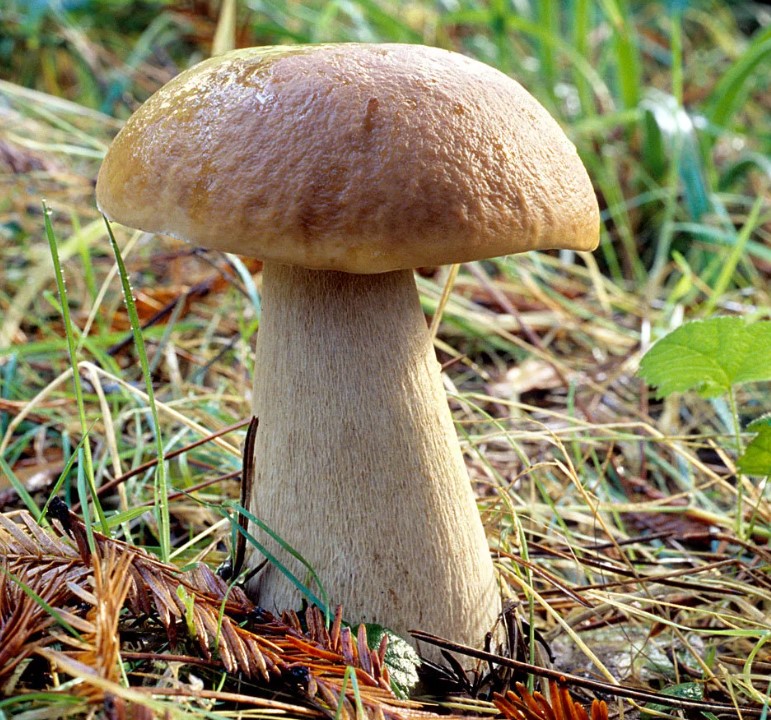
Spruce
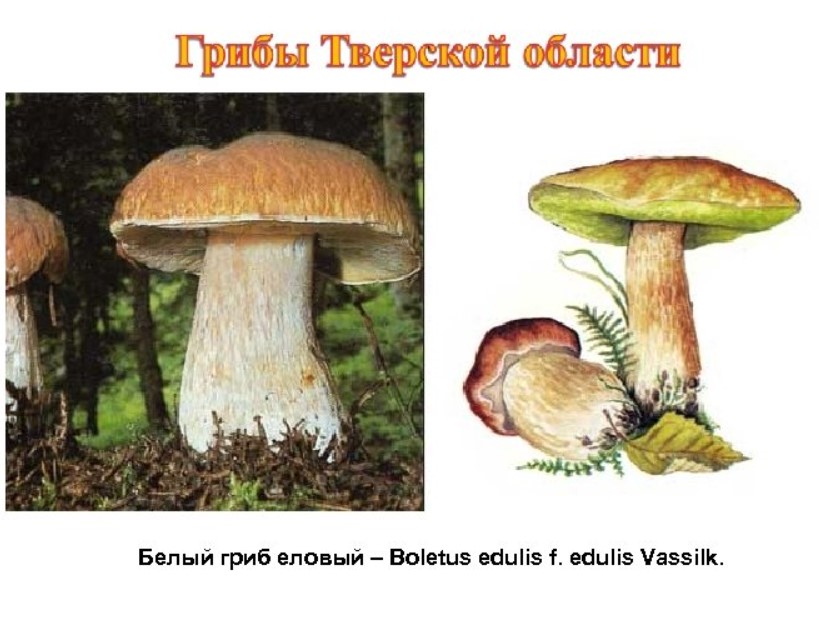
| View | B. ed. edulis |
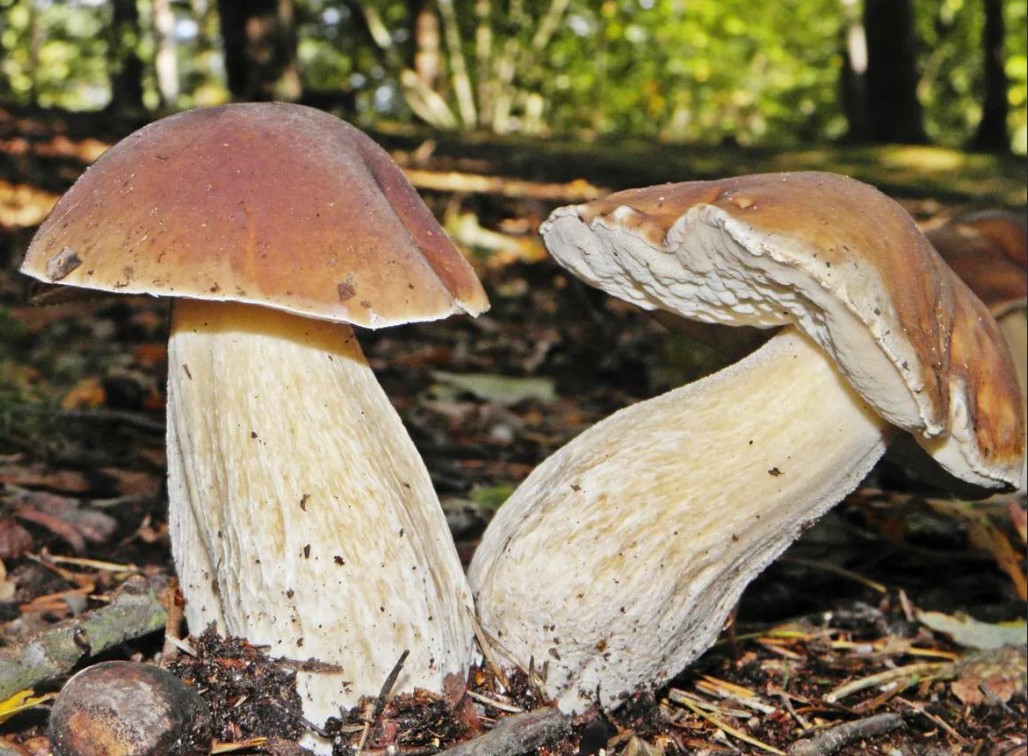
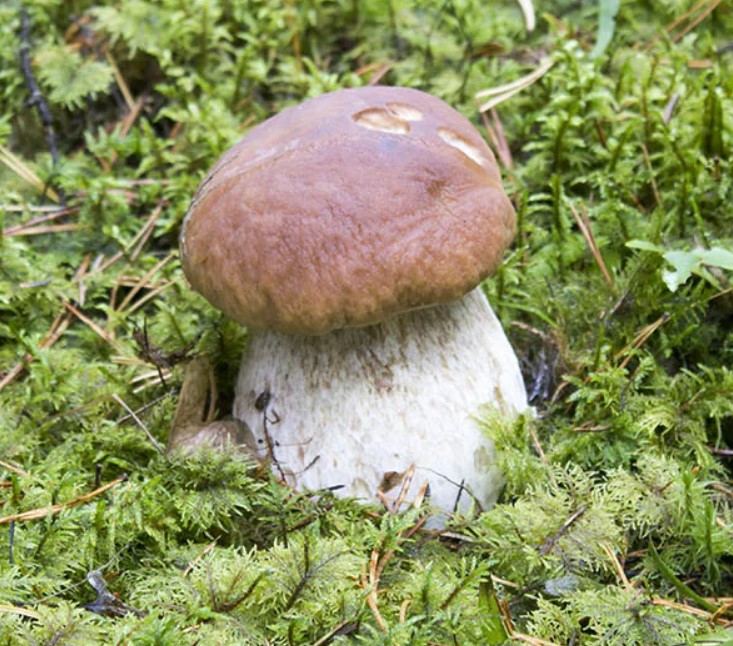
| Description | At different stages of development, the cap diameter can vary from 5 to 40 cm. It becomes sticky in high humidity. It is white or dark brown in color with yellowish, reddish, or snow-white specks. The stem is up to 25-26 cm long and up to 5 cm in circumference. The flesh is initially white, then turns yellow. Many mushroom pickers consider this variety to be the most delicious. It can be prepared in a variety of ways. |
| Collection deadlines | From the beginning of July to October. |
| Where to look | Prefers a temperate climate and is most often found in dense spruce forests. |
Photo gallery of the spruce porcini mushroom
Oak
| View | B. ed. quercicola |
| Description | The cap is brown with a grayish tint. Light spots may be present. The flesh is more loose compared to other varieties. |
| Collection deadlines | June-October. |
| Where to look | Oak forests of the central and southern zones of the European part of the Russian Federation, the Caucasus, and Primorsky Krai. |
Photo gallery of white oak mushroom
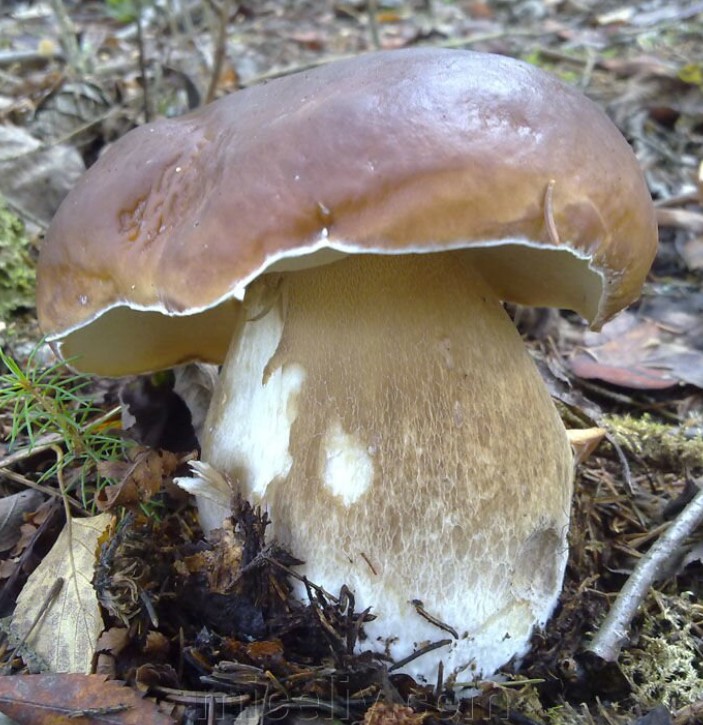
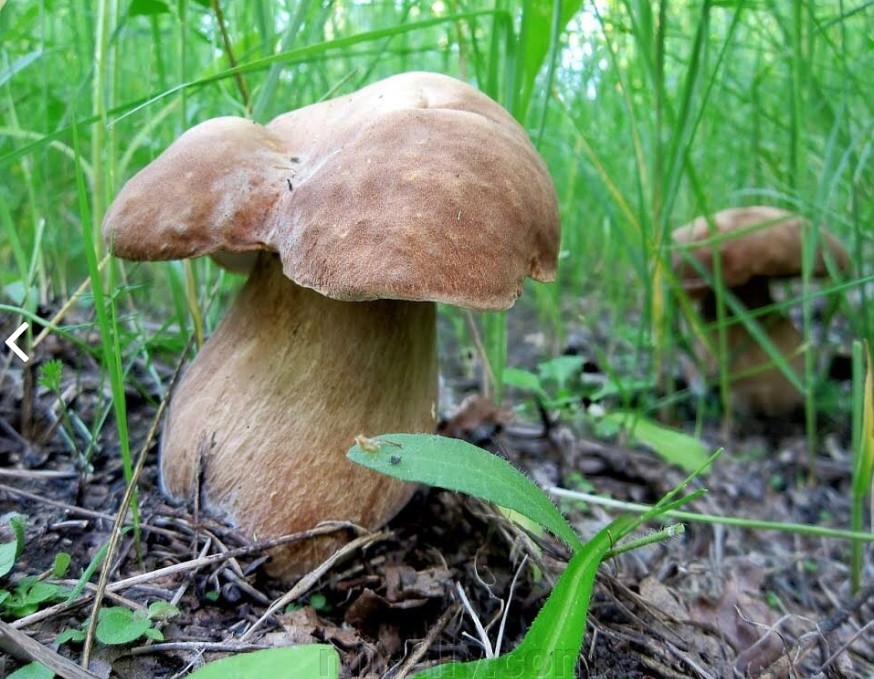
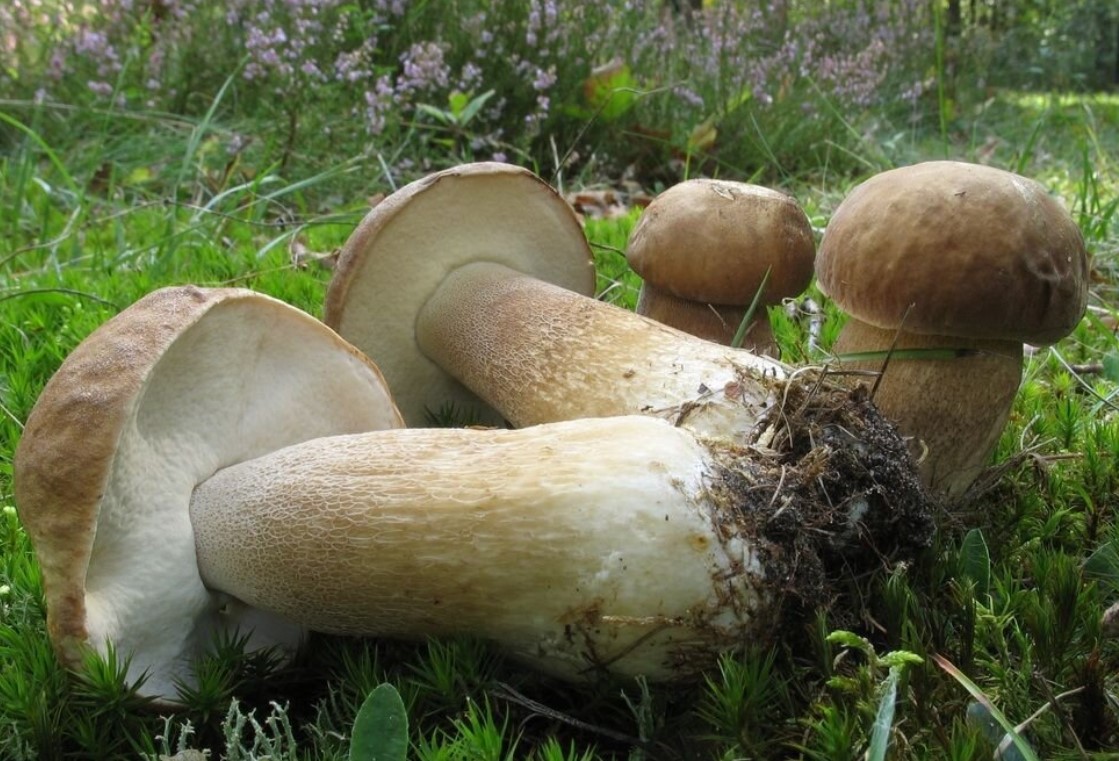
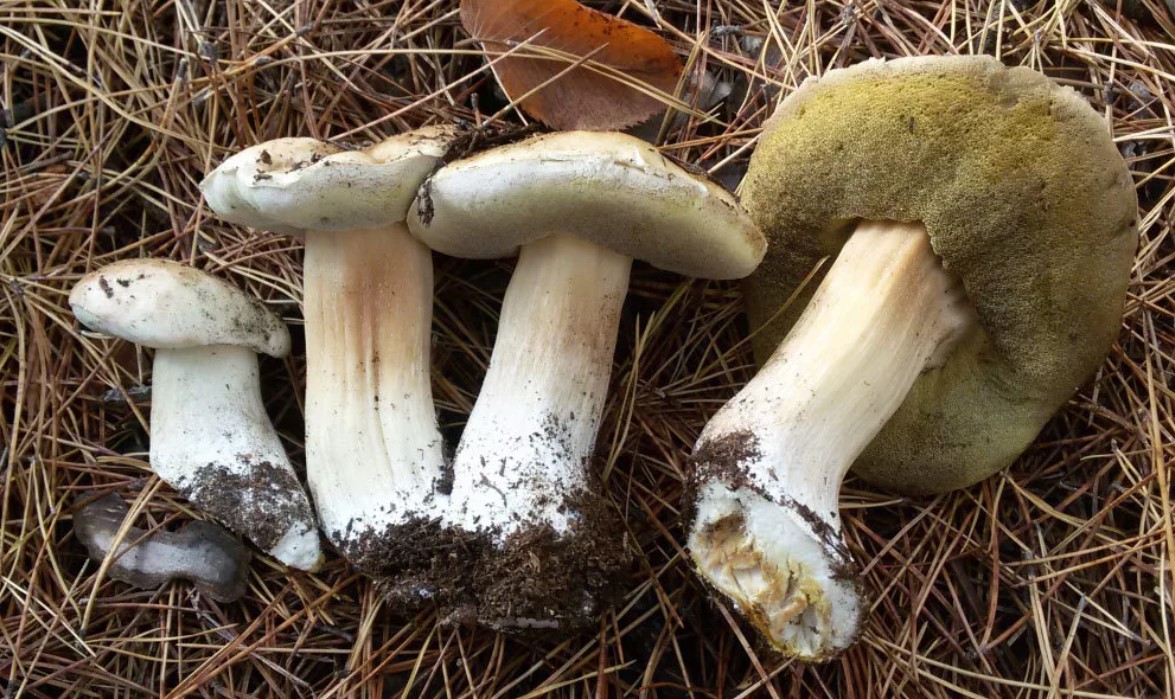
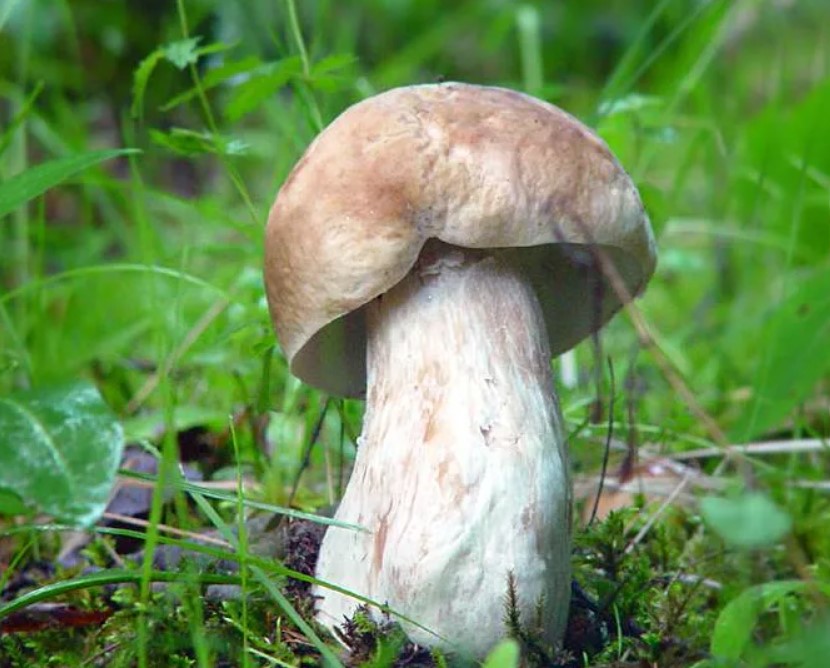
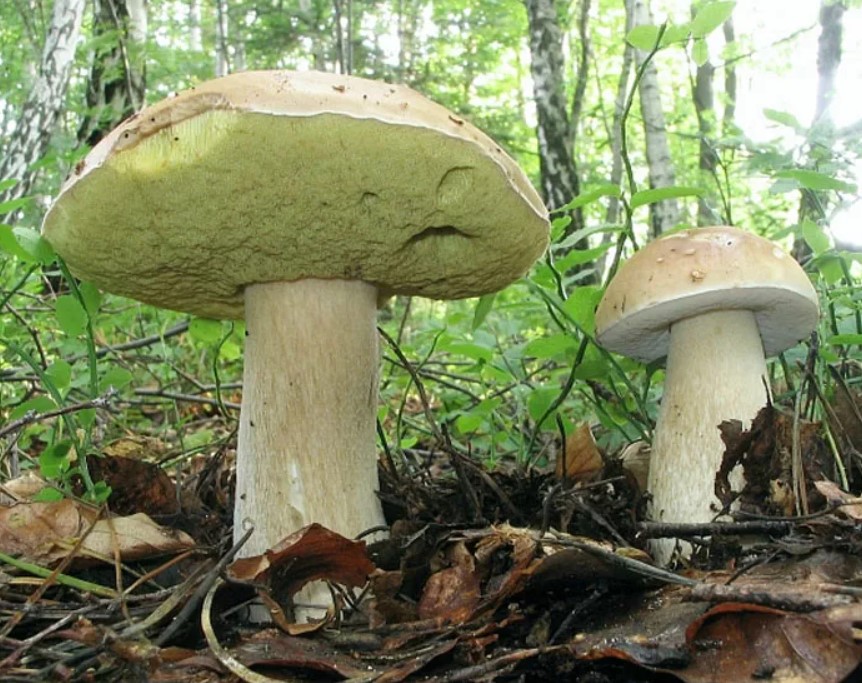
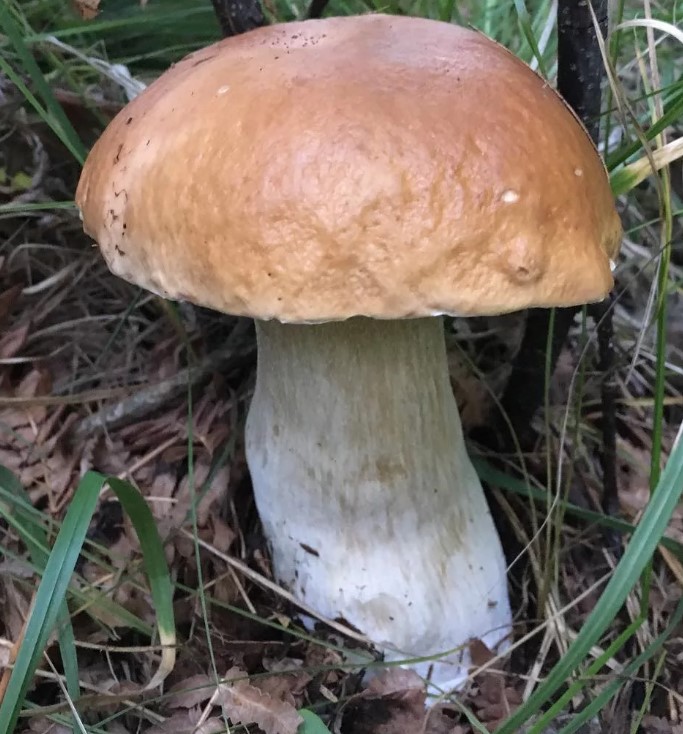
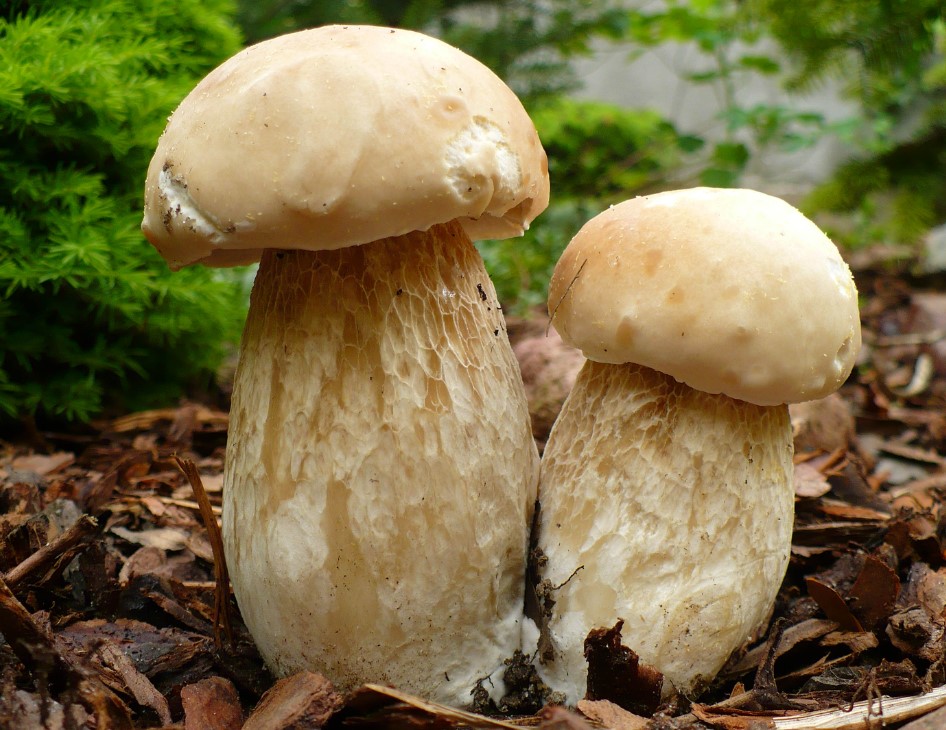
Birch
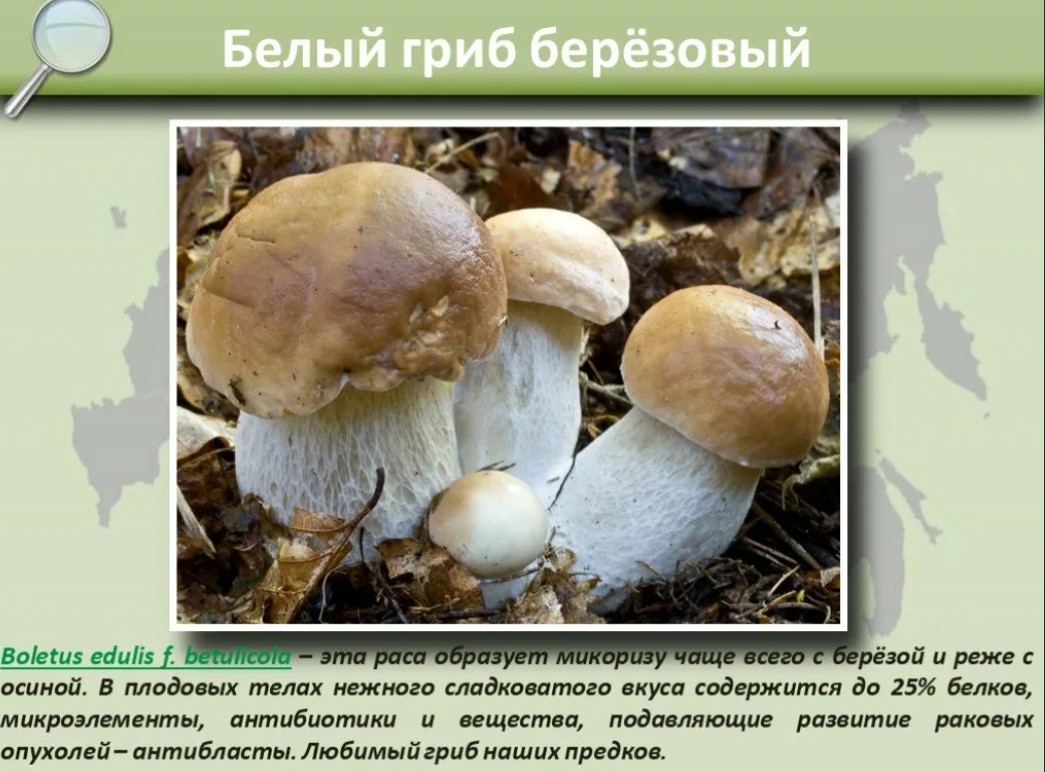
| View | B. ed. betulicolus |
| Description | Young specimens have a white, barrel-shaped stem that becomes thinner as they grow. It is distinguished by a light, smooth cap, reaching 14 cm in circumference. |
| Collection deadlines | July-end of October. |
| Where to look | It grows in all types of soil, typically under birch trees, with the exception of acidic peatlands. It is not found in birch-aspen forests. |
Photo gallery of white birch mushroom
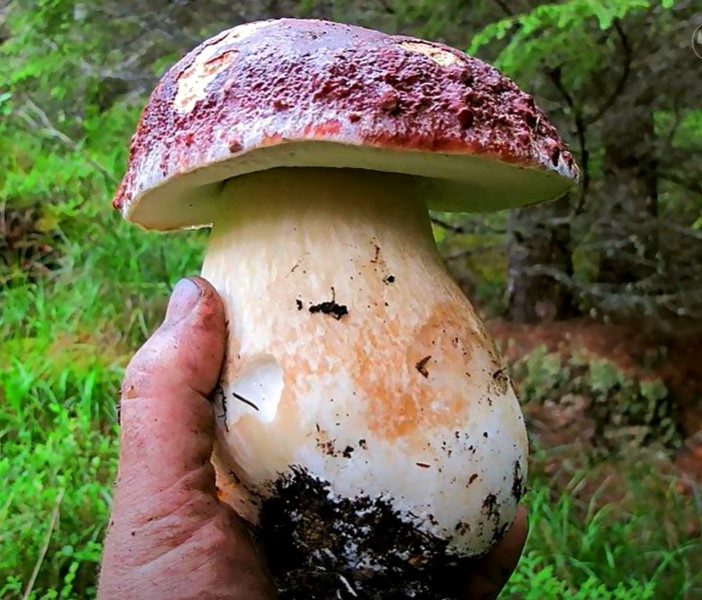
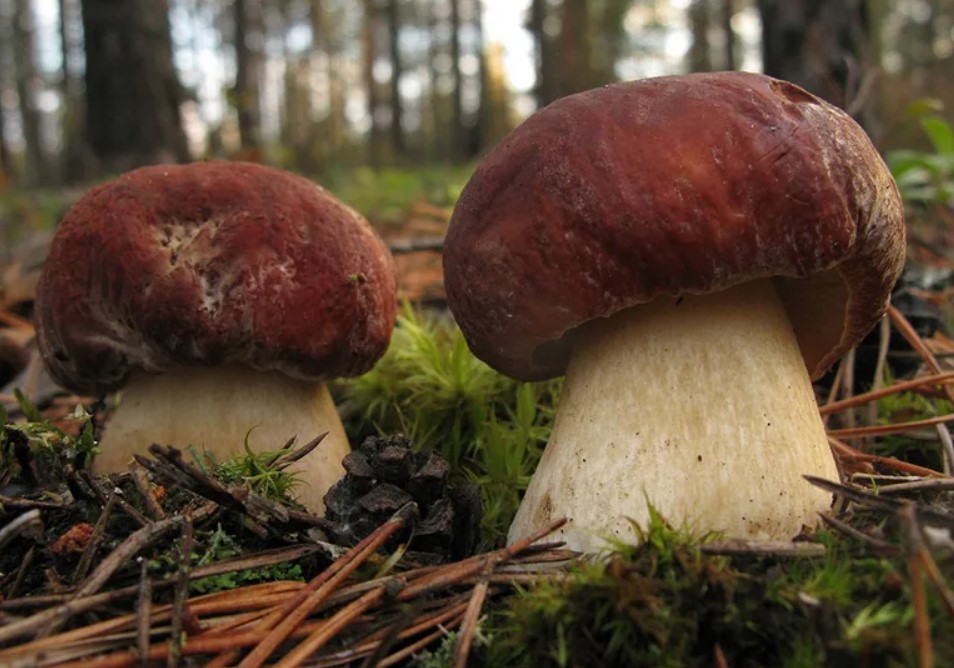
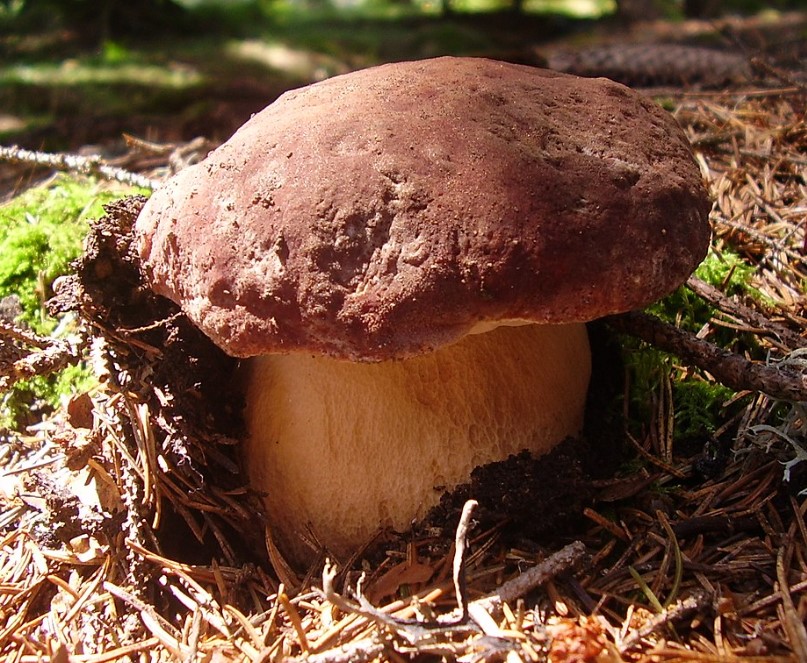
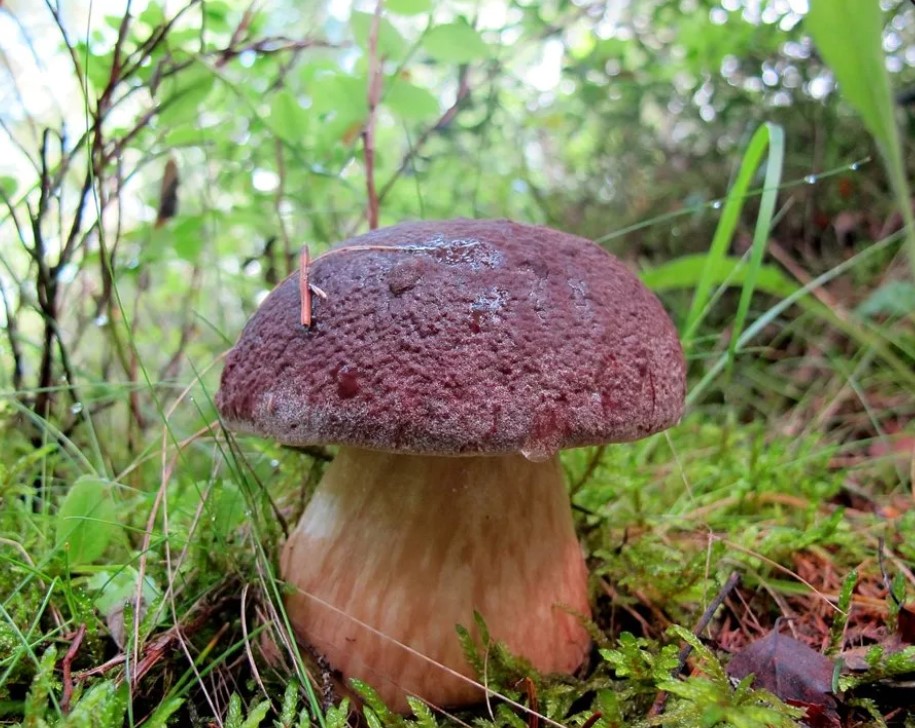
Pine
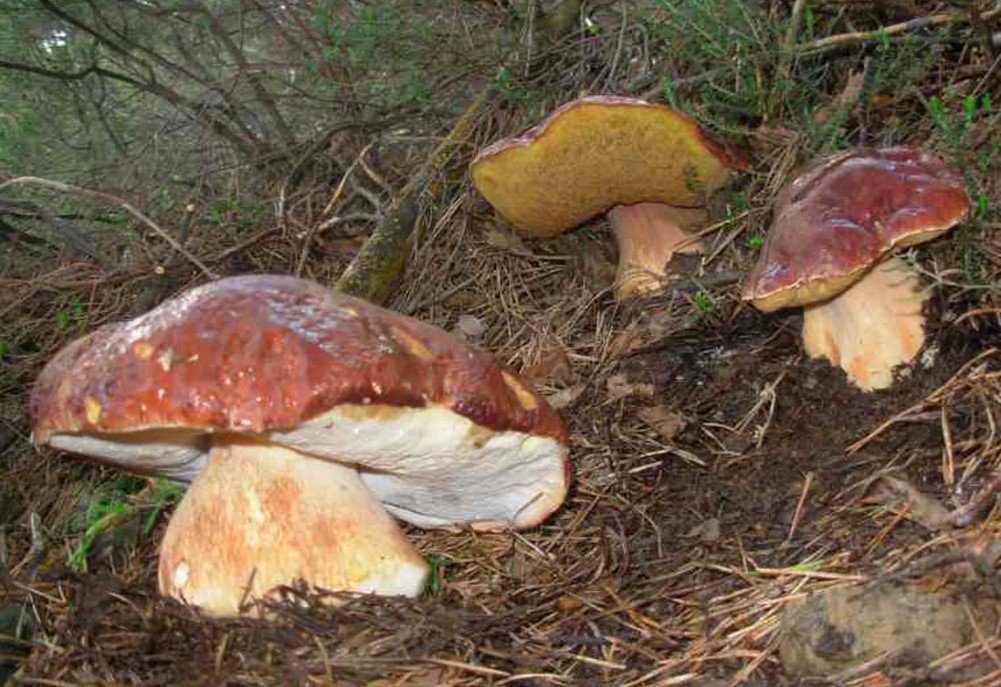
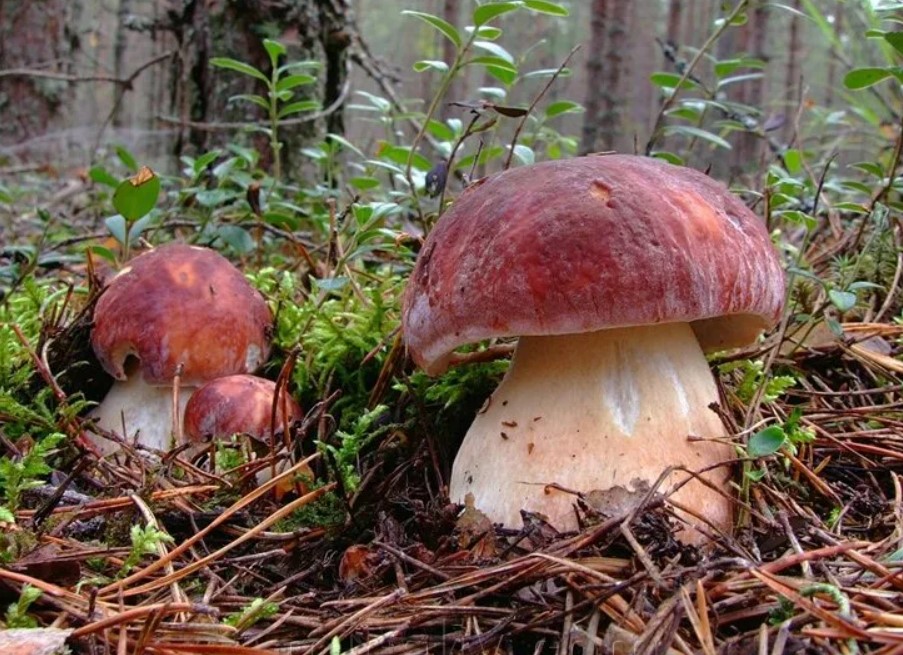
| View | B. ed. pinophilus |
| Description | The cap is reddish-brown. It can change color to dark purple with light veins around the perimeter. It is up to 25 cm in circumference. The stem is up to 15-16 cm. |
| Collection deadlines | Since the beginning of spring. |
| Where to look | It grows most often in poor sandy soil, and least often in black soil. |
Photo gallery of the pine boletus
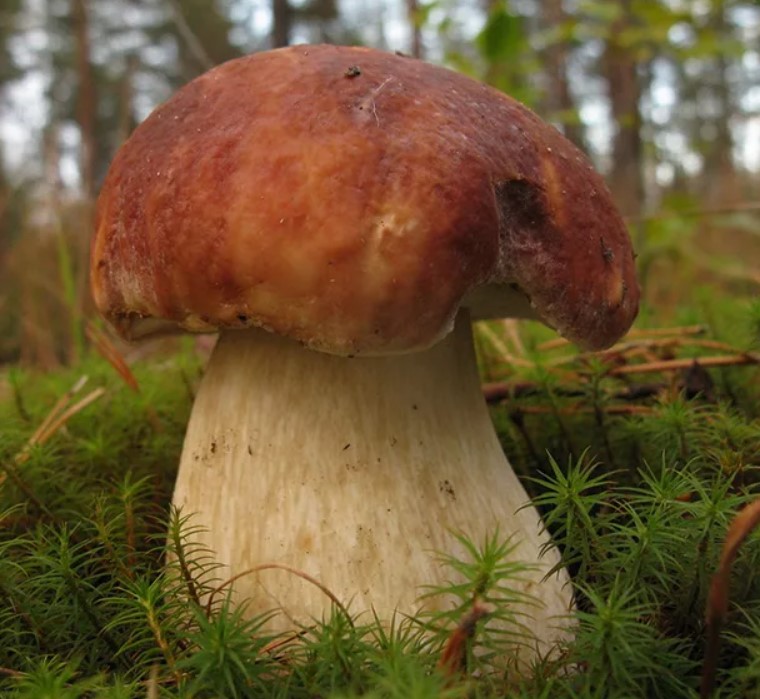
Early
| View | B. ed. praecox |
| Description | The cap is relatively small, often cracked, pale brown or light ochre without a reddish tint. |
| Collection deadlines | May-June. |
| Where to look | Dry pine forests. |
Photo gallery of early porcini mushrooms
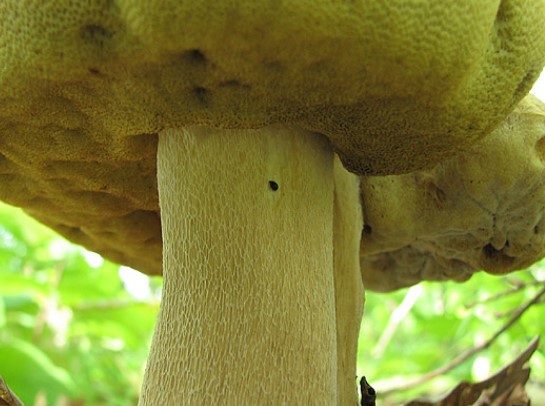
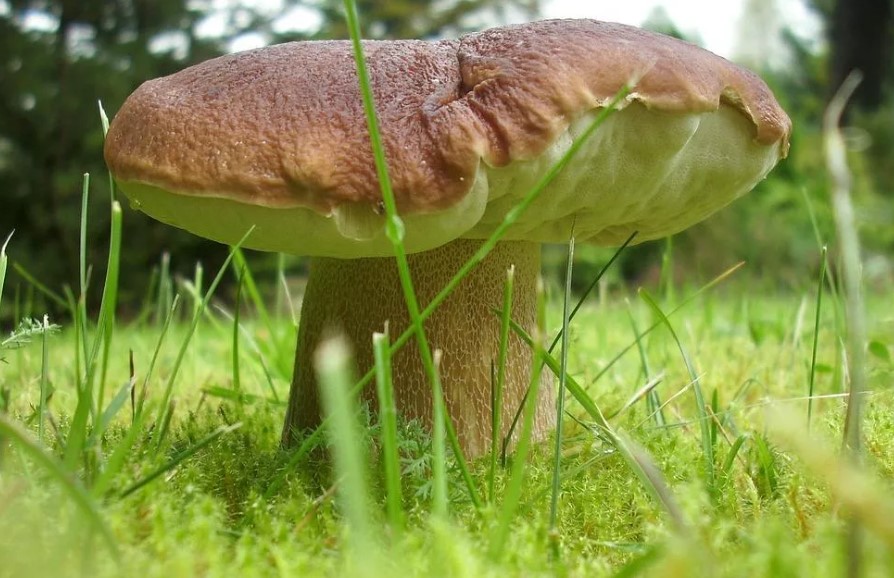
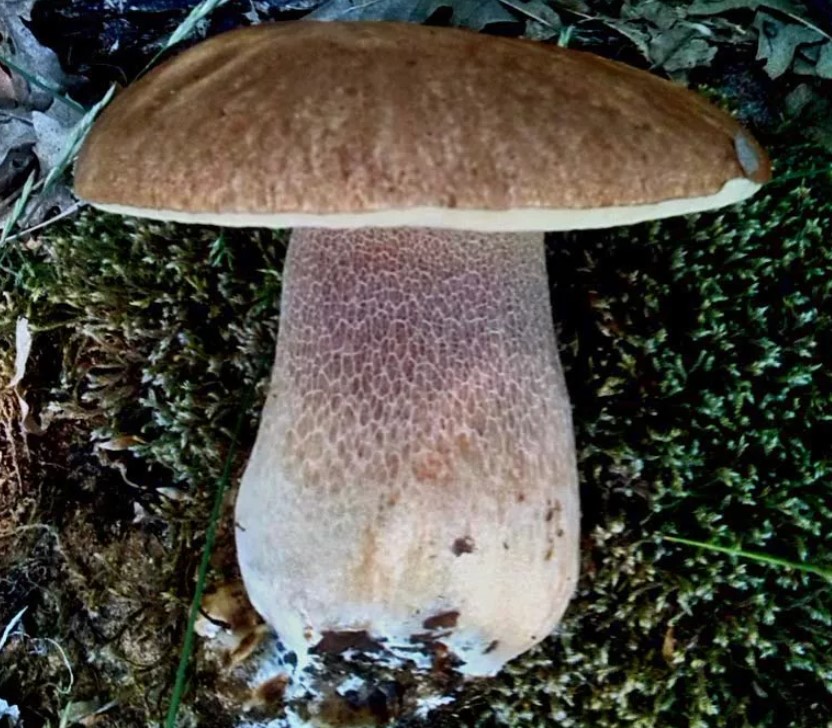
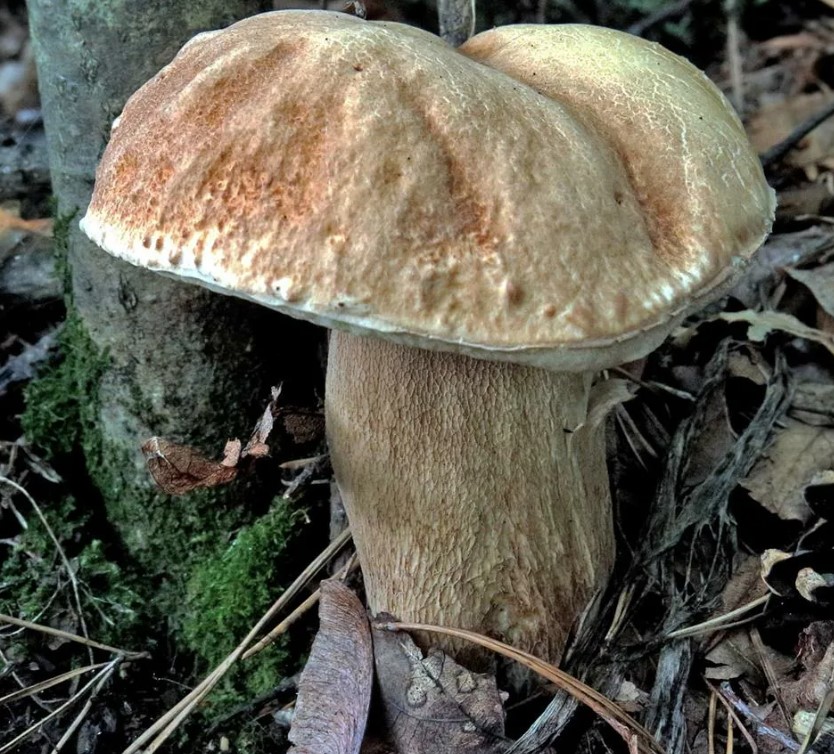
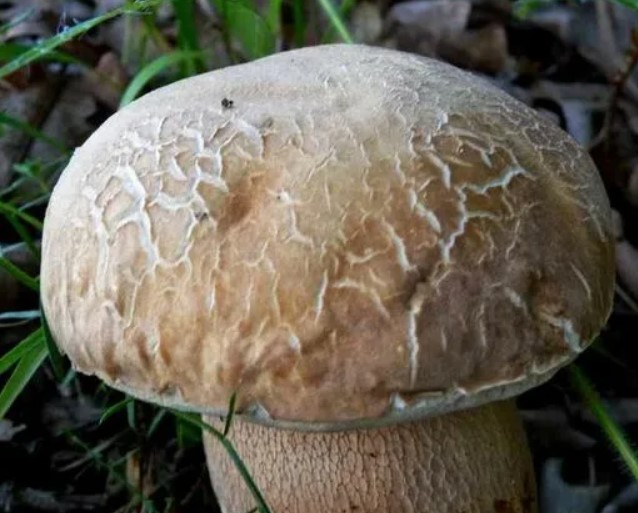
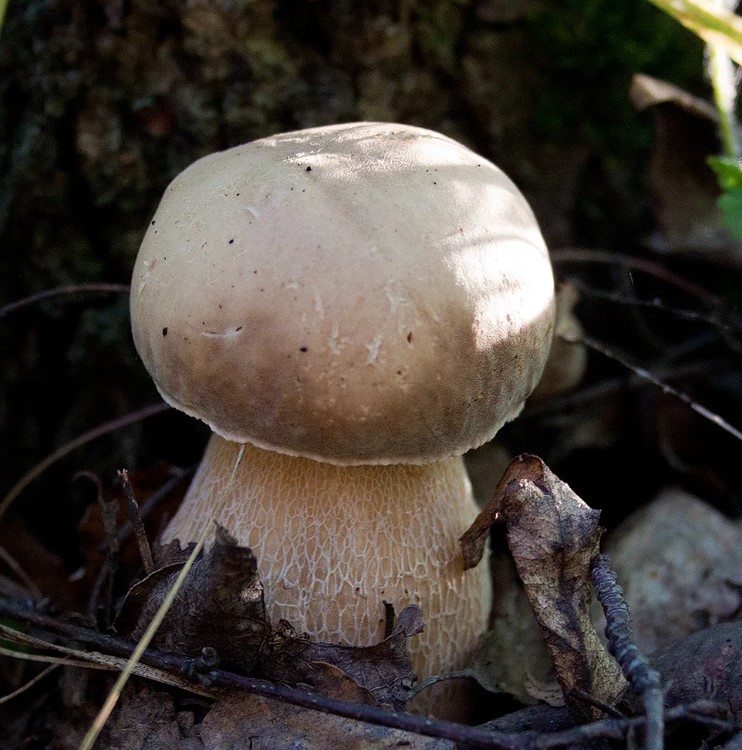
Reticulate
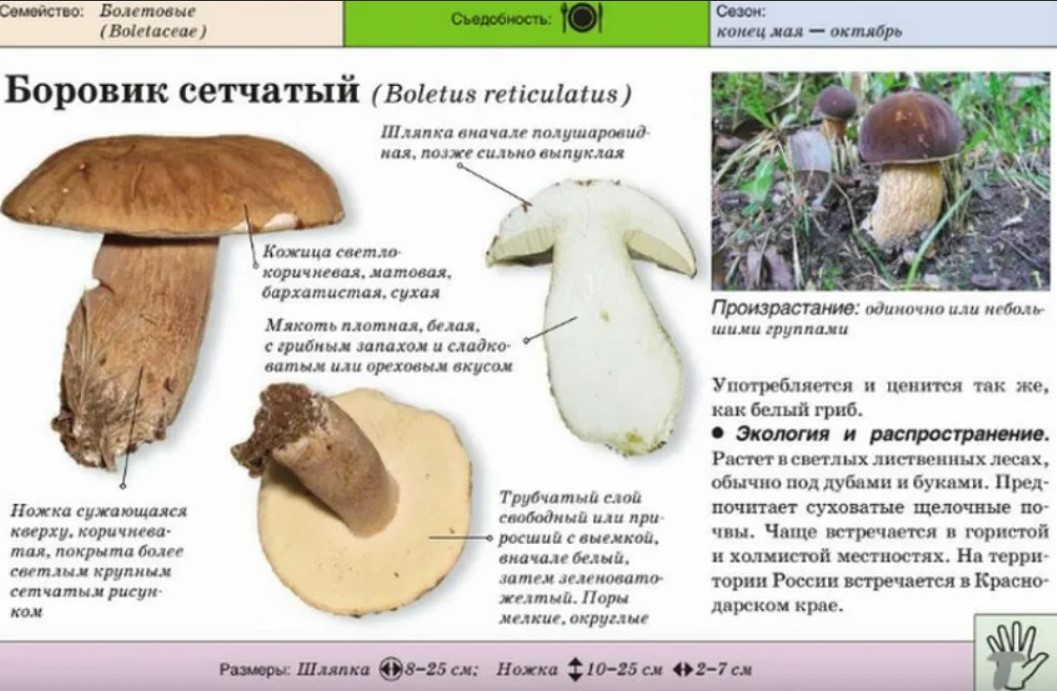
| View | B. ed. reticulatus |
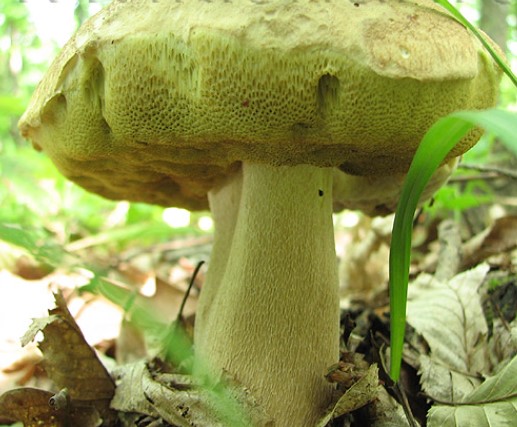
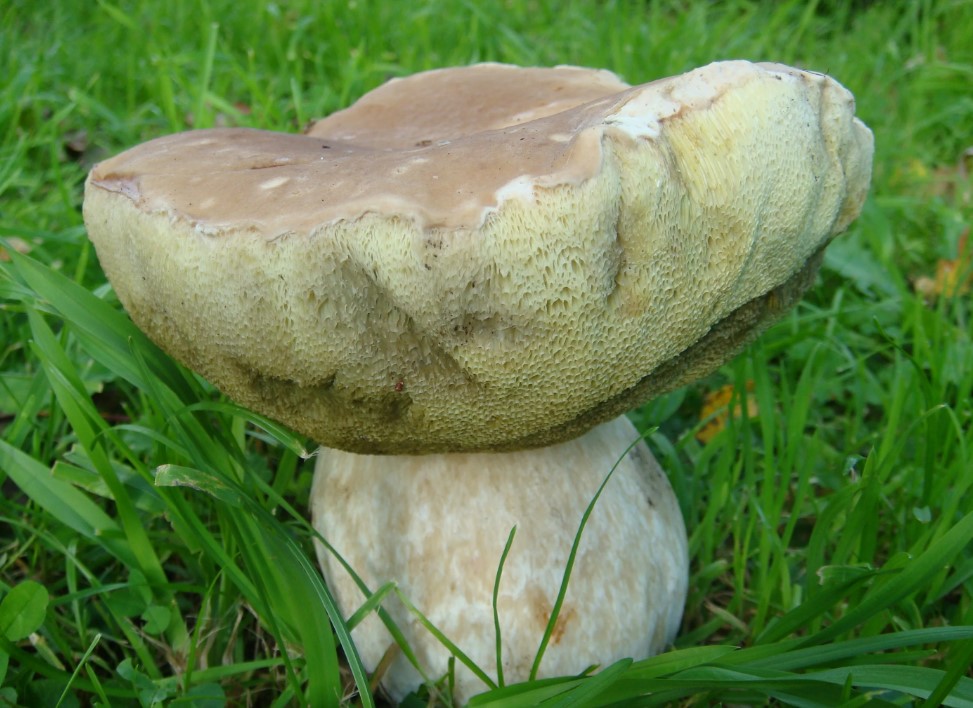
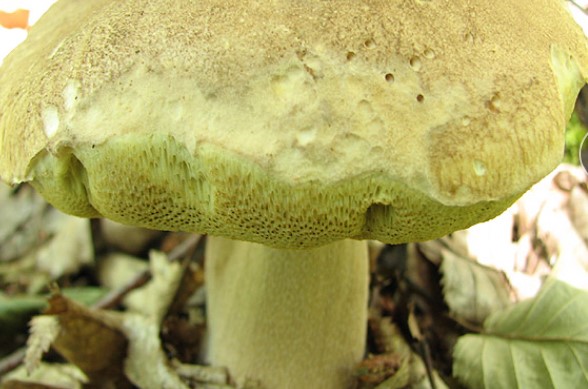
| Description | The cap is brown or ochre, with a mesh. The stem is cylindrical. Its appearance resembles a flywheel. |
| Collection deadlines | June-September. |
| Where to look | Beech and hornbeam forests. |
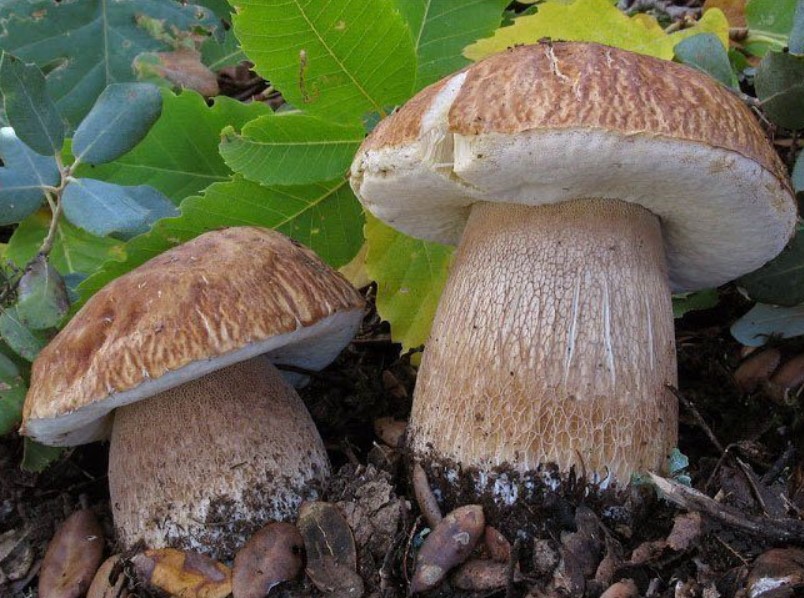
Photo gallery of the porcini mushroom
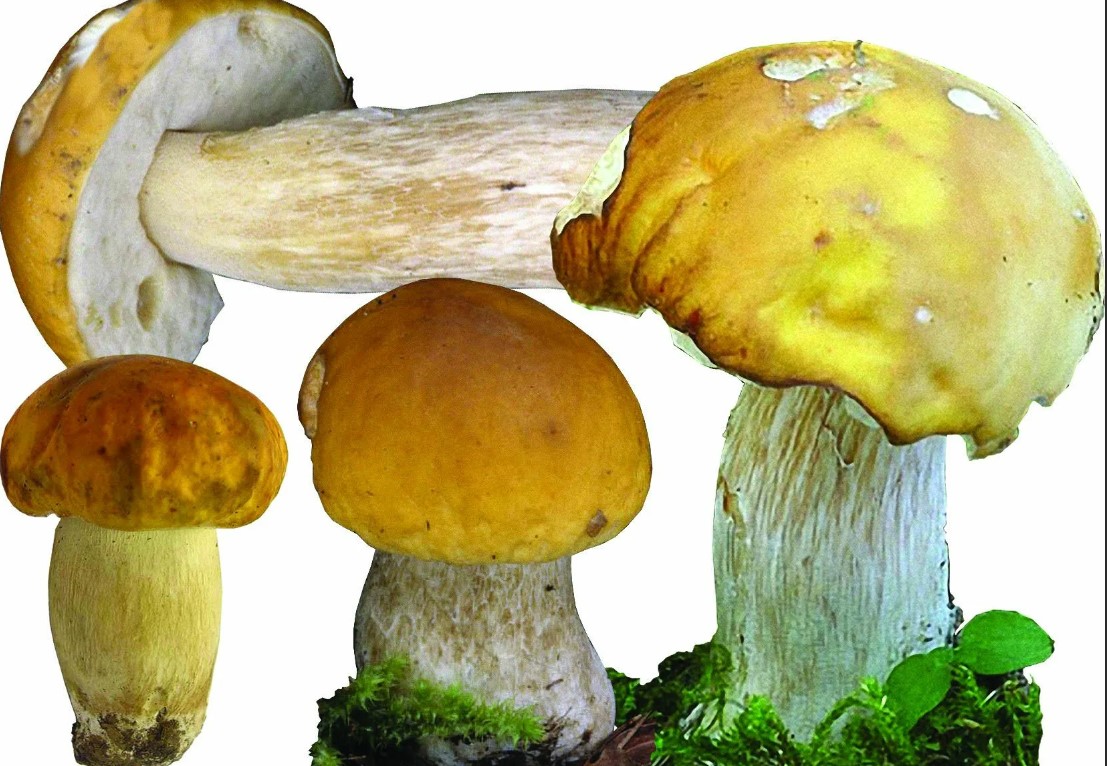
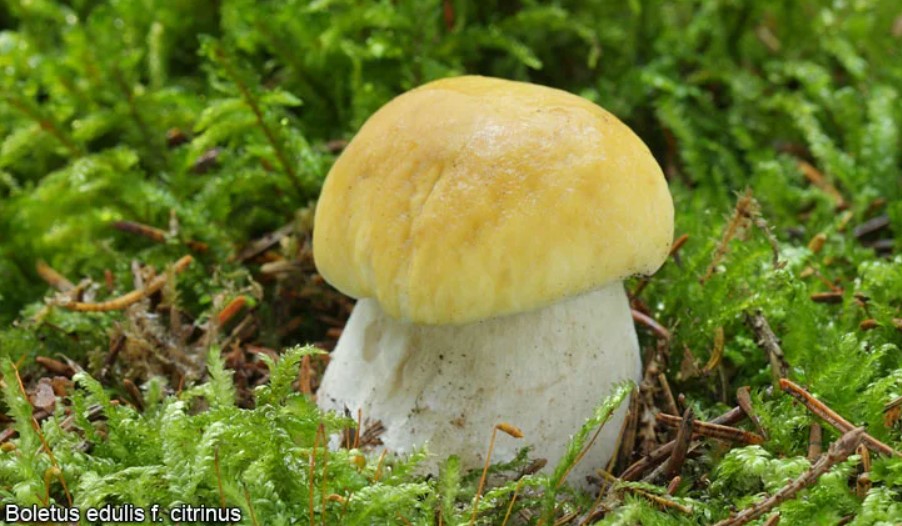
Lemon yellow
| View | B. ed. citrinus |
| Description | Bright yellow cap surface. |
| Collection deadlines | July-October. |
| Where to look | Spruce-pine copses. |
Photo gallery of the lemon-yellow porcini mushroom
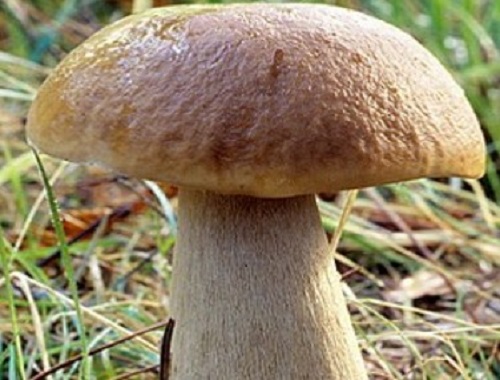
Smooth-legged
| View | B. ed. laevipes |
| Description | There is no mesh on the leg. |
| Collection deadlines | Standard. |
| Where to look | Birch forests of the Russian Federation, England, Belgium. |
Photo of a smooth-stemmed porcini mushroom
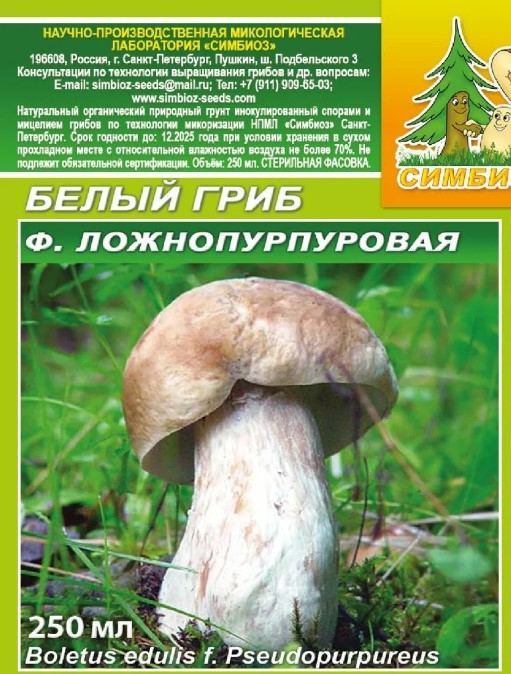
False purple
| View | B. ed. pseudopurpureus |
| Description | The cap is brownish-purple, the tubular layer is reddish-pinkish. |
| Collection deadlines | From the second half of summer until the onset of cold weather. |
| Where to look | Austria. |
Photo of a false purple porcini mushroom
Special
| View | B. ed. separans |
| Description | The color of the cap and stem ranges from purple to lilac. |
| Collection deadlines | June-October. |
| Where to look | North America, deciduous forests. |
Photo gallery of the special white mushroom
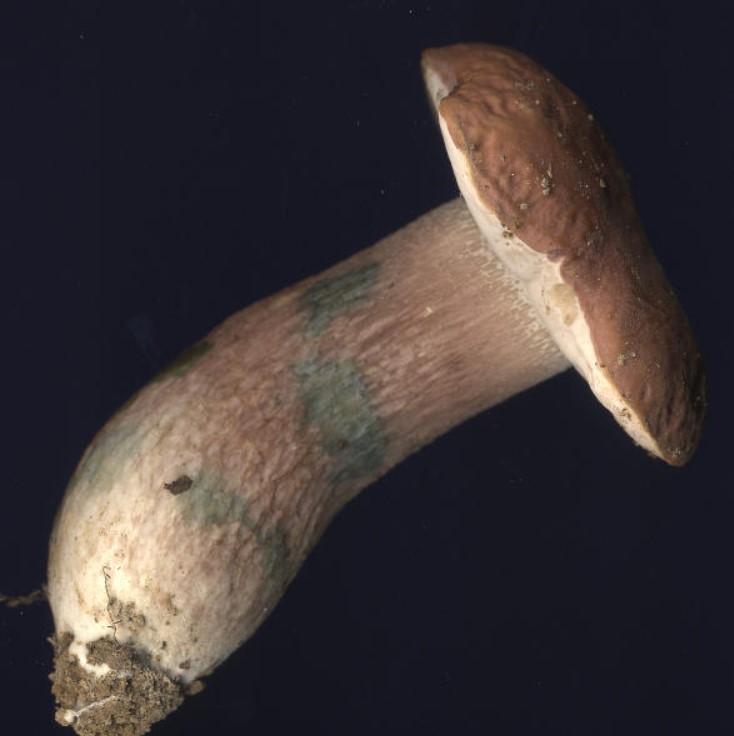
Orange-red
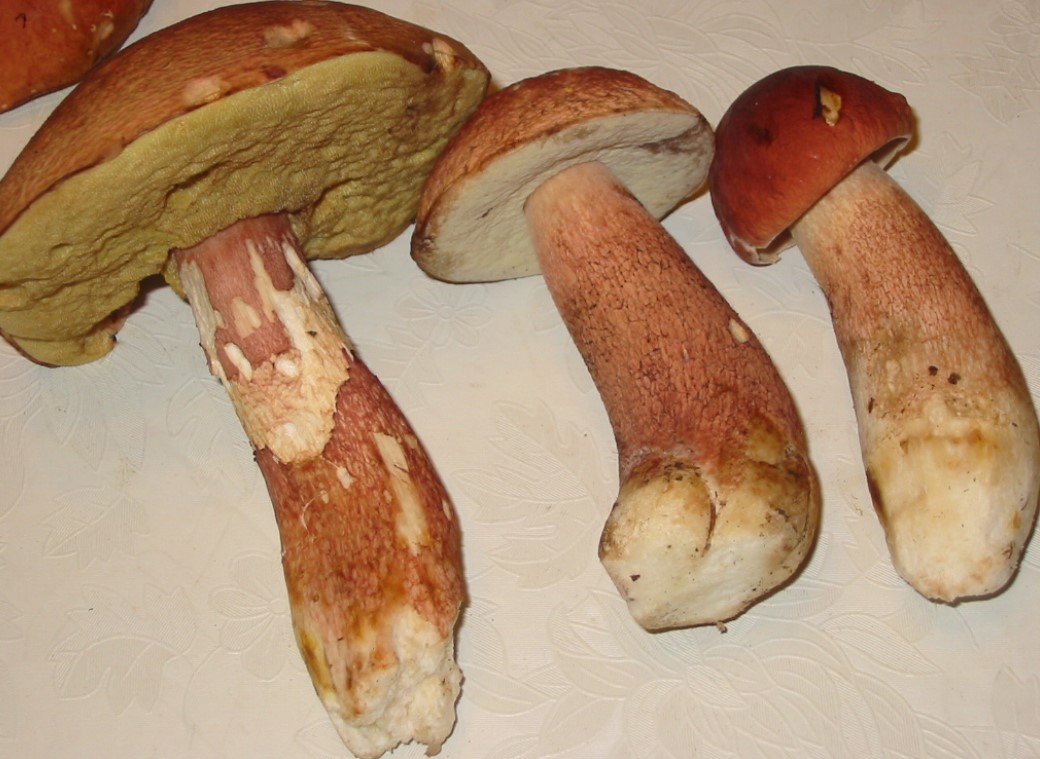
| View | B. ed. aurantioruber |
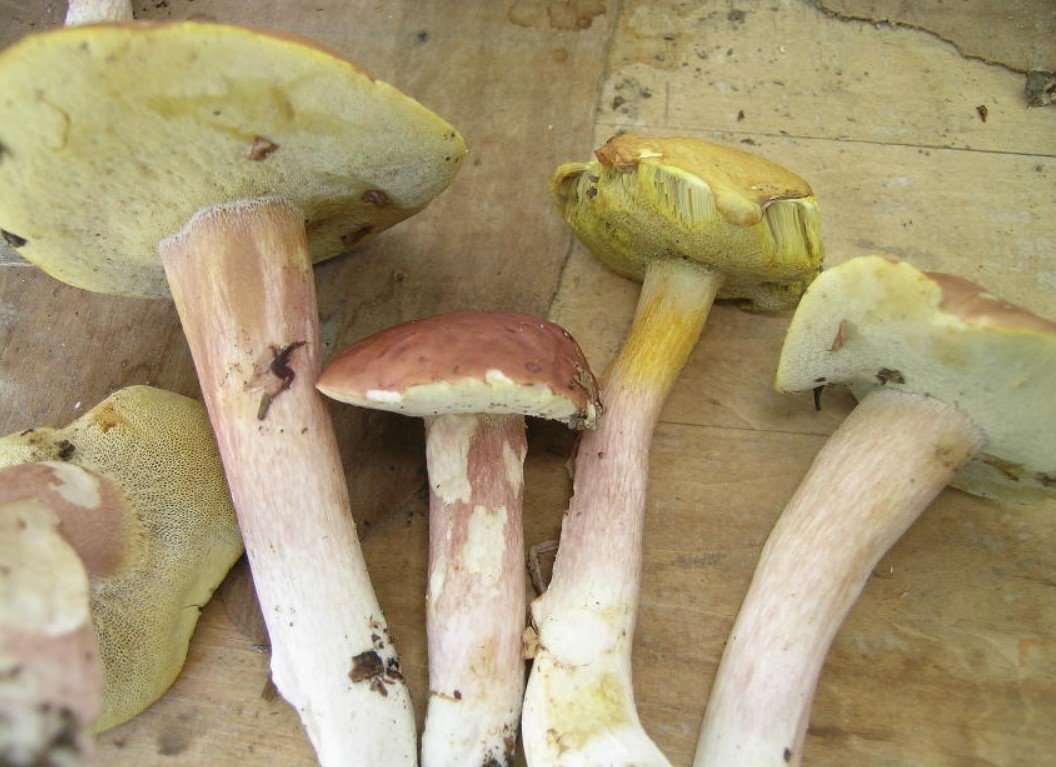
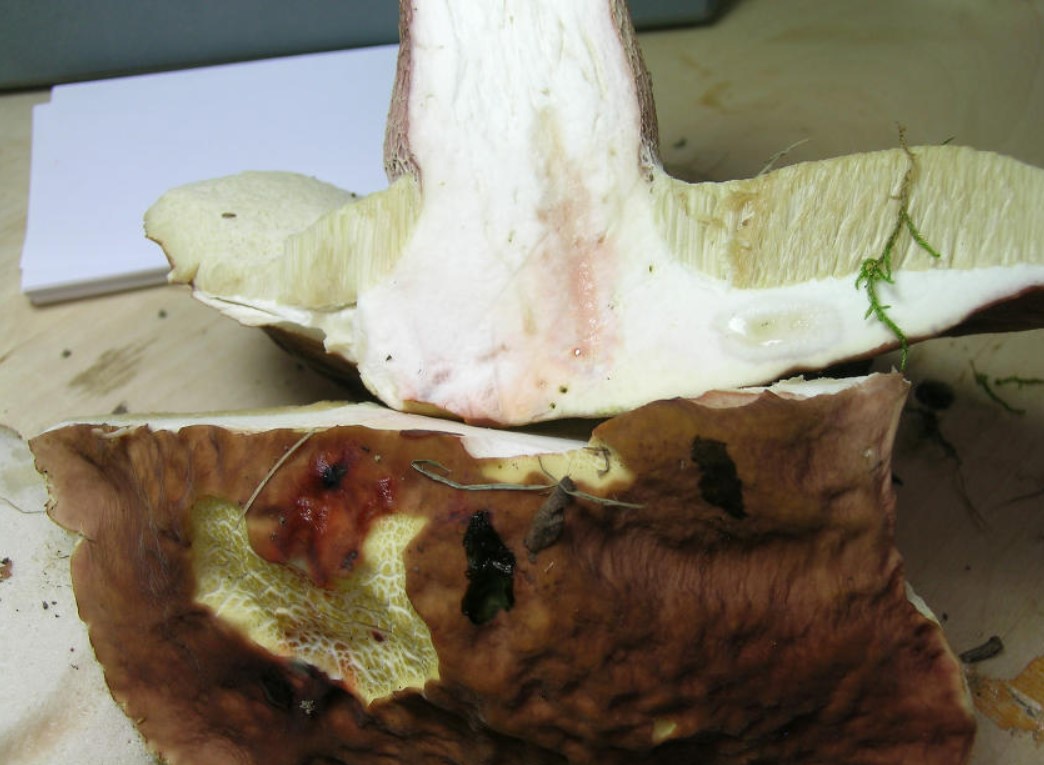
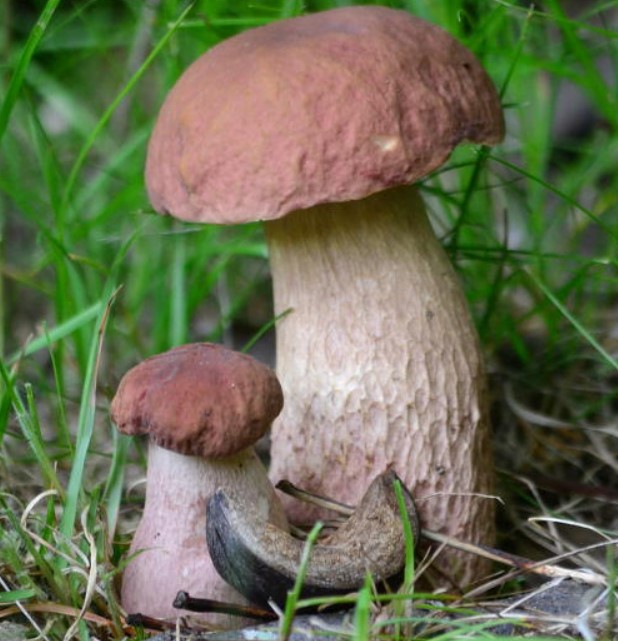
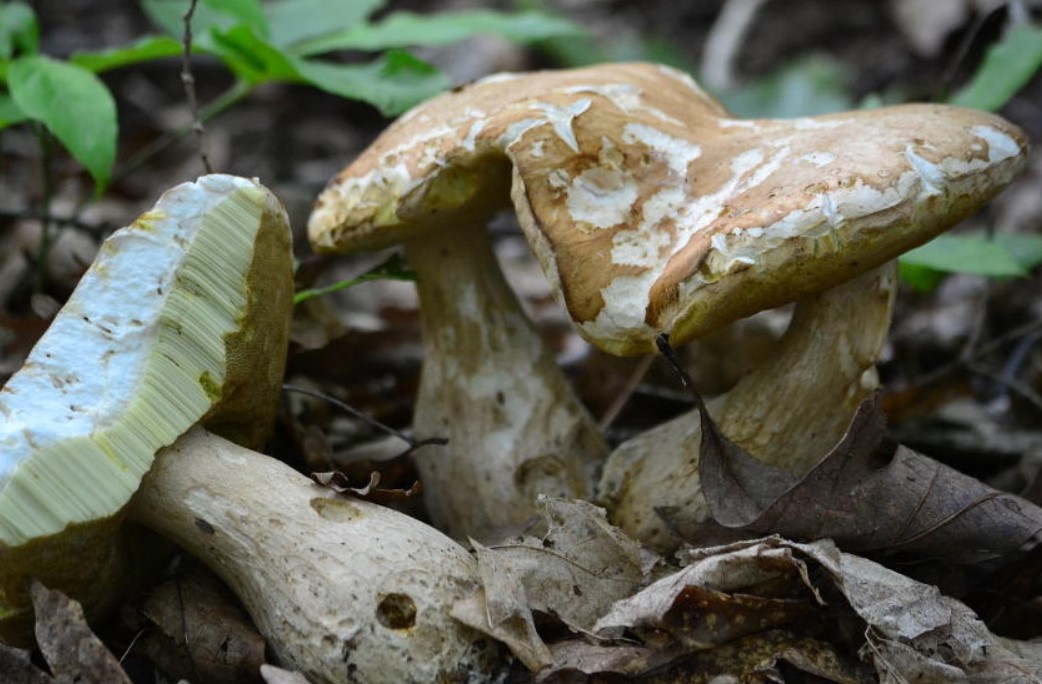
| Description | The cap is reddish-brown, the stem is pink or slightly red. |
| Collection deadlines | From the second decade of summer to mid-autumn. |
| Where to look | Under pine and hemlock trees. Known in Canada. |
Photo of an orange-red porcini mushroom
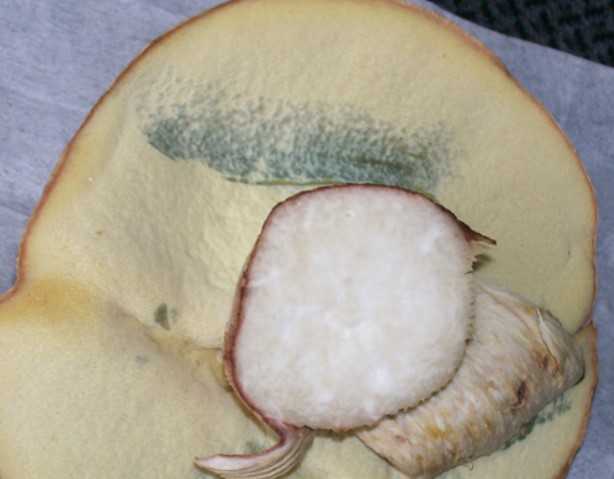
Blueing
| View | B. ed. subcaerulescens |
| Description | Burgundy color. The tubular layer turns blue when mechanically exposed. |
| Collection deadlines | July-October. |
| Where to look | Canadian pine forests. |
Photo gallery of the porcini mushroom turning blue
Pink-legged
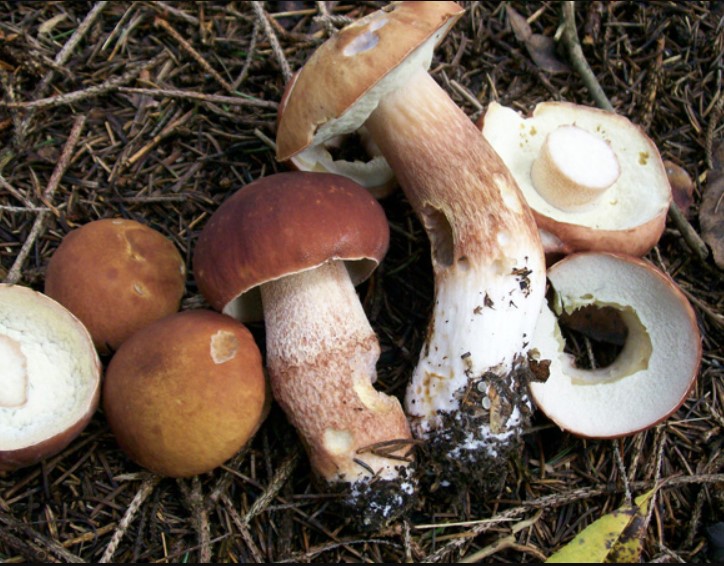
| View | B. ed. roseipes |
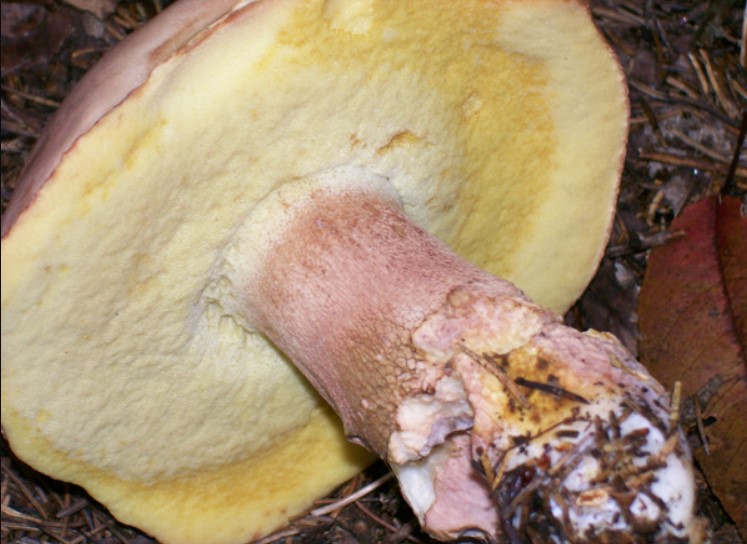
| Description | The cap is up to 25 cm long. It often has an uneven coloration with sandy and brown spots. The stem is beige-pinkish on top, brownish-brown underneath with a barely noticeable watery-white mesh. The flesh turns pinkish when cut, but the stem remains unchanged. |
| Collection deadlines | Standard. |
| Where to look | Sparse forests in the mountains made of larch and stone birch. |
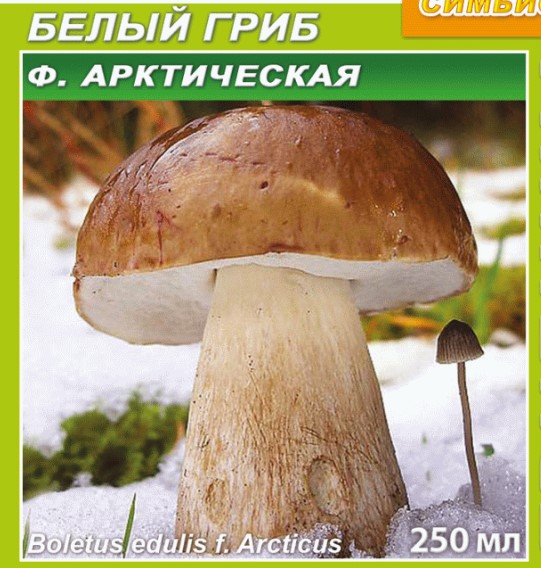
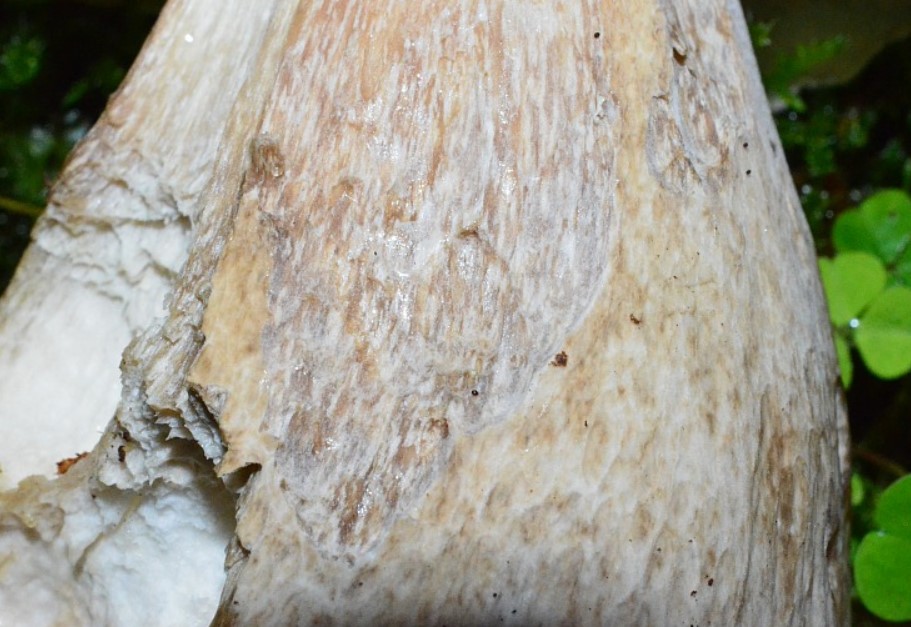
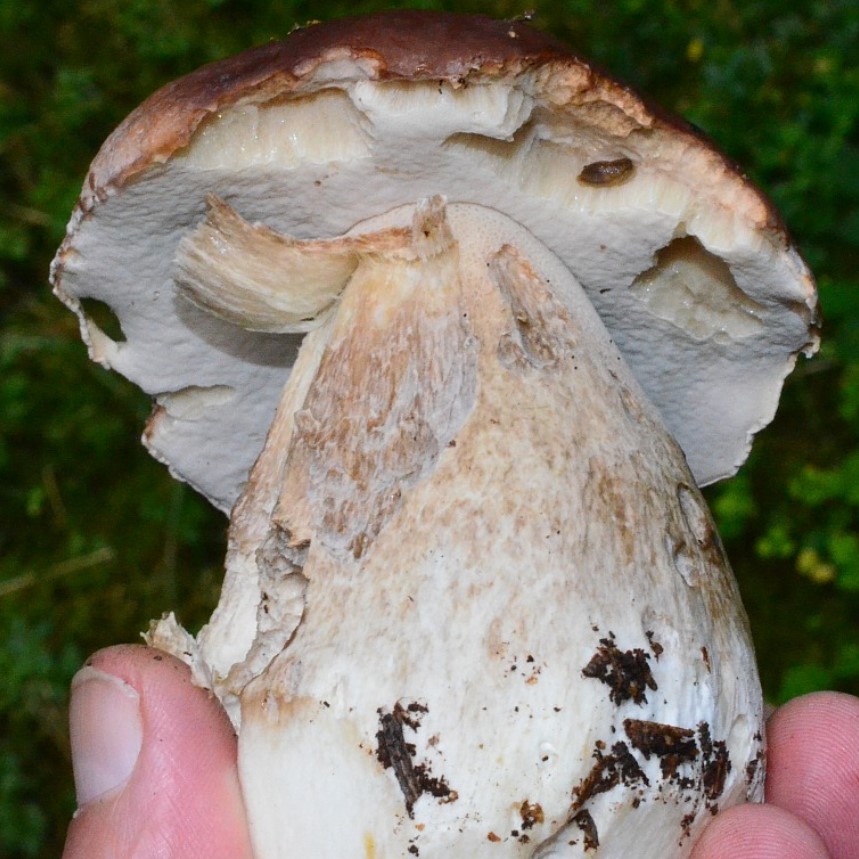
Arctic
| View | B. ed. arcticus |
| Description | The cap is no more than 5 cm, ocher-yellow or light brown. |
| Collection deadlines | June-September. |
| Where to look | It is found at an altitude of 700 m above sea level and at the foot of the mountains. |
Photo gallery of the Arctic porcini mushroom
Late
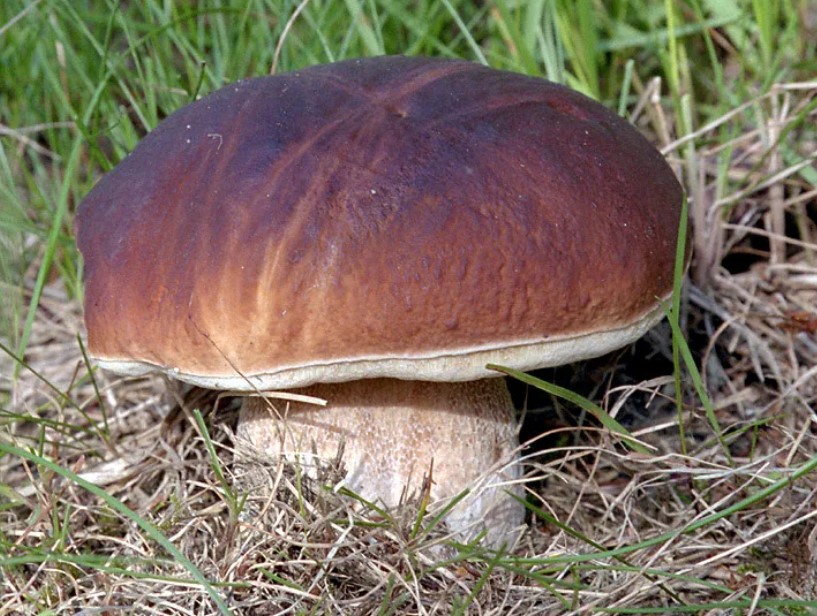
| View | B. ed. tardus |
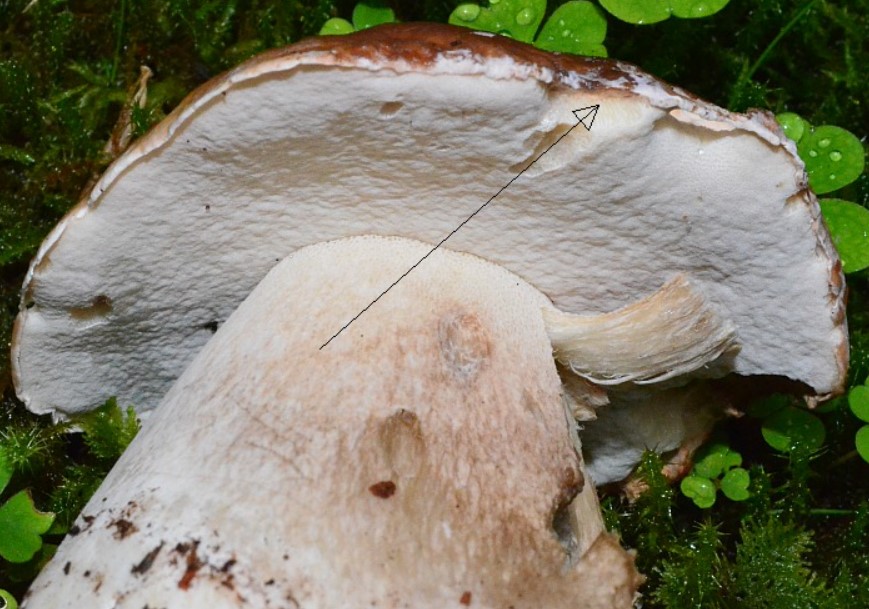
| Description | It differs from the previous species by its dark brown or blackish-brown cap, with a white or yellow border around the perimeter. |
| Collection deadlines | August. |
| Where to look | Among shrubby birches, in the highlands, in crooked birch forests. |
Photo gallery of the late porcini mushroom
Olive brown
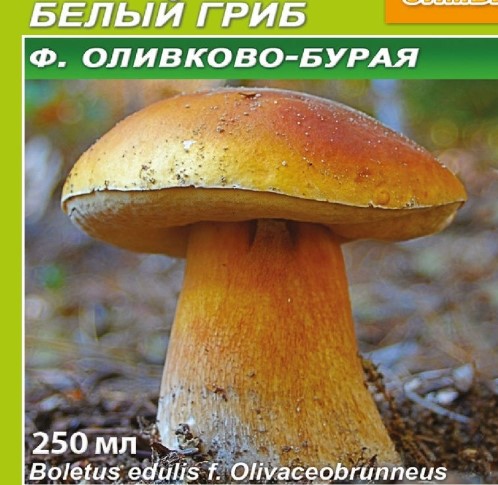
| View | B. ed. olivaceobrunneus |
| Description | The cap has fibrous edges, sometimes finely scaly. It is olive-brown in color, sometimes darker in the middle. The stem is smooth, without thickening. |
| Collection deadlines | October-November. |
| Where to look | Pine forests of North America. |
Photo gallery of the olive-brown porcini mushroom
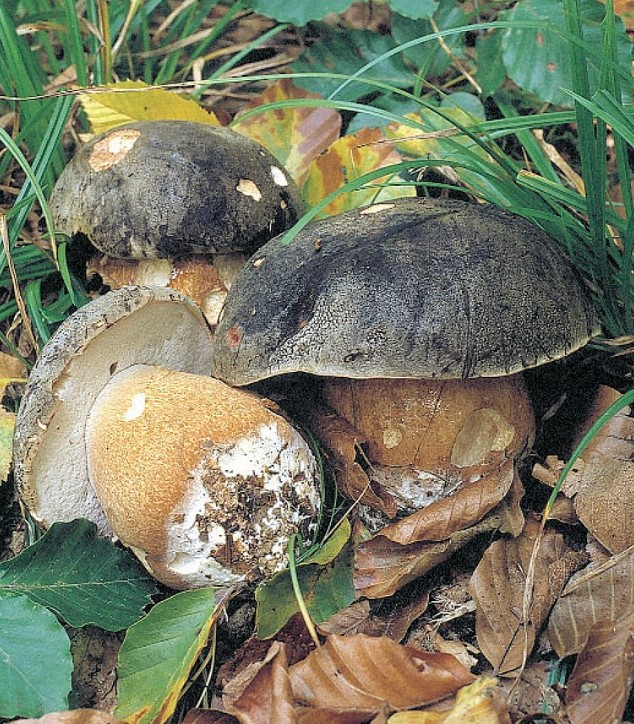
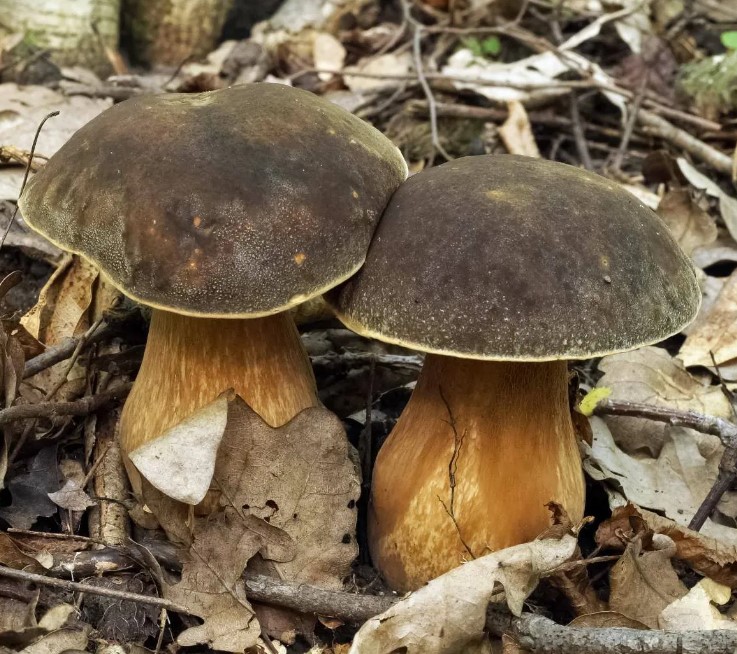
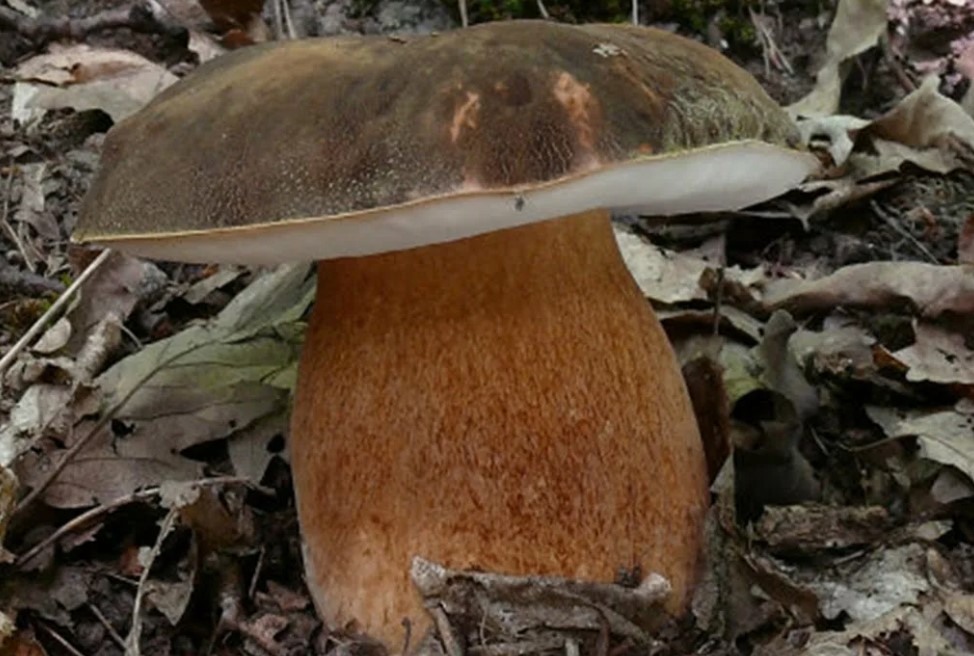
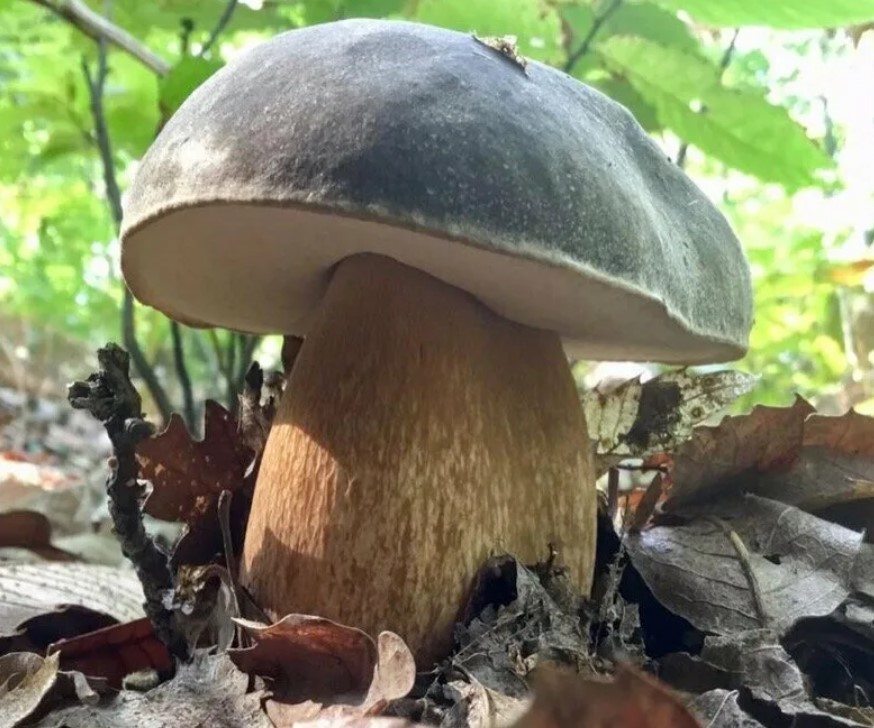
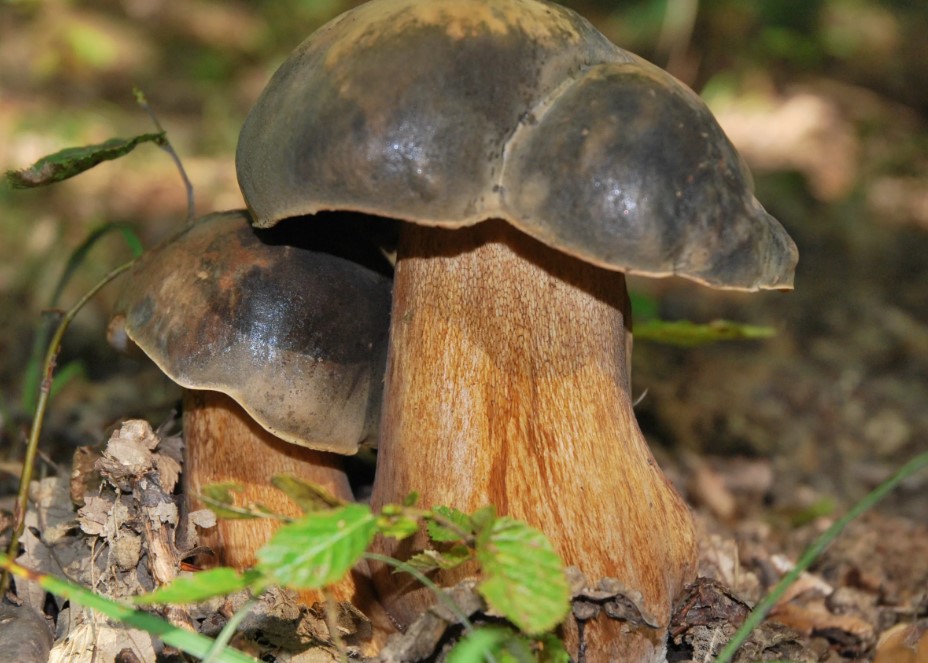
Dark bronze, copper
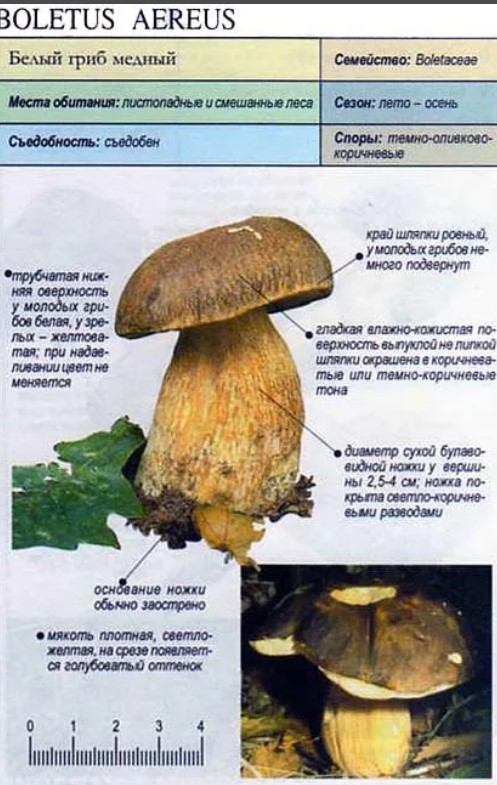
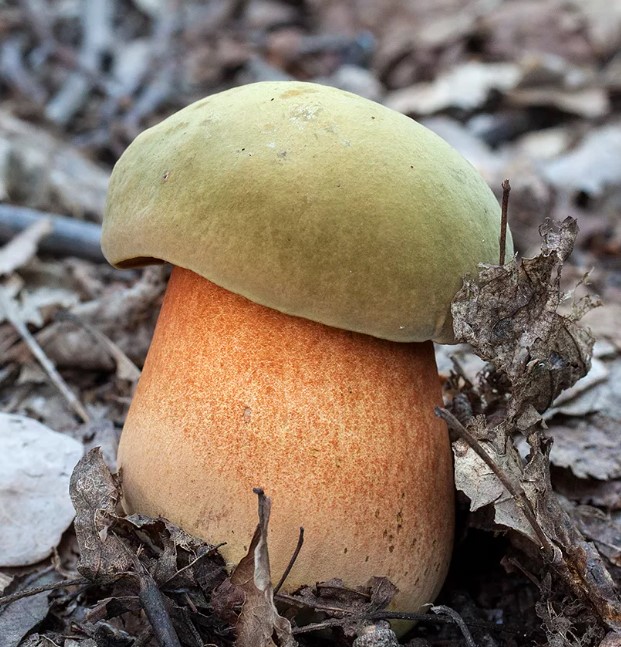
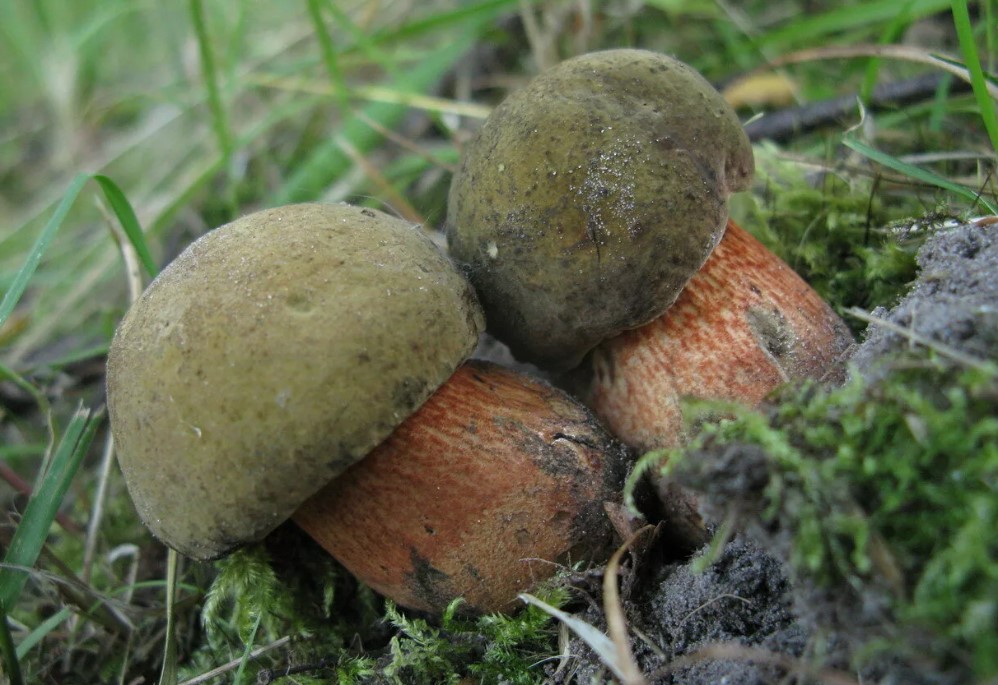
| View | B. ed. aë́reus |
| Description | Very dark in color. |
| Collection deadlines | Second half of summer. |
| Where to look | Beech and oak forests. |
Photo gallery of the dark bronze porcini mushroom
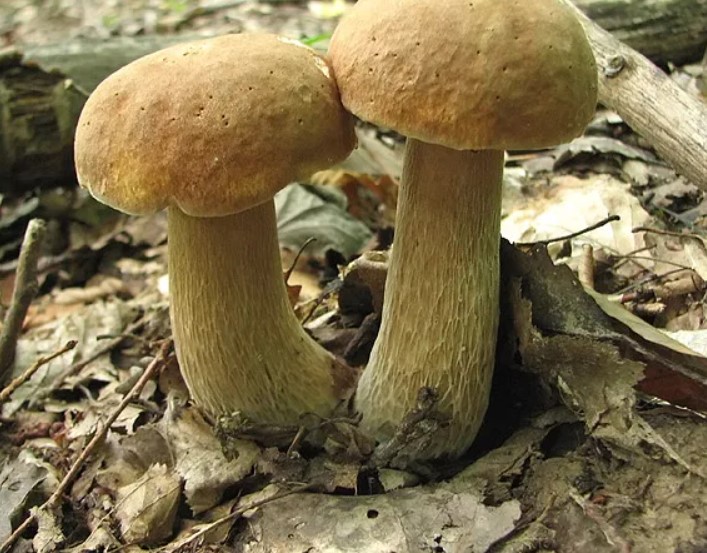
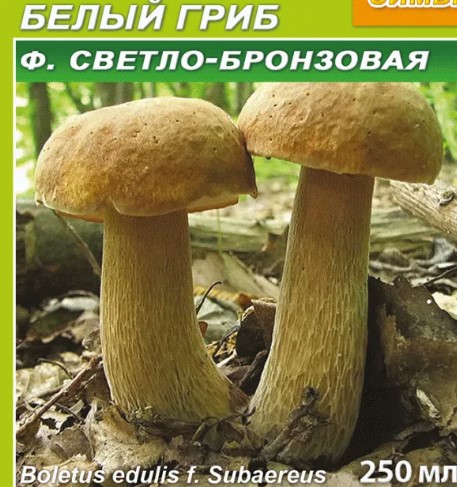
Light bronze
| View | B. ed. subaereus |
| Description | It differs from the previous species by its light brown upper part, sometimes with flesh-yellowish inclusions. |
| Collection deadlines | June-October. |
| Where to look | Beech, oak, hornbeam forests. |
Photo gallery of the light bronze porcini mushroom
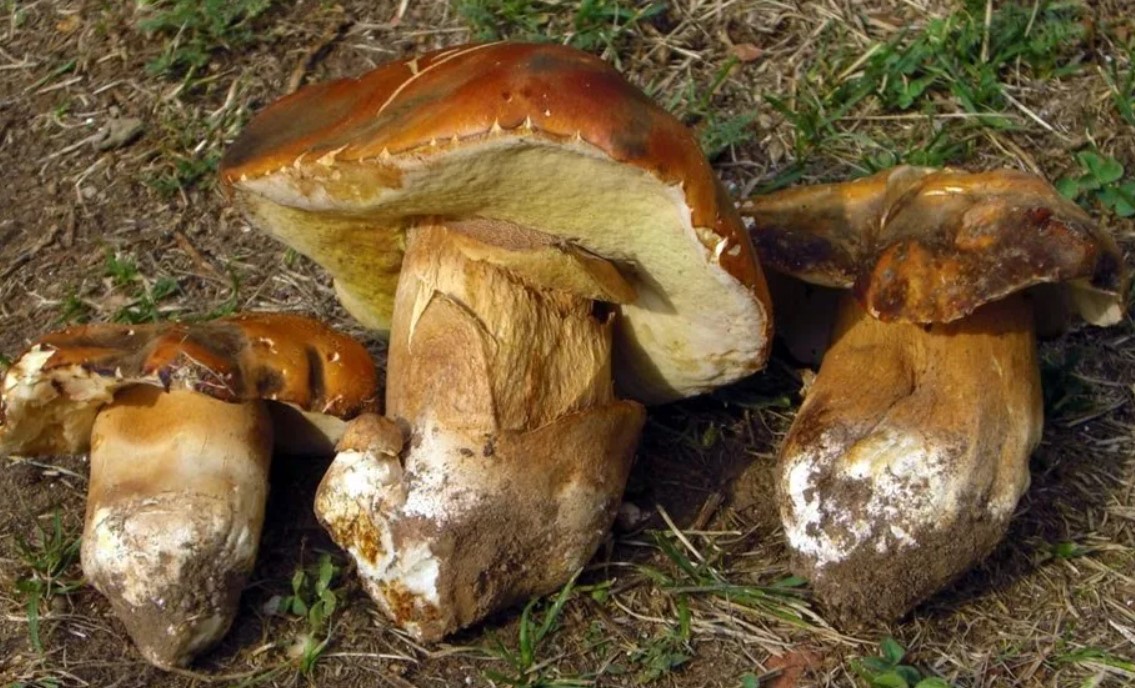
Do you know that some species are edible? porcini mushrooms turn blue when cut Read how to distinguish them from inedible mushrooms on our website Top.tomathouse.com.
Inedible doubles
Most often, they are confused by novice mushroom pickers.
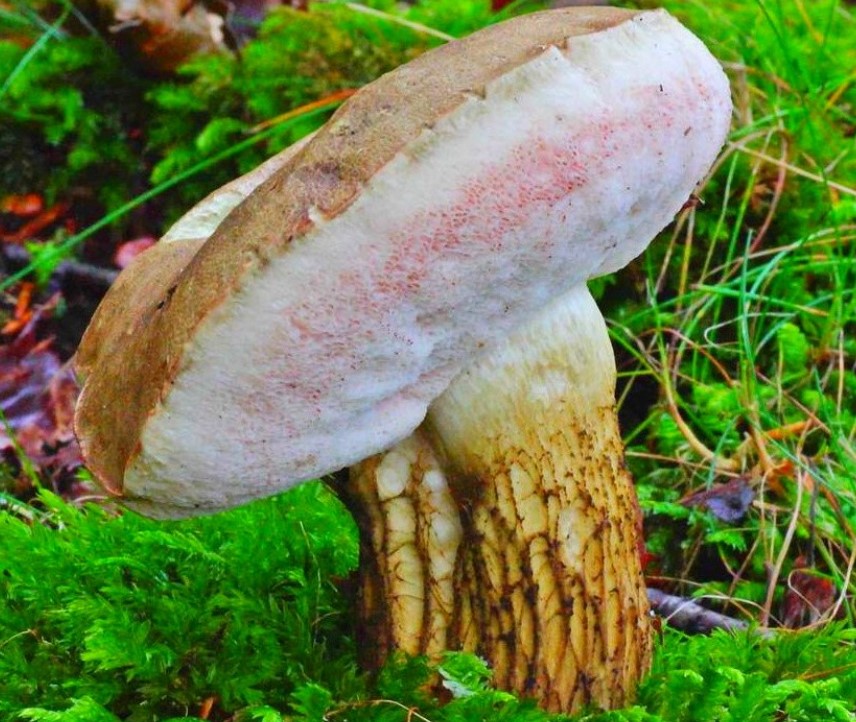
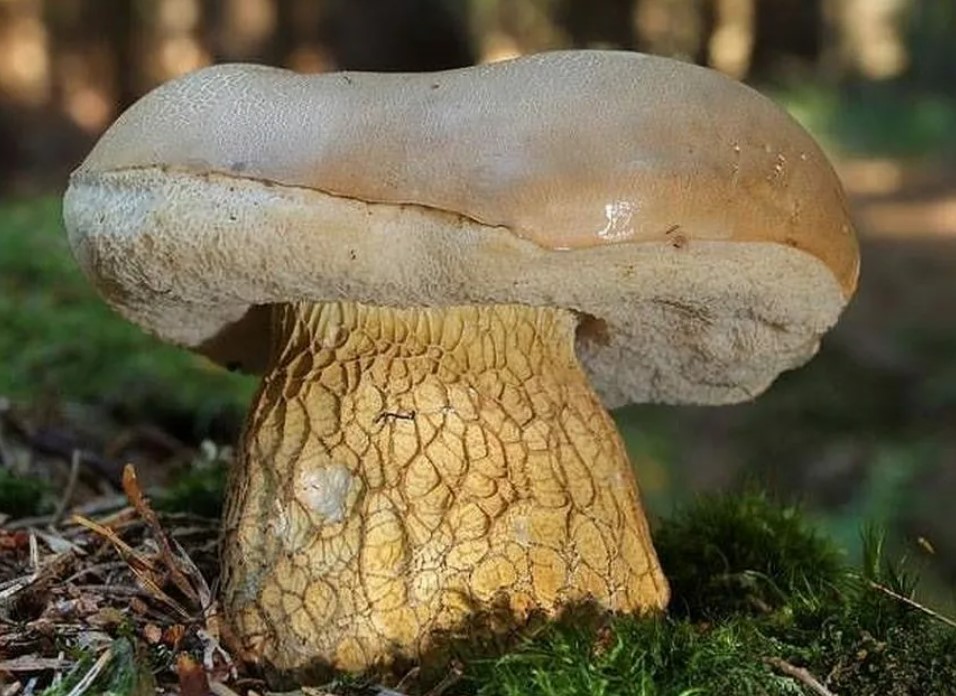
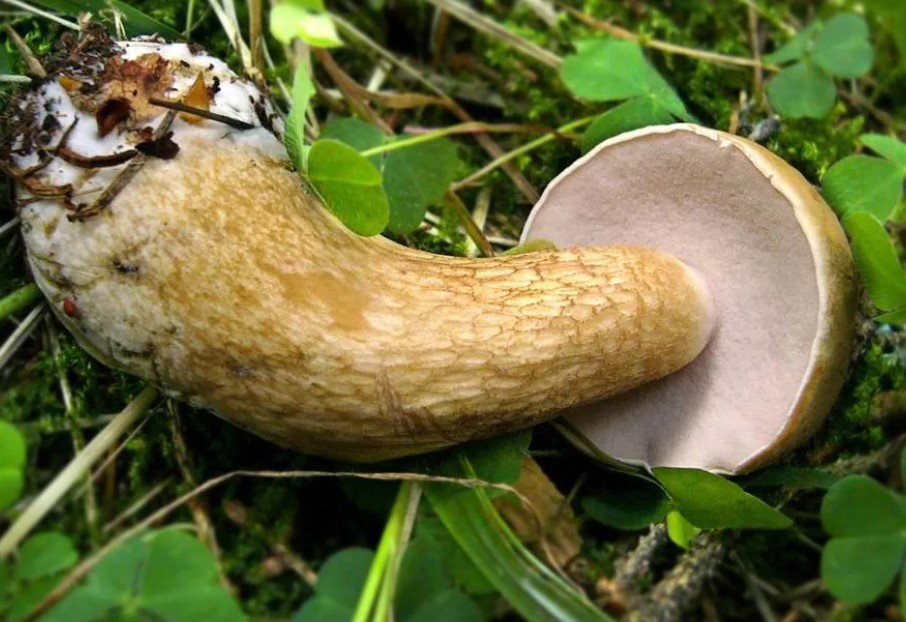
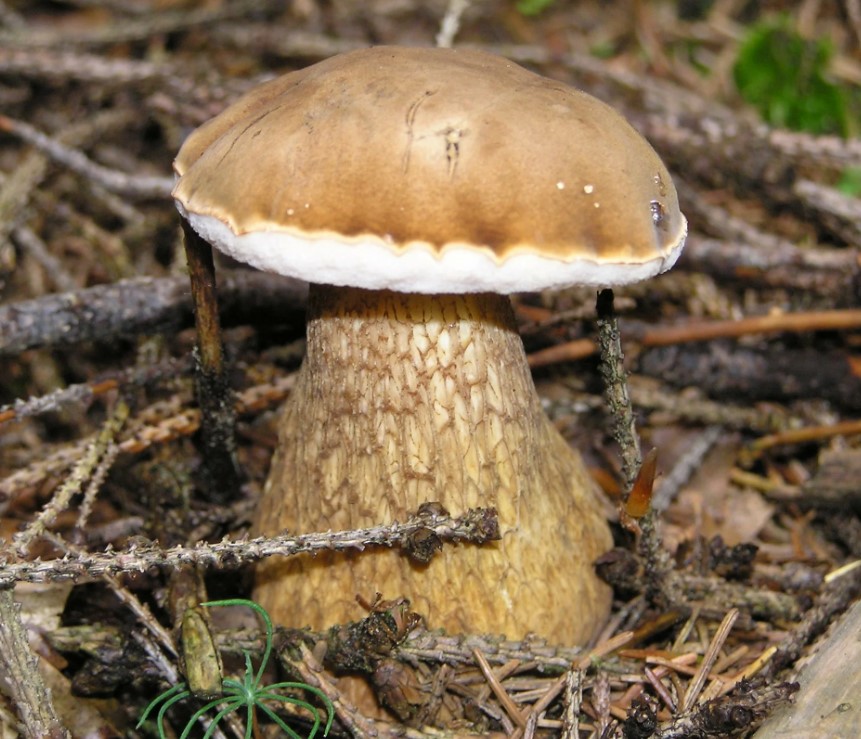
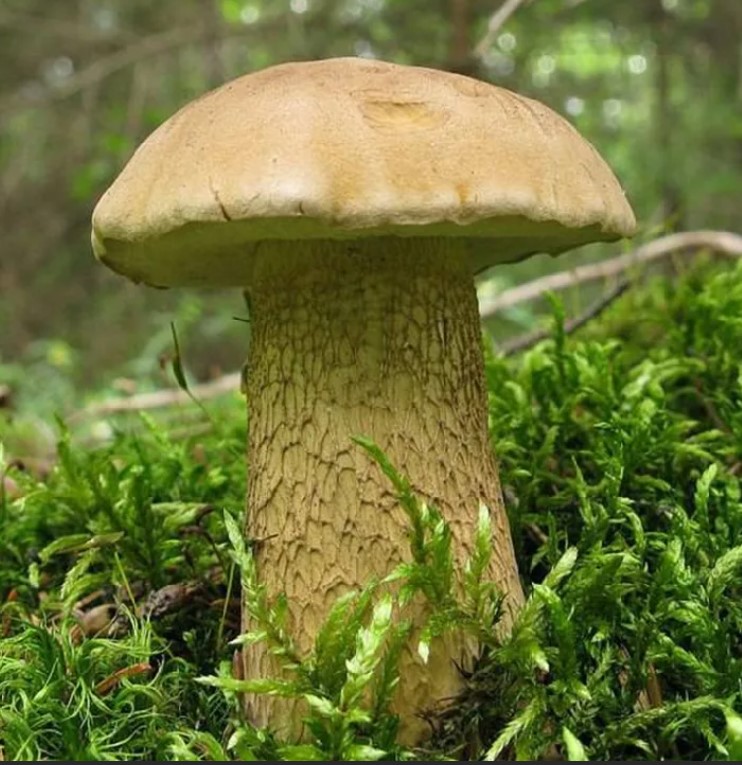
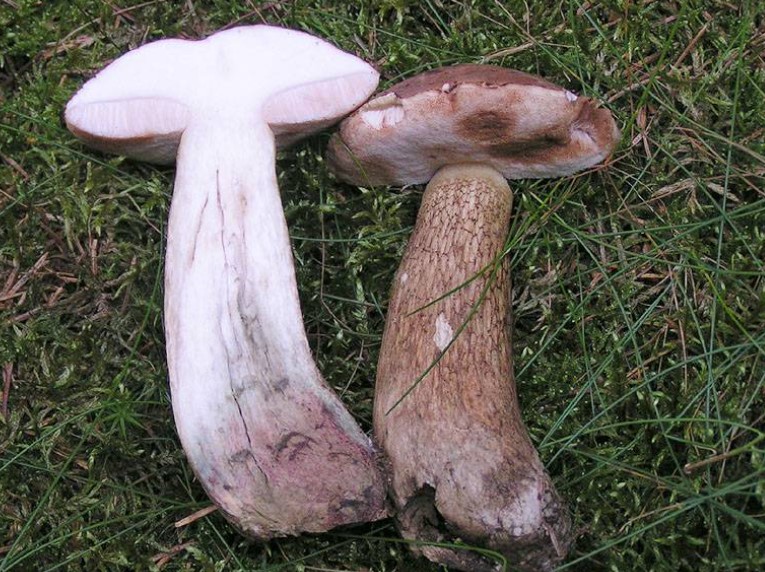
Gall mushroom (Tylopílus félleus)
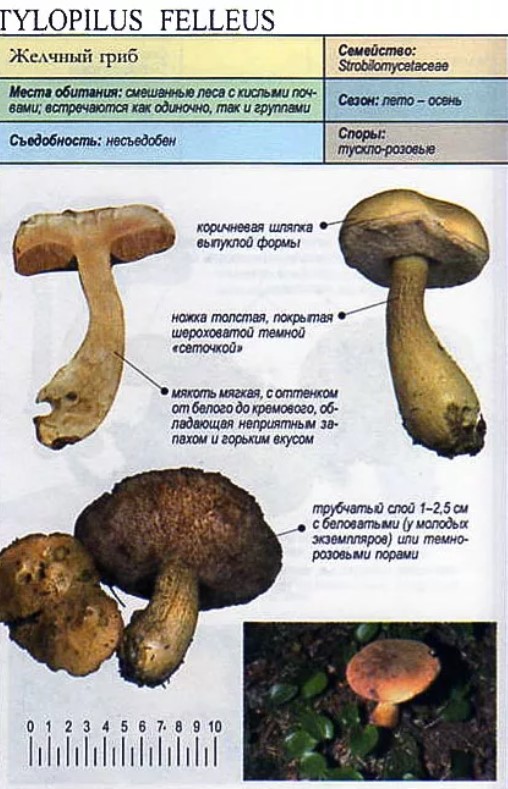
Bitterling not used due to its bitter taste.
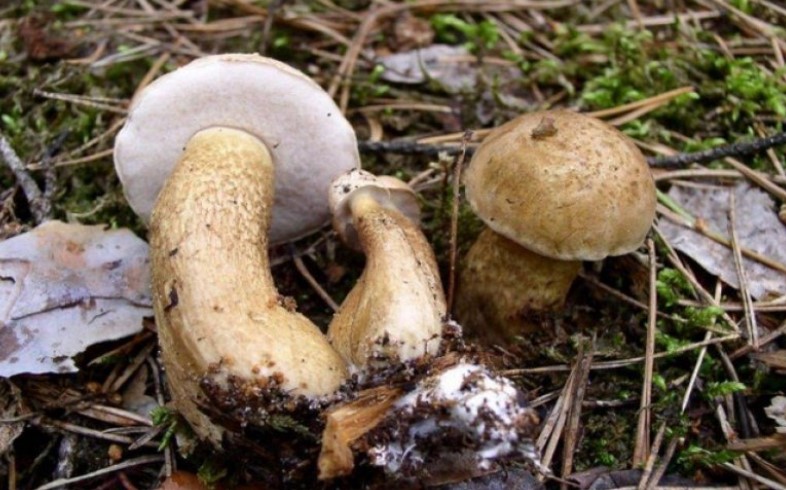
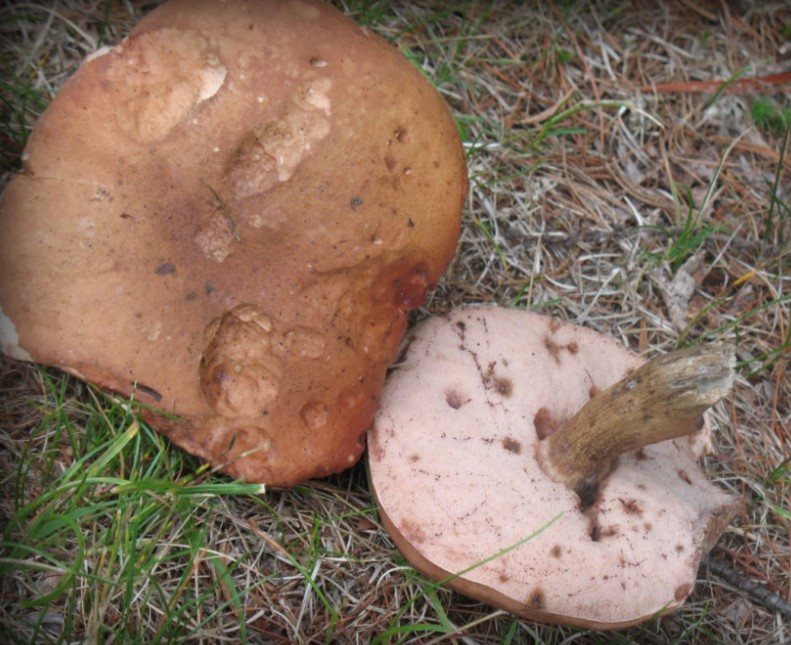
The cap is 4-10 cm, sometimes up to 15 cm. Initially hemispherical, it becomes rounded-cushion-shaped or prostrate. It is dry, velvety, or pubescent to the touch. Later, it becomes smooth. The surface is yellowish-brown, yellowish-brown, light brown, grayish-ocher, brownish-gray, chestnut, or dark brown.
The flesh is whitish. It doesn't change color or turn red when cut. Because of its bitter taste, it doesn't harbor worms. It has no distinct odor.
The stem is 3-13 cm tall and 1.5-3 cm in diameter. It is cylindrical or club-shaped, swollen at the base, and fibrous. It comes in various shades: creamy ochre, yellow, ochre-yellowish, or yellowish-brown. The top is whitish or creamy yellow, with a brown, dark brown, or black mesh.
The spore powder is pink or pinkish-brown. The spores are ellipsoidal-fusiform, slightly grayish-pinkish or completely colorless, and smooth.
Gall Mushroom Photo Gallery
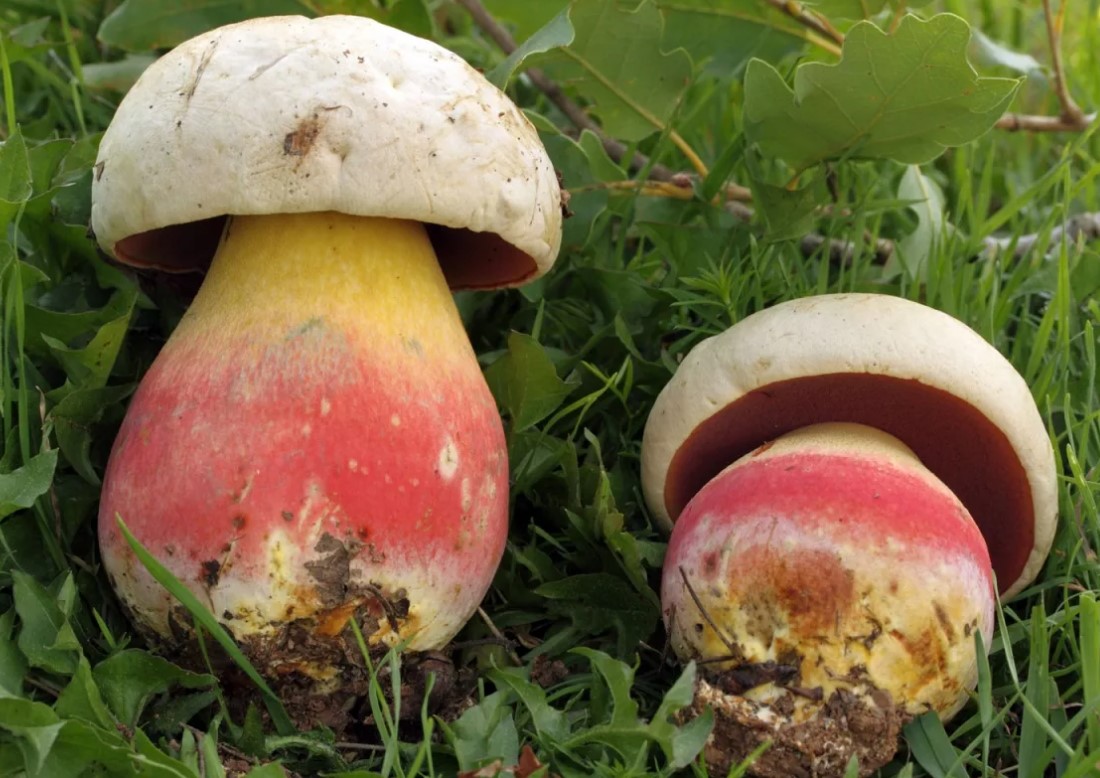
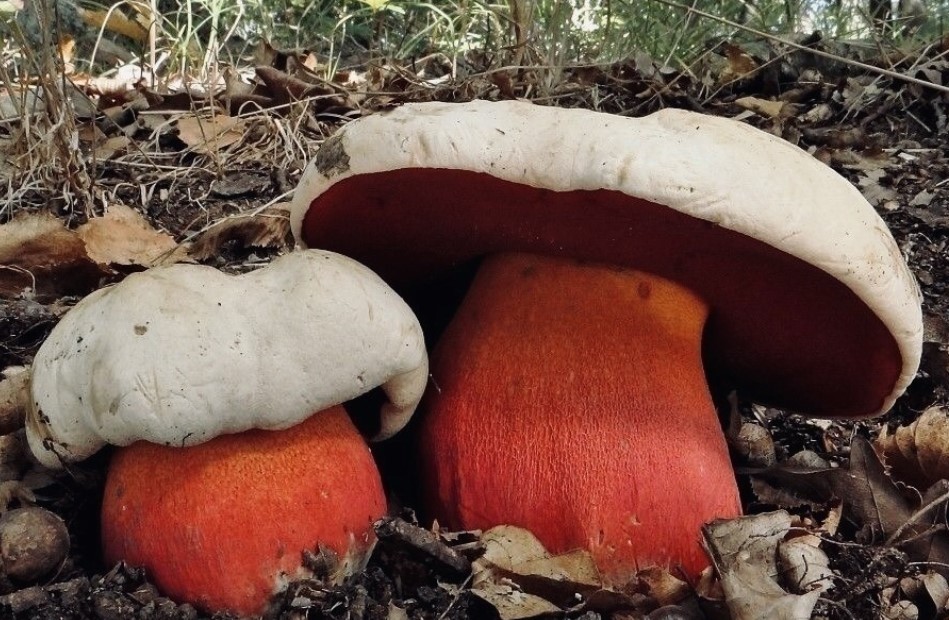
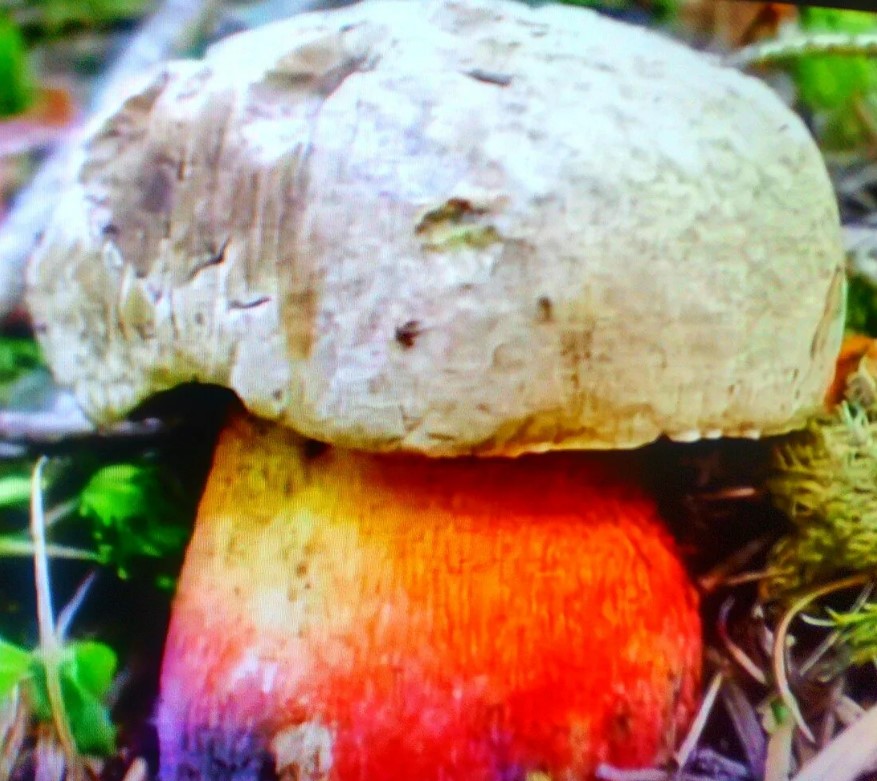
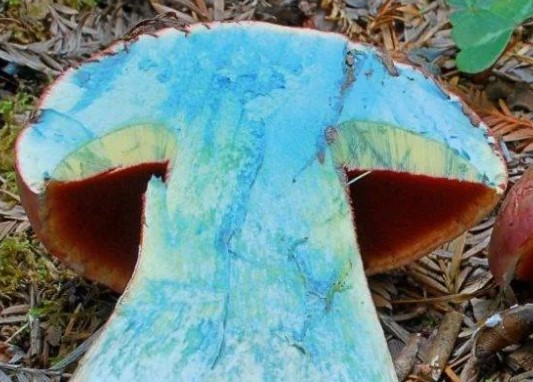
Satan's mushroom (Boletus satanas)
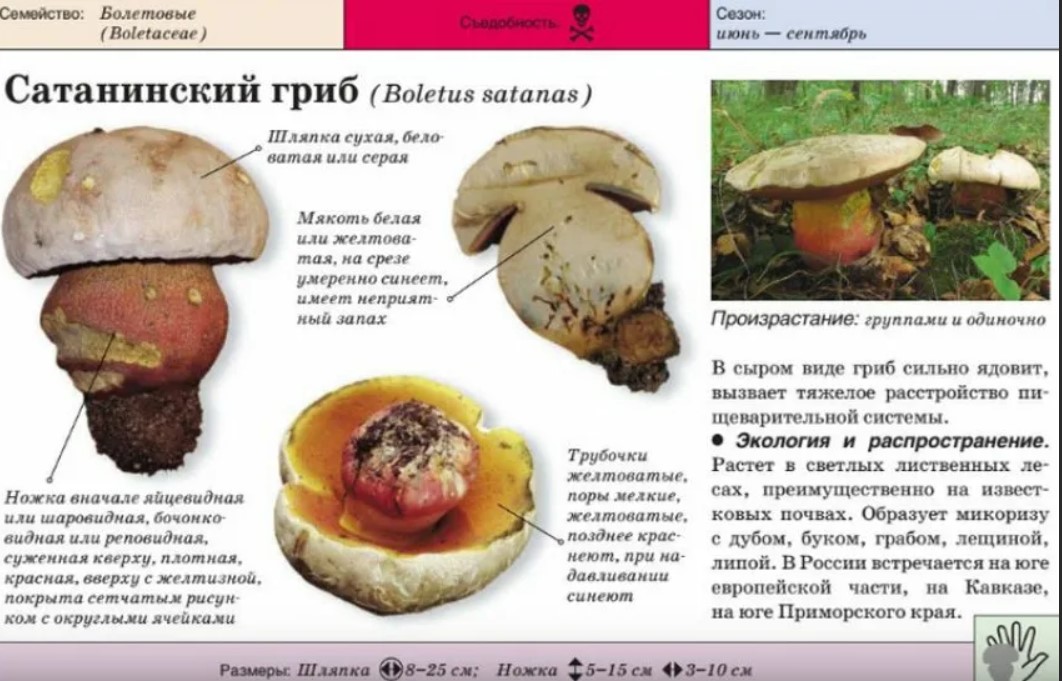
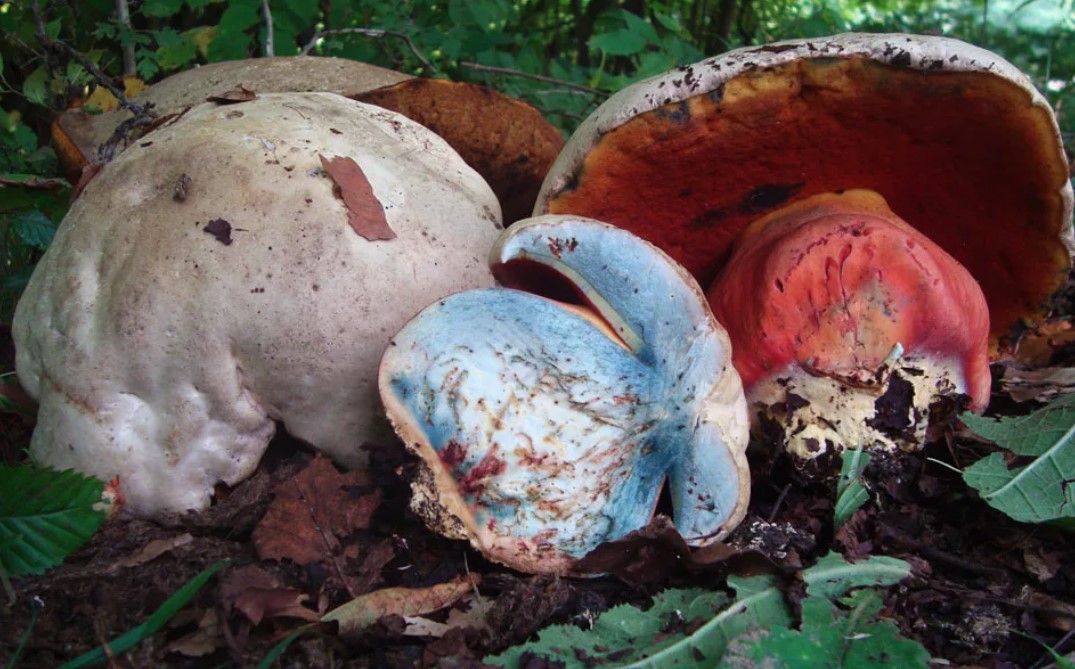
The cap is up to 25 cm long, gray or olive-colored. The flesh is white or yellow, turning blue when cut. This is a poisonous mushroom that can cause digestive problems. Symptoms of poisoning include dyspepsia, seizures, migraines, weakness, mood swings, and hallucinations.
Photo gallery of satanic mushroom
Composition and caloric content
The boletus not only has excellent taste characteristics, but also contains many useful substances:
- potassium, calcium, magnesium, chlorine, phosphorus, sodium, sulfur, silicon, manganese;
- iron, rubidium, fluorine, chromium, cobalt;
- vitamins B1, B2, B5, B6, B9, E, PP, niacin, ascorbic acid.
It's a low-calorie product, containing only 30 kcal per 100 g. The calorie content increases when fried in oil.
Edibility and nutritional qualities of porcini mushrooms
In terms of taste characteristics, the porcini mushroom belongs to I The highest category. It has an excellent taste and is suitable for all types of cooking. The ratio of proteins, fats, and carbohydrates is 45%, 3.4%, and 50%. 100 g of the product also contains 89.4 g of water, 2.3 g of fiber, and 0.9% ash.
The benefits and harms of porcini mushrooms
Boletus mushroom has the following beneficial properties:
- contains a large amount of macro-, microelements, vitamins and other nutrients;
- low calorie content, improved metabolism, which allows you to get rid of extra pounds;
- stimulation of the secretion of digestive glands;
- antimicrobial and antioxidant properties;
- immunomodulatory and tonic effect;
- cancer prevention;
- improving brain function;
- normalization of the gastrointestinal tract;
- recovery after illness, heavy physical exertion.
However, consumption can also cause harm to the body:
- The composition contains chitin, which impairs digestibility (to destroy this substance, thorough heat treatment is required);
- allergy is possible;
- Digestive problems are possible (if not cleaned sufficiently or if an overripe specimen is consumed).
Please note! Not recommended for use by pregnant women or children under 12 years of age.
Harvesting and storing porcini mushrooms
After harvesting, mushrooms need to be properly processed. This should be done within 10 hours. Clean off any soil and trim off the lower portion of the stem. Any damaged or rotten areas should be removed as well.
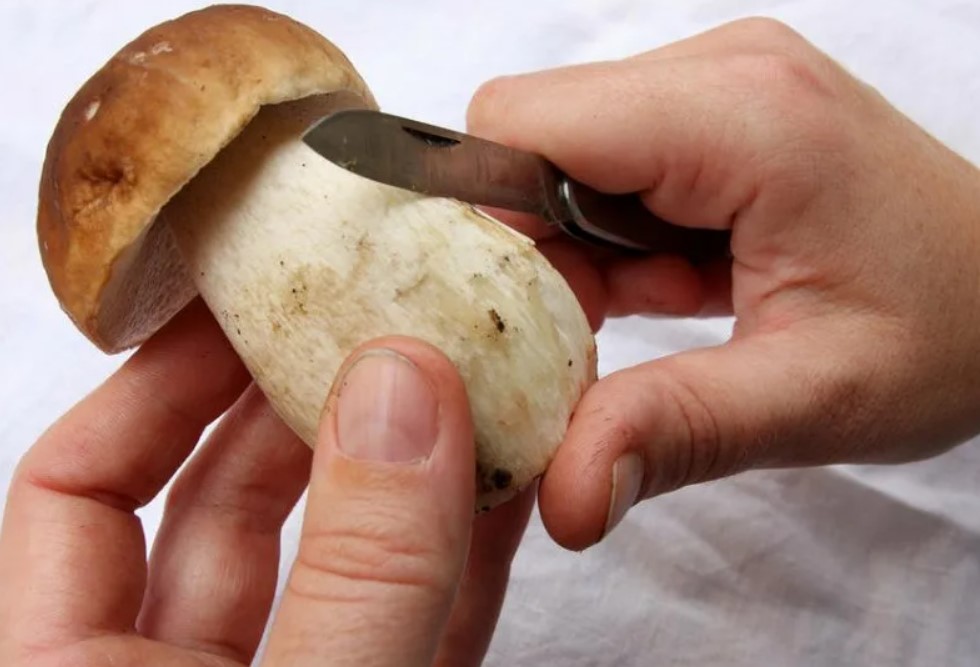
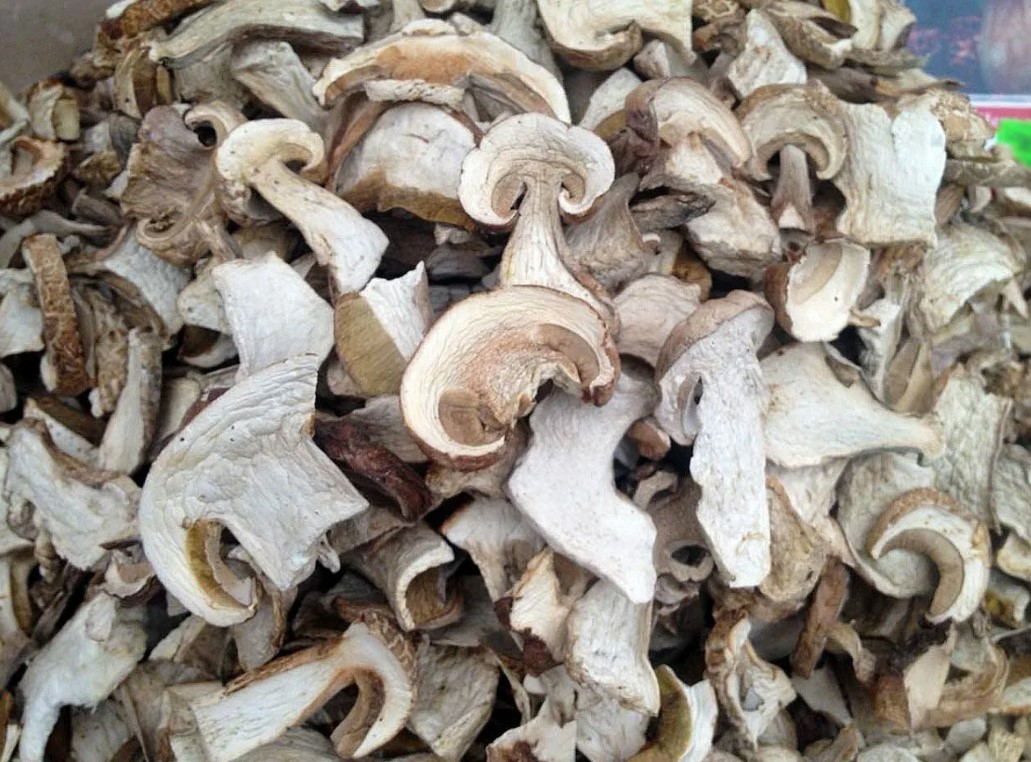
The next steps will vary depending on what you're using the porcini mushrooms for. they cook, fry, marinate. The easiest way is to dryThis will preserve the maximum amount of nutrients and give the mushrooms a pleasant aroma:
- Dry on a baking sheet.
- Place in a container, leave it slightly open.
If you keep them in this form in the temperature range of -2…+18 °C, they can be stored for 1 year.
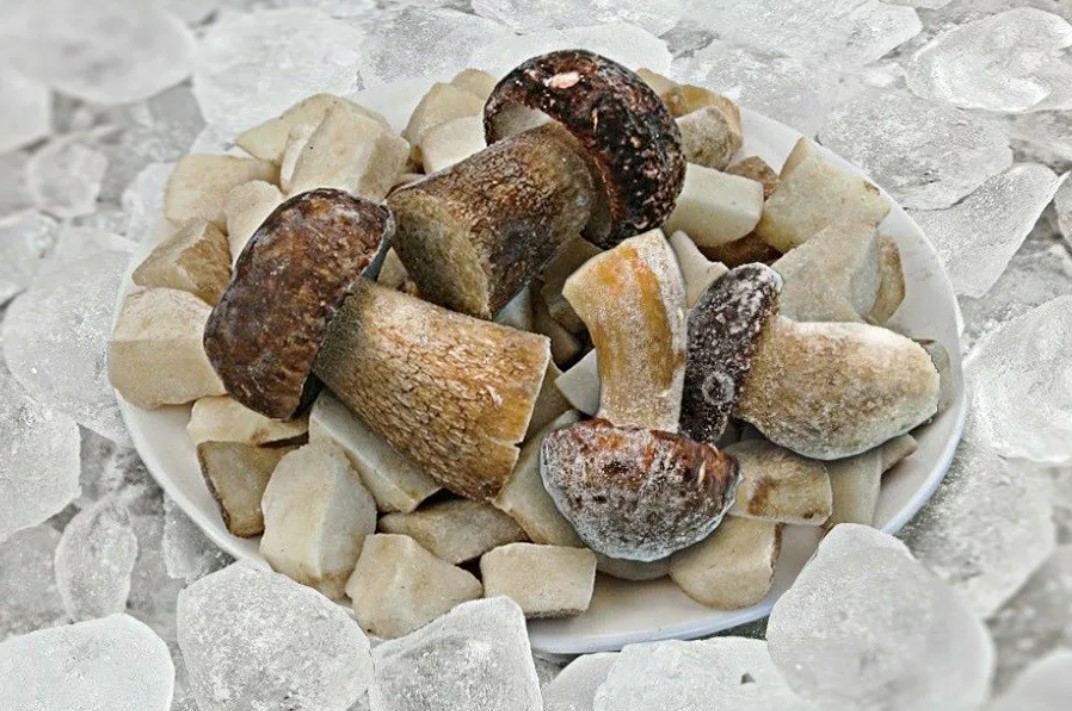
You can also freeze mushrooms:
- Place on a baking sheet.
- Place in the freezer.
- After 2-3 hours, take it out, transfer it to a container and put it back in the freezer.
This method also allows you to store the product for a year.
Interesting facts about porcini mushrooms
Some interesting facts:
- In 1961, the largest porcini mushroom was discovered. Its cap circumference was 58 cm and the specimen weighed 10 kg.
- In Italy, boletus mushrooms are only allowed to be collected in limited quantities.
- Lives only 1.5 weeks.
- Dried mushrooms have a higher nutritional value compared to sausages and boiled eggs.
- Raw mushrooms are poorly absorbed by the body.
- Do not collect in areas with unfavorable environmental conditions. They can accumulate harmful substances.
Find out how grow porcini mushrooms on your plot on our website Top.tomathouse.com.
The porcini mushroom has earned its royal status for good reason. Its taste and nutritional properties surpass those of its relatives. That's why they are not only collected in the wild but also specially grown in garden plots and even in apartments.