Beloperone is a southern tropical evergreen plant of the Acanthaceae family. Among the indoor varieties, the dripping Beloperone stands out. It requires no special skills to grow.
Description
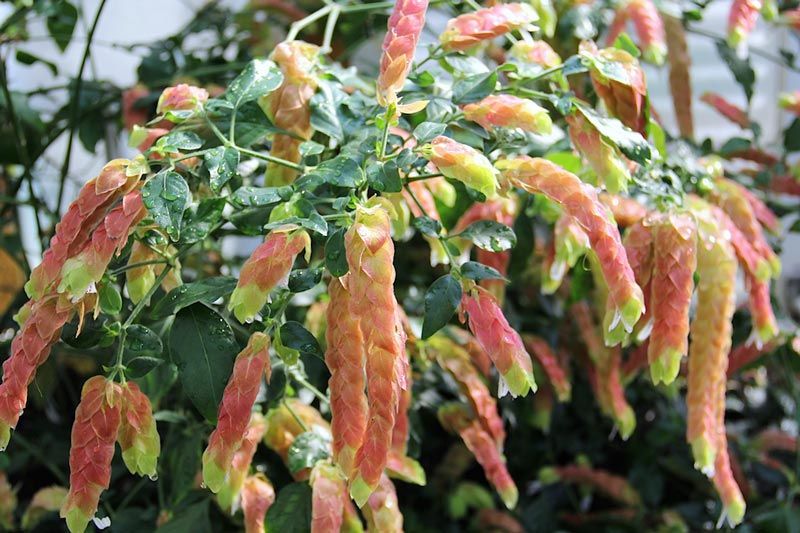
Renowned for its rapid growth, it is a shrub with slightly woody shoots, oval leaves, and brightly colored bracts and flowers. It can reach 1 m in height.
If desired, it can be grown as an ampelous or standard flower.
Beloperone droplet and other species
There are over 30 species of Beloperone in the wild. The flower is native to the subtropics and tropics of South America. Breeders show little interest in the plant today.
| Type / Variety | Description | Leaves | Bracts |
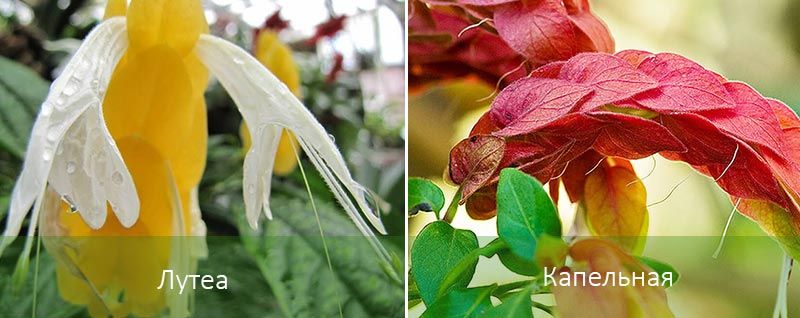
| Drip | A low shrub up to 80 cm tall. It thrives indoors. It enjoys repotting but does not tolerate changes in location. | Oval, dark, covered with fluff. | White. The inflorescences are collected in drooping brushes 20 cm long. The color is scarlet. |
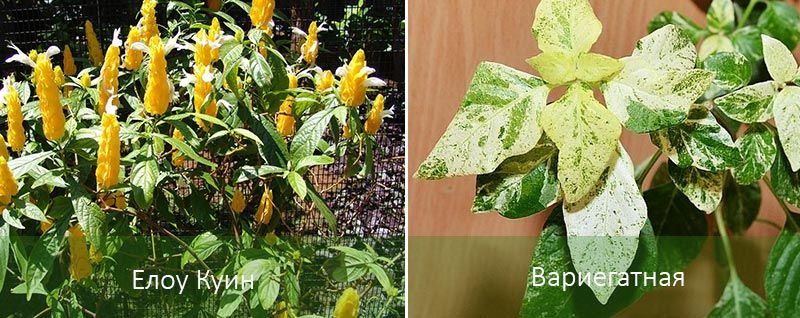
| Variegated | A selective variety developed from drip and guttata. Propagated only by cuttings. Undemanding in moisture. A low-growing shrub reaching 60-70 cm in height. | Variegated, green and silver. Oblong, oval shape, with pointed ends. | Red, snow-white flowers. |
| Lutea | The variety was bred from a drip method. It resembles its parent in appearance. | Light green, egg-shaped. | Yellow, white, lilac throat. |
| Yellow Queen | Parent: Beloperone droplet. | Similar to the Lutea variety, but darker in colour. | Light green. |
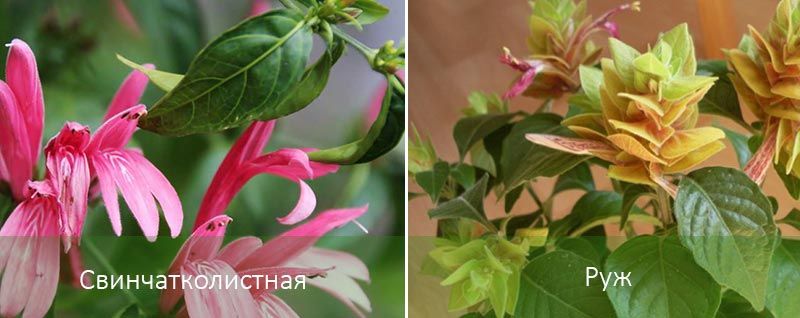
| Plumbago-leaved (leaved plumbago) | A rare species. Reaches 1 m in height, with underdeveloped branches up to 1.5 m long. | Narrow, dense, smooth. | Bright, pink, large. |
| Rouge | A selective species that blooms year-round indoors. | Small, up to 10 cm in length, rich green in color. | Lemon, creamy with small speckles, with a gradient to a bright, pinkish-scarlet color at the end. |
Caring for Beloperone at home
Important factors in caring for Beloperone are light and abundant watering. For rapid growth and flowering, experienced botanists recommend misting the plant with hot water heated to 40ºC.
The flower takes a warm shower in a pre-steamed bath with humidified air. It remains there for an hour after the procedure to consolidate the effect.
| Factor | Spring/Summer | Autumn/Winter |
| Location/lighting | South-facing windowsills, and open air in the summer during warmer months. Loves plenty of light and fresh air. Avoid drafts. | When cold weather arrives, move the plant to a north- or east-facing windowsill. Bright daylight should be diffused; if it's insufficient, artificial lighting should be used. |
| Temperature | +20…+25 ºC, in summer it can reach up to +28 ºC. | The optimal temperature is +20…+25 ºC. By winter, it is gradually lowered to +15 ºC. |
| Humidity | High, 50-60%. Regular spraying. Keep away from heating appliances. | 40-50%. Spraying is carried out less frequently. |
| Watering | Abundant, regular watering. Avoid overwatering and waterlogging. | Moderate, reduce gradually. Do not allow the soil to dry out. |
| Top dressing | Select for flowering plants, 2 times a month. | During the winter, the frequency is reduced. In the fall, it is done once a month, and in the winter, once every two months. |
Planting and replanting flowers
Young Beloperones require annual repotting in the spring. Rare specimens need to be repotted in the spring and late summer due to their rapid growth. Older specimens can be repotted every three years.
To do this, purchase a pot 12 cm larger in diameter than your current one. Ceramic pots are preferable. You can buy a universal potting soil or make your own: a mixture of leaves, turf, peat, humus, and sand (2:2:1:1:1) with the addition of chalk (3% of the total substrate volume).
Place a 3-5 cm thick drainage layer on the bottom of the selected pot. Add the substrate, filling about 1/3 of the pot. Remove the plant from the old container and water it 30 minutes beforehand to facilitate the process. Using a sharp knife (disinfected first), trim 1.5 cm of the roots from the bottom and make vertical cuts along the sides.
The finished flower is transferred to a new container and covered with the remaining soil. Shake well to compact and distribute the soil evenly. Water moderately and move to a semi-shaded location for 2-3 days. After this time, return the plant to its original location.
Top.tomathouse.com explains: crown shaping and pruning
The Beloperone flower grows very quickly and, due to this, can take on different forms: an ampelous plant, a standard plant, or a dense bush.
To create a bush, branches need to be pruned to stimulate bud development. Once this process has begun, pinching increases the number of flowering branches.
The process of creating a trailing plant is reversed. Branches are not pruned or pinched. The plant is not allowed to branch out, so it grows as a solid column and begins to droop under its own weight.
For standard trees, the trunk is supported and the lower leaves are removed as they grow. The trunk will reach a maximum height of 25-30 cm, with a formed crown of 10-20 cm.
Reproduction
Beloperone propagates well at home by seeds or cuttings.
The seeds are planted in a soil mixture of leaf mold and sand (1:1). Greenhouse conditions are created at a temperature of 20 to 23 ºC. Under-heating is provided to ensure rapid germination. Once the plant has pricked out, it is transplanted into a substrate of leaf mold, turf, and sand (1:1:1). Pinching is performed to promote vigorous growth.
Cuttings are taken from January to August. The plant will bloom approximately 6-8 months after planting. To propagate by cuttings:
- Take one-year-old shoots 10-15 cm long.
- Dry for 5 hours.
- While they're drying, prepare pots with the substrate. Choose a ready-made potting soil for flowering plants, mix it with sand (1:1), and moisten.
- Before planting, the base of the cutting is sprinkled with a biostimulant (Zircon, Kornevin).
- They create greenhouse conditions with abundant light flow, a temperature of +20…+25 ºC, and bottom heating.
- Ventilate for 10 minutes daily.
- When the roots appear (approximately on the 25th day), the flower is transplanted into a substrate of turf, leaf soil and sand (1:1:1).
- After 2-3 days, pinch and feed.
Possible difficulties, diseases and pests
If the condition of the Beloperone worsens or it is attacked by pests, the following measures should be taken.
| External manifestations on leaves | Cause | Methods of elimination |
| The color fades. | Overwatering, waterlogging in the soil. Lack of nutrients. | Reduce the amount of watering, add fertilizer. |
| It's falling off. | Dry air, rare watering, drafts. | Increase the amount of watering, spray the foliage, change the location or eliminate the cause of the drafts. |
| The bracts turn pale and yellow. | Poor lighting. | If there is not enough daylight, add artificial lighting (phytolamps). |
| Burgundy spots appear. | Lots of light, high temperature. | Diffuse the light flow, shade the plant, reduce the temperature. |
| The stems quickly become woody. | There is not enough lighting, the room is hot. | Cool the room, lower the thermometer readings, add daylight or artificial lighting. |
|
The plant is surrounded by white insects. They turn yellow and fall off. They become sticky, and green larvae appear on the underside. |
Whitefly. | Treat with insectoacaricides containing permethrin (Actellic) every 3-4 days. |
| The stems are deformed. Colored spots are visible on the plant. Curls and loses color. |
Aphid. | Wash with soapy water and treat with chemicals (Inta-vir). |
| Drooping, yellow, covered in cobwebs. | Spider mite. | Remove affected leaves, wash the flower with a warm shower and apply chemicals (Fitoverm). |