The downy birch, originally Betula alba, which translates from Latin as "white birch," has since been renamed Bétula pubéscens. It grows in damp areas, swamps, and lakeshores. It does not tolerate drought well and is found in both coniferous and deciduous forests. It thrives in the shade of other trees.
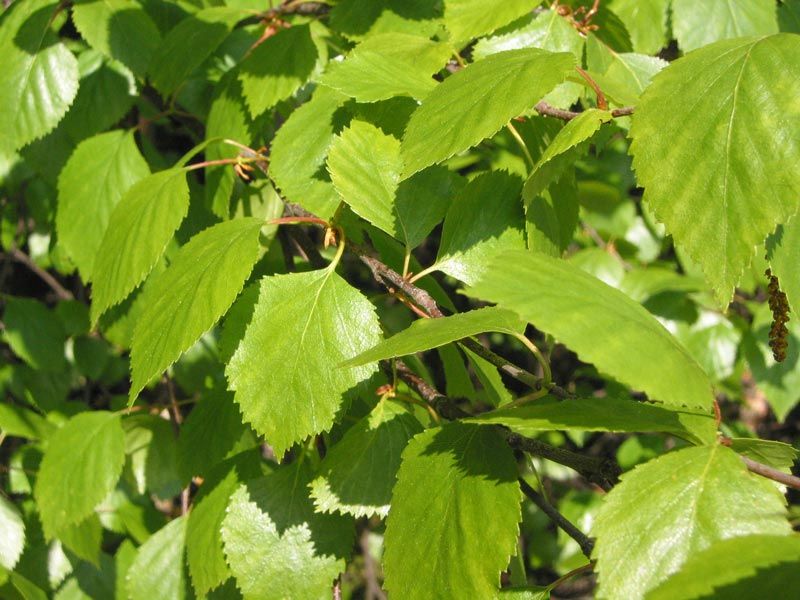
Description of the downy birch
The name change was prompted by confusion with silver birch and silver birch. Many varieties have white trunks, so classification began based on the external characteristics of the crown.
There are many species, but this variety is frost-hardy. Downy birch is native to all of Siberia and European Russia, and is also found in the Caucasus foothills.
Smooth, crack-free bark is the plant's main distinguishing feature. The beautiful white trunk is dissected by small cracks only in mature trees, closer to the roots. These areas are accompanied by birch bark. This phenomenon is widely known and manifests itself as the bark separating into thin layers.
This monoecious tree species reproduces through the production of unisexual flowers. In the fall, male flowers emerge from the branches and overwinter on the tree. In the spring, female "catkins" bloom before the leaves emerge. Pollination is facilitated by the wind.
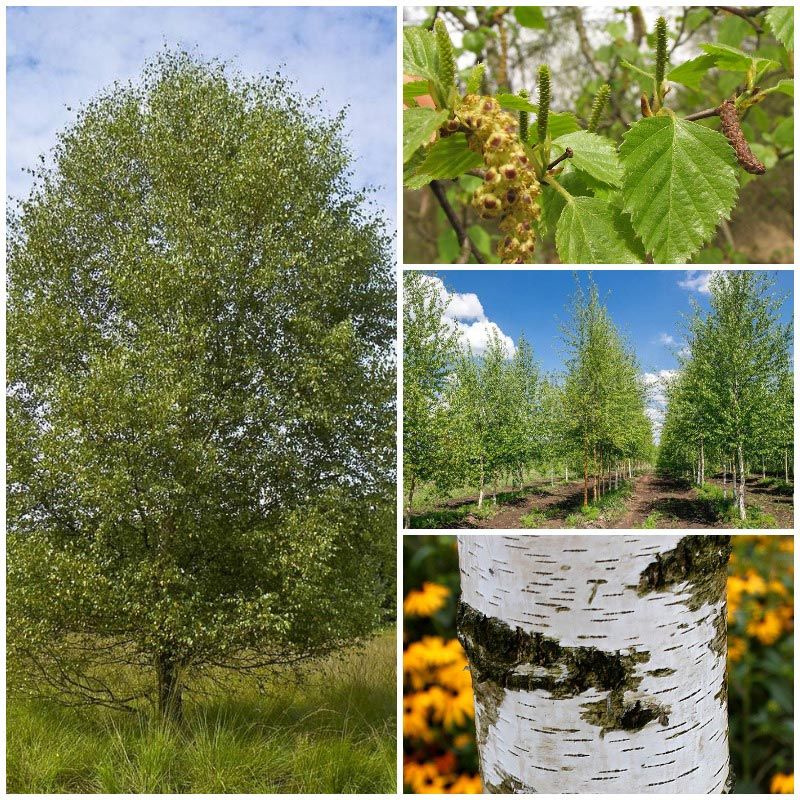
The birch tree can be described as follows:
- The straight, smooth trunk of the tree rises 15-20 meters above the ground.
- First-year seedlings have drooping shoots, thick and lush.
- Until the age of 5, the trunk is brown. By the age of 10, the birch tree's betulin production becomes sufficient, and the plant gradually acquires a uniform white color.
- Young birches stretch upwards, their branches reaching towards the sky, while the crowns of mature trees become spreading.
- The leaves of young plants are pubescent. Mature plants retain a soft hairy covering on the lower leaves and stems.
- The trunk grows to a diameter of up to 80 cm. Individual multi-trunked specimens are found, but rare.
- Bétula pubéscens is a frost-resistant variety.
- The root system is developed, but located close to the ground surface. Trees often fall during strong winds.
- The average lifespan is 120 years, sometimes a little longer.
Growing conditions
Downy birch is grown from seeds. Sow in late summer. Immediately after germination, each shoot is transferred to a separate container. In the spring, the shoots are planted in open ground, spaced 3-4 meters apart. Daily watering is necessary for the first week after planting.
Fertilizing is done twice a year - in early spring and early summer.
When weeding, loosen the soil to a depth of no more than 3 cm. To protect and improve the soil around the tree trunks, cover them with wood chips and peat to a depth of 12 cm. Birch trees do not need to be pruned; simply remove dry branches in the spring.
Preparing the plant for winter is not necessary. As a preventative measure, especially valuable varieties planted in the fall are covered at the trunk.
Common diseases and parasites:
- The pipe roller beetle attacks young shoots. Affected areas are pruned and burned. The soil around the trunk is dug up.
- Caterpillars love to eat birch leaves down to the skeleton. To treat them, remove the insects and spray the plant with insecticides.
- The cockchafer is dangerous in its larval form, which eats away at tree roots. When discovered, the soil around the trunk is loosened and the insects are removed by hand.
- Polypore fungi attack wood. They are carefully removed.
Top.tomathouse.com informs: the use of downy birch
Although downy birch wood is susceptible to rot, it has a wide range of uses. The material is easy to machine, making it popular for making toys. For long-term storage, the logs are immersed in water.
In spring, tasty and healthy sap is collected from the trees. The plant is used for plywood and ski making. The branches are gathered into bath whisks.
In industry, wood is processed into the following materials:
- acetic acid;
- coal;
- methyl alcohol;
- turpentine;
- tar.
The latter is obtained by dry distillation of the bark and is used in perfumery. The medicinal properties of birch leaves and buds are well-known. Chaga, a fungus that parasitizes birch trees, is also used for medicinal purposes. Landscape designers often choose this ornamental plant for landscaping. The snow-white trunk and lush, sinuous crown gracefully complement each other.