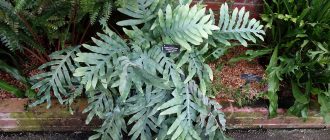
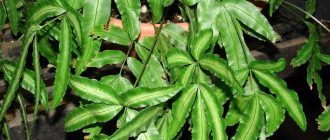
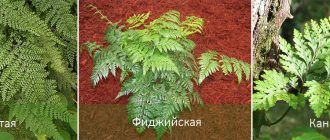
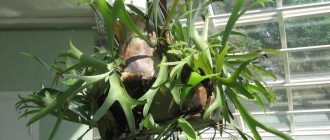
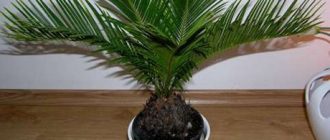
Nephrolepis (Blechnum) is a fern plant belonging to the Derbyankov family. It is native to western Europe, eastern Asia, and northern America, and is occasionally found in the Carpathian region.
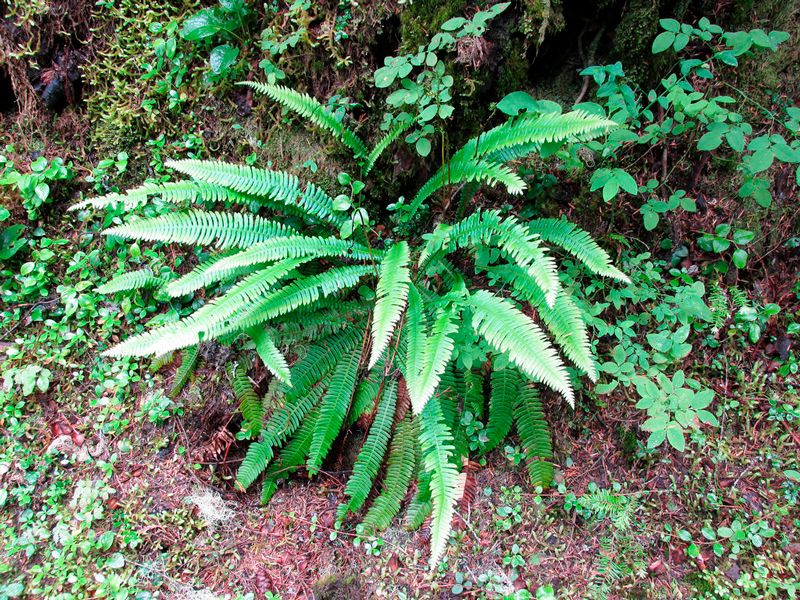
General information about Blechnum
A perennial with a shortened rhizome. The foliage is leathery and pinnately divided. The color is bright green. The fern is distinguished by dimorphism, a process in which the leaves have different shapes.
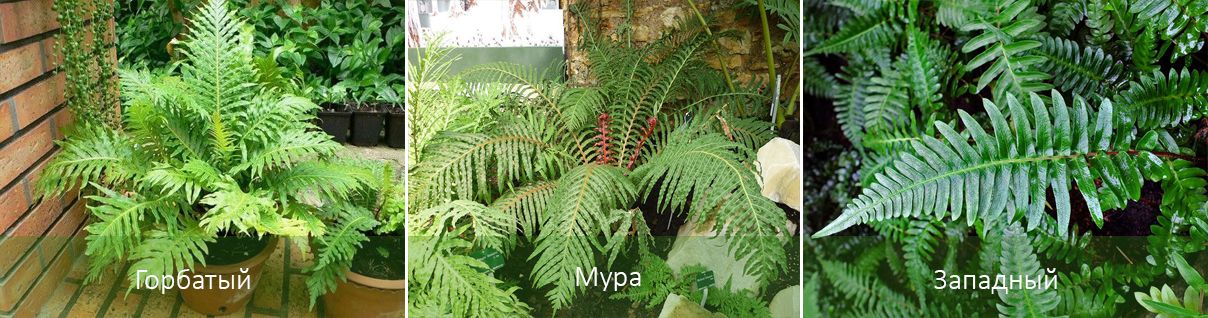
Types of Blechnum for the home
Only a few varieties of blechnum can be grown indoors:
| View | Description | Leaves |
| Humpbacked (gibbum) | Widely used in floriculture due to its foliage, which has virtually no petioles. | Rich green. |
| Mura | It reaches 30 cm in height. The petioles are almost black. | Bright green. |
| West | Reaches 50 cm. In Brazil, it is widely used for the treatment of inflammatory pathologies, diseases of the liver, lung tissue, and urinary tract. | Lanceolate. |
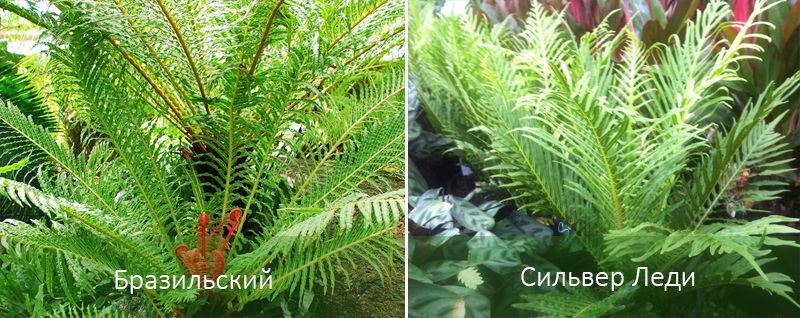
| Brazilian | A shrubby species, up to 40 cm in height. | Lush, pink-red color. |
| Silver Lady | A spreading shrub with a diameter of up to 50 cm. | Silvery, lanceolate, tapered. |
Features of caring for blechnum
When caring for a blechnum at home, you need to pay attention to the season of the year:
| Factor | Spring-summer | Autumn-Winter |
| Location/lighting | Choose a southeast-facing location, placing the plant 1 meter from the window. Provide partial shade; direct sunlight will negatively impact the plant's appearance. | |
| Temperature | +20…+25 °С. | +16 °C. |
| Humidity | Tall. It doesn't tolerate misting, so the pot is placed in a tray filled with moistened peat and pebbles. | |
| Watering | Wash liberally, 2-3 times a week. Use soft water at room temperature. | The frequency is reduced, but the soil must not be allowed to dry out. |
| Top dressing | Use liquid mineral fertilizer twice a month. | They are suspending. |
Transplantation, soil, propagation
Repotting a blechnum is done only when the root system begins to emerge from the pot. The optimal time is spring.
The soil should be loose and slightly acidic. To prepare the substrate, you can use humus, peat, sand, or crushed moss in a ratio of 2:2:1:1. When moving the plant to a new pot, be sure to place a drainage layer at the bottom.
Propagation is accomplished by dividing the bush or by spores located beneath the foliage. The latter option is quite labor-intensive and is only suitable for professional gardeners.
To propagate blechnum using the first method, the rhizome is divided with a sharp knife during transplantation, ensuring that each section has 2-3 growing points. The cut areas are sprinkled with charcoal. Each section is placed in a separate container, and rooting occurs within a month.
Mistakes in caring for blechnum, diseases and pests
Despite the high resistance of blechnum to diseases, it is susceptible to pests such as scale insects, thrips, and spider mites.
The likelihood of insects appearing increases if there are problems during the growing process, these can be the following:
- drying out of leaf tips – dry air or close proximity to radiators;
- sluggish appearance – lack of ventilation;
- yellowing of leaves – high temperatures;
- slow growth – insufficient moisture, unsuitable soil.
If you prevent these kinds of problems, pests will be rare. However, if they do appear, immediately treat the plant's foliage with a soapy solution and prune away the affected areas. If numerous insects are present, use a solution of Actellic.