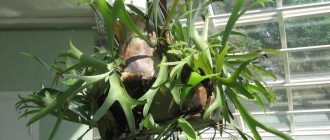
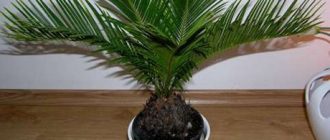
Pteris is a genus of ferns in the Pteridaceae family. The name comes from the Greek word meaning "feathered."
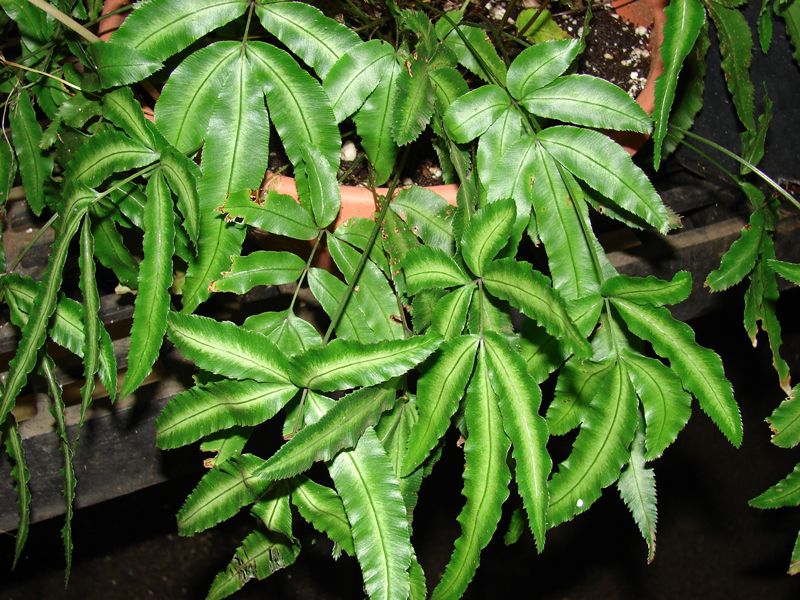
Description of Pteris
Pteris has an above-ground rhizome with soft roots covered in brown hairs. A stem grows underground, sometimes mistaken for an extension of the roots. The leaves grow from the stem, but they appear to emerge directly from the ground.
The height of the bush is up to 2.5 m, there are also more miniature forms that twine around rocks or rocky cliffs.
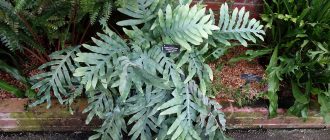
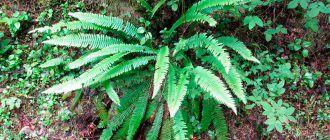
The leaves are large, lacy, bright green, and there are variegated varieties.
Types and varieties of pteris
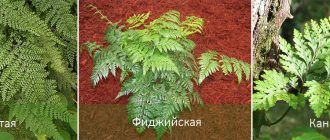
There are approximately 250 species of pteris. Despite their common structure and equally airy, graceful bushes, they can appear quite diverse due to differences in leaf shape and color.
| Name | Description
Leaves |
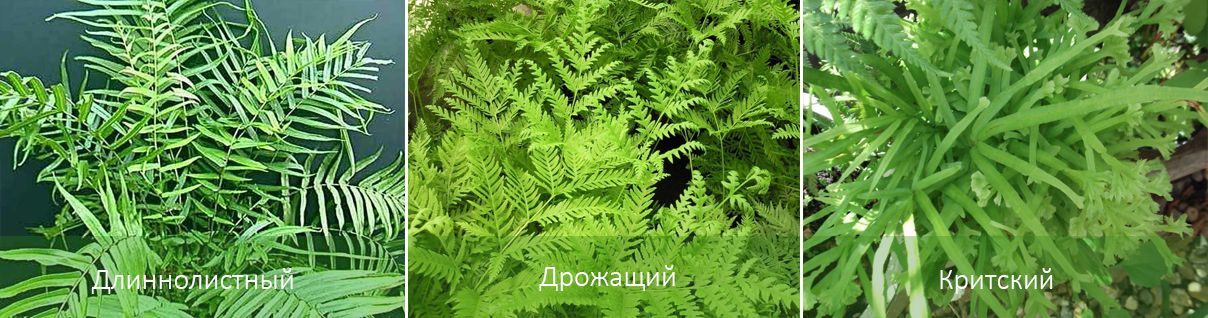
| Long-leaved (Pteris longifolia) | Lush, uniformly colored, dark green, narrow and long, they are arranged oppositely on a long petiole 40-50 cm tall. |
| Trembling (Pteris tremula) | The tallest, up to 1 m. Grows quickly.
Fragile, but very beautiful, deeply dissected, light green in color. |
| Cretan (Pteris cretica) | The most unpretentious variety is the variegated ‘Albolineata’, with wide lobes and the lightest colour.
Lanceolate, often contrasting, located on petioles up to 30 cm long. |
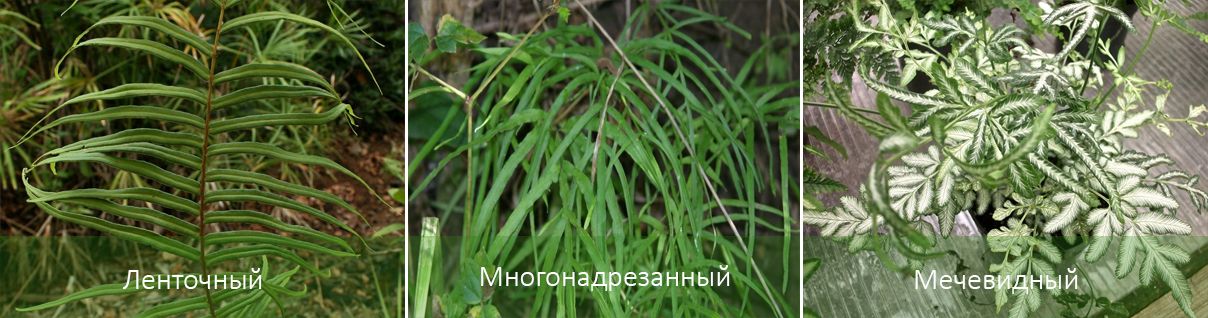
| Ribbon (Pteris vittata) | Arranged alternately on long (up to 1 m) petioles, they resemble cut ribbons. Floating, delicate, and beautifully curved, they are... |
| Multi-notched (Pteris multifida) | Reminds me of a grassy hummock.
Unusual, doubly pinnate, with narrow and long linear segments up to 40 cm long and only 2 cm wide. |
| Ensiform (Pteris ensiformis) | One of the most beautiful. Height 30 cm. Twice-pinnate with rounded segments. Many varieties have variegated coloring, with a light center. |
| Tricolor (Pteris Tricolor) | Homeland: Malacca Peninsula (Indochina).
Feathery, up to 60 cm, purple in color. Turn green with age. |
Caring for a pteris at home
Caring for the plant will require following a number of simple rules for home use.
| Parameter | Spring | Summer | Autumn/Winter |
| Soil | Light, neutral or slightly acidic, pH from 6.6 to 7.2. | ||
| Location/lighting | West or east-facing windows. Bright light is needed, but not direct sunlight. | It is advisable to take the plant outdoors and keep it in partial shade. | Select the brightest place, or provide additional lighting with lamps for 10-14 hours. |
| Temperature | +18…+24 °C | In case of insufficient light, reduce to +16-18 °C. At night – to +13 °C. | |
| Humidity | 90% | 60-80% if the temperature is lowered. | |
| Watering | Regularly, when the top layer of soil dries out. | If the temperature is around +15 °C, watering should be limited, allowing the soil to dry out to a depth of 1 cm. | |
| Spraying | From 2 to 6 times a day. | Do not spray at temperatures below +18°C. | |
| Top dressing | None. | Twice a month, apply a complex fertilizer for deciduous indoor plants. Prepare the solution at half the concentration indicated on the package. | None. |
Transplantation, soil, pot
Repot the fern in the spring, but only if the roots have completely encased the soil. Pteris prefers tight containers. Wide, shallow containers are preferred. Good drainage is essential.
Difficulties, diseases, and pests of pteris
Pteris won't cause any problems if provided with the right conditions. It's sensitive to poor care. It's often attacked by scale insects and thrips, and less commonly by aphids and mealybugs.
| Pest/Problem | Description and reasons | Methods of control |
| Scale insects | Brown plaques 1-2 mm. | Treat with Actellic (2 ml per 1 liter of water), repeat after 5-10 days. |
| Thrips | Strokes and dots on the underside of the leaves. | Use Actellik according to the same scheme: rinsing with a stream of water, removing damaged leaves. |
| Aphid | Sticky, deformed leaves. Insects are small, translucent, 1-3 mm. | Spray the plant with a 3% solution of tobacco, ash, and chlorophos. |
| Mealybug | White coating on the plant, similar to cotton wool. | Cut off and burn the affected parts, replace the top layer of soil in the pot. |
| Wilted leaves | Excessive lighting. | Move the pot to a more suitable location. |
| Yellowed, curled leaves, weak growth. | Too high temperature with insufficient humidity. | Reduce the air temperature. |
| Brown spots. | Overcooling of soil or irrigation water. | Water only with water that is +2…+7 °C higher than the air temperature. Move to a warmer location. |
Reproduction of Pteris
Propagation can be accomplished by spores or by dividing the rhizome during replanting. In apartments, the latter method is preferred. Mature bushes are divided by the number of growing points, keeping in mind that these do not necessarily correspond to the above-ground rosette from which the leaves emerge. The cuttings are dusted with crushed charcoal, and the divisions are immediately planted.
The plant is not only decorative but also medicinal. In folk medicine, the Cretan and multi-partite species are used. A decoction of any part of the plant is used for urological, infectious, and skin diseases, poisoning, and inflammation. Consult a doctor before use.