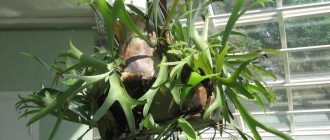
In its native habitat, the Phlebodium fern grows as a weed, quickly spreading across any area it invades. However, several decades ago, it was cultivated and domesticated. Now, Phlebodium can be found in garden plots, greenhouses, offices, and apartments.
Content
- 1 Description of Phlebodium
- 2 Types of Phlebodium
- 3 Ornamental varieties of Phlebodium
- 4 Features of caring for Phlebodium + a table with brief characteristics
- 5 How to propagate Phlebodium at home
- 6 Phlebodium diseases and pests and their control in the table
- 7 The Importance of Phlebodium in the Home and Other Ways to Use It
Description of Phlebodium
Phlebodium came to our region from America, where it chose to inhabit forests with subtropical and tropical climates. It belongs to the Polypodium family and is epiphyteIn 1841, it was discovered and described in detail by the British botanist Robert Brown.
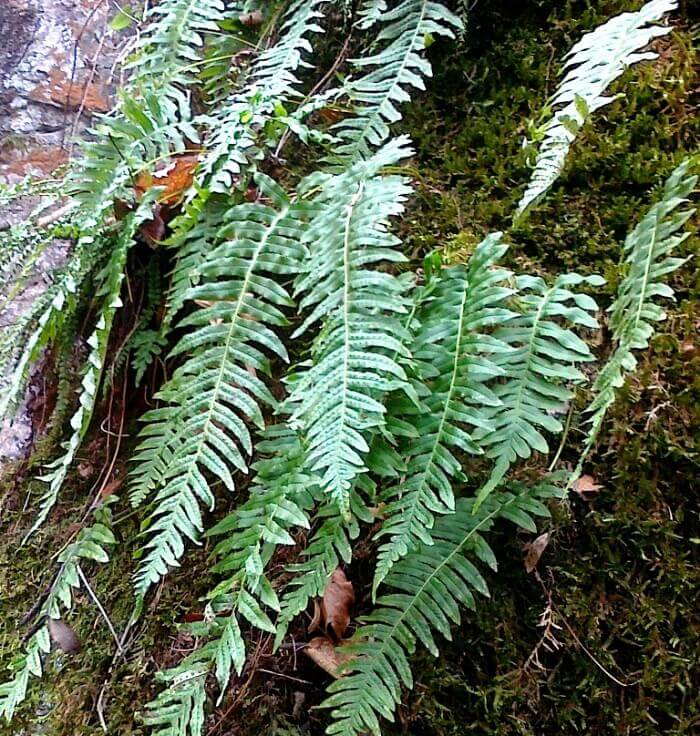
In the wild, the fern can reach gigantic sizes and is rarely found on the ground. Its epiphytic nature speaks for itself: the plant prefers to cling to trees and shrubs with its roots rather than live in their shade on the ground.
Phlebodium doesn't tolerate even the slightest temperature fluctuations very well. It thrives only in consistently warm climates, and when colder temperatures hit, it can begin to drop its leaves and become diseased.
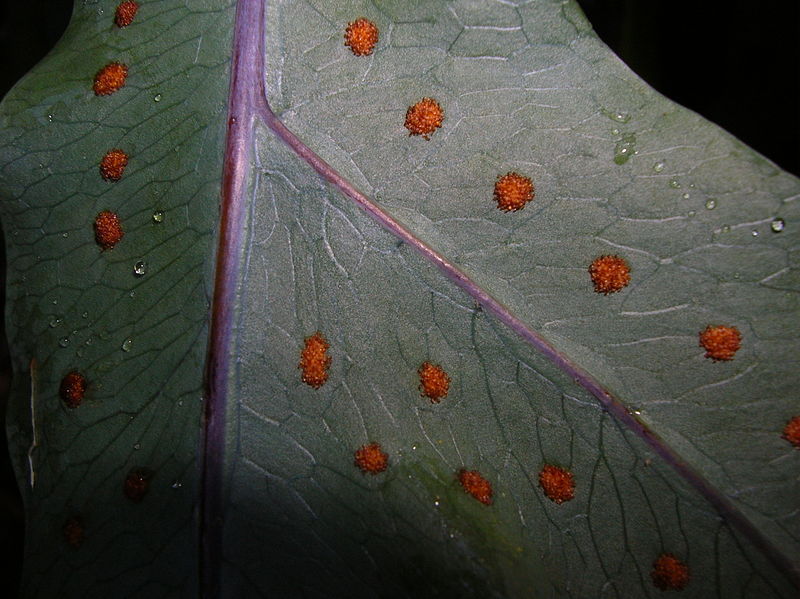
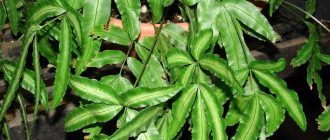
Fern leaves are scientifically known as "fronds." They are distinguished by a long, dark-brown petiole (up to 1 m long) and large, elongated, and deeply lobed blades. A single frond can contain up to 35 blades. On their undersides, one can see numerous spores (sporangia), which the fern uses to reproduce under favorable conditions.
Types of Phlebodium
The scientific community distinguishes between 4 main types of Phlebodium:
- Pimply (areolatum)The leaves have an uneven surface in shape and size. They are very thin, leathery, and bright green. Described by the 18th-century English botanist John Smith.
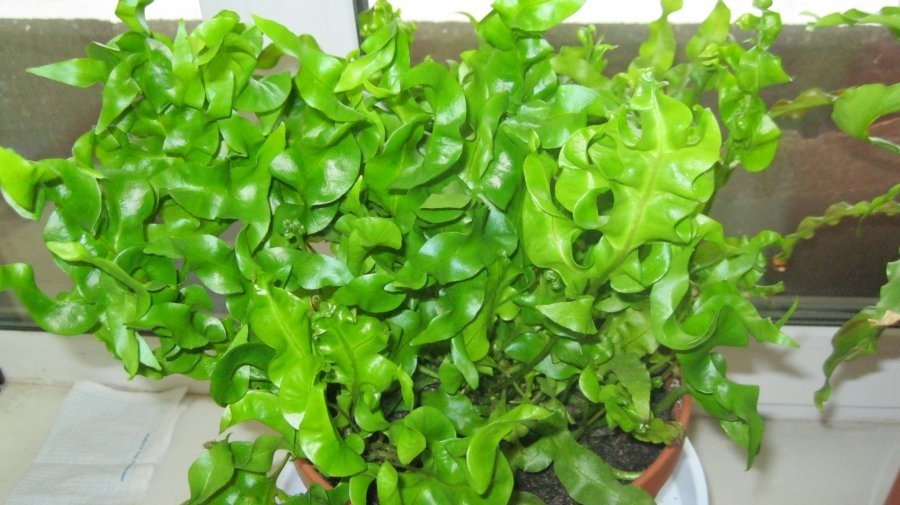
- Golden or golden (aureum)It got its name from the corresponding color of its rhizome. The leaves are long, up to 1 meter. They are gray-green in color, and the sporangia are bright yellow on the reverse side. The species was described by the Swedish naturalist and physician Carl Linnaeus.
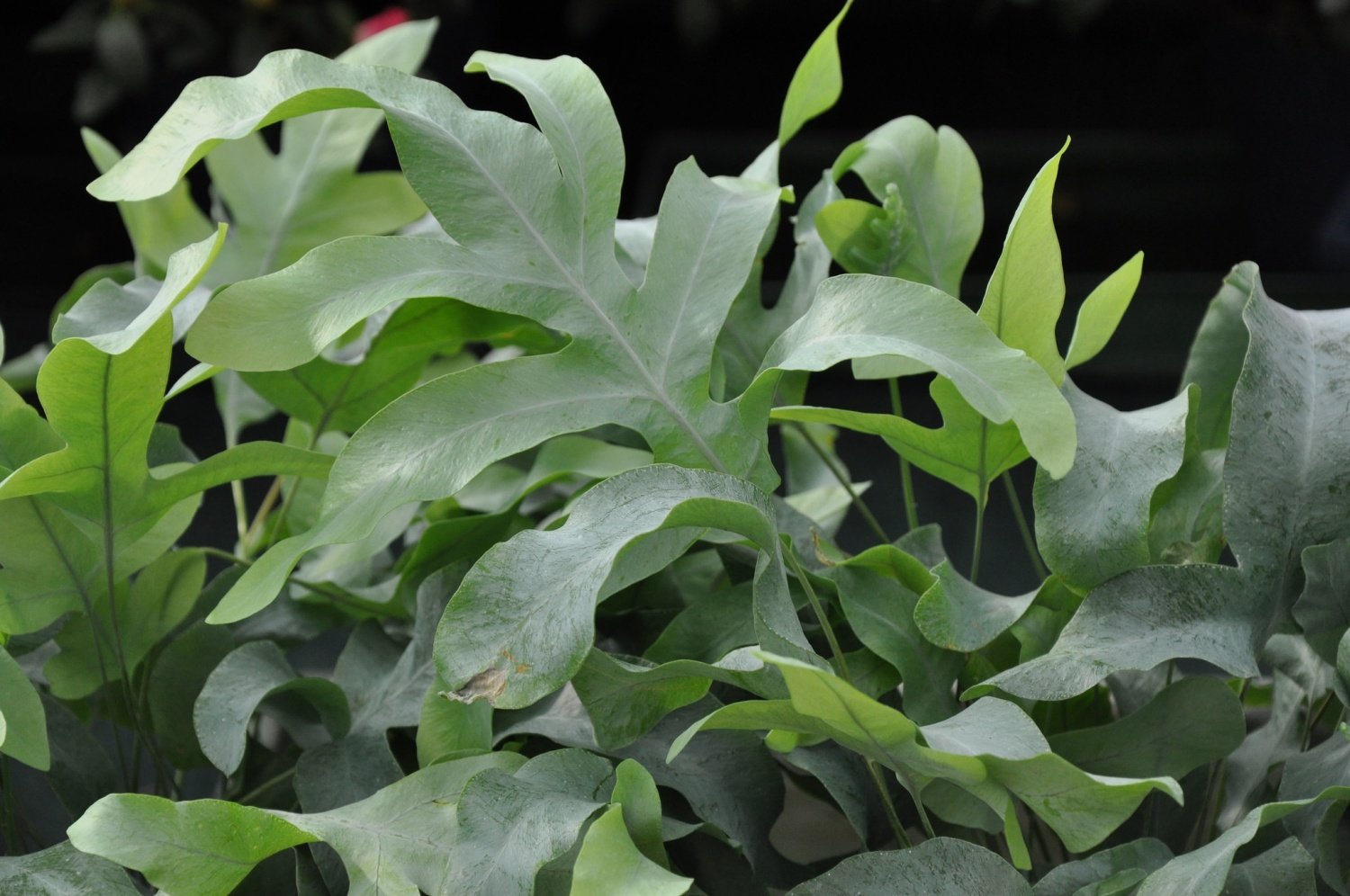
- Phlebodium decamanum (found in foreign sources). It grows as a spreading bush, reaching a height of 1.2 meters. The roots are strong and fleshy; when grown in soil, they try to break through to the surface. The foliage is succulent and bright green, and the frond is covered with irregularly divided leaflets. On the undersides of these leaflets, teardrop-shaped sporangia are arranged in several rows (3 to 7). The species was described by the distinguished 18th-century German botanist Karl Ludwig Willdenow.
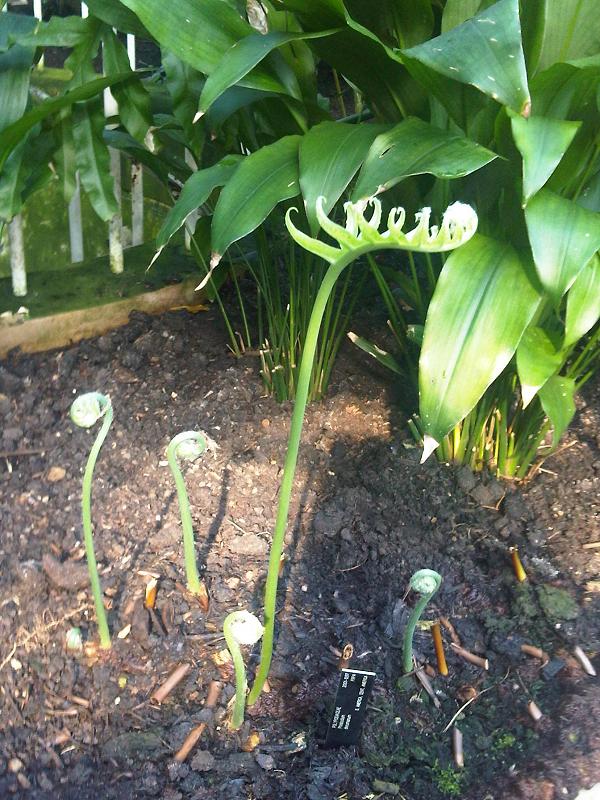
- PseudoauremumThe leaves are much denser than those of other varieties. They are glaucous or dark green in color. On the underside of the leaf, near the central vein, sporangia are arranged in a single row. The species was described by the 18th-century Spanish botanist Antonio José Cavanilles.
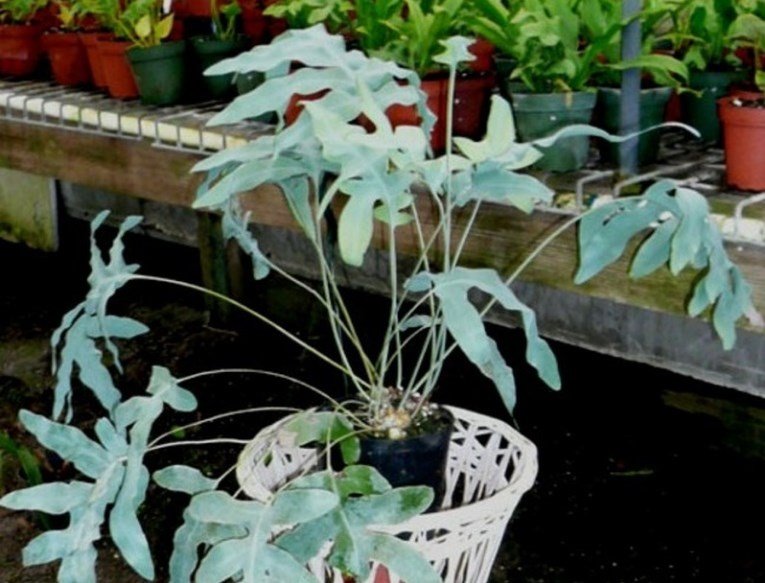
- Phlebodium polylepis (found in foreign sources). The species was described by the 18th-century Swiss botanist Johann Jakob Römer.
Ornamental varieties of Phlebodium
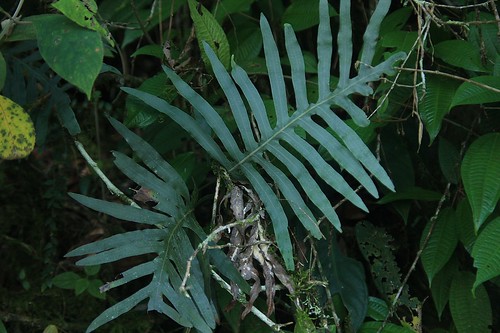
The only fern readily available for cultivation at home is Phlebodium aureus. It alone has been the basis for the development of a large number of ornamental fern varieties.
Mandianum
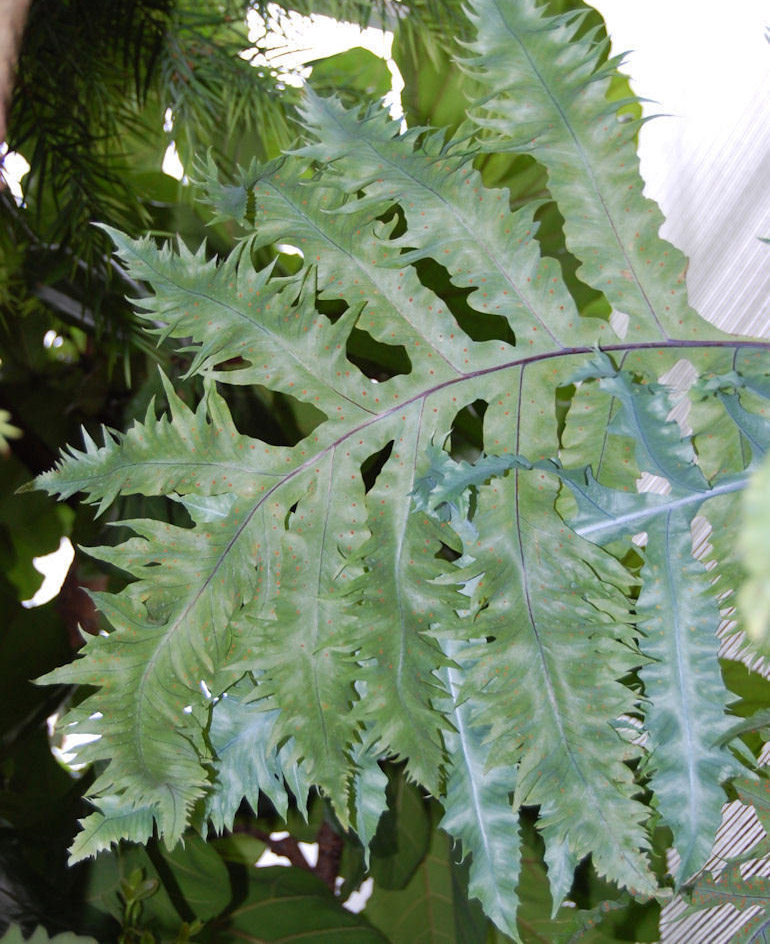
The variety belongs to the openwork type due to the fact that the edges of the leaf blades are slightly serrated or have a wavy edge.
Blue Star
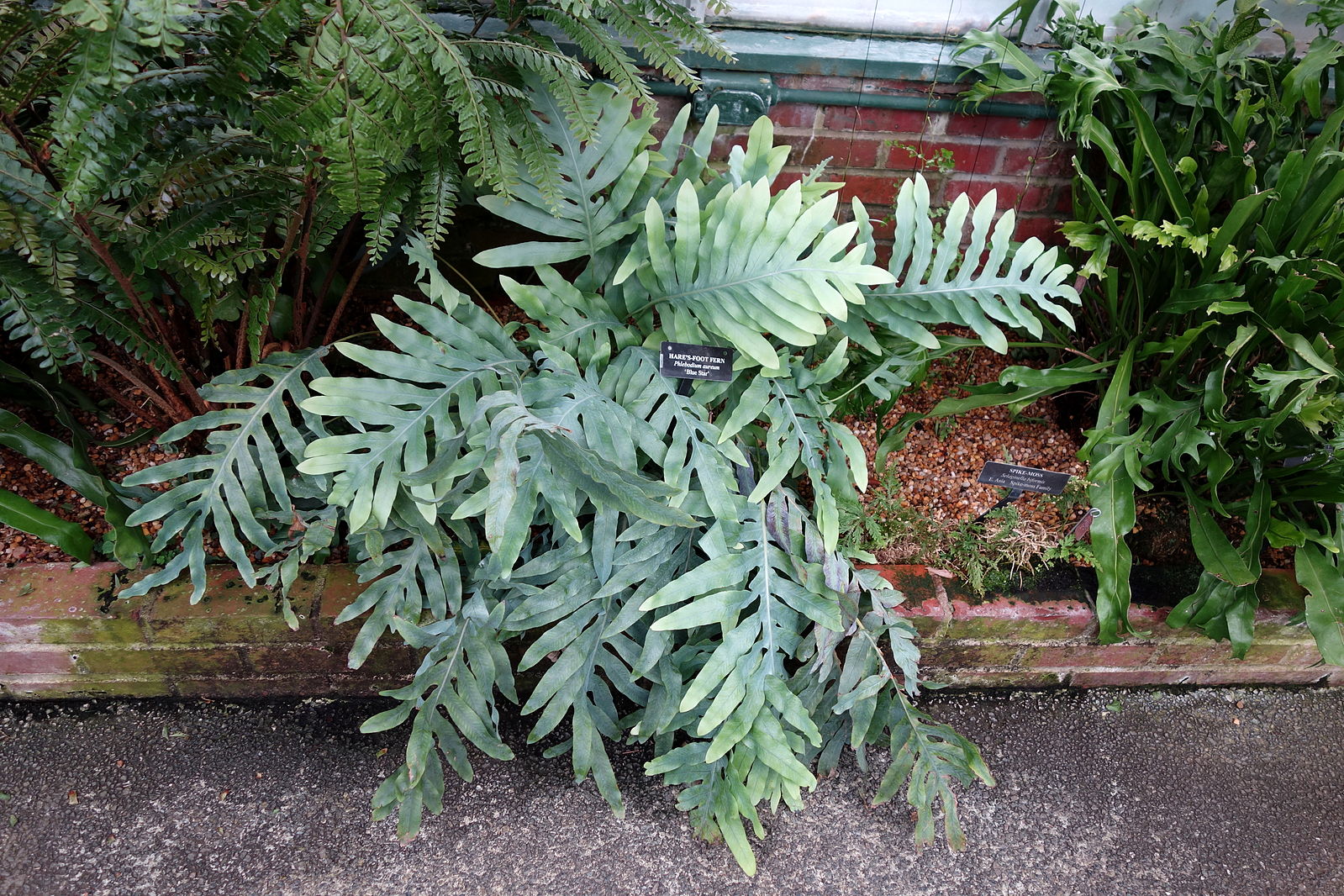
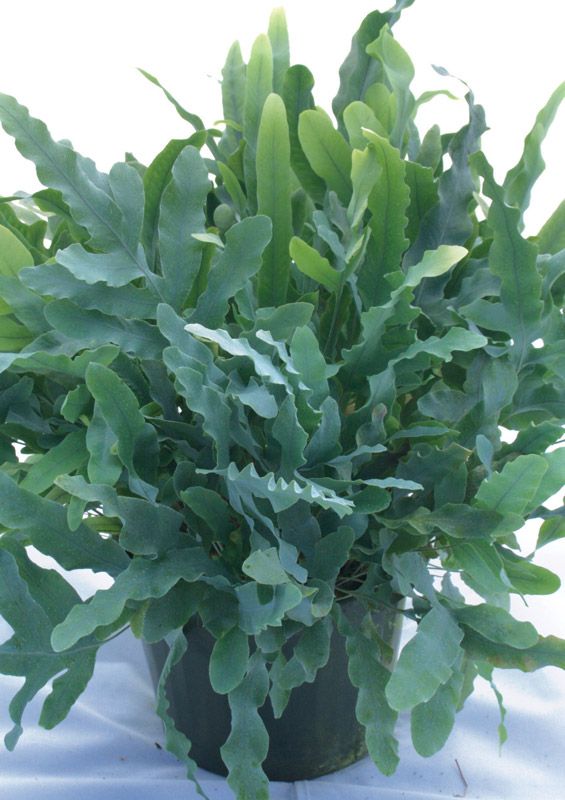
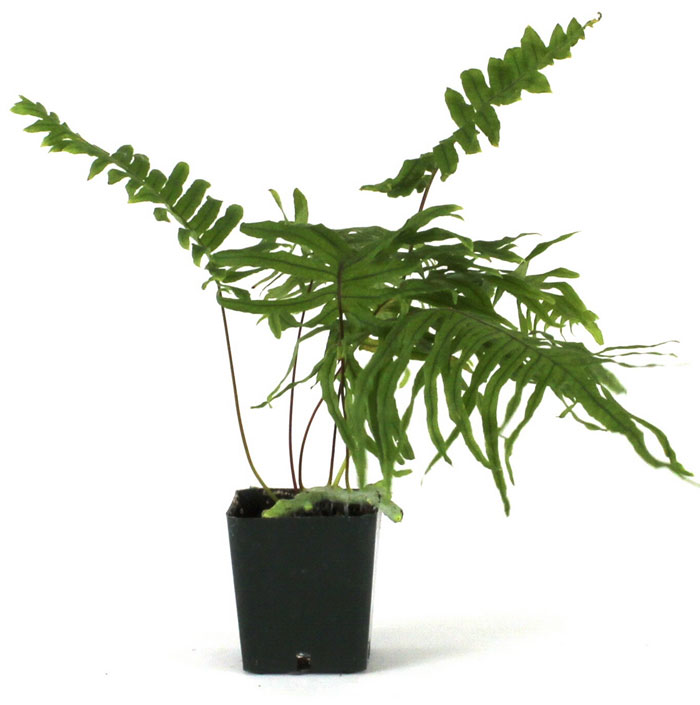
Phlebodium Blue Star received its name for its unusual blue-gray leaf color. The fronds are solid at the initial stages of growth, but with age they begin to divide into no more than three lobes.
Davana
Phlebodium davanii is quite rare in our country. It is typically grown in hanging baskets, as the shoots grow very densely and luxuriantly. The fronds do not have clearly defined divisions, but they are edged with wavy edges and have a distinctive shape.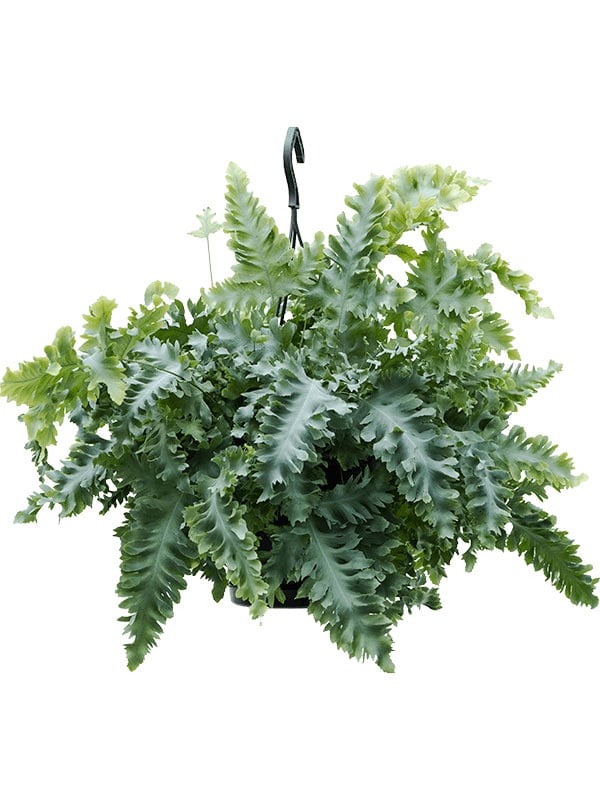
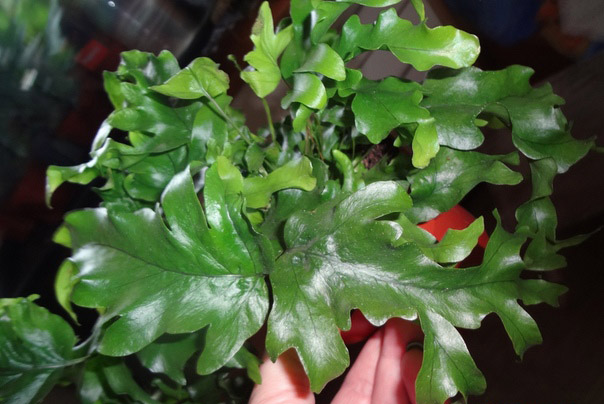
Nicholas Diamond
It has bright green leaves with slight curling at the edges. The fronds are practically undivided in the early stages of growth.
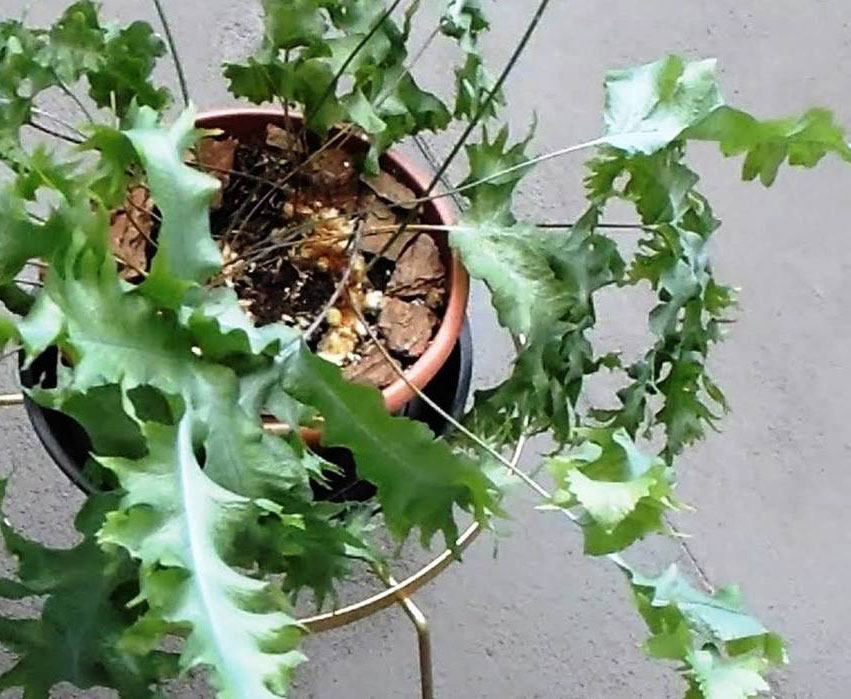
Ekstrand
The fronds are notched, slightly pointed, and have pronounced wavy edges.
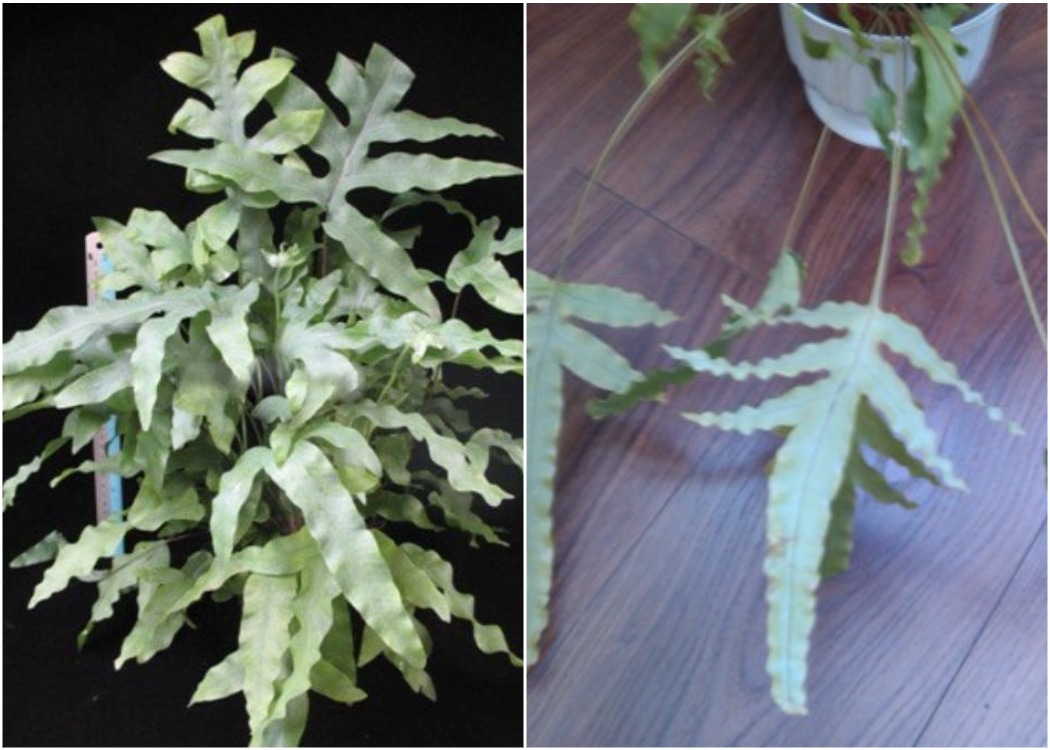
Undulatum or Undulatus (Undulatum)
The bush is tall, the fronds are large with a distinct wavy edge.
Glaucoma
A very compact and neat bush with glaucous fronds. Their wavy shape gives the fern a curly appearance.
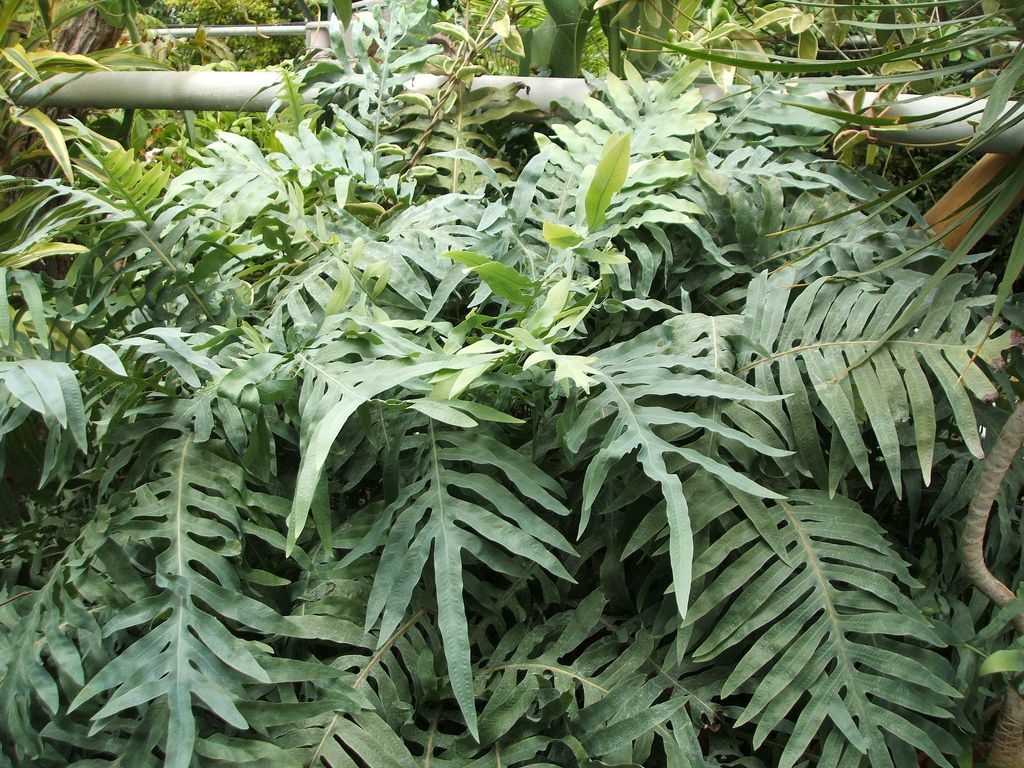
Cristatum
The fronds are glaucous-green in colour and resemble combs in shape.
Features of caring for Phlebodium + a table with brief characteristics
Let's look at a brief description of home care in the table below:
| Parameter | Characteristic |
| Lighting | During the summer, protect the plant from direct sunlight. In winter, you can place the fern on a windowsill or provide additional lighting with a special lamp. The amount of light can affect the number of shoots and their color. |
| Temperature | It is recommended to maintain room temperature. In winter, Phlebodium requires a dormant temperature of 16 to 18°C. A temperature of 10°C is critical (and 5°C will kill the fern). |
| Humidity | From 75 to 80%. Thanks to the waxy coating on its fronds, Phlebodium tolerates low humidity. However, it's still recommended to periodically mist the area around the plant or place a container of water nearby. Spraying the leaves themselves is useless—the water will run off them. The roots will absorb it from the air. |
| Watering | This is done more frequently in summer than in winter. A sign is the top layer of soil drying out. The pot must have a drainage layer and holes in the bottom to prevent water from stagnating. Otherwise, the roots may rot. |
| Priming | It is recommended to use a ready-made mixture for epiphytes. |
| Top dressing | Phlebodiums don't require frequent fertilizing, and doing so is unsafe due to their delicate roots located on the soil surface. It's recommended to apply specialized fertilizers for ferns once a year. |
| Transfer | This is done every three years, with the pot selected being 3 cm larger than the previous one. When planting, it's crucial not to bury all the roots; most of them should remain above ground. |
Phlebodium placement in the apartment
What kind of care is suitable for this plant? It's best to place a young Phlebodium on a windowsill, away from direct sunlight. Sunlight can burn the delicate fronds. However, plan ahead for where you'll place your fern once the bush grows over a meter tall and becomes very spreading.
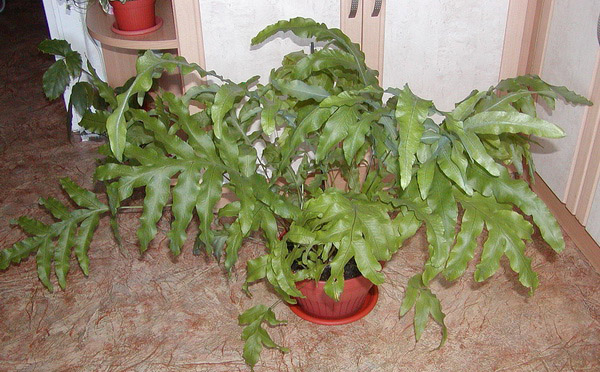
It's advisable to place the planter on a movable stand so you can move the fern as needed. In summer, it's also acceptable to place it on a covered veranda or terrace.
Temperature
Indoor ferns prefer room temperature. In this regard, they share the same preferences as humans. However, in winter, you can create a dormant period for the plant and move it to a room with a temperature of 16 to 18°C. If the room gets colder, it will begin to shed its leaves. The critical temperature for Phlebodium is considered to be 5°C—below this temperature, the plant dies.
Proper lighting
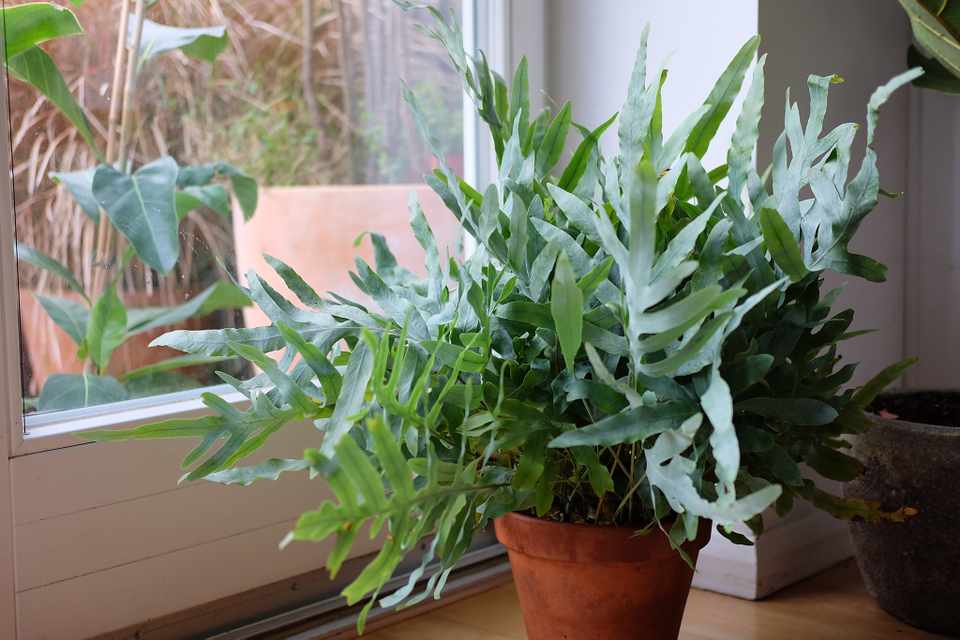
In the wild, Phlebodiums have to compete for every ray of light, so they aren't blessed with excellent lighting. Indoors, they don't require full sun to thrive. Partial shade is fine, but it should still receive some light from a window. Lighting is especially important during the initial stages of Phlebodium growth. Avoid exposing the fronds to direct sunlight, as this will cause sunburn.
Watering and proper humidity
The plant loves water, but it gets it not only from the soil but also from the air, as it is an epiphyte in nature. Therefore, the soil needs to be watered frequently, but avoid allowing water to stagnate around the roots, otherwise rotting will begin and the fern will wither.
Spraying the shoots is pointless. The fronds are covered with a thin layer of wax, preventing moisture from penetrating the plant. Experienced gardeners recommend placing a container filled with water next to the fern or misting the area around the plant.
Priming
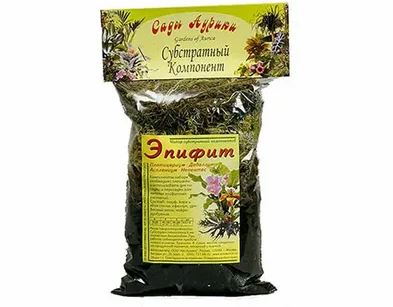
Ferns prefer very loose soil, as in the wild they never grow in the ground, but rather cling to trees with their roots. It's best to purchase a special mixture for epiphytes. However, if this isn't available, a mixture of soil and bark is essential. Additionally, it's important to create a drainage layer that fills a third of the pot.
Transfer
Phlebodiums should be repotted no more than once every three years, choosing a pot 3 cm larger than the previous one. Make sure to leave some of the roots above the soil surface.
Top dressing
The fern doesn't require frequent fertilizing. If your Phlebodium has suffered a disease and you want to support the plant, you can apply specialized fertilizers.
How to propagate Phlebodium at home
In the wild, Phlebodiums reproduce by spores carried by the wind. However, this cannot be replicated indoors. Therefore, propagation is by division. A section of the mature plant is removed, including the root.
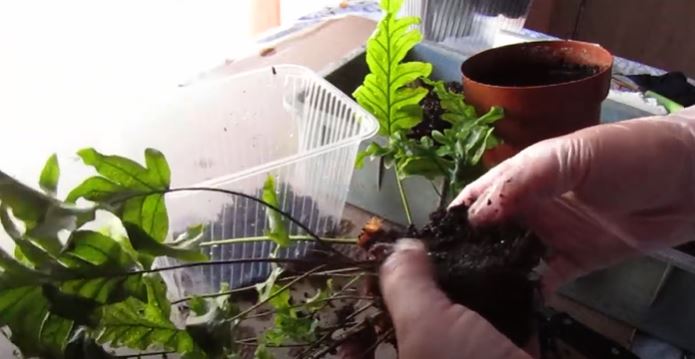
This is done as follows:
- Using a well-sharpened and disinfected knife, cut off a section of the rhizome with several shoots. It's not necessary to remove the entire plant; side shoots can be cut off.
- The cut areas are powdered with crushed charcoal and left open for a few minutes until dry.
- The separated fern is transferred to a pre-prepared container with moistened soil, but there is no need to bury it immediately.
- The container is covered with a plastic bag of the appropriate size to prevent the fronds from breaking. The fern is left in this position until it roots.
- During rooting, you need to periodically check the condition of the soil and water it if necessary.
Important! Propagation is recommended in early spring, before active growth begins.
Phlebodium diseases and pests and their control in the table
Phlebodium has a strong immune system, so if grown properly, it's resistant to diseases and pests. However, if overwatered or frozen, the fern can be susceptible to disease.
| Name | Signs | Treatment |
| Nematode
|
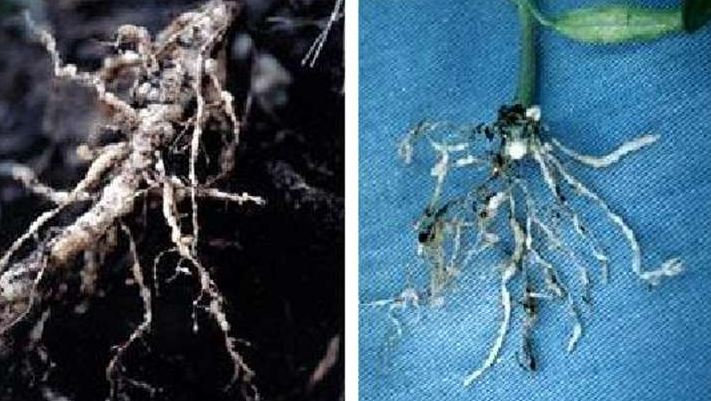
The leaf blades begin to darken, curl and dry out, and then fall off. | Specialized nematicide preparations such as Lindane, Heterophos, Mercaptophos, and Fosfamtide will help get rid of nematodes. If the infestation is not too large, you can try immersing the fern bowl in water at 50°C for 20 minutes. The infested soil is treated with water at 70°C. |
| Scale insect
|
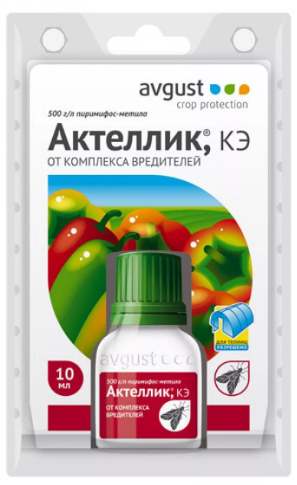
In the early stages, the leaves become covered with small sticky spots, which then turn black, increase in size, and eventually the leaves die. | Insect larvae dislike strong odors, especially the scent of garlic. A garlic or soap-alcohol solution is suitable for spraying. Specialized products such as Actellic, Fufanon, and Fitoverm are highly effective. |
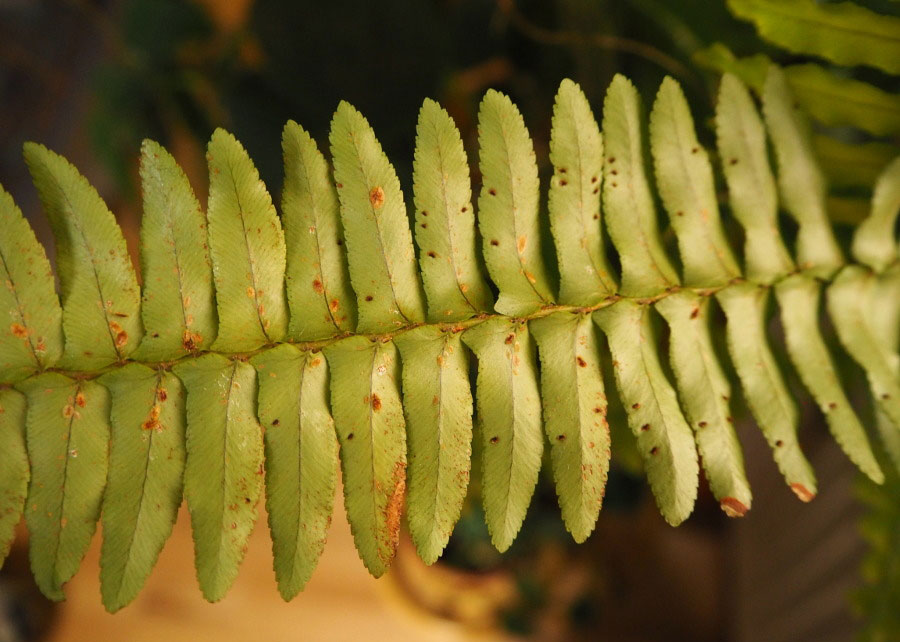
Important! Any disease is much easier to prevent than to cure. Following the rules for growing Phlebodiums will help prevent pests, bacteria, and viruses.
Drugs for the treatment of phlebodium:



The Importance of Phlebodium in the Home and Other Ways to Use It
Since ancient times, people have attributed magical properties to ferns and avoided growing them in their gardens for fear of attracting evil spirits. But these beliefs are a thing of the past. Today, this plant, on the contrary, is considered a symbol of beauty and harmony. However, for allergy sufferers, it may not be the best choice for a houseplant due to the spores it releases.
Phlebodiums often occupy a place of honor in floral arrangements and are used in bouquets, as they have succulent, richly colored shoots that make flowering plants look especially elegant.
Few people know that Phlebodium has medicinal properties and is widely used in folk medicine. A decoction of its leaves strengthens the immune system, stabilizes the cardiovascular and nervous systems, and helps combat asthma and psoriasis. A cream and ointment made from it protects the skin from ultraviolet radiation.