Davallia is an ornamental epiphyte. This perennial fern is native to tropical regions of Asia, including China and Japan, as well as the Canary Islands. It thrives in greenhouses and living spaces, provided it is constantly heated. It is named after the English-born botanist E. Davallia.
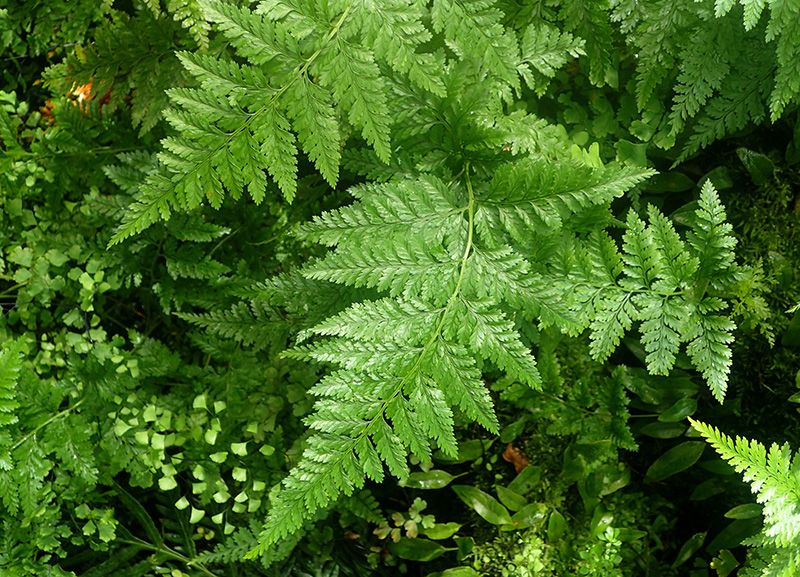
Description of Davallia
In the wild, the fern reaches 1.5 m in width and 1 m in height, but indoors it stops growing at a stem length of 45 cm. Its rhizome, abundantly covered with white hairs, has earned it the popular name "hare's foot." Brown or russet scales can also be seen on the root.
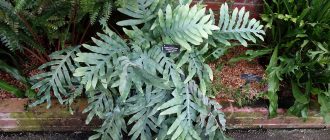
The crown is spreading. The leaves are lacy, bright green, deeply dissected, and triangular in most species, although oval or diamond-shaped ones can also occur. The stems slope downwards, making davallia a popular choice for hanging plants. Brown sporangia (the organ where spores are produced, which open during the reproductive period) are located on the underside of the leaf blade.
Types of Davallia
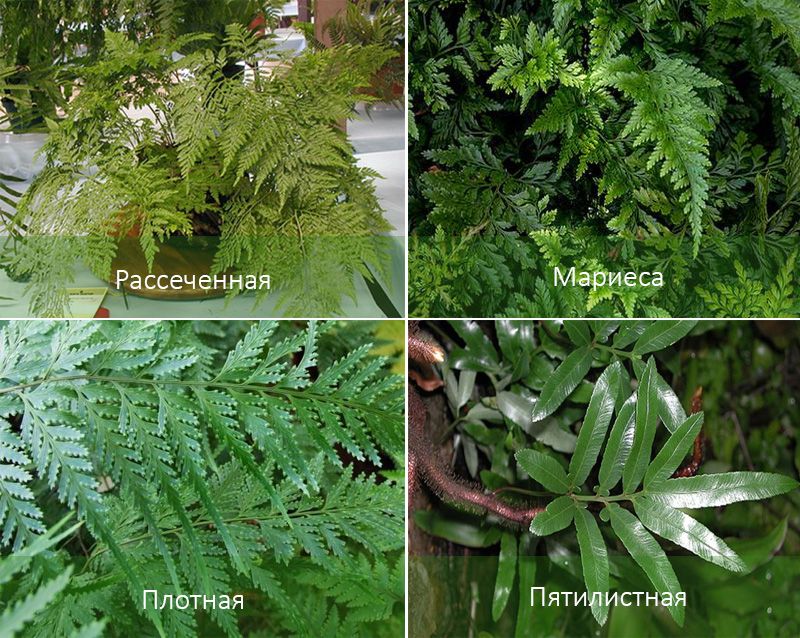
There are 60 subtypes of this plant. Ornamental varieties that can be grown not only in greenhouses but also indoors are listed below.
| View | Description |
| Dissected | Triangular leaf blades of a light green hue on yellowish petioles. The shoots are low. |
| Mariesa | Low-growing, reaching up to 25 cm in height. It tolerates significant temperature drops, but not freezing temperatures. The roots are covered with white bristles. |
| Dense | The leaves are long, up to 50 cm, and are divided into sterile, rounded leaves and linear leaves containing sporangia. The petioles are brown. |
| Five-leafed | Solid leaves with a glossy sheen. The rhizome is chocolate-colored, and the hairs are short and soft. |
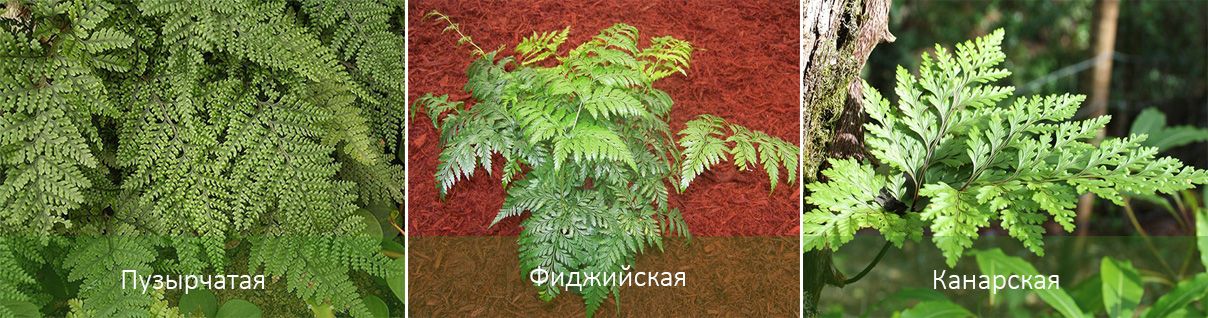
| Bubble | The sporangia are located at the tips of slightly swollen leaves. They are light green in color, and the rhizome is spiral. |
| Fijian | Height up to 90 cm, lacy shape, dark green color. Regularly renews shoots. |
| Canary | The most popular subspecies. The base is covered with brown scales and hairs. The stems are bare below and covered with small oval leaves above. |
Caring for Davallia at Home
| Parameter | Necessary conditions |
| Location/Lighting | Place the curtains in a west- or east-facing window, protecting them from direct sunlight. To diffuse the light and prevent sunburn, you can use tulle. |
| Temperature | Maintain a temperature of +18…+22 °C all year round. |
| Watering | Water when the top layer of soil dries out. In summer, water more frequently. Use warm, settled water and a watering can with a narrow spout, or submerge the pot in a container of water and then drain off any excess water. |
| Humidity | Maintain a moisture level of 50-55%. Spray with boiled water from a spray bottle and regularly place the fronds in containers of moistened peat to prevent rotting. |
| Top dressing | Fertilize the soil mixture every two weeks from May to August. Use fertilizer for tropical varieties, reducing the dose by 3-4 times the recommended amount. |
Transplantation, soil
The planting pot should be flat and wide. Create drainage at the bottom using expanded clay. Mix a soil mixture of the following ingredients in a 2:1:1:1:2 ratio:
- peat;
- river sand;
- turf land;
- sphagnum moss
- leaf humus.
Repot every 2 years or once a year if the roots quickly fill the pot. This procedure can be performed from March to April.
Reproduction
Ferns don't produce seeds; spores or rhizome parts can be used for propagation. The first method is more complex:
- Spores mature on the underside of the leaf. A dark shade indicates they are ready to germinate. If the color is right, scrape off the spores and dry them in a dark place for 48 hours.
- Prepare a shallow container filled with moist peat. It's recommended to sterilize the soil with boiling water or calcination: this will increase the likelihood of germination.
- Moisten the soil and spread the spores evenly over the surface. Cover the box or pot with plastic wrap and leave it on a bright windowsill in a room with a temperature of at least 12°C. After germination (which occurs within 1 month), spray the peat with a spray bottle.
- Keep the sprouts under plastic wrap, airing them daily for 15 minutes. Continue to moisten the substrate with a spray bottle.
- If the seedlings are located too close, transplant them (separate them more spaciously, using tweezers).
- Gradually increase the ventilation time and a month after the sprouts appear, remove the film completely.
A more effective and easier method is rhizome division. Here's how:
- Remove the mature plant from the pot. Remove soil from the roots.
- Using a sharp, sterilized blade, divide the rhizome into pieces at least 7 cm long, each with at least one leaf. Treat the wounds with crushed charcoal.
- Replant the sections into separate containers. Give the new ferns special attention for 1-2 months.
You can use a part of the plant, such as a stem or leaf, for rooting. The result is not guaranteed, but it is possible if the cutting is kept in a greenhouse.
Problems with growing davallia
Failure to follow proper home care can cause the plant to wilt or rot. These and other problems, along with measures to combat them, are described below.
| Problem | Cause | Solution |
| Slow growth | Lack of fertilizer and liquid, lack of ultraviolet light. | Replant in new soil and pot, change the windowsill or buy artificial lighting. |
| Wilted leaves | Sunburn. | Move the fern to a western window or shade it. |
| Falling leaves | Low air or water temperature. | Water only with warm water, move the pot closer to the radiator (but do not allow it to dry out). Eliminate drafts or remove the epiphyte from windows and doorways. |
| Darkening of the wai | Dry air. | Spray the plant regularly or give it a warm shower, avoiding liquid getting on the rhizome. |
Diseases and pests
| Disease/Pest | Elimination measures |
| Fungal spot | Cut off the diseased parts of the plant. Treat the cuts with crushed charcoal. Spray the fern with Mycosan. |
| Root rot | Remove any rotted roots and repot the plant in new soil. Avoid watering for the first 2-3 days, then ensure it's not overwatered. |
| Nematodes | The plant cannot be cured. It will have to be discarded. To prevent the new fern from becoming diseased, the substrate should be baked in the oven for half an hour. |
| Spider mite | Spray the stems regularly with a spray bottle (mites are sensitive to moisture). If this simple method doesn't work, treat with Aktara or Actellic. |
| Aphid | Treat the plant with a soapy solution. If pests reappear, repeat the procedure up to 3 times, with 3-4 day intervals. Be careful not to let the liquid come into contact with the sensitive rhizome. |