Indoor violets (Saintpaulias) are flowers grown on almost every windowsill. They have numerous fans, who accumulate collections of various varieties over several years. But even experienced gardeners sometimes encounter diseases in their indoor violets, requiring treatment for their favorites.
Content
Common diseases of violets
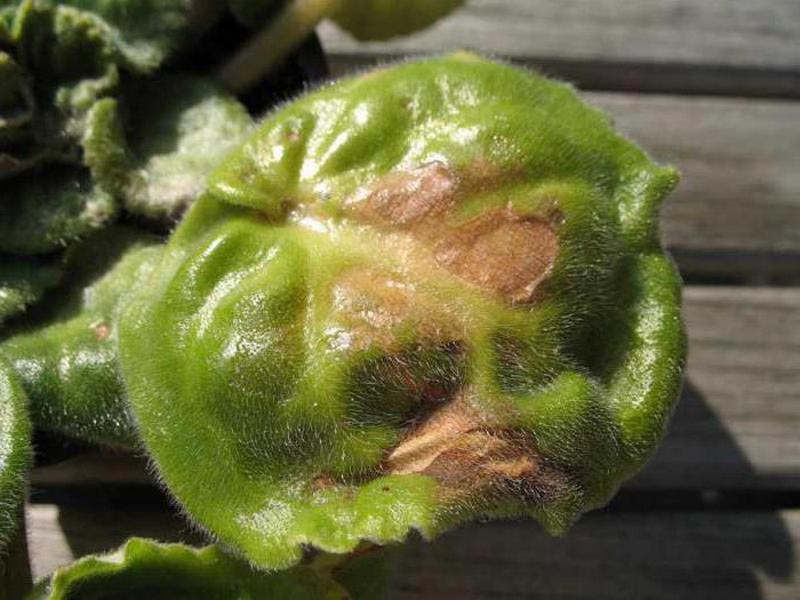
Improper care of Saintpaulias can lead to various problems related to their appearance. Low temperatures, high humidity, and overwatered soil can promote the rapid growth of various fungal spores. Diseases can be infectious or non-infectious.
Root rot
Overwatering causes the African violet to lose its attractive appearance, with leaves drooping and becoming dull. The root system dies. The roots turn brown and become soft. The plant is susceptible to decay fungi.
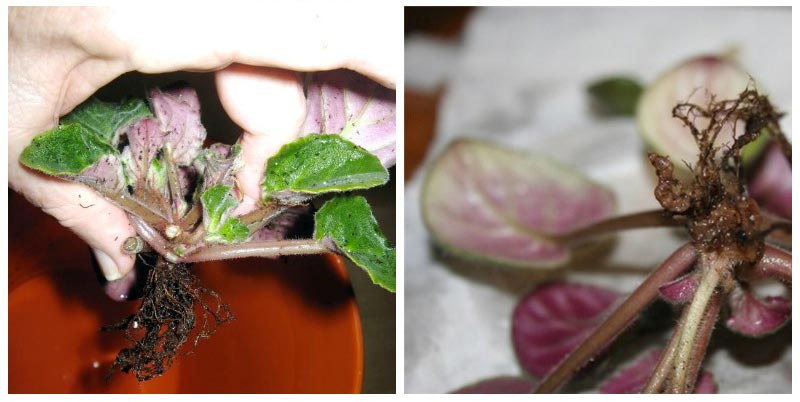
To cure the violet, immediate action is necessary. It's important to wash the roots of the old soil and remove any damaged ones. Soak the remaining healthy parts in a solution of Fitosporin before repotting. It's best to use different soil and a different pot for the new planting. If you're using an old pot, thoroughly clean it: wash and disinfect it by baking or steaming it in the oven, or treat it with a copper sulfate solution. You can select the upper healthy leaves from the diseased plant and root them, after treating them with fungicides to prevent disease.
Stem rot
Saintpaulia can be damaged by improper propagation. In this case, the stems can also rot. Causes of this disease include:
- unwashed and undisinfected instruments;
- deep wounds that were not allowed to heal;
- cuts not treated with antifungal agents during propagation;
- overwatering of young plantings, after which the young roots did not absorb moisture;
- The young, fragile plant was attacked by pests.
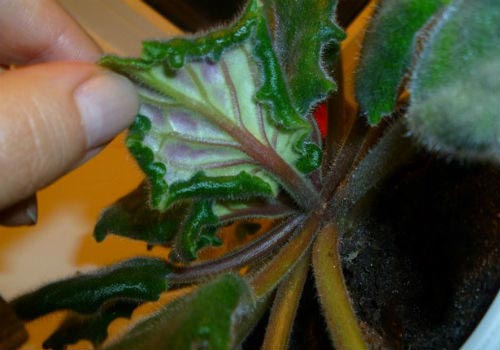
The growth of putrefactive bacteria on weakened flowers progresses significantly. Such Saintpaulias are rarely saved.
Brown rot
Brown bases on young rosettes, rooted cuttings, and transplanted shoots, which become thinner and soften the stems over time, indicate infection with spores that cause brown rot. Traces of mycelium are present in the soil under the leaves.
The disease can spread to other plants, so urgent measures should be taken:
- treat leaves, stems and shoots with antifungal fungicides (Skor, Fundazol);
- apply shallow rooting;
- treat the soil with Fitosporin, FitoDoctor or Trichodermin;
- Use loose soil for planting that drains well;
- Apply frequent but small amounts of water to plants.
Gray mold (botrytis)
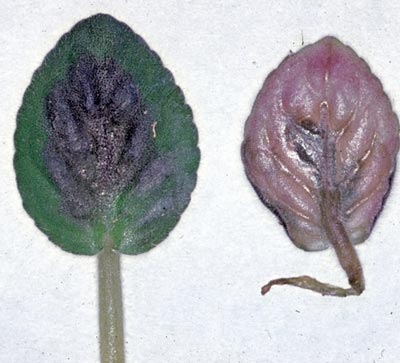
The disease is accompanied by the appearance of a gray, fluffy coating on the surface of the leaves, and the stems become soft and weak. Over time, all parts of the plant turn white and rot. The disease develops from spores in the planting soil, as well as from old, undisinfected soil containing residues from previous diseased plants.
To save the Saintpaulia, you should immediately remove parts of the plant that have wilted.
Further treatment:
- soil disinfection by means of calcination, freezing, and treatment with fungicides;
- treating Saintpaulias with fungicides to prevent the spread of the disease.
Prevention:
- spray during the warm season;
- maintain optimal air humidity, regular ventilation;
- eliminate temperature fluctuations;
- control the watering of plants, avoiding stagnation, and do not let water get on the leaves when watering;
- do not place flower pots close to each other;
- prevent the formation of fumes on the walls of the container during propagation.
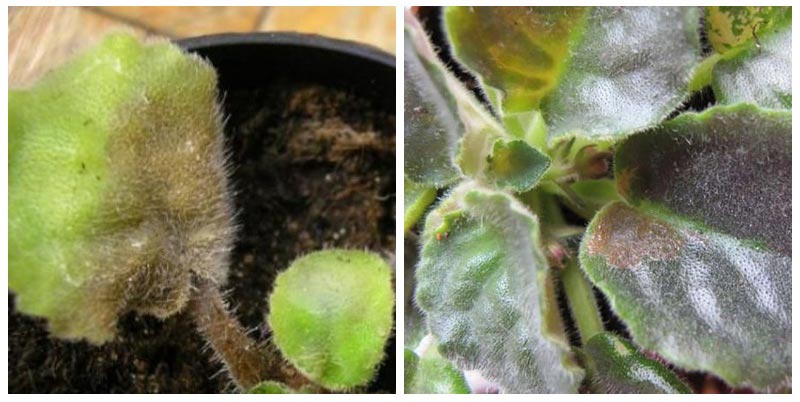
Leaf rust
A characteristic bloom of yellow or brown thickenings and bulges appears on the underside of African violet leaves, rarely on the petioles. Light yellow spots appear on the upper surface. Over time, fungal spores, spread by the air, mature on the underside of the leaf.
Spores do not germinate at optimal ambient temperatures and humidity. To eliminate violet rust, it is necessary to regulate environmental conditions.
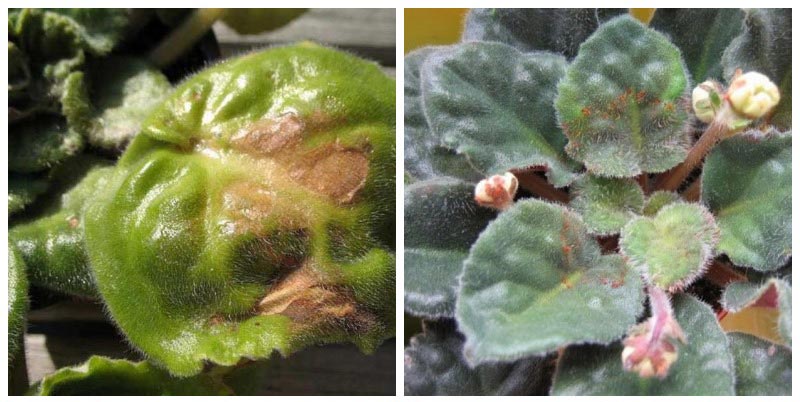
Powdery mildew
African violets are susceptible to powdery mildew, which comes in two forms: downy mildew and true mildew. To confirm the diagnosis, it's important to look at the pattern of the spots. Downy mildew is accompanied by brown streaks. True mildew is characterized by whitish lesions on the stems and leaves of the Saintpaulias. The infection could have occurred when previously used soil was used without treatment or with newly acquired plants.
For sick violets the following measures are recommended:
- regulate the ambient humidity;
- increase the room temperature;
- normalize the lighting by creating additional illumination;
- regularly remove dust from leaves and pots;
- Apply additional phosphorus-potassium fertilizers, as excess nitrogen can also cause plant damage.
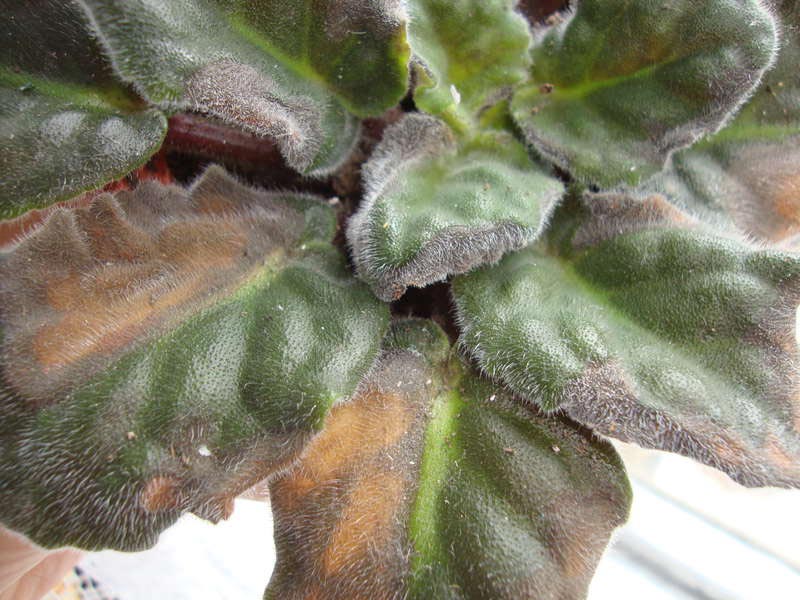
Late blight
Flower drooping, accompanied by root separation, is caused by late blight. Leaves begin to curl. Cool temperatures, high humidity, and insufficient light contribute to the disease. To combat the disease, the violet needs appropriate conditions:
- remove damaged parts of the plant and roots;
- transplant into new disinfected soil with the addition of perlite, which helps maintain soil moisture;
- treat the violet and soil with Fitosporin or similar preparations;
- root unaffected upper leaves to grow a new flower;
- Maintain optimal temperature and humidity for the newly transplanted plant, and increase lighting.
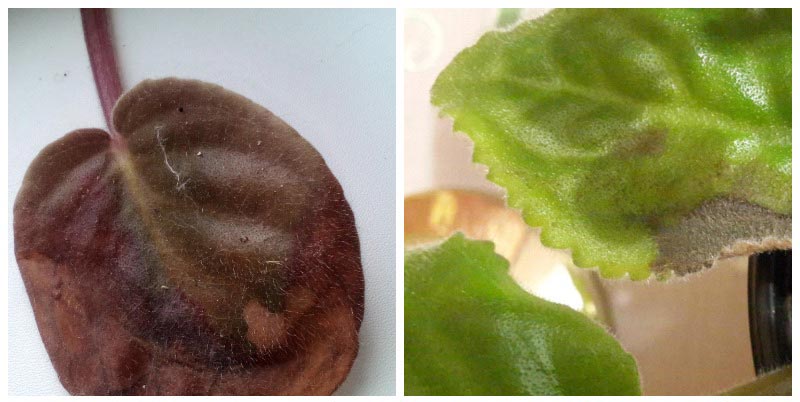
Fusarium
Brown, falling violet leaves indicate another fungal infection. Spores typically enter the plant from the soil through the roots. The toxic substances released spread to all parts of the plant: stems, leaves, and flowers. They turn brown and rot. This is caused by cold temperatures and excessive watering. Sudden temperature fluctuations and heavy planting soil also contribute to the disease's aggravation.
The treatment is as follows:
- remove all damaged parts;
- treat the remaining parts of the plant and the soil with Fitosporin or Fundazol;
- transplant into disinfected soil;
- reduce watering of the plant;
- increase the room temperature;
- ventilate regularly.
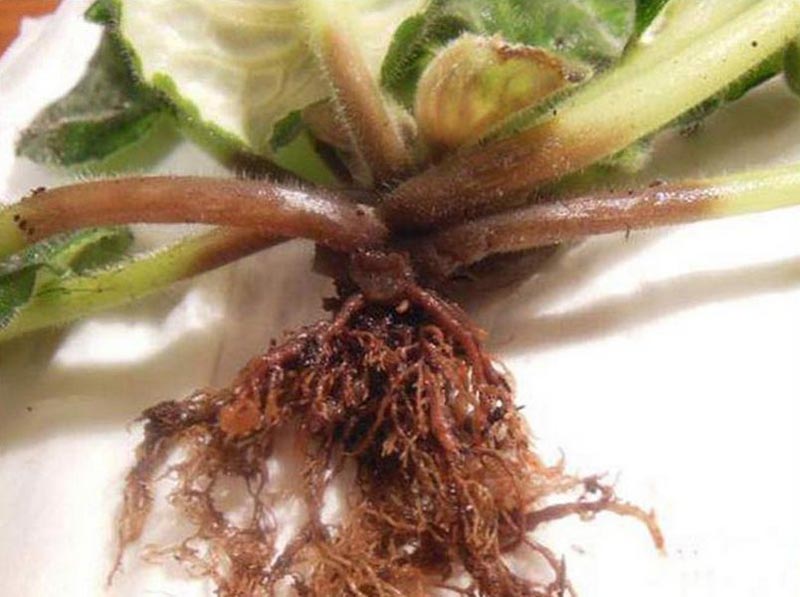
Vascular bacteriosis
Affected plants have wilted, weak leaves. The disease begins in contaminated soil. Fungal spores colonize the roots. As they grow, they release toxic substances that penetrate plant tissue and destroy it completely. It appears at elevated temperatures.
The hotter the windowsill, the faster the disease progresses. It's virtually impossible to save the plant.
The disease is not transmitted to neighboring violets; they can be saved by creating normal growing conditions. Another factor that promotes bacterial blight progression is increased soil moisture and cool winter temperatures.
Preventive measures:
- adjust the temperature and humidity conditions for flower maintenance;
- increase additional ventilation without direct exposure to flowers;
- disinfect the soil beforehand and remove any remains of previous plants;
- For planting, use soil with good conductivity, additionally loosening it with vermiculite;
- During the recovery period, exclude supplementary feeding;
- additionally treat the plants with preparations that boost immunity.
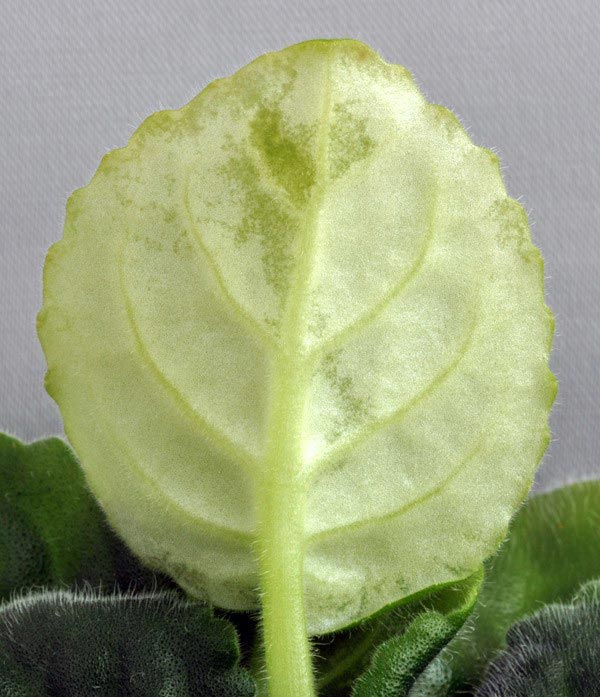
Leaf spot or bronzing virus
When exposed to direct sunlight, African violets develop a bronzed leaf discolouration. Another possible trigger is water droplets during irrigation. The disease is spread by thrips in poplar fuzz. Affected plants stop growing. Leaves become covered with a distinctive coating of red or brown spots. The virus is incurable.
Control measures:
- replace the soil that may contain fungal spores;
- eliminate bright sunlight by moving the flowers to a warm place with diffused light;
- reduce quantitative watering;
- When watering, pay attention to the direction of the water stream.
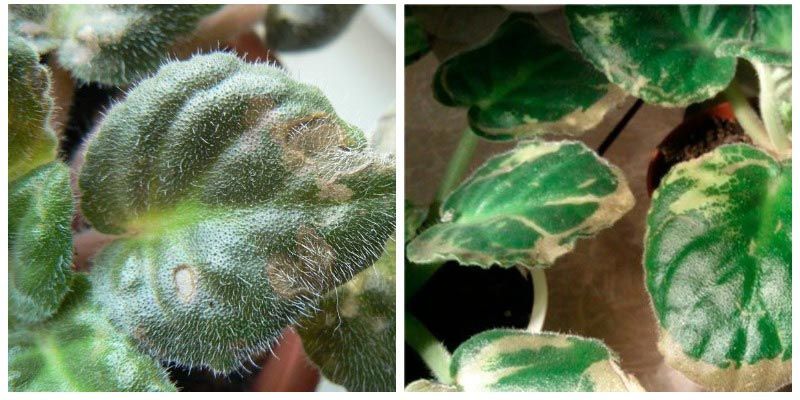
Insect pests of violets
In addition to diseases, violets suffer from a number of pests.
Mealybugs
Mealybugs are round insects with a white or waxy coating that reproduce very quickly under favorable conditions. They feed on plant sap, completely weakening flowers.
Signs of damage include the appearance of a mushroom smell from the soil, a change in green color to yellow or gray, decreased leaf elasticity, stunted growth, and the appearance of rotting roots and leaves.
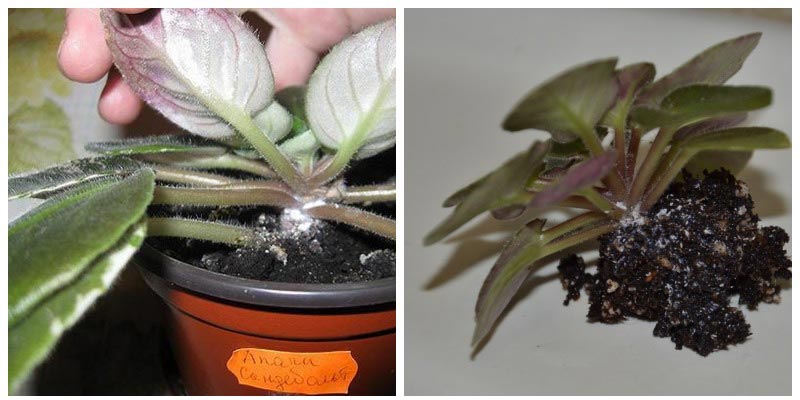
Control measures: treating flowers with insecticides.
Ticks
Violets are attacked by two types of mites: cyclamen mites and spider mites. The former damage young leaves and stems, leaving yellow marks. The latter make red punctures in the leaves, forming webs. These mites carry many diseases, so measures must be taken to eradicate them. Insecticides are used to control the pests.
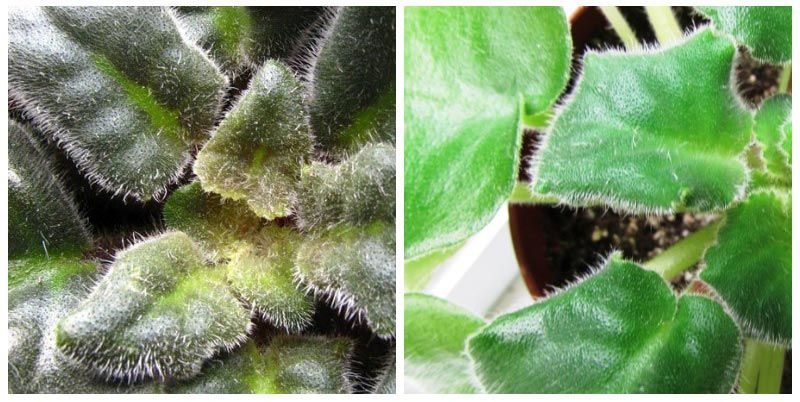
Aphid
This small, transparent, greenish insect causes a lot of trouble for Saintpaulias. It attacks all succulent parts, sucking the sap from leaves, petioles, and buds. Toxic elements are carried by the sap throughout the plant, slowing its growth and causing deformities.
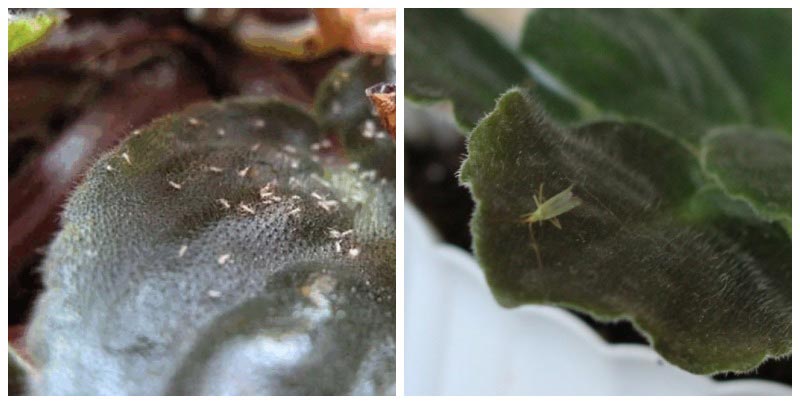
To combat aphids, flowers are treated in the shower, washed with a soap solution, and in severe cases, sprayed with insecticides.
Nematodes
Signs of nematode infestation on violets include dark green spots that gradually darken and rot. The growing point dries up, giving rise to deformed leaves. The flowers become weakened and droop, flower stalks with buds fail to appear, the stems become twisted, and eventually the plant dies. The pest can only be identified by examining the soil. To do this, remove the violet from the pot and inspect the roots.
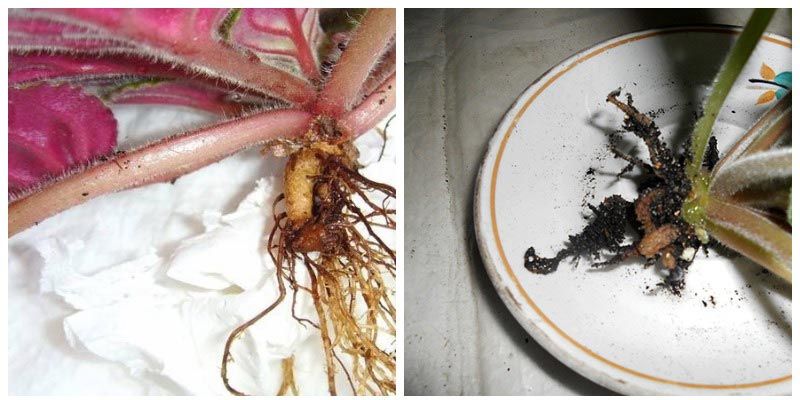
Nematode is a tiny insect that is very difficult to eradicate.
Control measures:
- complete replacement of soil with disinfected soil;
- Treat violets with insecticides if the infestation has just begun. Otherwise, destroy the plant.
Garden violets (pansies) also suffer from rot diseases. They are less susceptible to powdery mildew, rust, and viral diseases. In addition to the pests listed above, they are also attacked by slugs.
Top.tomathouse.com: Helpful tips for preventing Saintpaulias' diseases
In order for Saintpaulias to develop and bloom well, it is necessary to create the right conditions for maintenance and care:
- Periodically spray the plants with running water at a temperature of up to 40°C (104°F) from a shower head. During this time, ensure that no excess moisture gets into the soil. This preventative measure is recommended every 2-3 months. Wrap plastic around the plant's trunk and flowerpot to prevent soil from being washed away. After this, rinse the plant with water from the shower head and leave it in the bathroom until the leaves are completely dry. Otherwise, white or brown spots may appear on the leaves. Brown spots are caused by sunburn, while white spots are caused by hypothermia.
- To combat diseases and insects, use a solution made from garlic cloves. Crush three cloves and place them in 1 liter of water. Cover the mixture and let it sit at room temperature for 24 hours. Dilute the resulting infusion with 5 liters of water and apply it to the soil and leaves of Saintpaulias. After application, blot the flowers to remove any remaining water.
- In difficult cases, chemical methods of controlling violet diseases and pests are necessary. Fitosporin is considered the most common remedy for fungal diseases. To do this, soak 5 grams of the insecticide in 5 liters of water for 30 minutes. After collecting the resulting solution with a syringe, thoroughly moisten the soil in the pot. If Fitosporin M is available, spray the plants by dissolving 10 grams of powder in 1 cup of water.
- A weak solution of potassium permanganate is used to combat incipient fungal diseases. When treating the soil, dilute 3 grams of potassium permanganate in 5 liters of water and thoroughly water the area with the resulting dark solution.
- Before treating violets against insects, the leaves should be wiped with an alcohol solution to remove immobile insects and the plaque they form.
- To control mites, thrips, and aphids, use Fitoverm, one ampoule of which is dissolved in 1 liter of water. If you have pet shampoo containing permethrin, add 1 teaspoon to the solution. Treat violets every 3 days, repeating the treatments 4 times.
- To kill tick eggs and larvae, I use Nissoran, using 1 g of product per 1 liter of water. I spray the soil and plants where the eggs are found, and they die within 1-2 weeks.