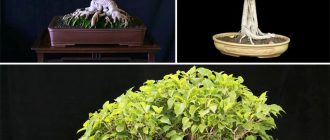
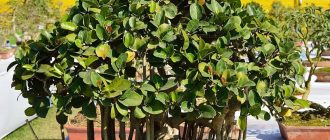
Brachychiton is a plant belonging to the class Dicotyledon, family Malvaceae, and the genus itself contains over 30 species. The name comes from the Greek "brachys" and "chiton," literally meaning "short chiton." This is directly related to the shape of the seed coat, which closely resembles a short Greek robe. It grows primarily in Australia and New Guinea.
The genus Brachychiton includes numerous species, ranging from shrubs to full-grown, robust trees. Depending on the species, plants vary in leaf shape and diameter, as well as in flowers. Leaves may remain permanently green or renew their foliage, and may be broad or oblong. The inflorescences are uniformly colored or slightly mottled, ranging from yellow to purple, and even flame-colored varieties are common.
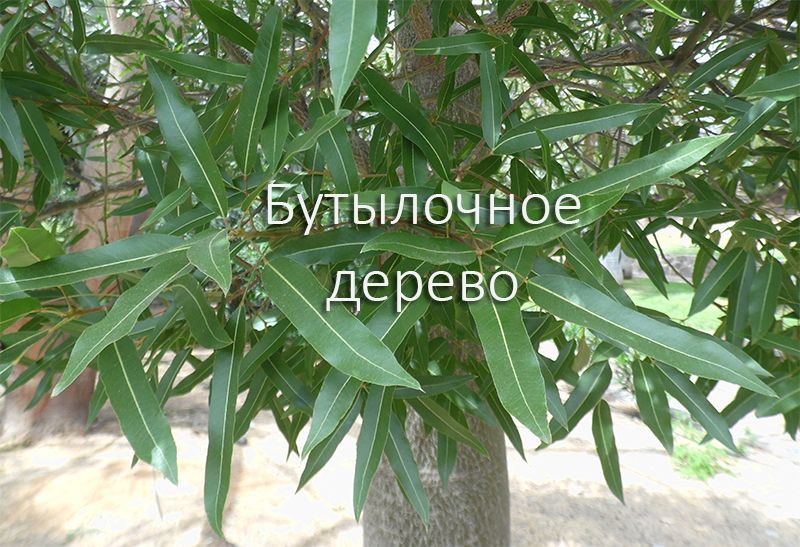
The trunk remains constant—one dominant stem, shaped like a bottle, which is why Brachychiton is often called the "bottle tree." Its trunk contains a large amount of water and minerals, which helps it survive in tropical climates. It is covered with thin bark (sometimes green), capable of photosynthesis. This helps the plant survive dry weather.
Content
Types
The most popular varieties of Brachychiton for home breeding are:
Acerifolius
The most common variety in the wild and as a houseplant. Bright green leaves, 8-20 cm long, form a dense, spherical crown. Flowering occurs in early spring, when the tree is covered in red, bell-shaped flowers. The trunk has no noticeable thickening.
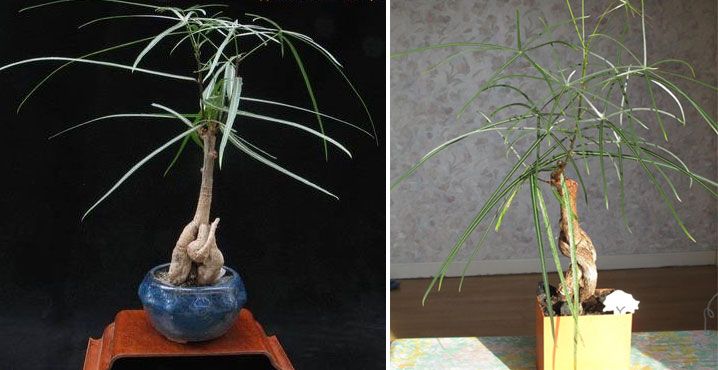
Rock (rupestris)
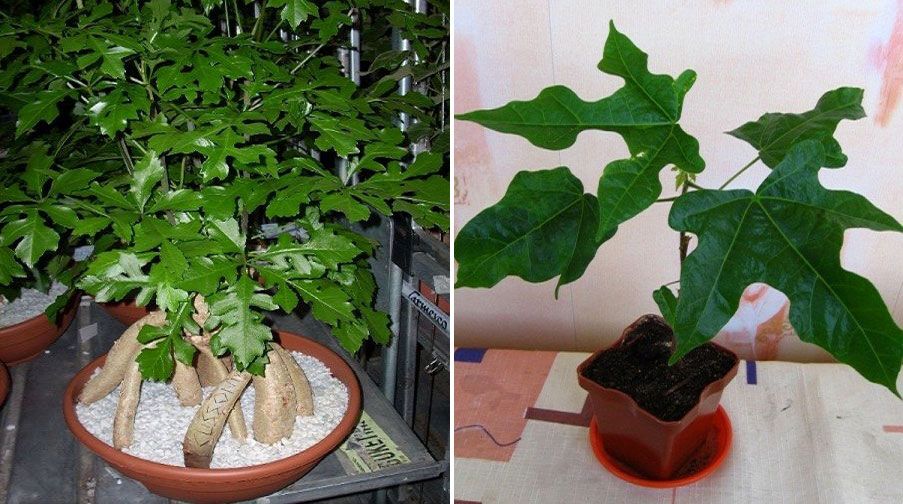
It has a bottle-shaped trunk typical of Brachychiton, reaching its maximum volume at the ground and tapering toward the top. In the wild, the tree can reach 20 meters in height, though very small specimens used for bonsai are sometimes found. In early autumn, the branches are covered with small, milky-yellow flowers, which are later replaced by 3-7 mid-lobed leaves up to 10 cm long.
Multicolored (discolor)
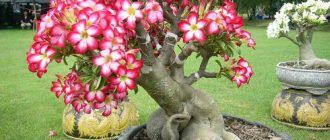
This variety has large, bright pink flowers, earning it the nickname "tree of happiness." Its brown fruits hang from the branches. The bark is textured. The leaves are 3-4-lobed, large and wide, dark green above and silvery beneath.
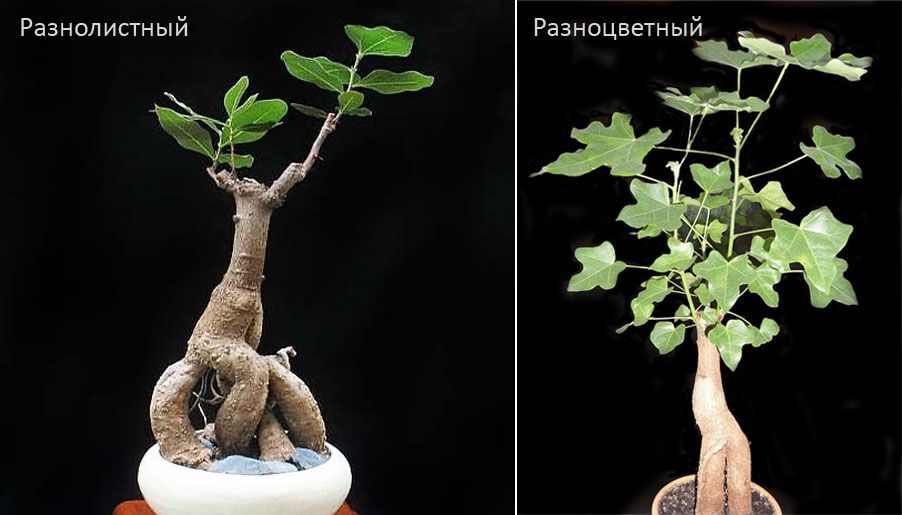
Poplar or heterophyllous (populneus)
The species gets its name from the varied shapes and sizes of leaves on its branches. They form a dense, spreading crown. Flowering occurs in the summer. Its other name stems from the shape of its leaves, which resemble those of poplars. Distinguishing features include its ability to grow in lime-rich soil and exceptional heat resistance. Therefore, the tree is often grown for protection from the elements.
How to grow bonsai?
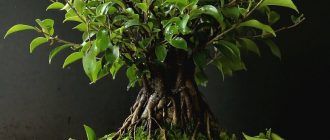
Growing Brachychiton is often recommended for beginning bonsai enthusiasts. Its branches are very flexible and can be molded into any desired shape. Furthermore, the plant is very low-maintenance. In stores, it is usually marketed as the "Australian Bottle Tree" and can be grown from seed or from fully grown seedlings. The latter sometimes contain several seedlings in a single pot, which can be repotted if desired.
Experienced bonsai enthusiasts recommend choosing a soil rich in beneficial minerals and with good air permeability. For this, a 1:3 ratio of perlite to peat moss is recommended.
Fertilizer, regular feeding, and repotting will promote rapid growth. A drainage layer should be placed at the bottom of the pot. The tree is easy to grow in both overwatered and dry conditions.
Growing and caring for them at home
Brachychiton often becomes a home decoration. It's easy to care for and doesn't require any special gardening skills. However, there are some guidelines for home care:
- The optimal temperature is considered to be +24…+28 degrees. In winter, it can withstand temperatures down to +10;
- Exposure to sunlight is only possible with a continuous flow of fresh air; behind a closed window the plant risks getting severe burns;
- In winter, the pot is moved to a cool place so that the leaves do not stretch out too much;
- If the soil is poorly drained, the roots are at risk of rotting;
- A dry period may be accompanied by leaf fall.
| Season | Location | Lighting | Temperature | Humidity | Watering |
| Winter-autumn | Cool place | Long lasting and bright | Not below +10 | Good drainage | Very little |
| Spring-summer | Shade or a stream of fresh air | +24…28 | Abundantly |
Pot, soil
It's best to plant the Brachychiton in a ceramic pot. It's heavy enough to support the weight of a miniature version of this Australian giant. A plastic container will topple over along with the tree.
The soil composition should provide the plant with all the nutrients it needs for growth. Experienced gardeners recommend using a ready-made soil for succulents. A mixture of peat, sand, and leaf mold can be used as a substitute. It must be well-aerated and drain well, otherwise the roots will quickly rot.
Top dressing
Fertilizing is usually done during the warmer months: from early spring to late summer. Mineral fertilizers are applied to the soil once every 2-3 weeks. This will help the tree survive dry periods.
The plant should be watered most generously during hot weather, with the next watering repeated when the topsoil has dried. In cooler weather, Brachychiton can go up to two weeks without watering, drawing on the stored moisture in the trunk.
Transplantation, pruning
Repotting is usually done as needed, approximately every 2-3 years. The plant is carefully removed from the pot, leaving the soil around the roots, and can then be repotted. The tree tolerates this procedure well, but it shouldn't be overdone.
Timely pruning of leaves and branches promotes the formation of a dense and lush crown. This method allows bonsai enthusiasts to control its shape while stimulating vigorous growth.
Reproduction
Brachychiton is propagated vegetatively or by seed. A seed or cutting cut from the top is planted in a special peat or sand mixture. The cover itself should be well-moistened and maintained at a temperature of 24-27 degrees Celsius. These conditions will promote rapid root development. A plastic bag can be used to create this cover.
Diseases, pests
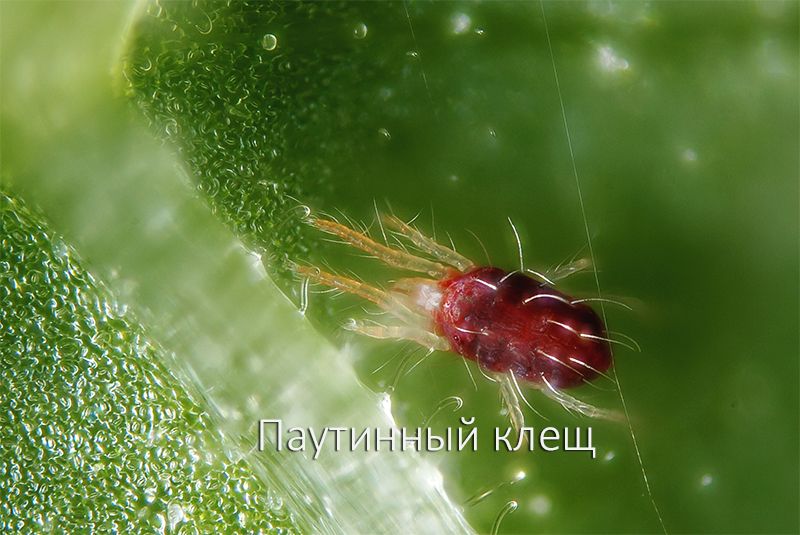
The most dangerous pests for Brachychiton are spider mites, scale insects, and whiteflies. If the plant has already been attacked, copious irrigation with water at 45°C (113°F) can help combat them. However, care must be taken to avoid damaging the tree itself. Spraying with pesticides, available at gardening stores, also helps.
Insufficient or excessive light can cause the bottle tree to become diseased, while overwatering can lead to rot. To avoid this, proper care is essential.
Use in the homeland, benefits and harms
Since the Brachychiton plant is native to arid Australia, locals have found ways to extract maximum benefit from it. Because the plant stores large amounts of water in its trunk, it quenches thirst. Extracting water from it is easy, even without damaging it, as the bark is quite thin. The seeds are a delicacy, but they are not easily removed. In addition to the durable seed pod, they are protected by a dense covering of hairs, which can cause irritation. It is recommended to clean them with gloves. Young rhizomes are also used as food. The perennial foliage provides livestock with year-round feed, and the tree's bark serves as a source of fiber.
For a long time, there was an opinion that the bottle tree was poisonous, but the research conducted completely refuted this theory.
Brachychiton is a remarkable plant. Its domestication has given people the opportunity to contemplate the beauty of nature even within the confines of their own homes. It can be a wonderful interior decoration and is even believed to bring good luck in exchange for kindness and proper care.