The Brassia orchid is a member of the Orchidaceae family and comprises approximately 30 species. In the wild, it is common in Mexico.
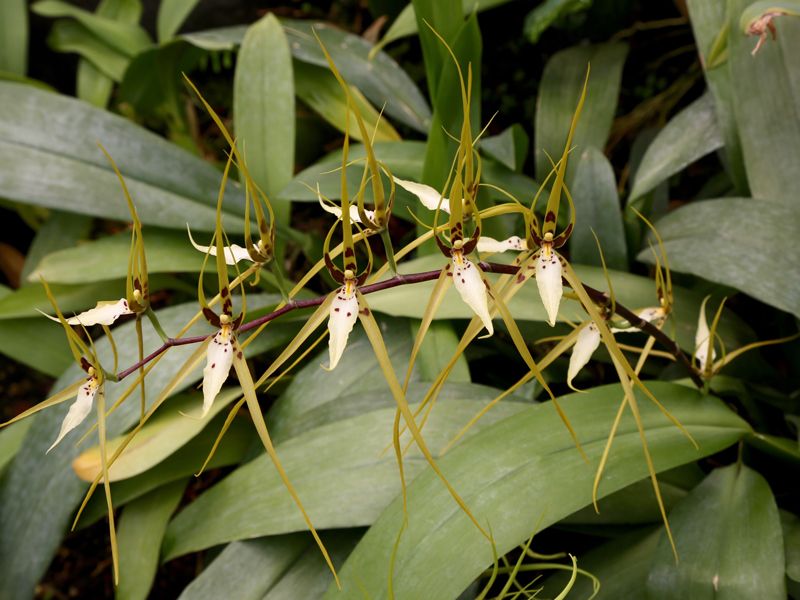
Description, distinctive features
The presented type of orchid has a number of distinctive features:
- the petals are elongated, have a pointed edge and can reach 15 cm in length;
- the peduncle is small and curved;
- aroma – a mixture of vanilla and honey;
- the foliage is dense, lanceolate, forming fan-shaped rosettes;
- color – light yellow;
- bulbs - have a pear shape, fit tightly to each other, and it is possible that they may grow in a ladder-like pattern;
- The lip is large and rounded, the color is slightly lighter than the petals.
Varieties and types of brassia
There are several types of brassia orchids that can be grown indoors:
| View | Description |
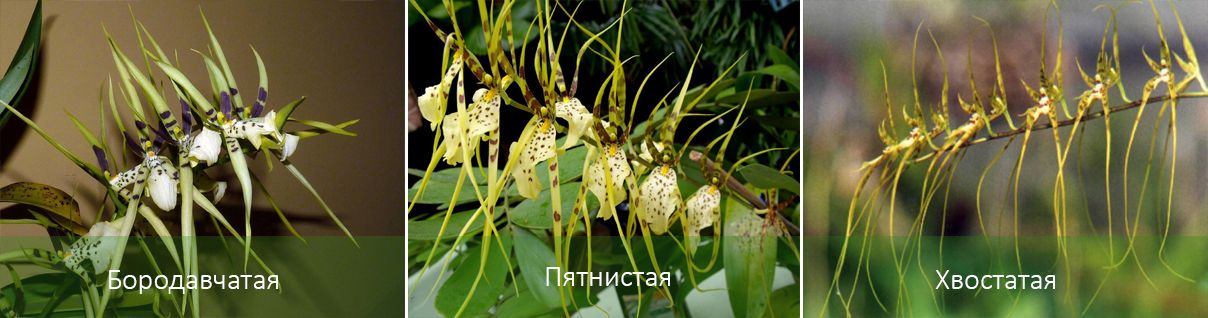
| Warty | The most common. It reaches half a meter in height and can bloom at any time of year. Its color is pale yellow. The foliage is narrow. |
| Spotted | Large yellow flowers with purple spots have a vanilla scent. The foliage is tapered and pointed at the ends. |
| Tailed | The buds are pale yellow and curved. Compared to other orchid varieties, they have a more intense scent. |
| Royal | This hybrid boasts a unique aroma and exquisite appearance. The flowers are small, with proportionally raised petals. |
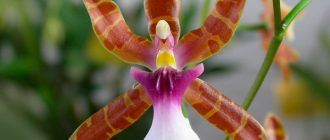
| Simmer Dream | It has large buds, up to 15 cm in size. The color is light yellow with brown speckles, proportionally distributed on the petals. The lip is large and wavy. |
| Brassidium | It stands out for its abundant blooms, the petals of which resemble spiders. The color is light yellow with brown flecks. |
Caring for a Brassia Orchid at Home
Caring for a brassia orchid at home does not require any special skills, as the plant is considered to be unpretentious.
The flower prefers bright light but does not tolerate direct sunlight, so it should be placed on an east- or west-facing windowsill. The ideal temperature for orchid growth is considered to be +20 to +25°C, with a minimum of +15°C. In winter, the plant requires additional lighting.
It grows poorly in dry air, so it requires regular misting. Water by immersing the pot in a basin of water for 15-20 minutes. After this, remove any excess moisture.
Planting, replanting, pot, soil
These houseplants don't respond well to repotting, so it's not recommended to move the orchid unless absolutely necessary. The pot should be plastic or ceramic, and should be tall and spacious.
During the planting process (the best time is spring), the orchid is pressed slightly against the edge of the container, which then frees up enough space for the formation of bulbs.
Plant the bulb as deeply as possible into the substrate. It is recommended to create your own soil, using the following components in equal proportions:
- charcoal;
- moss;
- pieces of bark;
- universal soil for orchids.
When planting or replanting a plant, a drainage layer consisting of crushed stone, pebbles and foam must be laid.
When replanting a plant, it is recommended to follow this plan:
- using the transshipment method, the entire lump of soil is moved into a new container;
- the rhizome is cleared of old soil;
- all roots are soaked in warm water, damaged areas are removed;
- the orchid is placed in a new pot and slightly shifted from the center;
- The pot is filled with soil up to ¾ of the way for further addition.
Reproduction
This houseplant is propagated by dividing the base of the root system with pseudobulbs. The plant is divided manually or with special tools, and the cut areas are sprinkled with ground cinnamon, which has antibacterial properties.
Diseases and pests
Brassia orchid is susceptible to the following diseases and pests:
- Spider mites are a pest that feed on flower sap. White spots initially form on the underside of the foliage, and then the foliage takes on a brownish-gray color. Control is achieved by hot showers and acaricide treatments (Fitoverm).
- Scale insects and mealybugs have a negative impact on leaf axils. These pests can be controlled by spraying with Fozalon or Karbofos.
- Slugs - you can get rid of these pests by pre-disinfecting the pot and treating the soil.
- Root rot is a disease often caused by overwatering, leading to plant wilting. It can be treated by spraying with Fundazol.
If you follow all the rules given, the orchid will grow completely healthy.