Cymbidium is a plant in the orchid family. It is native to tropical and subtropical forests of China, Japan, Korea, Vietnam, Thailand, and northern Australia. It is an epiphyte—a plant that grows on tree trunks but is not parasitic. Some species are lithophytes, growing on rocks or soil. As a houseplant, it is prized for its graceful hanging form and fragrant flowers.
Content
General information about the Cymbidium orchid
Cymbidiums grow from 20 cm to 1 m tall, depending on the variety. The root system is robust, extending vertically into the ground. The stems grow from tightly clustered oval pseudobulbs, reaching 15 cm in length. The leaves are leathery, dark green, long and narrow, with pointed tips.
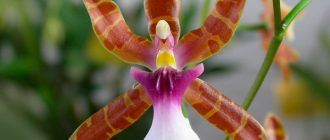
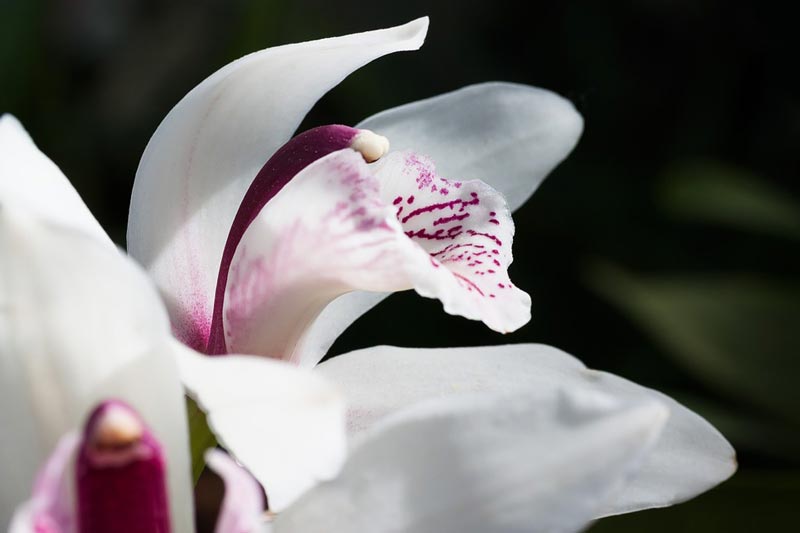
Flower stalks emerge directly from the bulbs, forming racemes at the ends. Each flower consists of sepals and petals, usually identical, and a three-lobed lip. Size, color, and shape vary greatly depending on the cultivar.
Cymbidium orchid species
There are many varieties of this orchid in the wild, but not all are suitable for growing indoors. Among those most commonly found in gardening, the following are among those most often encountered.
| View | Peculiarities | Flowers | Flowering time |
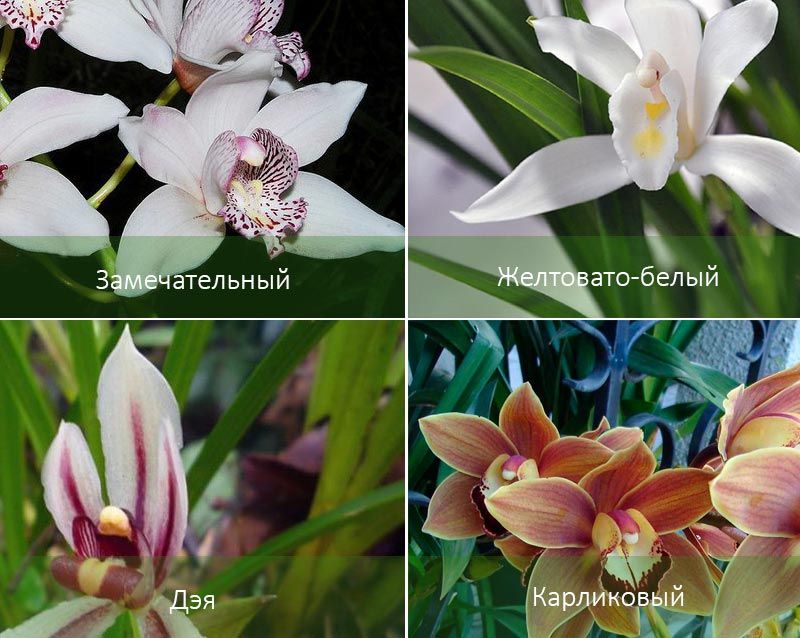
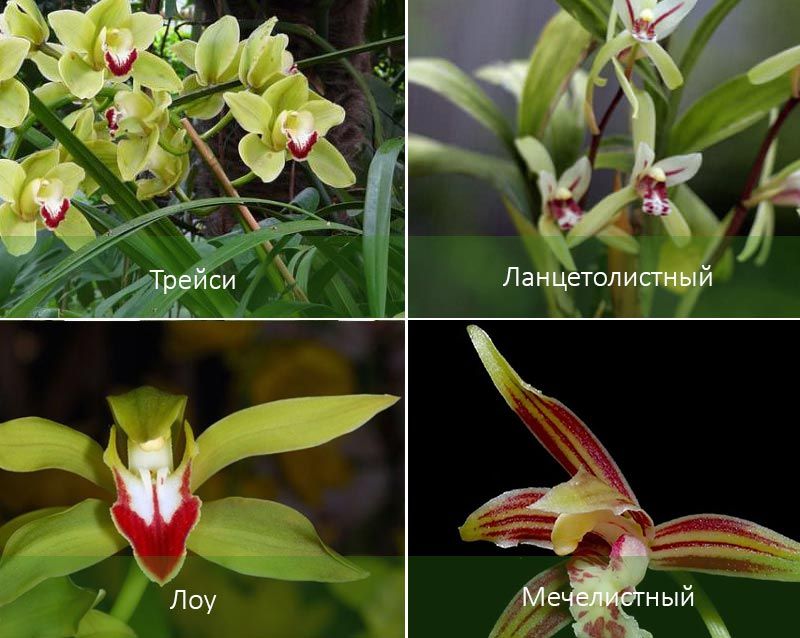
| Lancifolium | Thin, pointed leaves up to 30 cm long. | About 5 cm, the corolla is light green. The lip is white with a burgundy stripe along the lateral lobes and speckles on the central lip. | April – September. |
| Yellowish-white (Eburneum) | Peduncles up to 30 cm, one or two flowers on each. | About 7 cm, creamy with a yellow center. Scented like lilac. | The beginning of spring. |
| Tracy (Tracyanum) | Height up to 120 cm, up to 20 buds on each peduncle. | Large (about 13 cm), the corolla is yellowish-green with intermittent longitudinal burgundy stripes. The lip is beige, speckled, with wavy edges. | September – December. |
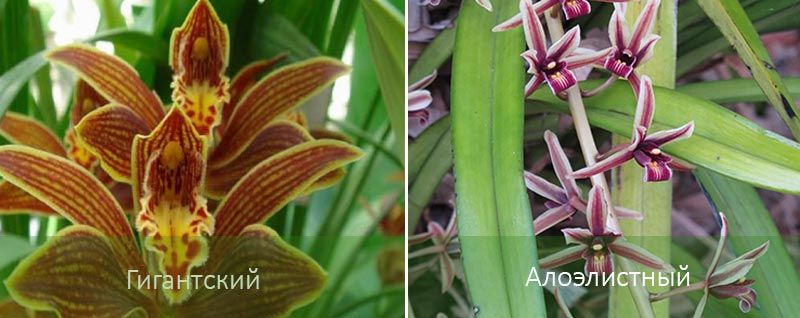
| Aloe-leaved (Aloifolium) | Height up to 30 cm. Leaves are fleshy. | About 4 cm in diameter, crimson with a cream or yellow border. | First half of the year, during the month. |
| Dayanum | Grows up to two meters. Thin and narrow curved leaves. | About 5 cm, cream petals with burgundy stripes down the center. The lip is burgundy with light speckles, the lower lobe curls outward. | August – October. |
| Lowianum | Height up to a meter, leaves up to 75 cm. | About 15 cm. Wide greenish-yellow petals. White lip with a crimson V-shaped marking. | February – July. |
| Dwarf (Pumilium) | The leaves are sharp, curved, up to 20 cm. Peduncles are about 10 cm. | Up to 10 cm, reddish-brown with yellow edges. The lip is white with crimson speckles and a yellow center. | December – March, 2-3 weeks. |
| Ensifolium | Straight peduncles up to 60 cm. | About 5 cm, the corolla is light yellow with red stripes. The lip is white with red spots. | January – April. |
| Wonderful (Insigne) | Height up to a meter, flower stalks about 75 cm. Leaves are stiff, curved. | Up to 8 cm, rich purple hue. The lip is white with purple spots. | February – May. |
| Giant (Giganteum) | Peduncles are thick, up to 60 cm. | About 10 cm, variegated, greenish-yellow with burgundy stripes. The lip is white with red speckles and wavy edges. | November – April, 3-4 weeks. |
Features of indoor growing of cymbidium
Orchids, inhabitants of the high-mountain tropics, are considered to be rather capricious plants.
Cymbidium is one of the most unpretentious plants of its genus, but still quite demanding.
Proper care for this orchid when grown indoors involves creating a microclimate specific to its native habitat. For example, this orchid requires ample indirect light—without it, the leaves will fade and flowering will fail. Furthermore, it thrives in humid tropical heat, and the dryness of a typical indoor environment is detrimental to it.
It is also important to ensure seasonal differences in lighting, temperature and humidity, and a temperature difference between day and night – without this mini-stress, the cymbidium will not bloom.
Conditions:
| Period | Lighting | Temperature | Humidity |
| Spring/summer | South or east facing window with shade to avoid direct sunlight. | During the day +25…+30 °C, at night about +15 °C. | At least 50%. Daily misting. It's recommended to place a humidifier or a saucer of water or damp moss nearby. |
| Autumn/Winter | Lighting should be provided for at least 12 hours per day. During periods of short daylight hours, use phytolamps. | During the day +15 °C, at night +11 °C. | Spray once a week or stop completely if the air is humid and cool. |
Watering
Cymbidiums are very demanding when it comes to the condition of the potting soil. If it dries out, the plant will refuse to bloom and begin to lose its attractive appearance. Overwatering can lead to root rot. Therefore, it's important to carefully monitor the soil during the growing season—it should be kept slightly moist.
For watering, use soft, filtered water at room temperature (25–27°C). Any excess water that collects in the tray should be discarded immediately.
In addition, from time to time, spray with warm water from the shower, after which wiping off excess moisture from the leaves and leaf axils.
In addition to the classic watering and shower method, the substrate is moistened through the drainage holes by immersion. To do this, place the pot in water for 40 minutes. The level should reach the edge of the substrate.
When watering, consider the orchid's seasonal rhythms. In autumn and winter, watering is required less frequently, and during the colder months, it is recommended to increase the water temperature by 2–3°C.
| Time of year | Interval between waterings, in days |
| Spring | 7-8 |
| Summer | |
| Autumn | 10-12 |
| Winter | 14-15 |
Choosing a pot, soil and fertilizing
To successfully grow cymbidium, you'll need an unusual container. The ideal pot should have the following characteristics:
- Transparency – the plant absorbs light through its roots.
- An elongated shape that suits the characteristics of the root system.
- The presence of large drainage holes in the bottom and walls for good air exchange.
The most suitable pot is a vase-shaped one made of clear plastic. Clay is also an option, but then the roots risk not receiving enough light, and the container itself will have to be broken apart when repotting.
It's important to remember that orchids don't like too much empty space in their pots. The distance from the roots to the sides of the pot should be no more than 3 cm, and from the bottom, no more than 5 cm.
Cymbidium soil is also not the typical soil used for other indoor plants. The optimal composition includes shredded pine bark, sphagnum moss, leaf mold, sand, perlite, and charcoal in a ratio of 3:2:1:1:1:1, respectively.
If you can't mix it yourself, you can buy a ready-made mix for terrestrial orchids at the store.
To feed the plant, add a complete orchid fertilizer to the water. Use a dosage half the amount indicated on the package. It's recommended to do this every other watering, but not during flowering, as fertilizing is contraindicated during this period.
Transfer
The plant should be repotted when the roots become crowded. If the pot is transparent, this can be easily seen. If not, watch for roots protruding from the drainage holes. Repotting is also necessary for resuscitation if the plant becomes ill.
The new pot should not be much larger than the previous one - it is enough to add 3-4 cm to the width and 5 cm to the depth.
The transplant must be carried out step by step:
- Carefully remove the plant from the pot, being careful not to damage the roots and bulbs. If the pot is made of clay, you will have to break it.
- Carefully remove excess soil and trim off any rotted or damaged roots. Healthy roots are yellow, firm, and elastic to the touch.
- Rinse the rhizome with warm water, treat the wounds with crushed activated carbon.
- Place a drainage layer on the bottom of the pot and sprinkle fresh substrate on top.
- Place the plant in the pot and add the remaining potting soil to the same level as before. Do not bury the plant too deep—the roots should be visible at a depth of 1 cm.
- Do not water for several days. Spray or wipe the foliage as needed.
Flowering: care during and after
Gardeners often complain that they can't get cymbidiums to bloom. This is because they require a number of conditions:
- the room temperature is not higher than +22 °C;
- the required difference between day and night temperatures is at least 4 °C;
- plenty of light, but protection from direct sunlight.
It is also important to consider that different varieties bloom at different times of the year.
Flowering takes a lot of energy, so afterward, the plant enters a period of rest. Ideally, the orchid draws nutrients from the old flower stalk, causing it to turn yellow and dry out. At this point, pruning can be done—removing the flower stalk, leaving a 1-1.5 cm piece at the base.
Sometimes it happens that new buds appear on the peduncle.
Allowing it to bloom a second time in a row is not recommended, as such stress can lead to disease or even death. Therefore, cutting should be done immediately.
Reproduction
The easiest and most productive method of propagation is division. To avoid unnecessary disturbance to the cymbidium, it's best to do this during your next repotting.
The rhizome, cleaned of soil and rinsed with water, should be carefully untangled, which can be difficult, as it's usually tightly woven at the base of the pseudobulbs. After this, you can begin dividing. Each part should contain at least three pseudobulbs, and at least one of them should have well-developed roots. Such a division will have no difficulty rooting.
After dividing and removing damaged root sections, the wounds should be treated with charcoal, and you can begin planting them in individual pots. Care for the new plants is the same as for a newly repotted cymbidium.
This orchid can also be grown from an old, faded, leafless pseudobulb. To do this, place the pseudobulb in a container on a damp mixture of crushed bark and sphagnum moss and keep it in a dark, warm place, misting it periodically with water. After the shoot and roots appear, pot the plant.
Gardeners sometimes wonder about growing this flower from seed. But this is nearly impossible at home—for the seeds to germinate, specific conditions are required, including strict temperature, humidity, and acidity. Even with meticulous adherence, the germination and survival rates of the seedlings are very low.
Top.tomathouse.com explains: mistakes in caring for cymbidium orchids and how to fix them
If a plant begins to lose its attractive appearance, it's not always a sign of disease or pest infestation. Often, the cause lies in poor care.
| Signs on leaves, etc. | Error | Solution |
| They turn yellow and wrinkle, becoming covered in spots. | The room temperature is too high. | Adjust the temperature; do not place the pot near radiators. |
| Sunburn. | Avoid direct sunlight on the foliage. Remove from windowsill or provide shade. | |
| Root damage. | Remove the plant from the pot, trim off any rotted roots, treat with charcoal, and repot in fresh soil. Do not water for several days. | |
| Pseudobulbs turn yellow and rot. | Stagnant moisture in the leaf axils after watering. | Trim off the damaged areas, treat the wounds with charcoal, and let dry. Do not water for the next week. After watering and spraying, wipe the leaf axils to remove any remaining water. |
| They turn pale or yellow. | Too little or too much watering. | Adjust the watering regime, observing the condition of the substrate. |
| Lack of light. | Provide bright, diffused light for at least 12 hours per day. Use grow lights if necessary. | |
| Lack of nutrients. | Apply fertilizer with every second watering, excluding the flowering period. | |
| Natural shedding of leaves. | From time to time, an orchid sheds old leaves - this is a normal phenomenon. | |
| The tips turn black. | Sunburn. | Avoid direct sunlight on the foliage. Remove from windowsill or provide shade. |
| Too much watering. | Adjust the watering regime, observing the condition of the substrate. | |
| They curl up. | A sharp change in temperature. | Do not take the flower outside during the cold season. |
| Lack of nutrients. | Apply potassium and magnesium fertilizers with every second watering, excluding the flowering period. |
Diseases and pests, methods of elimination
At times, cymbidium becomes a victim of various diseases and pest attacks.
| Symptoms | Cause | Methods of elimination | Preventive measures |
| Yellowish stains appear on the leaves. | Chlorosis is soil salinization. | Spray with a fertilizer solution. | Filter or settle water before irrigation. This will prevent excess calcium from entering the substrate, which interferes with metabolism, particularly iron absorption. |
| Black, water-soaked spots appear at the junctions of the leaf blade and stem. Leaves begin to fall off. | Fusarium is a fungal disease. | Cut out the infected areas, disinfect the wounds, and treat them with Fundazol after they dry. Repot the plant in new soil. | Avoid over-watering and salinization of the soil. |
| The leaves and stems turn black, mold appears near the roots, and a rotten smell is noticeable. | Root rot. | The plant can be destroyed along with the pot; it cannot be cured. | Avoid overwatering and stagnant water after watering. Immediately drain any excess liquid from the tray. |
| Leaves and flowers become distorted and curled. Light spots become visible on the petals. | Viral mosaic. | ||
| A sticky, whitish coating appears on the plant's surface. Small, light-green insects are often visible to the naked eye. | Aphid. | Wash the orchid with soapy water and rinse under a warm shower. Treat with an aphid insecticide (such as Fitoverm). | Ensure the required humidity level in the room – not less than 50-60%. Do not allow the substrate to dry out. |
| The leaves lose color and brown bumps appear on them. | Scale insect. | Manually remove all pests from the surface of the flower, treat the leaves and stems with a soap solution, and then with an insecticide (for example, Fosbecid or Metaphos). |