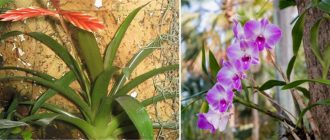
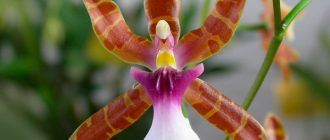
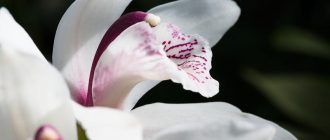
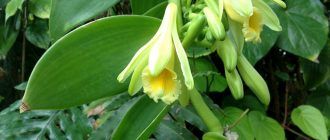
Catasetum is an epiphyte, meaning it's a plant attached to another plant but not a parasite. There are approximately 150 different species in the wild. It's native to Brazil and central and southern America.
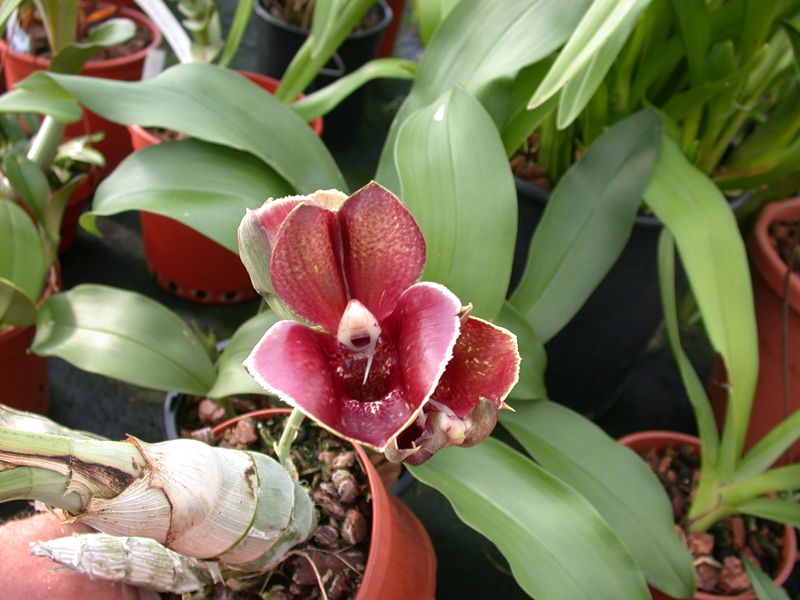
Biological characteristics of Catasetum
Catasetum orchids grow on the trunks or branches of various trees. Under favorable conditions, they grow from 10 to 70 cm, depending on the variety.
They have clearly defined seasonal characteristics – flowering period, leaf fall, dormancy.
They are divided into spring- and fall-blooming varieties. Their flowers range across virtually the entire color palette: from delicate white to purple hues, from light green to dark green, with a variety of flecks, patterns, and a unique fragrance.
Male and female flowers
Catasetum differs from most orchids in its unisexuality. A single plant produces male, female, and bisexual flowers. They differ in size and brightness. The male flowers are larger and come in a variety of colors. The female flowers are small, pale yellow, and light green.
Bisexual flowering on a single plant is primarily found in the wild. Indoor orchids can be exclusively unisexual. Depending on the species and care, a single flower stalk can produce anywhere from 3-4 to several dozen buds per season. The flowering period lasts approximately two months.
Caring for the Catasetum Orchid
Catasetum is a demanding plant, but any pot, whether ceramic or plastic, will do. Most orchids are placed in special transparent containers. This allows for easier observation of the roots. This, in turn, helps determine when to begin watering after the dormant period.
Ready-made orchid soil mixes are often purchased, but gardeners consider this type of soil too fine for a pot and recommend preparing the substrate themselves.
To do this, mix in equal proportions:
- pine bark;
- sphagnum (moss);
- crushed spruce cones;
- some charcoal;
- peat.
After planting the flower, care at home consists of watering, fertilizing, and maintaining it at the required temperature and humidity.
| Indicator | Detailed description |
| Lighting | Year-round, diffused, illuminated with lamps in winter. |
| Temperature | During the day +28…+32 °C, at night +21…+24 °C. |
| Watering, moistening | After the substrate has completely dried, water generously. Place the pot or the entire plant in water. Humidifiers, water trays, and misting are also used. |
| Top dressing | Once a week during watering, excluding the dormant period. |
In the wild and when grown indoors, the catasetum orchid enters dormancy in mid-November. During this time, the temperature is lowered to 20°C and watering is stopped.
Reproduction of Catasetum
To propagate, divide the rhizome. This is done before new roots appear. Plants with four or more pseudobulbs must be divided to preserve both flowers; otherwise, the old pseudobulb will die.
Diseases and pests attacking catasetum
The most dangerous insect for orchids is spider mites. They are removed by rinsing the plant under a warm shower, carefully cleaning each leaf.
It is important to water the catasetum well, but not to overwater it, otherwise rotten spots will appear, which will have to be removed along with the plant.