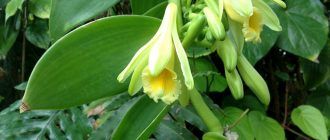
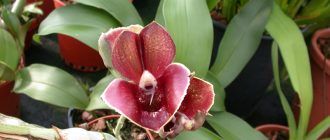
The Vanda orchid is an epiphytic plant native to South Asia. It is characterized by a robust root system and large, vibrant flowers. Vanda is a perennial genus belonging to the Orchidaceae family. It is an excellent choice for indoor cultivation.
Content
Description of Wanda
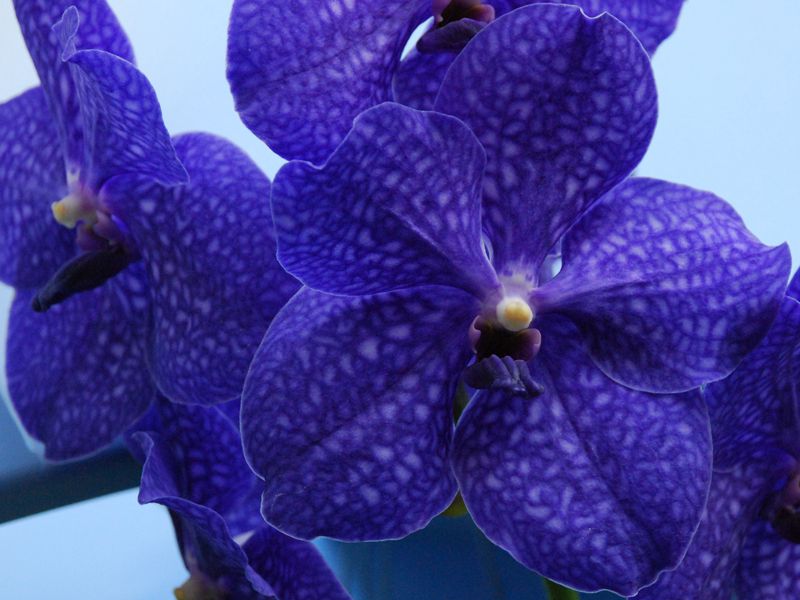
The Vanda orchid is a unique genus. It grows up to 2 m tall, with dark green leaves arranged opposite each other and can reach 90 cm. Tall flower stalks produce an average of 15 buds. Various colors are available, including orange, blue, white, and others. The flowers reach 5-12 cm. The long roots have a gray-green hue. It blooms twice a year with proper care. There is no dormant period.
Popular varieties of Vanda orchids
The Vanda orchid has many different varieties, each of which has its own flower size and color.
| Variety | Description | Flower | Leaves |
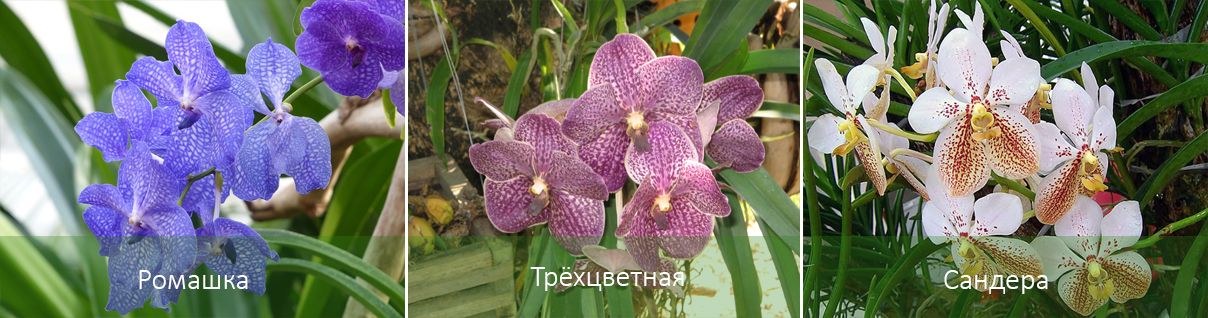
| Blue | The erect stem is 1 m tall. The peduncle is 80 cm. | 7-12 purple-white flowers. 10 cm in diameter. The lip is small, almost invisible. Pleasant aroma. | Oval, elongated, located close together. |
| Tricolor | Can reach 1.5 m. | 7 cm in size, with up to 10 variegated flowers. Wavy shape. White petals with red spots, pink lip. | Rough, about 40 cm. |
| Sander | 60-120 cm in height. Flower stalks reach 50 cm. | 5-10 flowers, yellow, pink, or white. Multicolored variegated petals with a double, single-color lip. | They split into two at the end. |
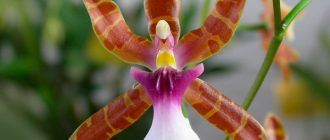
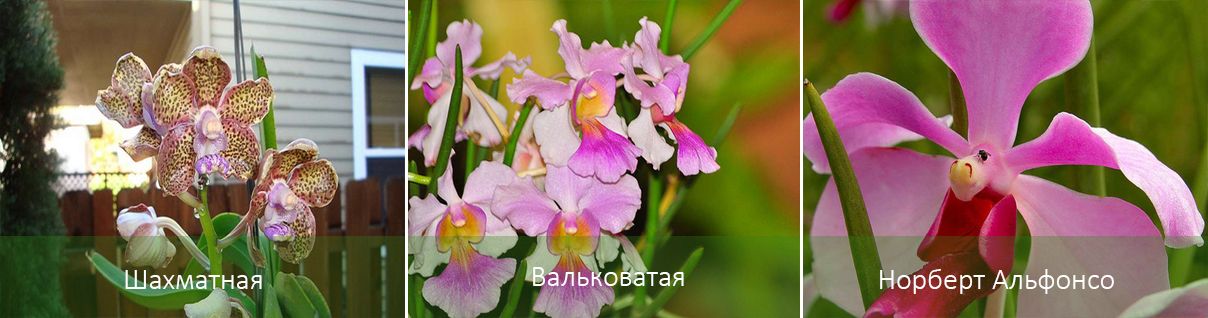
| Chess | 70-100 cm. | 12 large flowers, usually beige or brown. The lip is bright purple. Pleasant fragrance. | Greenish, hide the long stem. |
| Valkovataya | 150-200 cm. | 5-6 pinkish buds, 12 cm in diameter. The purple lip has numerous red spots, with a burgundy hue at the base. | Cylindrical, densely arranged along the entire length of the stem. |
| Norbert Alfonso | 80-90 cm. Medium peduncles. | 10-15 large, pink petals. The lip is burgundy and curled into a distinctive tube. | Rounded pointed. |
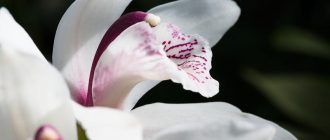
| Javier | 35-50 cm. The stem is not tall. | 10-12 medium-sized flowers. The lip and petals are snow-white, which is unique to the Vanda genus. | Dense rows of dark green leaves along the edges. |
| Rothschild | 80-100 cm. Peduncles up to 60 cm. | 15-18 petals, glaucous purple with a short, dark lip. Diameter: 6 cm. | Rough, the ends are forked, like Sandera's. |
Methods of growing vanda
Taking into account the peculiarities of the root system structure and the conditions of maintenance of the Vanda orchid, there are three ways in which the flower feels comfortable.
Pot
You'll need a large, transparent plastic or clay container. It shouldn't be cramped for the root system.
Poke a few holes in the bottom of the pot to allow air circulation. The soil should contain pine bark, polystyrene foam, peat, and charcoal. This type of substrate is available in stores, but you can also make it at home.
Glass cylindrical vase
Only the root will be in the vase, as the upper part of the flower requires constant bright light. To water the orchid, fill the container along the sides until the root system is completely submerged. Drain the water after 30 minutes. No soil is required in this case. This way, Vanda will blend seamlessly into your interior.
Hanging baskets
There are also special hanging baskets for this type of orchid. In them, the plant is positioned so that its entire root system is exposed, meaning it's outside the container. This method is popular due to its ease of watering: you only need to mist the entire plant about twice a week. In summer, you should do this every day.
Caring for a Vanda Orchid at Home
To ensure the Vanda orchid grows healthy and delights you with its vibrant flowers, it needs proper care.
| Parameter | Conditions |
| Lighting | It requires bright light, but avoid placing the plant in direct sunlight. If too much sun is harmful to the plant, cover it with tulle. During winter, use phytolamps for additional illumination. |
| Location | Place on the south or southwest side (where there is more light). |
| Temperature | Spring-summer: +19…+28°C. Winter-fall: +16…+21°C. At lower temperatures, the plant dies. The orchid can remain viable up to +35°C with regular moisture. |
| Humidity | Optimum: 60-80%. As the ambient temperature increases, the value is increased accordingly. |
| Soil | A special soil mixture is prepared consisting of peat, humus, sphagnum moss, and sand in a ratio of 1:1:1:0.5. The soil is then sprinkled with chopped pine bark, charcoal, or foam chips. |
| Top dressing | Orchid fertilizer. Prepare a solution at half the recommended dose. Feed once a month with a soluble indoor plant fertilizer at half the recommended dose. |
| Transfer | No need. It takes a long time to adapt and may die. However, it is acceptable if the substrate is depleted (once every four years), due to disease, or if there is insufficient space in the pot. Repot in early spring. |
| Watering | During the spring and summer, when the plant is actively flowering, maintain constant soil moisture. In winter, adjust the soil moisture as the soil dries out. |
| Trimming | No need. If pests appear, carefully cut off the affected parts of the plant. After flowering, cut off the dried flower stalk. |
Features of watering
The Vanda orchid is very demanding, so it's best to water it early in the morning. There are several ways to moisturize the flower.
A warm shower is the most suitable. Place the orchid in a large container (a bathtub or basin) and spray it with water at 28–35°C. When the roots turn dark green, transfer the plant to another container for half an hour to allow all the water to drain. Before returning the orchid to the pot, wipe the leaves with a cloth to remove excess moisture.
Another method is immersion. This is used only for healthy flowers. The orchid container is completely immersed in water and held there for 30-40 seconds. Then, the orchid is left for another 20-40 minutes to drain. Watering this method is recommended no more than once every three days.
When soaking, Vanda's roots are placed in water for 30-160 minutes. This allows the orchid to drink, after which it doesn't need watering for another 4 days. Citric acid is also added to the liquid to remove harmful carbonates.
A watering can is typically used for watering a pot. Water is poured around the edges of the container until the substrate is completely saturated and excess liquid appears in the tray. After this, replace the tray with a dry one and wipe the plant's leaves.
Watering can be replaced with misting from a spray bottle, especially if the orchid is grown in a hanging basket. The plant is thoroughly moistened, including the flowers and roots. This method is especially effective during hot weather, when humidity is at its lowest.
Care tips for Vanda orchids during flowering
Vanda produces beautiful, bright buds, at least five in number. For this to happen, the plant needs proper care.
| Parameter | Condition |
| Location | It’s better not to change it, as the orchid won’t have time to adapt to the new conditions and will drop its buds. |
| Pot | Orchid roots should always be exposed to light, so it is necessary to use a transparent container. |
| Lighting | Requires bright and abundant light. If there's insufficient light (especially in winter), use a grow light. |
| Temperature | Do not exceed +22°C. Average: +18…+22°C. These fluctuations are beneficial for flowering. It is also necessary to ventilate the plant daily. |
| Soil | The substrate must be nutritious, otherwise the orchid won't have enough strength to bloom. It's best to repot it in the spring. |
| Top dressing | Phosphorus fertilizers are excellent for stimulating bud development. Potassium can also be used by adding potassium-based fertilizers directly to the soil. |
Post-flowering care
When flowering ends, remove the dried flower stalk with a disinfected tool. Treat the cut with charcoal, wax, or cinnamon. After flowering, watering can be reduced, and potassium fertilizers can be eliminated altogether. With proper care, the next bloom will occur in about six months.
Vanda reproduction methods
Vanda orchids are most often propagated indoors by offshoots, or suckers. These appear only on mature plants. It's important to ensure that the offshoots have their own root system and are at least 5 cm long when they are divided.
- The baby orchid is separated from the main orchid using a disinfected knife.
- The cut is treated with charcoal.
- The cuttings are placed in small containers filled with pre-prepared substrate.
- The seedlings are watered once a week for a month.
- When the orchid begins to increase in size, the shoots are given greenhouse conditions, in which the humidity should not fall below 80%.
There is another way, using the upper shoots.
- Lateral shoots with formed aerial roots are cut off from the stem.
- A special substrate is prepared from pieces of moss, fern, bark and charcoal.
- The cuts are covered with a thin layer of beeswax.
- For the first 3 days, carefully water the cuttings placed in the prepared soil.
- Then reduce watering to once a week.
- When the seedlings grow to 15 cm, Vanda is transplanted into a standard container.
Mistakes when growing vanda orchids
| Manifestation | Cause | Elimination |
| Does not bloom. | Lack of light, incorrect temperature conditions. | Ventilate more often, ensure that there are daily temperature fluctuations, and avoid nitrogen fertilizers. |
| The flower stalk dies. | Low air humidity, lack of watering, pests. | Place a glass of water next to the orchid and increase the frequency of spraying. Take pest control measures. |
| The buds are falling off. | Unsuccessful transplantation, insect infestation, dry soil, change of location. | Water more frequently, ensuring the plant doesn't dry out. Use specialized insecticides to control pests and restore comfortable conditions for the orchid. |
| The leaves turn yellow and dry out. | Lack of nutrients, exposure to direct rays, dry and hot air. | Water every two days until the leaves recover. Shade the orchid with fabric or paper. |
| Light transparent spots on the leaves. | The plant has a burn due to prolonged exposure to direct sunlight. | Remove the plant from direct sunlight and cover with gauze. Spray the leaves every 3-4 days. |
| The roots are rotting. | Too hard soil, frequent watering, fungal infections. | Soften the substrate with micronutrients and bark. It's best to treat the orchid for fungus with a special medication called Physan. For the next two months, water no more than once a week. |
| The leaves are withering. | Low humidity and cold air, pests. | Increase humidity to 70%, normalize temperature (+19…+28 °C). |
Pests, diseases of Vanda and methods of control
| Manifestation | Cause | Method of elimination |
| The leaves have round black marks all along their length. | Fungal infection. | Treat infected areas with a fungicide. Reduce watering to once a week and maintain a constant temperature of 23–25°C. Cover with a cloth and avoid exposure to bright light. |
| The root system rots, becomes covered with a black coating, and dies. The stem and leaves dry out. | Bacterial rot. | Remove infected areas and treat cut surfaces with phytosporin. Replace the soil and disinfect the container. Antibiotics (tetracycline) at a dose of 1 gram per liter are also effective. |
| Black spots appear on the outer side of the leaf, and the stem may become covered with brown lines. | Viral infection. | A complete cure is impossible. The infected plant should be removed to prevent spreading the infection. |
| Tiny green insects appear all over the orchid. The stems and leaves wilt, and the plant dies. | Aphid. | Increase air humidity and treat the plant with a soap solution or lemon peel infusion. Special intestinal medications (Intavir, Actofit) are best for controlling the pest. |
| Small beige pests on leaves, flower stalks, buds, and stems. White coating and waxy deposits. Vanda wilts. | Mealybug. | Remove growths and affected parts of the plant. Treat the bulbs with an alcohol solution to remove the parasites. Aktara, Mospilan, Actellic, and Calypso are excellent options for control. |
| Small voids appear on the leaves and stems. Yellow spots appear, and shoots die. | Scale insect. | A solution of soap and alcohol, fern tincture and chemicals such as Permethrin, Bi 58, Phosphamide, and Methylmercaptophos will help get rid of the pest. |