Stachys, or stachys, is a perennial herbaceous plant in the Lamiaceae family. There are several annual species and subshrubs.
Stachys byzantinica, or woolly stachys, is an ornamental plant. Its dense pubescence gives its stems and leaves a silvery hue.
In the wild, woolly stachys grows in Turkey, Iran, Armenia, Crimea, and the North Caucasus. As an ornamental garden variety, it is found throughout Russia.
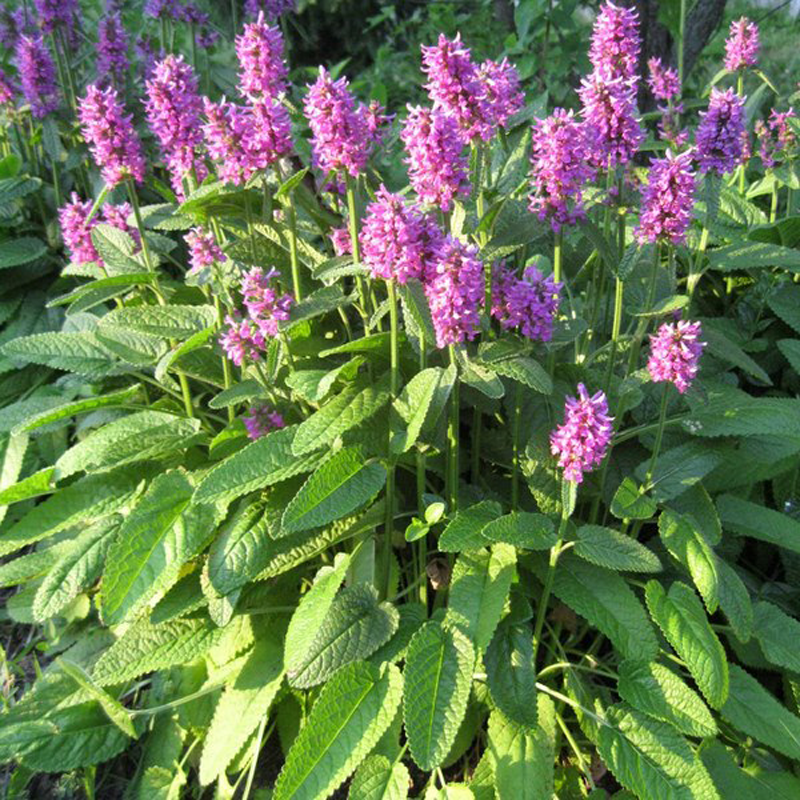
Biological characteristics of Stachys
Stachys is found on every continent except Australia. There are over 300 species. Around 50 varieties grow in different regions of Russia.
It grows to about 1 meter in height and is characterized by its pubescent leaves. The leaves come in a variety of shapes, including heart-shaped, serrated, and oval.
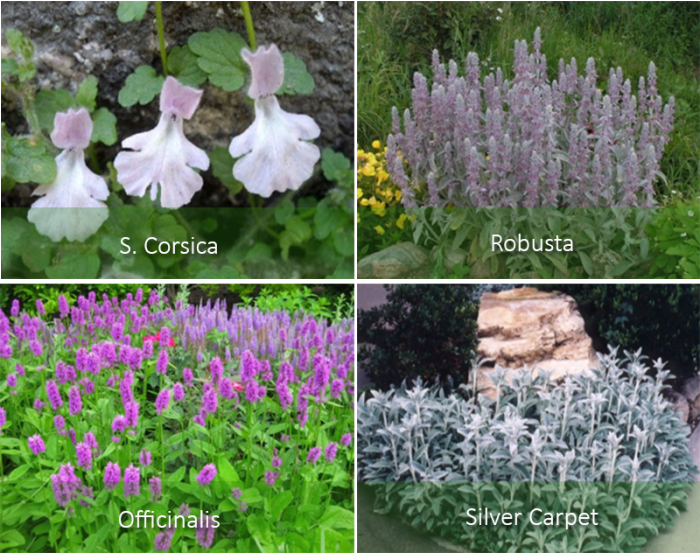
In Latin, "stachys" means "spike." Stachys flowers form spikes. The flowers are small, bell-shaped, and come in pink, purple, lilac, lavender, yellow, and white.
Flowers from May to August. Fruit is nut-shaped.
Planting and propagation methods of Stachys
There are edible varieties. For example, the Chinese artichoke (Chinese artichoke) is cultivated as a vegetable in China, Japan, and Southeast Asia, and is used in cooking in France and Belgium. It is only distantly related to the true artichoke.
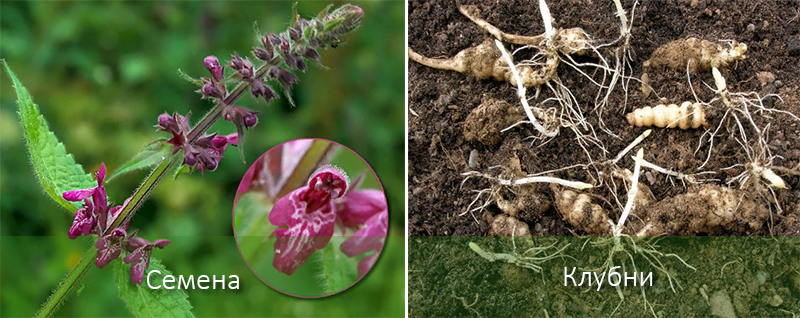
Its edible, pearlescent tubers have a whimsical spiral shape, reminiscent of an elongated shell or an insect cocoon. It's a low-calorie product used in soups, side dishes, and pickles.
It can be planted in spring or before winter, as it is cold-hardy. For this purpose, tubers are used and grown as an annual.
The Chinese artichoke (Stachis chinensis) is a high-yielding crop: 20-25 kg of root vegetables can be produced from one hundred square meters of land. This is despite the fact that the tubers are very small, weighing no more than 7 grams each. Each plant produces over 100 fruits.
The active growth period lasts 130-150 days. Plant in furrows 5 cm deep, with a 60 cm spacing between furrows and a 20 cm spacing between plants in rows.
For propagation, select large tubers, which can yield a high yield. Before planting, soak them in a weak solution of potassium permanganate and air-dry.
Caring for Chinese artichokes is similar to the potato cultivation common in central Russia. During the ripening period, hilling is performed every two weeks, a total of three times.
The harvest begins in the second half of September, when the bushes are dug up and the tubers are selected. Winter planting can begin immediately afterward.
Ornamental stachys propagates very easily—by simple division. Dig up several shoots and plant them separately. They will grow very quickly.
You can repot in spring and summer. Avoid on dry, cloudless days. It doesn't respond well to heat, and it doesn't need the additional stress of repotting at this time.
It propagates well by seed. Seedlings are grown in suitable containers, pricked out when they have two full leaves, and, under favorable conditions, the established plants are transplanted to a permanent location at a distance of 15-20 cm.
Stachys care: feeding and fertilizing
Stachys is an undemanding plant. It only requires occasional weeding and watering. It does not thrive in acidic soil. It dislikes full sun and excessive watering. Therefore, it is best planted in shaded areas with loose soil.
It is better to feed poor soil with complex fertilizer.
It overwinters without problems. In exceptional cases, when the forecast calls for a frosty and snowless winter, the soil is mulched or covered with a covering material.
Diseases and pests
Stachys is not afraid of harmful insects; they avoid this plant.
The only damage it can suffer from is fungus and rot. Therefore, watering should be monitored and excess water should not be allowed to stagnate around the roots. It is not recommended to grow stachys in low-lying or marshy areas.
Application in landscape
Stachys - sheep's ears, woolly, Byzantine stachys - are different names for the same decorative species.
Its leaves are almost white due to the thick pile, soft, like the skin of a furry animal, and look very attractive in ordinary flower beds.
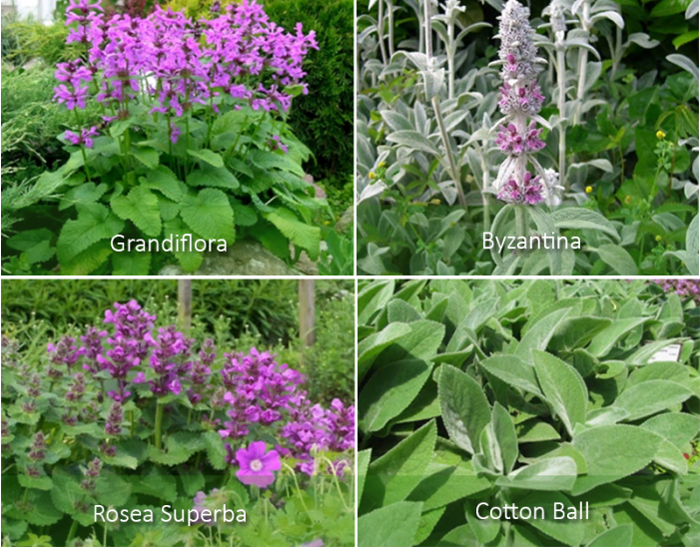
There are upright varieties, about 60 cm tall, and some that spread like a carpet. Low-growing varieties are good as borders along paths.
Stachys is beautiful in alpine gardens and landscapes reminiscent of its homeland – the mountain slopes of China.
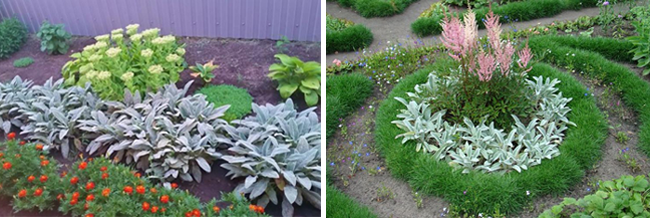
Flower stalks are cut off immediately after they appear, as they have little ornamental value. The plant tolerates pruning quite well.
An exception is the stachys monieri hummelo. Its beautiful purple-red flowers look stunning in garden arrangements and are prized for their long blooming period.
Combines well with hosta, milkweed, cypress and other decorative foliage plants.
Top.tomathouse.com recommends storing stachys after harvest.
Store the harvest in a dry, cool, dark place—a cellar, basement, pantry, or garage. Like other root vegetables, you can store them in the ground, covered with sand or sawdust. This will keep them juicy and crisp.
Both fresh and dried fruits are beneficial. Stachys chinensis is dried on a baking sheet at 60°C, then ground, and the powder is used as a seasoning for various dishes.
Medicinal properties, uses and contraindications of stachis
Herbal infusions based on Stachys sylvestris are recognized by official medicine and are prescribed in gynecology and postpartum therapy.
Stachys has a pronounced sedative effect. Its calming properties are superior to motherwort.
Marsh stachys and stachys are used as a choleretic and anti-inflammatory agent, the latter also has an antitoxic effect.
Chinese artichoke is recommended for diabetics because it contains no starch. It has beneficial effects on the gastrointestinal tract and cardiovascular system.
When deciding to introduce stachys into your diet, it should be taken into account that this is a specific product and is not typical for central Russia.
It has contraindications and can cause individual intolerance. It should be introduced with caution into the diet of allergy sufferers, children, and pregnant and nursing mothers.