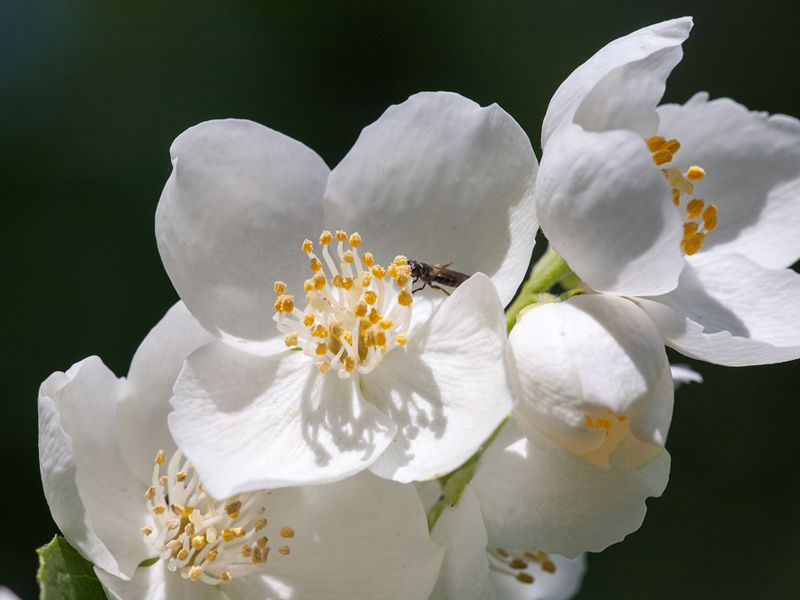
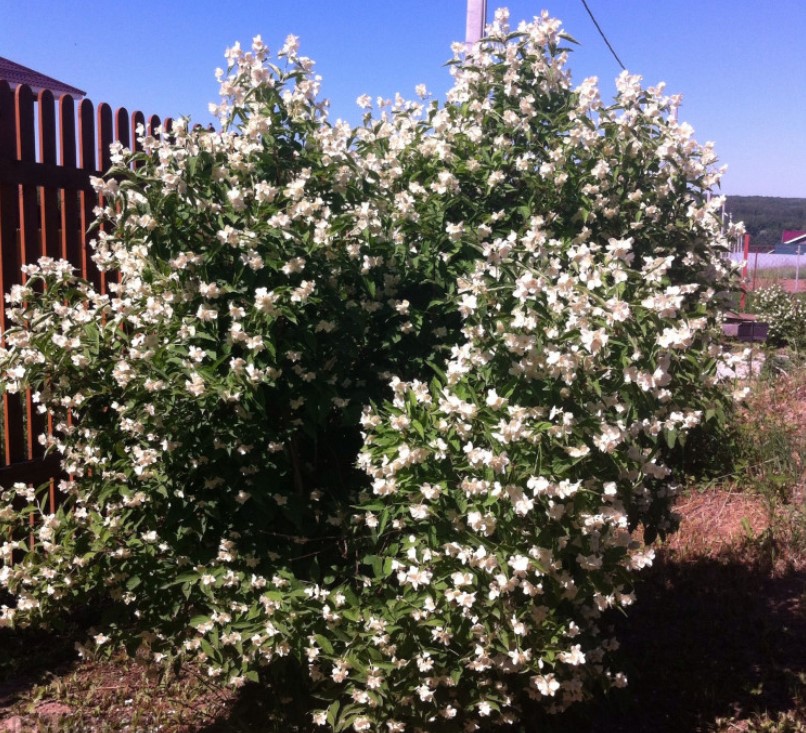
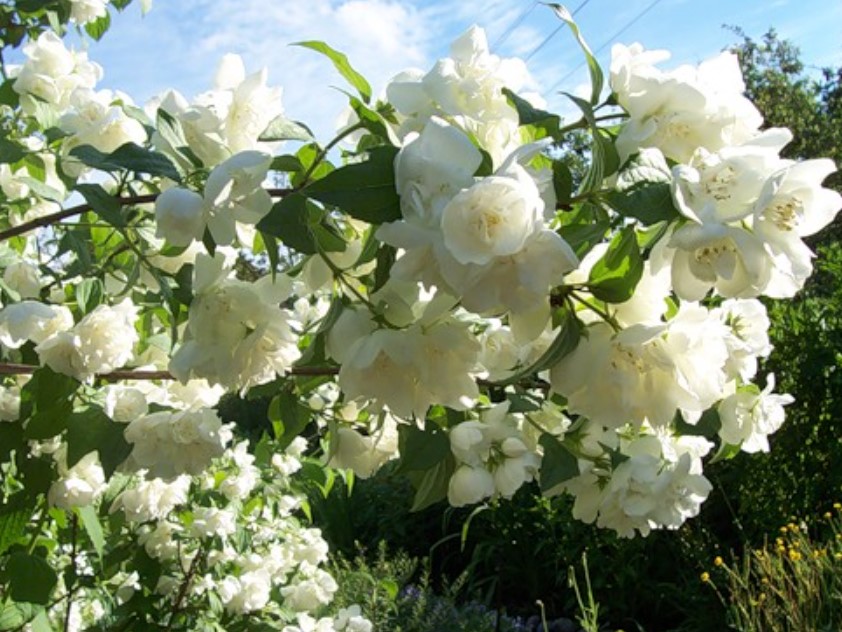
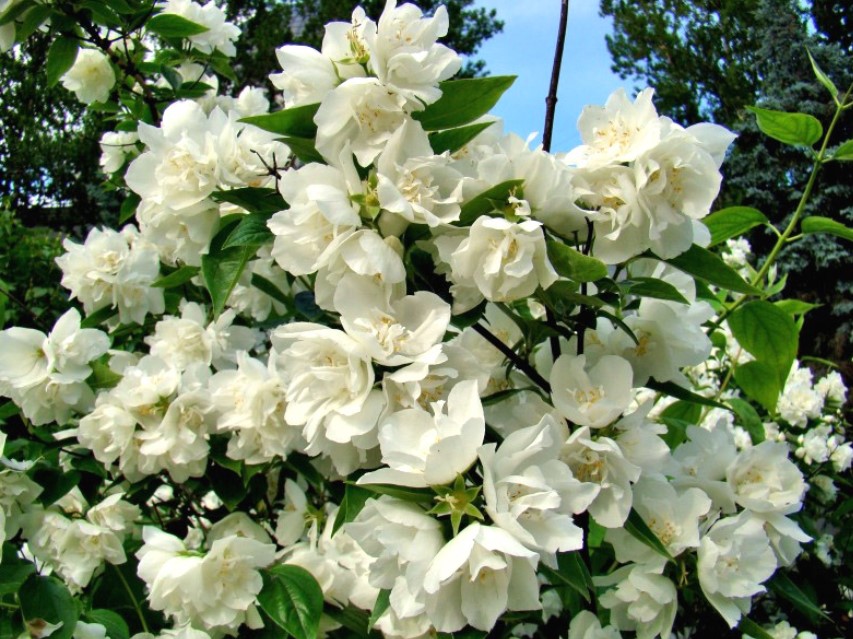
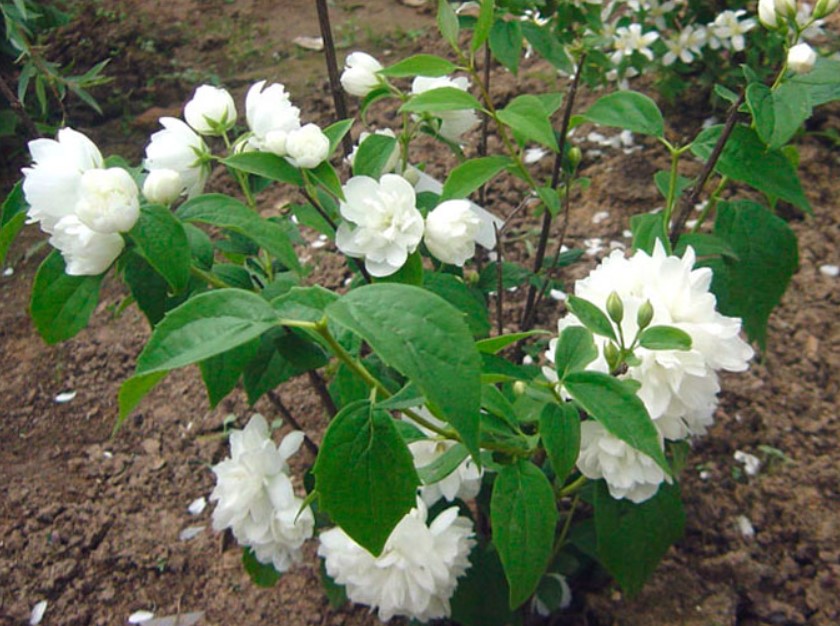
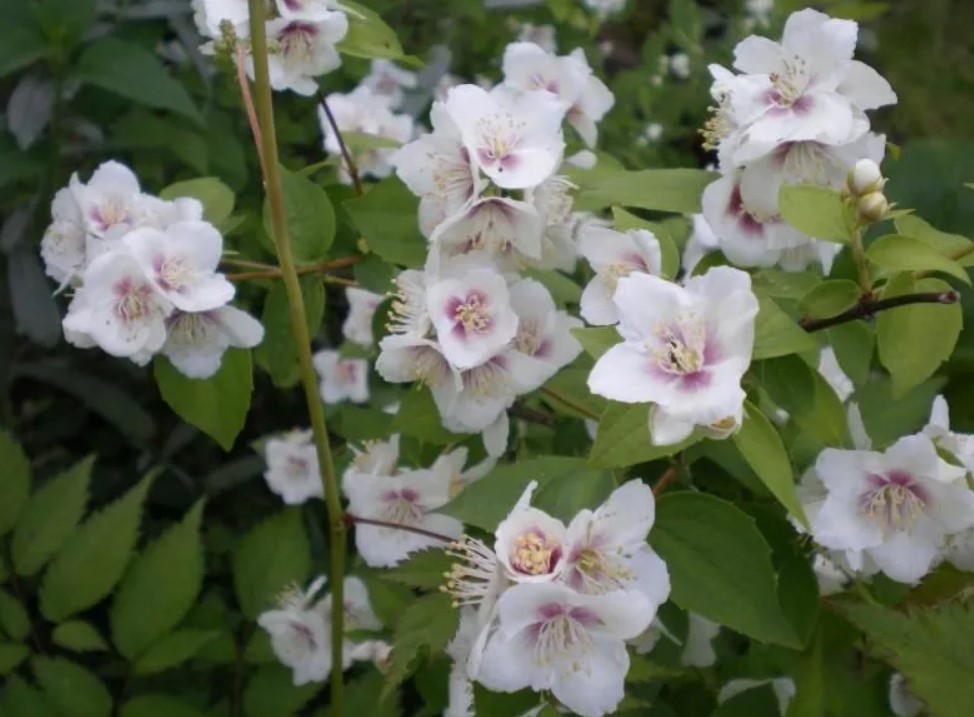
Mock orange is an easy-to-grow shrub with a pleasant aroma and snow-white flowers. It is a shrub belonging to the Hydrangeaceae family. It is native to Europe, eastern Asia, and northern America. Gardeners often mistakenly call this plant garden jasmine due to the similarity of its flowers and scent to houseplants. However, these shrubs belong to different families.
Content
- 1 Description and characteristics of mock orange
- 2 6 species, 17 varieties of mock orange
- 3 Qualitative characteristics of mock orange varieties
- 4 Planting garden jasmine
- 5 Caring for mock orange
- 6 Propagation of mock orange
- 7 Wintering of mock orange
- 8 Pest and disease control of mock orange
- 9 Reviews of mock orange
Description and characteristics of mock orange
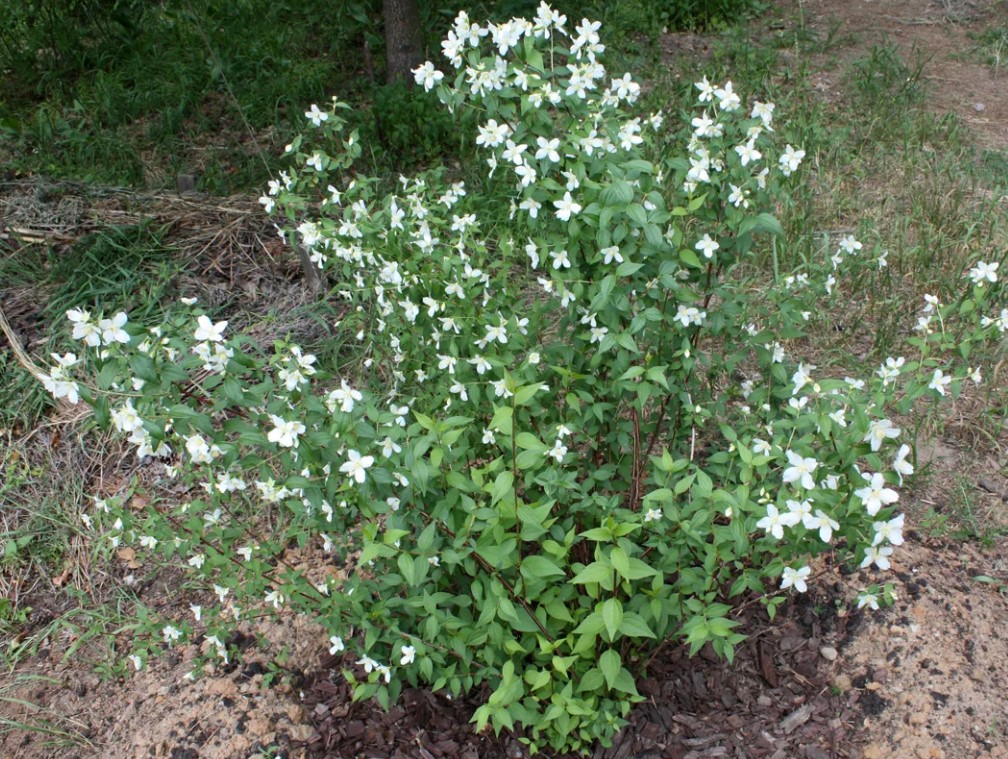
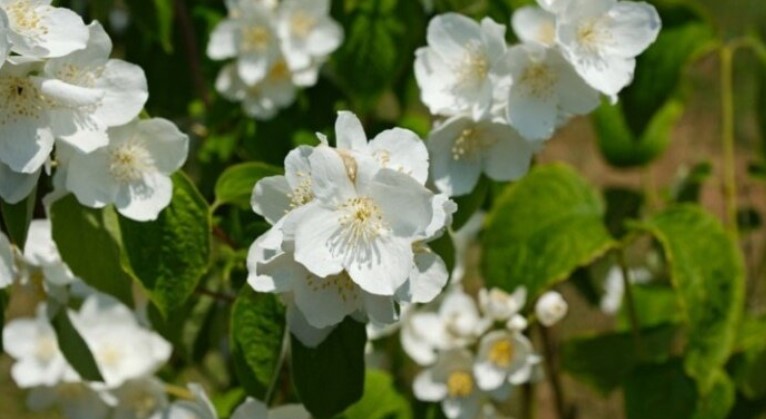
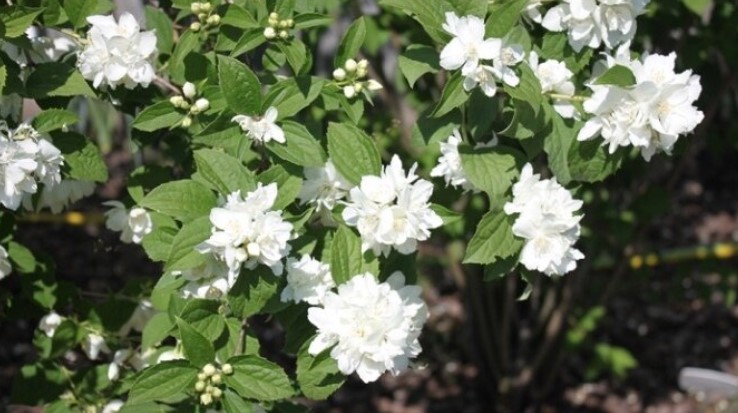
A deciduous shrub with thin, gray bark. The leaves are opposite, 50 to 70 mm long, and elongated, oval, or ovoid.
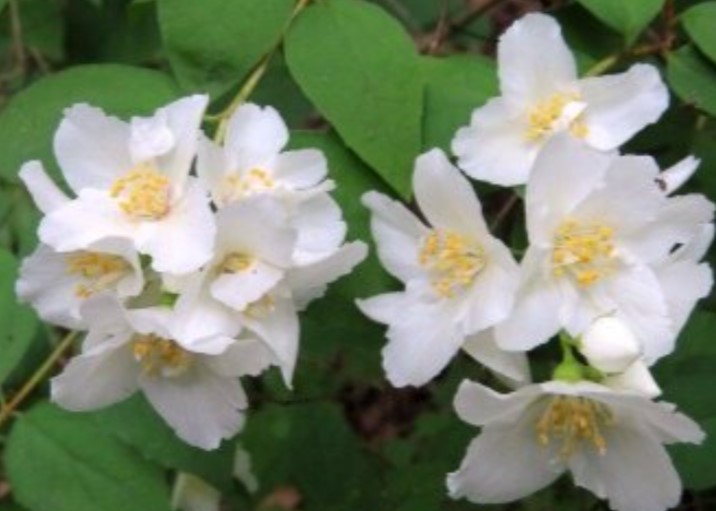
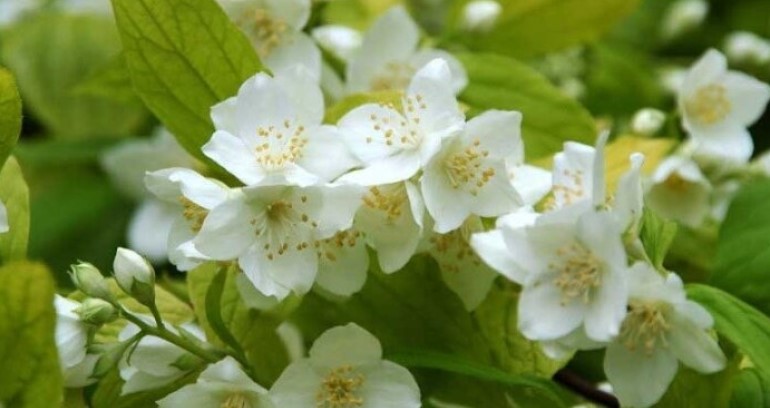
The inflorescences are racemose, with 3-9 buds 25-60 mm in diameter. The color ranges from white to yellowish.
The fruit is a capsule-shaped fruit with small seeds, the quantity of which ranges from 6 to 10 thousand pieces.
6 species, 17 varieties of mock orange
There are about 50 varieties of garden jasmine in nature, but the following are mainly used for cultivation:
| View | Description | Varieties, winter hardiness | Flowers, flowering period |
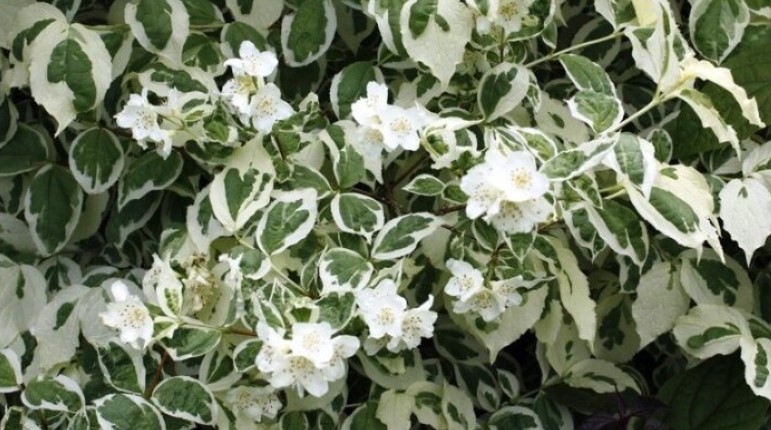
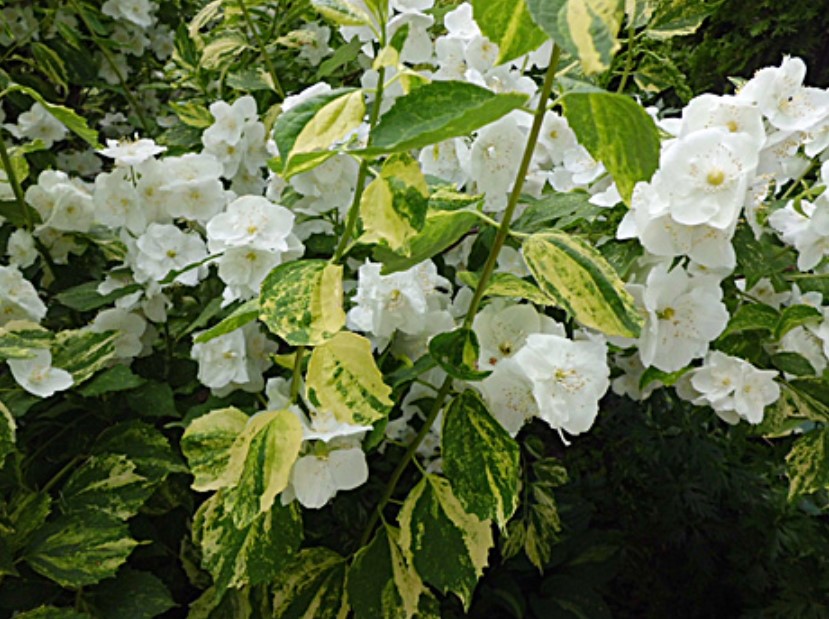
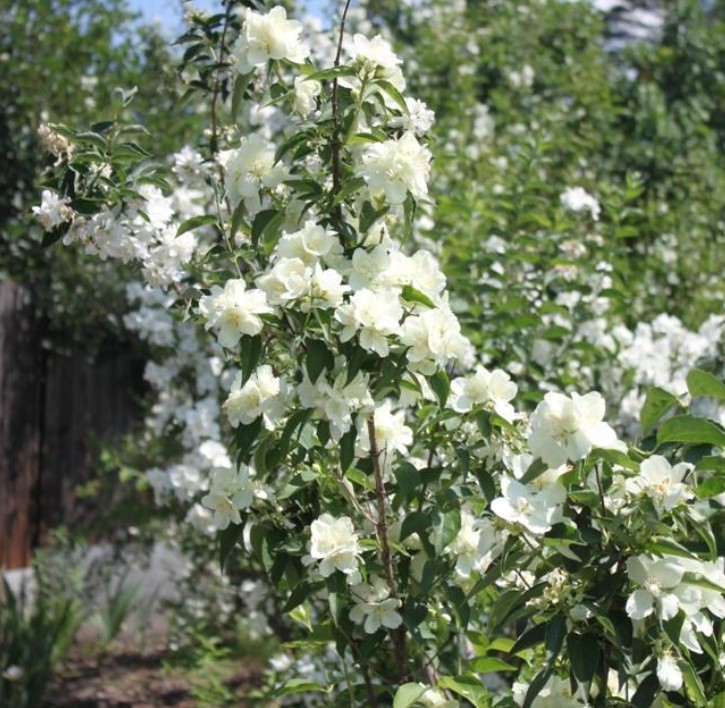
| Common, pale, crowned (Philadelphus coronarius)
|
Spreading, 3-4 m tall, with richly fragrant flowers. Frost-resistant, it thrives in temperatures down to -25°C. Some varieties can withstand temperatures as low as -34°C. |
|
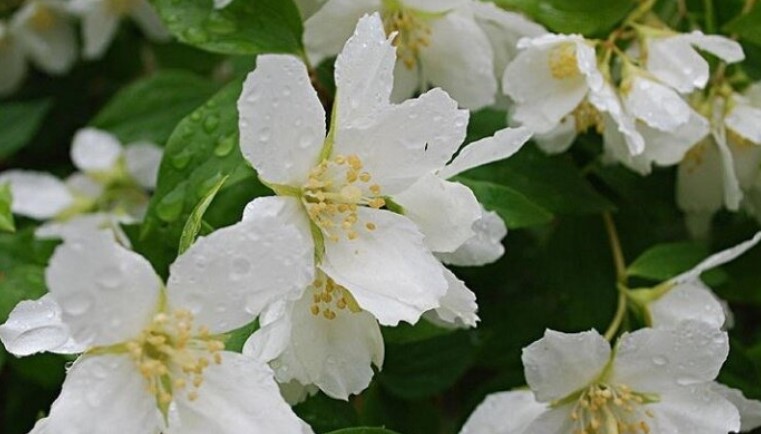
Simple. Color ranges from white to cream, size up to 5 cm.
June-July. |
Large-flowered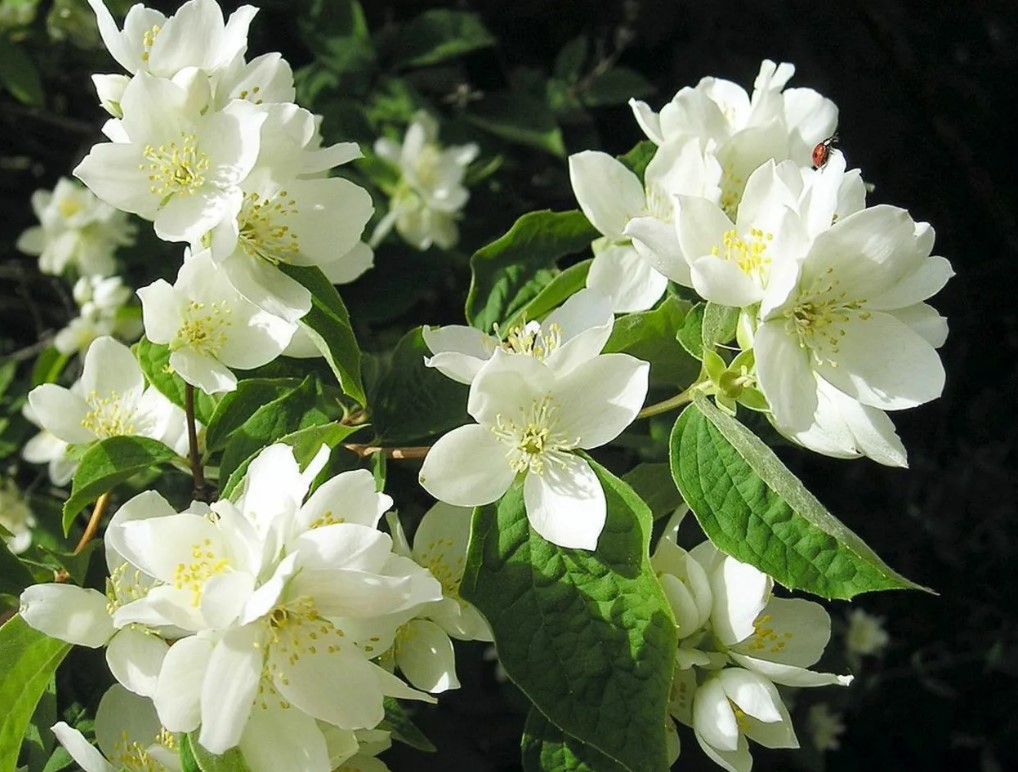 |
It came to Russia in the 19th century. It has a faint aroma. |
|
Large, bright white
Beginning of June – August. |
| Small-leaved
|
The trunk reaches a height of 1.5 m. It has a strawberry scent with hints of pineapple. |
|
Small, white. June-July. |
| Lemoine
|
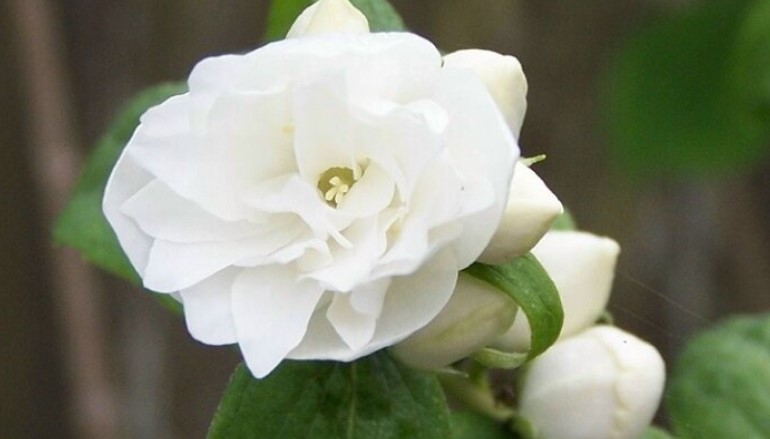
A hybrid plant bred from the common and small-leaved species. It has large, fragrant flowers in clusters of 6-7 and small, ovate leaves. |
|
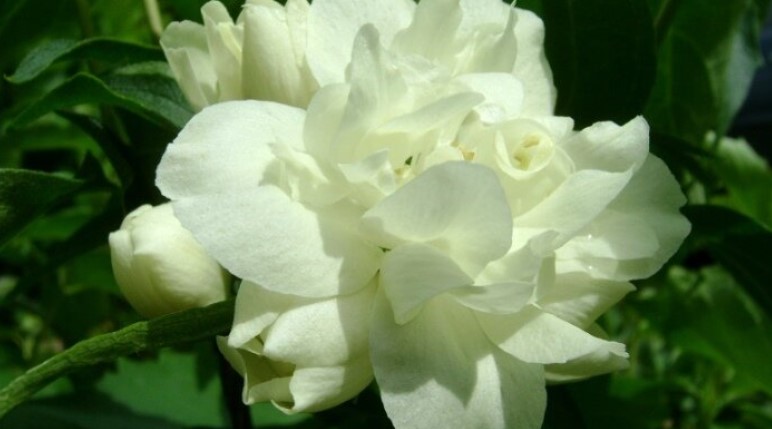
Terry or semi-double.
The beginning of summer is August. |
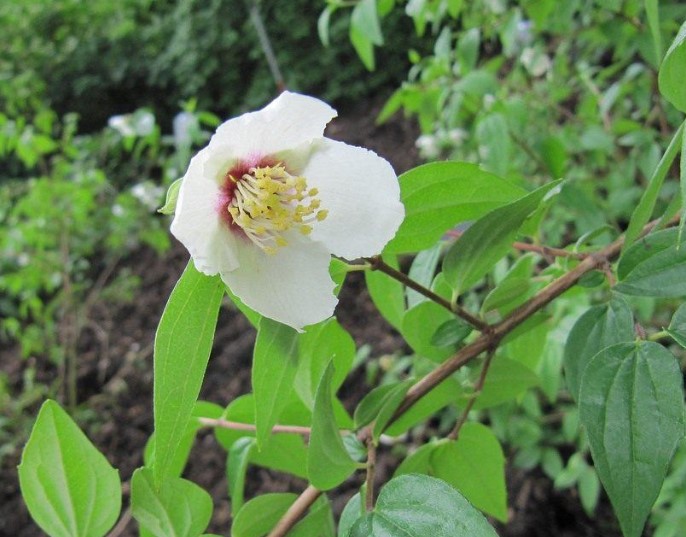
| Odorless (Philadelphus inodorus) 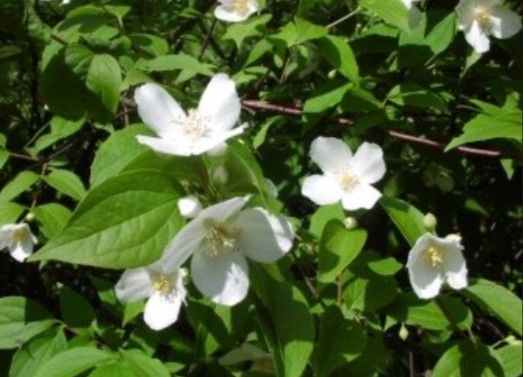 |
Native to North America. It has a tapering crown and upright shoots. Height: 3 m. Large foxtails: 7-12 cm. |
|
Medium-sized, white, bell-shaped. Smell is mild.
The second half of July – August. |
Qualitative characteristics of mock orange varieties
When choosing varieties and cultivars of garden jasmine, attention is paid to quality characteristics, as the further north the region, the more important the plant's winter hardiness is. Small gardeners appreciate the compact size of mock orange. Others prefer more fragrant varieties. Others value flower shape. Let's consider the various options.
12 varieties of mock orange by flower shape
When choosing mock orange, the numerous varieties are immediately apparent. Based on flower shape, they are divided into two groups:
| Flower shape | Variety | Description | Flowers. Flowering period. |
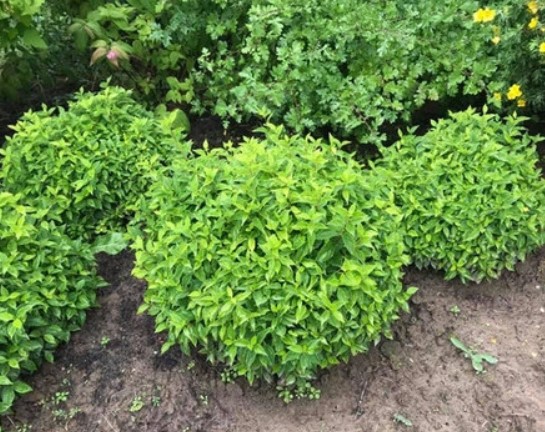
| Simple | Aureus
|
The bush is 2-3 m tall and has a spherical crown of bright yellow-green leaves. Hardiness zone 4. | In summer, small white flowers with a pleasant, strong aroma appear, barely visible among the foliage. |
| Dwarf
|
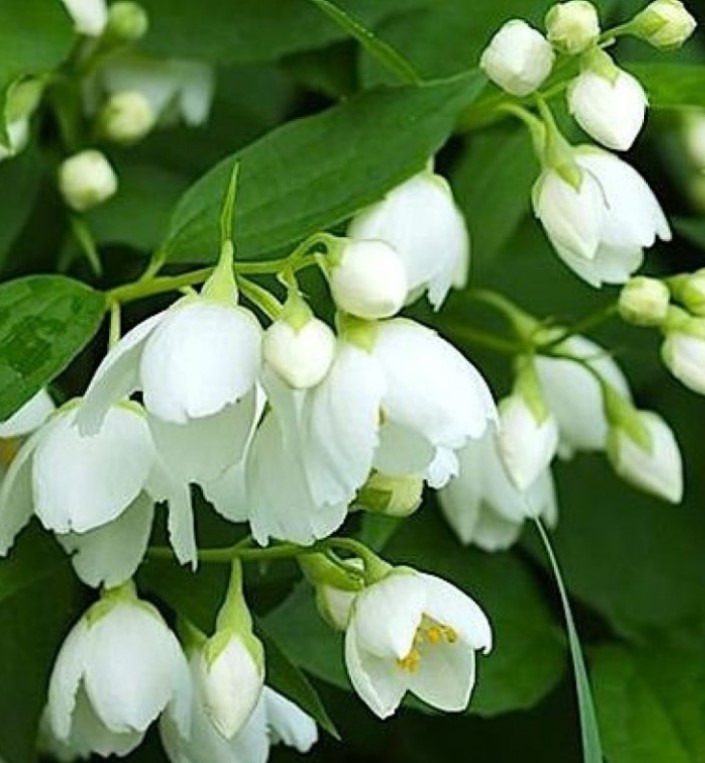
A dwarf variety growing up to 0.4 m tall and up to 1 m wide, it can be trained into a spherical shape. The leaves are small and serrated, and the flowers are medium-sized, plain, and unscented. Frost hardiness is -34 to -40 °C. | The flower is bell-shaped. The inflorescences are racemose, with 5-7 flowers. Color: white. Blooms from mid-summer. | |
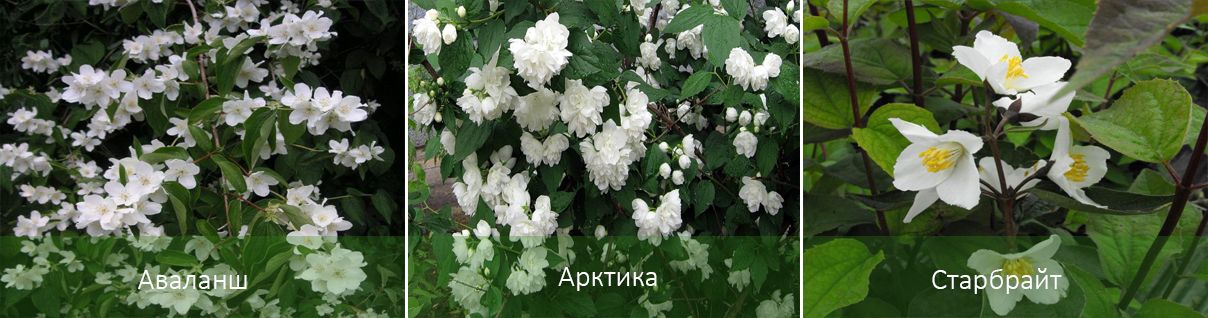
| Airborne assault
|
Bush height: 2-2.5 m, crown shape: coronal, leaves oval. Frost resistance: -29…-34 °C. | The flower is bell-shaped. The inflorescences are racemose, with 5-7 flowers. The color is white. The aroma is strong, like strawberry.
Since midsummer. |
|
| Starbright
|
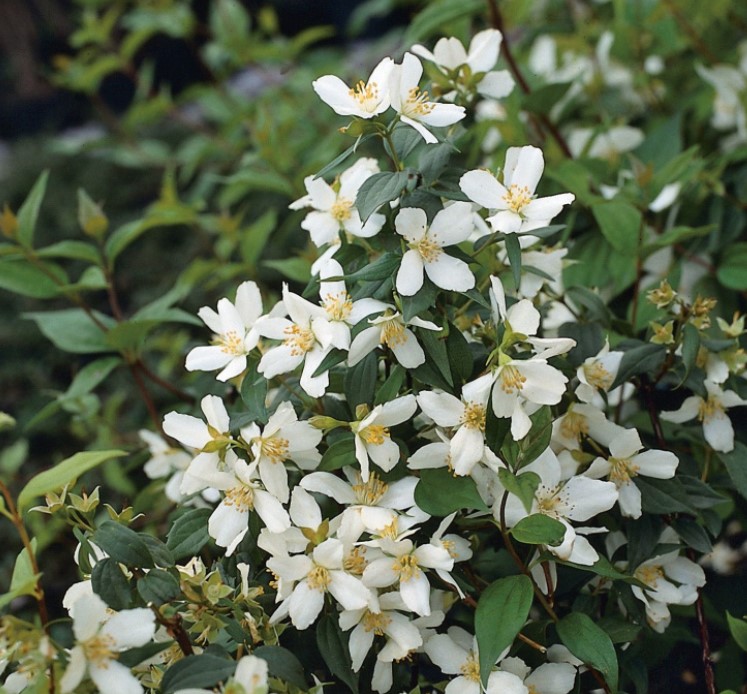
Developed from the crown mock orange, it has a dense, leafy crown that splits at the top. Hardiness zone 5 only. | Large, reaching 55 mm in diameter. The inflorescences are racemose. The color is white with a purple center. The aroma is strong.
Since midsummer. |
|
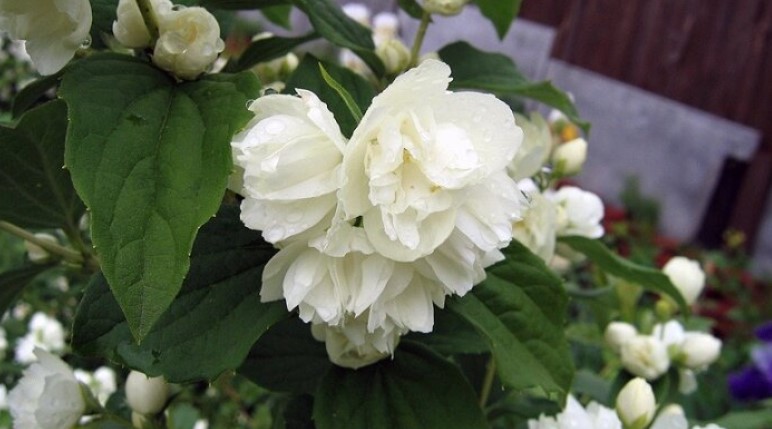
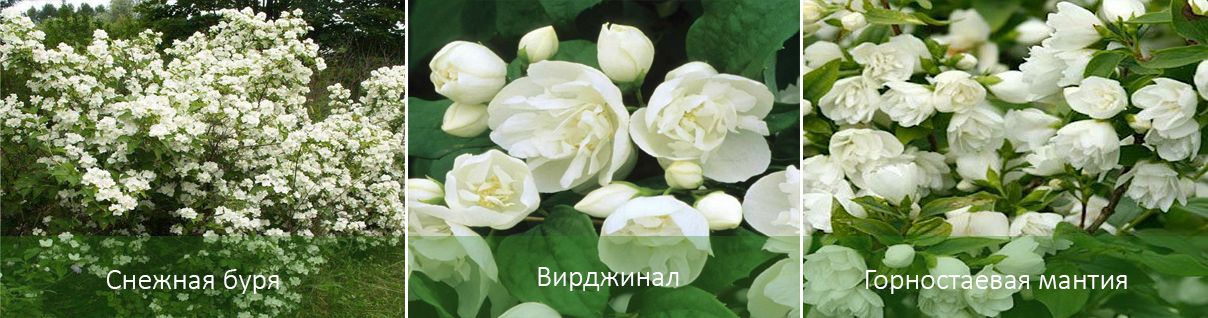
| Multi-petaled | Snowstorm
|
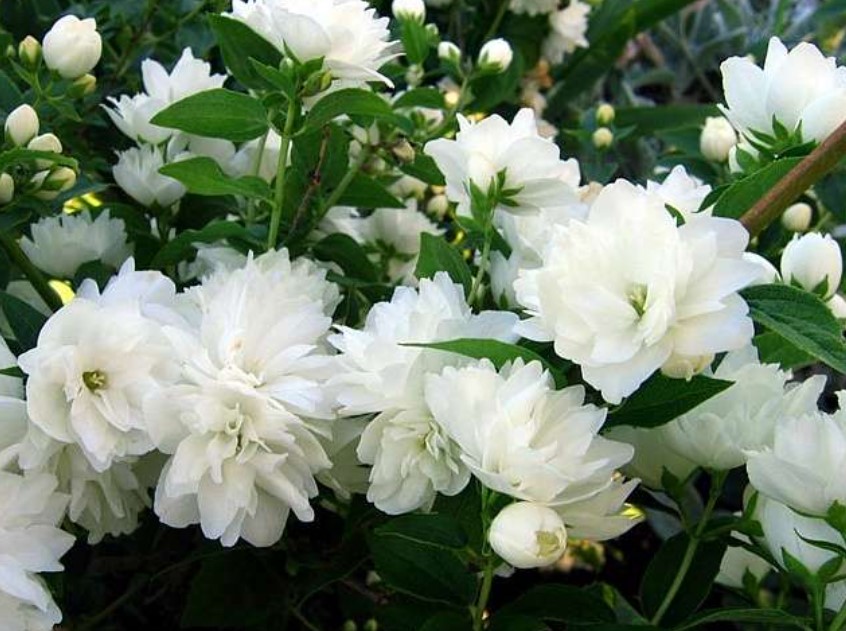
A medium-sized, compact bush, no more than 2 m tall. Frost-hardy to zone 4, no winter cover required. | Medium, densely double flowers with a delightful strawberry aroma. Color: milky. June-July. |
| Arctic
|
Compact, growing to 1.8 m. Winter hardy to zone 4. | Snow-colored, with 7 to 9 flowers per inflorescence, sometimes 15. Strong aroma. Second half of June – July. | |
| Virginal
|
This cultivar has been known for over 100 years. Lemoine variety. A firework-like shrub with dark brown bark and dark green, oval-pointed leaves 7 cm in size that turn yellow in autumn. It grows up to 3 m. Zone 4. | Terry, beige with a strong aroma, 5 cm, collected in inflorescences of 14 cm. From mid-June. | |
| Ermine mantle
|
Low-growing, compact plant, height from 80 cm to 1 m. Corolla diameter 25-30 mm. Zone 5. | Cream-colored, semi-double. Flowering period: up to 1.5 months. | |
| Snowbelle
|
Spreading, with a trunk height of 1.2-1.5 m. Dark green foliage. This variety is recommended for well-lit areas. In shade, the flowers become very elongated and weak. Zone 5. | Large, double flowers. Color – snow-white. Inflorescences – racemose. The aroma is fragrant, but faint.
June-July. Flowering lasts no more than a month. |
|
| Pearl
|
Winter-hardy to -40 °C, low-growing with rich green foliage. | Milky, double, fragrant, with buds up to 60 mm in size. Blooming in the second half of June, they last almost a month. | |
| Zoya Kosmodemyanskaya
|
The cultivar was described in 1951. It grows to 2-3 m and has a wide crown. The foliage is ovate-lanceolate and bright green. | Double, white. Slightly fragrant. Inflorescences are cluster-shaped. Flowers bloom from mid-June and last more than 3 weeks. | |
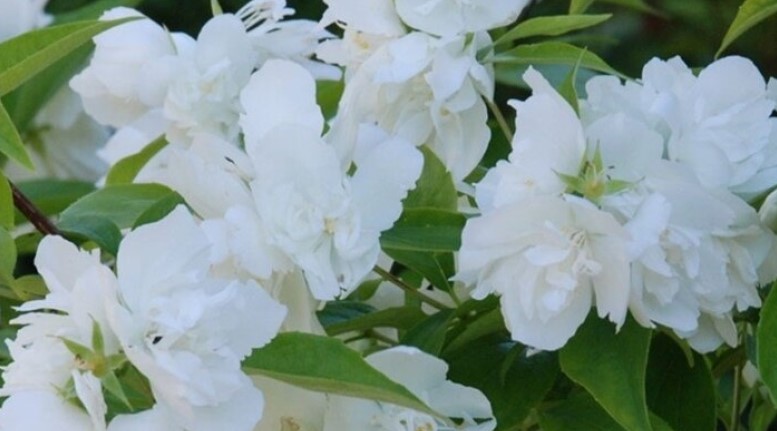
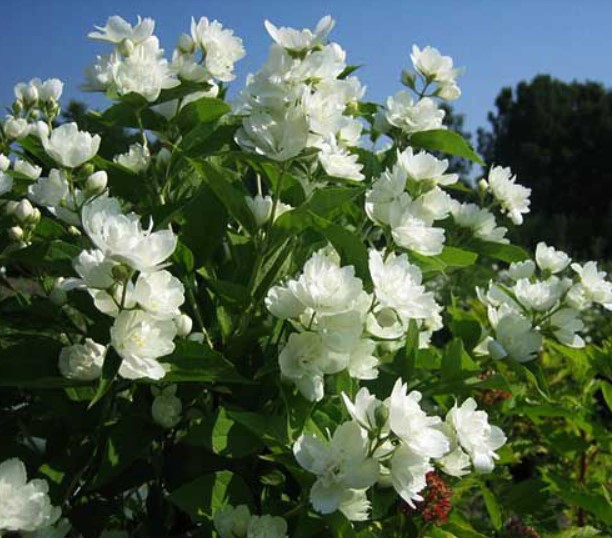
Young naturalist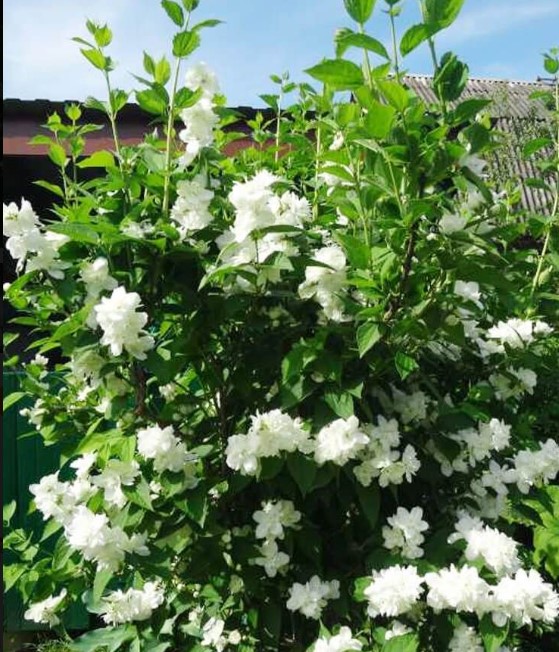 |
The bush grows no more than 1.2 m, compact. Frost-hardy variety, zone 4. | Large, double or semi-double flowers with a delightful strawberry aroma. White. June-July. |
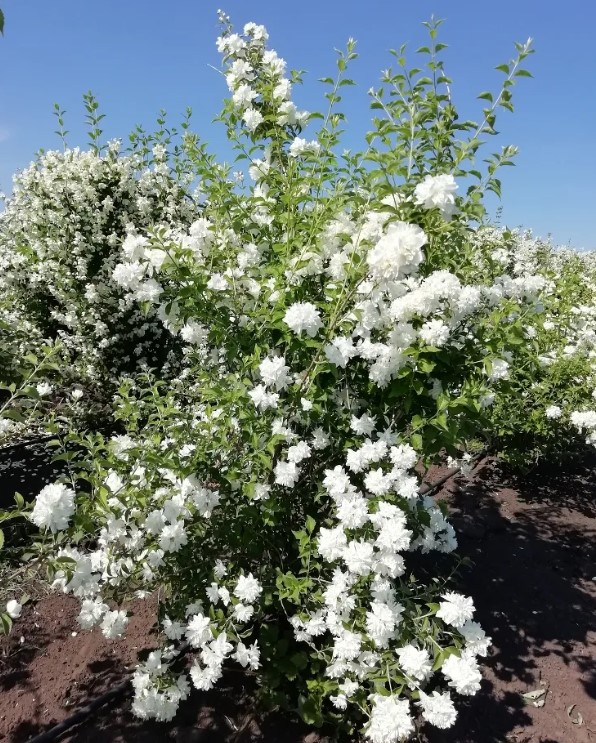
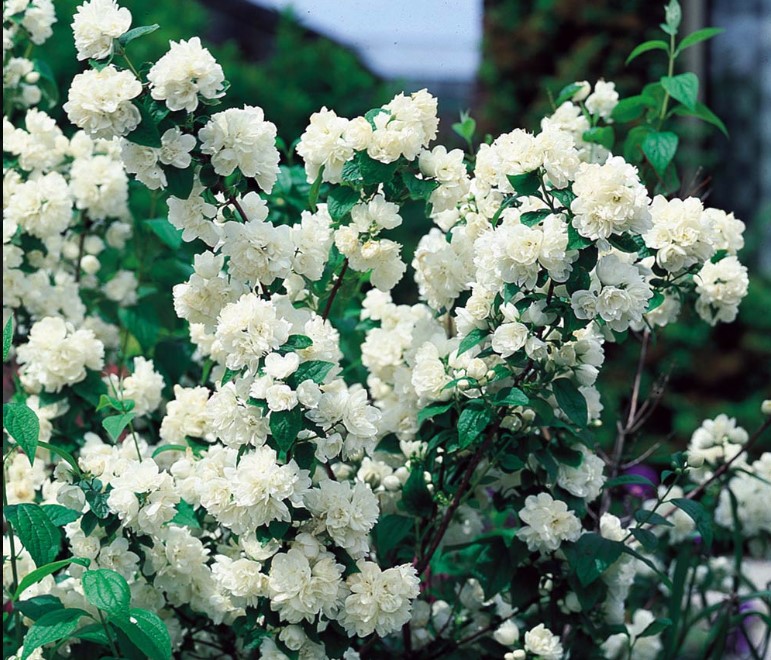
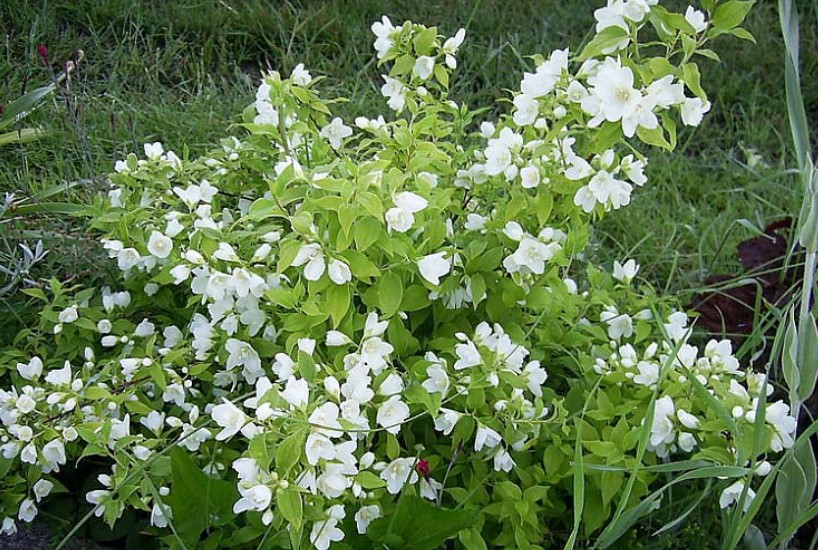
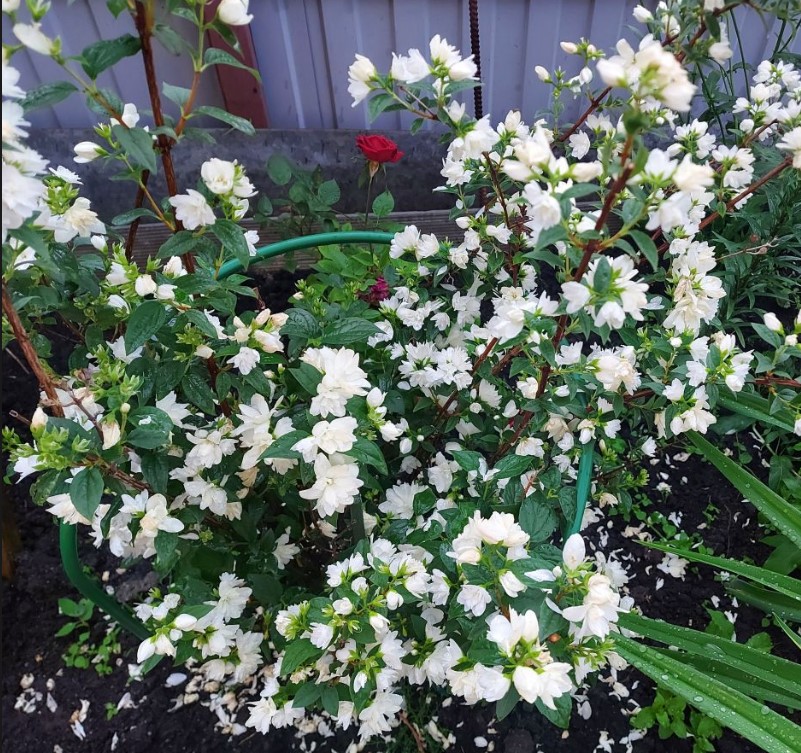
Frost-resistant varieties for the Moscow region
For the Moscow region and central Russia, the following varieties are best suited to withstand frosts down to -34°C (zone 4):
- Aureus;
- Arctic;
- Alabaster;
- Virginal;
- Airborne assault;
- Glacier;
- Zoya Kosmodemyanskaya;
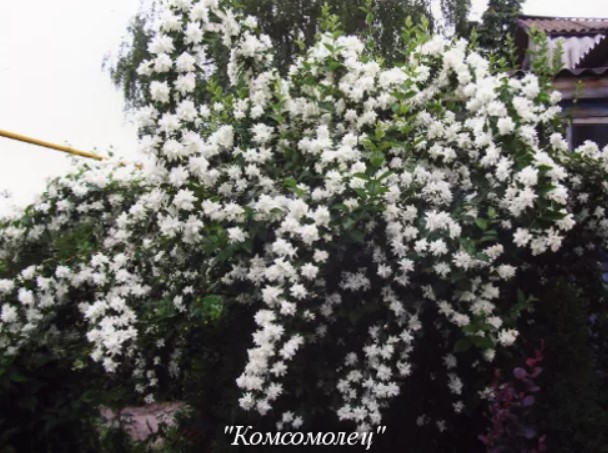
- Komsomolets;
- Snow storm;
- Young naturalist.
Winter-hardy varieties for Siberia and the Urals
For Siberian regions with harsh winters, mock orange varieties that can withstand temperatures down to -40°C (zone 3) are suitable. These include the following varieties:
- Pearl;
- Memory of Vekhov;
- Dwarf.
Aromatic varieties with different smells
Lovers of rich flower scents pay attention to varieties with a strong strawberry aroma:
- Avalanche;
- Airborne assault;
- Komsomolets;
- Moonlight;
- Mont Blanc;
- Snow storm.
The Pearl variety exudes a pleasant vanilla scent. The Glacier variety has an orange aroma. The Alabaster mock orange has a pineapple scent.
Two-tone
Today, two-colored varieties of mock orange are gaining popularity:
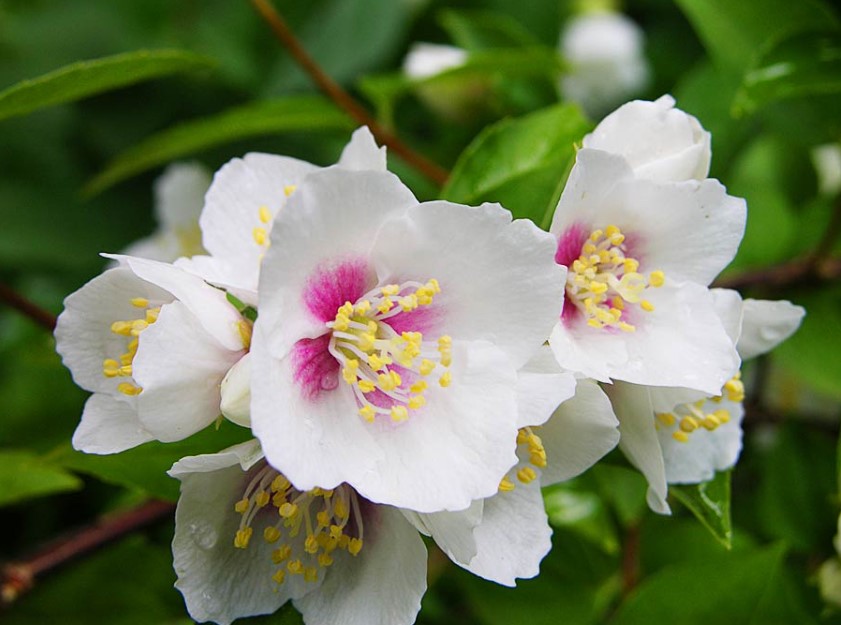
- Bicolor. A low-growing shrub with large white flowers and a pink center.
- Belle Etoile is one of the most famous varieties in Europe. The buds are single and have a raspberry-colored throat.
- Unusual. A frost-hardy shrub with a deep purple center.
Dwarf varieties
Mock orange is generally a tall plant; some species and varieties grow up to 4 m under favorable conditions, most from 1.5 to 3 meters, but there are also dwarf varieties that do not reach 1.2 m, for example:
- Dwarf;
- Mont Blanc;
- Unusual;
- Young naturalist.
Planting garden jasmine
For planting, select a well-lit area away from other plants. The optimal soil mixture is sand, humus, and leaf mold, in a ratio of 2:1:3.
The best time for planting is mid-September or October. Spring planting should be done only before the first leaves appear.
The spacing between shrubs depends on the variety of garden jasmine and can range from 50 to 150 cm. If the plants are used to create a green fence, the spacing should be 50-70 cm.
The size of the planting hole is 60*60*60 cm, a 15 cm drainage layer, including sand and brick chips, is placed on the bottom.
Next, add a small amount of the prepared soil mixture. Once the soil has settled, place the seedling in it, with the root collar level with the soil surface. Fill the hole with nutrient-rich soil. Water each bush with approximately 20-30 liters of water.
After a few days, the area around the trunk is covered with mulch (I use peat or sawdust), its thickness is about 3-4 cm.
Caring for mock orange
When caring for mock orange, perform the following steps:
- The area around the trunk is mulched and loosened, and weeds are removed.
- In spring, fertilize with mullein; before flowering, feed with a potassium-phosphorus composition.
- Water as needed during prolonged dry weather. At the beginning of the summer season, before and during flowering, pour 1 bucket of water under each bush.
- The appearance of insects and the development of diseases are prevented by spraying plants with fungicides and insecticides.
- They perform sanitary (in spring, dry, damaged branches are removed), formative (before the sap begins to flow, strong shoots are shortened to 15 cm, weak ones - by 50%), and rejuvenating (only 3-4 stems are left on the bush, leaving them 40 cm long) pruning.
Propagation of mock orange
Garden jasmine is propagated by all existing methods:
- Seeds are sown in open ground. They are planted in the fall. They are sown in furrows and then covered with compost and sand. For the winter, they are covered with spruce branches. In severe frosts, arches are installed and covered with plastic film. The greenhouse is ventilated occasionally.
- Seedlings. The planting material is placed in special containers in mid-winter. After the first leaves appear, the flowers are transplanted into plastic cups. When spring arrives, the plants are hardened off by taking them outside for 10 minutes daily. They are planted outdoors in mid-June.
- Cuttings. Green shoots are cut from mature mock orange plants in early summer using a well-sharpened knife. Each shoot should have two leaves, and the plant should be about 5 cm long. Plant in moist soil consisting of garden soil and sand in a 1:1 ratio. Use a stick to make a hole in the soil and place the cutting there, deepening it by 1 cm. Water the seedling and cover it with plastic wrap. Ventilate regularly.
- Layering. Select one of the lower branches of the mock orange. Bend it until it touches the ground. Remove the bark from the area where it touches the ground, doing so very carefully to avoid damaging the wood. Make a cut no more than 1 cm wide. Secure the shoot to the ground with a pin and cover with soil. Water regularly. In the fall, separate it from the mother plant and plant it in its permanent location.
- Dividing the bush. This is done in late autumn, after the leaves have fallen. Each division should have roots. The divisions are moved to a new location on the same day they are dug.
Wintering of mock orange
Despite mock orange's frost resistance, shrubs under one year old cannot yet withstand severe cold. Therefore, the branches are tied with rope and then wrapped in burlap. The root area is mulched with leaves.
In spring, melting snow is removed from the flowers with a garden fork. If this isn't done, the mock orange won't support the weight and will break off.
Pest and disease control of mock orange
Mock orange is resistant to diseases and insect attacks, but there are exceptions:
| Manifestation | Cause | Elimination measures |
| Root rot, leaf fall | Gray rot. | Spray with Chistotsvet, Agrolekar or Skor preparations. |
| Brown spots up to 10 cm in diameter. | Septoria leaf spot. | The plant is treated with Bordeaux mixture. All affected parts are burned. |
| White insects on leaves and trunk. | Aphid. | The flower is sprayed with Fufanon, Fitoverm or Iskra. |
If diseases and pests are detected in a timely manner, the plant will delight you with its flowering for a long time.
Reviews of mock orange
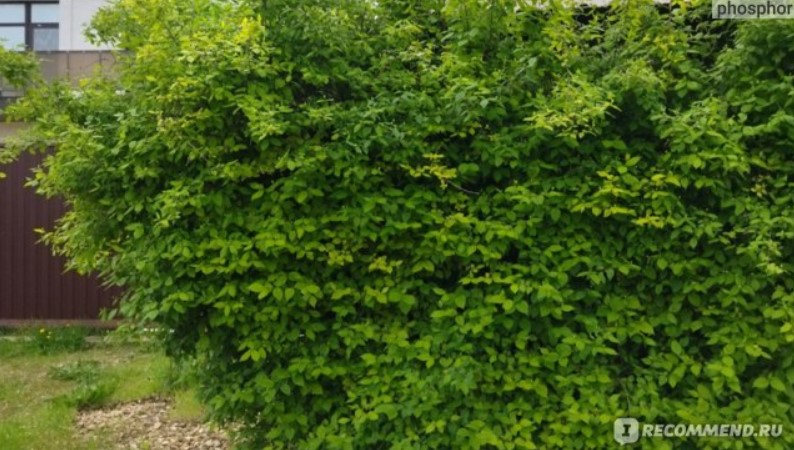
Mock orange, often called jasmine, is a great choice for a moon garden, but what about a hedge?
Jasmine and mock orange are completely different plants, but in southern Russia, for example, mock orange is almost universally called jasmine. This is due to the similarity of their flowers and scent. However, in reality, the differences outweigh the similarities.
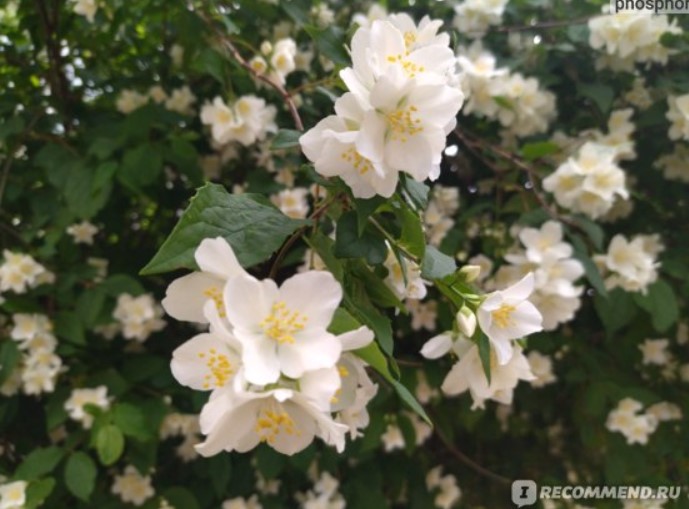
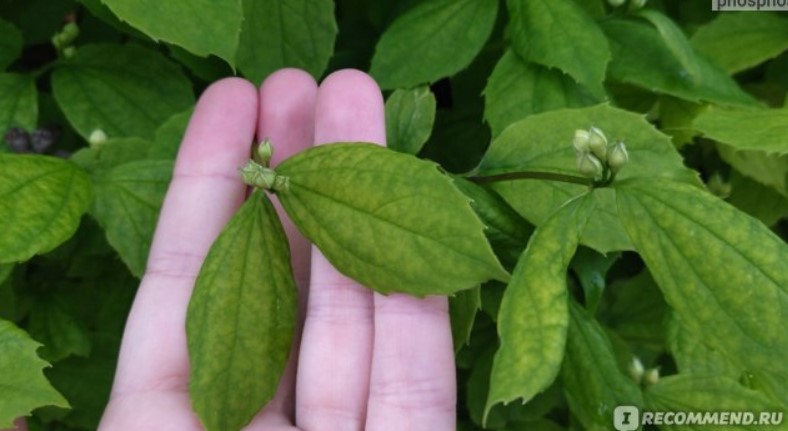
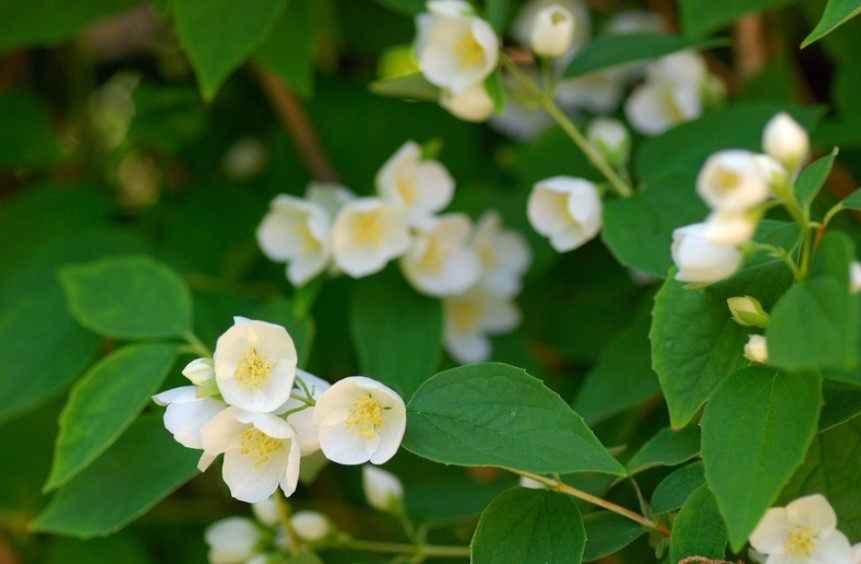
Mock orange (not jasmine) flower photo
I really like mock orange in general, but only during flowering – from mid-May to mid-June.
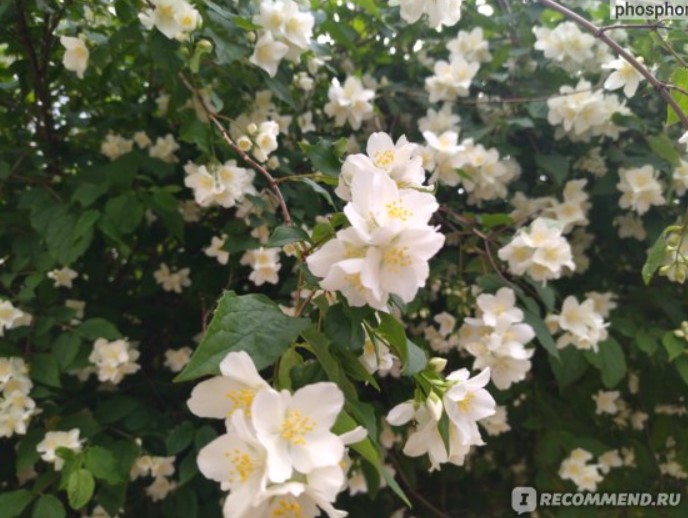
Mock orange bloom photo
Mock orange flowers photo
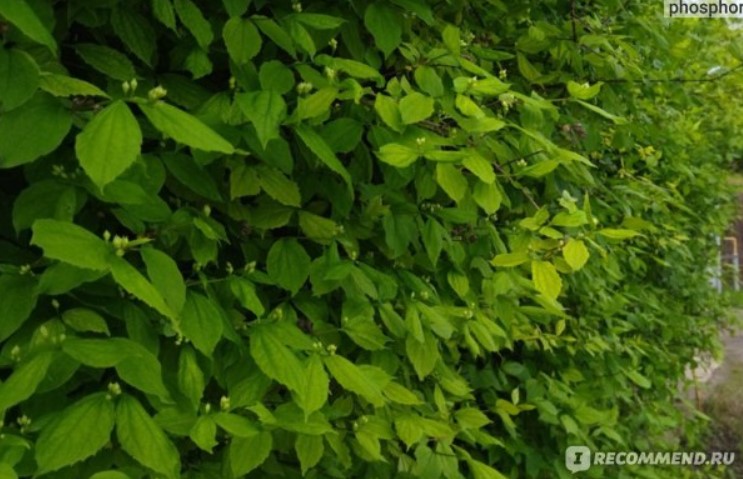
Then, until late autumn, it is an ordinary, unremarkable green bush, which, however, reaches impressive sizes (up to three meters in height or more).
Mock orange foliage photo
Mock orange leaves photo
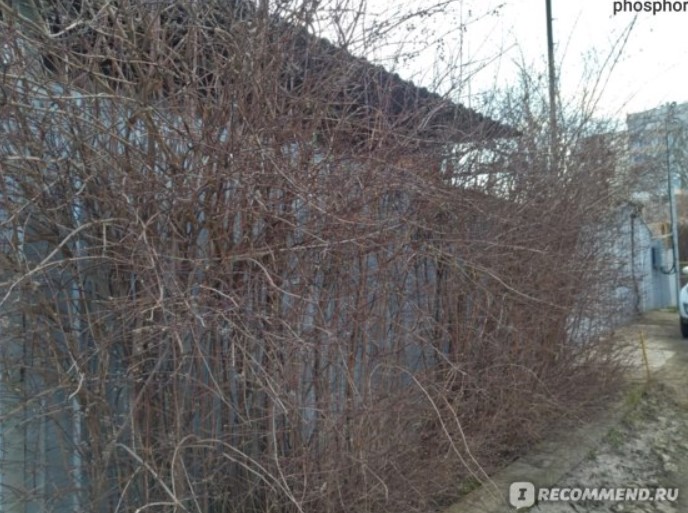
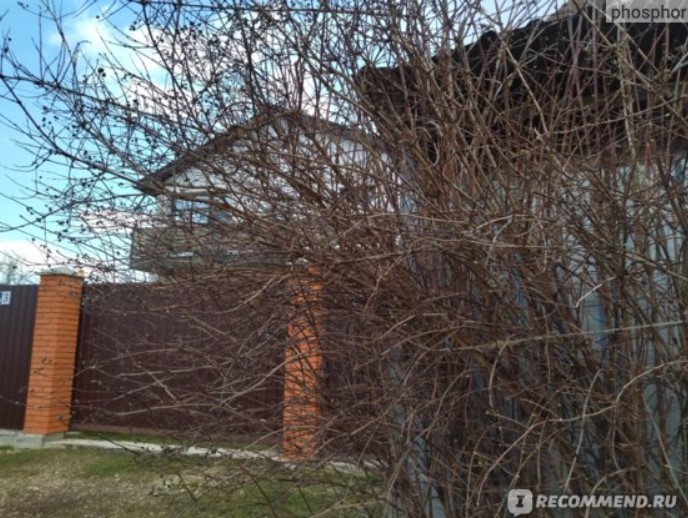
And from November to April, the mock orange stands bare and transparent, its thin, inconspicuous branches swaying in the wind. So, it's only suitable as a hedge for five months a year, unlike, for example, arborvitaes or evergreen ivy (hedera).
Mock orange in winter photo
Mock orange without leaves photo
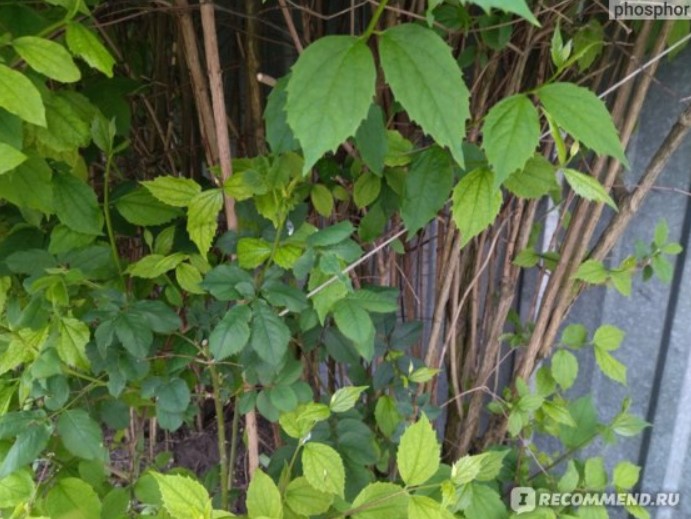
It's a matter of taste, but due to its short flowering period, I wouldn't recommend planting it in a prominent spot in the garden. Along sidewalks, fences, and roads—that's where it's at. It's just a good idea to trim it periodically or tie up its branches, otherwise the bush will fall apart.
Mock orange leaves and branches photo
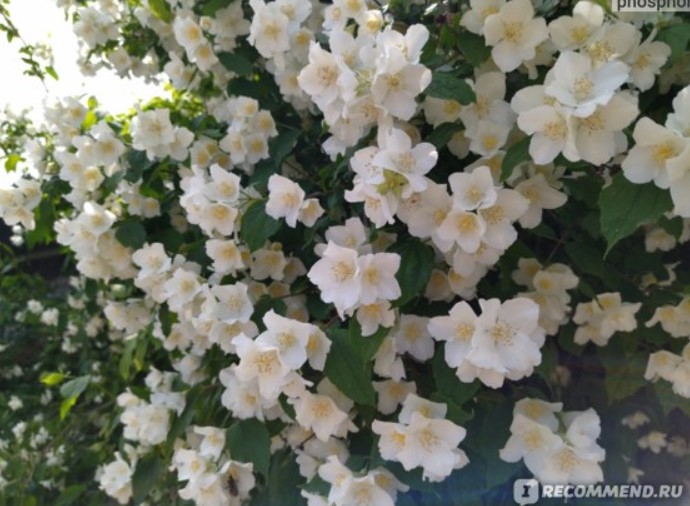
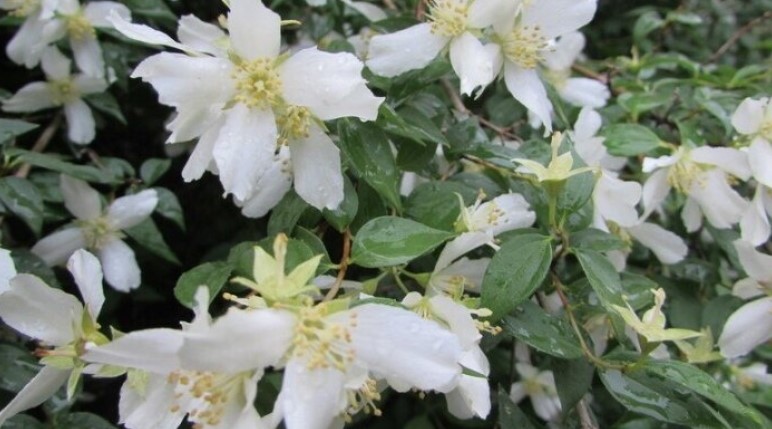
Photo of blooming mock orange
On the other hand, if the goal is to create a moon garden, and in this garden, in addition to mock orange, white roses, white irises, viburnum, and other white-flowered plants with different flowering periods will grow, then you cannot do without mock orange.
A moon garden is a landscape design technique that allows you to enjoy the beauty of the landscape even at night, under the light of the moon or lamps that simulate it. Plants with white flowers or variegated, silvery foliage are suitable for creating a moon garden. For about a month, mock orange blooms profusely and emits an indescribable fragrance. It looks stunning, especially on a moonlit night: its smooth white petals reflect the moonlight, making the bush seem to glow in the dark. It's absolutely beautiful!
Mock orange (not jasmine) flowering photo
Main advantages💚 In summer, mock orange effectively screens the area from prying eyes and protects against dust from cars on the road.
💚 It smells divine when in bloom. Its aroma is calming, joyful, and magical.
💚 Attracts pollinators to the plot for crops that bloom at the same time. For me, the most valuable plants that bloom at this time are strawberries and persimmons.
💚 During flowering it is beautiful both day and night.
💚 Easy to grow.
💚 Resistant to exhaust gases.
Mock orange in summer photo
There is no difficulty in growing mock orange.If you live in the central or southern part of Russia (I live in the south), mock orange grows in poor soil, without fertilizer, is disease-free, and is quite drought-resistant. It grows quite quickly and begins to bloom in its third year. If you don't want to spend money on seedlings, you can propagate it by cuttings or seeds.
Seeds and fruits of mock orange: photo
The disadvantages, as I already said, include a relatively short period of beauty, leaf fall (this is if we are talking about a hedge), and the fact that the bush is prone to falling apart, although this problem can be easily solved by tying it up, if necessary.When it comes to shrubs (non-climbing, unsupported) for hedges, I prefer pyracantha, which is decorative year-round. The southern evergreen "rowan" makes for bright garden accents and hedges. It's shade-tolerant, drought-resistant, and beautiful year-round.
And the psyllid, it's evergreen: It looks like bamboo, which is what it's called. It's a fairly frost-hardy bamboo substitute for gardens in the Russian Federation.
More options:
Jasmine nudiflora: Cascades of sunny yellow flowers in the middle of winter – in the garden and at home. 🌞 Can be shaped as desired. A great choice for terraced areas and hedges.
Forsythia: Yellow Bushes of Spring. Is forsythia beautiful when there are so many other yellow competitors nearby? It's debatable, but it has significant advantages.
Honeysuckle: A semi-evergreen honeysuckle (there's such a thing 😀) with an incredible aroma. Put a few flowers in your pocket, and you'll smell like perfume for a week.
I wrote about climbing plants for hedges and other interesting gardening here.
phosphor
recommends