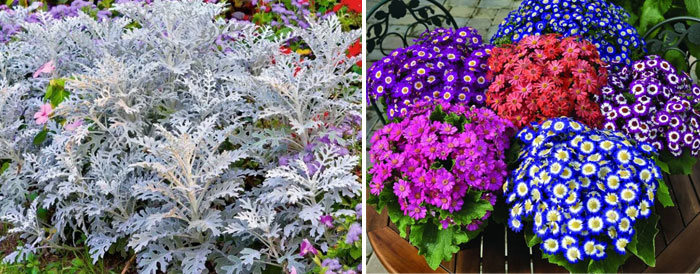
Cineraria belongs to the Asteraceae family. Its structure is similar to that of the genus Senecioaceae. In the wild, it grows primarily in hot African countries. The flower is widely used to decorate gardens, flowerbeds, and mixed borders.
Content
- 1 Description of cineraria
- 2 Types and varieties of cineraria
- 3 Growing cineraria
- 4 Conditions necessary for cineraria in the garden and at home
- 5 Planting and caring for cineraria in open ground
- 6 Vegetative propagation of cineraria
- 7 Diseases and pests
- 8 Top.tomathouse.com recommends: what to do with cineraria in winter
- 9 Reviews of cineraria from gardeners
Description of cineraria
The flower's name means "ash-gray" in Latin. It is a herbaceous perennial, growing as an ornamental subshrub. It does not tolerate frost well, so in Russia it is planted as an annual or biennial.
Reaches 30-90 cm, has branched shoots. Most varieties have pinnately dissected leaves. The blades are rounded, pubescent, and wide.
The tubular, ligulate flowers form corymbose inflorescences. The petals come in a variety of colors: crimson, white, canary yellow, and pudding yellow. Blooming is long, from the first month of summer until frost.
Types and varieties of cineraria
The genus Cineraria comprises 50 species. However, not all are grown in artificial environments. Cultivated species are usually divided into two groups:
- decorative foliage - planted in open ground;
- Ornamental flowering plants - intended for home keeping.
Silver (coastal)
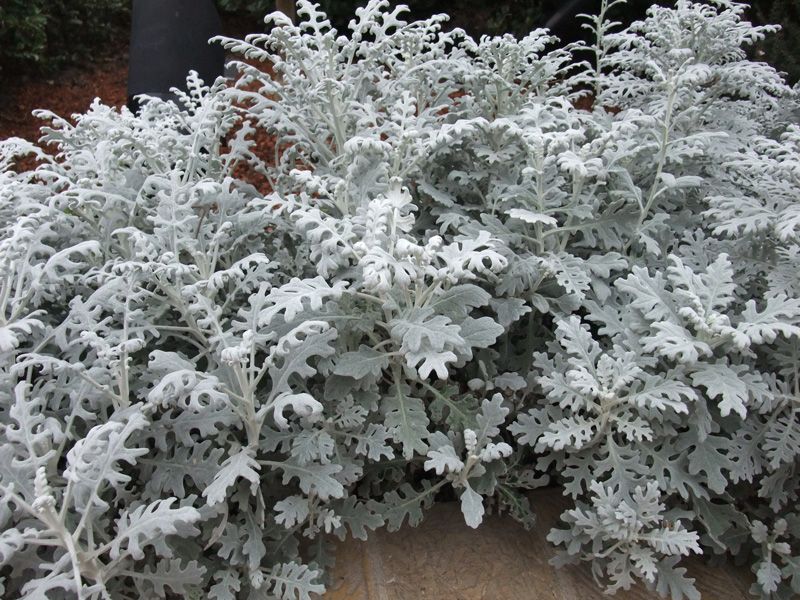
It is grown in gardens. The basal leaves are greenish-silver, gathered in a rosette. Cineraria maritima is popular in landscapes. This variety is also called silver dust.
The most popular varieties:
| Name | Height (cm) | Leaves |
| Silver Dust | 15-20 | Decorative, lace. |
| Cirrus | 20 | Serrated, oval. |
Bloody (hybrid)
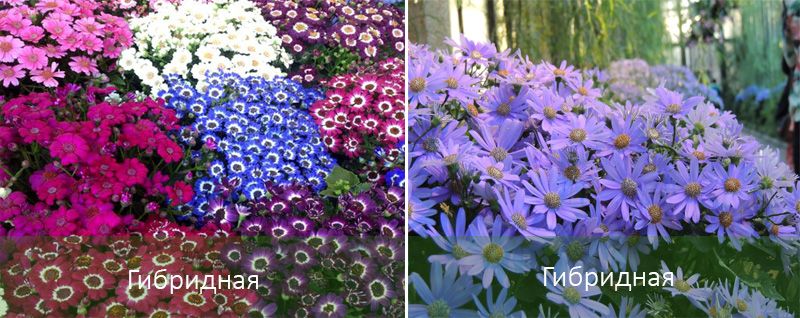
This is the only variety grown indoors. However, in botanical literature, it is classified in the Senecio family.
Up to 30 cm, sometimes more. Large, oval foliage reaches 10-20 cm. Variegated flowers, reminiscent of gerberas or daisies, create a strong contrast with the greenery. Popular hybrid cineraria varieties include:
| Name | Height (cm) | Flowers (circumference in cm) |
| Grandiflora | 50-70 | 5-8 |
| Double | 35-70 | 5 |
| Stellata | 70-90 | 2-4 |
| Sympathy | 20-60 | 4 |
Graceful
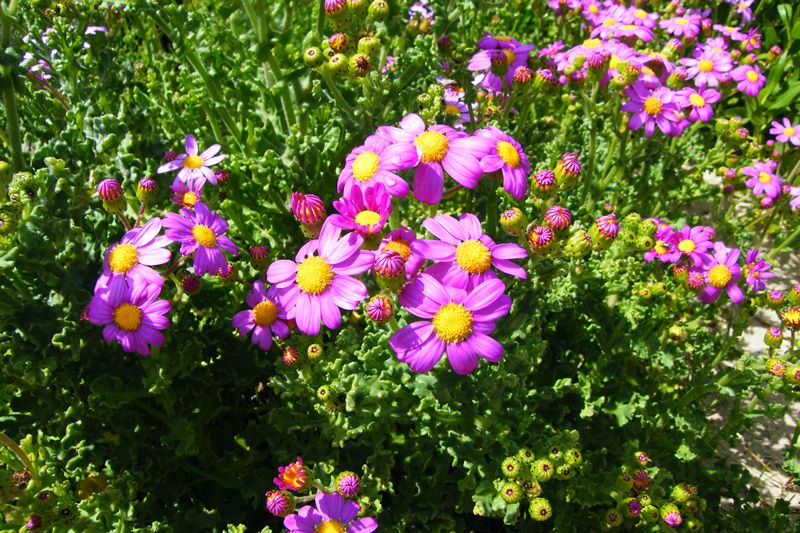
The stems are branched, up to 60 cm long. The shoots and blades are covered with sticky hairs. The buds form baskets. The most beautiful varieties are:
| Name | Height (cm) | Flowers |
| Nanus | 25 | Various tones |
| Ligulosus | Up to 60 | Terry, in a variety of shades |
Growing cineraria
Planting can be done directly outdoors or from seedlings. The latter method is preferable, as it will result in longer flowering.
Growing cineraria from seedlings
Seeds for propagation are usually purchased at a flower shop. They have a good germination rate. Collecting seeds yourself is rare, as the plant is rare in Russian gardens.
Sowing is done in the first half of April:
- Pour peat and sand (1:1) into the container.
- Distribute the seeds without burying them in the soil.
- Compact the soil with a wooden ruler.
- Moisten the seedlings using a spray bottle with a fine nozzle or through bottom watering.
- Cover with glass or plastic film to create greenhouse conditions. Remove the cover daily for ventilation, watering, and to remove evaporation from the walls.
- The first shoots will appear in 7-10 days. After this, move the containers to the brightest room.
- After the formation of 2 true leaves, transplant the sprouts with the root ball into separate cups, preferably into peat-humus briquettes.
Conditions necessary for cineraria in the garden and at home
The following maintenance rules must be observed:
| Factor | Conditions |
| Location | Choose the brightest possible light. Provide shade during midday heat. This can burn the greenery, causing brown spots. |
| Temperature | The optimal temperature is +15…+18°C. At +20°C and above, the greens will wilt. At night, the plant can tolerate temperatures as low as +5°C. If cineraria grows indoors, then from April to October it should be kept on a loggia, terrace, or in a constantly ventilated room. |
| Priming | When planting in the garden, first dig up the soil, adding peat, compost and sand. Indoor specimens should be planted in medium-sized containers filled with peat and leaf soil, and compost. For both types of cultivation, it is recommended to add pieces of pine bark and wood ash to the substrate to prevent infection. |
| Humidity | It's tall, but you shouldn't mist the bush because of its hairs. You can place a bowl of moistened moss indoors. Outdoors, water the soil generously, being careful not to overwater the rhizome. |
| Watering | Water generously, but avoid stagnant water. After moistening, loosen the soil, breaking up any hard crust. |
| Top dressing | Regular fertilization is recommended, especially when planted in poor soil. Apply mineral fertilizers a couple of times a month. In the spring, apply nitrogen-containing fertilizers to promote beautiful foliage. In the summer, apply phosphorus-rich fertilizers for better flowering. Replace the mineral fertilizers with organic matter (mullein) several times a season.
Indoor specimens should be fed once every 7 days. |
| Trimming | After wilting, trim the inflorescences. Shorten any branches that are stretched or growing in the wrong direction. |
Planting and caring for cineraria in open ground
Planting in the garden takes place in the second ten days of May, when the likelihood of frost has passed. Step-by-step process:
- Choose a well-drained area with nutritious, alkaline or neutral soil.
- Dig planting holes, leaving a distance of 20-25 cm.
- Move the bushes with the root ball into the holes.
- Compact the soil and water it.
- To prevent freezing, insulate plants with polypropylene fiber covering in the evening. Remove it in the morning.
It's important to follow watering guidelines. Insufficient water will weaken the plant and cause it to wilt, while excess moisture will cause root rot, which will eventually kill the flower. The plant is drought-tolerant, so rainwater is usually sufficient.
After watering, loosen the tree trunk area. Remove any weeds during this process.
Vegetative propagation of cineraria
Ornamental foliage varieties are also propagated by cuttings. The shoots are planted in cutting boxes. These are portable boxes that can be moved to another location to protect the bushes from ultraviolet rays. They are made of wooden beams and plywood. Drainage holes are always included in the bottom.
Planting is done in autumn:
- Separate the cuttings.
- Pour garden soil into a special container to a thickness of 10 cm.
- Lay out a layer of sand (5-7 cm).
- Level the surface and moisten it with a pinkish solution of potassium permanganate (for disinfection).
- Place the cuttings in a growth accelerator (for example, Kornevin) for a couple of hours.
- Plant the shoots and compact the soil around the trunk.
- Cover with a bottle (cut off the neck), pushing it lightly into the soil. Water from above twice a day.
- Once rooted, begin acclimating the young bushes to the surrounding environment. Remove the covering daily for 1-2 hours, gradually increasing the time.
- After a week, remove the bottle completely. Preferably in cloudy or rainy weather.
- Move to a cool room for the winter.
- In spring, plant them outside.
Diseases and pests
Cineraria is resistant to various diseases and insect damage. However, improper care can lead to the following problems:
| Disease/pest | Signs | Control measures |
| Powdery mildew |
|
|
| Rust |
|
|
| Aphid |
|
|
| Spider mite |
|
|
Top.tomathouse.com recommends: what to do with cineraria in winter
In central Russia, the flower is grown as an annual because it cannot survive frost outdoors. In late autumn, all shoots are destroyed and the area is dug up.
Some gardeners save the bushes for the following year. They are transferred to pots and placed in a bright, cool room (+10…+15°C). In this environment, they will bloom. In the spring, the plants are planted back in the garden.
In southern Russia, the plant can overwinter outdoors. To prevent freezing, cover it with 10-15 cm of dead wood or spruce branches. Remove the cover when the snow melts and the ground warms (late April-early May).
Cineraria is a hardy ornamental flower that requires little skill or knowledge to grow. Even novice gardeners can care for it. Provided the right conditions are provided, it rarely gets sick and delights with its beauty all season long.
Reviews of cineraria from gardeners
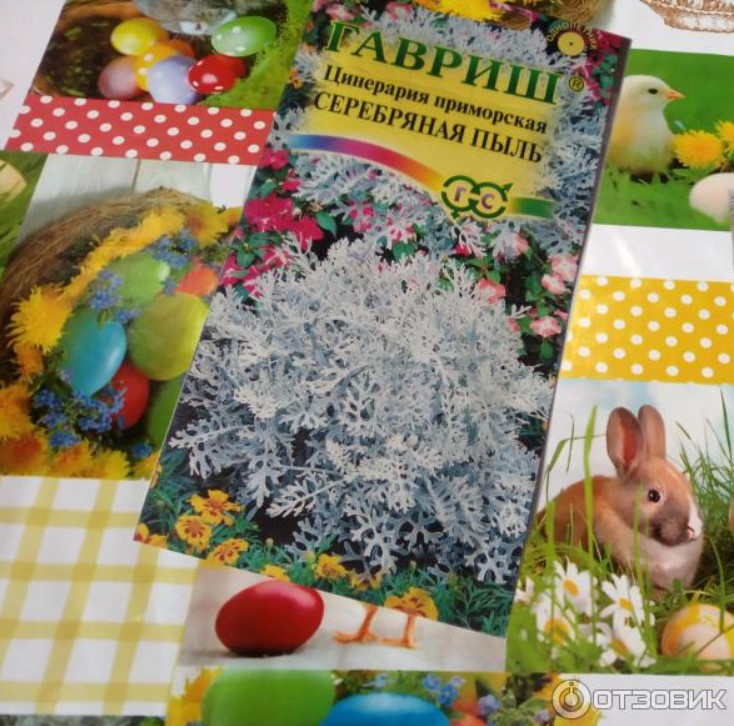
Review: Gavrish Seeds "Cineraria Primorskaya Silver Dust" - It's as if the first snow had fallen and covered the leaves of unprecedented beauty.
Pros: Beautiful, very interesting leaves.
Disadvantages: It is better to grow seedlings and then transfer them to the garden
Good day to all, my dear friends and visitors of the Otzovik forum!How generous nature is to us, we can only marvel at it.
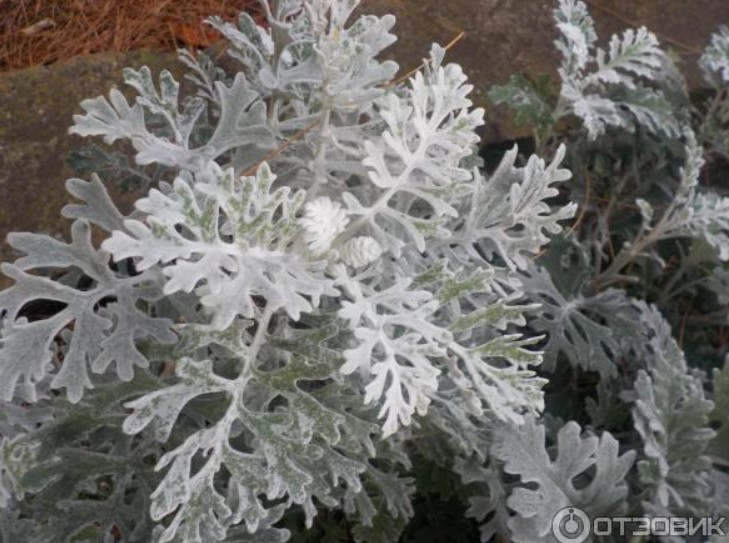
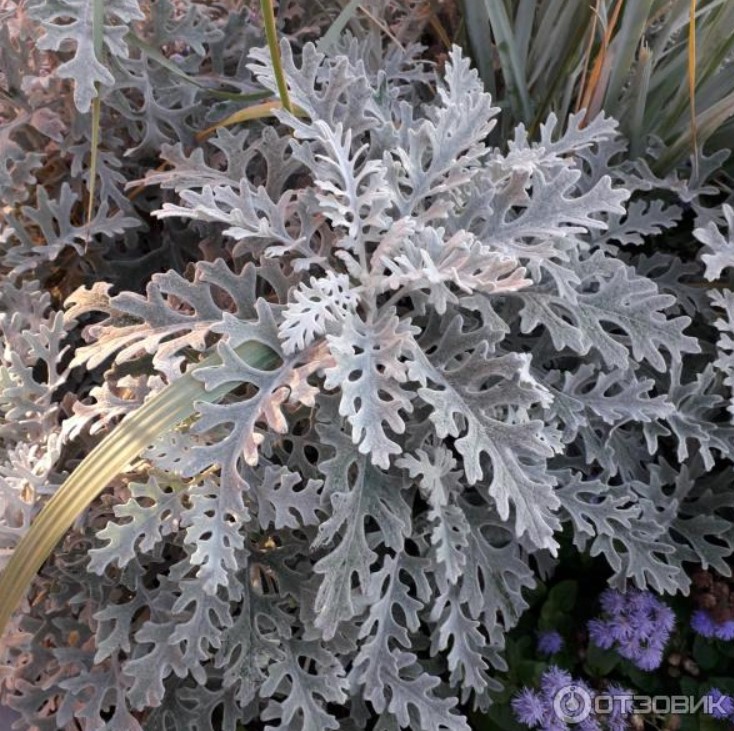
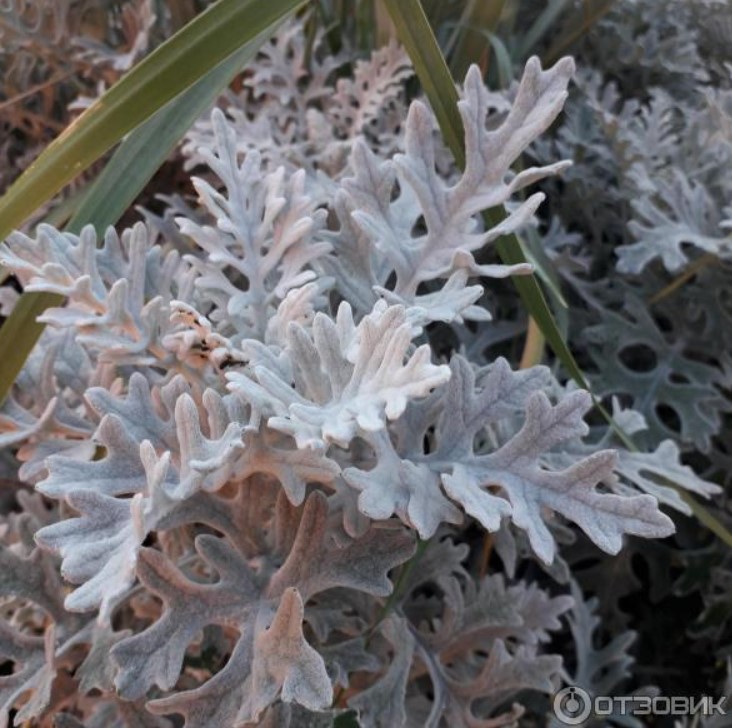
Sometimes I stop in my running rhythm and watch birds, butterflies or beautiful plants like these."Cineraria maritima Silver Dust" is a wonderful autumn plant that reminds us of winter in our climate; it makes you want to wipe its leaves with your palm, removing the frost...
But in fact, it has such amazing leaves, they look like the furry paws of some kind of animal, cut like the most exquisite lace on a luxurious dress.
But this plant is small, grows very well in our climate and reproduces by seeds.
We usually buy a couple of packets of seeds from the Gavrish brand called "Cineraria Primorskaya Silver Dust" and plant them at our dacha. They grow well, but they don't really gain their strength until late autumn or September, as is the case now with our current weather.
I noticed that the plant doesn't grow tall in all years. If there was a lot of rain and not enough sun that year, the plant practically spreads along the ground... and then it doesn't look as impressive.
All the beauty is in the leaves, in their patterns and such a color, you really want to shake off the first snow and say, “Oh, it’s still too early!”
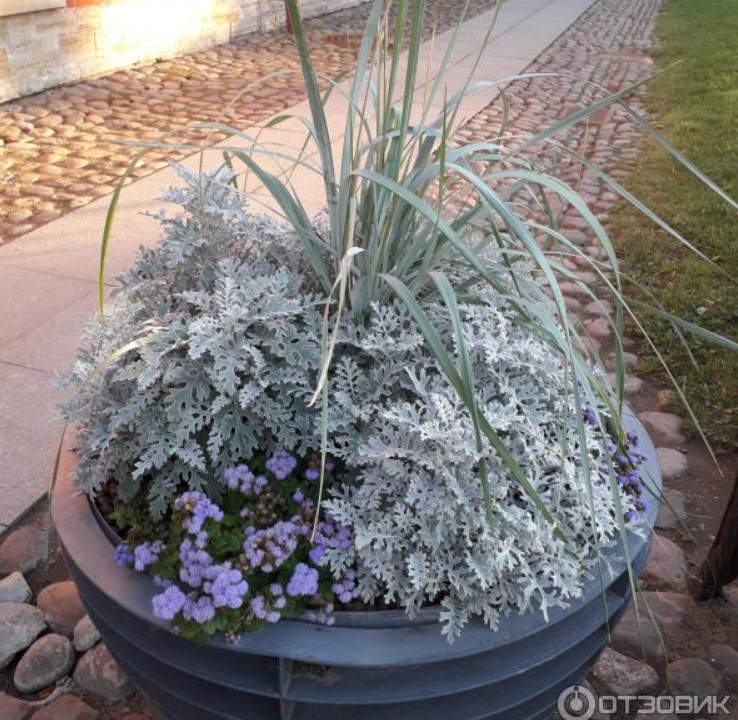
The city also began to be decorated with such winning beauty, although this year not all the flowers grew to a high quality and luxurious standard.
The care is not complicated in our case, the rain will help with watering, but we grew the seeds as seedlings and then planted them in the ground, we also tried simply planting the seeds in the ground.
Naturally, it's best to care for the plant when it's already established at home, as it will then become stronger and more quickly "grow" those fancy leaves.I would be happy to recommend that you try this beauty option for your property or for urban areas, where we also spend a lot of time.
My neighbors grow such beauty, I am always amazed at how and when they have time - yes, they are young working women.
Thank you very much for your attention and for my feedback.
I recommend it.
Year of manufacture/purchase 2022
General impression: It’s as if the first snow had fallen and covered the leaves of unprecedented beauty.
My rating
5
I recommend it to friends YES
Review: Gavrish seeds "Cineraria Primorskaya Silver Dust" - excellent seeds, the plants grew very beautifully
Pros: very beautiful
Disadvantages: none
Good day, dear readers of my review! I really like this unusual plant for decorating flower beds.
It's very popular and can often be found in our city flowerbeds. The plant is called "Cineraria maritima Silver Dust." It really does have shaggy, silvery leaves, and it looks as if it's dusted with snow in the middle of summer.
When I first saw this plant in the flowerbed, it was a sin to dig up one of the sprouts because it was so unusual and I really wanted one for myself, a long time ago. Now I know that the plant reproduces by seed and always buy seeds. Last year, I bought seeds from the Gavrish company.
I liked the seeds; there are quite a few of them, but they're all in one packet, so you have to be careful when opening it. I'm planting this plant in pots indoors because sowing it directly in the ground won't produce as good a result as planting it from seedlings.
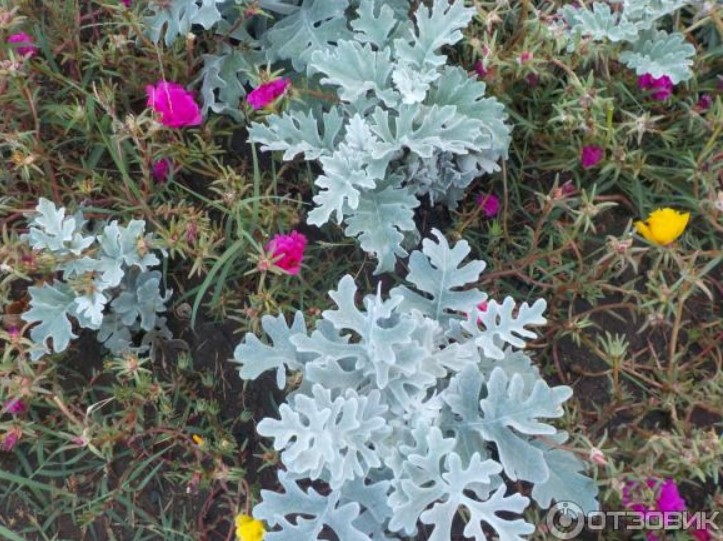
The plant isn't picky about soil, tolerates heat well, and enjoys full sun; in the shade, it won't develop such a beautiful silvery color. I planted the plants in the ground in mid-May, and they took root beautifully. This year, all the seeds sprouted, so I gave half the plants to a friend, who planted them along with a purslane flower mat, and this is how beautiful she ended up with in her flowerbed.
I recommend this plant for decorating flower beds in your garden.
Year of manufacture/purchase 2021
Overall impression: excellent seeds, plants grew very beautifully
My rating
5
I recommend it to friends YES