Antirrhinum, or the well-known snapdragon, belongs to the plantaginaceae family. It is also known by other names: dog's tongue (in Russia), snapdragon or biting dragon (in England), cleft palate (in France), and little mouths (in Ukraine). The name, translated from Greek, means nose-like or similar to a nose. It is believed to owe its origin to a goddess who created this flower to commemorate a victory over a lion. Since then, the Greek custom of presenting it to heroes has persisted.
Content
- 1 Description and characteristics of the snapdragon
- 2 Types and varieties of snapdragon
- 3 Snapdragon propagation methods
- 4 The process of growing seedlings
- 5 Caring for snapdragons in open ground
- 6 Seed collection
- 7 Diseases and pests
- 8 Top.tomathouse.com recommends: the medicinal properties of snapdragons
Description and characteristics of the snapdragon
There are nearly 50 species that grow in the southern regions of the Earth, most of them in North America. This flower has been cultivated for five hundred years. Thanks to the efforts of breeders, there are now a thousand varieties derived from a single species—the snapdragon.
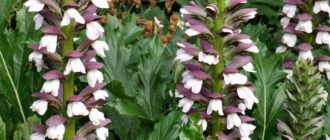
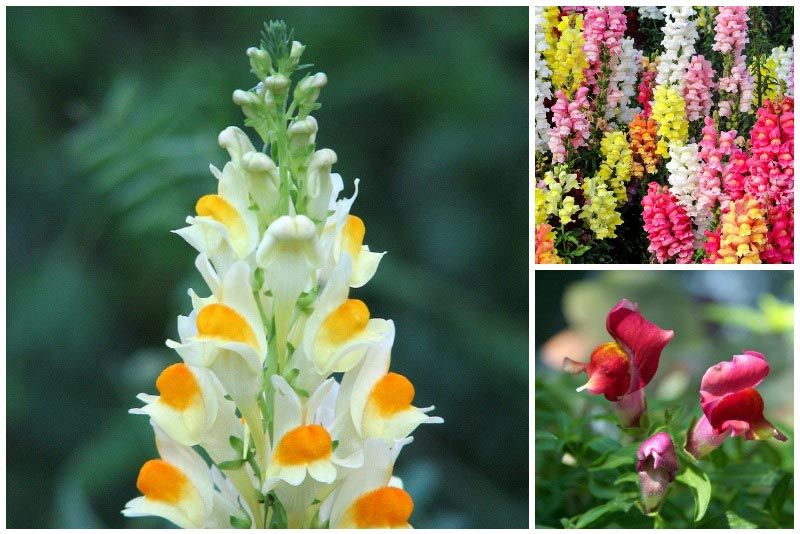
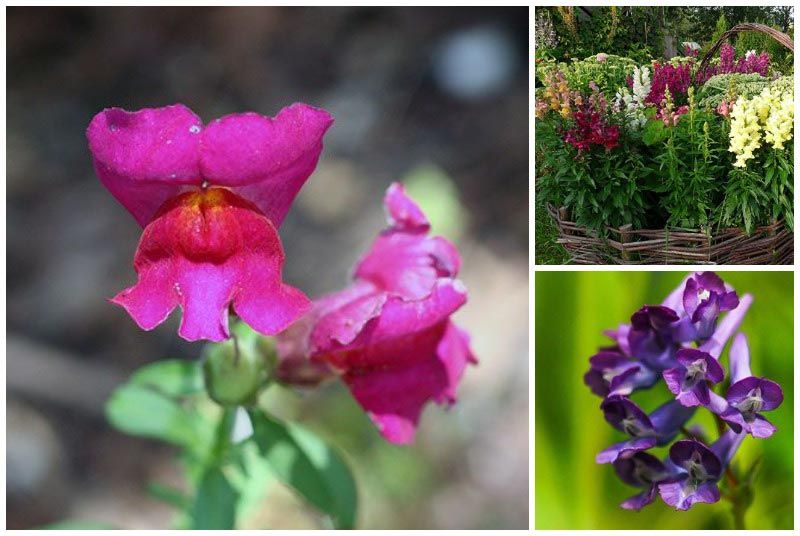
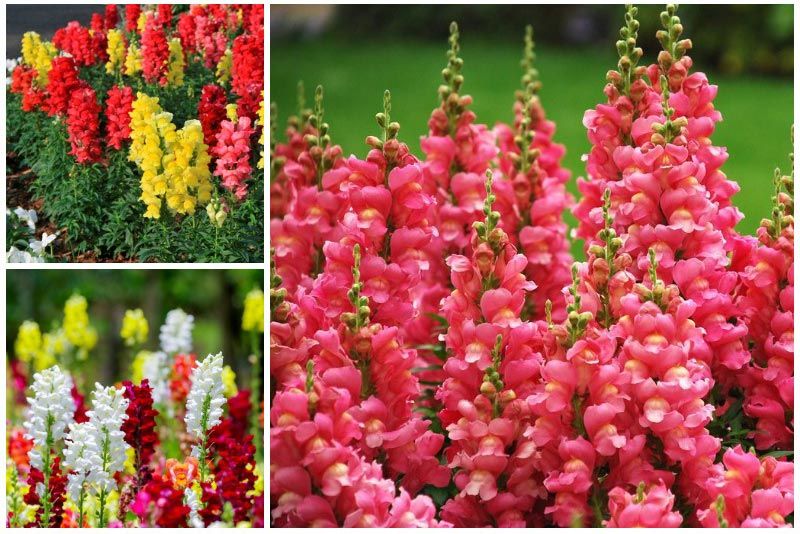
Snapdragon is a perennial subshrub or herb, reaching 15 cm to 1 m in height. Branched stems with fine grooves resemble a pyramid. The long leaves are elliptical in shape, although lanceolate ones are also common. The leaves are alternate at the top and opposite at the bottom. The greenish coloration ranges from light to dark, with the veins clearly visible. The fragrant, large flowers have an irregular appearance (two lips) and spike-like inflorescences. Cultivars vary in color, with light, golden, and various shades of red. Various double varieties and varieties with multiple colors have been developed. Numerous seeds ripen inside the capsule-shaped fruit.
It blooms in summer and fall, almost until the onset of cold weather. This perennial is usually grown as an annual. With proper care and suitable conditions, snapdragons, like biennials, can remain in the ground and begin blooming again after winter. In landscape design, they are used to decorate borders, flowerbeds, and lawns. Balconies and verandas planted with snapdragons look beautiful. Trailing varieties are planted in hanging baskets and baskets.
Types and varieties of snapdragon
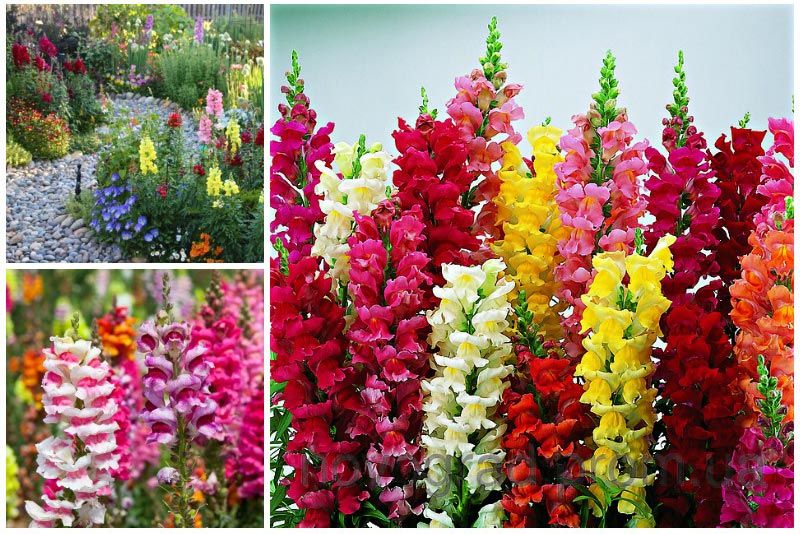
All varieties of snapdragons are classified according to their growth.
Giant
These varieties are distinguished by their large size. The laterally compressed bushes are formed by a single trunk. The flowers are large and often fluffy. They are grown in greenhouses for cut flowers. These varieties include Start, Frontier, Supreme, Rocket, and Forcing.
Tall
They are somewhat shorter in height—65-110 cm. A small number of stems are densely arranged, forming a kind of step. They are characterized by densely packed inflorescences and large flowers. They are used in bouquets.
Medium-sized
Pyramidal bushes reach a height of 35-50 cm. Their fullness is achieved through extensive branching. They look attractive in compositions if varieties with different bloom times are selected.
Short stature
These are small plants (30 cm) with numerous offshoots. When fully open, they resemble a sphere. The flowers are small and loosely clustered on the raceme.
Dwarf
Tiny varieties (15 cm). They are distinguished by widely branched stems. The bushes seem to simply spread out in different directions. The inflorescences are small.
Snapdragon propagation methods
There are two ways to propagate: generatively and vegetatively. Seeds remain viable for several years. In mild climates, they are sown directly into the garden. Sprouts will appear within a few weeks, and short periods of cold weather won't harm them. In other areas, it's better to grow seedlings, which is not very difficult or labor-intensive.
The process of growing seedlings
To begin planting the seeds, prepare a container at least 10 cm high. Make sure to make holes in the bottom to allow excess water to drain. When preparing the soil, you'll need sieves, both large and small, and a spatula. Place drainage material—usually expanded clay or small pebbles—at the bottom of the container. Then prepare the soil.
Selecting soil
To produce a sufficient number of seedlings, the soil must be loose and light. Prepared soil can be purchased or prepared at home. The required composition is: turf, sand, peat, humus, and wood ash. All these ingredients are taken in a ratio of 1:1:1:0.5:0.3, mixed thoroughly, and sifted using a coarse sieve, then a fine sieve. The substrate obtained after the first sifting is placed at the bottom of the container, and the remaining mixture fills the entire container. Disinfection with a potassium permanganate solution is mandatory. The soil is ready for use in 2 days.
Preparation of seed material
Snapdragon seeds are typically purchased at the store, with the variety chosen based on preference. People pay attention to the plant's height, color, blooming time, and its growing conditions.
If they collect it themselves, they are sure to dry it well.
Store in the lower part of the refrigerator to allow for the necessary stratification before sowing. Before planting, be sure to disinfect the seeds in a weak solution of potassium permanganate (for half an hour), then dry them by laying them out on a cloth or paper. After all preparatory procedures are completed, plant them.
Rules for sowing seeds for seedlings
The seedling cultivation process begins in early spring. Prepared flat bowls (10 cm in diameter) are placed in the bottom, coarse sand is added, then the prepared soil is added, and the surface is moistened with a spray bottle. The seeds are placed on top, covered with the substrate, sprinkled with water, and covered with glass. The glass is lifted daily to allow air to enter, condensation is removed, and the soil is watered as it dries.
When the first shoots appear, place the bowl in a bright location, and after a few days, remove the cover. Make shallow grooves 2 cm apart in the prepared containers with soil, and sprinkle the seeds into these grooves, having first mixed them with sand. Firmly pack the seeds to ensure full contact with the soil. To ensure good germination, maintain a temperature of 18°C.
How to care for seedlings
The emergence of the first seedlings means it's time to remove the glass covering the seeds. This is best done gradually, each day, adding 10-15 minutes for ventilation. The seedlings will develop roots first, followed by leaves. Once the two pairs have developed well, transplant them. For this, use separate pots, peat cups (8 cm), or containers (5x5 planting pattern). This is the first step to achieving high bushiness, and to encourage shoots, additional pinching is performed. In the second step, transplant them at a distance of 10 cm. To achieve successful cultivation, provide light, adequate watering, and a temperature of 23°C.
Transplanting seedlings into open ground
Planting in the garden occurs at a time when cold weather isn't expected. The timing depends on the growing region. Site selection is crucial: it should be well-lit, with sandy soil. Then, prepare the soil (figures are given per square meter):
- add wood ash (a glass) and complex fertilizer (a tablespoon);
- add rotted manure - 3 kg, peat - 1 kg;
- they are digging;
- loosen.
Planting of seedlings is carried out in the evening or during the day when there is no sun.
The distance between plants is based on the height of the plant. The taller the snapdragon, the greater the distance between plants. To protect the roots, the seedlings are first watered and then transplanted to the prepared site along with a clod of soil. The seedlings are not planted too deeply. The soil is lightly compacted.
Caring for snapdragons in open ground
Caring for snapdragons is simple and accessible even to inexperienced gardeners. Here are a few key steps to follow:
- Water moderately and regularly. Use plain or settled water. For seedlings and young plants, use a watering can to avoid damaging them.
- Special nutrition. Fertilizers containing nitrogen, potassium, and phosphorus are used. The first application is 15-20 days after planting the seedlings. Subsequently, apply them twice a month.
- Mulching the soil. Use wood shavings, dry grass, or humus.
- Loosening the soil. This is done to allow air to reach the roots and prevent weed growth.
Seed collection
The seeds are harvested when they are not yet fully ripe and placed in a special room for ripening, ensuring adequate airflow. The process begins once the lower capsules on the flower stalk have fully ripened. The upper stalk with the green fruits is removed, and a paper bag is draped over the remaining stalk and secured. The stem below the sling is trimmed and hung upside down in a special room. The ripe seeds are poured into the bag. They are then collected in a cardboard box and stored, protected from moisture.
Diseases and pests
The beautiful snapdragon plant is susceptible to the following diseases if not properly cared for:
- Rust. Sunken, light-colored spots will be visible on top, and yellow ones underneath, which will later darken and take on a reddish tint. It's airborne. The flower wilts and dies.
- Downy mildew. Whitish patches may appear on the upper surface of leaves, and a white or brown layer on the underside. Prevention: Avoid dense plantings and high humidity in greenhouses. Treatment is with copper-based preparations; remove all affected leaves before applying.
- Powdery mildew. A white coating typically forms on all parts of the plant. It's best to choose varieties resistant to this disease.
- Brown rot. The foliage turns lighter, then yellows and falls off. When the root is removed, it appears rotten and soft. It develops with frequent watering or in soil with low acidity.
- Brown rot. The stem changes color at the base. Seedlings and immature plants are susceptible. When planting, avoid planting seedlings too deeply.
Insects, butterflies that lay eggs, and other pests may attack.
Affected plants are promptly removed, and their growing areas are treated with special solutions.
Top.tomathouse.com recommends: the medicinal properties of snapdragons
Snapdragons are renowned not only for their beautiful appearance but also for their medicinal properties. In traditional Eastern medicine, a decoction of them is used as:
- antidotes;
- rejuvenating agent (combined with lily oil).
It is used to treat eye problems, gastrointestinal tract disorders, and colds. Ointments and infusions are made from snapdragon. Preparations are added to medicinal baths. As a preventative measure, it is brewed as a tea (for liver problems), and compresses are used for boils.
In addition to the above, there are other recipes. It's important to note that snapdragons are poisonous, so they should only be taken with a doctor's approval and in the prescribed doses. There are a number of contraindications: pregnancy, cardiovascular disease, and hypertension.