Dizigotheca is an ornamental plant belonging to the Araliaceae family. There are 17 species. This evergreen shrub or small tree, native to the tropics of Australia and Oceania, thrives in the shade of trees and reaches a height of 6 meters.
Content
Description of dizygotheca
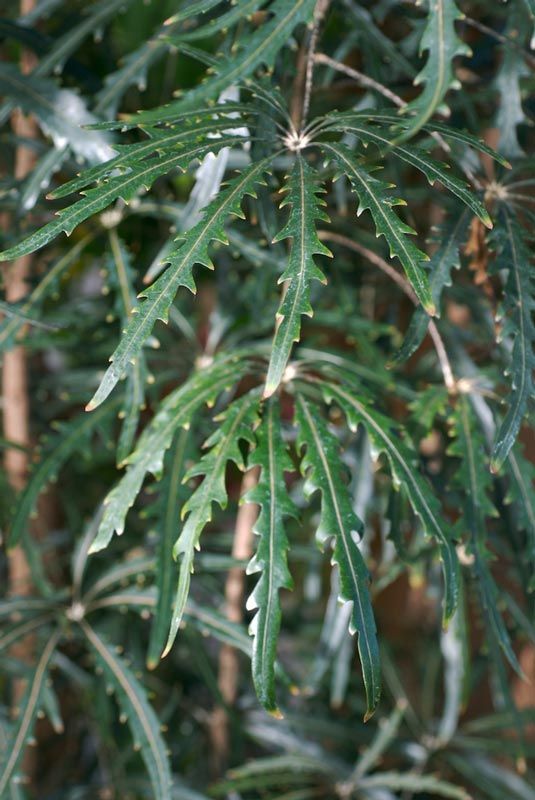
Dizigotheca (Schefflera or elegant Aralia) is prized for its unusual foliage. The glossy, lacy leaves consist of 4-11 serrated segments, 10-30 cm in size. Their color palette ranges from copper-red to dark brown and charcoal, eventually turning dark green. Dizigotheca's flowers are unattractive—pale green, small—and it rarely blooms indoors.
With proper care at home it reaches 1.5 m.
Types of dizigoteka
There are many species of the plant found in nature, but only one is used for cultivation.
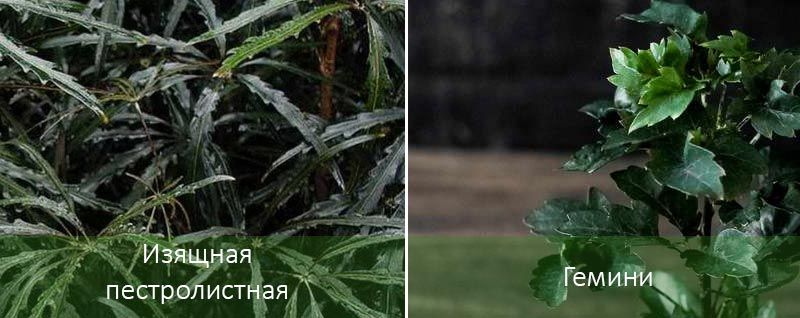
Elegantissima (graceful) is an evergreen, sparsely branched plant that grows like a tree with a straight trunk that gradually hardens. The leaves are linear, with triangular edges. Up to 11 of them are arranged on a long petiole. The flowers are borne in an umbel. Other cultivars descended from it have different leaf colors and sizes.
| Variety | Features of leaves |
| Graceful variegated | Speckled and motley. |
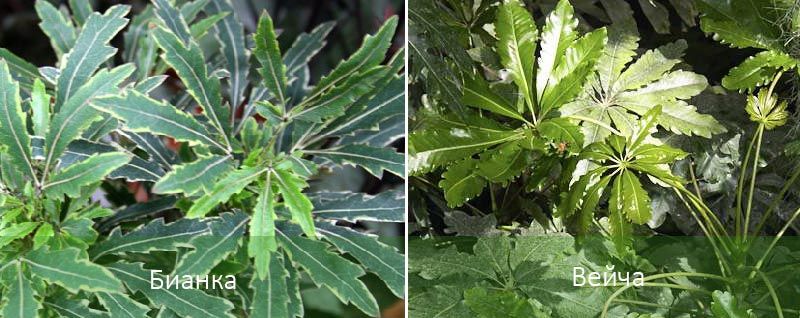
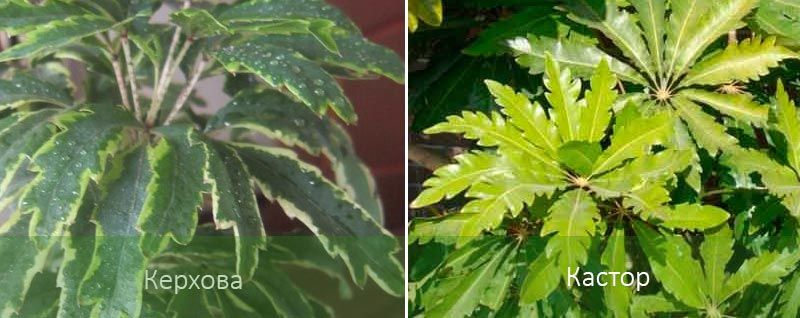
| Castor | The wider of the three short lobes, with rounded teeth and yellow veins. |
| Bianca | Dark up to five lobes, their veins are purple, cream border. |
| Gemini (Gemini) | With large, serrated edges of a burgundy hue, they have five wide oval-shaped lobes. |
| Gracilima | Wide, wavy, dark green leaves without pronounced veins. A low-growing variety. |
| Veicha | Wide, short, wavy. |
| Kerkhova | Light shade. |
Caring for Dizygoteka at home
When caring for Dizigoteka at home, you should take into account the peculiarities of watering, lighting, humidity, fertilizing, replanting and pruning.
Location, lighting
The plant enjoys plenty of bright, filtered light. An ideal location is near east- and west-facing windows. When planted in the south, shade the plant to prevent sunburn. In winter, supplemental lighting is required, with up to 12 hours of daylight. Avoid placing the dizigoteka near heating devices.
You shouldn't turn the pot, as this will cause the leaves to fall off.
Temperature
In summer, Dizigoteka requires a temperature of +18…+22 °C, in winter – +17…+18 °C. The flower does not like temperature fluctuations, drafts, and dry air.
Soil
Neutral, sandy soil is suitable for planting, being slightly acidic and slightly alkaline. You can buy a ready-made mix at the store or make your own: one part compost and sand, two parts turf soil. Add charcoal to prevent root rot.
Air humidity, watering
The plant prefers high humidity, regular misting in summer and winter, and a warm shower in dry air. A humidifier and a container of water are placed nearby.
The plant is watered in spring and summer immediately after the top layer has dried out; in winter, it is watered moderately with melted, settled water at room temperature.
Top dressing and fertilizers
Fertilize Dizigoteka in spring and summer with mineral mixtures for ornamental plants (Effekton, Agricola), applying it to the root once every 20 days, and once a month in winter. Foliar sprays (halve the dose) are required once every two weeks (Budton, urea).
Organic fertilizers are recommended: mullein with water 1:10.
Transfer
It's best to repot the Dizigoteka immediately after purchase and again in the spring after 2-3 years, using fresh soil. This should be done carefully, avoiding the fragile roots. Use a tight-fitting pot. For a mature plant, simply replace the top layer of soil; repotting is not necessary.
Shaping and pruning
The plant is pruned to shape the crown—removing old, dead branches to prevent excessive growth, leaving 15 cm above the ground. Pruning is done in early spring, after which new shoots emerge.
Reproduction
Dizygoteka is propagated by seeds and cuttings, which is difficult for novice gardeners to do.
Seeds
The seed is sown at the end of winter:
- Soak with the addition of growth accelerators (Epin, Zircon).
- The seed is planted to a depth of two of its lengths (soil made of sand and peat 1:1).
- Moisten the soil with a spray bottle.
- Maintain at a temperature of +20…+24 °C.
- The plant is pricked out when 2-3 leaves appear. Once the roots have grown, it is transplanted into a larger container.
Cuttings
Take 10 cm cuttings from the top of the shoot. Cut at an angle with a disinfected tool. Remove the leaves from the bottom. Next:
- The cuttings are dried for several hours. To speed up rooting, they are treated with a rooting agent (Heteroauxin, Kornevin).
- Plant in an equal mixture of peat and sand.
- Cover with plastic wrap and place in a bright spot. Make sure the bottom of the container with the cuttings is warm.
Diseases and pests
Dizigoteka is rarely susceptible to diseases, but sometimes it is attacked by pests:
- Spider mites - treat with laundry soap, garlic infusion, onion peel, or special products - Neoron, Actofit.
- Thrips – leaves are discolored and have many black spots. Spray with Aktara, Mospilan, or Intavir.
- Scale insects are waxy-shelled insects that cause damaged leaves to wilt. Treat with a solution of laundry soap, then an insecticide (Aktara, Decis).
As a preventative measure, it is recommended to wipe the leaves with a soap solution, and if pests are detected, immediately treat them with chamomile infusion.
Top.tomathouse.com warns: the most common problems when caring for Dizygoteka
Florists often make mistakes when growing plants.
| Problem with leaves etc. | Cause | Solution |
| The lower ones are falling off. | Lack of light. | Provide diffused, bright lighting. |
| In some places they become white, then brown. | The plant is exposed to direct sunlight. | Shade or move to another location. |
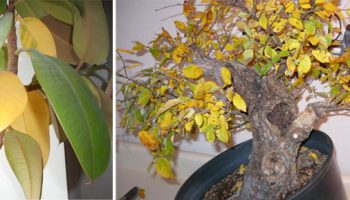
| They dry up. | Lack of moisture or too much sunlight. | Move, reduce temperature. |
| They are getting smaller, the dizygoteca is growing slowly. | Not enough fertilizer. | Fertilize or change the soil. |
| The flower becomes covered with a white coating. | Watering with hard water. | Let the water stand or add citric acid. |
| They are falling off. | The air in the room is too dry, there are drafts, the flower is located near heating devices. | Move the pot, place wet pebbles on the tray and spray. |
| They wither and droop. | Abundant watering. | Reduce the frequency of watering. |
It will take a lot of effort to produce an ornamental shrub with graceful foliage.
The benefits and harms of dizigoteka
Dizygotheca is poisonous and irritates the skin. Therefore, gloves should be worn when handling it. However, the flower purifies and humidifies the air in the home, improving energy.