Fungi are called wood-boring due to their primary characteristic: they burrow into the bark of dead or living trees and decompose it using specialized enzymes. By breaking down cellulose and other polysaccharides, they utilize them for their own development and growth. They belong to the group of xylotrophs.
There are edible and inedible species of these mushrooms, studied by the science of mycology. The edible parts are beneficial to humans, containing protein, vitamins B and C, iron, phosphorus, and calcium. "Mu'er" is the Chinese name for this tree mushroom, long and frequently used in Pan-Asian cuisine.
Content
Characteristics of tree mushrooms
Many species of wood mushrooms act as forest nurses, as they thrive on weakened trees and facilitate the natural selection of high-quality species. Well-known examples of these "nursing nurses" include honey mushrooms, which grow beautifully in large clusters on stumps and entice mushroom hunters with their spicy aroma. They are also delicious and crunchy, and are especially loved by gourmets when pickled.
We recommend reading the article about Honey mushrooms and how and where to collect them are on our portal.
But there are mushrooms that are completely unlike traditional mushrooms; they have neither caps nor stems. They are classified and recognized by their shape and appearance, which resembles familiar objects from everyday life. No one has ever thought to collect and taste them, so the flavor of these eccentric specimens is completely unknown.
Such xylotrophs can be distinguished by a description of their appearance:
- Meat pieces (Ascocoryne carnitas);
- Resin in the form of a drop (Exidia ferruginosa);
- Mounting foam bubble (Dacrymyces vanishing);
- Corals, sponge (Calocera).
Even among fungi, there are parasites that eat their own kind. For example, the sulfur-yellow hypocraea, which feeds on colonies of exidia or tremors.
Climacodon severum, a member of the polypore subspecies, is a particularly dangerous forest parasite. It penetrates healthy trees through cracks and cuts, completely destroying them within four years.
Gardeners and park workers should be wary of such pests, as they can completely destroy a garden.
Types of tree mushrooms
Mushroom hunters pay attention to unusual-looking species found in forests on rotten or diseased trees and dead wood. In midsummer and fall, you can find adult specimens of the most interesting mushrooms, described below.
Ascocoryne meat
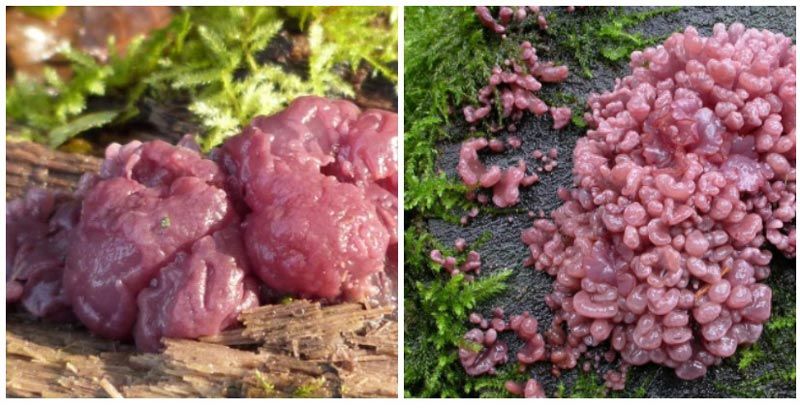
It got its name because the fruiting body resembles pieces of pink-purple meat, with gills no more than a centimeter long, united over a single saucer. It is most often found on birch stumps. It has no distinct aroma. Its unsightly appearance discourages mushroom connoisseurs, so its taste is unknown.
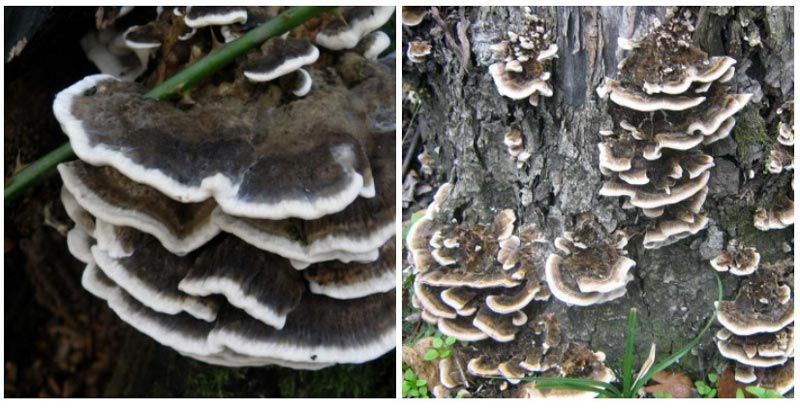
Bjorkander
Belonging to the polypore family, it is characterized by its ribbon-like growth pattern over the course of a year. A mature mushroom is dark brown in color, resembling a ribbon of caps no larger than 3 cm. The flesh is brittle, gray, and odorless. A thin, clearly demarcated spore-bearing layer separates the body of the mushroom from the brown, oily cap, which appears perpetually moist and has a grayish tip.
It grows on dead wood and brushwood. Its taste is reminiscent of common tinder fungus.
Oyster mushroom
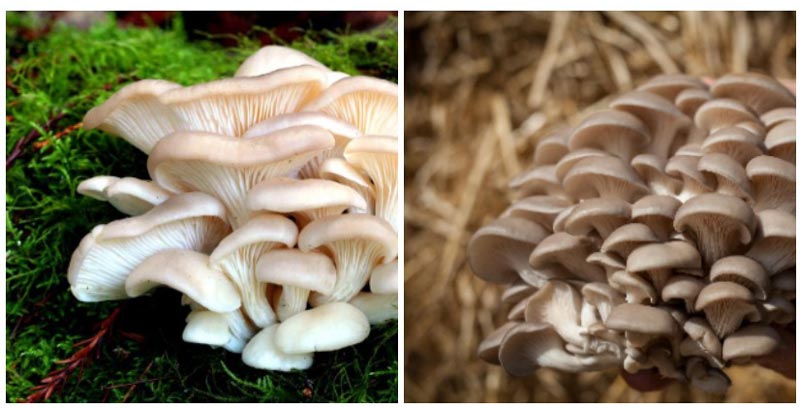
Oyster mushrooms have rapidly entered our lives, significantly simplifying the preparation of many dishes with rare species of tree mushrooms. Growing quickly in an artificial environment and possessing a wonderful aroma and delicious flavor, they have become undisputed bestsellers. Specimens grown on mushroom farms are incomparable in flavor to wild varieties. They grow in large clusters on the trunks of living and dead deciduous fruit trees.
You need to look for them in spring and autumn in Crimea.
The fruiting body consists of a long, elastic stem and a matte cap. Oyster mushrooms come in a wide range of colors, from pale gray to orange, and all are edible and delicious.
Hypocrea
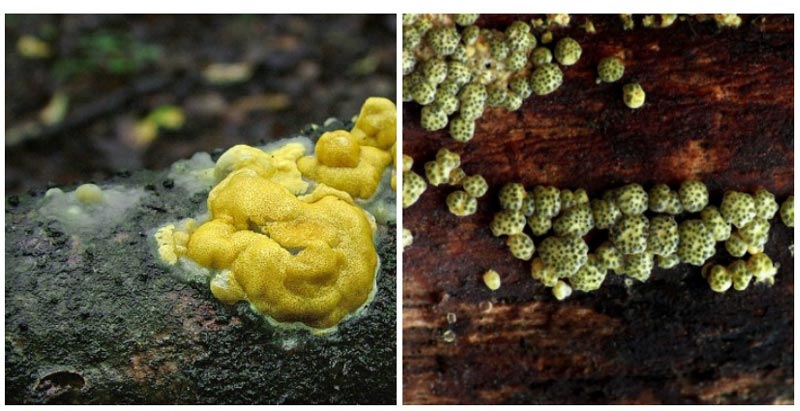
Hypocraea sulphurosa is an inedible parasitic mushroom that feeds on members of the Tremella family (most commonly, Exidia ferruginosa). Consequently, the seasons and habitats of this species coincide with those of its "prey."
Appearing on the body of the trembling fungus, the hypocrea grows as several yellow spots that eventually merge into a single surface. It forms a large golden spot on the body of the woody fungus, dotted with black dots—spore-forming fruiting bodies. It resembles a dense, uneven sponge, ranging in size from 1 to 15 cm.
Ram mushroom
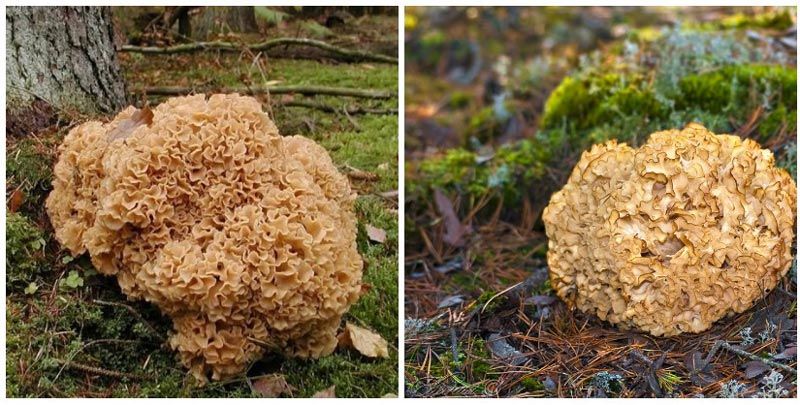
This fast-growing mushroom from the tinder fungus family is also known as Grifola crispa. In our country, it is rare, growing only in broadleaf forests on old logs and stumps. In the wild, these mushrooms have been found weighing 9-10 kg.
The ram's mandarin mushroom's many thin stalks merge into brown caps with gray and greenish hues along the wavy edges. The light-colored fruiting body has beneficial properties and a pleasant nutty aroma.
Due to these properties, the mushroom has found wide use in cooking and has become the basis for folk remedies for treating lung diseases.
Dacrymitses
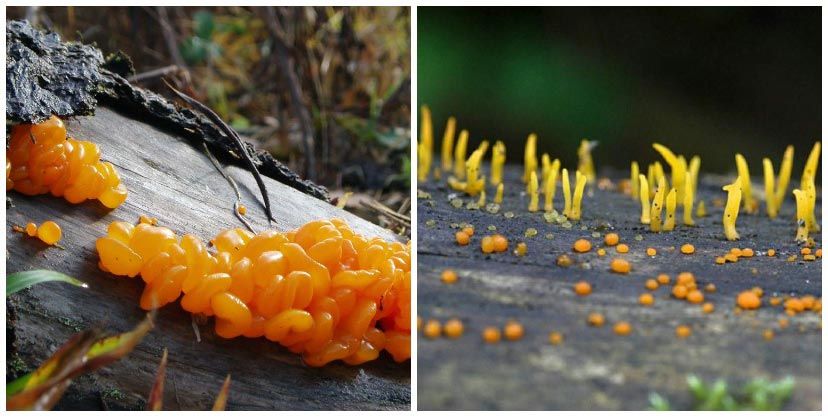
A relatively rare, small, yellow oval mushroom (up to 0.5 cm). It thrives in water, dampness, and rotting conifer stumps, so in dry weather it hides in the bark of dead wood, seemingly spreading out and becoming flattened.
Its yellow hue and texture resemble small droplets of foam spray on wood. The body of the dacrimyces is tasteless and odorless. It is inedible, but not poisonous.
Kalocera adhesive
In the forest, it usually settles on rotten wood and occupies this space completely, meaning that other mushrooms will no longer grow there.
Calocera strongly resembles coral, bright yellow and orange in places. Reaching a length of 6 cm, the horn-like appendages fuse at the base, creating a "bouquet" of flowers. These growths parasitize on rotten wood and reproduce throughout the summer.
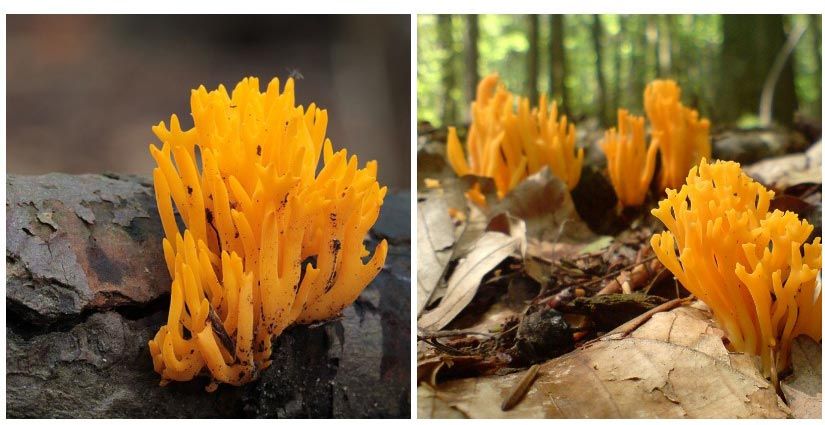
Each rubbery mushroom has 2-3 sharp, branched tips.
This species is not considered either edible or poisonous due to its rarity.
Chinese mu'er mushroom
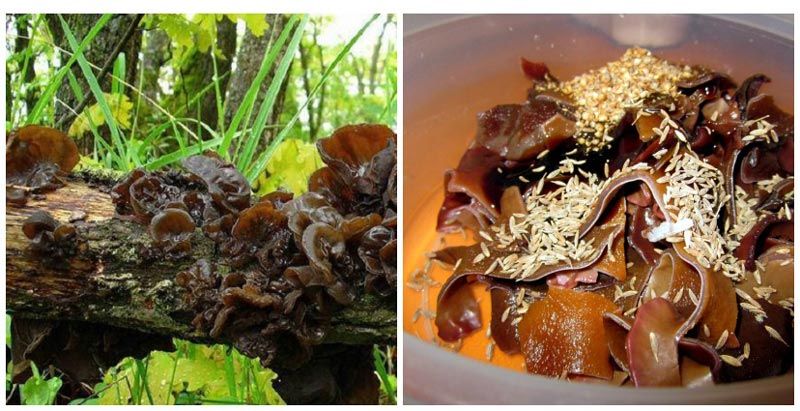
The name of this delicacy mushroom reflects its primary habitat—China, but it can also occasionally be found in the eastern forests of Russia. It grows primarily on living tree trunks, preferably alder.
Brown, almost black, with a thin, abalone-like body, mu'er mushroom is widely used in the cuisine of China, Japan, Vietnam, and Thailand due to its delicate, gelatinous, slightly crunchy texture and sweet, smoky flavor.
Climacodon severnii
It can be called a true forest sanitarian. In midsummer, it settles on old and diseased deciduous trees and destroys them within a couple of years. It belongs to the tinder fungus family and looks very typical of these fungi.
The light yellow, porous body and slightly brown caps of the Climacodon, up to 15 cm in radius, form a charming, multi-tiered structure. The spore-producing areas are covered with soft spines—a rather rare occurrence for this species.
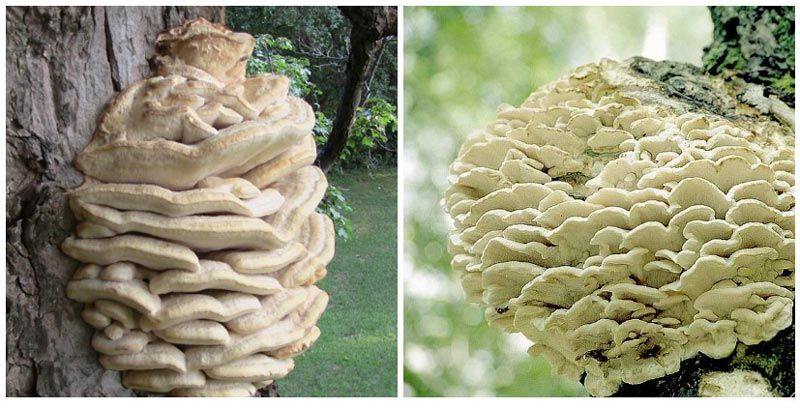
Its taste and smell are unpleasant, so this specimen has no experience of use in cooking or pharmaceuticals.
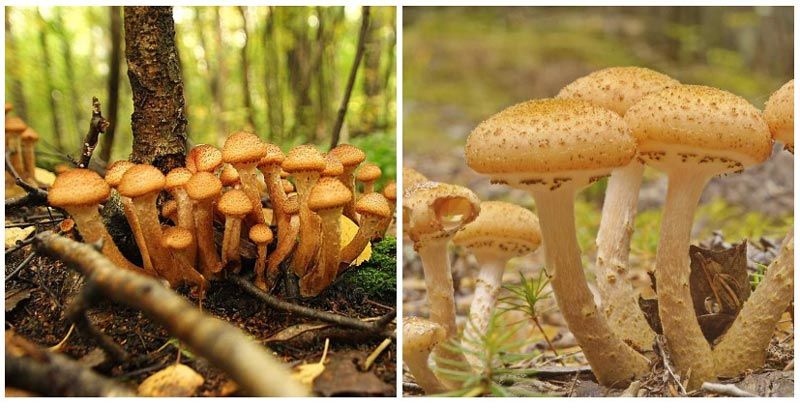
Honey fungus
Familiar to everyone in appearance, taste and color, the edible tree mushroom is original in that it can be grow up in an ordinary city apartment. And how, read on our website!) But the taste value of natural specimens found growing on stumps and old deciduous trees is much higher.
They are found in all forests of Russia, growing in large families - up to 50 pale gray legs and gray-brown caps with one base.
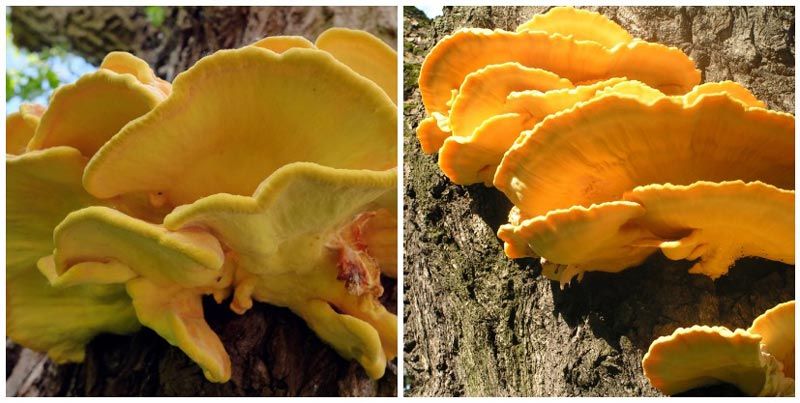
Tinder fungus
There are many varieties of tinder fungi, making them one of the most popular subjects of study in mycology. They thrive in broadleaf forests and parks, particularly those with elm trees.
The yellow caps are 15 cm in diameter and the brown stems are 10 cm long and covered with brown scales. Those who enjoy cooking these mushrooms should only pick young specimens with firm, moist flesh, and up to three harvests can be made over the summer and fall.
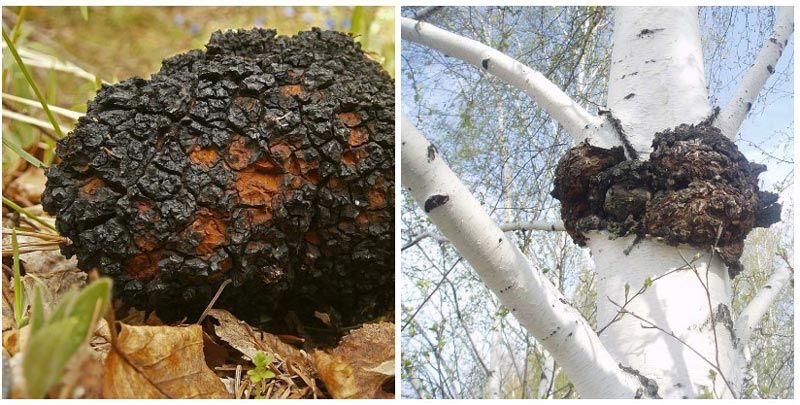
Chaga
An inedible mushroom, its medicinal properties place it among the finest medicinal xylotrophs of its kind. The dark brown or light gray, plate-like, semi-circular growths on birch trunks have a dense, brittle structure and a putrid odor.
The biologically active substances and fiber in chaga's fruiting body provide traditional medicine with a substrate for medicinal decoctions, infusions, teas, and powders. As long as birch groves exist in Russia, we will be able to utilize the mushroom's unique beneficial properties for the benefit of human health.
Golden scaly cap (royal honey fungus)
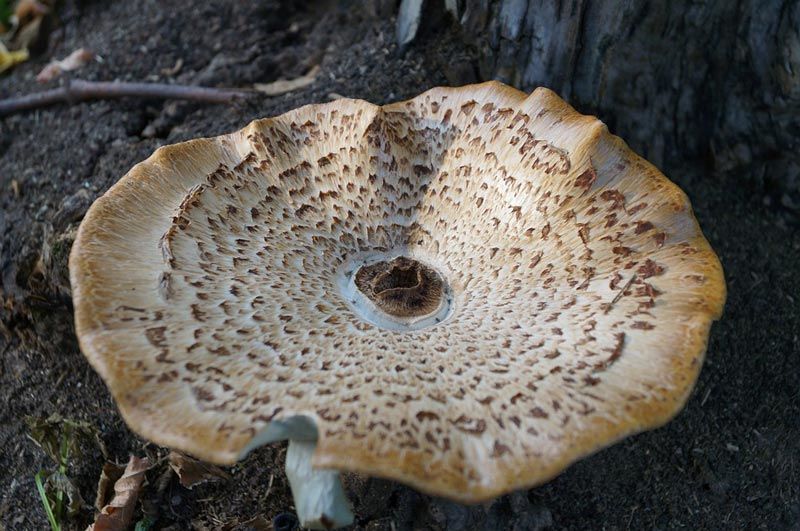
They are most often found on the trunks of weakened and dead poplars, birches, and alders. Their yellow-golden caps, up to 20 cm in diameter, are covered with brown scales on a thin, long stalk.
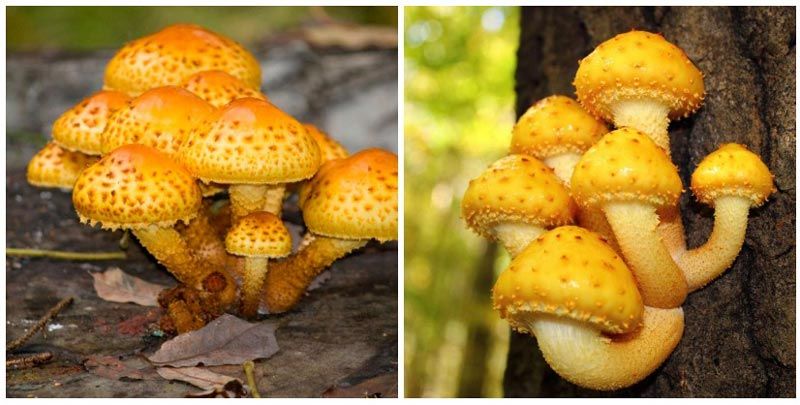
Young specimens, appearing in midsummer, are often confused with honey mushrooms. However, this mushroom's flavor is significantly inferior to its well-known relatives, so it is not eaten as a separate dish.
It has an inedible but also non-poisonous close relative – the poplar scalycap (pictured below).
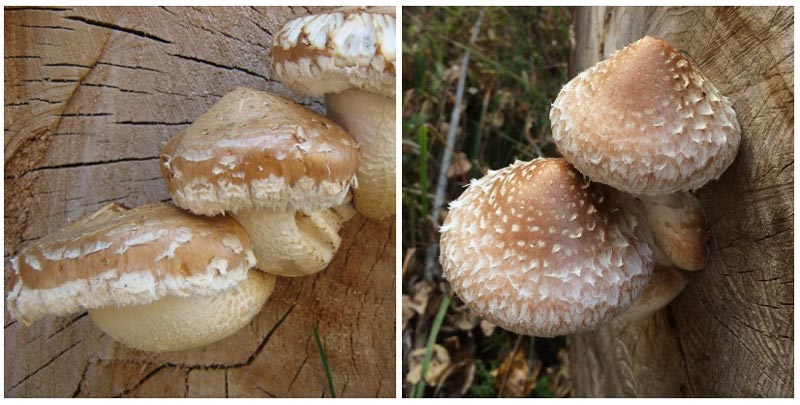
Read more in the article golden scaly cap.
Shiitake
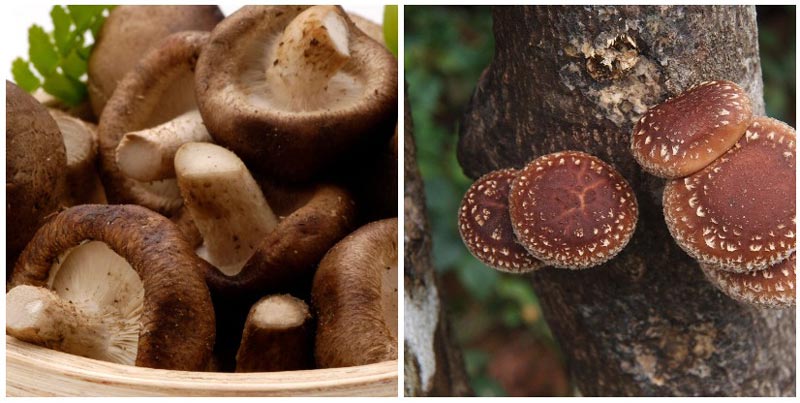
Japanese forest mushroom, imperial mushroom, or edible lentinula – these are the names used for this well-known tree mushroom studied by mycologists.
Distinguishing features:
- fibrous leg;
- brown round cap with lightened plates;
- scales on dry skin.
It grows most often on oak trees. Its tasty, peppery flesh, as well as its medicinal properties, have become popular in cooking and medicine.
Exidia ferruginosa
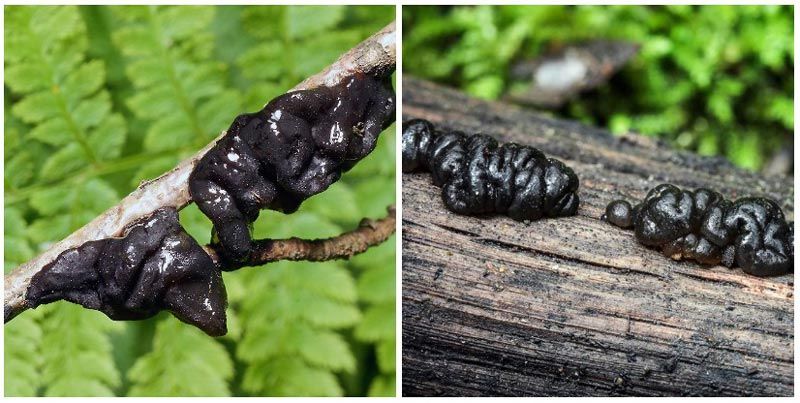
Xylotrophus, a member of the Tremella family, is difficult to describe visually, as it frequently changes shape depending on climatic conditions. It resembles black resinous drops, and its large clusters envelop the entire trunk of young branches growing on the remains of wood. The pulp of the fruiting body is gelatinous and lacks flavor or aroma, making it of no culinary value.
The benefits and harms of tree mushrooms
The benefits of edible wood-boring mushrooms are scientifically proven. They are completely fat-free. Their main beneficial components are:
- vegetable protein;
- vitamins C, B, especially a lot of B3;
- Microelements: calcium, phosphorus, iron.
Mushrooms such as tinder fungus, shiitake, and chaga have pharmaceutical rather than culinary properties. They are used to prepare various substances and mixtures capable of treating the symptoms of certain diseases:
- iron deficiency in the blood;
- high blood pressure;
- high stomach acidity;
- reduced immunity.
Tree fungi can be considered harmful only because they spread widely and quickly on healthy trees in cultivated areas—gardens, parks, and man-made forests. When they land on the bark of a damaged section of a healthy trunk, the fungal spores quickly multiply and destroy it within just a few years.
If wood damaged by animals or frostbitten is treated with garden pitch in time, this danger will disappear.
Top.tomathouse.com recommends: Wood mushrooms – beneficial properties, culinary uses
The birch chaga tree mushroom is famous for its medicinal properties – teas and decoctions made from it have a powerful immunostimulating and tonic effect.
Growing mushrooms on a farm has become a profitable business, and we now often see delicious and nutritious oyster mushrooms, also known as wood mushrooms, for sale. In the wild, they come in yellow, greenish, and other shades and grow in numerous families. Wild mushrooms are much more aromatic than their artificially bred counterparts. A major advantage is that they have no poisonous look-alikes.
Wood ear mushrooms, as they are called due to their resemblance to the outer ear, are very popular in Eastern cuisine. However, they are rarely prepared as a stand-alone dish, as they lack a distinctive aroma or distinct flavor. They are delicious as a side dish with meat, imparting a subtle smoky aroma. The crisp, dense texture is pleasant and nutritious, especially when well-seasoned.
Undoubtedly, wood mushrooms have taken a worthy place in the human diet: it's no wonder we've begun to see them increasingly on supermarket shelves, thereby enriching our diets with healthy and nutritious protein products.