Sweet pea is a legume. It is often called vetch. During flowering, the corollas emit a very pleasant aroma.
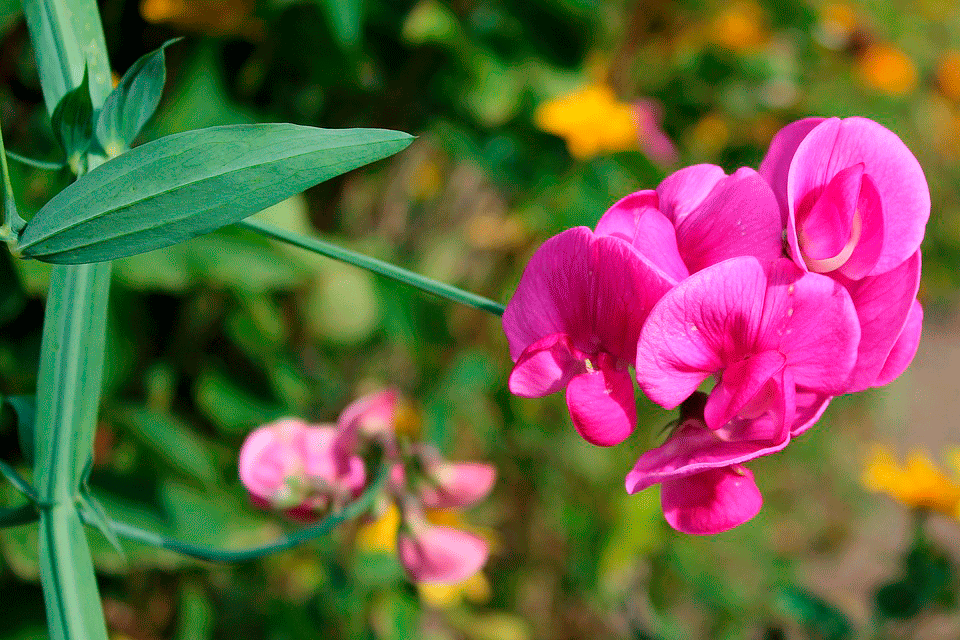
Today, there are over 1,000 varieties. In the central part of the country, this easy-to-grow perennial is grown as an annual.
Content
Description of sweet pea
Sweet peas grow to a height of 1 to 2 meters. This should be taken into account when selecting suitable support. Dwarf varieties of peas do not require support. The taproot system is highly branched, extending to a depth of 1.5 meters. Distinguishing features also include:
- paripinnate leaves;
- antennae that provide grip on the support;
- Inflorescences originating in the axils of leaf blades. The corollas, which form a few-flowered raceme, have an irregular shape. The flowers are often compared to moths and sailboats;
- A bean-like fruit containing large, spherical seeds. Their rough surface is often dented. Their color ranges from light yellow to blackish-brown. The seeds remain viable for up to 8 years.
- weakly branched climbing stems.
China loves warmth and sunlight. The largest and brightest buds appear when this garden plant is grown in the northern or central climate zones. In the southern regions, they are smaller and more inconspicuous.
Reproduction occurs through self-pollination. Abundant flowering begins in midsummer. If the gardener follows all the advice, the peas will bloom until frost. This crop can withstand temperatures as low as -5°C. To obtain seeds, simply leave the required number of bivalve pods until they fully ripen. The remaining inflorescences must be removed after they fade.
Types and varieties of sweet peas
Perennial peas produce purple or pink flowers. The palette of annuals bred by plant breeders is much broader. The corollas can be blue, white, burgundy, light blue, red, and pink.
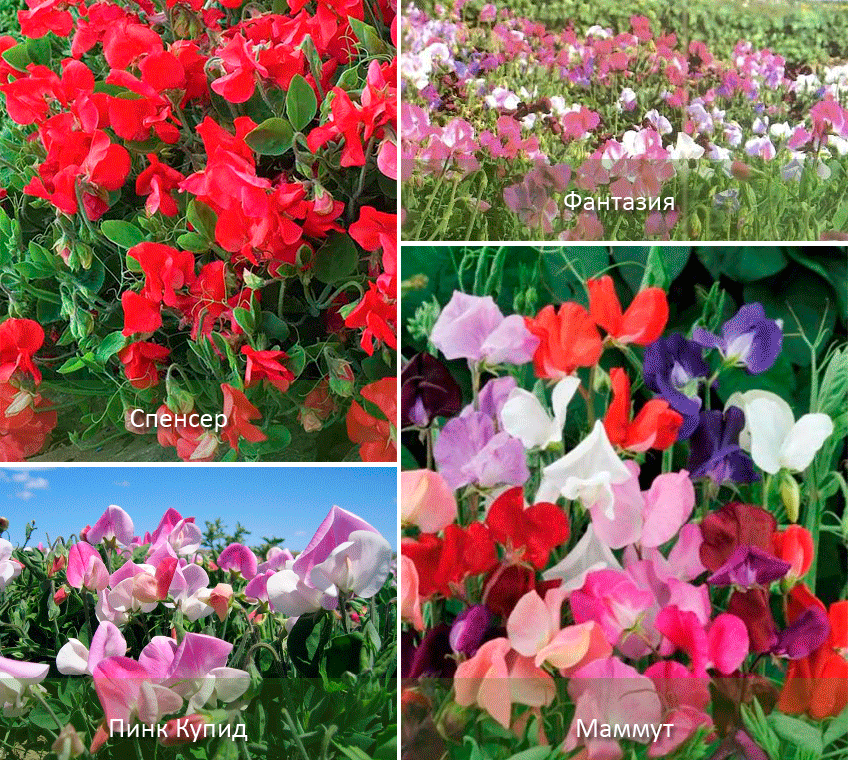
Therefore, gardeners most often plant hybrids obtained as a result of selection of the main varieties.
All types of sweet peas can be divided into several categories.
| Group | Description |
| Spencer | Tall, multi-stemmed. Produces strong flower stalks. Inflorescences form 3-5 corollas. The petals have wavy edges. The color depends on the variety. Varieties: Aristocrat – whitish-pink flowers with a sweet aroma; Sir Arthur – soft lilac; Sir Charles – scarlet. |
| Fantasy | Compact, no higher than 20 cm. Used as groundcover, planted in borders. |
| Cuthbertson | Long stems, multi-flowered racemes, each with at least 8 corollas. They look great when cut. |
| Mammut | Up to 30 cm. Powerful peduncles, on which numerous large, bright corollas appear during the flowering period. |
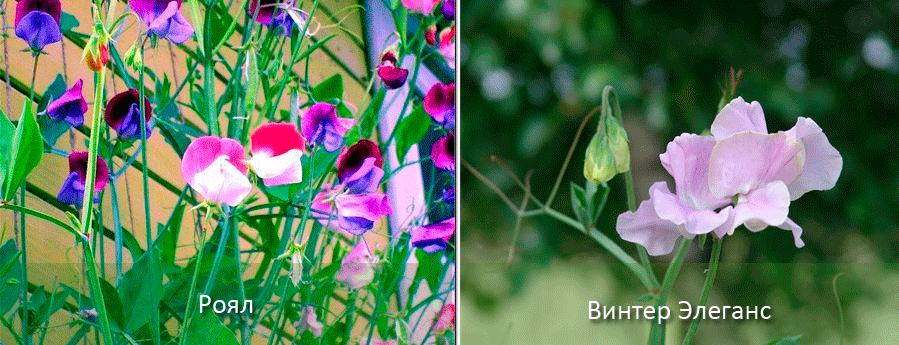
| Royal | Early-blooming and heat-resistant. The flowers are strong and sturdy. These varieties are grown only in summer. |
| Bijou | The height of the bushes does not exceed 30 cm. During the flowering period, large bright corollas appear. |
| Pink Cupid | The flowers are distinguished by their unique coloring. The shoots are approximately 30 cm long. |
| Winter Elegance | They reach 180 cm. Unlike other varieties, abundant flowering is possible not only in summer, but also in autumn. |
Growing sweet peas from seeds
Sweet peas are planted with seeds in two ways: seedlings (in Northern and Middle latitudes) and without seedlings (perennial in the South).
Seedling method for growing sweet peas
To achieve a decorative effect, it is necessary
- soak the seed material in the spring;
- Create greenhouse conditions for the seedlings. Without enough warmth, moisture, and sunlight, the seedlings will be less viable;
- Take into account the color of the seed coat when carrying out preliminary preparation.
The first step is seed treatment. To determine which of the harvested or purchased beans will germinate, they must be immersed in a salt solution. To prepare this, you'll need 30 grams of salt and one liter of water. Those that settle to the bottom are used for sowing. The selected seeds are rinsed and soaked in plain water (50°C) or with 1-2 grams of Bud. The beans are soaked for 12 hours. This softens the hard shell. Soaking is essential for brown and russet-colored beans. For light and cream-colored beans, it's best to skip the soaking process.
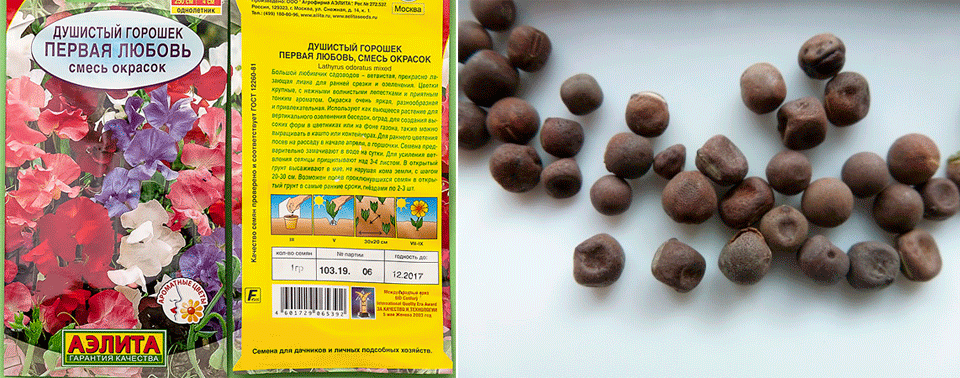
The next stage involves germination. To do this, the seeds are carefully wrapped in a damp cloth and placed in a warm place. The seedlings emerge two weeks after planting. To speed up this process, experienced gardeners pierce the seed coat of each seed with a needle.
Once the peas have sprouted, they are placed in pre-prepared cups. Cover them with transparent film to maintain the appropriate temperature. To prevent the seedlings from stretching, pinch them back.
The soil mixture for filling the containers can be purchased or made at home. It typically includes turf, peat, and humus. It should be disinfected before planting. Sweet pea seeds are planted in the cups to a depth of 30 mm, with at least 80 mm between them.
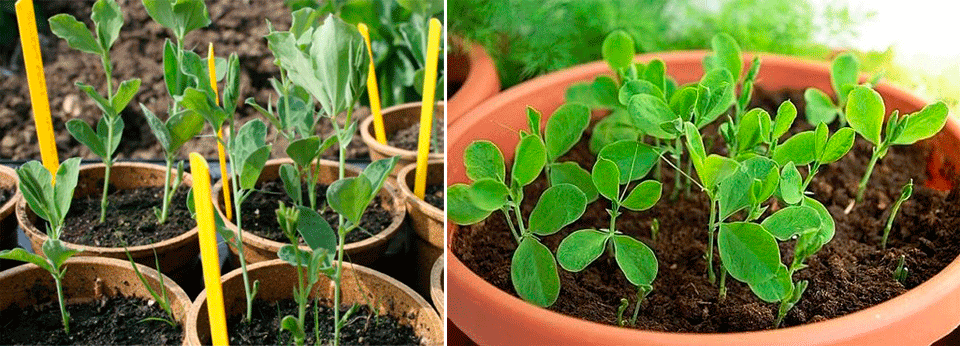
To avoid problems with transplanting seedlings, it is recommended to plant sweet vetch in peat or plastic cups. The soil in the containers should be regularly moistened. If the light is poor, install phytolamps near the cups. To accelerate the growth of lateral shoots, pinch them. Another essential step is fertilizing the seedlings. Water the plants with a Kemira solution.
A seedless method for growing sweet peas
To sow sweet pea seeds directly into the ground, the soil must be prepared in advance. The selected area must be dug, loosened, and leveled.
In spring, seeds can be sown in the ground in late April or early May. However, flowering will occur much later than with seedlings.
Planting in the fall offers several advantages. These include faster seedling adaptation to climate conditions and abundant flowering throughout the summer. The procedure is quite simple. Sow the seeds after the first frost. Place the seeds in furrows, each no deeper than 5 cm. Leave 3-5 cm between the seeds. This distance is sufficient for normal plant growth. After planting, cover the bed with a layer of dry soil and compact it. Thanks to their cold resistance (down to -5°C), peas will overwinter in the soil without losing their varietal characteristics (only in southern regions). If all recommendations are followed, seedlings will appear by mid-May.
When sowing in spring, the seeds should be planted 2-3 cm deep.
Planting sweet peas in the ground
Before planting, seedlings must be hardened off. This should be done over the course of 1.5 weeks. The time spent outdoors is increased each time. Gradually, the plant will acclimate to temperature fluctuations, which will positively impact its vitality.
The grown seedlings are transplanted into the ground in mid-May. This procedure should be carried out in cool weather. Ignoring this recommendation can cause burns on the delicate leaves.
The planting location is chosen based on draft protection and light. A sunny side of the gazebo may be ideal. However, leave enough space for support.
During the preparatory stage, mineral fertilizers should be added to the soil. Sweet peas grow best in permeable, loose soil. The optimal pH is between 7.0 and 7.5.
Dig holes in the dug area. The distance between them should be at least 0.25 m. Plant 2-3 seedlings per hole.
When planting, the gardener needs to follow several simple recommendations:
- Sweet peas should not be planted in the same area for several years in a row.
- To ensure proper growth, after the first pair of true leaf blades has formed, the plant should be attached to a support or trellis.
- China grows best in full sun.
- Fertilizers should be applied twice a month.
- Stems should be placed on a vertical surface. Otherwise, rot and disease can develop.
Caring for sweet peas in the garden
Growing sweet vetch doesn't require much time or effort. If all the necessary agricultural practices are carried out in a timely manner, there won't be any difficulties. Watering frequency is determined based on weather conditions. Watering should be generous but infrequent. In temperate climates, 1/2 m² 3-4 buckets of water are needed.
As the plant grows, the gardener will need to guide the stems in the correct direction along the support. In addition to pinching, fertilizing, and watering, the necessary measures include loosening and hilling. This will ensure more profuse flowering of sweet peas.
When hilling, add nutrient-rich soil to the base of the plants. The fertilizer composition depends on the growing season. The plants are fed with a solution containing nitrophoska and urea.
Wintering of perennial sweet peas
Preparing for the cold season doesn't take much time. Supports are removed, shoots are pruned. The area is covered with humus and sawdust. Mulching prevents damage to the perennial garden crop. The plant will regrow after the soil thaws (for southern regions).
In the middle zone, plant debris is removed, and peas can only be planted again in the same place after 4-5 years.
Preventive measures against pests and diseases
To prevent aphids and weevils, seedling holes are treated with a Chlorophos solution. Alternatively, you can use products such as Zineb and Tsiram. Leave at least 15-20 days between preventative treatments.
Particular attention should be paid to measures to combat ascochyta blight, viral mosaic, downy mildew, and fusarium. To combat the first disease, sweet peas are sprayed with a solution containing Rogor.
When signs of downy mildew appear, the leaves should be covered with a solution of colloidal sulfur.
Rapid wilting of foliage indicates the onset of fusarium. Affected plants will need to be removed and the soil disinfected. Otherwise, other plants will be affected.
The same thing will happen if the sweet peas become infected with a viral disease. These diseases are incurable.
Top.tomathouse.com recommends: The benefits of growing sweet peas
The vetchling will grace any garden plot. Its popularity stems from its decorative qualities and pleasant aroma. A wide range of colors makes it easy for gardeners to find the perfect variety.
Sweet peas' advantages include their versatility and low maintenance. Their dense foliage provides comfortable shade. A vibrant carpet of multicolored flowers adds uniqueness and charm to the garden. Additional benefits include accelerated plant growth and a longer flowering period.
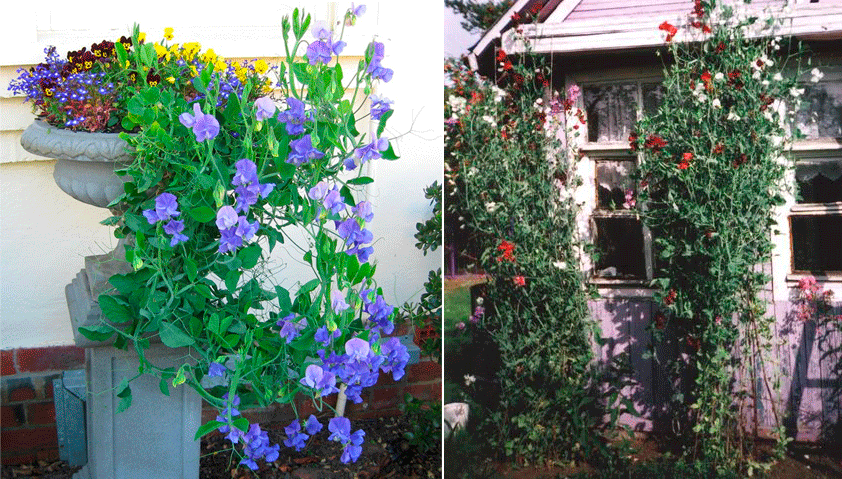
Tall peas are often planted for cutting. They are also prized in landscape design, used to create backgrounds and embellish decorative elements. The latter, in particular, play a significant role.
Groundcover varieties look great in rock gardens, borders, and elevated flowerbeds. Thanks to their tolerance of extreme temperature fluctuations, sweet peas will delight the eye until late autumn.