Spruce belongs to the Pinaceae family. This tree is a symbol of Christmas and New Year. The genus includes approximately 40 species, the most common of which is the Norway spruce.
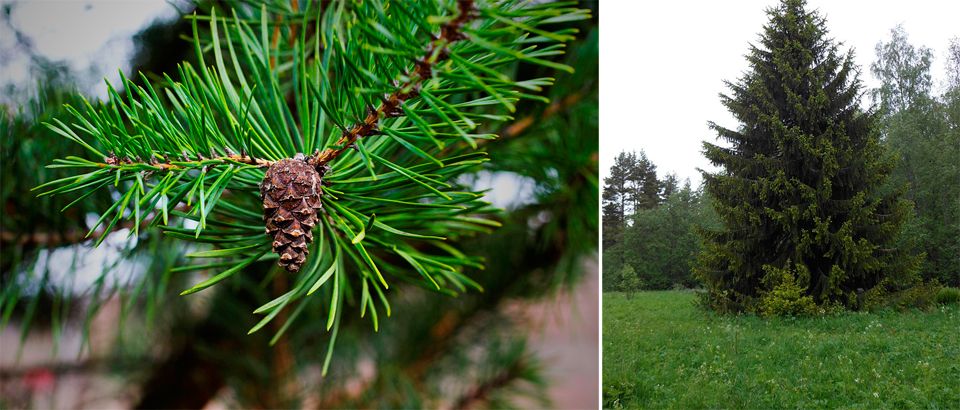
The height of this evergreen coniferous tree reaches 50 m. The average lifespan varies from 250 to 300 years.
Content
- 1 Description and characteristics of spruce
- 2 Selection of planting material
- 3 Spruce propagation
- 4 Spruce varieties
- 5 Timing of spruce planting
- 6 Spruce planting technology
- 7 Caring for a spruce tree in the garden
- 8 Preparing for winter and wintering spruce
- 9 Diseases and pests
- 10 Top.tomathouse.com recommends: Spruce trees in the landscape
Description and characteristics of spruce
A distinctive feature of monoecious trees is their slenderness. The root system is taproot for the first 15 years. Afterward, the root dies, and its functions are transferred to the superficial shoots. These shoots extend up to 20 meters. This explains their lack of wind resistance.
The crown, characterized by a pyramidal or conical shape, is composed of drooping and horizontally spreading branches. Lateral shoots appear only several years after the spruce is planted in open ground.
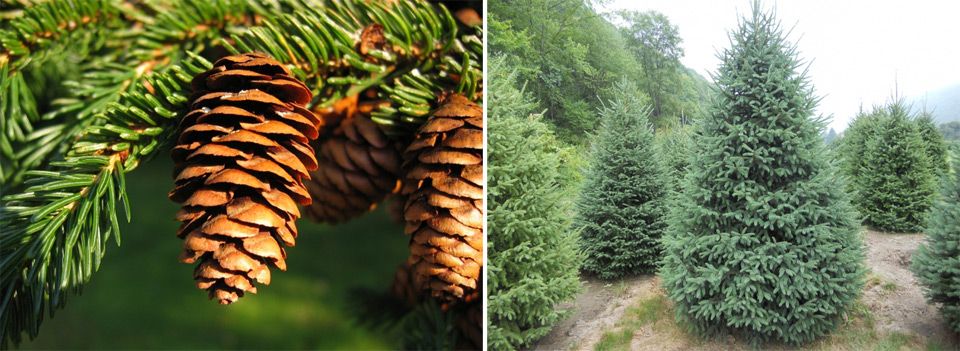
Characteristic features of trees belonging to the spruce genus also include gray, scaly bark and needle-like needles. The former becomes furrowed and thick over time. The needles can be either flat or square.
If the gardener can create favorable growing conditions, no more than 1/7 of all the needles will fall off annually.
Spruce trees are gymnosperms. Male and female cones are borne at the tips of branches. The elongated, cylindrical cones fall only after the seeds have ripened.
Pollination occurs in May, and ripening occurs in October. Fruiting lasts for 10-60 years.
High frost resistance is another distinctive feature of spruce trees. Unfortunately, this only applies to mature trees. Young trees planted outdoors are very sensitive to sudden temperature drops. To protect their tender needles, it is recommended to plant immature spruce trees near more mature trees.
Despite their shade tolerance, spruce trees require good light. Therefore, undergrowth is usually absent in unmixed spruce forests.
Selection of planting material
To obtain a new seedling, you can use several methods:
- By visiting a nursery. They offer grown seedlings, either planted in containers or dug in the buyer's presence. The former option is preferable. This is due to the protection of the root system. Buying a plant with an exposed root system makes it more sensitive to environmental influences.
- By digging it up in the forest. This option is acceptable if the spruce species and variety are not particularly important. The height of the selected tree should be between 1 and 2 meters. Carefully dig around the sapling. A lump of soil should remain on the roots. Thanks to its "native" soil, the spruce will adapt more quickly to its new location;
- Growing them yourself. The first step is collecting ripe cones, the second is preparing the soil. You can make your own soil mixture or purchase a ready-made one. It's poured into a container. The final stage is sowing the seeds using a specific technique.
Seedlings should be transported covered with a tarpaulin.
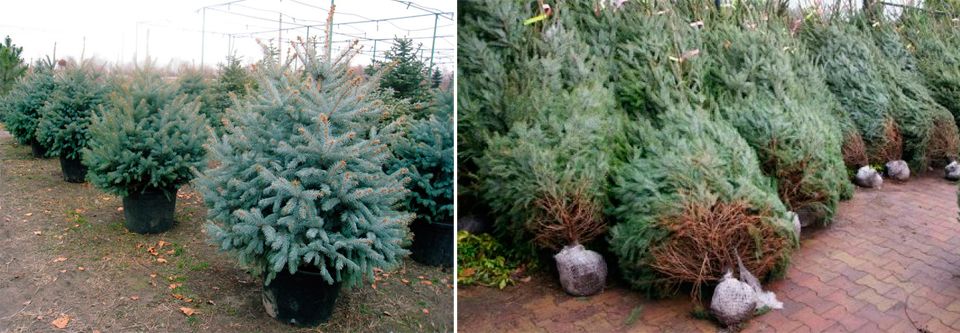
The sooner they are placed in the ground, the better.
Spruce propagation
New trees can be grown from seeds or cuttings. The latter are popular among hobbyists. Another conifer can be used as a rootstock, but the main requirement is its high frost resistance.
Rooting should be done in early spring. The gardener should do this before the buds swell. Stems with smaller branches are used as cuttings. The cutting should be 6-10 cm long. After cutting, it should be treated with a growth stimulant. The optimal planting angle is 30 degrees. The soil mixture is prepared from sand and peat. Fine perlite can be used instead of the latter ingredient. The soil is filled with drainage and turf soil. The first layer should be at least 5 cm thick, and the second layer should be about 10 cm thick.
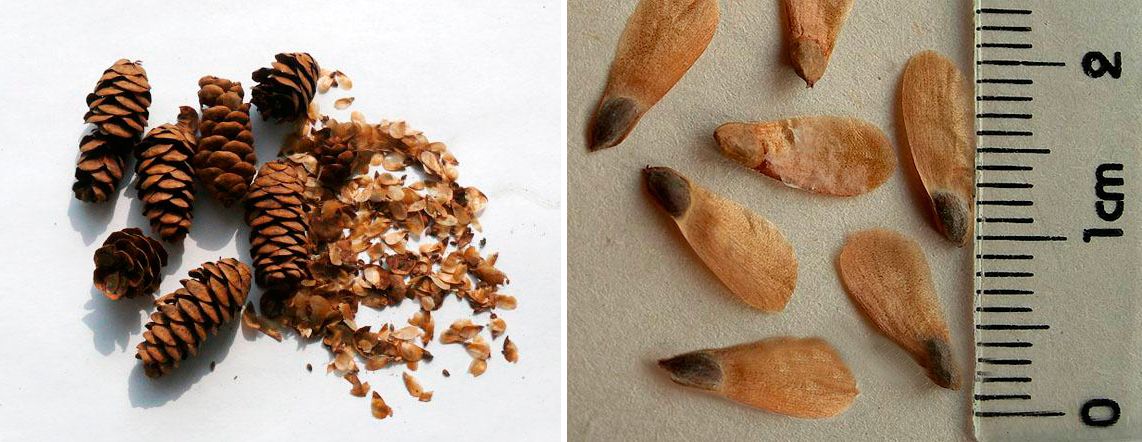
Growing spruce trees generatively (from seeds) requires considerable investment and time. This method requires using seed that has retained its germination capacity. The seeds are extracted from ripe cones and pre-dried. Peat or dry sand is used for stratification. The next step is freezing. The seeds are kept in the refrigerator for 1-1.5 months. Sowing takes place in late February or early March. Using this method, gardeners will obtain plants that are characterized by slow growth and low tolerance to strong gusts of wind, scorching sun, and excessive humidity.
Spruce varieties
Spruce trees prefer cool climates.
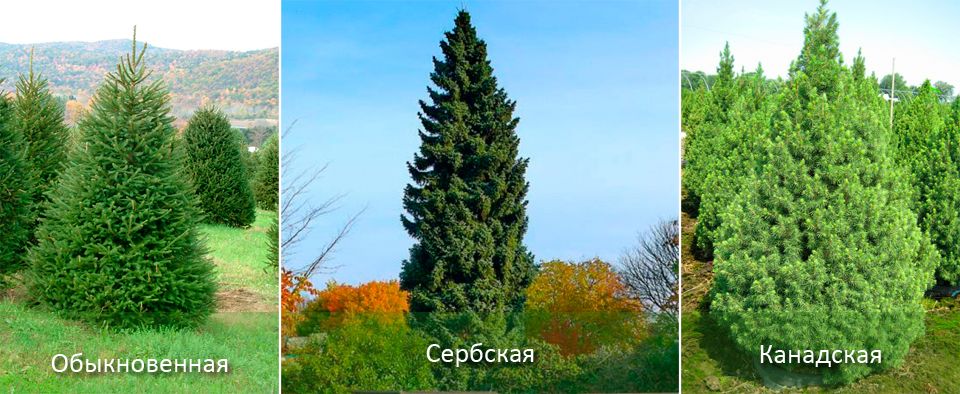
Rocky or sandy soil is preferred. Its low maintenance nature translates into winter hardiness and drought tolerance.
| View | Description | Variety | Peculiarities |
| Ordinary | Up to 50 m. The pyramidal crown is adorned with a pointed tip. The elongated cones and tetrahedral needles are a rich green. | Acrocona | Compact size, abundant fruiting. Early fruiting. |
| Frohburg | Medium-sized straight trunks with drooping, lush “paws”. | ||
| Ohlendorf | Wide crown, golden needles, dense branches. | ||
| Serbian | Flattened needles, decorated with silvery streaks. Highly decorative, undemanding to soil conditions. | Peve Tejin | Flat surface, dense crown. |
| Canadian | Height from 25 to 30 m. Dense, bluish-green crown, branches directed downward. Small cones. When mature, they turn brown. | Alberta Globe | The crown is graceful. Its surface is provided by a bumpy texture. |
| Sanders Blue | If there is insufficient light, the needles become looser. | ||
| Konika | It was obtained as a result of Canadian selection. | ||
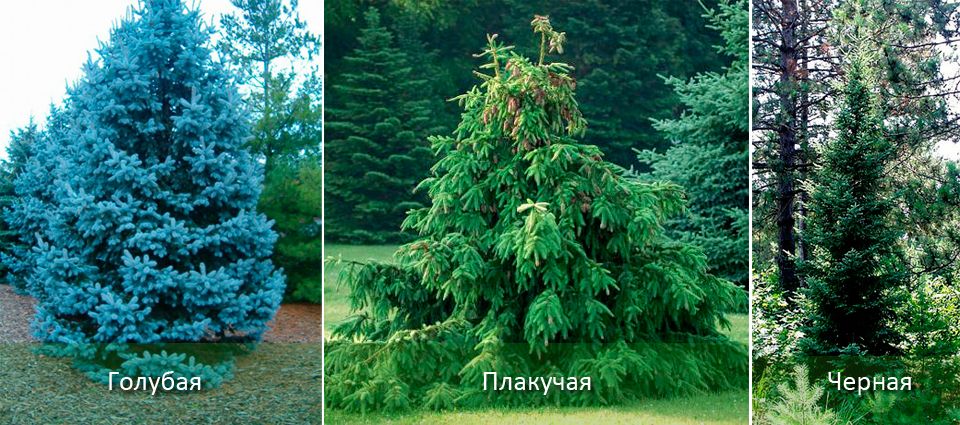
| Weeping | Reaches 50 m. The glaucous needles are distinguished by their pointed shape. The cones are characterized by a burgundy color and small size. | Snake | Gradual growth of skeletal branches. |
| Bush Lace | Its high decorative value is due to the variety and richness of its shades, including bluish-green, blue, and silver. | ||
| Blue | The branches are horizontal. It is frost-hardy and resistant to pollution. The needles have a blue tint, and the bare shoots are bright brown. | Herman Nau | A compact variety with an inconspicuous central stem. Bluish needles. |
| The Blues | Medium-sized, long needles decorated with blue growths. | ||
| Hoopsie | Lush crown, height – no more than 12 m. | ||
| Black | Up to 30 m. Bluish-green needles are dense. Branches are pubescent. Unpretentious and winter-hardy. | Aurea | Slow growth, drooping branches. |
| Nana | Dense crown, annual growth of up to 5 cm. Contrasting color, short needles. | ||
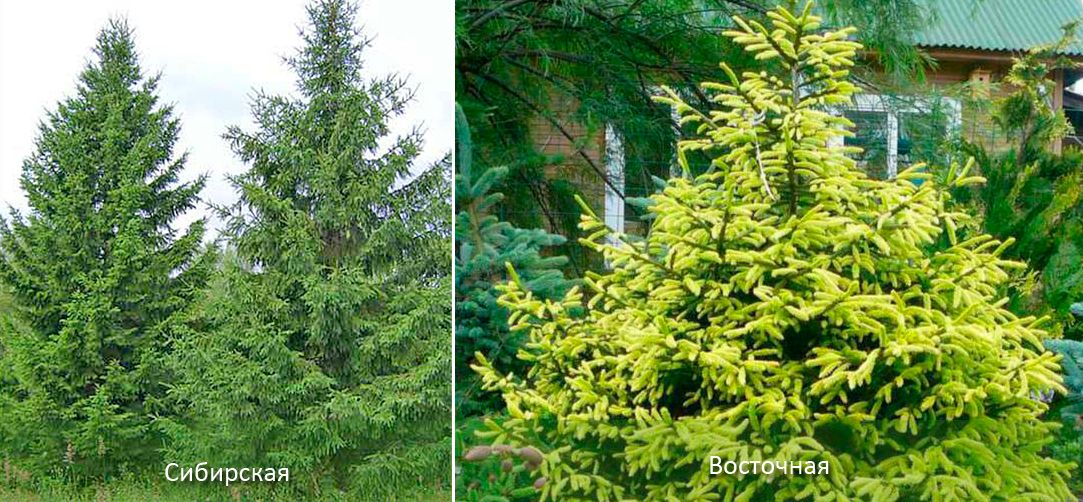
| Siberian | Narrow conical crown, glossy needles no more than 3 cm long. | Glauca | Slender central stem, linear-needle needles. |
| Eastern | It doesn't exceed 60 m. The crown is dense. The branches at the base are raised. The rich green needles are stiff. | Aureospicata | The height varies from 10 to 15 m. The growths are colored greenish-yellow. |
| Nutans | The branches grow unevenly. The needles have a glossy sheen. Ripe cones are brown. | ||
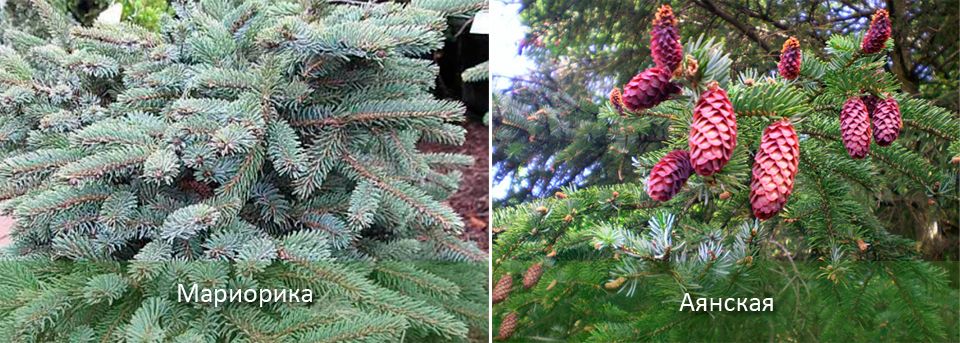
| Mariorica | No more than 30 m. Needles decorated with silvery inclusions. | Machala | Width – up to 1 m, needles are silvery-bluish in color. |
| Ayanskaya | Winter-hardy, shade-tolerant, unpretentious. | Nana Kalus | A low plant with a rounded crown. |
Timing of spruce planting
Spruce trees are planted in the ground in the fall and spring. The latter option is preferable, as planting during this period will allow the seedling to harden before winter. This cultivation should be carried out in late April or early September.
It's recommended to plant tall seedlings in November or March. The root ball should be kept frozen. This protection is necessary because young plants can be damaged by sudden temperature changes. The following points should also be considered:
- Branch arrangement. The cardinal directions are determined by their number. There are far fewer branches on the northern side than on the southern side;
- The appearance of the root system. Exposed shoots can die due to overdrying;
- Planting location. Ornamental varieties are most often planted in garden plots. Tall and powerful spruce trees, known as large-sized trees, require more nutrients and moisture. They should be planted in a location outside the garden. Otherwise, other crops will suffer.
- Lighting. Spruce trees are light-loving plants. Ornamental varieties with colored needles have a particular need for sunlight.
Spruce planting technology
Spruce trees are planted in pre-prepared holes. They must meet the following criteria:
- depth – from 0.5 to 0.7 m;
- lower and upper diameters – 0.5 m and 0.6 m;
- the thickness of the drainage layer is no more than 20 cm.
The latter is made from crushed stone supplemented with sand or broken brick.
The need for drainage may be due to heavy soil and close proximity to groundwater.
The next step is creating a soil mixture. It includes nitroammophoska, turf soil, peat, sand, and humus.
The plant is removed from the container immediately before planting. Soil should remain on the roots.
Place the seedling in the hole upright. Do not compact the soil. Surround the planted tree with a mound of earth. Pour water into the resulting "container." Use 1 to 2 buckets of water per seedling. Once the water has completely soaked through, fill the area around the tree trunk with peat. Leave at least 2 meters between seedlings.
Caring for a spruce tree in the garden
Despite their drought tolerance, spruce trees require watering. Watering frequency increases if dwarf and miniature varieties are planted in the garden. The same applies to seedlings and young trees. If plants were planted in winter, they should be watered no more than once a week. Wetting the needles during this time is not recommended.
Fertilizing is done with complex fertilizers. These are often combined with growth stimulants. Gerbamin, Heteroauxin, and Epin are particularly popular. It's important to note that only young trees require fertilizing.
To prevent damage to the needles, they are sprayed with Ferravit.
Pruning can be either sanitary or decorative. The former involves removing damaged and dried branches. The latter is done to give the tree a symmetrical shape.
Lighting should also be considered. Seedlings are shaded for several years to protect them from the scorching sun.
Preparing for winter and wintering spruce
The procedure is quite simple. The tree is watered for the last time before the onset of November frosts. The area around the trunk is reinforced with bark. This step is especially important for young and weakened spruce trees.
To accelerate stem lignification, plants are fertilized with potassium-phosphorus mixtures in September. After this agricultural procedure, the need for additional feeding will disappear.
Diseases and pests
Spruce trees, like other plants, can be susceptible to harmful insects and diseases. Trees weakened by inadequate or improper care are most often affected.
| Problem | Description | Control measures |
| Rust | Cylindrical vesicles containing spores appear on the needles. Early needle shedding occurs. Young plants are most often affected. | Spraying with fungicides, timely removal of weeds. |
| Schütte | The disease appears in the spring. The needles on the shoots first change color and then die. They fall off at the beginning of the following season. A fungus forms on the needles. | Removal of infected shoots, treatment with fungicides. |
| Spider mites | The parasite becomes active during drought, causing spots to appear on the plant. Another characteristic sign is webbing. | Preventative spraying with acaricides. These include Floromite, Flumite, Apollo, and Borneo. Insectoacaricides (Akarin, Agravertin, Actellic, and Oberon) are used for treatment. |
| Bark beetles | The pest damages the bark, as evidenced by a large number of passages. | Treatment with the following preparations: Crona-Antip, Clipper, Bifenthrin. |
| False scale insects | The parasite is protected by a brown shell. The stem tips become twisted and gradually die off. The needles take on a brownish tint. | Adherence to agricultural practices is the best prevention. To enhance the effect, plants are treated with insecticides. |
| Leaf rollers | Brownish-yellow caterpillars make rusty clusters on shoots. | Using a solution prepared on the basis of green soap. |
| Sawflies | Insects settle on young trees. Their growth slows, and the stems lose their needles. | Digging up the soil and destroying nests. Larvae are treated with insecticides, including Fury, BI-58, and Decis. |
| Root sponge | The root system is rotting. Brown or tan formations appear around the root collar. | Removal of all affected areas, use of fungicides. |
Top.tomathouse.com recommends: Spruce trees in the landscape
Trees with tiered branches and pyramidal crowns are used to create protective curtains and formal avenues. The branches form a dense shelter that blocks sunlight. This is used to decorate secluded areas. Large trees are most often planted in large parks. By planting them as a single specimen, the gardener achieves a uniform landscape composition.
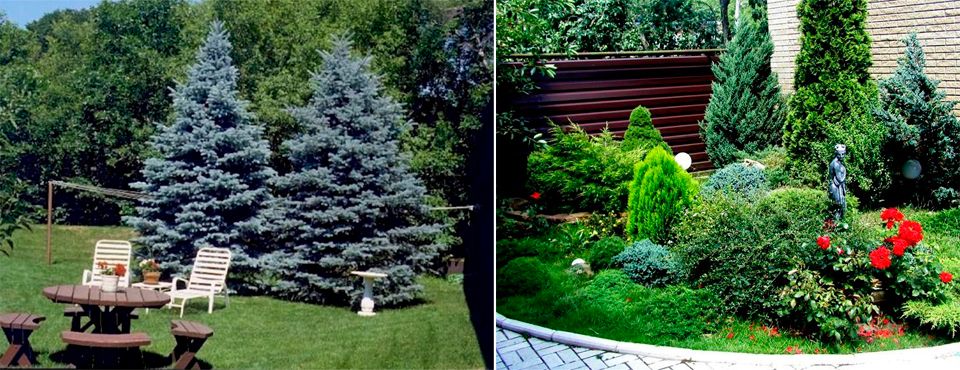
Dwarf spruces are characterized by their decorative qualities and diversity. Distinguishing features include crown structure, needle color, and size. These conifers are planted in groups and used to decorate flower beds, small gardens, and rock gardens.
Giving conifers the desired shape is usually straightforward. Spruce trees can be pruned, and creating a symmetrical and geometrically correct silhouette doesn't require much time.
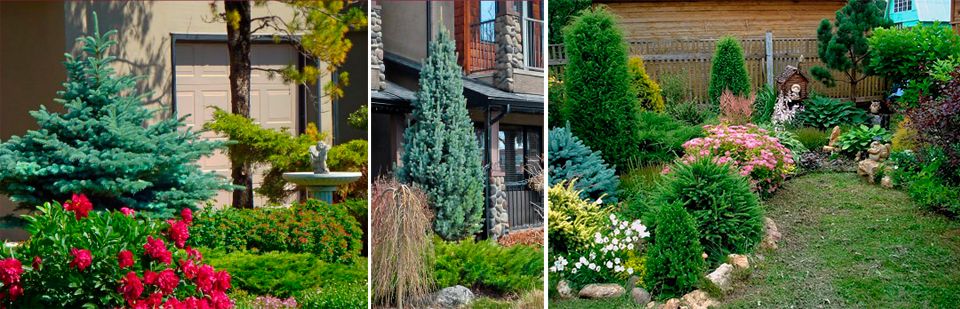
Dark green spruce trees are used to decorate formal gardens and parterre areas. They are often planted alongside other conifers. These can be golden, silvery, or bluish. Herbaceous "neighbors" are often planted around spruce trees. The plants should be shade-loving. These include lilies of the valley, ferns, wood sorrel, and astilbe.