Aeonium arborescens is a plant in the Crassulaceae family. This subtropical flower is native to Morocco. From there, it was introduced to the United States, Great Britain, Mexico, several southern European countries, and Australia, where it can grow outdoors. In Russia, it is cultivated only indoors. The name "Aeonium" is Latin for "eternal." This succulent is also known as the desert rose.
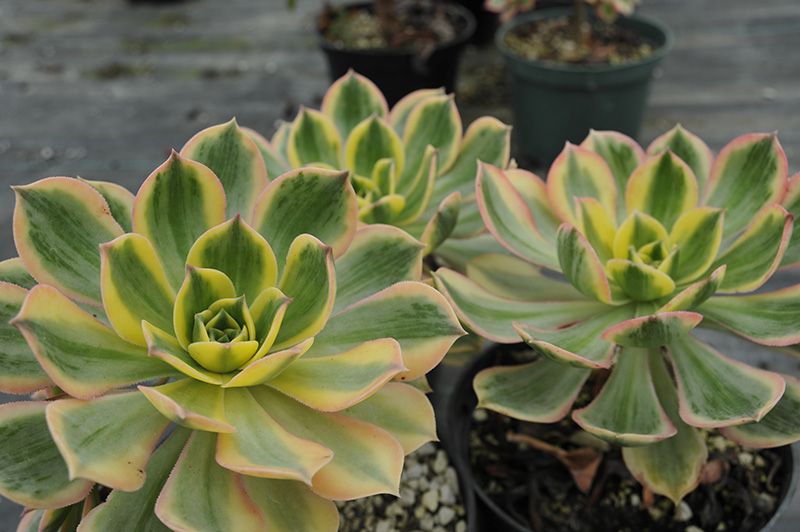
Description of Aeonium
In the wild, Aeonium reaches a height of 2 m, while indoors it reaches 40–90 cm. Fleshy, spoon-shaped leaves, 1.5–3 mm thick, store moisture. They grow up to 15 cm long and 4.5 cm wide, often covering the thick stem. The surface of the leaf blades is glossy and smooth. The branches of this succulent, up to 3 cm in cross section, become woody over time. The plant is an annual subshrub and dies after flowering. Only specimens with multiple shoots can continue to thrive.
The peduncle, erect and branching, emerges from the center of the rosette in late winter. At the end, inflorescences form in the form of a pyramidal raceme, 2 cm in diameter, and are bright yellow. The petals are small, elongated, triangular. The roots are filiform and aerial, highly branched.
Types and varieties of aeonium
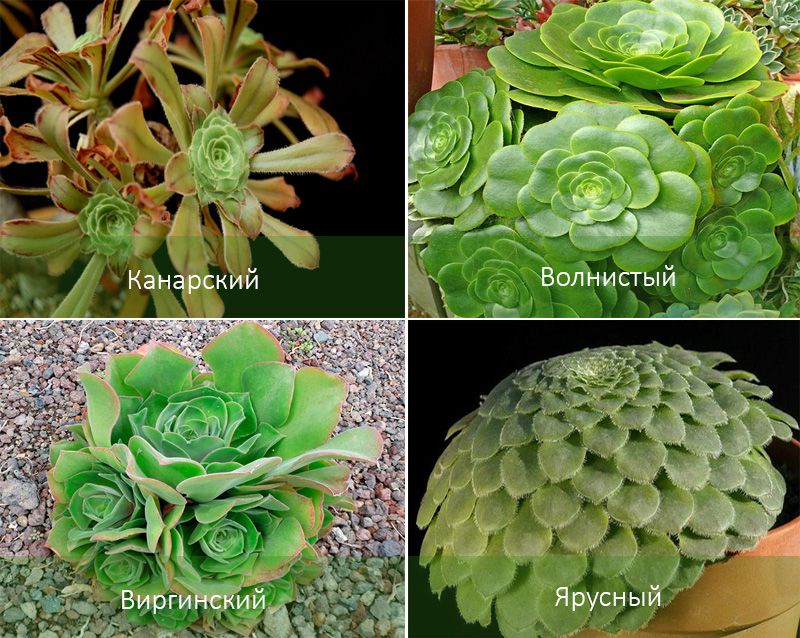
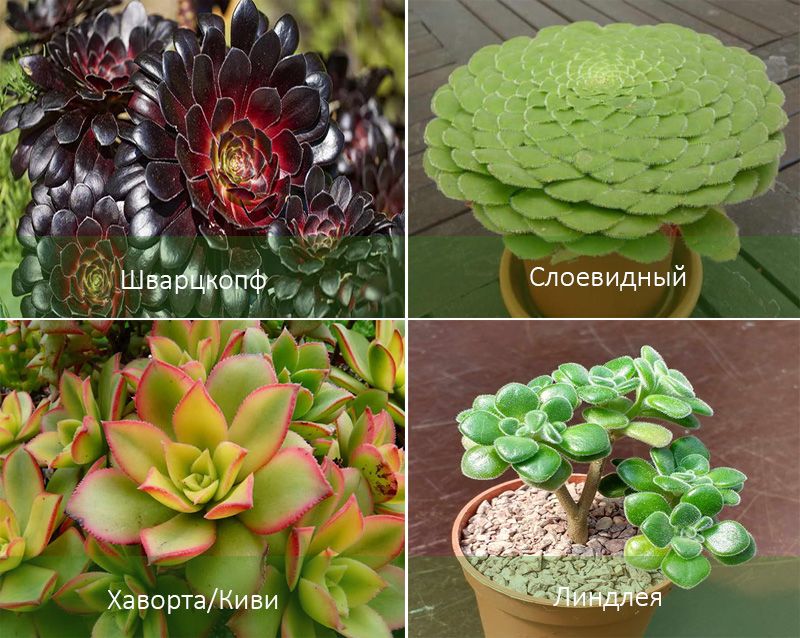
There are over 70 varieties of succulents. The table lists indoor species with their names and key characteristics, which can be combined into an original mix.
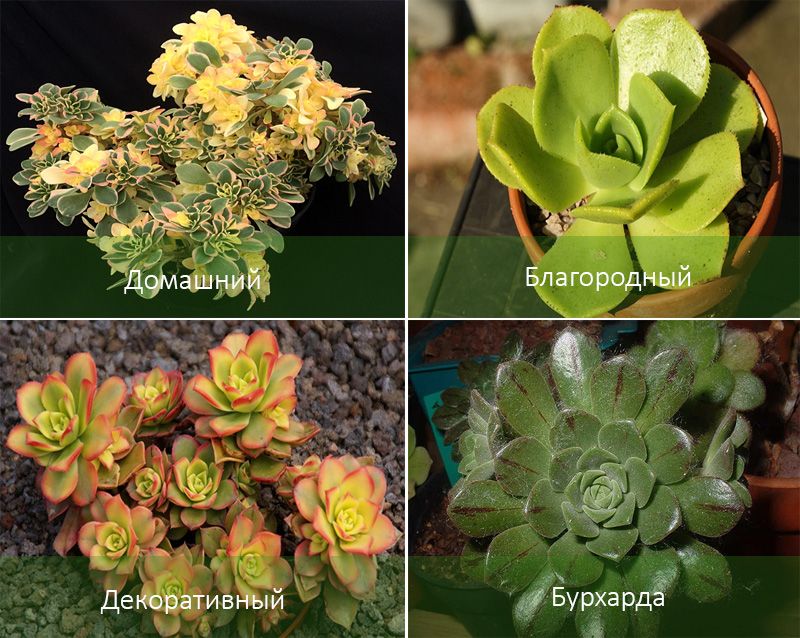
| View | Description |
| Home | Branched, with spatulate, dark green leaves. Height up to 30 cm. Stems curve upward. |
| Noble | A 50-cm-diameter rosette on a short, single stem. Grooved leaf blades, olive-green in color. Copper-colored buds. |
| Decorative | The plant is spherical in shape. Young specimens are light green with a red border; in adults, they are almost entirely scarlet. The inflorescences are light pink. It grows up to 150 cm, with the stems covered with leaf-fall scars at the base. |
| Burchard | Rosettes up to 10 cm in size. Color is uneven: the central part is light green, the sides are marsh and orange. |
| Canary | A perennial variety. The blades are spatulate and rounded. The color is light green, with barely noticeable light hairs on the surface. The edge is reddish-burgundy. |
| Wavy | Several shoots are located on a gray trunk with dark scars. The leaves have a wavy edge, wide at the tips. The buds are dark yellow. |
| Virginia | A groundcover variety. The balsamic-scented rosettes are covered in soft hairs. Their bases are tinged pink. |
| Tiered | The leaves are small, rounded, closely packed, and arranged in tiers. They are covered with soft, pale bristles. |
| Schwarzkopf | An artificially cultivated variety with a dark burgundy color, edged with large white eyelashes. |
| Layered | A wide, flattened rosette up to 50 cm in diameter grows practically from the ground. The inflorescences are pyramidal and rich yellow. |
| Haworth/Kiwi | The buds are pendulous, with seven per stem. The rosette is gray-green with a red border and hairs. It grows no more than 30 cm. |
| Lindley | From March to April, it produces beautiful golden buds. It exudes a pleasant aroma. The trunk is woody, with numerous shoots. |
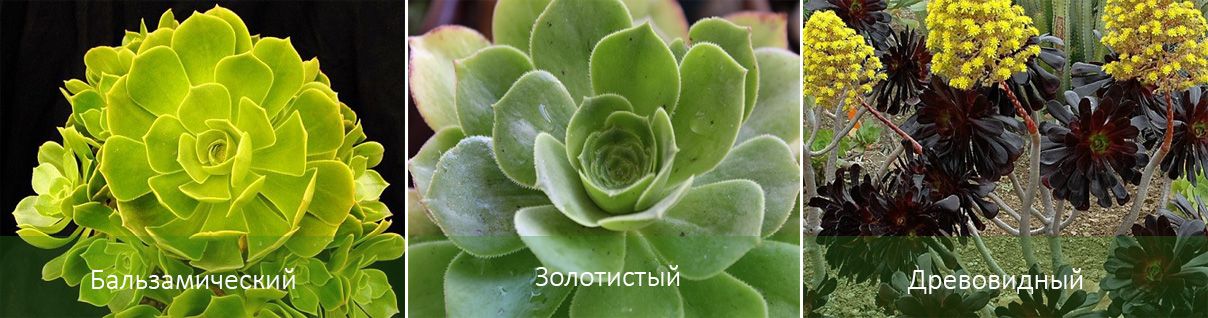
| Balsamic | It is distinguished by its characteristic smell and long, hard branches with light green plates at the ends. |
| Golden | Perennial. The foliage is covered with red stripes running down the center and along the edges. The stem has numerous shoots. |
| Tree-like | The few branches harden over time. The color is light green, the flowers are yellow with a hint of yellow. |
Features of caring for aeonium
| Parameter | Spring-summer | Autumn-Winter |
| Lighting and location | Place in a southeast or south-facing window. Protect from sunburn during hot periods and provide shade. Can be moved outdoors. | Place the plant in a south or southeast-facing window in the brightest spot. No artificial lighting is required. |
| Temperature | +20…+25 °C, if kept outside or on a balcony – not lower than +10 °C at night. | +10…+12 °C. +18…+20 °C is acceptable, but the plant will form less spectacular rosettes. |
| Humidity | Thrives in humidity levels above 30%. Spray only when dust accumulates on the leaves. | |
| Watering | As almost all layers of the soil dry out, direct the stream of water strictly along the edge of the pot, avoiding the succulent itself. | Reduce frequency, moisturize no more than once every 2-4 weeks. |
| Top dressing | Add a mixture for cacti and succulents to the soil once every 3 weeks during the period of active growth. | Doesn't need it. |
Transfer
The plant should be repotted annually for young plants, or every 2-3 years for mature aeoniums. Use a standard potting mix; the method for preparing it is described below. If rotten roots are noticed during repotting, they should be trimmed and sprinkled with ash, and more crushed charcoal should be added to the soil.
When changing a pot, you don’t have to change the substrate, but you must add the missing amount.
Soil
The soil mixture should be composed of the following components in the proportion 2:3:2:1:
- humus;
- river sand;
- garden soil;
- crushed coal.
If these types of soil are difficult to find, you can buy ready-made soil for cacti or succulents. Be sure to provide good drainage at the bottom of the pot, 7-8 cm, to prevent water stagnation.
Reproduction
Succulents are propagated by division and seeds. Beginners in gardening are better off using the former method. To root cuttings, follow these steps:
- Cut off the top of the shoot with the rosette without damaging the leaves.
- Sprinkle the mother plant with ash at the cut site and then place it in the shade. This will protect it from disease and death during the recovery period.
- Prepare a container with a substrate of 2 parts sand and 1 part leaf mold. Create a drainage layer.
- Plant the cuttings individually. Water generously, avoiding getting the stems wet.
- Water thoroughly as the top layer of soil dries out, making sure to drain any excess moisture. Two weeks after roots appear, replant in standard soil.
Growing a flower from seeds is more difficult. Several seeds should be lightly pressed into prepared soil (the same ingredients are used for propagating by cuttings). Cover the pot with plastic wrap or place it under a glass dome. Remove the plastic wrap daily for ventilation to prevent the seedlings from rotting, and gently moisten the soil with a spray bottle. Keep at a temperature of around 20°C. Replant after the first leaves appear.
Problems with growing aeonium
To avoid these difficulties, it is enough to follow simple rules of care at home, and also not to place new plants near the succulent, possibly infested with pests.
| Disease or problem | Cause | Solution |
| White waxy coating, slow growth, drying of leaves. | Mealybug infestation due to purchasing poor soil or a new flower. | For minor damage, wash the foliage with soapy water or ethyl alcohol. Repeat every 4 days until the problem is completely resolved. For large infestations, use Malathion according to the instructions. |
| Changes in the curvature of soft stems and leaf blades. Softening and wateriness of tissues. | Late blight developed due to excessive watering or high air humidity. | Remove rotted parts. If the entire root system is affected, propagate using apical cuttings. |
| Loss of color brightness, slow development, unhealthy bending of shoots. | Fusarium. | Treat with Bayleton, Fundazol, or Maxim. Store separately from other plants in a dry, warm place. Clean out the affected areas. |
| Light or brown colored spots on the leaves, gradually becoming crusty. | Anthrocnosus. | At the initial stage of infection, cut off the resulting spots with a sharp blade. If the disease has progressed significantly, the plant will have to be discarded. |
| Brown spot in summer. | Excessive light, sunburn. | Moisten with a spray bottle, water, remove from the south-facing window or shade. |
| Small weak sockets. | Lack of space in the pot and nutrients. | Replant, add fertilizer to the soil. |
| Fall of leaves. | In summer there is a lack of light, in winter there is an excess of moisture. | Establish a watering regime. Place the pot in a bright spot. |
Medicinal properties of aeonium
Aeonium arborescens juice has antiseptic and wound-healing properties. It activates regenerative processes, stimulates collagen production, and kills pathogenic bacteria. Moroccans use it to treat:
- Glaucoma and cataracts. A solution containing a small percentage of the plant's juice is applied to the eyes three times daily until improvement occurs.
- For inflammatory skin conditions, calluses, and blisters, abscesses, and infected areas are treated with a succulent-based ointment or a liquid infused with its juice. The simplest option is to apply a leaf and secure it with bandages.
- Dermatological conditions. For allergic rashes or acne, the flower soothes and relieves itching.
- Diabetes. People at risk for this condition should eat 2 leaves daily.
- Insect bites. When attacked by ticks, small parasites, or mosquitoes, aeonium not only relieves itching and redness but also prevents infection.
Do not use this folk remedy without consulting a doctor. It may cause unexpected side effects or allergic reactions. The plant's therapeutic effects have not been studied in European medicine or cosmetology.