Erigeron is a garden or wild perennial plant of the Asteraceae family. Annuals and biennials are less common. The genus of this subshrub comprises over 200 species, growing worldwide.
Characteristics of Erigeron
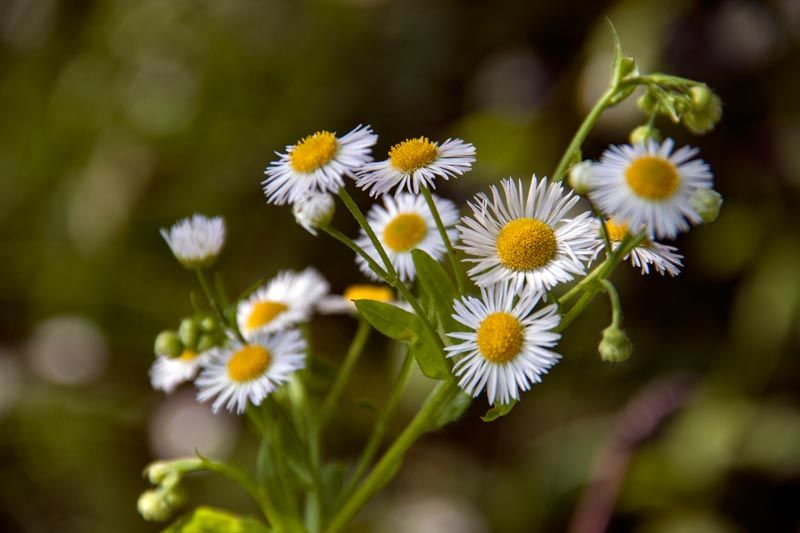
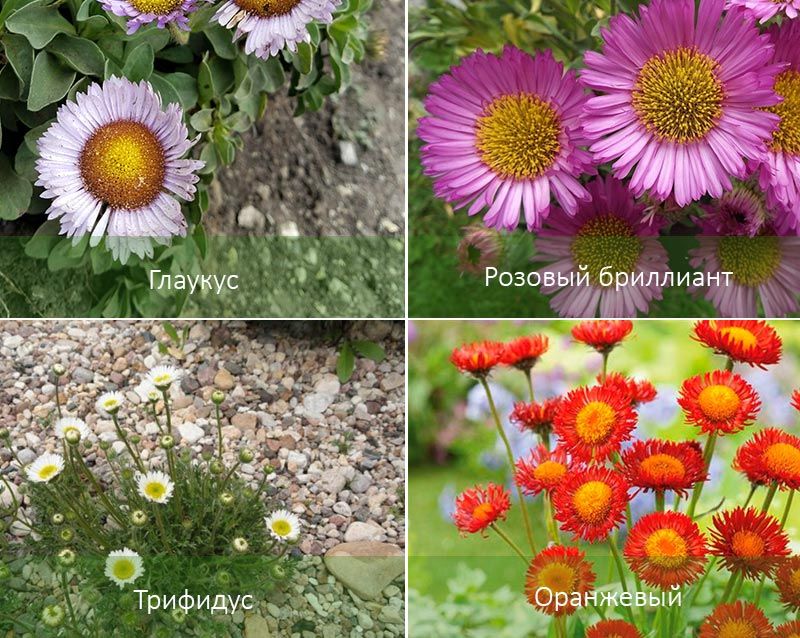
This flower propagates easily, requires no fertilizing or frequent watering, and tolerates low temperatures. This makes it particularly popular among gardeners. It doesn't require frequent repotting—the plant can live in one location for up to 5 years without losing its brightness and lushness. It also gets its name—"small-petaled"—from the appearance of its bud. Narrow, long petals of white, yellow, pink, and various shades are arranged in one or more rows around a bright yellow core. The flower head size depends on the variety and ranges from 2-4 cm in diameter, with a height ranging from 15 to 70 cm.
A single flower usually forms at the top of the stem. However, some species form umbels of inflorescence. As the plant grows, it becomes a bush 40-50 cm wide. The buds open in early summer and delight the eye until the October frosts.
The fleabane prefers sunny areas where the soil does not retain moisture. If these conditions are not met, the plant produces abundant foliage and sparse blooms. The soil should be moistened only during dry periods. Tall stems with buds require staking or support. To prolong flowering, dried flower heads are pinched off. New flower stalks will form in these spots. Mature plants do not require preparation for winter. Young bushes are pruned in the fall and mulched with dry leaves and sawdust.
This versatile flower is equally at home on balconies and in rock gardens. Low-growing, trailing varieties are used as hanging plants. Tall bushes harmoniously decorate porches and garden paths, and are perfect for creating a backdrop along a fence. Dwarf varieties can be used as a border. Erigeron spp. looks stunning in a bouquet. Thanks to its varied and vibrant colors and long-lasting appearance after cutting, its buds will delight the eye for days.
Types and varieties of small-petaled grass
The most vibrant and unpretentious species of small-petaled flowers served as the basis for the development of garden varieties and hybrids.
|
View |
Description | Height (cm) |
Flowers |
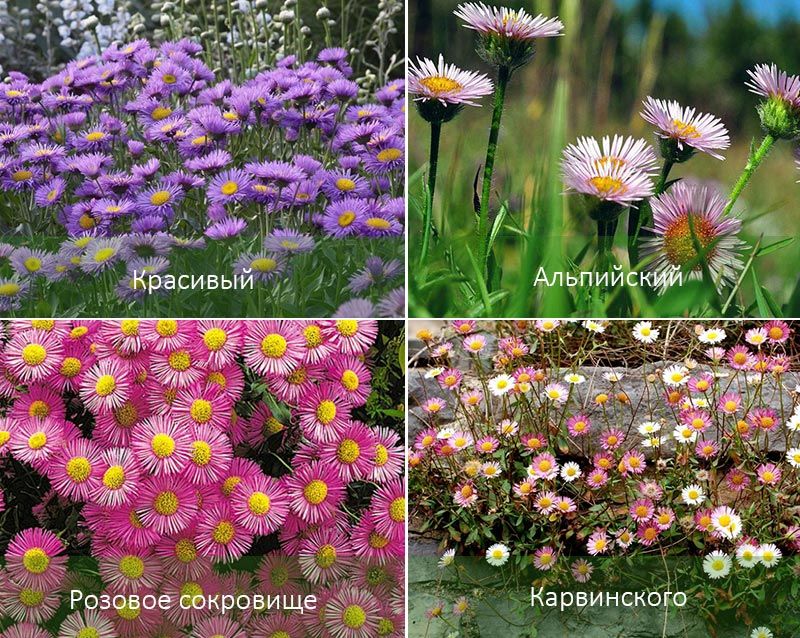
| Beautiful | It has straight shoots with dense foliage and a single flower at the top. It blooms all summer from July to August. The most popular varieties are: Lilofee, Wuppertal, Pink Jewel, Azurfee, Rothe-Schönheit, Sommerneuschnee, and Dunkelste Aller. | 50-70 | Simple (in one row) and terry (in two or three rows). Various shades: pink, white, crimson, blue. |
| Karvinsky | A low-growing plant with abundant foliage, it grows up to 65 cm in width. The shoots spread out, forming a lush, colorful carpet. | 15 | The petals are arranged in a single row, resembling a daisy. During flowering, they change color three times: first pink, then white, and finally coral or crimson. |
| Alpine | Straight stems with sparse narrow leaves. | Up to 30 | Large flower heads up to 4 cm in diameter. Petals are narrow, lilac in color, with a yellow center. |
| Orange | A subshrub with erect stems and large foliage. It grows up to 50 cm wide. Popular hybrid varieties include 'Violetta' and 'Rosa Triumph'. | 30-50 | Petals in several rows form a double basket of yellow or orange color. |
| Pink diamond | A compact bush with straight stems and small leaves. Requires support. | Up to 65 | Double buds of rich pink color. |
| Pink Treasure | A tall plant with sparse, small foliage. It blooms twice a season: in early summer and in September. | Up to 70 | Pink and crimson petals in several rows form lush inflorescences. |
| Glaucus | A low-growing perennial with fleshy stems and leaves. It can grow in crevices of rocks and cliffs. | 20-40 | Small pink-lilac petals densely frame an orange center. |
| Trifidus | A dwarf plant with shaggy foliage that grows in large basal rosettes. | 10-20 | Large inflorescences with a rich yellow core and bright lilac petals. |
| Miyabe petal | A low, graceful plant. A short, single stem tops a bright flower. The basal foliage is dense and large. | 15 | The flower head consists of two rows of closely spaced, ligulate petals of pinkish-lilac color. The diameter is 2.5 cm. |
Planting and caring for erigeron
The fleabane can be propagated by dividing the rhizome, seeds, and cuttings. Growing from seeds is considered the most laborious. Sowing outdoors in winter or early spring doesn't always produce the desired results. A more reliable method is to prepare the seedlings in advance. To do this, in early March, plant the seeds in a container with moist soil, lightly covering them with soil. Create a greenhouse effect by covering the container with glass or plastic. Seedlings emerge after 3-4 weeks and develop very slowly. In early summer, young shoots are planted outdoors in a sunny, well-drained area. Care consists of loosening the soil, infrequent watering, and weeding.
Fertilizers are applied in small quantities during the period of bud ripening to prolong the flowering period.
When propagating by cuttings, a young shoot with a portion of the rhizome is separated from the bush. It is planted in prepared, soft soil and mulched with sand and sawdust. Once the plant has formed its root system and produced its first leaf, it is transplanted to a permanent location. At home, cuttings are grown using a mini-greenhouse. To do this, fill a plastic bag with neutral soil, moisten it, and make holes in it. Insert the root portion of the shoot into the holes. When leaves appear, you can judge the young plant's development and then plant it in the garden.
The simplest and most effective way to propagate erigeron is by dividing the plant. In early spring, the largest plants are dug up and the rhizome is cut into several pieces with a sharp knife. The cut pieces are covered with ash and planted in their permanent location. The distance between the pieces should be 35 to 50 cm, depending on the size of the mature plant and its root system.
Small-petaled lily bushes require repotting every 3-5 years to rejuvenate. After this, flowering becomes abundant and long-lasting. Many gardeners resort to pruning to give the plant a beautiful shape.
The only thing that can harm erigeron is excess moisture. Prolonged rains can cause the plant to rot. Dark spots appear on the stems and leaves. If the damage is minor, treat the bush with a fungicide (for example, a 1% solution of Bordeaux mixture). Cover the surrounding soil with a layer of ash. If the damage is severe, the plant cannot be saved.