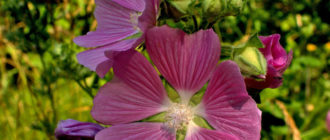
Eschscholzia belongs to the Poppy family, which includes several dozen different species. This plant was first discovered in western North America.
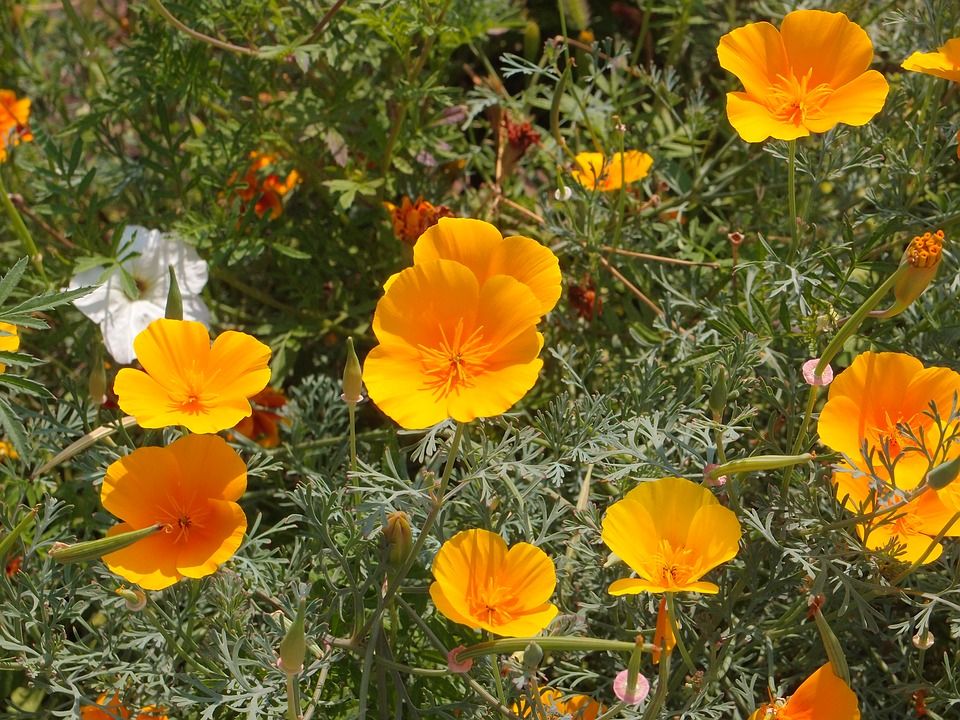
Its color resembles gold, which is why the Spanish jokingly call California poppy "golden cup." This plant is very beautiful and romantic, yet requires little care and is becoming increasingly popular in cultivation.
Content
- 1 Description and Features
- 2 Types and varieties of California poppy
- 3 Growing California poppy from seeds
- 4 How to sow California poppy seeds at home
- 5 Planting California poppy in open ground
- 6 Caring for California poppy in open ground
- 7 Eschscholzia after flowering
- 8 Diseases and pests
- 9 Top.tomathouse.com recommends: the medicinal properties of California poppy
Description and Features
This is a herbaceous perennial shrub with a taproot. The shoots are slender and numerous. The flowers resemble poppies, ranging in color from yellow to red and shades thereof, and are single or double, depending on the variety.
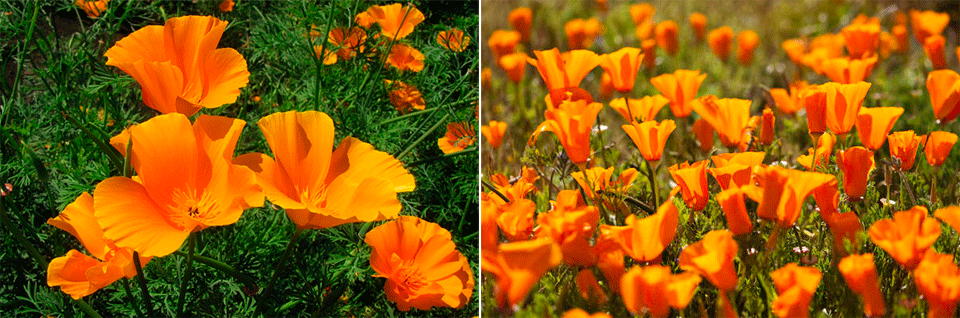
Blooms from summer until winter. However, each bud lasts only a few days, being replaced by more, at a rate of approximately 1/2. The hallmark of this plant is not only the delicate flowers, but also the white, bluish bloom on the stems and leaves.
Types and varieties of California poppy
In nature and in gardens, both single species and inflorescences are found.
Californian
The most common. Moreover, all the varieties considered are varieties of Californian.
The plant is perennial and spreads along the ground. It has fairly sturdy stems, medium-sized, about 50 cm in height. The buds are solitary, 8 cm in diameter.
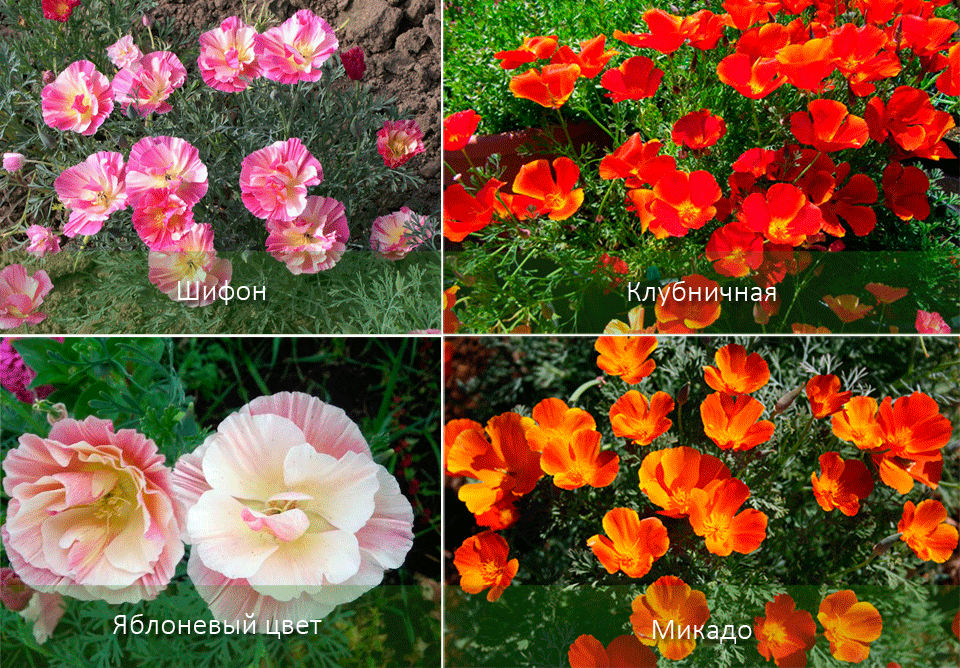
| Variety | Description |
| Strawberry | Semi-double flowers, also available in single varieties. Available in a two-color gradient, red and yellow. Thrives in rocky soil. |
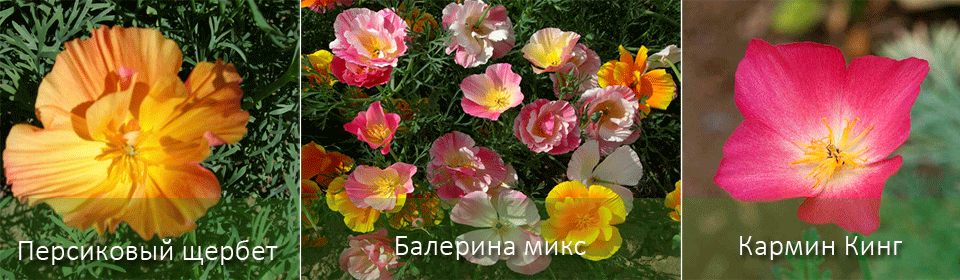
| Peach sherbet | This variety produces semi-double flowers, creamy beige in color. It has a large number of petals, up to 12. The stem is slightly shorter, reaching 25 cm. |
| Carminking | Height is about 30 cm, flowers are up to 8 cm in diameter. It has ruby-colored petals. |
| Apple blossom | Bright pink double flowers. Distinguishing features include dense foliage, numerous stems, and buds. |
| Chiffon | As we know, hybrids inherit the best traits from their parents. This variety's advantage lies in its record-breaking blooming. It begins in early May and ends with the onset of frost. The buds are double, their coloring unique. They bloom in clusters, with each flower having its own distinct hue. |
| Ballerina mix | A hybrid. It features both single and double buds. Their shades range from light pink to orange. The flowers themselves are quite large, about 9 cm in diameter. The stems are medium-sized, 40 cm. |
| Mikado | The shoots are medium-sized, up to 40 cm tall. The buds are large, about 7 cm in diameter. The petals are straight. The color is a gradient of orange and bright yellow. |
Growing California poppy from seeds
The simplest and most effective method of propagation is by seed. Seeds can be stored for a long time, retaining their properties.
Sowing times, pros and cons
An excellent solution is to plant the seeds in the fall. This allows for 100% stratification. Moreover, weaker seeds simply won't survive in such conditions, and the California poppy will flower early. To do this, prepare special furrows about 5 cm deep.
Sow the seeds, pressing them lightly into the soil. Top them with a mulch of loose humus, no more than 2 cm thick. This is done to prevent the soil from freezing where the plant is planted, as this significantly impedes root development.
Autumn sowing usually occurs in October, preferably in dry weather, only after frost sets in.
Some, on the contrary, prefer to plant seeds in the spring. However, this requires some preparation before planting. They are placed in a special cotton bag and then placed on the bottom shelf of the refrigerator. They should be kept there for at least a month before planting.
How to sow California poppy seeds at home
The plant absolutely hates transplanting, but that doesn't stop gardeners. Around the beginning of March, you can begin growing California poppy on your windowsill, but not using the usual method. A peat pellet is used exclusively. This is done to avoid damaging the plant's root system during transplantation.
Place the tablet in water to soften it. Then, using a toothpick, place 2-3 seeds into it. Afterwards, sprinkle them with peat moss, and moisten the surface.
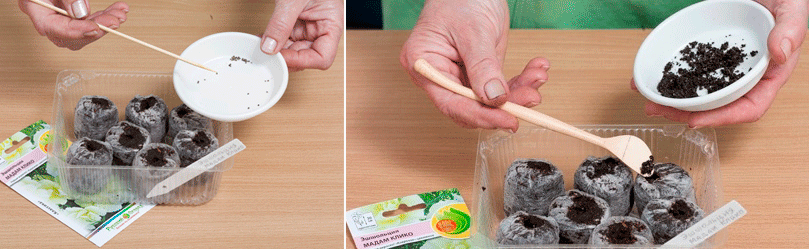
It's recommended to cover the seedlings with plastic film; the greenhouse effect will help speed up seed germination. Once the first shoots appear, remove the film and place the seedlings in a cooler, brighter location.
15 days after the emergence of seedlings, you need to feed the plants with a special mineral mixture.
If it is necessary to transport the plant to open ground, this is done together with the tablet; it decomposes in the soil, and the root system is not damaged in any way during transplantation.
About 3 weeks before planting seedlings in open soil, hardening of the seedlings begins.
This is done by placing the container with the seedlings outdoors for several hours. Hardening off is necessary to prevent the plant from dying from subzero soil temperatures when transplanted into open ground.
Planting California poppy in open ground
For planting, sandy soil is recommended; it must be well drained.
Planting dates
Seedlings should be transplanted into the soil once the threat of frost has passed. This is usually in May or April.
However, everything depends on the landing region.
Landing features
Initially, small planting holes need to be prepared. Space them at least 30 cm apart, due to the bushy growth habit. The seedling is placed in the pre-dug hole along with a peat pellet, then covered with soil and compacted. After this, water. Flowering occurs after about a month.
Caring for California poppy in open ground
This plant is naturally unpretentious, requiring only fertilizing and timely watering. Watering should be done exclusively in the evening, before sunset. Direct the water precisely at the plant's roots to avoid touching or damaging the blossoms.
Mineral fertilizers with high levels of phosphorus, nitrogen, and potassium are excellent for fertilizing. They promote overall plant growth and increase the number of inflorescences.
Organic matter is highly discouraged as it will kill the California poppy.
To ensure air access to the roots, the soil must be loosened regularly, and dried buds must be removed promptly.
Eschscholzia after flowering
After flowering, the seeds are collected and the plant is prepared for winter.
Seed collection
California poppy seeds reproduce well through self-seeding, so collecting seeds is not necessary. If you plan to replant the plant in the same location later, you can let the process take its course. Next spring, you'll be delighted with dozens of beautiful flowers. However, if you plan to plant them elsewhere, you should place special gauze bags over the flowers. Then, after four weeks, cut off the seed pods and only then extract the seeds.
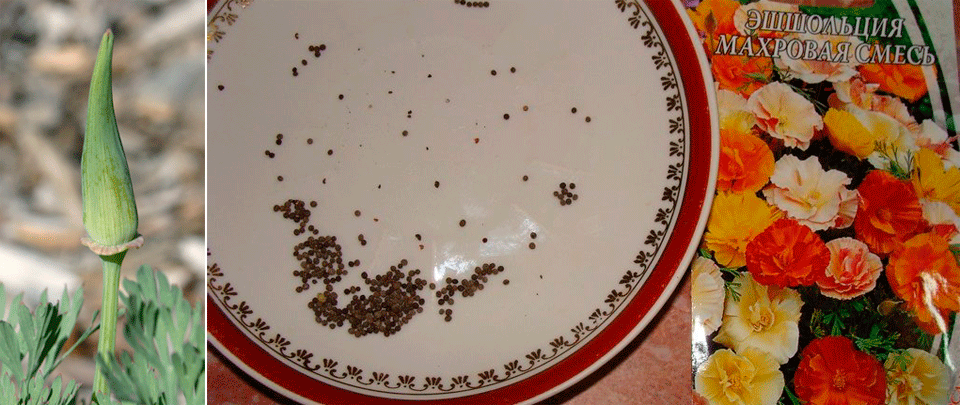
Gauze bags isolate the seeds from the outside world, thereby preventing the emergence and development of various diseases. They are dried and then stored in the refrigerator.
Preparing for winter
In the fall, cut back any remaining plants and thoroughly dig the area. Strong stems will surely emerge in the spring; they're thinned and fertilized. Just a month later, they'll bloom.
Diseases and pests
Eschscholzia is highly resistant to various diseases, but it is not immune to all diseases. The most common problem with this plant is root rot. It is caused by excess moisture in the soil. This disease manifests itself as wilting of the flower. The only way to determine for sure is to dig up the root. If there is a gray coating on it, it is gray mold. The affected plant is removed, its neighbors are treated with a fungicide, and watering is temporarily stopped.
During dry periods, spider mites are the main problem. They appear as webs covering the leaves, and small, moving dots can be seen on the leaves themselves. Acaricides are excellent for treatment.
Aphids are also a common problem for California poplars. However, they are relatively easy to control: simply spray the affected plant with cold water and dust it and neighboring plants with a fungicide solution.
Top.tomathouse.com recommends: the medicinal properties of California poppy
Virtually every plant in nature has a special purpose. This is also true for this flower. Ancient Native Americans long ago studied the medicinal properties of California poppy. They used it to relieve toothaches and fight lice. Even the pollen was used to improve skin elasticity and restore its former attractiveness. Modern medicine uses this plant extract as part of multi-component medications. It is included in sedatives and pain relievers. Furthermore, California poppy-based medications are 100% safe, allowing them to be used by everyone, regardless of age or individual health conditions.
However, it's important to keep in mind that nothing is perfect, and California poppy seed medications also have side effects that can only develop if the dosage is exceeded. These include the development of an allergic reaction. This is true regardless of the form in which the medication was taken. A decrease in effectiveness is possible, which often leads to an increase in dosage. To avoid any unpleasant consequences, it's important to strictly follow your doctor's instructions.