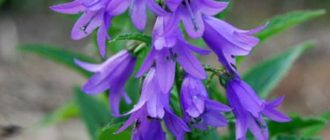
Eustoma is a flowering plant for both gardens and indoors. Until recently, the flower wasn't so common, but today, a wide variety of eustoma varieties—white, purple, blue, and bicolor—can be found in flowerbeds and apartment windowsills.
Content
- 1 Eustoma flower – features
- 2 Types and varieties of eustoma
- 3 Where is it better to grow it - in a flowerbed or at home?
- 4 Necessary conditions
- 5 Propagation from seeds
- 6 Breeding at home
- 7 Eustoma in the garden
- 8 Lisianthus after flowering
- 9 Disease and pest control
- 10 Top.tomathouse.com explains how to keep eustoma flowers growing longer.
Eustoma flower – features
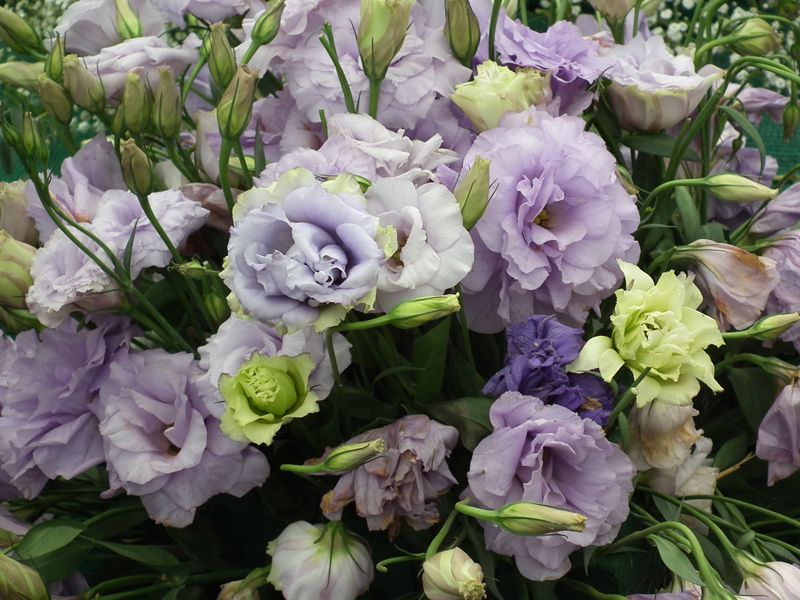
Lisianthus, or eustoma, is a delicate and beautiful flower with leaves that seem to be covered in wax, a pleasant glaucous hue. The inflorescences are large, funnel-shaped, single or double, about 8 cm in diameter. Unopened, the inflorescences resemble rosebuds, but as they mature, the flower transforms, resembling a poppy. The stems, up to 120 cm long, branch extensively, so a single plant makes a full, lush bouquet.
Up to 35 buds form on a bush at a time. Cut flowers can last up to 30 days in a vase.
Incidentally, eustoma is one of the top ten most popular flowers in the Netherlands, and regularly wins prizes at exhibitions in Poland. At home, the flower grows up to 20 cm, and in a flowerbed, the bush can be grown up to 1.5 meters.
Types and varieties of eustoma
Every year, new varieties of this remarkable flower appear in specialty stores. Planting material is available to both professional and amateur gardeners who want to grow large, vibrant blooms in their flowerbeds. When choosing seeds, pay attention to the height of the bush, the type of inflorescence, the color, and the growing conditions. The seeds are very small, so they are sold pelleted.
Hobby gardeners are advised to choose annual eustoma varieties, as biennials can only be grown in a greenhouse, but this requires experience and knowledge.
Main varieties of eustoma
| Variety | Description | Height (cm) | Inflorescences |
| Tall | |||
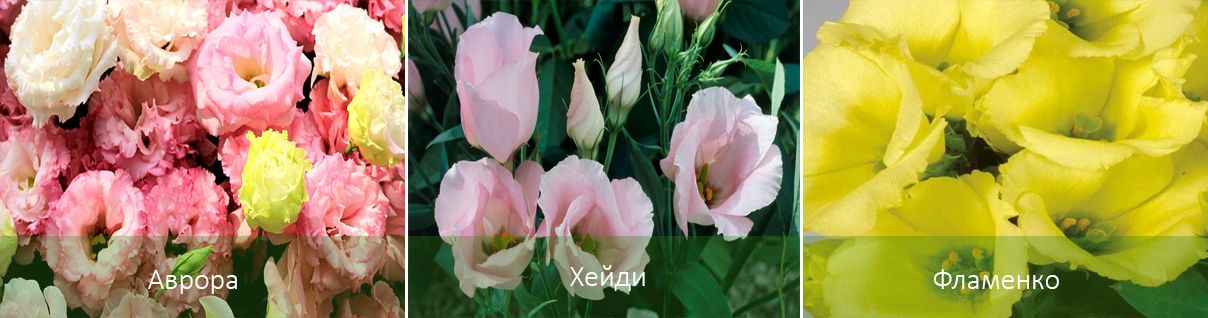
| Aurora | An annual variety with early, long-lasting flowering. | Up to 120. | Terry in white, light blue, blue or pink shades. |
| Heidi | The plant forms a spreading bush, inflorescences appear early. | About 90. | They can be single-colored or two-colored, and are located densely on the stem. |
| Flamenco | The tallest. Disease resistant. | About 125. | Large ones in a variety of shades - white, blue, pink, two-tone. |
| Short stature | |||
| Florida Pink | An indoor variety, the flowers can be used to make a beautiful bouquet. | No more than 20. | Soft pink color with lace edges. |
| Mermaid | Unpretentious for home gardeners. | Up to 15. | Simple, up to 6 cm in diameter, colors vary. |
| Little Bell | Low-growing with inflorescences located tightly on the stem. | Up to 15. | Regular, small, of various shades. |
Where is it better to grow it - in a flowerbed or at home?
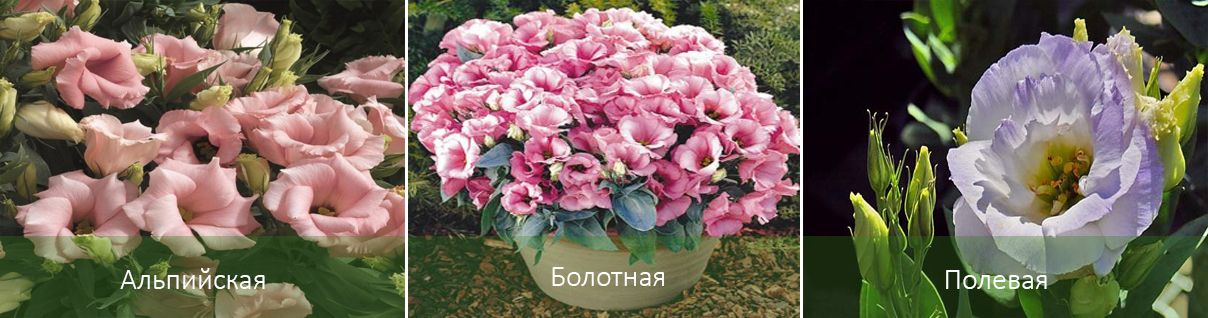
Is the eustoma flower a houseplant or a garden plant? Lisianthus was once grown exclusively indoors, but today seeds for growing in flowerbeds are available. It's used to decorate rock gardens and create mixed borders.
Flowering begins in midsummer and continues until early October. A single bush blooms for four months.
In southern regions. Under favorable weather conditions, if the flower is cut in time, new shoots will emerge from the root and the eustoma will bloom again. However, in temperate climates, this is impossible to achieve.
If you need to grow a flower by a certain date, it is enough to sow the seeds according to the schedule.
| Sowing seeds | Bloom |
| November-December | June |
| At the end of December | July |
| Mid-January | August |
| End of January | September |
Eustoma is a flower that can tolerate light frosts. The main mistake novice gardeners make is harvesting seeds too late. If you prepare the planting material in the spring, the buds won't have time to appear.
Necessary conditions
- Sunny areas.
- The optimal soil composition is humus with the addition of peat.
- The best method of propagation is from seed. Cuttings are not possible.
- The plant is watered after the soil has dried out; excessive moisture is dangerous for the bush.
- Once flowering begins, the bush cannot be replanted, otherwise the root system will die.
- At home, lisianthus grows in cool conditions.
Propagation from seeds
Growing a beautiful, blooming eustoma bush at home is quite challenging, even for experienced gardeners. The process is long and labor-intensive. The main difficulty is the very small seeds, which are difficult to work with. A second problem is the low germination rate of the planting material (no more than 60 out of 100 seeds survive).
Algorithm of actions:
- in the middle of winter they begin to prepare seeds;
- The best choice is a sterilized substrate with low nitrogen content;
- the seeds are scattered on the surface and pressed down;
- cover the container with polyethylene on top;
- holes are made in the film to allow air access;
- if additional lighting is required, lamps are installed;
- It is necessary to maintain humidity by spraying the seedlings.
Optimal temperature: +20 ºC during the day and +14 ºC at night.
If the conditions and technology are followed, the first shoots appear after 14 days. To accelerate growth, they are treated with a special solution. When two full leaves appear, the seedlings are transplanted into separate containers. The plants are transferred to the flowerbed after three months.
Breeding at home
To make lisianthus bloom in winter, seeds are sown from mid-summer to early autumn.
Algorithm of actions:
- the container is filled with substrate (a mixture of sand and peat);
- scatter seeds on top;
- containers are placed in a warm, well-lit place;
- It is necessary to spray the soil regularly.
Once the seedlings emerge, watering should be reduced by half to allow the soil to dry slightly. Once full-fledged leaves have formed, the bushes are transplanted into individual pots.
Indoor varieties require additional lighting and oxygen. It's important to ensure an appropriate temperature range—between 19ºC and 22ºC.
Water with settled water. The bushes do not require misting. Fertilize with fertilizer when the first buds appear. Use a complex fertilizer twice a month. When the air warms up well, take the eustoma outside into fresh air. Faded stems should be cut back, leaving two pairs of leaves.
Eustoma in the garden
For garden cultivation, eustoma flowers are grown from seeds. They are sown from December to January, with buds appearing between late May and July. The seeds are planted in plastic cups filled with prepared potting mix. Each container should be covered with plastic film, creating a greenhouse effect.
For several months, seedlings need:
- ventilation and air access;
- additional lighting;
- spraying.
In the second half of February, the cups are moved to the sunniest and brightest windowsill. To prevent various diseases, the seedlings are sprayed with a Fundazol solution. As soon as the seedlings have two full leaves, the eustoma is transplanted into pots. The containers are again covered with plastic wrap, but uncovered during the day for ventilation.
In just one week, the seedlings double in size, and in March they are replanted into larger pots. It's important to preserve the root ball.
The best time to transplant shrubs to a flowerbed is May, as the risk of frost is minimal. It's important to choose a site that's sheltered from the wind and receives good sunlight.
How to plant eustoma seedlings:
- it is necessary to prepare a hole;
- water it;
- without removing the soil lump, place the seedling in the center of the hole and sprinkle with soil;
- cover with a plastic container (it should not be removed for at least two weeks).
The minimum distance between holes is 10 cm. It is important to maintain a proper watering schedule – both excess and insufficient moisture are detrimental to young eustoma seedlings.
Helpful Tips
- After 6 to 8 leaves appear, pinch the top of the plant. This helps create a fuller crown.
- The first feeding is carried out after a month - mineral fertilizers are used, but the solution is prepared in a low concentration.
- Withered flowers are cut off.
Lisianthus after flowering
After flowering, remove the branches, but not completely – leave a few centimeters (two internodes) to allow for subsequent blooms to develop. Place the container indoors where the temperature does not rise above 15ºC. Reduce watering during the winter months and do not apply fertilizer. Repot the bush in new soil only in spring, when new leaves appear.
Gradually restore the previous care regime:
- bright lighting;
- watering regime;
- top dressing.
Disease and pest control
| Problem | Reasons | Solution to the problem |
| The most common diseases: gray mold, powdery mildew | Failure to comply with temperature conditions (too cold) and humidity levels. | Preparations: Topsin, Saprol. They are alternated and also used for prevention (treated on healthy plants). |
| Insects: aphids, fungus gnats, slugs, whiteflies. | Neighborhood with infected plants, improper care. | Treatment with preparations: Mospilan, Confidor, Fitoverm. |
Top.tomathouse.com explains how to keep eustoma flowers growing longer.
Cut flowers will last up to one month in a vase. To maximize the life of your eustoma, change the water regularly to keep it clean and prevent bacteria growth. The branches should also be properly nourished.
Recommendations:
- already in the water, the stems need to be cut at an angle;
- the work must be done with disinfected scissors or a knife;
- leaves that are in the water must be removed;
- Cut the stem and insert a match to allow water to penetrate inside more easily.
Eustoma flowers are best preserved in settled, filtered water. To get rid of the bacteria that are inevitably present in water, follow these steps:
- put a silver item in a vase;
- pour ash into the water;
- dissolve an aspirin tablet, you can use several tablets of activated charcoal;
- dissolve a tablespoon of salt in water.
The water should be changed daily, and the stems should be rinsed with plain water. Experts recommend providing nutrition for eustoma as follows:
- add a tablespoon of sugar;
- use special solutions.
Nutrients are changed daily along with water.
Eustoma flowers have many advantages: they come in a wide range of colors, stay fresh for a long time after being cut, and form a bushy shrub with numerous flowers. Unlike roses, eustoma flowers are thornless.