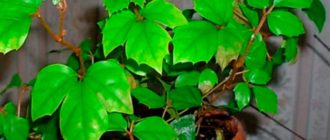
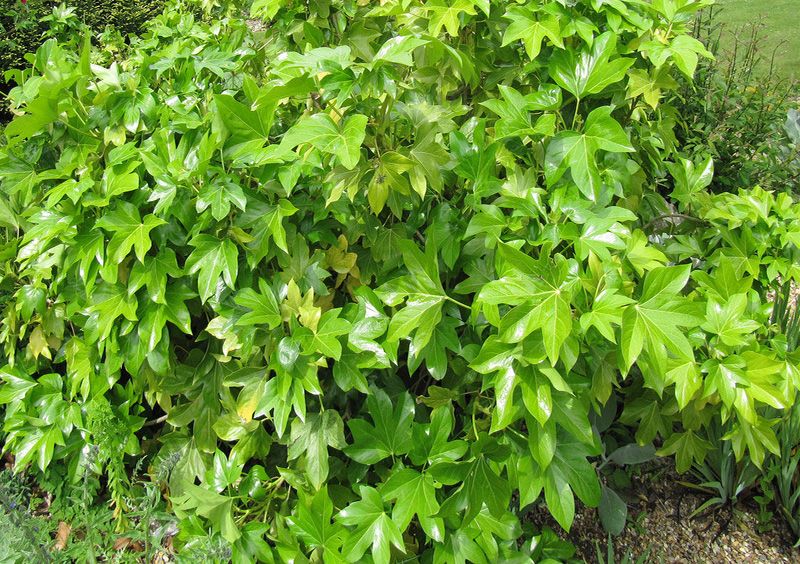
Fatsia vine is one of the most popular hybrid plants among gardeners, created by crossing common ivy and Japanese fatsia. The combination of these two plants makes this vine tolerant of virtually any conditions, and its evergreen foliage will grace any home.
Content
Description
Young plants of this species have smooth, easily bendable stems, which become covered with hard, rough bark as they mature. Because Fatsia vines are climbers, they often require support for vigorous growth, as the trunk can reach heights of up to 5 meters! The leaves of this vine are divided into 3-5 parts and are dark green. Some specimens have lighter colored margins.
The flowering period occurs in late summer and early fall. Then, delicate pastel-colored flowers appear on the branches. The plant bears small berries in various shades of blue.
Varieties
There's only one species of this genus in nature—Fatshedera Lise. However, there are many varieties, the main difference being the color of the leaf blade:
| Variety | Peculiarity |
| Variegata. | The leaves are dark green, with light beige veins and edges. |
| Silver Prince. | The name itself indicates that the leaves of the silver are green with a silvery sheen. |
| Pia. | It has wide and strong leaves with white edges. |
| Ennmike. | The colors lighten toward the center. The edges of the leaf often take on an emerald hue, while the center becomes whitish. |
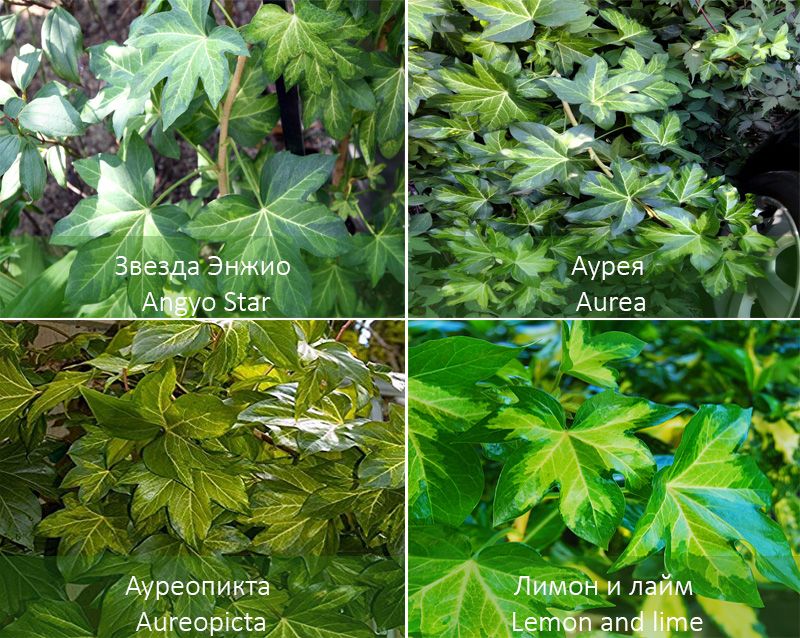
| Star of Engio. | The foliage contains shades of green and beige. |
| Aurea. | The core of the leaf blade is pale green, becoming darker green towards the edges. |
| Aureopicta. | It is distinguished by relatively small leaves with a bright green base color. |
| Lemon and lime. | Spotted dark green leaf with spots of different light shades. |
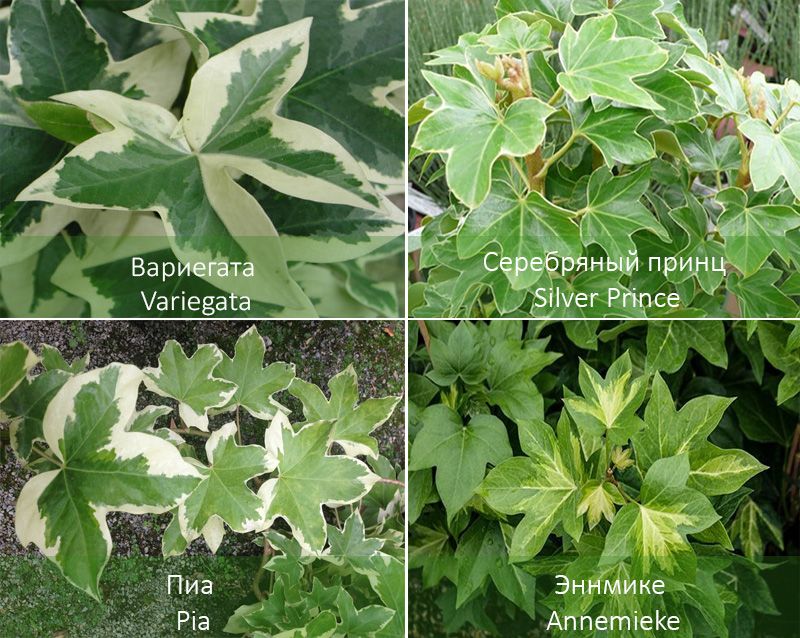
There are quite a few varieties, so you can choose the one that will fit most harmoniously into the surrounding environment, having first assessed the variety from a photo.
Home care
Since one of Fatsia's ancestors is ivy, the plant is easy to maintain and doesn't require any special gardening skills to grow. However, there are a few guidelines to follow to ensure a beautiful and healthy green friend in your home.
Location, lighting, temperature, air humidity
| Location | Lighting | Temperature | Air humidity | |
| Winter. | Cool place (balcony, veranda, windowsill). | A bright place without direct sunlight (eastern or western windowsill). | +10…+16 | Loves humid air; in summer, you need to spray it with warm water from a spray bottle and wipe the leaves. |
| Summer. | In the fresh air without wind. | +20…+22 |
Planting, soil, pot
For planting, you can purchase soil with a pH of 6-7. Experienced gardeners often use homemade mixtures in a 2:2:1:1 ratio of the following components:
- peat, turf, river sand and leaf soil;
- leaf soil, turf, pieces of pine bark and coarse sand.
The mixtures can be diluted with humus. The hybrid can grow without soil at all, in which case it can be replaced with nutrient solutions.
The pot should be large, as the vine has a well-developed root system. It should have holes in the bottom to allow excess water to drain. To prevent the weight of the shoots from tipping the container, dig a sturdy support 1/3 of the way into the soil. You can wrap it in a roll of moss so that its appearance behind the foliage won't detract from the tree's aesthetic appeal. The shoots are secured to the support with thread or soft wire.
The pot and its contents are changed annually in the spring or as needed.
The plant requires more space, otherwise the fatshedera may not receive enough nutrients and will begin to wilt.
Watering
The frequency of watering depends on the season. In summer, indoor vines need to be watered much more frequently than in winter. You can determine the need for watering by the condition of the soil: it should be about half dry before watering again.
Watering requires careful attention, especially in apartments, as overwatering can cause root rot, while insufficient water will cause the plant to dry out. Both of these conditions are detrimental to the Fatsia plant.
Top dressing
During the active growth period (spring and summer), the hybrid requires additional feeding. Typically, a mixture of complex and organic fertilizers is used for this, alternating them every ten days. During the winter dormancy period, no additional feeding is necessary.
Formation, reproduction
To propagate Fatsia, you can use seeds, cuttings, air layering, or simply divide an existing bush.
Air layering
When warm weather arrives (March-April), the vine's trunk is cut and a small piece of sphagnum moss soaked in a nutrient solution or plant stimulator is applied to the area. The compress is wrapped in plastic wrap or a regular bag, and the wound is periodically aired to prevent drying. After some time, new roots will emerge from the cut, and when they reach sufficient length and strength, the root tip is cut off and the vine can be replanted in a separate pot with nutritious soil and good drainage.
cuttings
The top branches are cut off and replanted into individual pots filled with a 1:1 mixture of peat and sand. The cutting is covered with a plastic bag or a cut-off bottle to retain moisture and heat. Once the cutting has developed its own roots, it can be transplanted into a larger pot for further growth.
Dividing the bush
Propagation should be done with a sharp, clean knife. The hybrid is completely removed from the pot, and its root system is carefully divided. The plants are replanted in separate containers with good drainage. The division points should be sprinkled with activated charcoal.
Seeds
Plant in a mixture of turf, humus, and sand, equal parts, to a depth of 1 cm. If the seed is planted deeper, it may not germinate. Cover the pot with a plastic bag, and keep the temperature inside at around 18 degrees Celsius. Transplant when the first shoots appear.
Diseases and pests
Fatsia is rarely susceptible to diseases, but if they begin to develop, the cause is most often violations of care rules.
| Signs | Reasons | Elimination |
| The leaves are yellow and wilted. | Excess moisture. | Reduce watering, dry out the soil. |
| The leaves are dry and falling off. | Lack of moisture. | Moistening the soil and spraying with water. |
| Fluffy coating on shoots. | Disease: gray mold. Low temperature and high humidity. | Removal of affected parts, treatment of the rest with antifungal agents. |
| Variegated plants lose their pattern. | Lack of sunlight. | Moving to a better-lit area. |
| There are brown spots on the leaves. | Sunburn. | Limit exposure to sunlight. |
Most often, the vine is attacked by mealybugs, spider mites and scale insects.
| View | Signs | Elimination |
| Spider mite. | Black dots on leaves, thin web on shoots. | If there are only a few insects, thoroughly rinsing the plant will help. If there are many, treating with specialized chemicals will help. |
| Mealybug. | White coating. | |
| Scale insect. | A brown armored pest. |
The sooner measures are taken to eliminate negative impacts, the less damage will be caused to the plant by pests and diseases.
Superstitions
For many years, Fatshedera has been a key figure in popular superstitions. Many believe that this exotic hybrid steals the life force of household members, feeds on their positive emotions, literally drains their owners of their vitality, and is a portent of death. The opposite effect occurs when the vine is placed outside the home, where it serves as a kind of shield against evil spirits and negative influences.
There is a belief that the plant repels men; they feel discomfort and a loss of strength near the descendant of ivy, so they avoid close contact and even try not to be in the same room with the green man-hater.
Of course, these are just omens and superstitions, and there's no need to heed them. In fact, in exchange for minimal time spent on it, the Fatsia plant rewards its owner with the opportunity to enjoy the beautiful sight of its broad green leaves, graceful flower buds, and vibrant berries.