Not long ago, many exotic fruits were unknown to residents of our country: neither their names nor their appearance. Today, stores offer a wide variety of exotic fruits. However, many people interested in gardening and growing indoor plants want to cultivate plants that don't grow naturally in our climate, either at home or in their gardens. One such exotic plant is the feijoa. It turns out that this southern tree thrives in our latitudes, but only indoors.
Content
Description of feijoa
Feijoa is a shrub or small tree cultivated in the subtropics and tropics. It belongs to the Myrtaceae family. The plant grows wild, primarily in South America. Through extensive selective breeding, indoor varieties have also been developed that can be grown on a windowsill at home.
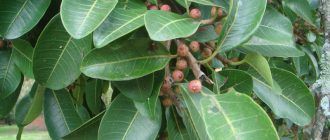
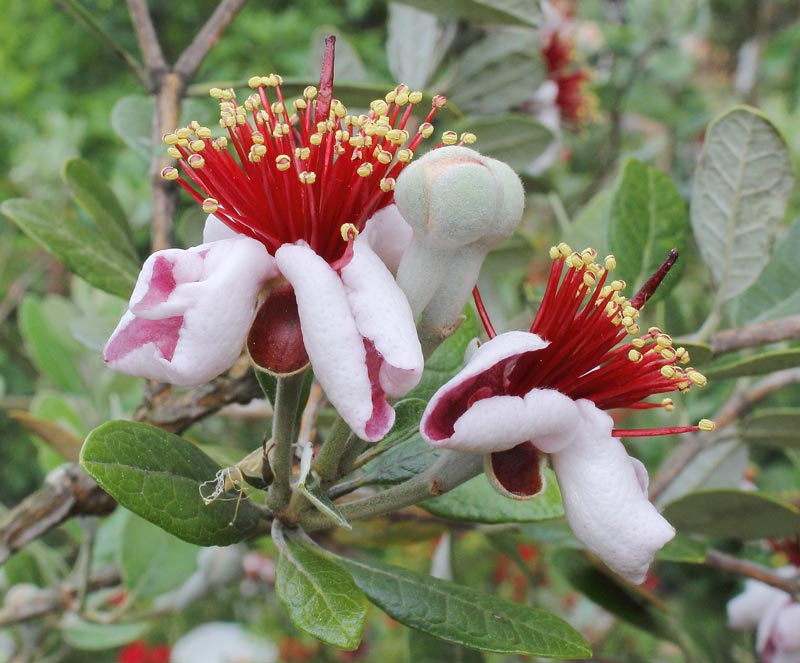
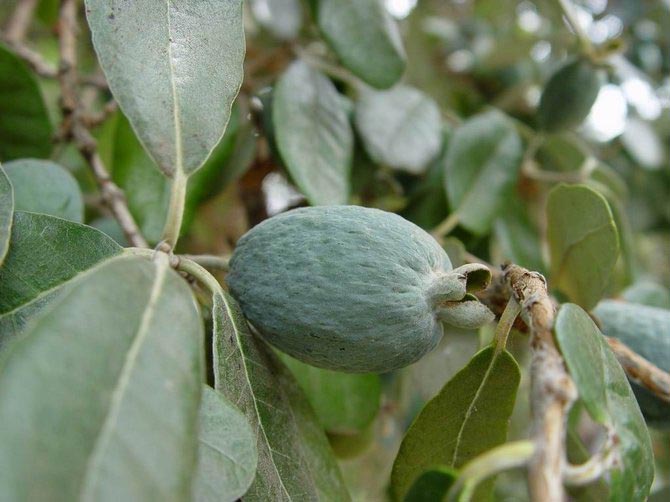
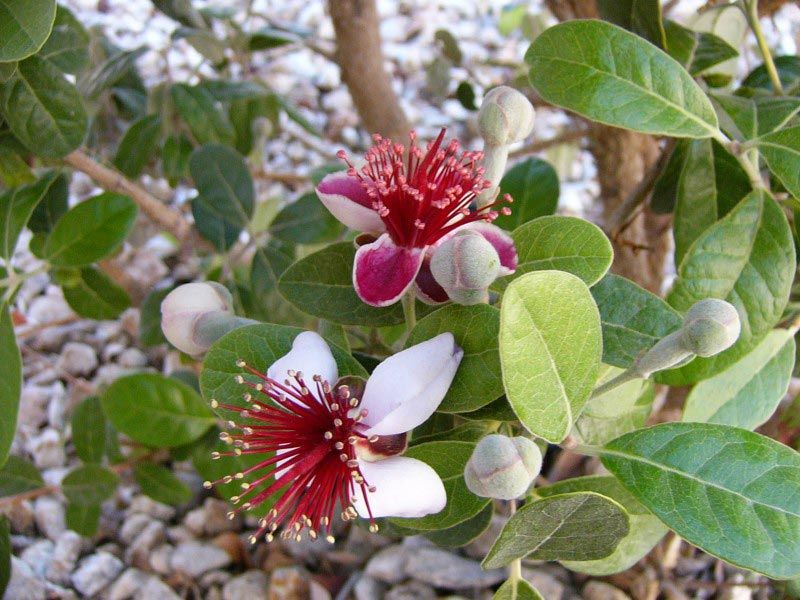
Feijoa has oblong leaves, smooth and dark green above, and grayish beneath, covered in a light fuzz. Flowers can grow singly, in pairs, or in clusters of several. Petals are white at the edges, turning pinkish toward the center, where numerous stamens are located.
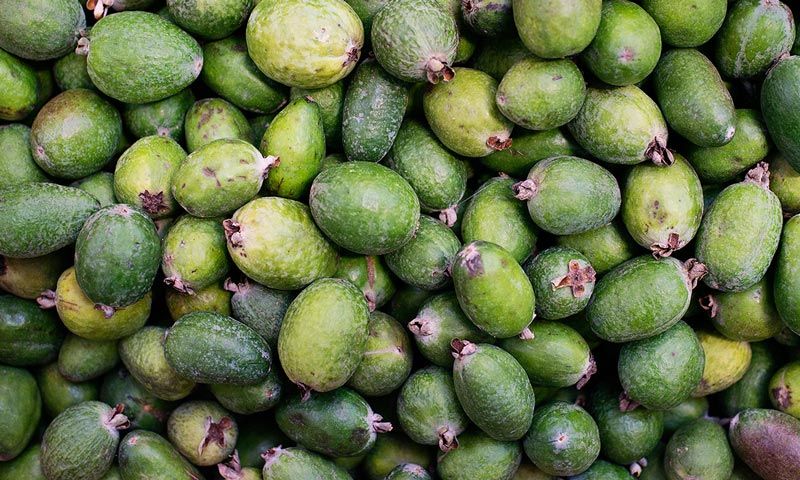
Feijoas are juicy, fleshy berries covered in a yellow to dark green peel. Their flavor is reminiscent of pineapple, kiwi, and strawberry.
Feijoa fruits contain many beneficial sugars and organic acids. They are also rich in iodine, which is in the most bioavailable form. However, scientists have found that the content of this beneficial micronutrient varies greatly depending on growing conditions. Only feijoas grown near the sea boast high iodine levels. The fruits are also rich in ascorbic and malic acids, pectin, and fiber. They have been shown to contain substances that inhibit carcinogenesis. The peel, which is not usually eaten, is particularly beneficial in this regard.
Feijoa should not be consumed by those who are allergic to the substances it contains.
The relatively high content of simple carbohydrates in fruits can be harmful to people with obesity of the second or higher degree, as well as diabetics.
Caring for feijoa at home
Growing feijoa in the Russian climate is not too difficult, but it is necessary to follow the care instructions.
Temperature
During the summer growing season, it requires temperatures of 20 to 25°C. The pot can be placed on the balcony or outside, but it must be kept in a location protected from drafts.
During the cold season, feijoa doesn't require high temperatures; it can be maintained at around 15°C. It has been shown that wild and cultivated feijoa bushes can tolerate temperatures as low as -10°C. However, subjecting the indoor plant to such severe stress is not recommended.
Lighting
Feijoas are native to subtropical regions with plenty of sun, warmth, and moisture. This indoor plant requires adequate light: it's best to place it on a sunny windowsill or move it outside to a well-lit area.
If it doesn't receive enough sunlight, it may wilt and even die. In winter, feijoa requires supplemental lighting to extend daylight hours.
Soil
The soil requirements are not too high, however, for better growth and development, you still need to prepare a special substrate for feijoa.
Its optimal composition is in the ratio 6:4:1:1 respectively:
- turf soil;
- humus;
- river sand:
- rotted manure.
Growing from seeds indoors requires a slightly different soil preparation. To ensure proper germination, seeds should be planted in the following substrate (proportions 2:2:1, respectively):
- peat;
- leaf soil;
- sand.
Watering
In subtropical climates, especially along seashores and ocean coasts, the air is very humid. Therefore, indoor feijoas also require high humidity and ample watering. If the air is too dry, they will begin to drop leaves, dry out, and may even die.
During hot weather, it should be watered very frequently, preventing the soil from drying out. It's also important to mist the feijoa regularly with a spray bottle. You can place several containers of water in the room where the pot is kept, or install a humidifier.
Top dressing
During the growing season, feijoa requires special fertilizers. In spring and summer, these should be applied at least once every two weeks, in stages. Both mineral and organic fertilizers are required. First, enrich the soil with a nitrogen-based fertilizer (bird droppings or cow manure), then after two weeks, apply a potassium-rich fertilizer (such as wood ash), and after the same amount of time, apply superphosphate. Fertilize each time after a thorough watering.
Transplanting and pruning
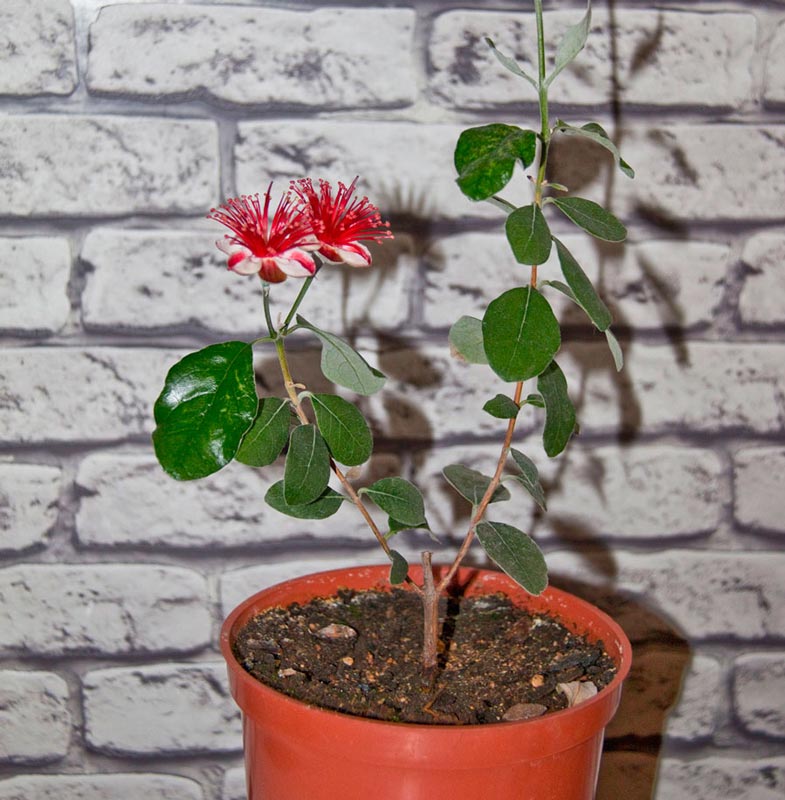
A plant up to three years old requires repotting once a year. A mature plant should be repotted as needed, every two or three years. Each time, use a larger container to allow the root system to develop freely. Feijoas don't require complete repotting: they can be carefully transferred from one pot to another, complete with soil. Since the above-ground portion of the plant is very fragile, it's best to have someone help you repot.
To ensure that your indoor feijoa is pleasing to the eye, its crown must be trimmed correctly.
Shaping a standard tree is no easy task. A standard tree is an artificially created, straight trunk topped with a beautifully shaped crown. Excess branches must be periodically removed, which can be quite time-consuming. Once the plant reaches the desired height, the top should be pinched off. After this is removed, lateral shoots will begin to grow. These should also be pinched off, gradually shaping the crown.
Methods of propagation of exotic plants
Feijoa can be propagated by planting seeds, cuttings, or separating root suckers. Of course, the easiest way to obtain this exotic plant is to purchase it from a specialty store. However, finding feijoa isn't always easy. Alternatively, you can buy the fruit at the supermarket and obtain the seeds for planting. It's important to choose fully ripe berries. They shouldn't be either unripe or overripe. Otherwise, the seed won't germinate.
Carefully squeeze out the contents of the fruit, then place it in a saucer and cover with water, or better yet, a weak solution of potassium permanganate. After the seeds have separated from the pulp, rinse them thoroughly under running water and dry. Once completely dry, they can be sown in prepared soil.
The seeds are planted at a shallow depth (about 0.5 cm) and then covered with plastic wrap or a glass container to create greenhouse conditions. If done correctly, seedlings will appear in about 30 days. Once the seedling has two or three pairs of leaves, it should be carefully transplanted into a separate pot.
Taking cuttings is a more complex method, accessible only to experienced gardeners. Beginners are better off using simpler methods. Semi-woody shoots are cut from a mature plant. The cuttings should be approximately 10 cm long, and it's important that each one has 2-3 buds.
The leaves are trimmed from the branches, leaving only a couple of the top ones. The same soil used for germinating seeds is suitable for rooting the cuttings. The branches are planted in moist soil, leaving about a third of the cutting above the surface. After this, the soil in the pot is watered with a weak solution of potassium permanganate.
After some time, you can use some kind of root formation stimulator (for example, Kornevin).
Rooting takes a long time, about 1.5-2 months. When the first leaves appear on the branches, the plants can be transplanted into individual pots.
Feijoa flowers and fruits
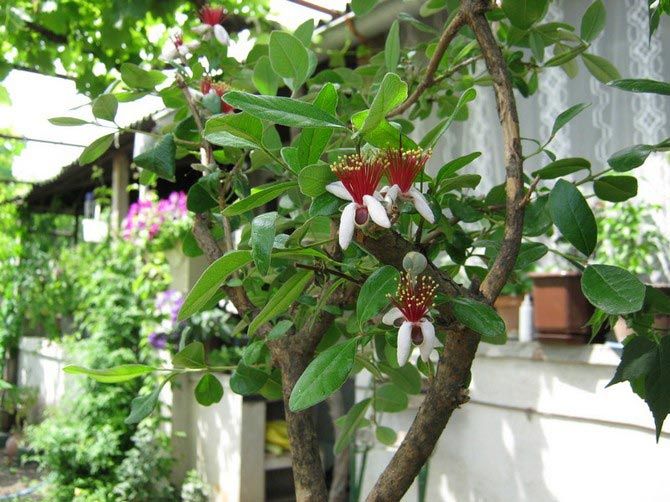
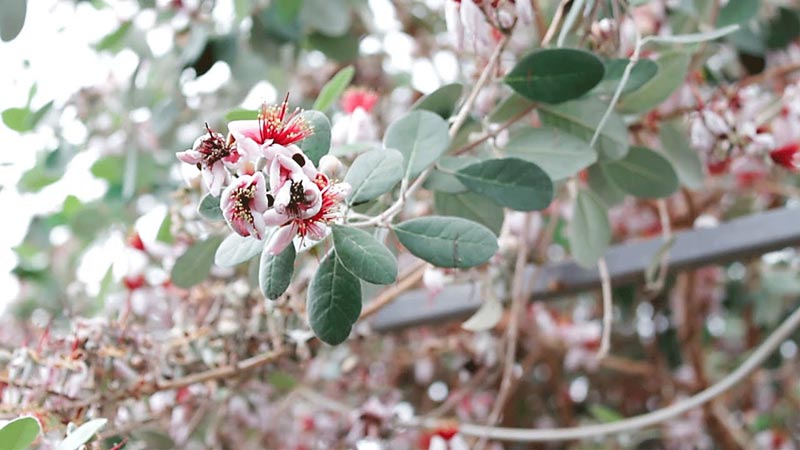
Feijoa blooms from May to June-July. The flowers are four-membered, with white and pink petals, and numerous red stamens in the center. Flowering is typically long-lasting, lasting 3-4 weeks.
To avoid additional difficulties, it's best to choose self-pollinating varieties. Then, the fruit will set naturally, without any extra effort on your part.
If you're growing a different variety, you'll need to plant several plants (at least two) at once. After the flowers appear, use a special brush to collect pollen from one plant and place it on the stamens of the other.
Feijoas grown indoors may have a slightly sour taste. They only appear on grafted trees, in their fourth or fifth year.
Pests and diseases of feijoa
Like other houseplants, feijoas can become infected with fungi or be attacked by insect pests. This is often due to improper care. Treating the plant with fungicides can help protect it from fungal infections. These can be purchased at a specialty store.
When using the drug, you must strictly follow the instructions.
The most common pests of feijoas are scale insects, spider mites, and mealybugs. The former can be controlled using several methods. As soon as insects are detected, thoroughly treat the leaves with a soapy solution. Be careful not to let the solution come into contact with the soil in the pot.
If this method doesn't work, stronger solutions such as Karbofos should be used. It should be diluted at a rate of 6 g per liter of water and then sprayed liberally on each leaf. The treatment should be repeated at least three times, with a week between sprays.
Red spider mites typically attack plants that are kept in low-humidity conditions or experience soil moisture deficiency. To control them, the acaricide Kelthane is recommended. It is effective against various types of mites on fruit plants. Dilute 2 grams of the product in a liter of water and thoroughly spray all parts of the feijoa. It's best to spray on a cloudy day or move the plant out of direct sunlight to a shady location. Otherwise, the leaves and shoots may be severely burned.
Mealybugs rarely infect feijoas. If they do, any insecticide will help combat the problem.
Feijoa not only produces delicious and healthy fruits, but also makes a wonderful interior decoration for any home. When in bloom, it will fill the room with a wonderful, subtle aroma. Growing the plant is not difficult; even a novice gardener can do it.