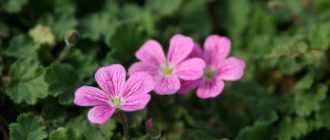
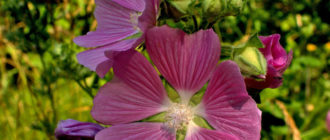
The sweet violet is a herbaceous perennial of the genus Viola. It prefers forest, forest-steppe, meadow, and mountain zones of Europe and Asia, growing in sunny clearings and forest edges. It is easily cultivated.
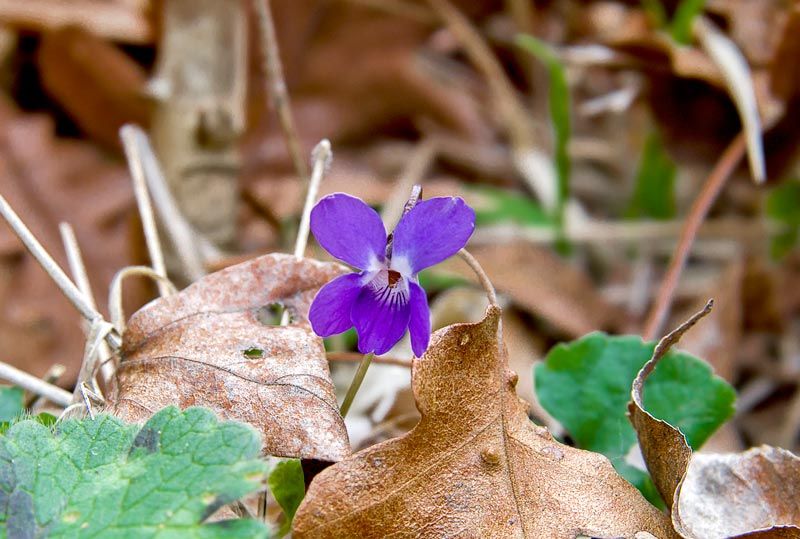
Description of the fragrant violet
Thanks to its medicinal properties and low maintenance, the sweet violet has long been cultivated in gardens and flowerbeds. The plant blooms in late April, and with proper care, its bluish-blue or purple buds delight the eye until mid-July. It has a very strong creeping root system, constantly producing new buds that produce rosettes of leaves. The upper shoots trail along the ground, allowing them to root. The leaf blades are rounded, tapering at the top. They have serrated edges along the sides. They open fully after flowering.
The flowers are solitary, with five petals, and are located on a 12-15 cm long peduncle. The plant gets its name from its delicate and pleasant aroma, which intensifies during the opening of the buds in the morning and evening.
Fragrant violet - varieties
In addition to traditional shades, breeders have developed varieties of white, pink, and multicolored violets. Some varieties can bloom twice per season.
Let's look at the most common ones in more detail.
| Variety | Description, application | Flowers |
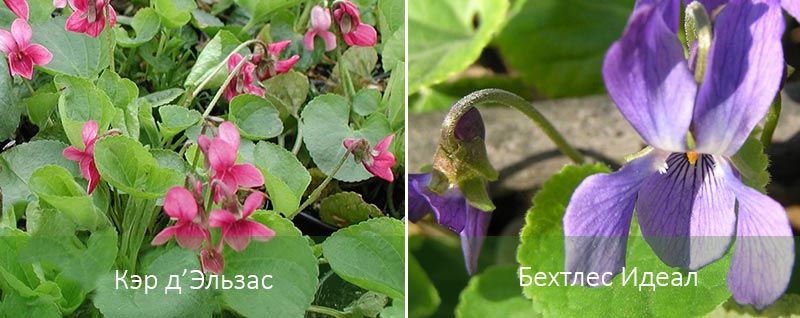
| Bechtles Ideal | Suitable for use in flowerbeds and flower gardens by forcing. | Large, bright, blue-light blue. The middle petal has a stripe at the base. |
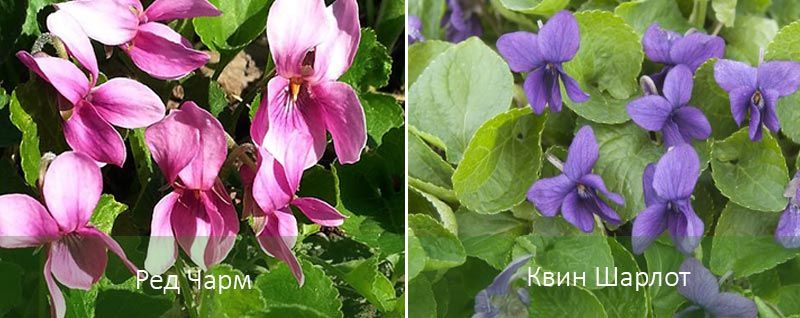
| Queen Charlotte | The plant grows up to 20 cm tall. The leaves are rounded and rosette-shaped. It can freeze in winters with little snow, so it requires additional shelter. It blooms in May and June. | Purple, fragrant, butterfly-like. |
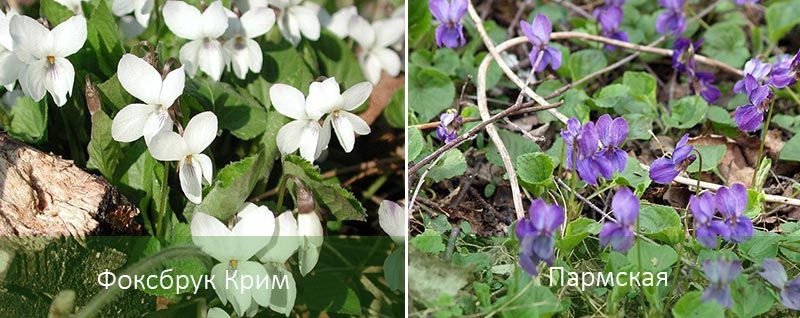
| Coeur d'Alsace | An ornamental plant with a fragrant scent. | Pink, drooping, large. |
| Red Charm | The heart-shaped leaves, on long petioles, are gathered in bunches. The plant blooms in May for 25 days. | Small, purple, fragrant. |
| Foxbrook Cream | Blooms from May to September. | White with a yellow center, tender |
| Parma | A hybrid variety, up to 20 cm tall. Cultivated in Italy since the 16th century, and commercially produced since the 19th century for candied fruit, liqueurs, and perfumes. It blooms once a year and can have up to 20 petals. | Large, lavender or dark purple, rarely white, single, 5 petals. |
| Queen Victoria | The oldest variety used for cut flowers. The leaves are dark green, slightly pubescent. | Rich dark pink, strewn with dashes and dots. |
Fragrant violet - growing and care
The plant is undemanding and prefers light soil, similar in composition to forest soil, with abundant humus. A garden violet placed in partial shade can bloom longer and retains the vibrant color of its leaves than one planted in full sun.
For planting in flower beds, use a mixture of compost, peat and sand, taken in equal quantities.
The best method of propagation is rooting young shoots with internodes.
They are separated from mature plants, including those growing in the wild, and transplanted into the garden. Flowers can be grown from seeds, but this method is only suitable for experienced gardeners, as seeds dry out quickly and require special preparation: stratification, soaking, germination, and seedling production.
https://www.youtube.com/watch?v=C6b9au-yh94
Care for this plant involves regular watering, weeding, and thinning. Sweet violets reproduce very quickly, crowding out other species from their designated space. Therefore, it is recommended to periodically remove any emerging shoots.
During dry weather, leaves can be damaged by spider mites, which become active during this period. Therefore, it's important to follow proper agricultural practices: avoid allowing the soil to dry out and provide sprinkling irrigation.
For good growth and flowering, it is necessary to apply leaf compost two or three times per season, as well as special mineral fertilizers for flowers.
Top.tomathouse.com recommends: the benefits and uses of fragrant violets
The plant's medicinal properties have been described since time immemorial. The ancient Greeks dedicated it to Persephone, the wife of Hades, god of the underworld. The Romans planted it everywhere, using it not only as an ornament but also as a medicine. The violet contains saponins, essential oil, and bitterness. Thanks to the presence of saponins, the plant is used in the treatment of upper respiratory tract diseases as an expectorant and mucus thinner, as well as a diuretic, blood purifier, and laxative.
Ancient healers used infusions and oils from the flowers as a migraine remedy, and crushed petals were applied to skin rashes. Written sources indicate that certain ailments could be cured simply by inhaling the aroma of violets.
In modern pharmacology, not only the flowers but also the roots and leaves of the plant are used. To prepare a medicinal remedy, take 10 grams of dried raw material and add a glass of boiling water. Take the resulting infusion, one tablespoon three to four times daily.
A syrup is made from freshly cut flowers to relieve colds and lung problems. Place 200 grams of washed, sorted petals in a saucepan and pour in two cups of boiling water. Cover tightly with a lid and let steep until completely cool. Strain the resulting infusion. In a separate container, dissolve 650 grams of sugar in another two cups of hot water and combine with the previously filtered liquid. The resulting syrup should be purple. Take 1 tablespoon three times daily.