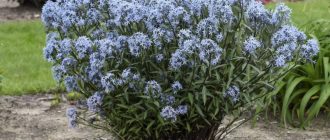
The horned violet (Viola cornuta) is a favorite among many gardeners due to its beautiful appearance, early bloom, cold tolerance, and rare disease susceptibility. It is widely used in landscape design.
Content
Description
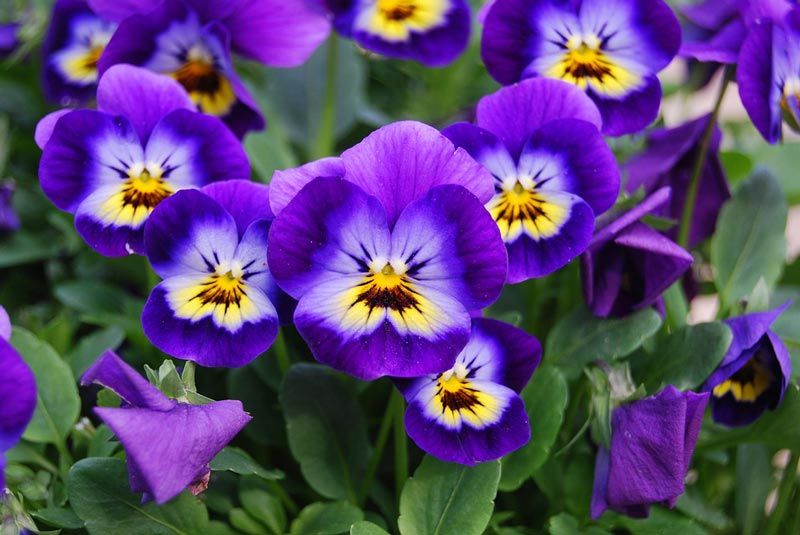
This perennial plant belongs to the genus Viola, family Violaceae. It can reach a height of up to 26 cm. The flowers are pleasantly fragrant and range in diameter from 2.5 to 5 cm. The petals are quite long, reminiscent of butterfly wings. It grows in small clumps, which, when planted closely together, form a distinctive carpet.
The violet owes its name to a horn-like or spur-like growth on the underside of the flower. Some modern hybrids of this species lack this distinctive horn.
It has been used as an ornamental plant in gardening since the end of the 18th century.
Horned violet is a creeping plant that spreads widely thanks to its branched rhizome. Two to three plants in the second year can completely cover an area of about 2 square meters. The bushes produce a profusion of flowers. A single violet can boast up to 60 buds and blooms.
The plant's leaves are dark green, oval, and some varieties have rounded teeth along the edges. Single flowers grow on long stems, each with a yellow or orange "eye" in the center. The petals themselves come in a variety of colors, developed through hybridization. They can be lilac, yellow, orange, purple, burgundy, and more. There are also single-color varieties of violets, which are most popular in large flower beds and landscape design. There are also varieties that combine several shades of a single color, which are popular among amateur gardeners.
Another undeniable advantage of horned violets is their long flowering period. It begins in May and ends by the end of September. Spring is the peak of this process, with the largest and most abundant flowers, and by autumn, this process gradually subsides.
They feel good and delight with strong flowering in one place for 5 years, then they need to be transplanted to another.
Horned violet: varieties
Breeders are currently actively developing new hybrid violet varieties. However, when planting them, it's important to remember that they survive the winter much less well and need to be well covered during this period. Also, some of these are biennial plants, not five-year-olds. The following varieties are the most widely grown.
| Variety | Description / Flowering period |
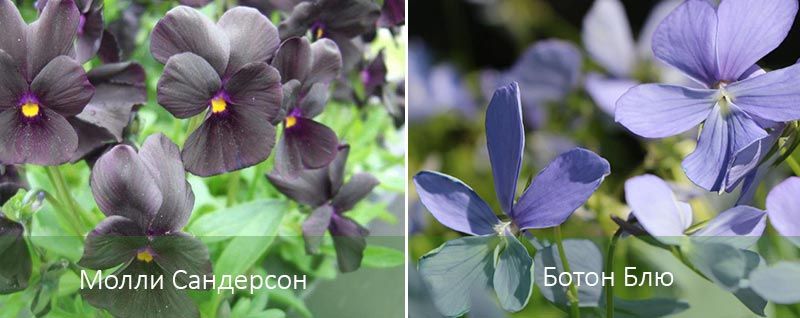
| Molly Sanderson | They have an unusual coloring: black or dark purple with a yellow spot in the center of the flower. The bushes are spreading, growing up to 15 cm in height. The leaves are green and glisten in the sun. They are fairly frost-resistant, but they still need to be covered for the winter. It's best to plant them in shaded areas; they will be much more comfortable there than in the sun. Starts in April. |
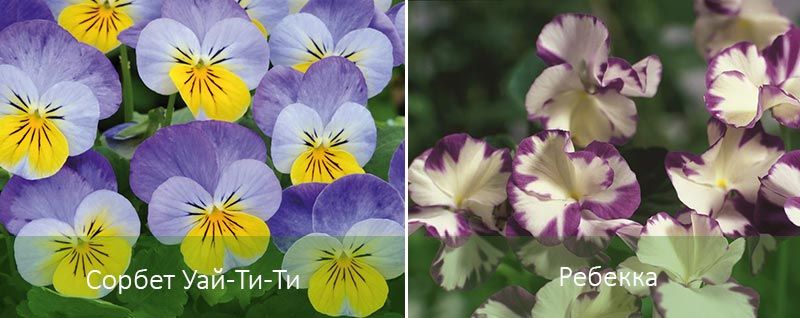
| Rebecca |
The bushes reach a height of 15 cm. They are prized by gardeners for their long and abundant blooms. They grow into a lush carpet. They look beautiful when planted near shrubs. The petals are light yellow, with purple streaks along the edges. In hot weather, the plant requires watering. From the beginning of June until the first frost. |
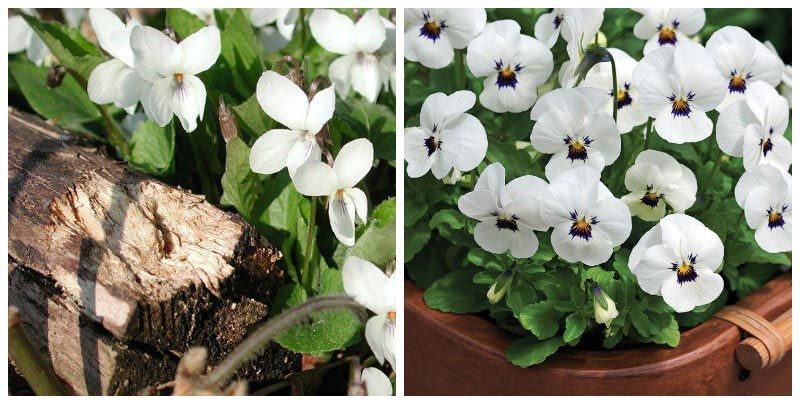
| Foxbrook Cream | The flowers are snow-white. They are often used to edge flowerbeds and sometimes borders. They grow in both partial shade and full sun. Pruning the green parts of the plant for the winter is not necessary. From early May to September. |
| Boton Blue |
Low bushes—no more than 10 cm tall. Flowers are soft blue. Grows best in light, moist soil. From March until the first frost. |
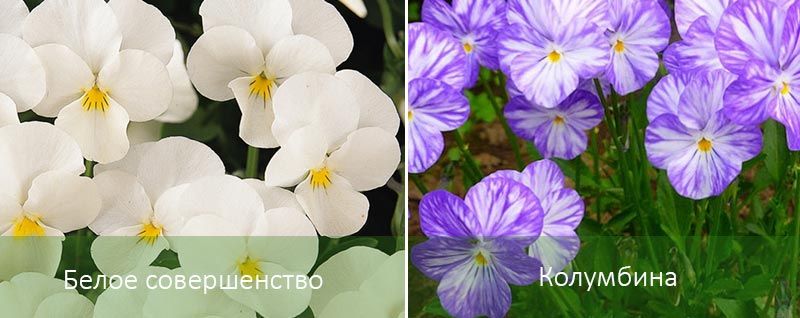
| Viola Columbine | The plant is creeping, reaching 20 cm. The leaves are oblong, green, with coarsely serrated edges. The flowers are variegated in shades of white, blue, and lilac. They prefer loose, fertile soil. If winter has seen little snow, it is recommended to cover the plants, for example, with spruce branches. From May to October. |
| YT Sorbet | What makes this variety unique is the way its colors change throughout the seasons. They begin blue, then turn light blue, and finally turn pure white at the end of flowering. |
| White perfection | The flowers are white with a yellow center. They are frost-resistant. They are used in landscape design as a groundcover, planted under trees. |
This is just a small list of violet varieties. There are a great many of them.
Features of cultivation and care
Horned violet is a perennial; hybrid varieties can be biennial or annual (if planted in open ground as seedlings). This plant is undemanding in terms of growing conditions, but with some considerations for its preferences and proper care, it will bloom better and delight the gardener.
Priming
It grows in almost any soil, but thrives best in loose, light, fertile, well-drained soil with a pH of 6.8-7.2. It grows profusely and blooms. Mulching is important. Rocks, drainage granules, gravel, wood chips, and moss are used for this. This helps retain moisture, reduces weed growth, and prevents the leaching of nutrients.
Landing site
It grows best in partial shade, near taller plants that will protect it from the midday sun. Avoid planting it in complete shade, as the stem will stretch, and the flowers will become smaller and paler. Furthermore, it's susceptible to attack by slugs and snails, which will not add to the plant's beauty.
Watering
It should be moderate, done as the soil dries. In hot weather, water more frequently. If the gardener is temporarily absent and unable to water the violet regularly, it will survive this without dying, but flowering will be less intense and the buds will be smaller.
With regular spraying (morning and evening) it grows better.
Top dressing
This is done in spring and at the end of August. Mineral and organic fertilizers in weaker concentrations are best. It's important to remember that manure is strictly prohibited, as it is extremely aggressive to the plant's root system, damaging it.
Pruning and maintaining decorative appearance
Sometimes the plant begins to stretch excessively, making it appear untidy. In this case, trim the branches back to create a more compact and well-groomed appearance. If you don't intend to harvest seeds, it's best to remove spent inflorescences. This will prevent the plant from wasting energy on seed production and will bloom more abundantly and for longer. This also helps prevent unwanted self-seeding.
Wintering
In general, violets are quite frost-hardy and can withstand temperatures down to -23°C. However, it's worth remembering that hybrids are more sensitive to cold and should be covered with peat, fallen leaves, or spruce branches. Newly planted young flowers should also be covered during the cold season.
Rejuvenation of plantings
Once every few years (3-5), it's worth rejuvenating your plants. When it's time to do this, you'll easily notice: the flowers are becoming smaller and fewer in number. To do this, dig up the roots, divide them into several pieces, and replant them in a new location.
Reproduction
Horned violets are propagated in several ways.
Horned violet from seeds
It can also be grown from seeds. This can be done in two ways: directly sown into the soil or from pre-prepared seedlings.
Sowing seeds for seedlings
Seeds are sown from February to April. It's important to note that the earlier you plant them, the sooner the plant will bloom. The period from sowing to flower appearance is 10-13 weeks.
First, prepare a nutrient soil mixture, bake it in the oven to disinfect it from infections and fungi, and water it with a Fundazol solution.
Make furrows 1.5-2 cm apart, place the seeds in them, cover with soil, and spray with water. Before sowing, it's important to check the germination rate of your particular violet variety. It can range from 60% to 95%.
Then, cover the container with the sown seeds with plastic wrap and water them periodically, but do not allow the soil to dry out completely. The ideal temperature for maximum germination is 12 to 18°C. When the first sprouts appear (approximately 3-5 weeks), move the container to warmer conditions (18 to 22°C). Remove the plastic wrap for a short period of time to allow airing. This period is gradually increased as the seedlings grow.
When 2-3 leaves appear on the plant, it is important to transplant it, planting it at intervals of 5-6 cm from each other.
Planting in open ground can be done in May, but be sure to water and loosen the soil regularly. The first feeding should be done after 14 days; mineral fertilizers are best.
Sowing seeds in open ground
You can plant directly into the soil from May 10th to September 10th. Home-collected seeds are best for this method, but store-bought seeds can also be used, but their germination rate should be taken into account.
Before planting, it is important to loosen the soil and make furrows into which the seeds are placed, covered with soil on top and watered.
The following spring, seedlings will emerge, which must be protected from direct sunlight. If the seedlings are too close together, they should be separated. In August, the plants are transplanted to their permanent location. If flower buds have appeared, they are removed to prevent the loss of nutrients and ensure the violet survives the winter stronger.
Next spring the plant will delight the gardener with its beautiful flowering.
Vegetative propagation of violets
It is divided into several subspecies.
Dividing the bush
The most suitable period is from early spring to mid-summer.
If you do this during this period, the violet will have time to develop its root system and by autumn it will be strong enough to survive the winter; if you divide it later, there is a high risk of the plant dying.
The method is carried out as follows: the bush is dug up, and fragments with roots are separated. The separated parts are buried in moist soil in a shaded area protected from strong winds. It is important not to allow the soil to dry out. It usually takes 2-3 weeks for the plant to establish itself. The following spring, they can be transplanted to their intended location.
Propagation by layering
One of the easiest methods of propagation. Select several long shoots, bend them back, pin them to the ground in several places with plastic or metal staples (hair pins can be used), cover them with soil, and water regularly. After about a month, roots will form on the buried stems, and these should be separated from the main plant.
Cuttings
This process is carried out from early June to late July. The shoots are cut into 5-cm-long cuttings, each with 2-3 nodes and 3-4 leaves. These cuttings are inserted into a pre-prepared container with moist soil to a depth of approximately 1-1.5 cm at an acute angle. Cover the container with plastic wrap and place it in a warm place protected from bright sunlight. Remove the plastic wrap once a day for ventilation. After about a month, the cuttings begin to grow, indicating that they have rooted. They can now be transplanted into open ground in the shade. They are moved to their permanent location the following spring.
Problems in growing
Violets, like many plants, are susceptible to various diseases and pest attacks. The table below lists the most common ones.
| Disease / pest | Defeat | Treatment |
| Powdery mildew | Black spots and a cobwebby coating appear on the stems, leaves and buds. | It is necessary to spray the plant with an antifungal agent. |
| Spotting | The disease begins on the leaves, then dries up the stems. It can also affect the seeds. | The bed should be dug up and treated with chemical disinfectants. |
| Blackleg | The stem becomes thinner and darker. | Plants need to be thinned out, the soil loosened and treated with antifungal agents. |
| Gray mold | A fluffy grey coating appears on the flowers, and then the plant begins to rot. | It is necessary to thin out the bushes, fertilize them, and treat them against fungal diseases. |
| Caterpillars | They affect all parts of the plant, mainly from May to June. | Spray with tobacco infusion and Chlorophos as soon as the first pests are noticed. |
The horned violet is not only a beautiful and easy-to-grow flower, but also has successful culinary uses. The fragrant flowers add a refined, unusual flavor and a beautiful appearance to salads, desserts, and yogurts. They are candied and frozen in ice cubes, used to decorate various treats.