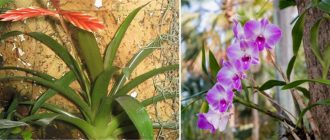
The Saintpaulia (or African violet) is a genus of flowering plants widely used in indoor gardening. It belongs to the Gesneriadaceae family. It is native to the Usambara Mountains and is distributed throughout the humid, warm climates of East Africa. It is also known as the African violet.
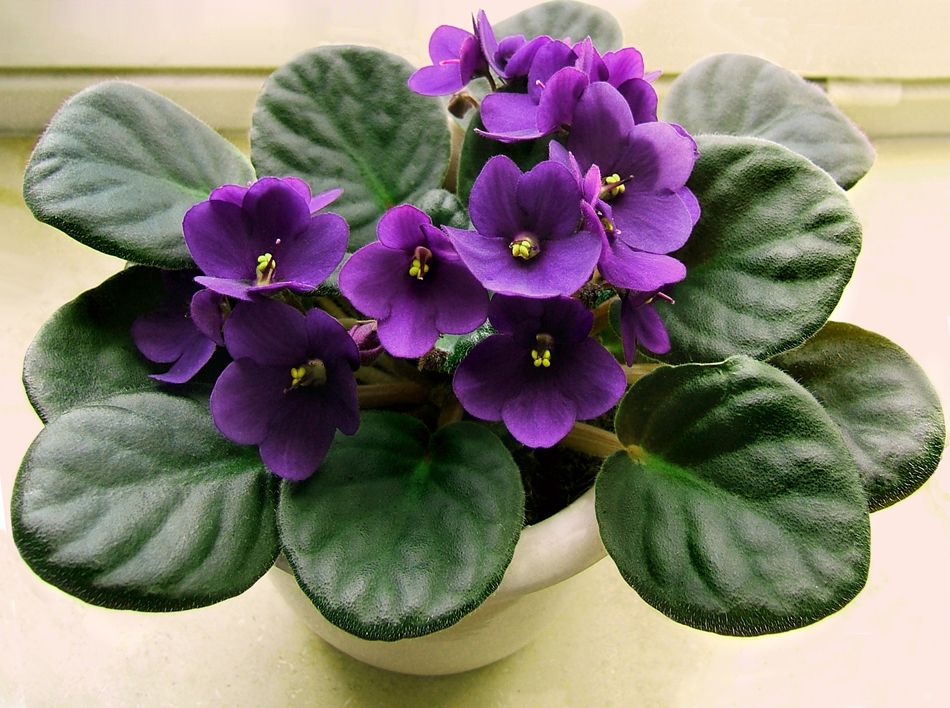
This flower was named the Uzambara violet because of its resemblance to the true viol, but in fact it is far from these plants of the Violet family, which grow in temperate climates.
Content
- 1 Description of Saintpaulia
- 2 Types of Saintpaulia (African Violet)
- 3 Tips for choosing and adapting indoor violets
- 4 Caring for Saintpaulia at Home
- 5 Reproduction of indoor Saintpaulia
- 6 Typical diseases and pests of the Uzambara violet
- 7 Top.tomathouse.com informs: Saintpaulia violet – a vampire flower
Description of Saintpaulia
The genus is represented by low-growing evergreen perennial herbaceous bushes.
They have a weakly developed fibrous root system, fleshy stems, and leaves tightly gathered in a rosette at the roots. These are their common characteristics, but otherwise, the species are very diverse. They are distinguished by:
- Flowers: shape - bordered (pansies), fantasy, classic star-shaped, chimeras; petals - simple (5 petals), scalloped (in addition to 5 simple ones, there are additional underdeveloped ones), semi-double (7-8), double (more than 10), carnations (more than 10, but larger); colors - solid, multi-colored.
- Leaves: shape - round, oval, elongated, with smooth or serrated edges; color - from dark green to light green, solid and variegated.
- Socket: micromini (diameter 8 cm), mini (12-15 cm), semi-mini (less than 20 cm), standard (from 20 to 40 cm).
Types of Saintpaulia (African Violet)
Varieties are divided into types according to their distinctive characteristics:
|
Type by flower shape Peculiarity of petals |
Variety | Leaves | Flowers |
|
Pansies Five-petaled. Two small and three larger. |
Lions Pirates Treasures | Burgundy oval with a bubble structure. | Bright pink, with a wide crimson stripe along the edge that resembles fringe. |
| Cinderella's Dream | Dark green wavy. | Light lilac with a red-violet ruffled edge. The upper petals are smaller and darker. | |
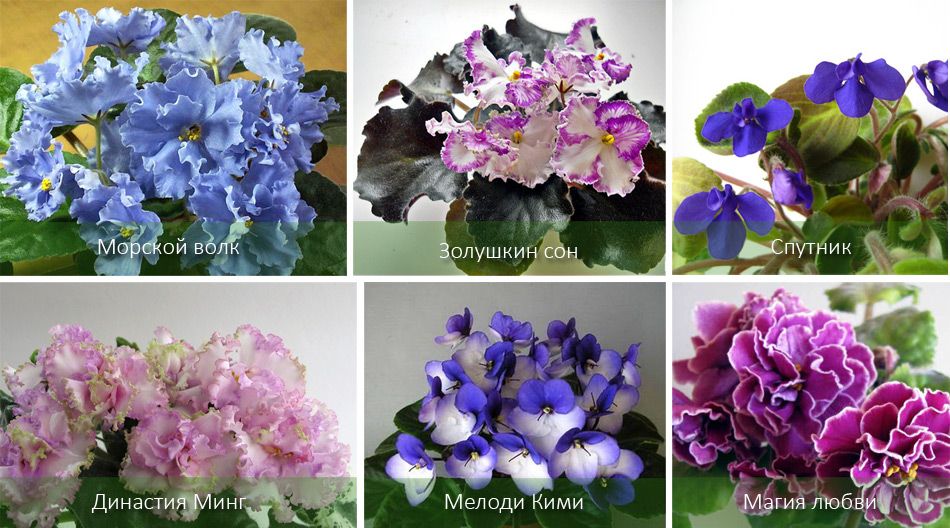
| Melody Kimi | Herbaceous, heart-shaped. | Plain white, the top two petals are blue, the rest are lightly dusted with this color along the edges. | |
|
Star Identical, evenly spaced around the center. |
Kev's Heavenly Star | Simple, oval-pointed. Green, with a red back. | Single and semi-double pink, fuchsia edge. |
| Goddess of Beauty | Swamp green. | Terry, purple-violet. | |
| The magic of love | Rich green. | They look like large, terry, beetroot-colored pom-poms with a white border. | |
| The Black Prince | Dark emerald with red backing. | Large burgundy flowers resembling a peony. | |
| Rosemary | Dark jagged. | Corrugated pink with blue splashes. | |
| Marshmallow | Light green. | They look like the dessert of the same name with pink strokes. | |
| Austin's Smile | Dark oval. | Coral with raspberry edging. | |
|
Bell Fused at the base, they do not open completely and become similar to the flowers of the same name. |
Admiral | Heart-shaped with a lilac border. | Cornflower blue wavy. |
| Shining Bell | Green round ones. | Blue fantasy. | |
| Sea Wolf | Fleshy dark. | Blue terry. | |
| Chanson | Glossy bottle green. | Velvety blues with purple strokes. | |
| Robs Dandy Lion | Grass colors with a variegated border. | Creamy-light green. Similar to snowdrops. | |
|
Bowl Constantly retaining the shape that gave this type its name. |
Bu Men | A rich dark green elongated circle. | Pale blue, tops white. |
| Ming Dynasty | Wavy variegated. | Snow-white corrugated with pink or lilac border. | |
|
Wasp Separated. Two are in the form of small tubes, three are elongated and hanging down. |
Lunar Lily White | Quilted light green. | White. |
| Zemfira | Grassy top and burgundy bottom, variegated center. | Lilac, like a fluttering skirt. | |
| Satellite | Variegated divided. | Red-violet. |
The following popular types of indoor violets are presented by color range:
| Type by color | Variety | Leaves | Flowers |
| Monochrome | Blue Tail Fly | Shaggy, rolled into cones. | Blue. The petal shape is related to wasps. |
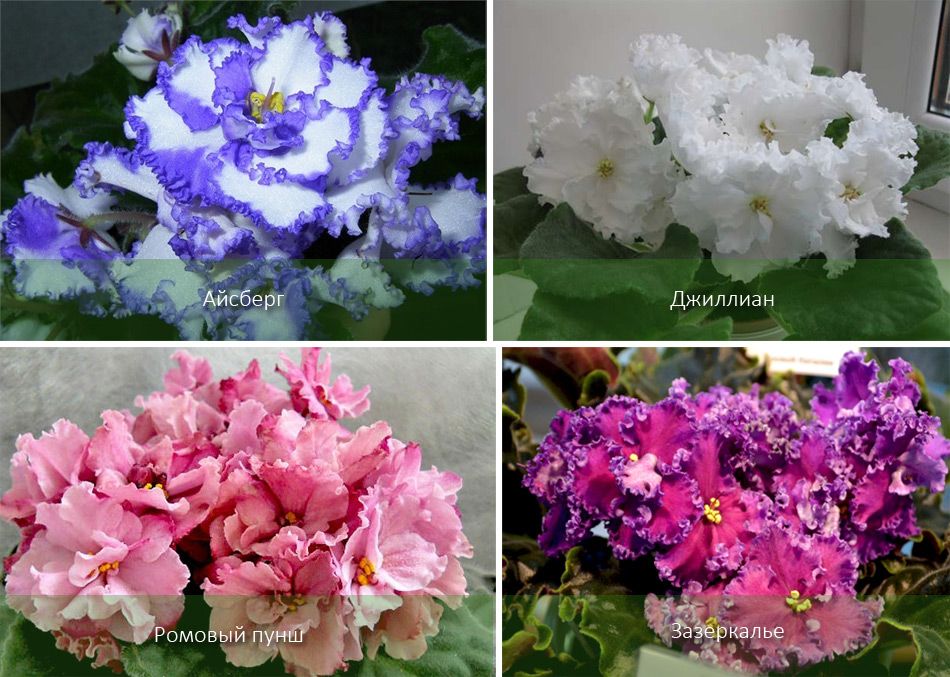
| Gillian | Rounded quilted green. | White, large, like a carnation. | |
| Two-tone | Marie-Sylvia | Oval, single-color. | Light purple with darker edges. Simple. |
| Rum Punch | Ash-pink star-shaped flowers. Semi-double and double. | ||
|
Two- and multi-colored They are distinguished by a border that is more saturated than the main color. |
Iceberg | Dark with wavy edges. | Bluish with a contrasting blue corrugated stripe. |
| Through the Looking Glass (Lukin Glas) | Herbaceous with brown color. | Light pink semi-double, thin thread of raspberry-fuchsia shade and white-green, running along the edge. |
The edges of the petals of different varieties of Saintpaulias can be wavy, notched, fringed (bordered).
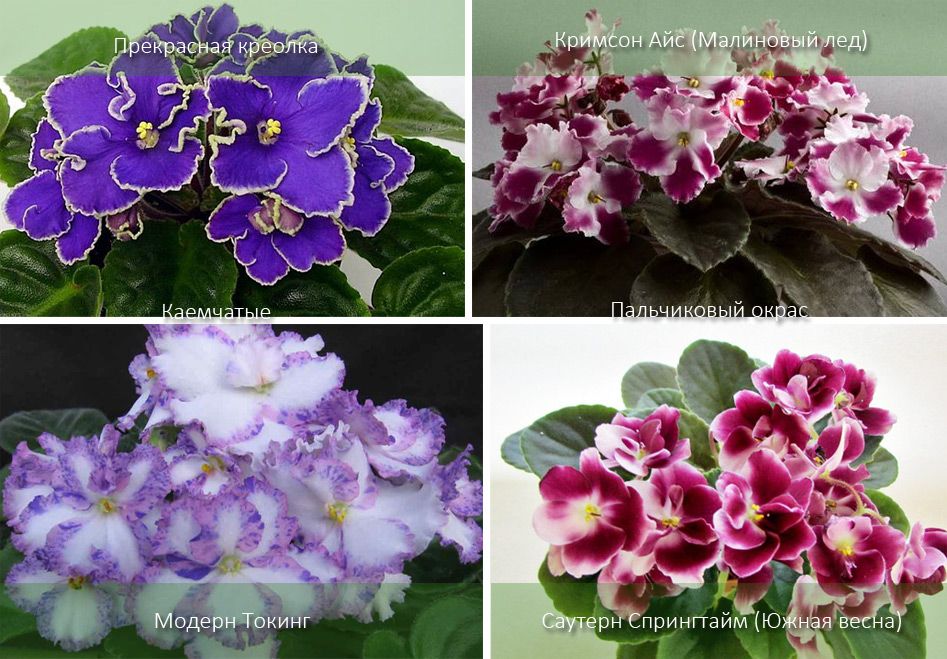
There are several more original species that have their own characteristics:
| Type | Variety | Leaves | Flowers |
| Bordered | Wind rose | Wavy, solid color. | Pale pink, the color thickens towards the edge and becomes crimson at the ends, with a green tint in some places, very reminiscent of roses. |
| Natalis Estravagante | Variegated with light brown streaks along the edges. | White and pink lace, border is darker, almost chocolate. | |
| Beautiful Creole | Green wavy on a burgundy stem. | Simple dark blue velvety stars with a thin snow-white border. | |
| Macho | Simple oval emerald with fine serrations along the edge. | Burgundy-purple star-shaped, framed by a light contrasting stripe. | |
| Modern Talking | Light green flat. | White pansy-shaped flowers with a pink-purple edge with blue stripes. | |
| Fingerprinting | Crimson Ice | Green with burgundy petioles. | Pinkish. Three petals have raspberry-red strokes. |
| Southern Springtime | White with random burgundy spots from light to almost black tones. | ||
|
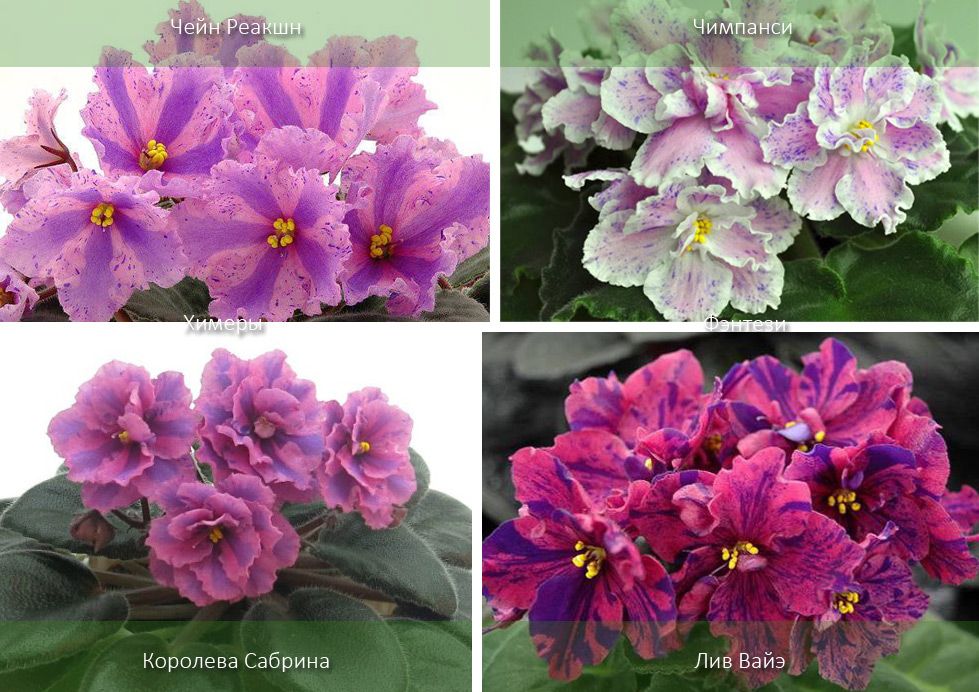
Chimeras They are distinguished by stripes diverging from the center along the petals. |
Chain Reaction | Dark green with burgundy stems. | Pink with lilac ribbons coming from the center and splashes of the same color. |
| Queen Sabrina | Purple with a large number of petals, each with a purple stripe in the middle. | ||
|
Fantasy Coloring with strokes and dots of different colors. |
Chimpanzee | Wavy emerald. | Pink with a white wavy edge and blue splashes. |
| Liv Vaye | Green simple. | Coral stars with randomly scattered blue-violet strokes. | |
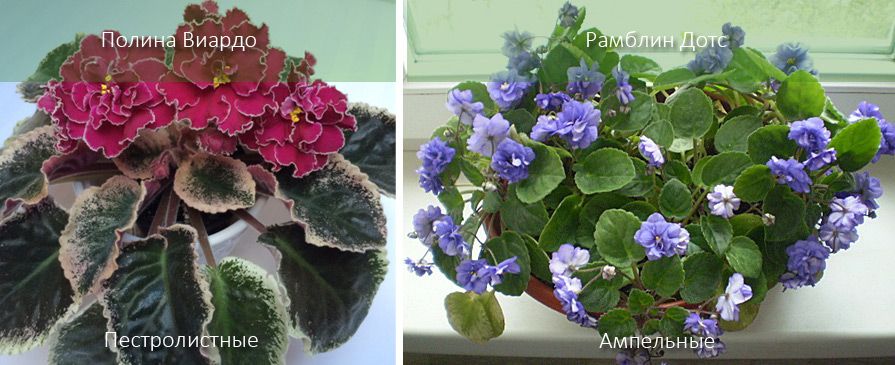
| Ampelous | Ramblin' Dots | The jagged colours of young grass. | Starry lavender with light purple fantasy patterns. |
| Fallin Snow | Small, pointed, emerald, simple. | Numerous small, snow-white, wasp-shaped insects. | |
| Variegated | Pauline Viardot | Light pink edges of varying width. | Semi-double, wine-colored with a white border. |
Tips for choosing and adapting indoor violets
When purchasing Saintpaulia, you should adhere to the following recommendations:
- The plant must be grown in the local climate and no more than one year old.
- The stem is elastic, the leaves are richly colored, without yellowing or signs of falling.
- Symmetry and density of the rosette are important.
- The soil is free of whitish deposits.
For better acclimatization of plants in an apartment, follow these rules:
- Treat with a fungicide (Maxim). Spray, leave for 20 minutes, and then gently wipe with a damp sponge. Water the substrate with an insecticide (Aktara).
- Place it in a spot away from other plants for two weeks. The best location is an empty aquarium covered with a transparent material (glass, film). Wipe off any accumulated condensation daily.
- After quarantine, replant the plant.
Caring for Saintpaulia at Home
Almost all varieties of Saintpaulia require the same conditions, with the exception of fantasy violets and chimeras.
Planting and growing them is quite difficult.
| Factor | Growing season | Winter |
| Location/lighting | A west- or east-facing window. For a more even distribution of light, rotate the plant regularly and use additional lighting. Cold drafts and direct sunlight are unacceptable. | |
| Temperature | +20…+22 °C, do not allow temperature fluctuations. | Not below +15 °C. |
| Humidity | At least 50%. To maintain, spray with a fine mist, place in a tray with damp pebbles, or place with other flowers. | 50%. |
| Watering | After the soil has dried from above, it should be moist, but without stagnant water. | They are restricting. |
| Use filtered water at room temperature, being careful not to let it get on the leaves. | ||
| Top dressing | Once every 2 weeks with complex mineral fertilizers. | Not used. |
| Soil | Soil for Saintpaulias or composition: leaf, sod, coniferous and peat soil (3:2:1:1), add vermiculite, perlite, coarse river sand and chopped moss (1). | |
| Pot | Take 3 times less violets, since the plant’s roots are small and a lot of soil is not needed. | |
| Transfer | Typically, this is done once every three years. The plant has a sensitive root system, so disturbing it frequently is not recommended. | |
Stimulation of flowering
If the violet is not given good care, it will not bloom. This happens in the following cases:
- low light;
- lack of nutrition;
improper watering; - dense soil;
- large pot;
- infection by diseases or pests.
To stimulate the plant, it is necessary to eliminate all errors: transplant it into a smaller container, change the substrate, feed it, treat it with a fungicide and insecticide.
Reproduction of indoor Saintpaulia
Violets are propagated in three ways: by cuttings, leaves and seeds.
Seeds
The most painstaking process, but allows you to get a lot of plants:
- Take a wide, low container with loose soil and moisten it.
- The seeds are distributed over the surface without covering.
- A film or white paper is stretched over the container.
- Place at +17…+21 °C, periodically removing the cover.
- After half a month, when the first true leaves appear, transplant into a tall container and cover with glass.
- When the plants grow up, they are planted into separate pots.
Sheet
The easy option. Step-by-step leaf propagation:
- In the middle row, a leaf with a 5 cm petiole is cut off.
- Rooting is done in water and soil.
- Leaf cuttings root quickly. One cutting produces 3-4 seedlings.
Water
The petiole and leaf are placed in a container of water. To prevent rotting, activated charcoal is dissolved in it. The water is changed periodically. When root buds appear (from two weeks to 1.5 months, depending on the variety), they are transplanted into the soil.
Advantages: You can monitor the process and begin further actions in time (a transparent container is required).
Priming
The leaf is placed directly into the soil. Advantages: It takes less time, as the plant doesn't have to adapt to different conditions (water, then soil).
cuttings
This method involves propagation by daughter rosettes that grow in the leaf axils. These make the bush unsightly and are usually removed. However, if you pinch the top of the rosettes to reveal leaves, the shoot can be carefully cut off and planted in the ground.
Regardless of the method, the pot with the growing cutting is covered with polyethylene with holes and certain conditions are created:
- humidity - 50%;
- temperature - +22…+25 °C;
- daylight hours - at least 12 hours (without direct sun);
- loose substrate with good air exchange;
- watering with filtered warm water as the soil dries out.
Typical diseases and pests of the Uzambara violet
If there are any violations in care, Saintpaulia is exposed to various diseases and attacks by harmful insects.
| Manifestation | Cause |
Elimination measures |
| Rotting of plant parts, leaf fall. | Fusarium |
Remove damaged parts and treat with Fundazol. |
| White coating, yellowing of leaves. | Powdery mildew | Benlat is used; if the symptoms persist after two weeks, the procedure is repeated. |
| Root collar rot, foliage turning brown. | Late blight | The plant is destroyed. |
| The appearance of a fluffy brown coating. | Gray mold |
Remove diseased areas and spray with Fitosporin or another fungicide. |
| Reddish formations on foliage with spores. | Rust | Bordeaux mixture and sulfur dust are used. |
| Dying of leaves. | Vascular bacteriosis | Treated with Zircon and Fundazol. |
| The appearance of cobwebs, drilling and deformation of foliage. | Spider mite | Spray with acaricides (Actellic). |
| Stickiness. | Scale insect | Agravertin is used |
| Browning of foliage, holes in flowers, dying of stamens. | Thrips |
The diseased parts are torn off and treated with insecticides (Inta-vir). |
| Finding worms on the swollen root system, pale smears and leaf rot. | Nematodes |
Remove lesions. After treatment, replant. Spray with Vidat nematicide. |
| Deformation of foliage and flowers, their wilting, stickiness. | Aphid | Treat with soap solution; if the problem persists, use Mospilan or Actellic. |
| Sour odors, formation of white lumps on the roots. | Root mealybug |
They are replanting. They are using Aktara for treatment. |
| Rotting of individual areas, appearance of flying insects. | Midges and mosquitoes | Spray the soil with Karbofos. |
| Appearance of shiny black coating, lightening of foliage, growth retardation. | Whitefly | Insecticides and acaricides (Actellic, Aktara) are used. |
If treatment is started on time, care regimens are normalized, and preventative measures are carried out, the recurrence of problems will be minimal.
Top.tomathouse.com informs: Saintpaulia violet – a vampire flower
The plant drains energy from people while they sleep. Keeping it in the bedroom is a guarantee of headaches and malaise. But there's a simple explanation. Like all flowers, it produces oxygen during the day and absorbs it at night, producing carbon dioxide.
But violets can also be beneficial: they repel harmful insects (cockroaches, ants). Therefore, the best location for them is the kitchen.