The Violet "Chic Poppy" is a result of selective breeding. K. L. Morev's 2013 seedling immediately found a following. It is a frequent guest at international exhibitions and a member of private collections.
Description of the violet "Chic Poppy"
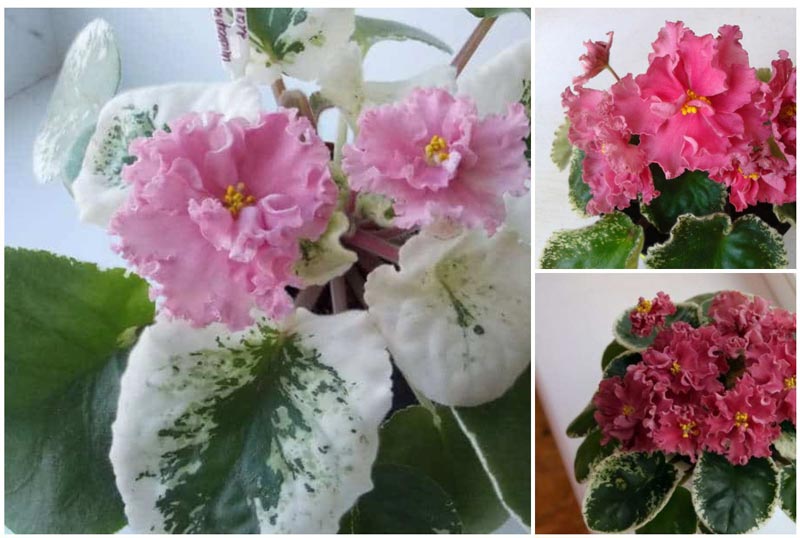
The leaves form a rosette, the color from the center of the blade to the periphery turns from green to white, there are also pure white ones.
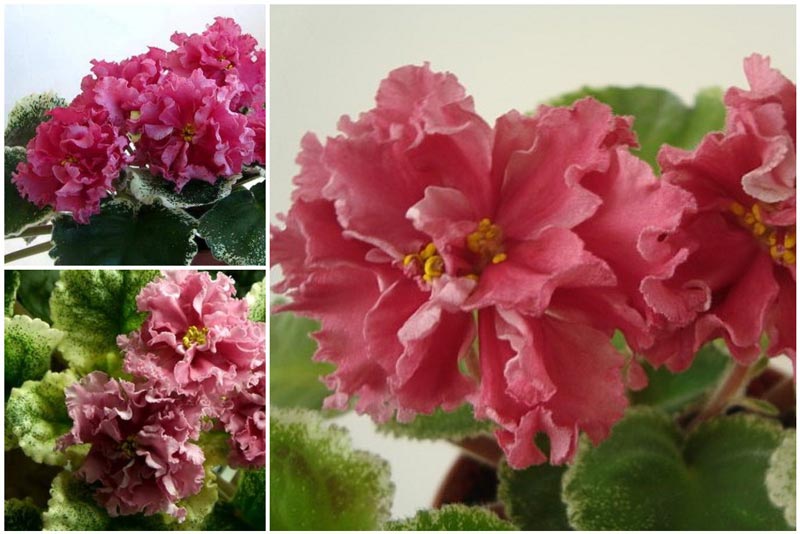
Flowers on tall stems reach 8 cm in diameter. During the first few years, they bend under the weight of the buds and fall off, but then the plant gains strength and this no longer happens. Blooming is long, with petals unfurling slowly and fringed edges. The pink young buds later take on rich brick hues. Propagation is by leaf cuttings, which root well and produce up to three rosettes, but this requires plenty of light.
The benefits of the Chic Poppy violet
Appearance:
- unusually beautiful leaves - green with a white "sprinkle";
- huge flowers with fringes covering the entire violet;
- long flowering.
Reproduction:
- easy rooting of cuttings;
- rapid emergence of new sockets.
Planting and growing conditions for the violet Chic Poppy
A luxurious poppy requires special care and attention; creating the right conditions is difficult, but its appearance is delightful and worth all the effort.
|
Parameter |
Conditions |
| Location | It needs plenty of light, but should be kept out of direct sunlight to avoid burning. A west or east exposure is best. A south exposure will require some shade during the summer. |
| Lighting | It's essential for flowering and maintaining the beauty of the rosettes. Insufficient light causes the cuttings to stretch. Too much light causes the lower leaves to curl, which also leads to a loss of decorative appeal. A minimum of 12 hours of daylight is required, so supplemental lighting is recommended in winter. |
| Temperature | Optimal temperature: +19…+23 °C. Avoid sudden fluctuations. |
| Humidity | At least 50%. During cold periods, additional air humidification is necessary. You can place water in an open container near the plant. |
| Priming |
There is a specially prepared substrate available for sale, but you can also prepare various mixtures:
Use slightly acidic soil (up to 6.5) or neutral 7.0. The soil is replaced approximately once a year. To protect against fungal diseases, mix activated charcoal or sphagnum moss into the soil. To kill fungal spores and other pests, warm the soil in a microwave, oven, or by dousing it with boiling water before planting. |
| Pot | Three times smaller than the rosette. It doesn't require a lot of soil. A plastic pot will do, but it needs holes in the bottom for drainage, which is essential to prevent waterlogging and root rot. Expanded clay, pebbles, small crushed rock, or broken brick can be used. Frequent repotting to a more appropriately sized pot is necessary. |
Top.tomathouse.com warns: Proper watering for the Chic Poppy violet
This plant does not tolerate overwatering or drying out of the substrate.
If it is overwatered in hot weather, it may die from a bacterial infection that will quickly spread through the leaves.
The delicate parts of the flower can also be damaged by water spills. Therefore, the following watering precautions should be observed:
- the water must be settled or filtered;
- soften hard water with oxalic acid 0.5 tsp per 6 liters;
- Be sure to fill in drainage before planting;
- do not allow liquid to stagnate in the container under the pot;
- The violet cannot be sprayed.
Watering methods:
- From above, from a watering can, but avoid letting drops fall on the plant.
- Bottom watering: the pot is placed in a tray with water for half an hour, after which it is removed.
- Through a wick. When planting, thread a piece of string through the drainage hole and soil, then plant the flower. Then place the pot over a container of water, ensuring the wick is submerged but the bottom is not touching the water. This will maintain optimal soil moisture.
Fertilizing the violet 'Chic Poppy'
Fertilization is carried out using ready-made liquid fertilizers. During the flowering period, it should be applied weekly. If the appropriate temperature and light conditions are not met in winter, once every 30 days is sufficient.
Young violets need nitrogen compounds during vegetation, and mature ones preparing for flowering need phosphorus and potassium compounds.
If your violet has been properly cared for, watered, and fed regularly, but the plant is still feeling undernourished, you should check the soil's pH. If the pH deviates too far from slightly acidic, the violet will lose its ability to fully absorb nutrients from the soil.
Pruning the Violet 'Luxury Poppy'
To ensure rapid rooting, remove the lower leaves and flower stalks from the rosette. Placed in water or soil, it will sprout roots.
On mature plants, trim off overgrown and diseased leaves and flower stalks with faded flowers. If the plant is overgrown, remove the rosettes.
Transplanting the Chic Poppy violet
This is done in early spring and in October. Flowering plants should not be repotted. If they are overwatered or growing slowly, an unscheduled procedure is necessary. A small amount of soil is not needed; a pot should be 1/3 the size of the rosette. Water the violet 24 hours before repotting. Then, the healthy plant is transferred, along with a lump of soil, to a prepared pot filled with moist soil. Any rotted roots or old, diseased leaves should be removed. After repotting, do not water for 48-72 hours. It is permissible to place the plant under a jar to maintain increased humidity.