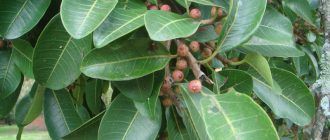
The date palm is a plant from the Palm family. A native of the tropics, the date palm is popular among gardeners and often decorates even city apartments with its spreading leaves.
Content
Description
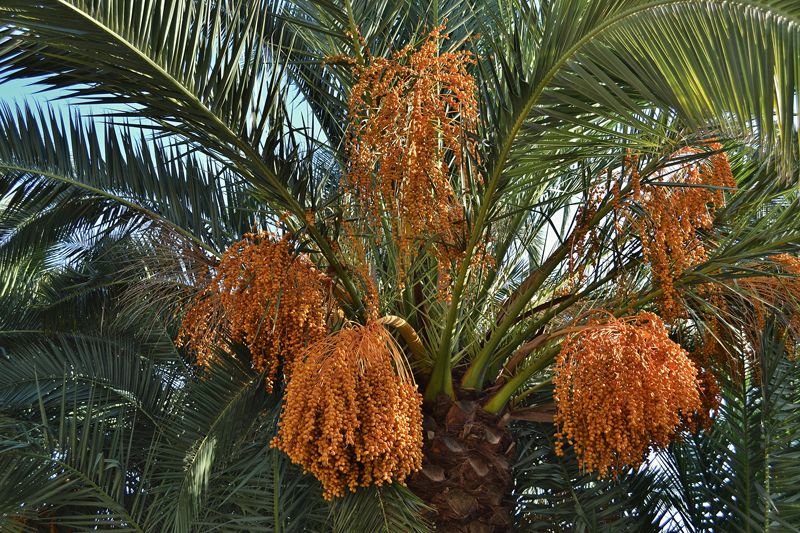
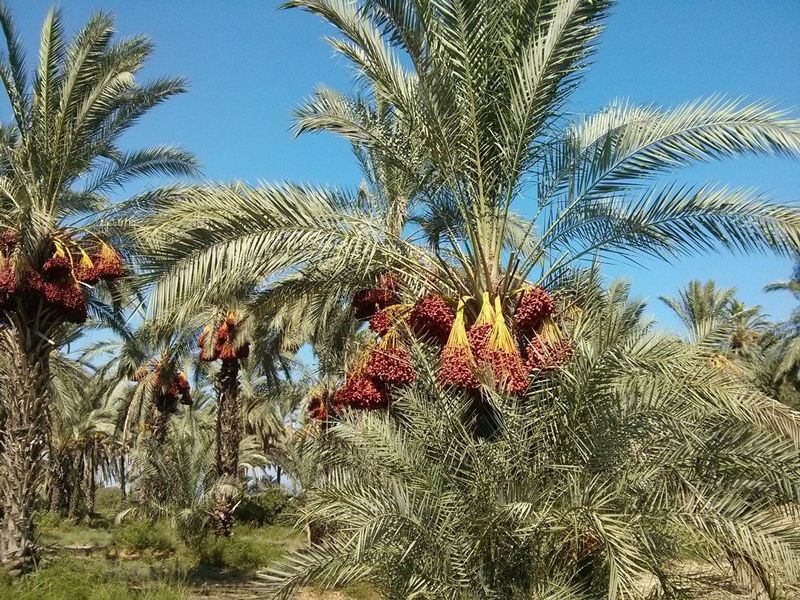
Long, narrow leaves with unpaired pinnae and a pointed tip emerge from one or more trunks. Even indoors, the palm can grow up to two meters. It blooms in panicles of pale yellow flowers and bears fleshy berries. This is impossible to achieve indoors—only plants reaching 10 meters in height begin to bloom, and fruiting requires two trees: a male and a female.
Types of date palms
Among the many types of date palms, it is worth noting those varieties that are used as indoor ornamental plants.
| View | Peculiarity | Differences in care |
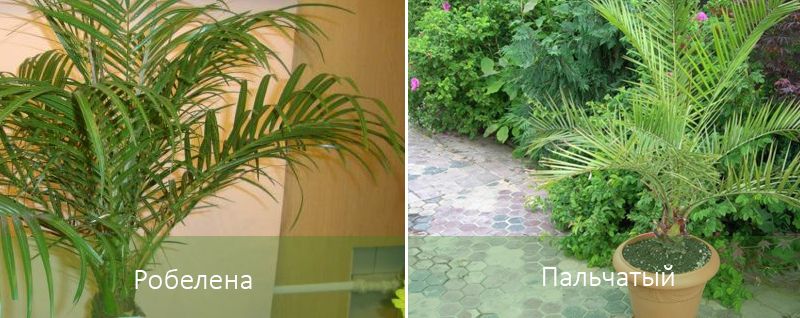
| Palmate | The most common and fastest-growing. Mature plants have bare trunks. | You can grow it from the seed of a regular date fruit bought in a store. |
| Robelena | Low-growing and shade-tolerant. A whitish coating appears on the leaves of young plants. Often has several trunks. | Requires intense light (12-14 hours a day), abundant watering, and humid air. It loves heat. |
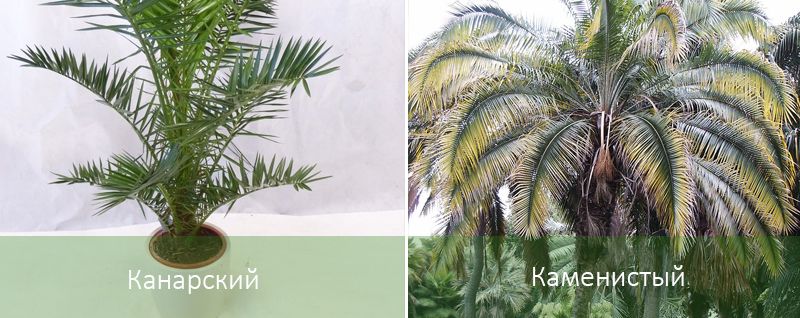
| Canary | Low-growing. Large, stiff leaves with a bluish tint. The trunk is straight and thick. Spines on the leaf petioles. | Prefers bright, well-ventilated areas. Requires ample drainage and a tall pot. Easily propagated by seed. |
| Curved | Multi-stemmed. White hairs on the leaves. Spines on the petioles. Grows up to 8 meters. | Tolerates direct sunlight and does not require shade. Prefers humid air and requires frequent misting. |
| Forest | The tallest, single-stemmed variety. Thorns on the petioles. The glaucous leaves with a gray tint grow in groups of 3-4, slanting downwards. | Unpretentious and resistant to pests. Frost-hardy. |
| Rocky | Single-stemmed. Thorns on petioles. Leaves are small and few in number. | Frost-resistant. |
| Ceylonese | Single-stemmed. Short, glaucous leaves with spines on the petioles. | Resistant to cold. |
Caring for dates at home
The date palm is not a very demanding plant, but a few simple conditions for caring for it at home must be followed.
Lighting
The palm prefers bright spaces but does not tolerate direct sunlight. To prevent leaf burn, provide shade. Covered balconies and loggias with curtains are ideal for growing dates.
Air temperature
Date palms are temperature-sensitive, and while they can withstand hot summer days, they need a cooler room in winter—no hotter than 18°C. Avoid placing the plant near radiators.
During warmer months, you can move the plant outdoors. However, keep in mind that nighttime temperatures should not drop below 12°C.
Humidity
Since the palm tree is native to tropical climates, it's accustomed to high humidity. Therefore, the drier the indoor air and the higher the temperature, the more frequently the plant needs to be misted. In hot weather, large leaves can be gently moistened with a damp cloth.
Watering
Palms don't tolerate stagnant water well, so a good drainage layer is required at the bottom of the pot. For watering, use settled water at room temperature, ideally rainwater or melted snow.
The frequency depends on the time of year. In winter, dates require less frequent watering, while in summer, they require more frequent and abundant watering. It's important to monitor the soil, ensuring it doesn't become overwatered or dry out.
Top dressing
You can fertilize the soil every ten days in the summer and every month in the winter. To do this, add 1 gram of potassium sulfur to a liter of water.
Once a year, it is advisable to carefully remove the top layer of soil from the pot, replacing it with fresh soil mixed with superphosphate fertilizer.
Leaf pruning
It's important to promptly remove dried and broken leaves. It's best not to trim partially yellowed leaves, as they provide nutrients for the plant.
Transfer
Young date palms grow quickly and should be repotted at least once a year. Mature plants (over 5 years old) require this procedure every 3-5 years.
It's best to repot in the spring. Fall is definitely not recommended, as it could kill the palm.
It has difficulty adapting to a new location, so replanting should be done in accordance with step-by-step instructions:
- The new pot should be much deeper than the old one, as palm roots grow deeper than they spread out. Good drainage holes are essential.
- Place drainage material, such as expanded clay, at the bottom of the pot.
- You can use ready-made store-bought soil or mix turf soil, sand, and humus in equal proportions yourself, making sure to add 1 tablespoon of superphosphate fertilizer per 3 liters of soil.
- Under no circumstances should the soil around the roots be damaged. Only the top layer of soil should be removed. If the pot is too large to remove the palm tree and its soil, it should be broken or cut.
- The plant's trunk doesn't need to be buried deeper in the new pot. The soil level should remain the same as in the old location.
Reproduction
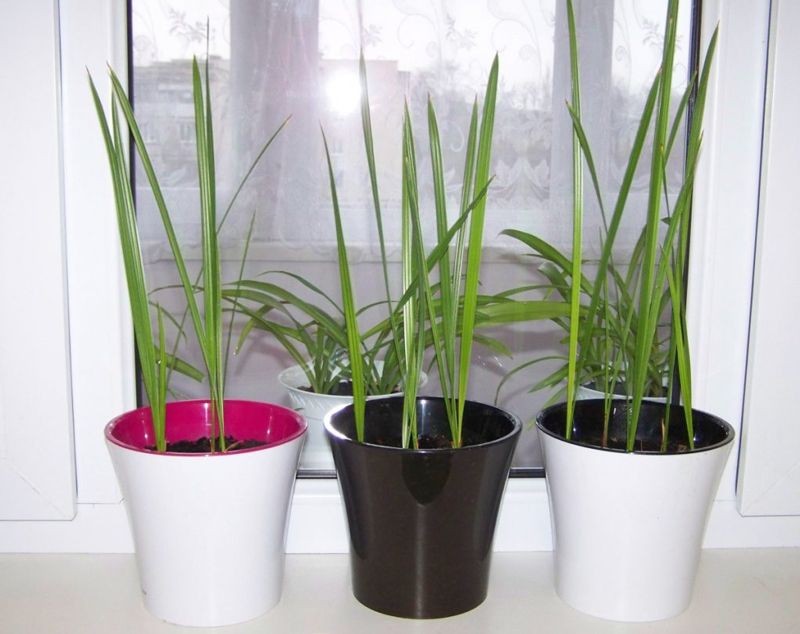
All varieties of dates are easily propagated by seeds, which are readily available in stores. The common date palm can be grown from the seed of a candied fruit purchased at the supermarket.
Preparing the seeds
Immediately after removing from the fruit or after purchase, the seeds are soaked in warm water (35…40°C) for 2-3 days. The water is changed daily.
For planting, select the seeds that have sunk to the bottom of the container. Before planting, rinse the swollen seeds under running water.
Soil preparation
Drainage holes are cut in disposable cups. A sterile potting mix consisting of equal parts leaf mold, perlite, and vermiculite is mixed. This mixture is poured into the cups (not to the brim!) and watered.
Landing
To speed up the germination of dates, slightly open the outer shell of the pit. Then, plant the seed vertically in the soil (one per cup) and cover it with another half-centimeter of soil.
Care
Place the seedling cups in a warm location (20–30°C) and water occasionally, being careful not to let them dry out. Germination takes three to nine months.
As soon as the first shoots appear, they need to be provided with bright, diffused light – but under no circumstances should they be placed in direct sunlight.
Transplantation into a pot is carried out when the sprout reaches 4 centimeters in length.
Diseases and pests attacking dates
A well-cared-for palm rarely gets sick. Here's a brief list of diseases date palms are susceptible to and how to treat them.
| Cause | Signs on leaves | Treatment |
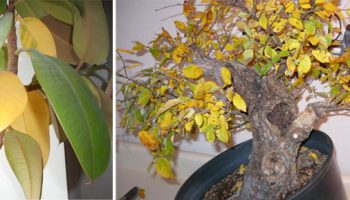
| Lack of nutrients | Yellowness. | Regular feeding. |
| Watering with hard water | Filtration of water for irrigation. | |
| Overwatering | Brown, smells of rot. | Stop watering until the soil is completely dry. |
| Lack of moisture | Darkening at the ends. | Correction of conditions of detention, change of location. |
| Drafts | ||
| The air is too dry | ||
| Watering with cold water | ||
| Fungal diseases | Gray or pinkish spots. | Fungicides are antifungal medications. Use more than once a week is not recommended. |
In addition, the date palm can become the target of pest attacks:
- Spider mites cause leaves to turn yellow, dry out and curl, and cover them with a thin web.
- Mealybugs suck the juice from the leaves, leaving a white fluffy coating.
- Thrips contaminate and dehydrate, causing discolored spots.
- The scale insect attaches itself to the plant's skin, sucking out the sap. It can be identified by its brown bumps.
- Nematodes are worms that live inside leaves, causing them to thicken, deform, and die. They are difficult to eliminate and spread quickly, so if they are discovered, the plant and its pot should be destroyed as quickly as possible.
Most insects can be removed using the following folk methods:
- Garlic infusion: soak 4 heads of garlic in 1 liter of water for 5 days. Dilute the resulting extract with water and use it as a foliar spray.
- Tobacco infusion: add 40 grams of tobacco to 1 liter of water and let it steep for 2 days. Then add another liter of water and spray the plant.
- Soap and vodka solution: dilute 15 grams of liquid soap and a couple of tablespoons of vodka in 1 liter of water. Use once a week to wipe the leaves.
If the above methods are ineffective, it is necessary to treat the plant with agrochemicals, following the instructions.
It is recommended to first test the product on one leaf of the plant to determine the reaction.
Before processing, the soil must be covered with film to protect it from foreign substances that could harm the composition of the soil.
Potential problems when growing
Some gardeners encounter a situation where their date palms stop growing for no apparent reason. This can be due to the following factors:
- Insufficient heat. At temperatures below 17°C, plant roots stop functioning properly, and the trunk is deprived of the nutrients necessary for growth.
- Incorrect soil composition. Palms don't like soils with a pH below 7. A lack of manganese and iron in the soil can also be to blame.
- The pot is too large. The above-ground portion of the plant will not grow until the roots fill all the available space.
Top.tomathouse.com informs: the use of date palms
In its natural habitat, the date palm is a very practical plant. Its fruits, which are sold as dried fruit, are rich in amino acids and are used not only for food but also for medicinal purposes.
They also serve as animal feed. Date palms provide humans with wood, raw material for textile production, valuable oil, and juice for sugar extraction.
Designers use this plant to fill empty spaces and divide rooms. It fits perfectly into contemporary interiors.
In esotericism, a date palm in the home is considered a sign of family harmony. It is credited with the ability to defuse conflicts and promote mutual understanding.