Physostegia is a beautiful, low-maintenance perennial plant belonging to the Lamiaceae (Labiatae) family. Many gardeners choose it for their flowerbeds, and florists love to add it to bouquets and arrangements. Its tall stems with numerous lush, vibrant buds are very impressive.
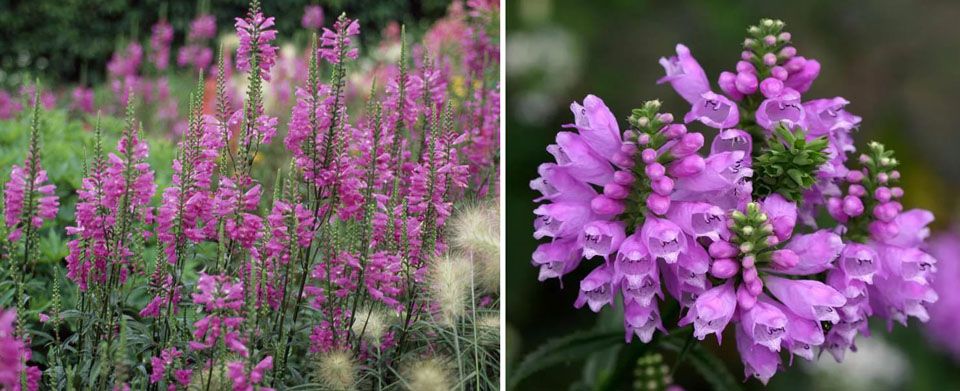
These plants are native to North America. In the wild, they grow near bodies of water and swamps. There are about 12 species, but only one is grown as an ornamental plant in gardens: Physostegia virginiana. Its flowers are honey plants.
Content
Description and characteristics of physostegia
This is a herbaceous, winter-hardy perennial. The name comes from the Greek "covering" and "bladder," referring to the swollen shape of the flowers. The plant has unusual, square-sectioned stems (60-120 cm long) and tall, lush inflorescences (up to 30 cm). The leaves are long and lanceolate.
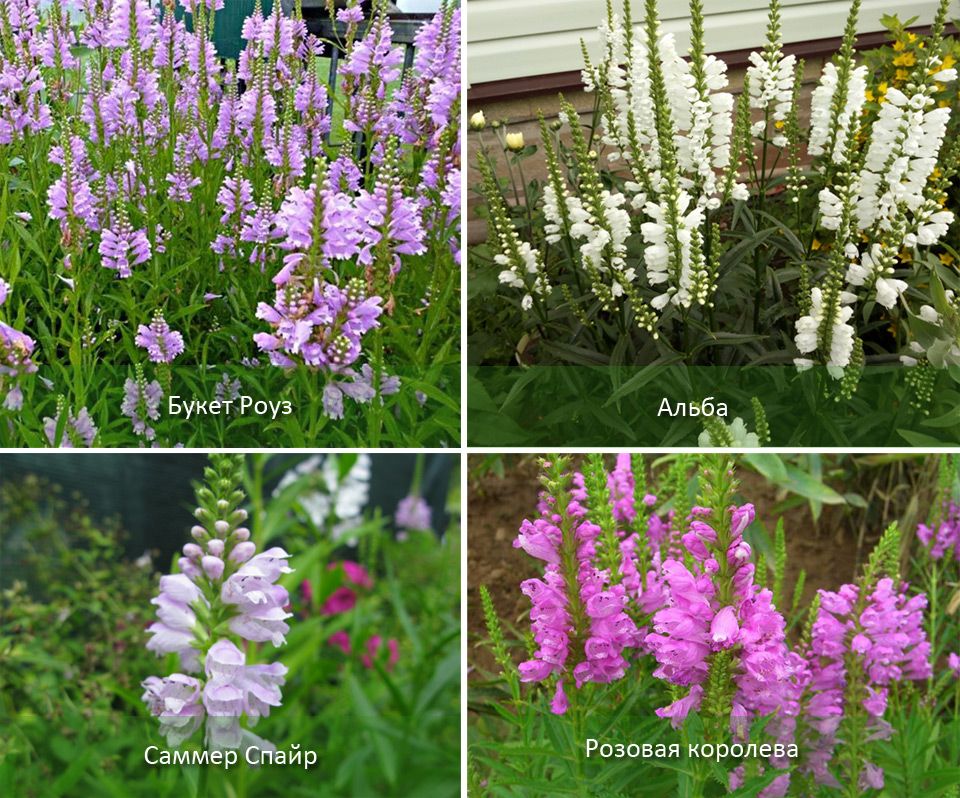
They bloom in July, delighting for up to 50 days with beautiful inflorescences of lush, tubular flowers in a variety of colors—pink, lilac, snow-white, purple. They continue to decorate the garden until the cold weather sets in, even after many other late-blooming plants have finished blooming.
Only one species of this perennial, Physostegia virginiana, has been cultivated by gardeners. Several cultivars have been developed, differing in the color of their flower stalks, foliage, and height. All are low-maintenance, and planting and care are simple.
Varieties of Physostegia virginiana
Several varieties have been developed through selective breeding:
| Variety | Description | InflorescencesI |
|
Alba (White) (Physostegia virginiana alba) |
Grows up to 80 cm. | White, large, dense apical. |
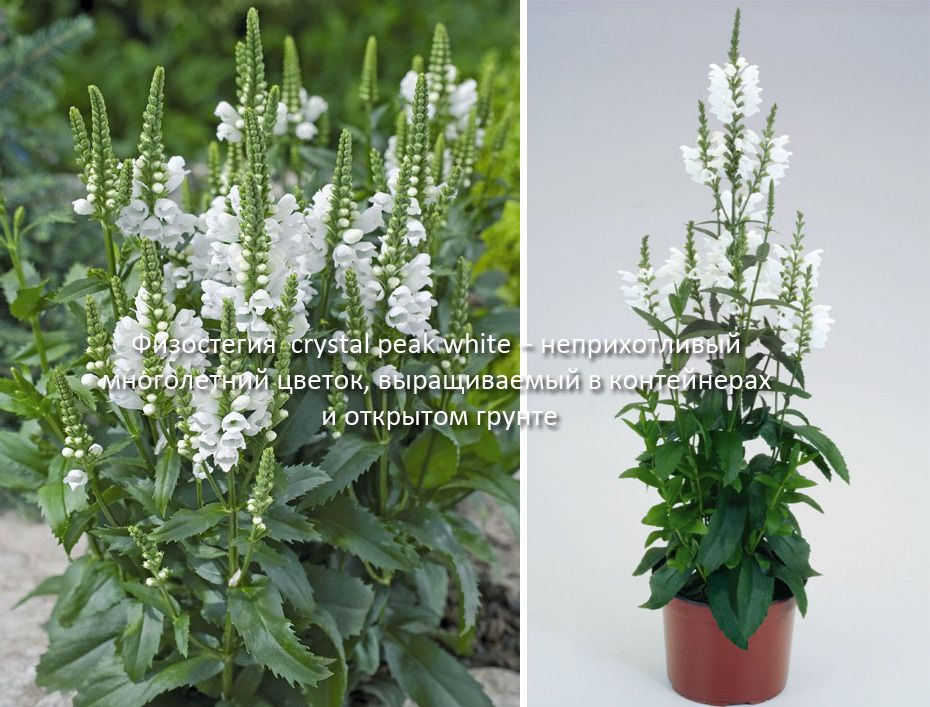
| Crystal peak white | Approximately 80 cm. | Snow-white color. |
|
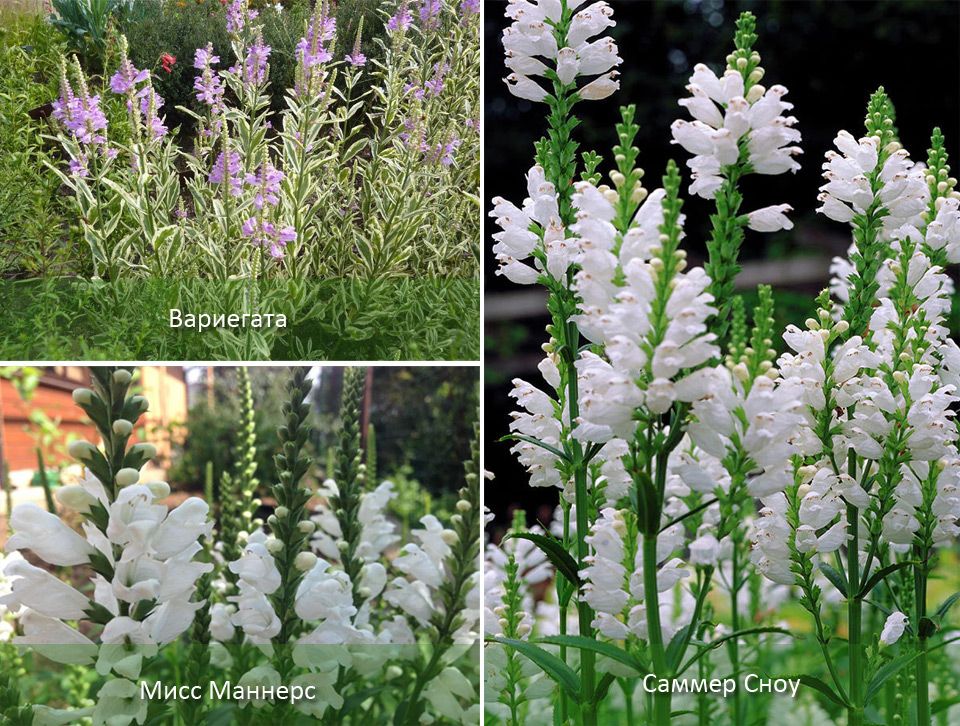
Summer Snow (Summer Snow) (Physostegia virginiana summer snow) |
The length of the stems is 90 cm. | Snow-white, spike-shaped. |
|
Summer Spire (Summer Needle, Spire) (Physostegia virginiana summer spire) |
The height of the bush is 90 cm. | Rich pink color, spike-shaped. |
|
Variegata (Physostegia virginiana variegata) |
The most wind-resistant, stem 90 cm, with white edges on the leaves. | Hot pink. |
|
Bouquet of Roses (Physostegia virginiana bouquet rose) |
The tallest variety is up to 1.2 m. | Rich lilac. |
|
Vivid (bright, ardent) (Physostegia virginiana vivid) |
The height of the slender (not falling apart) stems is 60 cm, it grows quickly. | Soft pink. |
|
The Pink Queen (Physostegia virginiana pink queen) |
It grows to 70 cm, tolerates frosty winters well, and is distinguished by abundant flowering. | Pink, spike-shaped. |
|
Miss Manners (Physostegia virginiana miss manners) |
The bush is 45-60 cm high and grows less uncontrollably than other varieties (with good manners). | White, large. |
Growing Physostegia from Seeds
Planting by dividing rhizomes is more effective, but in some cases, physostegia is also grown from seeds. Seeds have a high germination rate, and physostegia grows vigorously by self-seeding.
It is better to plant only freshly collected seeds.
Sowing physostegia seeds in open ground
Seeds are sown in open ground in late autumn, but planting can also be done in early spring. Seedlings produce more resilient plants.
Growing seedlings
Indoors, seeds are planted for seedlings in early March:
- Sow in boxes with loose nutritious soil to a depth of no more than 1 cm, cover with film or glass on top (also plant in plastic cups);
- the room where the seeds are germinated should be warm, well-lit, ventilated, and provided with regular watering;
- seedlings appear after 2 weeks, after which the glass or film covering should be removed;
- young shoots are protected from drafts and direct sunlight, and the soil is regularly loosened;
- when two true leaves appear, thin out the shoots to a distance of 10 cm between them or pick them into pots;
- The seedlings are picked out for flower beds at the end of May, before which they are hardened off for 2 weeks by taking the seedlings out to a shaded area of the garden during the day.
Planting physostegia in open ground
The permanent location can be sunny or partially shaded - the plants will tolerate both conditions equally well.
The soil should retain moisture well—this can be loamy, sandy loam, or black soil. The soil should be sufficiently loose and nutritious. Avoid planting physostegia in areas that are too dry, as this will be detrimental to it.
When transplanting seedlings into flower beds, maintain a distance of 25-30 cm between shoots. The roots of these flowers grow quickly and can choke out other surrounding plants. Therefore, planters are used—special barriers buried 30-40 cm deep, and topped with no more than 5 cm of soil.
Caring for Physostegia in the Garden
It is not difficult to properly care for these flowers:
- requires regular watering, but there will be enough rainfall in rainy weather;
- periodically weed and loosen the soil;
- To protect against weeds and retain moisture, the soil around the bushes is mulched;
before flowering, mineral fertilizers are added; - cut off dried leaves and stems in time;
- organic fertilizers are not applied during the summer season; it is enough to do this in early spring and when preparing the plant for winter;
Plants planted from seedlings begin to bloom in 2-3 years. In total, bushes can grow for up to 5 years without replanting.
Then, to keep them in good condition, they need to be replanted in other places (only after flowering).
If the soil is over-fertilized, bushes can grow up to 1.5 meters tall and overgrow, choking out other plants in the flowerbeds. Overly tall and overgrown plants need to be supported, tied, and pruned, otherwise they simply won't support their weight.
Physostegia after flowering
After all the physostegia flowers have faded, collect the seeds and trim the stems. Don't cut them off completely, but leave stumps.
Seed collection
In September, after flowering, you can collect the seeds. They are hidden at the bottom of the flower sepals and are quite large. To prevent them from scattering in the wind as self-seeding, it's best to extract them early and dry them, preparing them for sowing in a suitable location.
How to prepare for winter
Although this plant is winter-hardy, in regions prone to severe frosts, it needs to be covered for the winter. The pruned bushes are covered with peat and humus, then topped with spruce branches. In the spring, with the first warm days, the cover should be removed to prevent the roots from rotting.
Reproduction of Physostegia
Physostegia reproduce in several ways:
- seeds;
- seedlings;
- division of roots;
- layering;
- cuttings.
Bush division
New plants are separated from the mother plant, along with their root system, in early spring or late fall. If necessary, replanting can be done during flowering, but since all stems must be trimmed during digging, the physostegia flowers will be lost. The resulting bushes are planted immediately in the chosen location.
Layers
Lateral shoots develop from the creeping roots. In early September, they are dug up and planted in a semi-shaded area of the garden, and the following year, they are transplanted to a permanent location.
cuttings
In spring or summer, cut 12-cm-long stems with two buds and root them in containers placed in a shady spot in the garden. They are then overwintered indoors and planted in flowerbeds in the spring.
Diseases and pests of physostegia
This plant is very resistant to diseases and pests. During cold, rainy seasons or with frequent watering, they can be susceptible to fungal attack; in this case, treatment with a fungicide solution (Fundazol, Skor) is necessary. During dry seasons, spider mites and aphids may attack. These require treatment with a soap solution or special preparations (Aktara).
Physostegia in the landscape
Physostegias look most impressive when planted in groups, especially when several shades are combined. They are planted along fences, alongside ornamental shrubs, and to border paths.

Plant singly or in clumps. They thrive alongside phlox, dahlias, lilies, junipers, echinacea, daisies, and lupines.