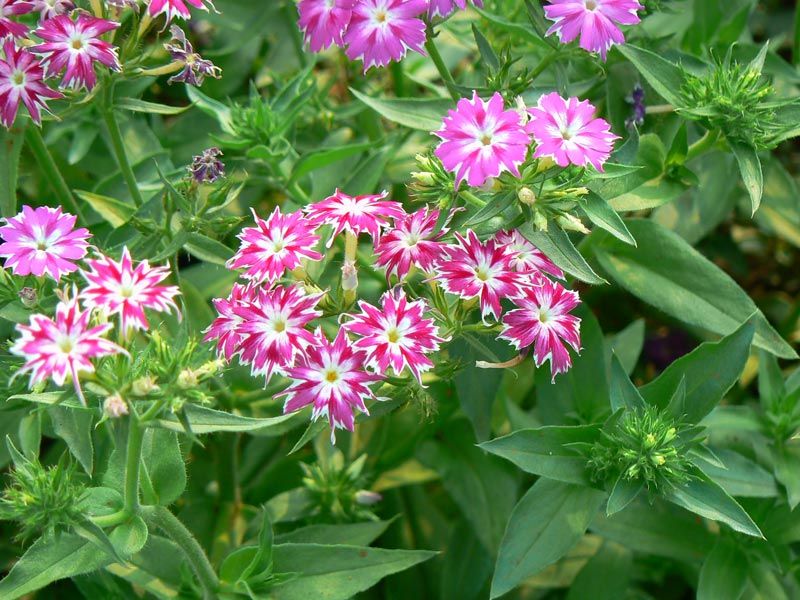
Phlox drummondii is an annual herbaceous plant of the genus Phlox, family Polemonium. It is native to the southwestern United States and Mexico. This ornamental flower is widely used by gardeners for its low maintenance and vibrant, lush blooms in a variety of colors. Translated from Greek, it means "fire." It was brought to Europe by the English botanist Drummond.
Content
Description of Phlox Drummondii
Drummond phlox grows to a height of no more than 50 cm, with erect, branched, and pubescent stems. The leaf blades are elongated, obovate, lanceolate, serrated at the edges, and pointed. The inflorescences are corymbose or umbel-shaped, blooming from June to October.
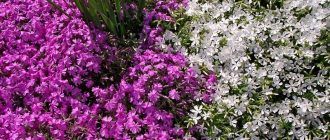
Flower colors include white, dark red, blue, and purple. Each bud falls off after a week, but new ones open. The roots are shallow and poorly developed.
Popular varieties of Drummond Phlox
There are dwarf varieties (no more than 20 cm), tetraploid (large flowers), and star-shaped (petals with fringes).
| Varieties | Description | Flowers |
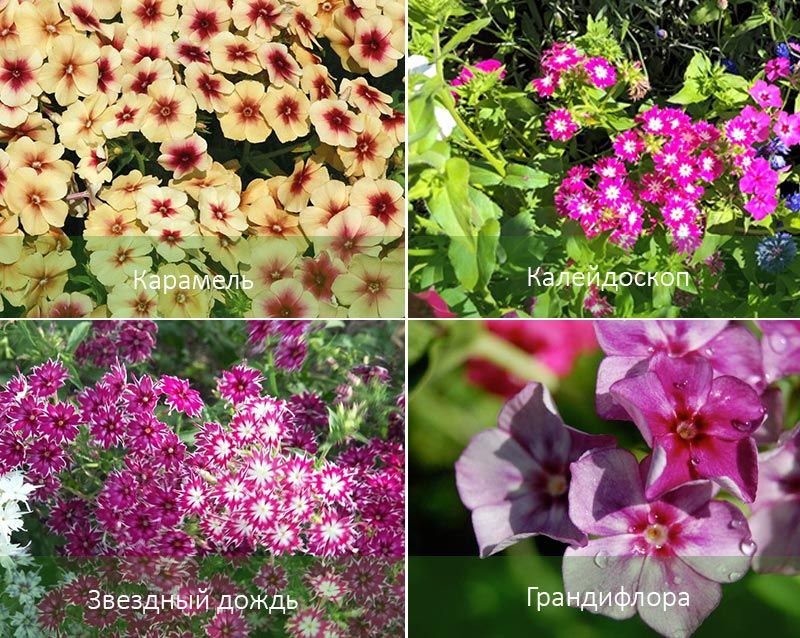
| Star rain | An annual plant with thin, straight, and branched stems. Drought-resistant and frost-tolerant. | In the shape of stars, purple, lilac, pink. |
| Buttons | Well-defined branches, suitable for growing in the south, tolerates heat. | The eye is located at the base of the petal. The palette is pink, blue, and scarlet. |
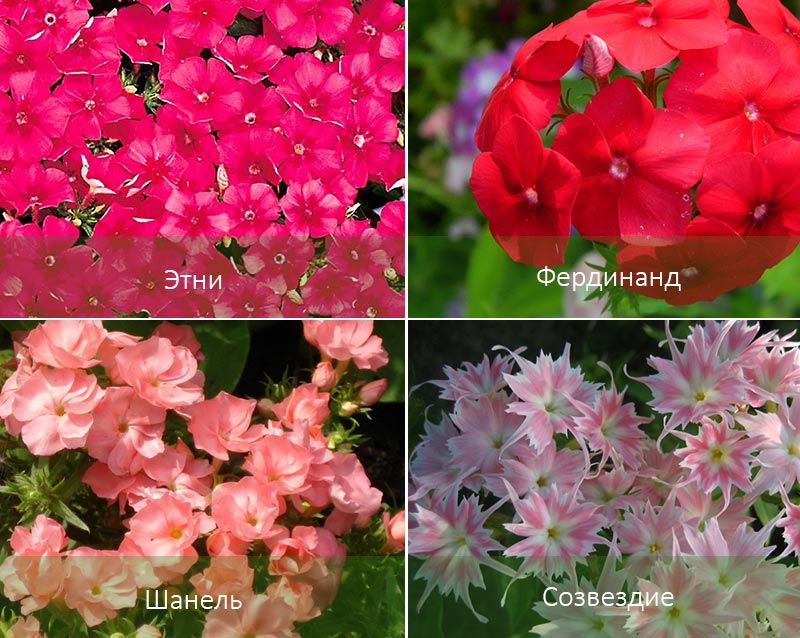
| Chanel | Low, up to 20 cm. | Terry, peach. |
| Constellation | Lush, up to 50 cm tall, with pubescent leaves and corymbose inflorescences. Popular for bouquets. | Bright red, 3 cm in diameter with a pleasant aroma. |
| Terry | Up to 30 cm, decorates loggias and balconies. | Cream, red. |
| Grandiflora | Frost-resistant, large. | 4 cm in diameter, different colors. |
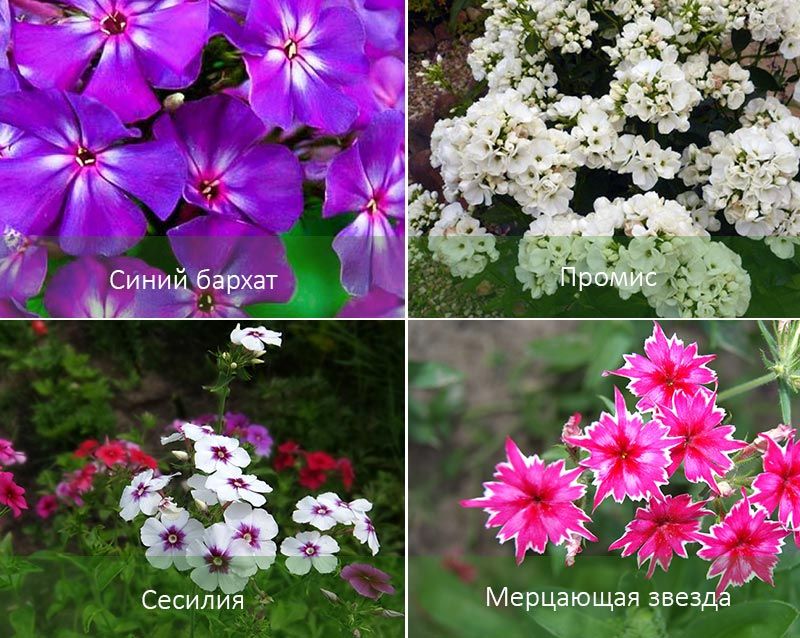
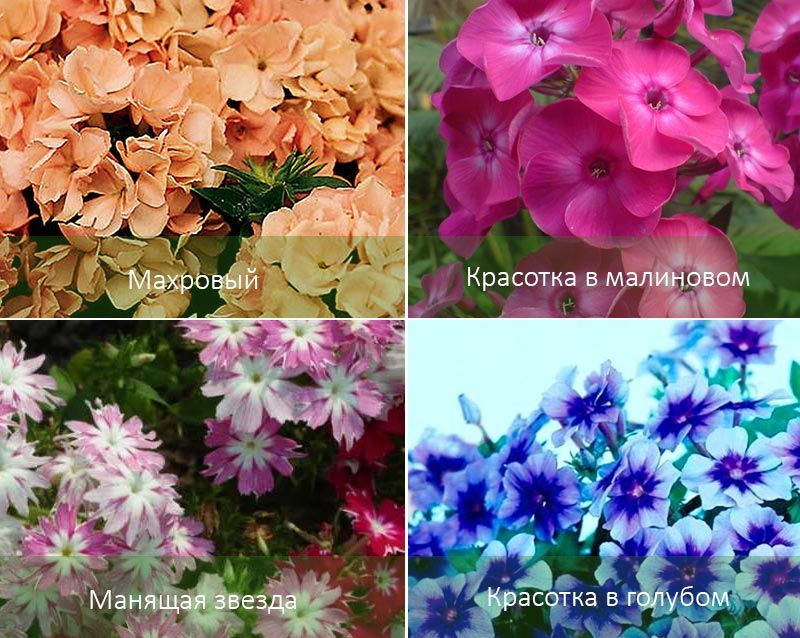
| Twinkling Star | Height 25 cm. Blooms until cold autumn. | Like snowflakes, with pointed edges. Color: white, pink. |
| Promise | Terry, up to 30 cm, decorates rock gardens and flower beds. | Large, blue, purple, pink. |
| Beauty in crimson | Spherical bushes up to 30 cm, not afraid of cold and temperature changes. | Raspberry. |
| Tapestry | Tall, up to 45 cm. | In the middle there are dark petals (cherry, burgundy), light at the edges. |
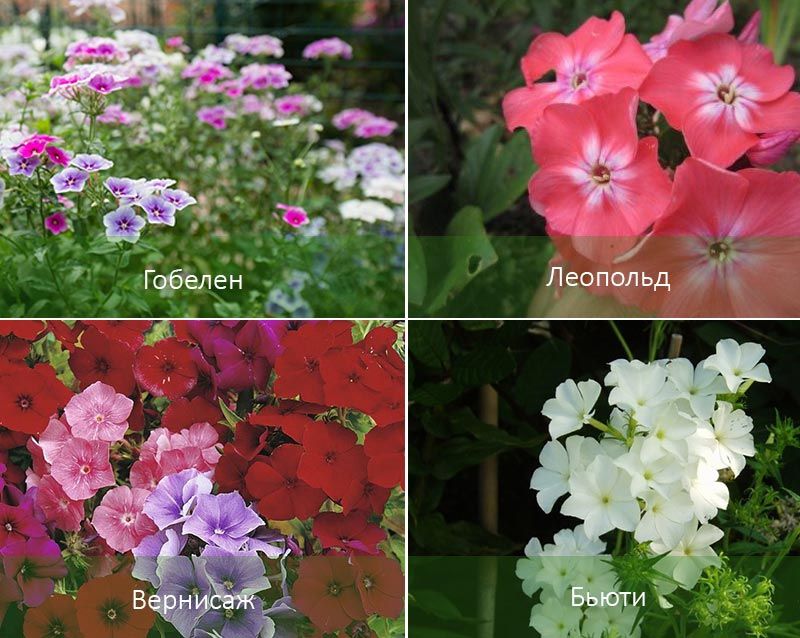
| Beauty | Up to 25-30 cm. | Small, white, aromatic. |
| Bird's milk | Mini bush up to 15 cm, blooms profusely and for a long time. | Terry, cream, vanilla color. |
| Leopold | Inflorescences up to 3 cm in diameter, on a tall stalk. Cold-resistant. | The petals are coral, with white centers. |
| Kaleidoscope | Small, decorates borders. | A mix of different shades. |
| Alluring Star | Up to 40 cm, umbrella-shaped inflorescences. | Small, fragrant, pink, crimson, purple, white. |
| Blue sky | Dwarf up to 15 cm. | Large, 3 cm in diameter, bright blue, white in the middle. |
| Blue velvet | Maximum up to 30 cm with pointed leaves. | Large, double, bright purple, blue. |
| Scarlett | Blooms profusely, disease resistant, up to 25 cm. | Scarlet, pink, terry. |
| Ethni | Intensively branching, up to 15 cm. | Semi-double, pastel colors. |
| Vernissage | Up to 40 cm, large-flowered, looks impressive in pots and on balconies. | Large, fragrant, white, purple, red. |
| Fair mix | Up to 15-20 cm in height with corymbose inflorescences, loves sunny places. | Terry, in different colors. |
| Cecilia | The bush is branching, spherical in shape, up to 30 cm. | Blue, pink, light blue. |
| Caramel | Height up to 60 cm, used in bouquets. | Creamy yellow, cherry in the center. |
| Ferdinand | Grows up to 45 cm with dense inflorescences. | Bright red, fragrant. |
Growing Drummond Phlox from Seed
The seeds are purchased or collected from a ripe capsule. The dried but uncracked fruits are crushed, and the debris is sifted out.
In early May, sow the seeds in open, light, fertile soil with low acidity. Add organic matter, sand, and peat if needed. Loosen the soil surface, make furrows at intervals of 20 cm, and water. Once the water has been absorbed, lay out 2-3 seeds at intervals of 15 cm, cover with soil, and moisten. Cover with lutrabsil, periodically lifting and moistening as needed. Two weeks after sowing, seedlings will emerge, and the cover is removed. Loosen the soil, remove weak seedlings, and fertilize with liquid nitrogen. Fertilizer mixtures are added when flower buds form. When grown from seed, the seeds will bloom in July.
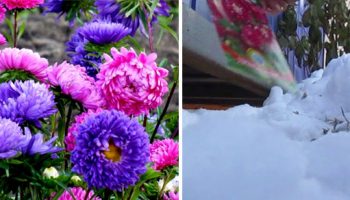
Fertilizing is allowed in November and December, and phlox will sprout in April. Even if there's snow, clear it away and scatter the seeds, sprinkle dry soil on top, and cover with spruce branches. Plant in a flowerbed in May.
Seedling method
When grown from seedlings in March, phlox bloom earlier. The boxes are filled with pre-sterilized soil.
They purchase a ready-made substrate for flowering plants or prepare it from fertile soil or humus and sand with peat chips.
Furrows are made 7 cm apart. Seeds are placed one at a time in a row in moistened soil, 5 cm apart, covered with a thin layer of soil, and covered with glass or plastic film. Place in a warm, bright room. Moisten the soil. Seedlings will appear in 8-10 days, and the plastic film is removed.
When two true leaves form, transplant and feed with nitrogen after a week. Water with warm water when the soil dries out. When the fifth leaf forms, pinch out the leaves.
In April, the seedlings are hardened off by taking them outside or onto the balcony for 15 minutes, and a month later – for the whole day.
May is the time to plant outdoors. Choose a site that doesn't receive midday sun. Dig holes to fit the seedling's root ball. Water, lower the plant, add soil, and firm it down. Then water.
Caring for Drummond Phlox in the open ground
When planted and cared for according to agricultural practices, phlox bushes will delight you with lush flowering – this includes watering, fertilizing, and removing wilted inflorescences and weeds.
Watering
Water the plants with lukewarm water, moderately and consistently. Use 10 liters of water per meter. During flowering, water more generously, and in hot weather, water in the morning and evening, avoiding contact with leaves and buds.
Top dressing
Plants require fertilization several times. At the end of May, apply liquid manure at a rate of 30 grams per 10 liters. Potassium salt and superphosphate are added two weeks later. At the beginning of July, minerals and nitrogen are needed – for phlox grown from seed, and for seedlings, only mineral fertilizers. Phosphorus is added to the fertilizer at the end of July.
Loosening
At the beginning of flowering, hill up the soil around the bushes and loosen it until flowering ends. Do this carefully, shallowly, so as not to disturb the roots. After rain, loosen the soil around the plants as well.
Pinching
When the 5th or 6th leaf appears, the plants are pinched for better flowering.
Shelter for the winter
During the winter, phloxes are covered with dry leaves and grass.
Propagation of Drummond Phlox
The ornamental annual plant is propagated in several ways.
By dividing the bush
A five-year-old bush is dug up in the spring, divided, and the roots and buds are left on each division. It is then replanted immediately.
Leaf
A leaf and part of the shoot are cut off in late June or early July. The bud is buried 2 cm deep in loose, moist soil and sprinkled with sand, leaving the leaf on the surface at a distance of 5 cm. Cover the soil, creating a greenhouse effect with a temperature of 19 to 21 °C. Periodically moisten the soil and ventilate it; the cuttings will root after a month.
Cuttings from stems
Stems are cut from a healthy bush in May-June. Each section should have two lateral shoots. The cut is made just below a node at the bottom, and 2 cm above at the top. Leaves are removed from the bottom, and the top is trimmed by half. The prepared cuttings are planted in soil up to the second shoot, sprinkled with sand, and spaced 5 cm apart. Water twice a day until rooting occurs. Keep the cuttings in a greenhouse. After 2-3 weeks, new shoots will form. These are then placed in a separate bed.
Layering
The bush is covered with fertile soil; when the roots form and grow, the soil is cleared, the shoots are cut off and the plant is replanted.
Diseases and pests
The plant is resistant to diseases and pests, but problems may sometimes arise.
| Disease/Pest | Symptoms | Elimination measures |
| Powdery mildew | White coating on leaves. | Wood ash, activated carbon, and fungicides (Strobi, Alirin-B) are used. |
| Root rot | The stems turn black and soft. There are brown spots on the leaves and mold on the soil. | The bush is discarded, and the soil is treated with copper sulfate. For prevention, Trichodermin and Entobacterin are applied at planting. |
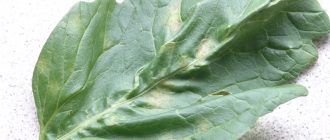
| Thrips | Yellow spots on leaves, stems, gray on the underside, bushes are deformed. | Treat the soil with Aktara, Tanrek, and onion and garlic decoctions. Prune off any damaged parts. |
| Spider mite | Small mites on leaves and inflorescences. | For processing, Actofit and Kleschevit are used. |