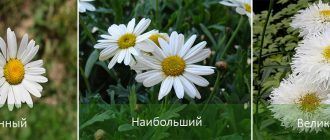
Salvia, or lettuce leaf, or sage, is a well-known plant that has long been used in folk medicine on every continent. There are several hundred species worldwide, many created by breeders. Long-flowering varieties are used in landscape design, are often grown in gardens for ornamental purposes, and are harvested for medicinal purposes. Oily varieties of salvia have been bred for industrial production; they are excellent honey plants. Sage is also used as a spice in cooking.
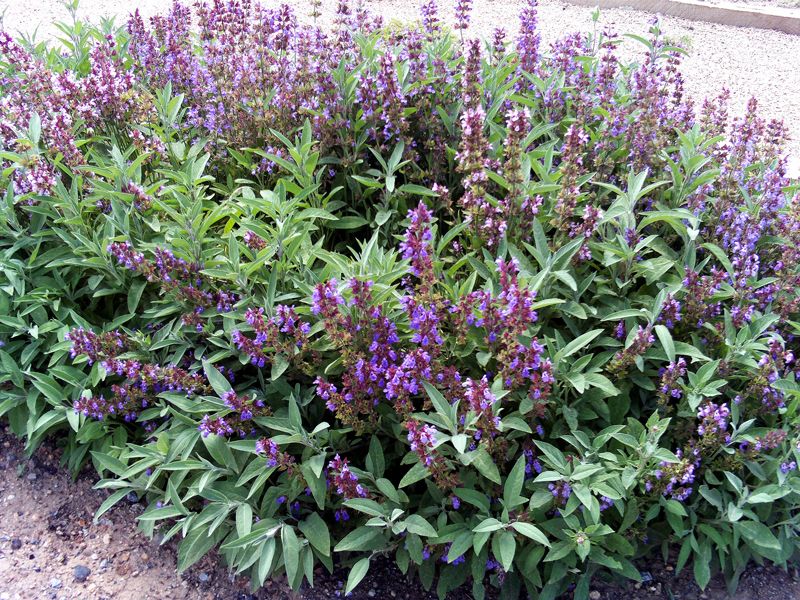
All wild species and cultivated varieties possess medicinal properties: antiseptic, softening, and healing. The benefits of sage have long been recognized by official medicine.
What is sage, description
Salvia is an herb, or more accurately, an upright, branching perennial subshrub with a woody rootstock, belonging to the mint family. Sage is native to the Mediterranean region, but it was later cultivated in many mountainous areas. It thrives on sunny, sun-drenched slopes, forest edges, and rocky riverbanks. In the wild, the plant reproduces by seed, growing in large clumps that occupy every available space.
Sage varieties differ in the shape of their leaves: there are plants:
- with narrow, wedge-shaped, smooth and serrated edges that widen at the bottom;
- ovoid, tuberous, with wavy, jagged edges;
- oval, smooth, with thickened edges;
- growing from the trunk and on the cuttings from 1 to 3 cm.
The herbaceous bushes reach 1.2 meters in height, but there are low-growing varieties, no taller than 30 cm. Most often, the subshrub grows to 50–70 cm and is well-branched. The upper stems and leaves of some species are covered in white fluff.
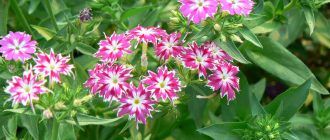
The plant's color ranges from greenish-silver to reddish, and the flowers range from pale lilac to deep purple. There are varieties with red, bright blue, pinkish, and white buds. These can be gathered in spikes and panicles. From a distance, sage thickets resemble colorful caps, the flower stalks densely covered with buds. Blooming time ranges from one to three months, and some varieties adorn gardens from late spring to late fall.
Common sage, oak sage and other species
The most popular varieties:
| Species (official name) | Description, plant height (cm) | Application |
| Meadow (Salvia pratensis) |
|
Used for medicinal purposes. |
| Medicinal (Sálvia officinális) |
|
In addition to medicine, it is used in cosmetology and serves as a source of essential oils. |
| Salvia sclarea |
|
|
| Oakwood (Salvia nemorosa) |
|
|
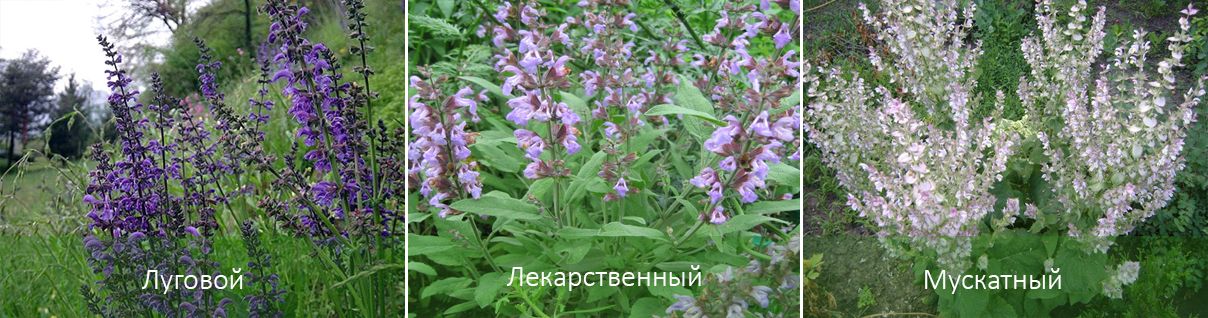
In addition to these varieties, wild steppe and Ethiopian sage are also found. The vegetable variety, with its large, fleshy leaves, was bred specifically for culinary use. White sage is grown abroad as an annual and is used in smoking mixtures because it contains narcotic components.
Growing sage
This medicinal plant is often found in garden plots. For those without land, it's easy to grow salvia indoors. Keeping the medicinal leaves on hand is helpful.
Breeding at home
The ND sage has nothing in common with the houseplant violet. For growing plants in pots on balconies and windowsills, choose low-growing varieties, up to 30 cm tall. For planting, choose tall clay 10- or 15-liter pots.
Plastic containers are not suitable for this purpose, as the developed root system will not be able to breathe. Sage should be placed on the east or west side of the apartment; a south-facing plant will be too hot and will need shade on sunny days. A north-facing plant will not have enough light, so supplemental lighting will be needed in winter to ensure the plant's fragrance. The plant does not like drafts; a comfortable temperature range is 22 to 25°C.
Select soil with a pH of 6.5. Sow seeds directly into the soil, planting them 3 cm deep and watering generously. Moisten the soil as it dries. Watering should be increased during the flowering period.
Garden sage
Salvia prefers loamy and sandy soils rich in organic matter. Planting and care, taking into account proper agricultural practices, include regular watering, annual fertilizing with complex fertilizers, or adding humus. Open-ground plantings are best done after the last frost, when the soil warms to 10°C. Drainage is required in damp areas with a high water table—salvia is drought-tolerant; if overwatered, it will not thrive, and the roots will rot.
Sage propagation options:
- seedlings, they grow from 8 to 10 weeks, by which time a full-fledged root system is formed;
- by cuttings, shoots are cut and grown in the spring, then dug in in a shady place, and transplanted to a permanent place after a year;
- by dividing the roots, the procedure of dividing the grass hummock is carried out in the fall;
- Sowing of winter-hardy species is carried out in early spring or late autumn, with a distance between plants of at least 30 cm.
Sage responds well to autumn pruning, bushes out more strongly in spring, and blooms profusely.
Diseases and pests
Salvia is resistant to insect pests; volatile essential oils repel them. The plant is used as a natural fungicide, and an infusion is used to treat garden crops.
Sage is susceptible to fungal infections. In cool, rainy weather, it becomes covered with powdery mildew. For treatment, use an infusion of fresh manure, whey, or common mildew-fighting products. Topaz, Fundazol, and Skor are diluted according to the instructions. Treatment is carried out in the evening on a windless day. After treatment, the plant should not be harvested for two weeks, as the roots and leaves can accumulate toxins, which require time to remove.
Root rot is treated with the biological preparation Fitosporin. It is dusted onto the soil. Regular sanitation treatments are performed on moist soils to eliminate sources of fungal infections.
Top.tomathouse.com recommends: Sage – the healer
Salvia is distinguished by its high essential oil content, found throughout the plant, from roots to buds. Depending on the species, the leaves contain between 0.5% and 2.5% oily components, including borneol, camphor, and other esters. These produce a persistent aroma when crushed.
Other beneficial substances contained in sage:
- tannins make up to 4%;
- alkaloid components,
- resins and paraffin components (up to 6%);
- organic acids;
- gum;
- phytoncides;
- plant enzymes;
- B vitamins, ascorbic acid;
- starch;
- micro- and macroelements.
Thanks to its complex chemical composition, sage possesses a wide range of medicinal properties. The leaves, roots, and flowers are used to prepare medicinal remedies, including decoctions, infusions, poultices, and ointments.
The components of salvia have the following effects:
- antispasmodic effect, can relieve headaches caused by sudden changes in pressure;
- it is a mild diuretic and choleretic agent;
- excellent antiseptic, disinfects and heals wounds;
- expectorant effect, increases the secretion of pulmonary fluid by the mucous membranes;
- anti-inflammatory and anti-edematous effects, improve blood microcirculation in tissues;
- Sedative, normalizes hormone production, contains magnesium in an easily digestible form, esters have a hypnotic effect.
Areas of use of sage for the treatment of diseases:
- Externally, it is used to treat the mouth, throat, and nasal passages for sore throats, rhinitis, otitis, pharyngitis, and sinusitis (frontal sinusitis, maxillary sinusitis, and tonsillitis). In dentistry, decoctions are used to treat stomatitis and gum inflammation. Compresses reduce swelling from injuries and bruises. For external hemorrhoids, compresses are used, while for internal hemorrhoids, the solution is injected into the anus using a rubber bulb. Enemas are recommended for men with prostate problems.
- For women, sage is used to treat vaginal conditions such as colpitis and thrush. The decoction effectively restores vaginal microflora and inhibits the growth of pathogenic microorganisms.
- Internally, infusions and decoctions are recommended for gastrointestinal disorders; they normalize gastric acid production, bile flow, and harmonize intestinal microflora. Sage is a good aid for pulmonary diseases of an inflammatory and infectious nature; decoctions are used in the comprehensive treatment of tuberculosis, pneumonia, bronchitis, and tracheitis. For those with kidney problems, infusions are recommended to improve urine filtration.
In cases of stress and nervous tension, salvia helps you sleep peacefully.
Side effects
- Like any medicine, sage has a number of contraindications:
- Individual intolerance. Essential components, resins, and plant enzymes can cause an allergic reaction, including rashes and spasms.
- Asthma, severe chest cough. Taking sage should only be done after consulting a doctor, as the herb can cause asthma attacks.
- Acute forms of genitourinary diseases, urolithiasis.
- In case of thyroid dysfunction, sage stimulates the functioning of the endocrine organs.
- Diarrhea. In cases of dehydration, sage's diuretic effect is undesirable.
Dosage forms
Pharmacies sell sage infusions, herbal extracts packaged in filter bags. The ingredients are found in cough tablets and syrups. Clary sage essential oil is also available and is used for inhalation and gargling. It's important to strictly follow the instructions, as high concentrations of resins and esters can cause burns.
The alcohol tincture is safer, as it has a lower concentration of ingredients. It is used to treat dental and ENT conditions, in gynecology, for the treatment of skin inflammations, and in cosmetology.