Phlox has been a favorite of many generations of gardeners. The lush, fragrant blooms delight the eye from May until September. Propagation by seed is becoming increasingly popular. This allows you to grow your favorite varieties of both annual and perennial phlox.
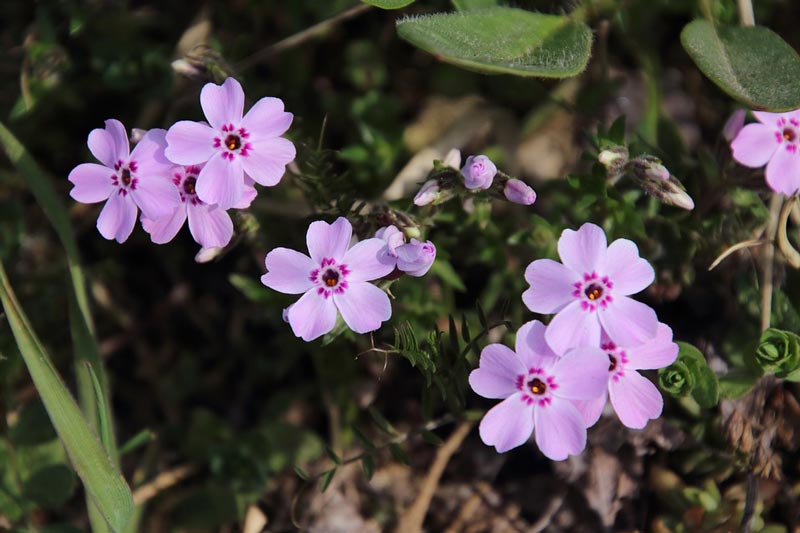
Growing annuals from seeds
The most popular annual species is Drummond's phlox. Its long-lasting blooms, in a variety of shades from white to purple, from June to September, draw attention to any garden plot.
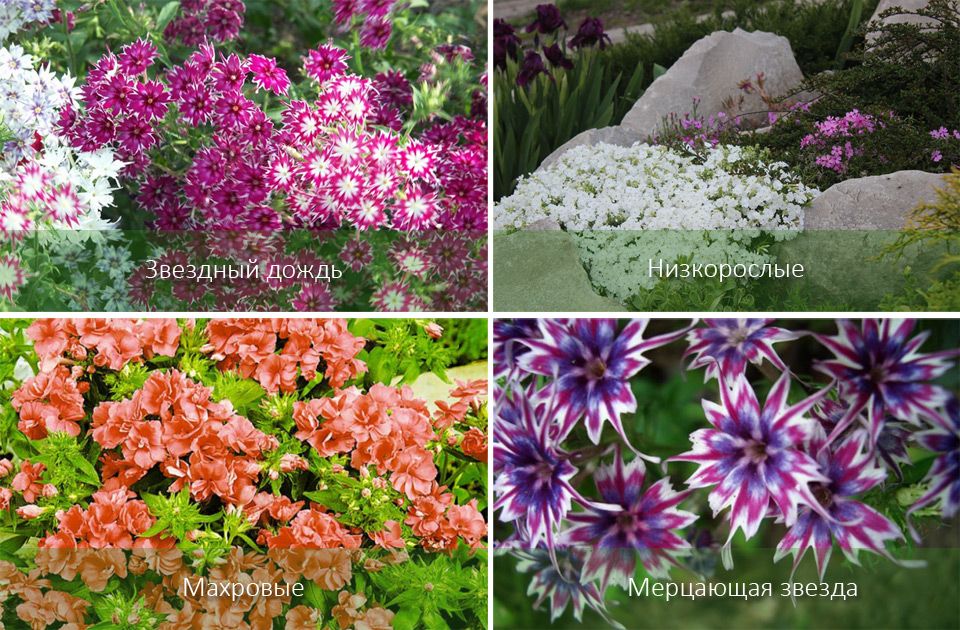
There are two varieties: star-shaped and large-flowered. The first group includes varieties such as Constellation, Double, Buttons, and Little Thumb. The second group includes Star Rain, Milky Way, and Scarlet Stars.
Sowing annual phlox in the ground
Phlox are sown outdoors as soon as the soil thaws. Raised beds in partial shade are ideal for them. It's best to prepare the seedbed in the fall.
Manure should not be applied to annual flowers.
For every square meter of bed, add one bucket of compost and 200 g of lime. If the soil is loamy or peaty, increase the lime to 300 g. Mix everything thoroughly with the soil. Furrows are marked every 15-20 cm and 3-5 cm deep. Additionally, add 40 g of Kemira Universal fertilizer per square meter to each furrow. Mix it with the soil. Water the furrows with a watering can fitted with a fine mesh strainer. Sowing begins immediately, to prevent the soil from drying out.
Seeds are spread 3-4 cm apart. Broadcasting is also an option. Cover with dry soil, sand, humus, or compost and lightly compact. A covering material is stretched over the bed. It is removed during subsequent waterings and then replaced. The first loops of seedlings will appear in 10-15 days. They can withstand short periods of soil drying.
Planting and caring for annual phlox seedlings
Favorite varieties, such as Tom Thumb, are grown by sowing seedlings. Sow in March. Containers are filled with regular seeding soil and watered with a pink solution of potassium permanganate. Calcined river sand is added on top.
If it is not saturated with moisture from the ground, spray it before sowing.
The seeds are placed in pressed furrows 3 mm deep and spaced 2-3 cm apart. The seedlings are covered with plastic film and germinated in a shaded area, maintaining a temperature of 18 to 20 °C. The sprouts emerge within 10-15 days.
Immediately after germination, uncover the seedlings and place them on a southwest or southeast-facing windowsill. If the window faces away from the window, place a grow light over the seedlings and leave it on throughout the day. Water the seedlings in the morning, thoroughly wetting the top layer. When the first true leaf appears, transplant the flowers into 5-6 cm pots. The transplanted plants can be moved to a hotbed or greenhouse, providing additional protection during cold snaps and frosts.
During seedling cultivation, fertilize with Kemira-Lux or Kemira-Universal complex mineral mixtures at a rate of 2 g per liter of water. Water the seedlings at the roots, using ½ cup of fertilizer for 4-5 plants, then the same amount for 2-3 pots every 10 days.
In May, harden off the seedlings by opening the windows slightly for two weeks. Afterward, they can be left outdoors 24 hours a day. If cold winds, low temperatures, or frosts occur, cover the seedlings with non-woven material or bring them indoors. At the end of the month, hardened seedlings are planted in permanent flowerbeds, spacing them 12-20 cm apart.
Growing perennial phlox from seeds
Perennial phlox can also be grown from its own seeds. This method is used to renew subulate varieties. To do this, collect the capsules containing the ripened achenes in mid-September. They are cleaned and winnowed. Store in a dry place until sowing.
Sowing in open ground
Sow in November-December on frozen ground in prepared flowerbeds. Sow a little more densely than in spring. Cover the seeds with soil stored in the shed and cover with dry leaves or spruce branches.
During winter thaws, a uniform temperature will be maintained there, promoting better wintering.
If snow has already fallen, sweep it from the bed, scatter the seeds, cover with soil, and then top with a layer of snow. In the spring, after natural freezing and germination, the phlox are transplanted to their permanent locations at a distance of 40-70 cm.
Sowing for seedlings
Perennial phlox can be grown from seedlings. This is usually done for special varieties purchased in stores. These require soil with a high humus content.
Fill a container with prepared soil, perforated in the bottom to allow drainage of excess moisture, and water with Fitosporin (1 g per 1 liter of water). Place the seeds individually, 2-3 cm apart, then cover with dry soil and place in a cool place or on the bottom shelf of the refrigerator for stratification for 3 weeks. After this period, place them in a sunny spot and cover with plastic wrap until sprouts appear.
The accumulated moisture must be removed daily. Growing seedlings are watered when the top layer of soil dries out. When four true leaves have grown, they are pricked out into individual 5-6 m pots. During cultivation, they require the same feeding as annual phlox.
In the last ten days of May, the prepared seedlings are planted in a permanent place with a distance of 40-70 cm between bushes.