Forsythia is a shrub native to Asia, but is currently most popular in Europe. The plant symbolizes the beginning of spring, as it blooms in March. Another notable feature of this plant is its low maintenance; even in deep shade, it will retain its lushness, vibrant colors, and rapid growth.
Content
Description of forsythia
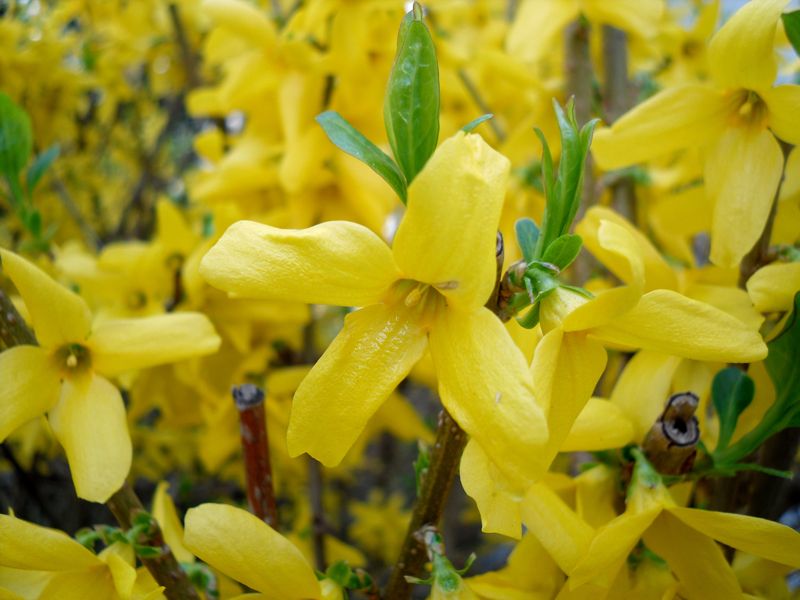
This flowering tree has a modest growth rate, ranging from 1-3 m; a dwarf variety also exists. Among all forsythia species, specimens with oblong leaves are most common, although there are exceptions with trifoliate leaves. The serrated leaves grow up to 15 cm long. The flowers resemble bells, but are yellow. The fruit is a seed capsule. Flowering begins in March and can last for three weeks.
Types and varieties of forsythia
| Species. Varieties | Height, stems | Peculiarities |
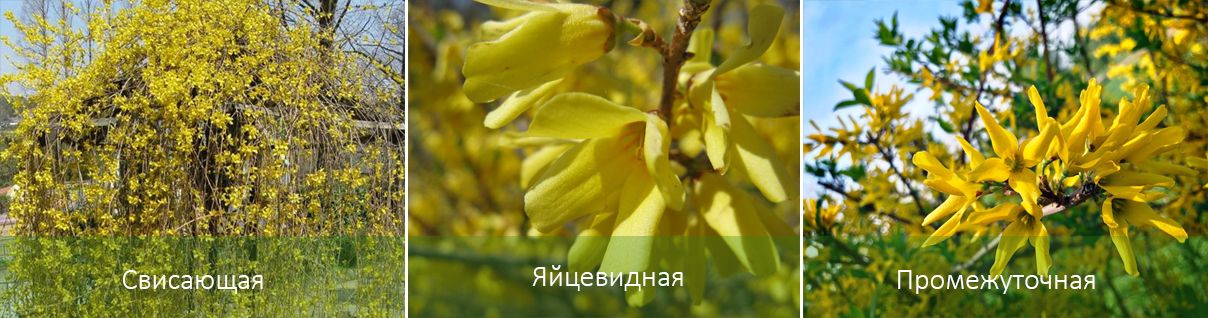
Hanging:
|
The three-meter-tall forsythia's crown is very spreading, and its slender stems are long enough to trail along the ground. Individual shoots that reach the ground sometimes root, forming a tetrahedral shape when cut. The stems are colored reddish-brown. The trifoliate leaves are slightly elongated. | The vast majority of hybrid specimens were developed from this variety. Its inflorescences are formed by 5-6 bell-shaped flowers of a fiery yellow color. It is used as a medicinal plant, fighting tumors, ridding the body of toxins, beneficially affecting blood flow, and normalizing the function of several internal organs. It takes root well after transplantation. |
Ovoid:
|
A relatively short specimen (up to 2 m) with a mixture of grey and yellow colours on the bark. | The plant is a winter-hardy species, but has a higher density of inflorescences than other specimens. |
Intermediate:
|
Massive shoots form a plant growing up to 3 m in height. The oblong leaves have a serrated edge. | This shrub is derived from the dark green, drooping forsythia. It is most popular in the European part of the country. The flowering tree is frost-hardy. |
| European | It grows up to 2 m in height. Stems of standard diameter are very strong, largely due to their good elasticity. | Considered the most cold-hardy species, it has a rather limited distribution. In the wild, this specimen can be found near cliffs and is notable for its lush growth. Its yellow flowers are adorned with dark stripes. |
| Giralda | Forsythia is a modest-sized plant (up to 2 m). The shoots are rectangular in cross-section. | The bush resembles European forsythia, but is less cold-hardy. The sunny-hued flowers grow to large sizes. |
| Dark green | Grows up to 3 m in height. Stems are the typical forsythia shape and size. | Its natural habitat is the mountainous regions of Asia. The plant is not cold-hardy, so it will require insulation to survive the winter. The golden flowers have hints of green. |
Features of growing forsythia
The plant doesn't require meticulous care, but there are some nuances that will affect its growth and development. Below is a list of some of these:
- The bush will respond with more profuse flowering in the presence of abundant light, but growing in partial shade is also acceptable;
- The soil for forsythia should contain lime;
- Grows well next to green conifers;
- The plant will sparkle with new colors in the autumn, which will only add to its decorative appeal.
Planting forsythia in open ground
The shrub must be fully established before frost sets in, so planting should take place in the spring or September. A sunny location should be protected from strong winds. Almost any soil is suitable, as long as it is dry and not acidic. To raise the soil pH, add wood ash.
Landing features
The planting hole should be shaped like a cube with a 0.5-meter edge, as forsythia's root system doesn't extend deeper than 0.4 meters. When planting multiple specimens at once, be mindful of spacing: each subsequent bush should be at least 1.5 meters away from the previous one. Drainage should be provided at the bottom of the planting hole by adding expanded clay, crushed stone, or broken brick to a depth of up to 0.2 meters. Then, add sand to a depth of up to 0.1 meters.
The last mass to be added is (1:1:2):
- peat;
- sand;
- land.
A small amount of wood ash (200 g) can be added to this soil mixture. The seedling is then placed, the empty spaces are filled with soil, and the area around it is lightly compacted. The newly planted plant requires ample moisture. Fall planting differs from spring planting in that the surrounding soil should be mulched in September. During the winter, the plant requires shelter, which is best achieved with a well-drained material; otherwise, the forsythia may rot.
Forsythia care
It should be comprehensive and include watering, soil cultivation and fertilization; the plant also requires pruning.
Watering
Watering is only necessary during droughts and prolonged heat; otherwise, precipitation is sufficient. Approximately 12 liters of water should be applied to each specimen, with watering occurring once every 2-3 weeks. Almost any type of water will do for forsythia.
Loosening, weeding, mulching
Soil cultivation should be carried out immediately after watering. The soil is loosened to a depth of 20 cm, the area around the shrub is weeded, and then the area is covered with moisture-free soil. Adding a compost mulch layer will eliminate the need for weeding.
Top dressing and fertilizers
A plant in properly fertilized soil will demonstrate good growth rates and sprawling blooms. Fertilizer is applied three times:
- In March, organic fertilizers, such as rotted manure, are suitable. Apply it generously around the trunk and water thoroughly;
- In mid-spring, complex mineral fertilizers are used at a rate of 70 g per specimen;
- Forsythia that has just finished blooming. This measure promotes bud formation in the future. A balanced complex fertilizer for ornamental garden plants is applied at a rate of 0.1 kg per 1 m².
Trimming
For sanitary purposes, the plant requires pruning all dried and damaged stems. This procedure should be performed on plants that have already finished blooming. Healthy shoots should be reduced by half. Decorative pruning is also sometimes performed to shape the forsythia. The shrub can be rejuvenated in the same way, but no more than once every five years. This will significantly increase the number of new shoots. Increased pruning frequency will stimulate foliage growth, resulting in a spreading and lush forsythia, but it may stop blooming.
Forsythia after flowering
If there's enough snow in the winter, the flowering tree won't require insulation, as the snow cover will already provide it. Otherwise, additional measures are necessary to ensure the forsythia survives the winter safely. The trunk should be lined with plenty of dry leaves, and the branches should be pressed to the ground and covered with a thick layer of spruce branches.
With the onset of spring, the bush is freed from its shelter.
Propagation of forsythia
Gardeners often prefer vegetative propagation methods, especially cuttings. Planting material is collected in early summer. Each individual plant should be healthy and approximately 15 cm in length. Lower leaf blades should be removed and the shoot treated with a root growth stimulant.
Planting is done in sand, in a greenhouse. Woody cuttings collected in the fall can be planted directly in open ground. They should be covered for the winter, and by spring they will have become good seedlings.
Propagation by layering. In the summer, select a shoot that hangs down to the soil surface, wrap wire around its base, and make a cut in the ground-facing part of the bark. Secure the stem to the soil and cover with potting soil.
It can be separated from the mother plant as early as April, and the cutting will bloom within a year. Seed propagation is best suited only for trained professionals.
Diseases and pests
The plant is virtually immune to disease and insect attacks. Nematodes rarely appear on it, but controlling them is relatively easy with a special treatment, such as Carbation.
Among the diseases, the most common are bacterial blight, wilt, and moniliosis. This infection, known as bacterial blight, can cause significant damage to a shrub in a very short time, with little hope of curing the plant. Since forsythia cannot be saved, the only option is to remove it along with the roots and treat the surrounding soil to prevent the infection from spreading to other plants.
The first symptom of moniliosis is the appearance of numerous brown spots on the leaves. In this case, simply removing the infected parts of the bush is sufficient.
Wilting can be stopped by spraying the flowering tree with Fundazol. The most suitable concentration is 5%.
Top.tomathouse.com recommends: using forsythia in the landscape
The shrub is often planted in gardens and parks, both in single plantings and in groups with similar specimens.
It fits beautifully into a natural garden setting. It's often used as a hedge, as its branches grow quickly. Landscape designers also use it in vertical gardening. It's also excellent for embellishing flowerbeds.