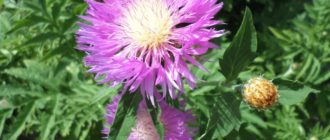
Gazania is a herbaceous plant in the Asteraceae family, native to Australia and South Africa. It is also known as "African daisy" or "midday gold."
Content
Description and characteristics of gazania
A bright, beautiful ornamental flower. It can be either an annual or a perennial. Its great advantage is its adaptability and rich color. It loves sun and is highly drought-resistant, easily tolerating low temperatures and relatively mild spring frosts.
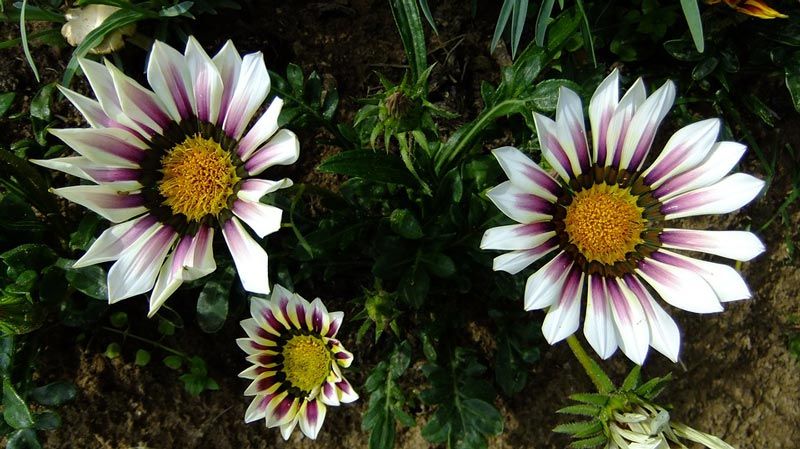
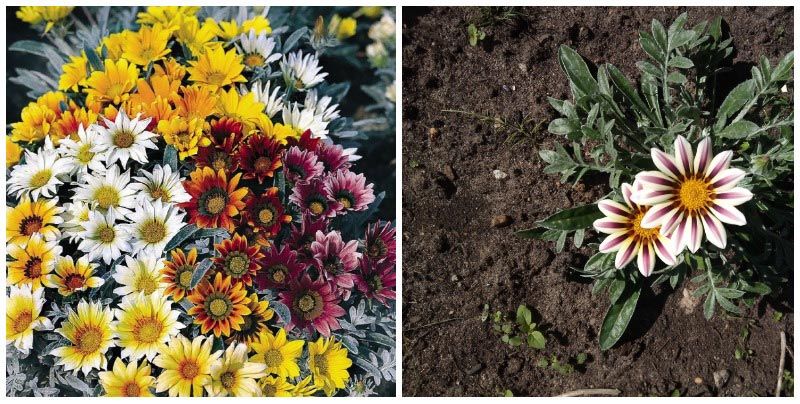
It grows as a bush up to 30 cm tall. The leaf blades are arranged in rosettes, with petals of varying shapes. The leaves are dark green with a grayish tint, pubescent underneath. The petals are pointed and come in a variety of colors: red, brownish-yellow, orange, golden-brown, and pink.
A distinctive feature is the presence of dark spots near the core. The fruit is a pubescent achene with a small tuft.
Popular types of gazania
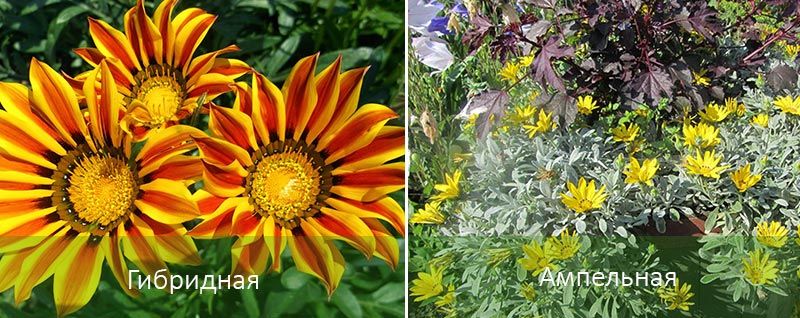
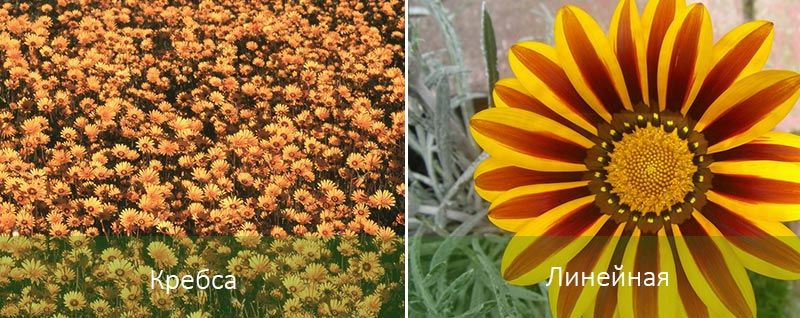
Many of its varieties are known, the most famous are listed in the table.
| Variety | Flower color and size (cm), other |
| Ampelous | Bright yellow, 2.5-4. The leaves are silvery and pubescent. |
| Rough (Shiny) | Orange, golden yellow, 4-8. Petals have dark spots near the core. |
| Linear (Long-Rifle or Potsi) | White, orange, yellow, up to 8. Petals are strongly elongated. |
| Krebs (Peacock) | Dark red, orange with dark spots at the base of the petals. Low-growing with a weak root system. |
| Hybrid |
White, golden yellow, crimson, orange, 7-10. Cold-resistant. |
Propagation of Gazania
This process is carried out both by cuttings and seeds.
Propagation by cuttings
Propagation by cuttings begins in mid-summer, but not earlier, once the mother plant is ready—having developed leaves and stems. First, a side shoot is selected and carefully cut at an angle, making sure it's at least 10 cm long. The cut area is treated with Kornevin (a growth accelerator). The resulting cutting is placed in a small container with moistened soil.
Maintain a room temperature of 18°C, avoid direct sunlight, and maintain humidity at 60%. Water regularly, preventing drying out. After 1.5-2 months, the plant will be well established and can then be moved outdoors (spring is the best time).
Growing Gazania from Seed
With this method, seedlings are grown indoors and then transferred outdoors. Planting seeds in open ground initially is not advisable, as they will grow more slowly and are susceptible to cold.
Sowing for seedlings
The sowing time should be chosen based on climate conditions. Mid-March to April is the most suitable time. Deep containers with well-drained soil with a pH of 7 are best for growing.
Caring for seedlings
The seeds are planted randomly or staggered, but spaced 2-3 cm apart. They are then lightly sprinkled with sand or pressed down and watered. The seed containers are then covered with plastic or glass and placed in a warm, bright room with a temperature of at least 20°C.
The seedlings need daily ventilation and removal of accumulated condensation. The seeds will germinate within two weeks.
Picking and preparing for planting in open ground
If the plant was planted in a small container, after new leaves (at least three) have formed, it is transplanted into a separate pot with soil made from peat and humus, which is called pruning. If you were initially using larger containers, you can do without this.
Next, the resulting sprouts are transferred to a room with a temperature of +12…+16 °C, for example, to a balcony, where they gradually harden off, preparing them for life outside the home.
Planting and care in open ground
Repotting begins between May 15 and June 15. If done earlier, further growth may be affected. It's best to choose a sunny location.
There are no special preferences regarding soil, the only thing is that it is better to use nutritious soil.
It's best to transplant grown seedlings into a flowerbed along with the soil they were growing in to avoid damaging the roots. Plant the seedlings 20-25 cm apart. Flowering can be expected within 3-4 months.
Caring for gazania in open ground
'Midday Gold' thrives in full sun, well-drained soil, and warm temperatures. It can easily survive light frosts (-5 to -7°C). During prolonged periods without rain, ensure adequate irrigation. Generally, the plant needs to be watered 2-3 times monthly, with careful loosening of the soil and removal of weeds.
Trimming faded blooms will encourage new buds to appear. Fertilizing is also a good idea, especially if the soil lacks the necessary nutrients. To ensure beautiful "daisies," feed them regularly once a month.
Wintering
When growing gazania as an annual, after it has finished blooming, the remains are collected and burned. However, they can be left for another year. To do this, select non-flowering plants, carefully remove them from the soil, place them in a pre-prepared container, and leave them in a room with a temperature of 8–10°C and good lighting. Water sparingly, but do not allow the soil to dry out. In the spring, transplant the gazania outdoors, cutting the stems back by half.
Growing at home
It will look great on a windowsill in a room. The only important requirement is ample lighting.
In summer, it is better to move the flower to the loggia.
Diseases and pests
Many varieties of this plant are quite resistant to pests and diseases. However, they are often attacked by aphids, spider mites, garden snails, and fungi. Special insecticidal solutions are used to protect against insects. A prolonged lack of flowering indicates improper care.
Growing and caring for gazania requires some knowledge, but it is not difficult to master.