Gaillardia is a plant in the Asteraceae family. This flower is native to the Americas. In the wild, it grows in Mexico and the southern United States. It is named after Gaillard de Charenton, an eighteenth-century philanthropist who made significant contributions to the field of botany.
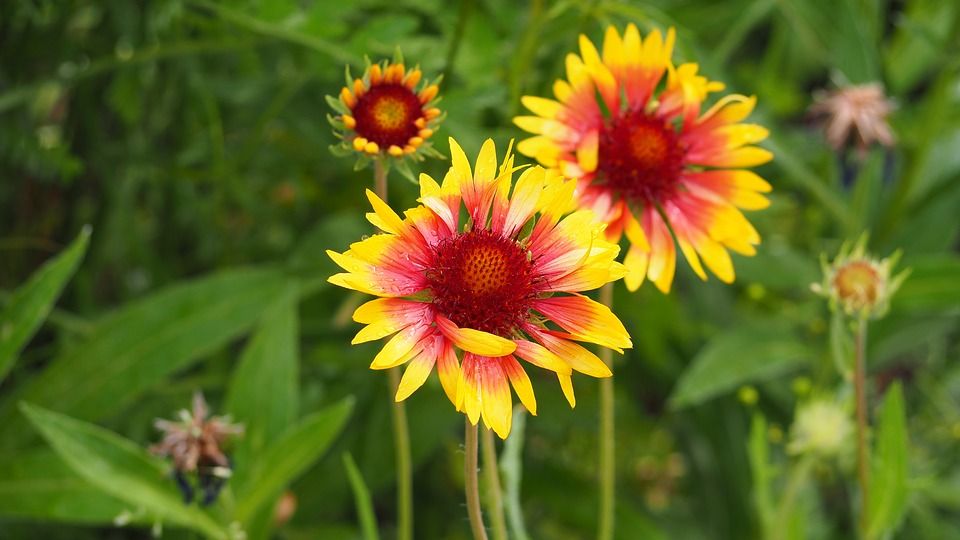
This plant is the state flower of Oklahoma. It grows in open fields and, when in bloom, paints the fields a vibrant, fiery color.
Content
- 1 Description of Gaillardia
- 2 Types and varieties of perennial and annual gaillardia: aristata and others
- 3 Growing Gaillardia from Seed and When to Plant
- 4 Planting gaillardia in open ground
- 5 Features of caring for gaillardia
- 6 Gaillardia after flowering
- 7 Perennial gaillardia in winter
- 8 Propagation of Gaillardia
- 9 Pests and diseases of gaillardia
Description of Gaillardia
Both annual and perennial varieties are cultivated. These flowers resemble daisies or gerberas in appearance. They reach a height of 60 centimeters. The inflorescences are large, double, and come in rich, warm hues.
It is widely used in landscape design for decorating gardens and private areas.
Types and varieties of perennial and annual gaillardia: aristata and others
Both perennial and annual species and varieties of gaillardia are popular:
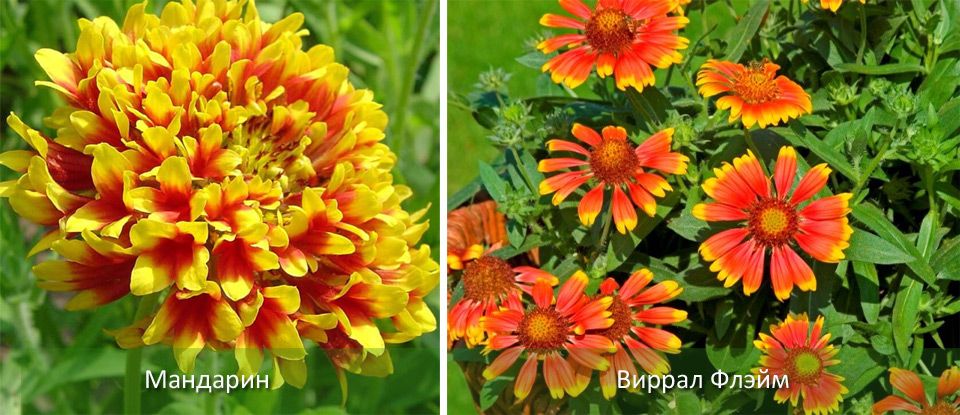
| Types | Description | Varieties | Description |
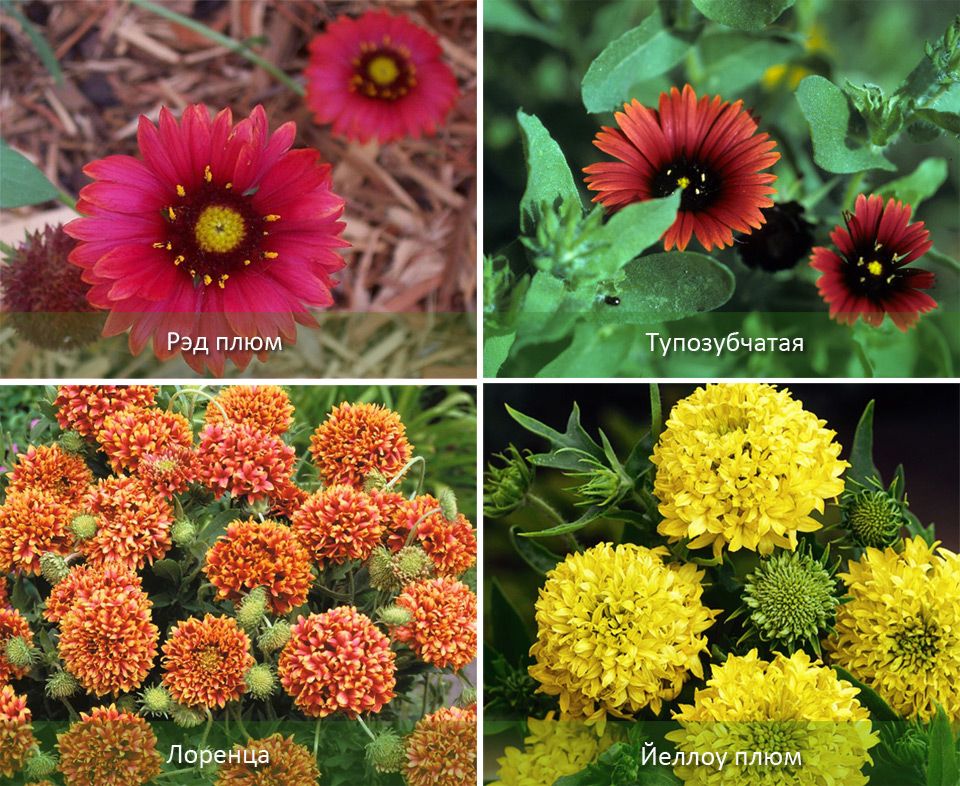
| Beautiful | An annual. An ornamental garden plant with single- or bicolored inflorescences—red at the base and yellow at the petal edges. | Red Plume | Small flowers of rich red-pink color. |
| Lorenz | The inflorescences are large, with numerous petals. Yellow and yellow-red varieties are found. | ||
| Painted Picta | Red or two-colored inflorescences, large, spherical, with a large number of petals. | ||
| Yellow Plume | Spherical plants with yellow inflorescences, similar to the previous variety. | ||
| Blunt-toothed | Up to 70 centimeters tall, with reddish-brown flowers. Rare. | ||
| Aristate | A perennial with dense, upright stems and elongated or oval leaves. Flowers are rayed and come in rich, warm hues. Flowering begins in early summer. | Mandarin | A variety of flower with bright red-orange inflorescences. |
| Wirral Flame | Red flowers with a thin yellowish border. | ||
| Dazzler | Two-color tongue variety. | ||
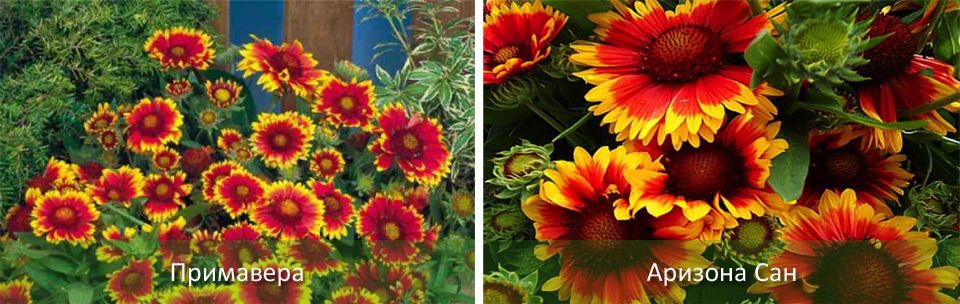
| Hybrid | The result of mixing with other flower species. Depending on the variety, they can be tall (up to 80 cm) or short. | Primavera | Low, bushy plants with a large number of flower stalks on one seedling. |
| Arizona Sun | A dwarf variety with a long flowering period. | ||
| Sonne | The stem height is up to 50-60 centimeters, inflorescences with tubular and ligulate petals are found. |
Growing Gaillardia from Seed and When to Plant
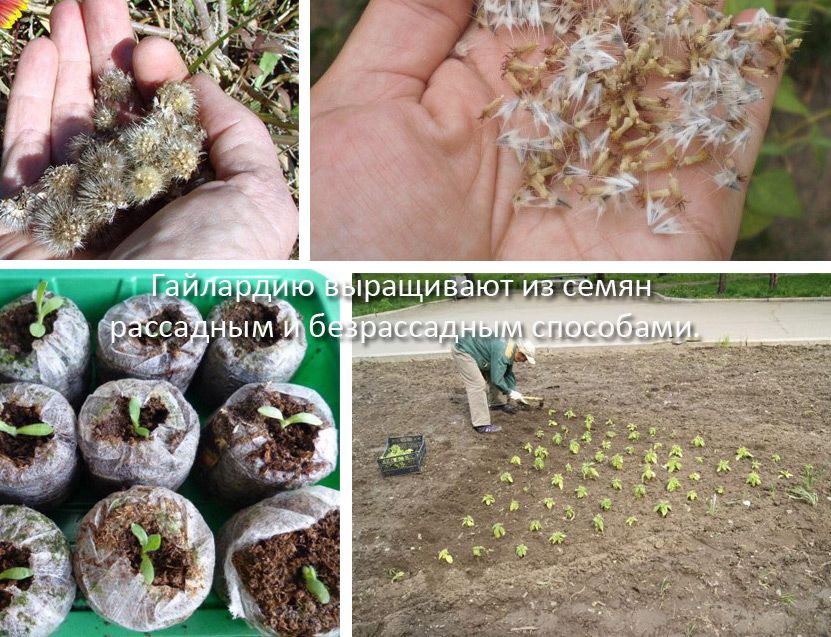
Growing from seeds occurs in two ways: seedlings or sowing directly into the soil.
The first method is divided into two stages: preparing seedlings and planting the seedlings in the ground.
Sowing seeds for seedlings
Planting takes place in late February or early March. Rather than burying the seeds, they are laid out on the soil surface and left in a bright, room-temperature area.
Place the seedling container in a location protected from direct sunlight. Water lightly as needed.
Gaillardia produces its first shoots one to two weeks after planting.
Caring for seedlings
After the seedlings sprout, move the container to a cooler part of the room or to a greenhouse. The sprouts are separated from each other and placed in small containers when the third leaf appears.
Water the young plants as the substrate dries. The seedlings should be exposed to light for at least 14 hours a day; grow lights will be needed to provide the necessary illumination. Humidity in the room containing the seedlings should be maintained at moderate levels.
Planting gaillardia in open ground
Planting gaillardia does not present any major difficulties, but it is necessary to follow a few recommendations regarding planting timing, location, and soil.
Planting dates
The mature seedlings are planted in the ground in late summer or September. If planted correctly, the seedlings will have time to take root before frost sets in and produce eight to ten strong leaves. The plant will bloom the following spring.
If you're sowing flowers directly into the ground, without first growing seedlings, the best time to sow is late spring. Plant the seeds in shallow holes in the garden, and when the seedlings have grown strong and produced a third leaf, transplant them into the flowerbed.
Landing rules
This plant thrives in sunny areas and dry soil. It does not thrive in overly moist soil. Before planting, fertilize the soil with a mineral mixture. The concentration should be low—no more than 40 grams per 1 liter of water. Ash is also added to the soil. Space the seedlings at least 20 cm apart.
Features of caring for gaillardia
These plants are easy to care for.
Care tips
To obtain healthy inflorescences, follow a few simple rules:
- Mineral fertilizers are used to feed gaillardia.
- During the season, the soil is fertilized three times: at the beginning of flowering, in mid-summer, and after the plant has finished flowering.
- Regularly loosen and weed the flowerbed. Water sparingly and only in hot and dry weather, when the soil becomes dry.
- Tall varieties of perennials require garters.
Top dressing
For plant nutrition, use mineral supplements such as Kemira Universal. Compost and humus can also be used as fertilizer.
The main rule is that fertilizers should not increase soil acidity. Using manure can lead to disease and plant death.
Gaillardia after flowering
Gaillardia blooms until the end of September. In October, seeds can be obtained from the remaining flower stalks.
How and when to collect gaillardia seeds
To collect seeds, flowers that have faded in the summer are tied tightly with gauze to prevent the seeds from falling into the soil. The inflorescences are left under the gauze until early fall, after which they are harvested. Seeds that have naturally fallen into the soil can also sprout in the spring, so many gardeners avoid hand-picking.
Propagating gaillardias by seed is not popular. Plants grown this way will differ from the mother plants and will not meet the cultivar's standards. To maintain the appearance of their inflorescences, perennial varieties are propagated using bushes.
Perennial gaillardia in winter
In the first year, before the onset of frost, the flowers are cut back to ground level. They are then covered with a layer of dry leaves, pine needles, or other natural insulating material.
Subsequent winter preparation requires no additional measures – the flowers overwinter successfully and tolerate cold temperatures well. Covering will only be necessary during warm, snowless winters.
Propagation of Gaillardia
Perennial varieties are propagated by the bush method. A strong, healthy bush that has been growing in the same spot for five years is dug up and divided into two or three parts. Each shoot should be strong, with sturdy leaves, capable of establishing itself in a new bed. Division is done at the end of the season, after the plant has fully bloomed. All parts are planted in new flowerbeds.
Root propagation is also possible. Large roots of a healthy plant are cut into 5 cm long pieces and then planted in a greenhouse.
Pests and diseases of gaillardia
The main cause of disease is improper watering and overly wet soil. The leaves of these flowers are susceptible to diseases such as:
- gray mold;
- rust;
- powdery mildew;
- spotty rashes.
These diseases are caused by fungi. In the early stages, the plant can be treated with fungicides (Fundazol, Skor). If the affected area is large, it is recommended to dig up and burn the diseased plant to prevent the fungus from spreading throughout the flowerbed. As a preventative measure, healthy plants can be treated with a solution of potassium permanganate.
The pests that most often damage crops are aphids and whiteflies. Treating flowerbeds with insecticides (Aktara, Actellic) will help against them.