Gardenia is a genus of evergreen shrubs or small trees in the Rubiaceae family. Native to Japan, China, and India, it is also widespread in the tropics of South Africa.
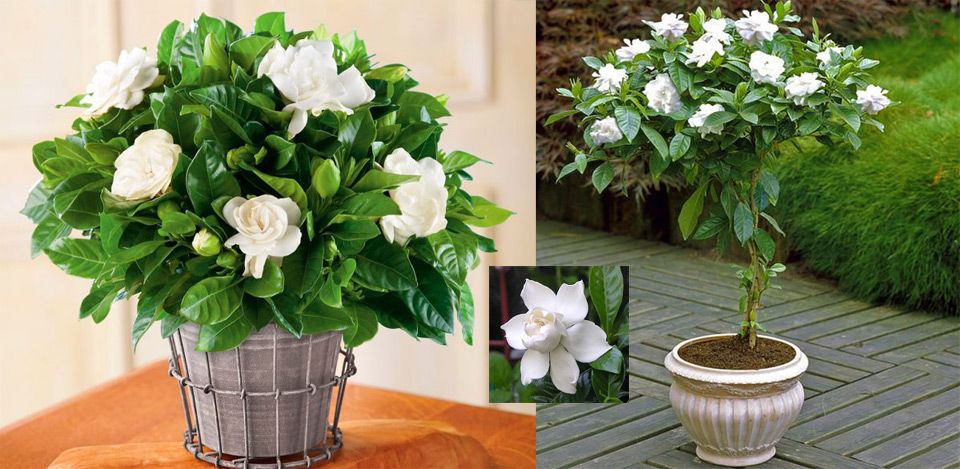
It was named after the Scottish-born British botanist and physician Alexander Garden. It also has a second name, Cape jasmine.
Description of gardenia
The plants have a spreading, woody stem. Glossy, rounded, elongated leaves are arranged oppositely on bare or drooping shoots. The flowers are single, double, and come in delicate shades of white, pink, and yellow. They are 5-10 cm in diameter. Blooming is rapid and brief (3-5 days), accompanied by a fragrant aroma. With proper care, they will bloom from early spring to mid-fall.
Types and varieties of gardenia for the home
There are over 250 natural varieties of gardenia.
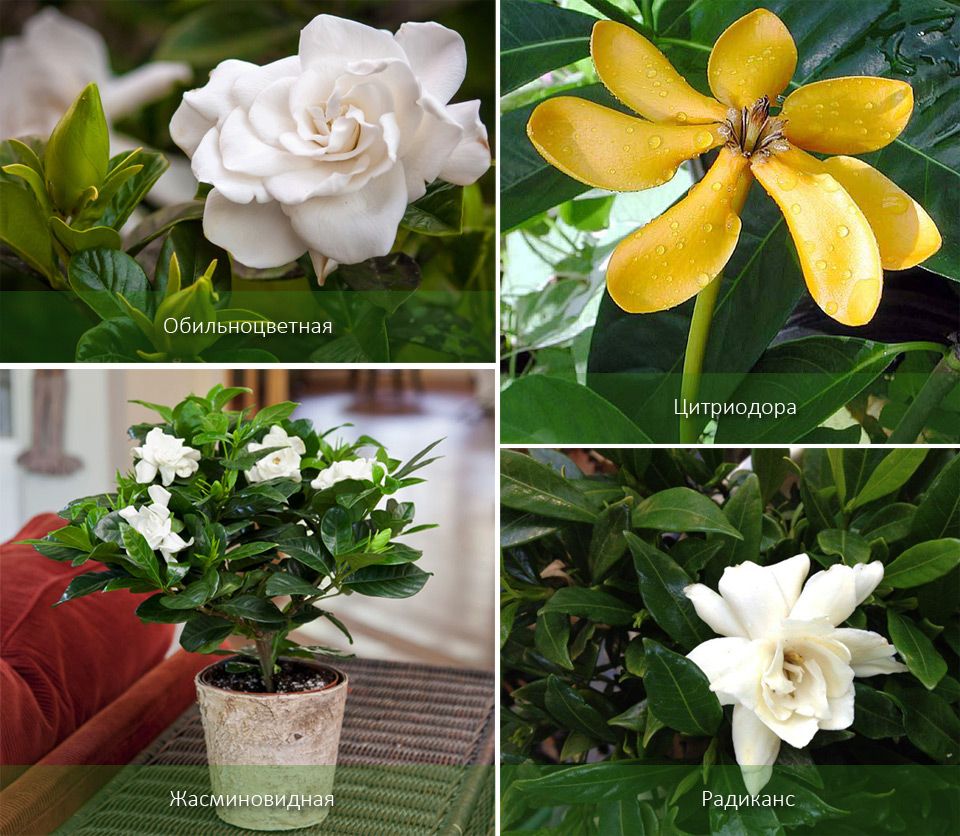
Basically, flower growers use the following types:
| Types | Description | Leaves | Flowers |
| Jasmine | The bush grows to 50-60 cm in height and is widely used as a houseplant. It's quite fussy. | Dark, shiny, quite large 10 cm. | White, double, 5-7 cm, flowers may be arranged in clusters. They have a pleasant aroma. |
| Abundantly flowering | About 70 cm. Excellent pot culture. | Light, small, about 5 cm. | Camel-shaped, 7-8 cm, snow-white, abundantly located, strongly scented. |
| Radicans | 30-60 cm. Used as bonsai. | Pointed, resembling a bay leaf, about 3 cm. | Fragrant 2.5-5 cm. |
| Citriodora | 30-50 cm. Grown in containers at home. | Glossy, elongated-rounded, with pronounced veins, slightly wavy, rich dark green color. | Miniature 2 cm, lemon-colored, five-petaled, with an orange scent. |
The most popular is the jasmine one.
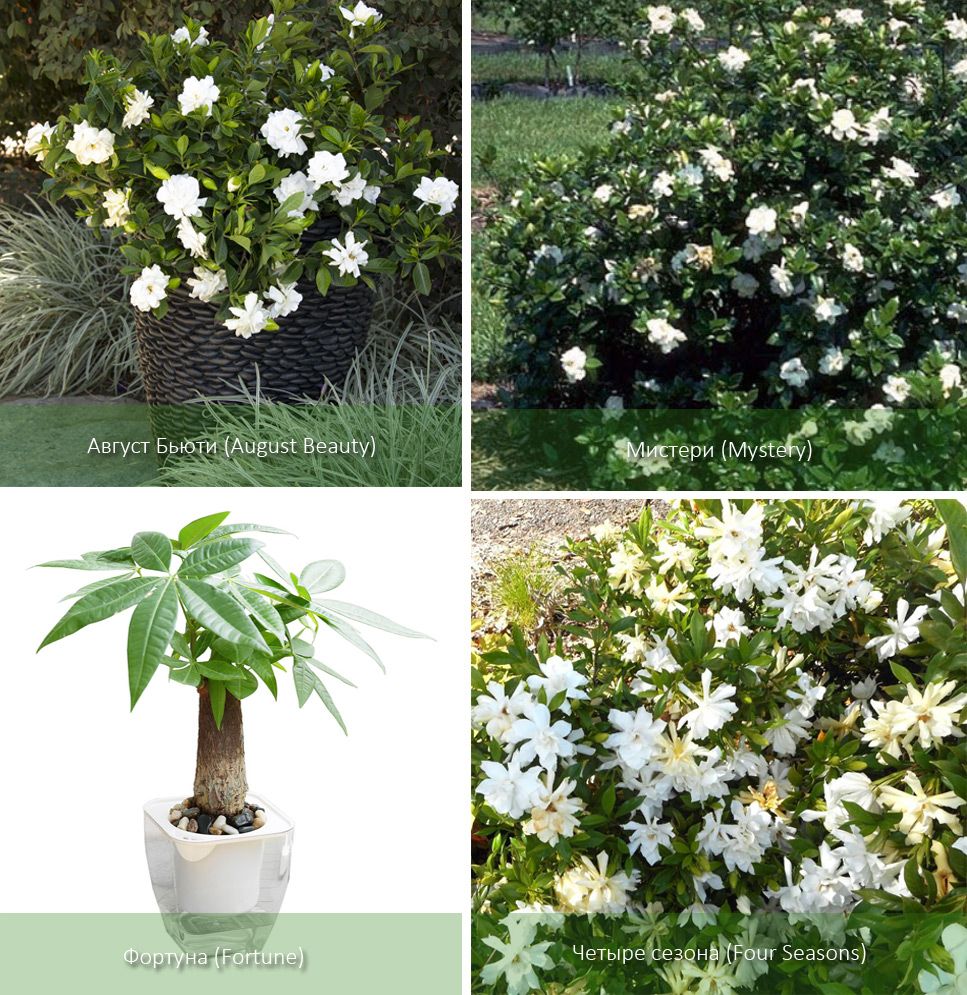
Improved varieties have been developed by breeders:
| Variety | Distinctive features |
| Four Seasons | The bush has double flowers. |
| Mystery | Very long flowering, possibly twice a year. |
| August Beauty | Grows up to 1 m. |
| Fortune | Giant leaves 18 cm and buds 10 cm. |
Caring for Cape Jasmine at Home
Gardenia is a rather capricious plant, but if you follow the rules of care at home, you can achieve a beautiful bush that blooms long and profusely.
| Factor | Spring/summer | Autumn/Winter |
| Location/lighting | A well-lit window without direct sunlight. Provide shade on a south-facing window, and supplementary lighting on a north-facing window. Avoid drafts. | |
| Temperature | +18…+24 °C. | +16…+18 °C. |
| Humidity | 70-80%. Spray frequently and place on a tray with wet moss or expanded clay. | 60-70%. Reduce spraying. |
| Watering | Abundant, without stagnant water. As the top layer dries. | Moderate, 2-3 days after the soil on top dries out. Minimal in winter. |
| Top dressing | Fertilize flowering plants twice a month, without calcium, with minimal chlorine and nitrogen ratios. During flowering, apply iron-containing fertilizers. | They stop. |
| Soil | Composition: turf, leaf, coniferous soil, sand, peat (1:1:1:1:1) with the addition of coconut fiber or soil for azaleas. | |
Gardenia growing rules:
- To prevent leaves and buds from falling off, water and maintain high humidity.
- Spray with a fine spray, with a frequency directly dependent on the conditions: dry, stuffy - often; cold, damp - rarely.
- If there is no flowering, provide additional lighting.
- Give the flower a bath once a week for 3-4 hours until budding: place it next to a bathtub filled with hot water.
- If the buds do not open for a long time, water the roots with warm filtered water.
- To stimulate the formation of new shoots, faded flowers are removed in a timely manner.
- To create a lush bush, the plant is pinched and pruned.
- Do not move or turn over.
- Do not allow sudden temperature changes.
- To improve the absorption of mineral fertilizers, acidify the soil: water it once a month with water spiced with a weak solution of citric acid.
- Young plants are repotted annually by transshipment after flowering. Older plants are repotted every 3-4 years, without removing the soil from the roots, but simply adding new soil.
Propagation of gardenia
The flower is propagated from January to March or from June to September.
The best way is cuttings:
- Cut green-brown (semi-woody) cuttings 10-15 cm long.
- Treat with a root formation stimulator (Kornevin).
- Place in peat with sphagnum moss.
- They moisten and create greenhouse conditions by covering the container with planting material with a glass lid or polyethylene.
- Maintain at a temperature of +24 °C.
- When the seedlings grow to 10 cm, they are transplanted into separate pots using the transshipment method so as not to damage the delicate roots.
Growing problems, diseases and pests of gardenia
| Problems | Reasons | Elimination measures |
| Yellowing and shrinking of leaves. |
|
|
| Paleness of leaves (chlorosis). |
|
|
| Drying and falling off. |
|
|
| Absence of flower buds. | Temperature below +16 °C or above +24 °C. | Maintain at the correct temperature. |
| Bud drop. |
|
Maintain the required temperature, humidity and lighting. |
| Fungal diseases. |
|
|
| Pests (leaf aphids, spider mites, scale insects). |
|
Spray with folk remedies: infusions of nettle, garlic, burdock, and others. Do not use a solution of laundry soap on gardenias. Or use insecticides (Aktara, Actellic). |